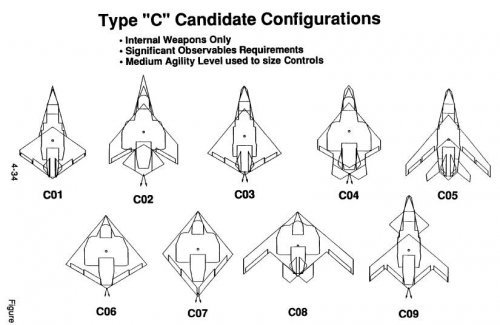
Well, with the usual caveats, it is interesting that so far the clues we've seen point to both NG and Boeing (for which i take as reference the canard diamond wing design shown in a PPT from some time ago) configurations being tailless canards.

You are using an out of date browser. It may not display this or other websites correctly.
You should upgrade or use an alternative browser.
You should upgrade or use an alternative browser.
CGI - Possible configuration of the Boeing F-47 NGAD
- Thread starter 4decaa
- Start date
It's obviously a 3D model of a fan game/pixel art variation that was also featured in a past article about 6th gen and drone. The pixel art is from at least a decade ago. I don't remember from where and it seems google has purged old links from results.Not without surprise it looks like that NG PPT is from 2024. Has anyone done artwork of the configuration depicted? Apart from being in a NG PPT, that configuration gives an uncanny vibe of actually fitting overall with what little we've seen from F-47 renderings so far.
It's a variant of this but in black camo.
Attachments
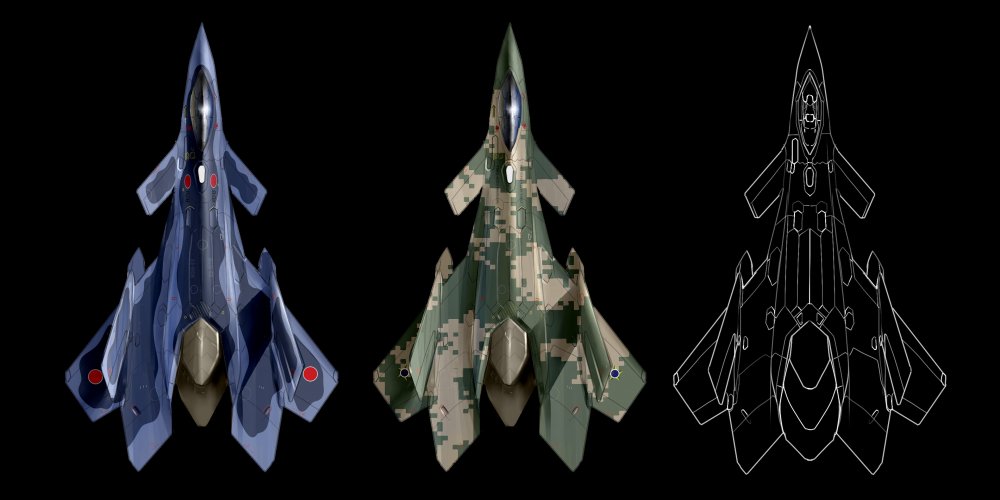
Perhaps we're looking at different things, what you posted (fictional anime-like design) looks nothing like that configuration from the NG PPT, that actually has the "right" feel as far as design is concerned. At any rate, i'll leave you guys to it, i just thought it would be of interest to share what i came across.
It's actually 53° and outside angle so the sweep angle is 90-53=37°. A lot of people are confused by this. I've given it for the outside because the inside is usually cluttered and would be more confusing.@Seragina Regarding the 52 degree wing sweep, that's the sweep for a mach 1.6+ regime, but wouldn't that mean less efficient flight in the speeds up to mach 1.5 - 6 ish where you'd be spending the majority of your supercruise flight + BVR fighting at? Also - there are canards on this fighter which would need a leading edge sweep matching the wing sweep. I would think something like mid 40's sweep would be good enough but I'd love to hear your (and others) thoughts on that.
The only option to get higher aspect ratio is to go with 35° sweep angle or make the plane longer or using raked wingtips.
The carnard version you are looking for I've posted in post-#796654 with the original sweep angle of 40° and AR 2.5. A larger angle is better for maneuverability but due to size contraints will have to have smaller aspect ratio. Also don't forget taper ratio.
Due to the lambda wing my latest has TR of:
tip to wing root: 0.0 ( "no" induced drag)
tip chord at outer most aileron to wing root 0.34337 (better for subsonic)
outboard-root to wing root 0.5787 (better for supersonic)
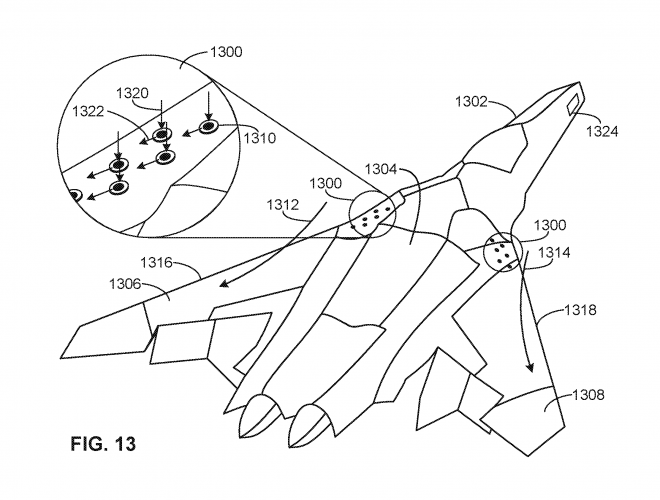
Now that I have considered the use of active flow control there's no reason to use carnards anymore!
Well, ventral intakes are also bad for sucking in ground water and debris.This is actually what caused me great headache when trying to fit a single central intake.
Arguments against a ventral intake:
- Primarily, the reason for this is that we know it's a twin engined fighter. Every single example of a ventral intake proposed for a stealth fighter (of which there are extremely few) also only feeds a single engine and thus doesn't need a split airflow. For this and other ventral intake renders, I'm curious in this render how you've split the airflow. Last I asked about this, it was said that you need to split the airflow upfront rather than internally - a splitte plate like the Su-75 or Eurfighter kind, but that's now somewhat problematic RCS wise. The Su-75 remains the only stealth fighter with a splitter plate looking thing in it's intakes (even though it's been said that that isn't a splitter plate either).
- Tangentially, landing gear placements and internal volume also don't lend itself to this. Looking at the few examples we have of fighter aircraft with ventral intakes, the front landing gear is always sitting on the ventral intake itself - I presume due to creating turbulent air and kicking up debris if it sits in front of the intakes. That means:
- Your intakes must sit further forward and the narrowing of the fuselage also begins to constrict the intake area, which, from what's been discussed on this forum, should be generally wider than other stealth fighter intakes due to VCEs
- The other option is to have a much longer fuselage to allow you to put your ventral intake and front landing gear further back while still having large bays, but then we aren't talking about an F-22 or YF-23 sized fighter.
- A wider or thick airframe. In this configuration, I couldn't fit tandem bays in my model because that interferes with the front wheel bay position. Going with a side by side bay configuration couldn't fit nearly as many weapons.
Separated intakes require more space and incurre more structure weight. A solution might be to use a centered DSI for both.
Attachments

- Joined
- 1 April 2006
- Messages
- 12,276
- Reaction score
- 15,084
No.It's obviously a 3D model of a fan game/pixel art variation that was also featured in a past article about 6th gen and drone.

Reddington777
ACCESS: Top Secret
- Joined
- 23 March 2025
- Messages
- 830
- Reaction score
- 2,746
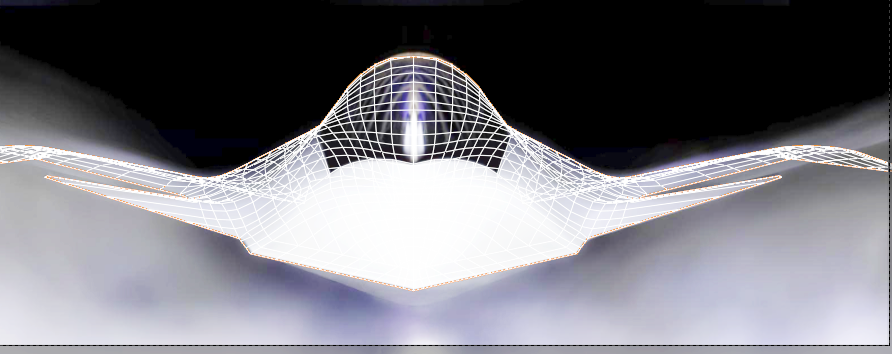
So after breaking my head over this and exhausting myself over the past month or so, I've tried to manually fit two cameras, I've tried using perspective matching at various distances, I've tried pushing AI to do the matching work for me, I've used the same technique I used to model the CVN-78's hull (to a pretty good degree of accuracy) by estimating contour via casted shadows. If you value your sanity, don't try this at home, but in case you are successful, please tell me how.... because I'm about 95% sure that the two official renders may have had the same underlying 3d models, but either the model itself was tweaked between renders or the render was warped in post processing - yeah I know unsurprising. Oh and repeated runs with different AI running math on some common planar points on both images have also came to the same conclusion. I've tried just about every angle of nose chine sweep to match the tilted model. If I aligned the nose chine, the canards would be off. If I aligned the canards and nose chine, the root and canopy would be off. No matter how you try, these two renders taken as is do not map to the same 3d model. If anyone was successful... I'd give you my next paycheck to buy the .blend file off of you
What I have found common between the two renders though, is that in order to figure out the planform depicted here, it relies almost entirely upon the details of the nose.
Rodrigo's render looks to be derived from some perspective matching of the tilted render. It's got a long slim fuselage while I arrived at a more tapered fuselage that expanded towards a blended dorito fighter. I decided to entertain the idea of a narrower body and I was able to perspective match both of these to the front view:
This is the narrow body 52 degree LE wing sweep fuselage.

This is the perspective match for the more tapered 47.5 LE sweep angle fighter from my last post:

Do note that I was able to match not just the the corners and chine angles but also the wing's angle along the most prominent length of the wing - for both models despite them differing prominently from each other. In order from the left to right: 47.5 degrees LE sweep, 52 degrees with narrow fuselage, and 49 degree with no change in forward fuselage width.

Yet, in order to match the thinner model, the camera needed to be further away from the model while conversely, the more tapered model required the camera closer. That means in order to accommodate the change, the nose angle for the thinner model needs to be more acute if you move the camera further away or more obtuse as you get closer. Below the longer nose is the narrower front fuselage while the shorter nose is the wider front fuselage.
So while I can't necessarily prove to you that a narrow front fuselage with little taper is wrong I can undoubtedly tell you that there needs to be consistence to match these renders. It helps to look at the render

In case I haven't bored you to death talking of the obvious, this means that if you want to have a narrow angled fuselage to get it to agree with the front facing render, then you must have a long nose or have a nose that isn't on the same plane. You cannot have an airframe that is both long and narrow and has a flat and level nose relative to the fuselage between the chine corner and the canard or else there's basically no way to get it lined up with the front render. This somewhat narrows down the band of angles the fuselage shape can have given that we know it has a chisel nose.


Given all this, I think it helps to look at it and think about what is likely both from what you see and from an aerodynamics / volume point of view.
About the height / thickness of the fighter.
The front render shows a pretty tall fighter. There are four visible contours on the front render:

The contour starts at the silhouette of fuselage, and becomes steeper to meet the rising spine. It changes incidence to accomodate the canard and width of the canopy before becoming shallower towards the radome. Altogether, this makes a plane with a large canopy and a wide, polygonal/hexagonal radome that more or less meets right at the chine corner befor a somewhat abrupt tapering.
I tinkered with the contrast for the tilted render a bit and found that it's nose section has two different things going on: the light side was either doctored or blasted with high contrast lighting before having the image washed out, but the dark side retained contours that echo the front render:

You can see the marked change in contour near the chine corner as well as what appears to be some kind of seam line that was blurred away on the light side. Both of these together echo the similar contours found on the front render. The tilted render has had it's contours deliberately hidden so much that the light side looks like a different plane than the dark side.
So yeah - I've more or less given up trying to match the two cameras, but if I had to choose - I'd choose the front view. This view is not only easier to match, but it gives more controllable and reasonable results with less room for error.
As for the planform - my conclusion is that it's more likely to be a blended wing dorito and less likely to be a narrow traditional planform with a sharp nose. The planform is also much taller than the tilted render gives off, which lends greater credence to the front view render.
What I have found common between the two renders though, is that in order to figure out the planform depicted here, it relies almost entirely upon the details of the nose.
Rodrigo's render looks to be derived from some perspective matching of the tilted render. It's got a long slim fuselage while I arrived at a more tapered fuselage that expanded towards a blended dorito fighter. I decided to entertain the idea of a narrower body and I was able to perspective match both of these to the front view:
This is the narrow body 52 degree LE wing sweep fuselage.
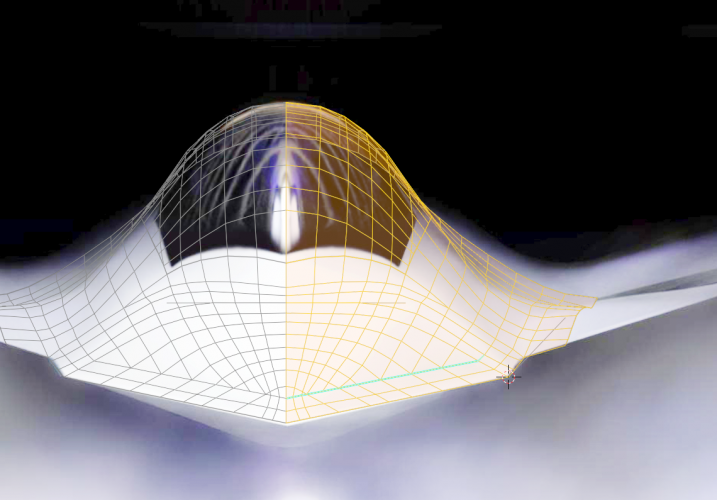
This is the perspective match for the more tapered 47.5 LE sweep angle fighter from my last post:
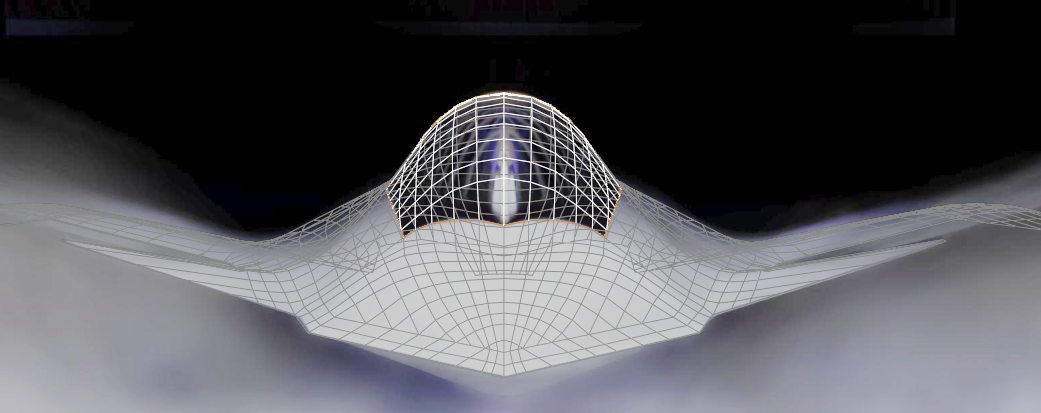
Do note that I was able to match not just the the corners and chine angles but also the wing's angle along the most prominent length of the wing - for both models despite them differing prominently from each other. In order from the left to right: 47.5 degrees LE sweep, 52 degrees with narrow fuselage, and 49 degree with no change in forward fuselage width.
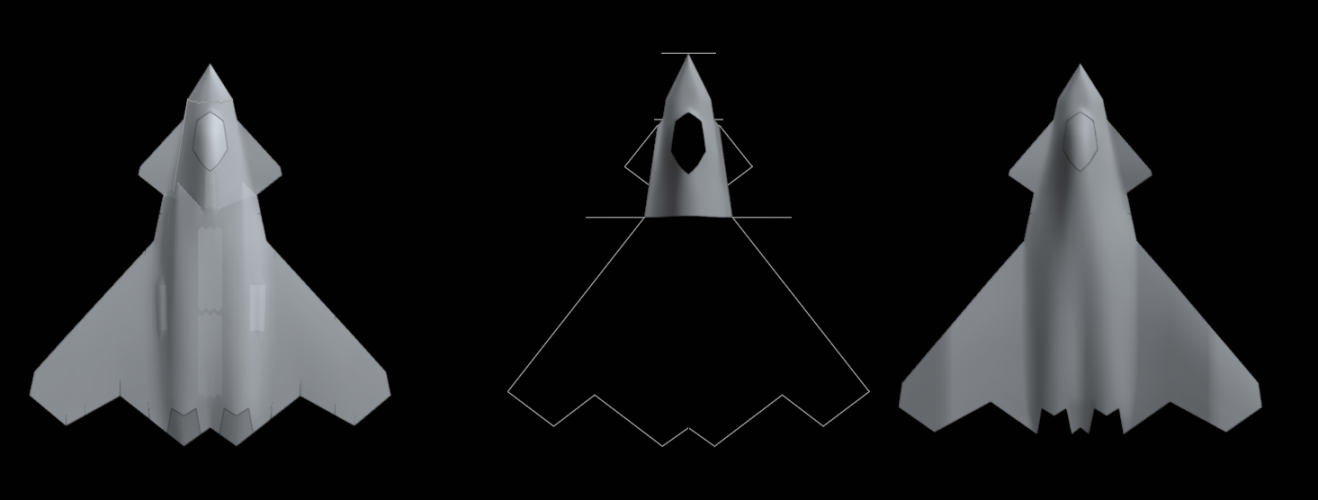
Yet, in order to match the thinner model, the camera needed to be further away from the model while conversely, the more tapered model required the camera closer. That means in order to accommodate the change, the nose angle for the thinner model needs to be more acute if you move the camera further away or more obtuse as you get closer. Below the longer nose is the narrower front fuselage while the shorter nose is the wider front fuselage.
So while I can't necessarily prove to you that a narrow front fuselage with little taper is wrong I can undoubtedly tell you that there needs to be consistence to match these renders. It helps to look at the render
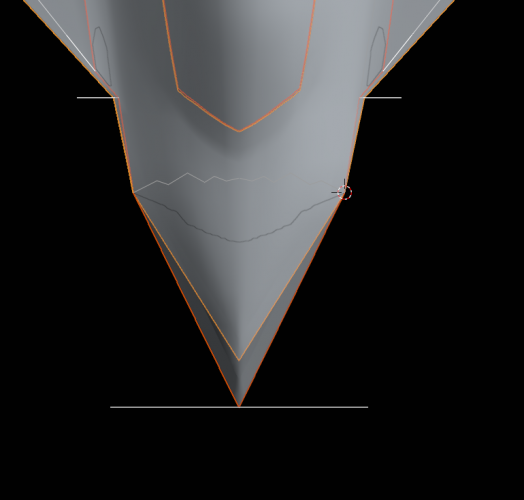
In case I haven't bored you to death talking of the obvious, this means that if you want to have a narrow angled fuselage to get it to agree with the front facing render, then you must have a long nose or have a nose that isn't on the same plane. You cannot have an airframe that is both long and narrow and has a flat and level nose relative to the fuselage between the chine corner and the canard or else there's basically no way to get it lined up with the front render. This somewhat narrows down the band of angles the fuselage shape can have given that we know it has a chisel nose.
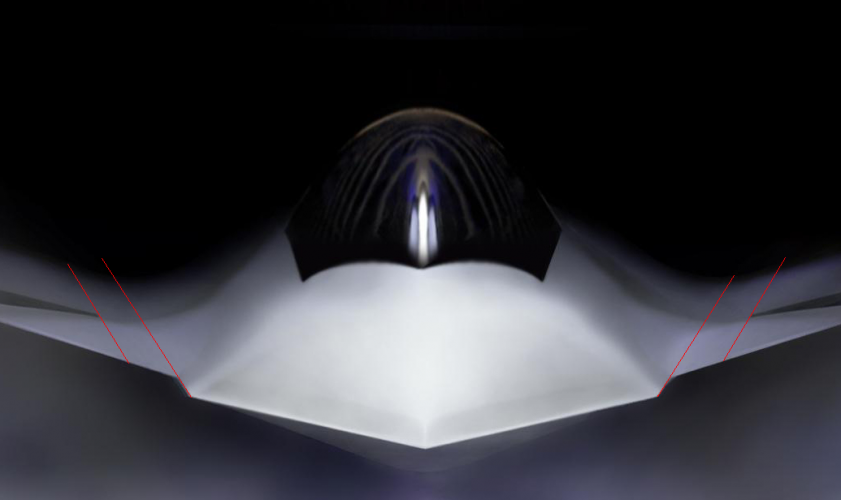
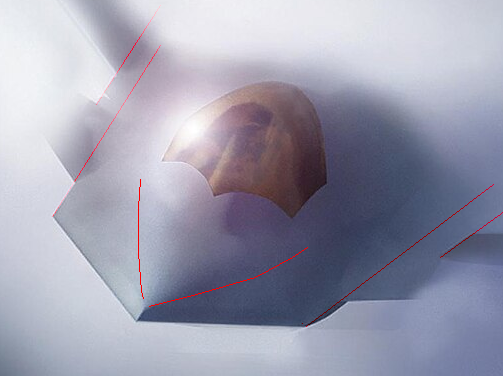
Given all this, I think it helps to look at it and think about what is likely both from what you see and from an aerodynamics / volume point of view.
- Pretty sure its not a good thing for your nose chine to be a wider angle than your wing - both from an edge alignment perspective and a aerodynamics perspective.
- It can't be significantly different from the wing sweep even though on many stealth aircraft (particularly the supersonic capable ones) the nose chine angle is actually sharper than the wing sweep (F-35, YF-23, F-22, J-XDS).
- If the nose comes out to be too long, you must then start to ask yourself... why? what purpose would disproportionately long nose serve?
About the height / thickness of the fighter.
The front render shows a pretty tall fighter. There are four visible contours on the front render:
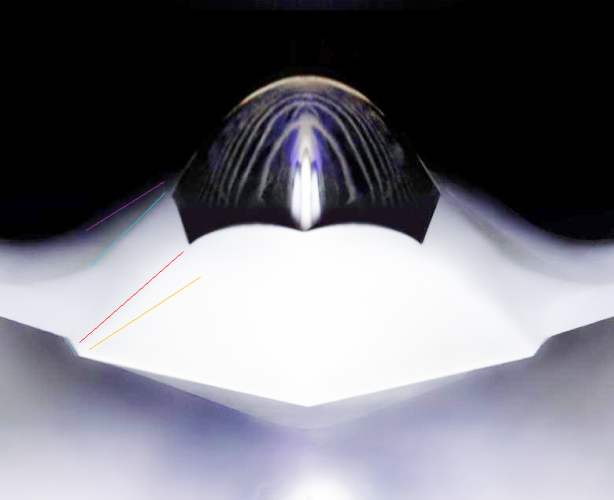
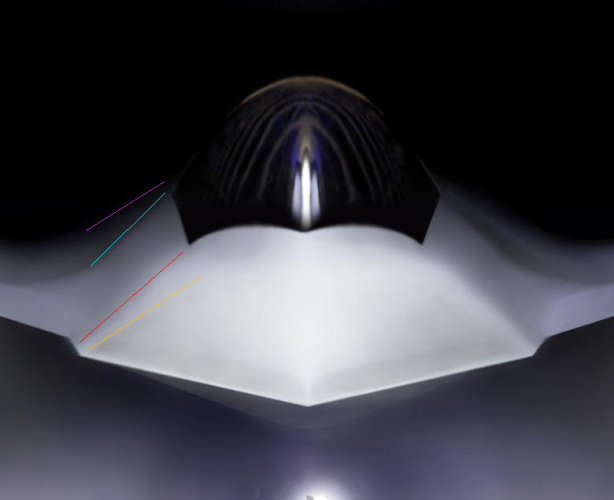
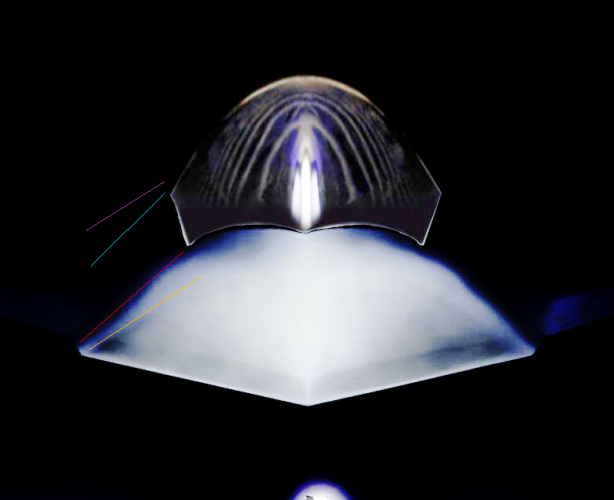
The contour starts at the silhouette of fuselage, and becomes steeper to meet the rising spine. It changes incidence to accomodate the canard and width of the canopy before becoming shallower towards the radome. Altogether, this makes a plane with a large canopy and a wide, polygonal/hexagonal radome that more or less meets right at the chine corner befor a somewhat abrupt tapering.
I tinkered with the contrast for the tilted render a bit and found that it's nose section has two different things going on: the light side was either doctored or blasted with high contrast lighting before having the image washed out, but the dark side retained contours that echo the front render:



You can see the marked change in contour near the chine corner as well as what appears to be some kind of seam line that was blurred away on the light side. Both of these together echo the similar contours found on the front render. The tilted render has had it's contours deliberately hidden so much that the light side looks like a different plane than the dark side.
So yeah - I've more or less given up trying to match the two cameras, but if I had to choose - I'd choose the front view. This view is not only easier to match, but it gives more controllable and reasonable results with less room for error.
As for the planform - my conclusion is that it's more likely to be a blended wing dorito and less likely to be a narrow traditional planform with a sharp nose. The planform is also much taller than the tilted render gives off, which lends greater credence to the front view render.
Attachments
Last edited:

- Joined
- 24 November 2008
- Messages
- 1,858
- Reaction score
- 4,327
@Reddington777 What an effort!
"...this means that if you want to have a narrow angled fuselage to get it to agree with the front facing render, then you must have a long nose or have a nose that isn't on the same plane...."
I also thought about that. The nose & canard could be located above the wing, maybe a similar arrangement like on Rafale... But it's hard to find a satisfying solution that blends nose, canard, wing and airintake seamless into a LO shape.

"...this means that if you want to have a narrow angled fuselage to get it to agree with the front facing render, then you must have a long nose or have a nose that isn't on the same plane...."
I also thought about that. The nose & canard could be located above the wing, maybe a similar arrangement like on Rafale... But it's hard to find a satisfying solution that blends nose, canard, wing and airintake seamless into a LO shape.
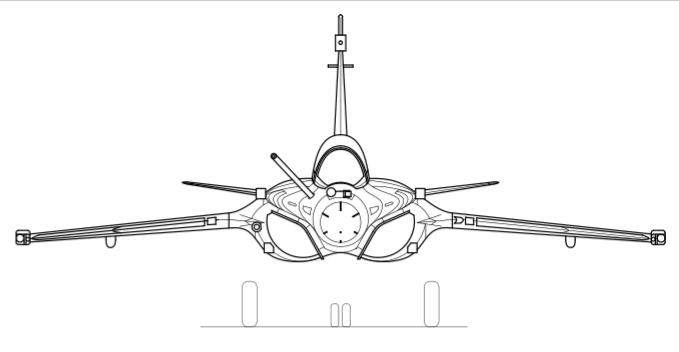

dark sidius
ACCESS: Top Secret
- Joined
- 1 August 2008
- Messages
- 1,618
- Reaction score
- 1,710
I agree with a more triangle shape, or star shape.

targetpractice
ACCESS: Confidential
- Joined
- 30 December 2024
- Messages
- 165
- Reaction score
- 616
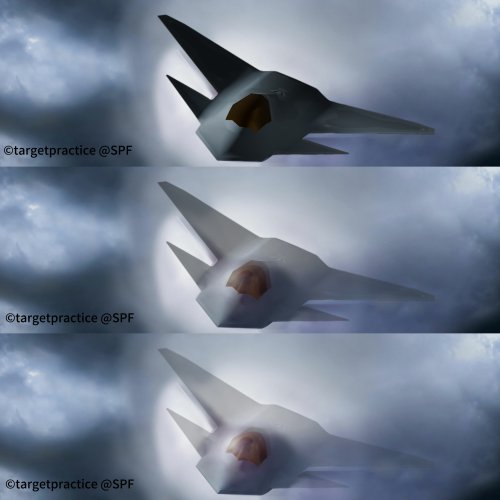
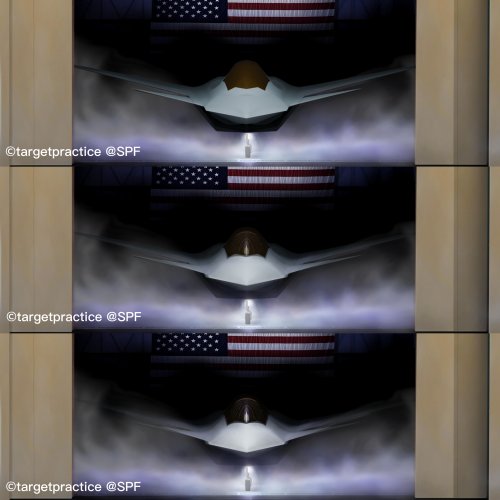
Brief thoughts on the renders:
https://www.secretprojects.co.uk/th...ion-of-the-boeing-f-47-ngad.45793/post-805564
- Having pushed stuff around a bit (see attached) I am 90% sure that these are undistorted renders of the same model
- The cameras are set up in a pretty weird way though, having focal lengths that make them almost orthographic.
- In my set up (using Blender) I have a focal length of 362mm for the hangar shot, and 264mm for the flying shot.
- (Another way of replicating this would be to zoom way out, then crop in on the plane.)
- As a side note, I'm pretty sure the hanger image is reflected down the middle.
https://www.secretprojects.co.uk/th...ion-of-the-boeing-f-47-ngad.45793/post-805564
Attachments
Reddington777
ACCESS: Top Secret
- Joined
- 23 March 2025
- Messages
- 830
- Reaction score
- 2,746
Not that I'm nit picking here, but you can see what I'm talking about here in your screen caps - I've also got it to overlap "sorta" right but you align one thing and something else is off.Brief thoughts on the renders:
- Having pushed stuff around a bit (see attached) I am 90% sure that these are undistorted renders of the same model
- The cameras are set up in a pretty weird way though, having focal lengths that make them almost orthographic.
- In my set up (using Blender) I have a focal length of 362mm for the hangar shot, and 264mm for the flying shot.
- (Another way of replicating this would be to zoom way out, then crop in on the plane.)
- As a side note, I'm pretty sure the hanger image is reflected down the middle.
https://www.secretprojects.co.uk/th...ion-of-the-boeing-f-47-ngad.45793/post-805564
In my model, the front view is ever so slightly off, and the shadows on both sides aren't perfectly symmetrical either.
I requested access on the file you sent me though and I'll see if I can get it to line up better.
Reddington777
ACCESS: Top Secret
- Joined
- 23 March 2025
- Messages
- 830
- Reaction score
- 2,746
The J20 has canards like this:I also thought about that. The nose & canard could be located above the wing, maybe a similar arrangement like on Rafale... But it's hard to find a satisfying solution that blends nose, canard, wing and airintake seamless into a LO shape.
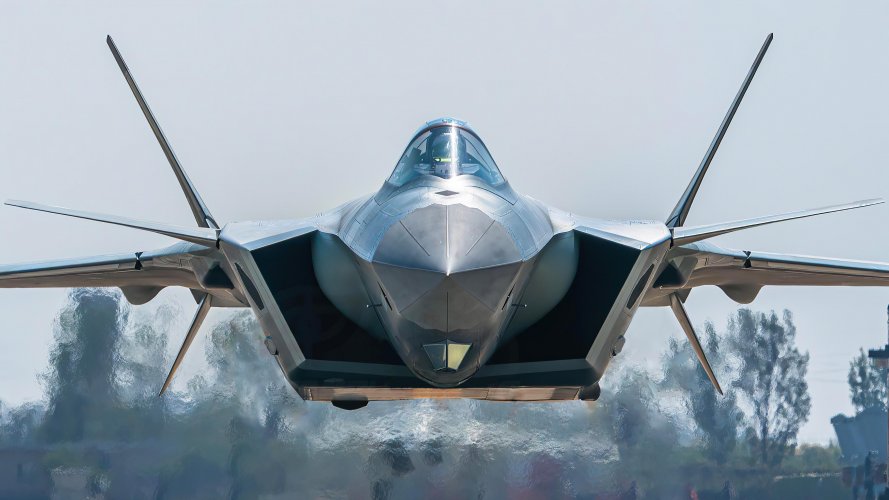
The root might not be higher but it's angled more?
At wings level, mine sits lower than the wing and blends completely into the wing's own angle so...I guess back to the drawing board.
- Joined
- 24 November 2008
- Messages
- 1,858
- Reaction score
- 4,327
The J20 has canards like this:
View attachment 792455
The root might not be higher but it's angled more?
At wings level, mine sits lower than the wing and blends completely into the wing's own angle so...I guess back to the drawing board.
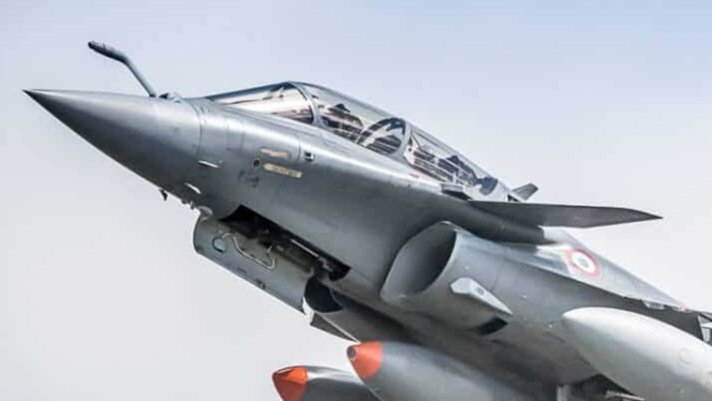
J-20 canards sit on the side/behind the intakes... I chose Rafale as an example because the nose transions smooth into those "cheeks" above the intakes, where the canards are mounted. However, the wings are lower and the leading edge transitions into the side wall of the air intake. I wonder if this kind of arrangement woukd be feasible for a stealth fighter (...with DSI intakes?)
Last edited:
On a side note if you look closely at the renders including F/A-XX notice how the wing sweep angle have been drawn?
This either hides the true angle or something like cranked wing or else and or fake the dihedral.
Aso I believe the cockpit / canopy to be larger than F22, at least as large as F35 in order to fit a sizeable screen. So a narrow fuselarge might not be quit right an assumption.
This either hides the true angle or something like cranked wing or else and or fake the dihedral.
Aso I believe the cockpit / canopy to be larger than F22, at least as large as F35 in order to fit a sizeable screen. So a narrow fuselarge might not be quit right an assumption.
I can only guess but F-47 looks like its going to use micro inlets for supersonic speeds and what look essentually like fish gills for subsonic speeds. Compressed supersinic air will enter tiny holes like a liquid then expand the air rapidly in a mostly empty chamber. Solves cooling somewhat as most of the air will flow over the external cone, letting a metered amount of compressed air past. Once inside the expansion of air will give off its heat. Control the hole size controls the IR emmissions. As for the gills, your inlets can bring air in from the backside as long as its not transonic.

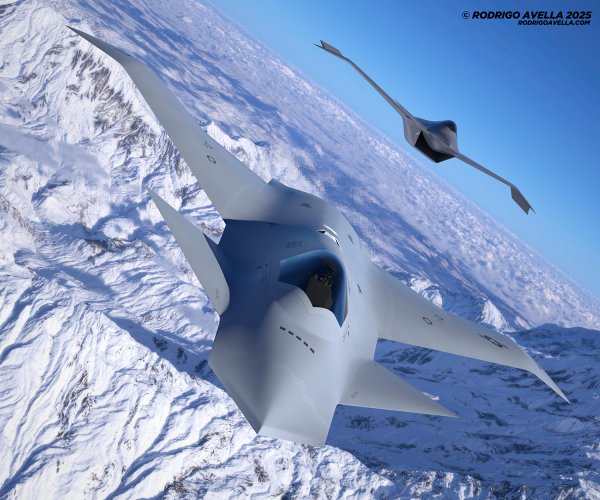
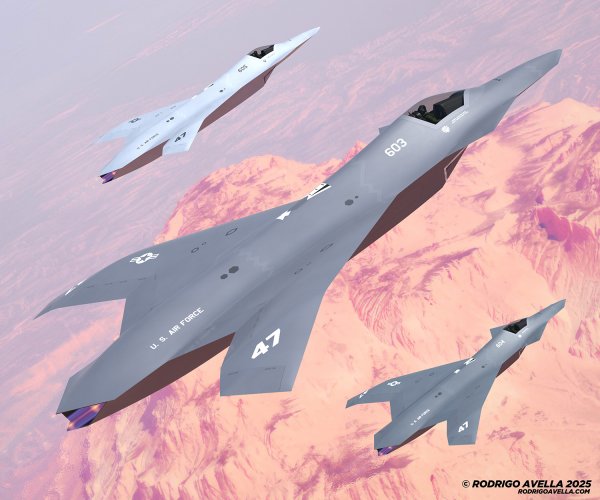
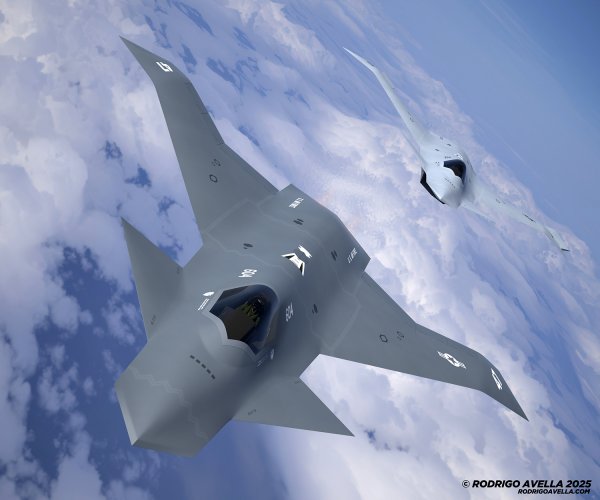
Rodrigo Avella
I really should change my personal text
- Joined
- 22 March 2017
- Messages
- 102
- Reaction score
- 1,011
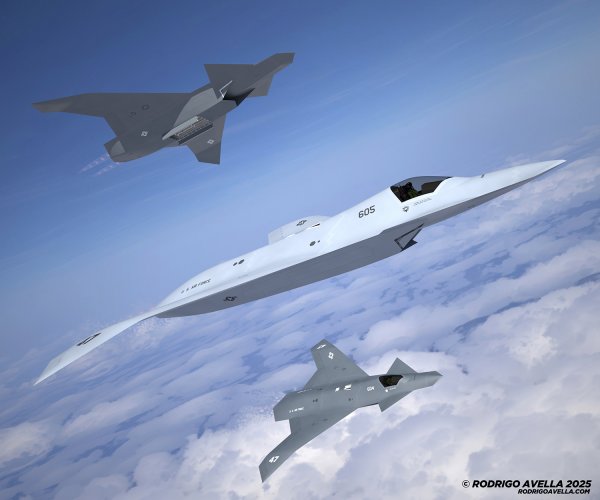
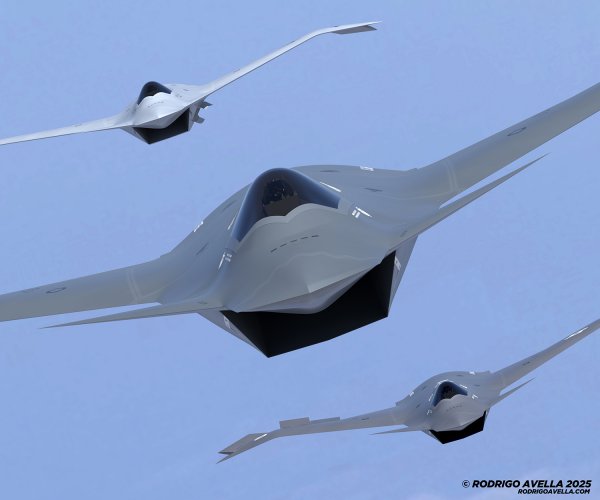
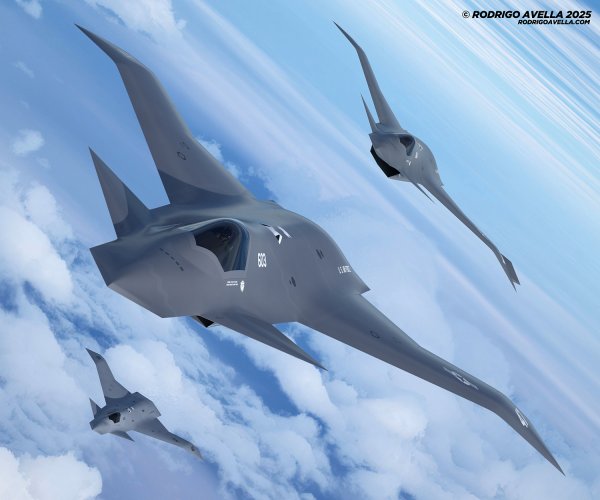
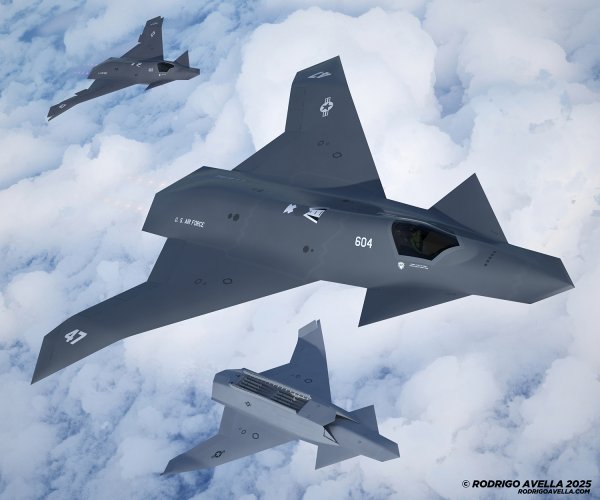
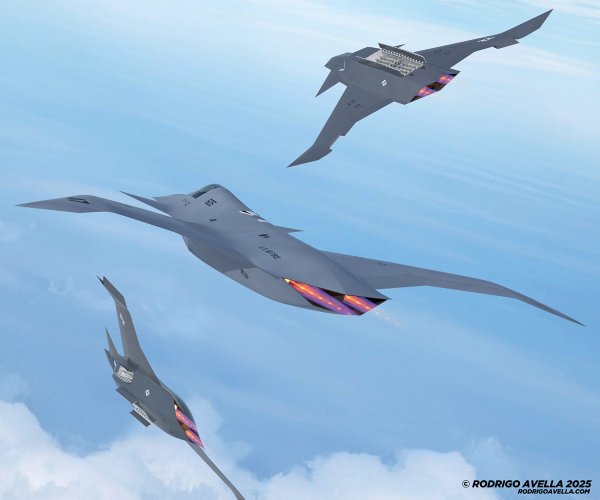
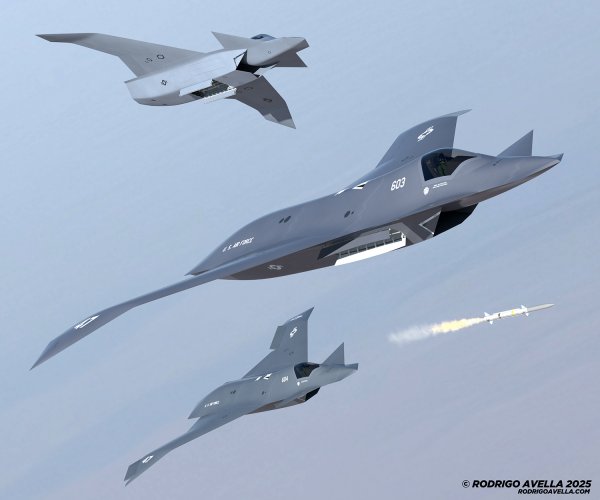
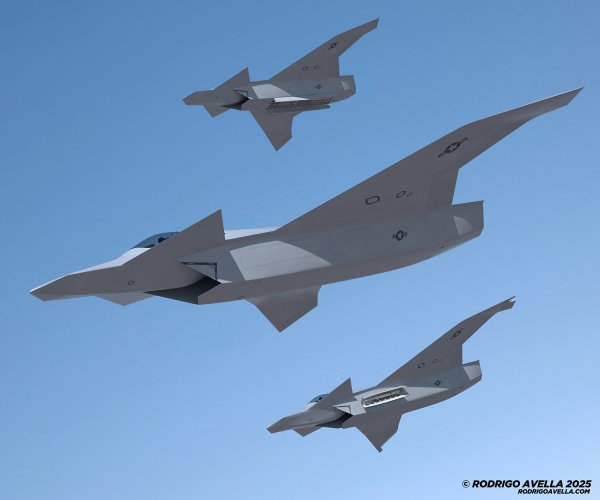
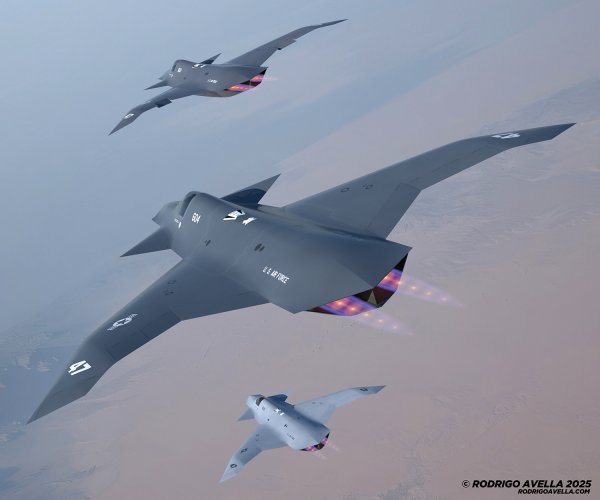
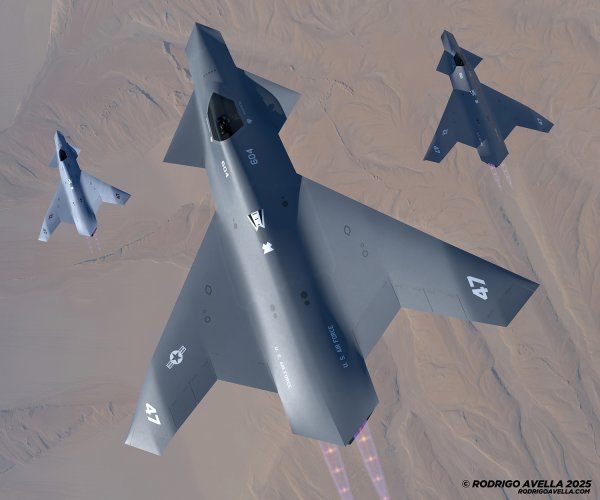
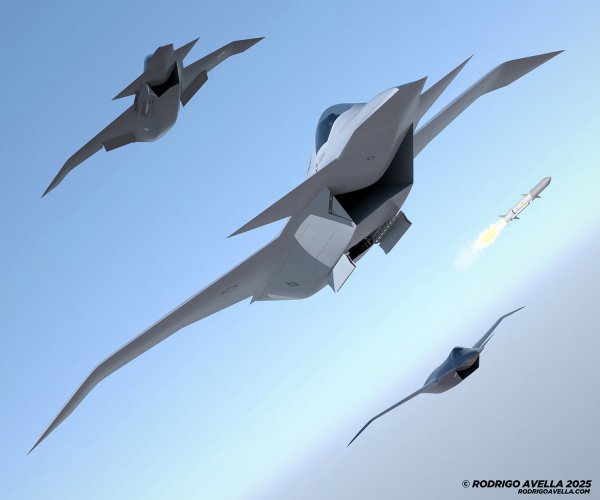
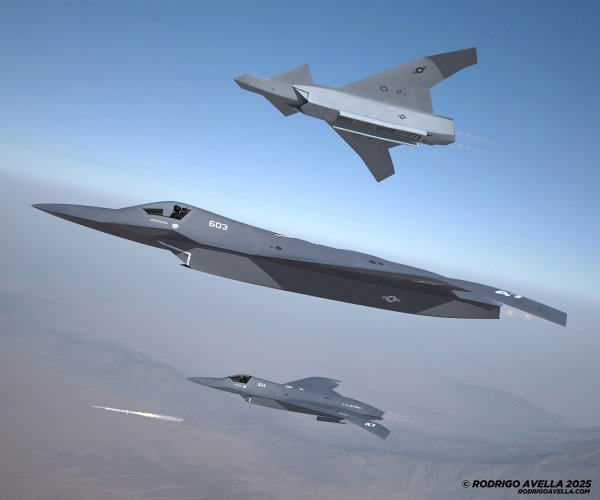
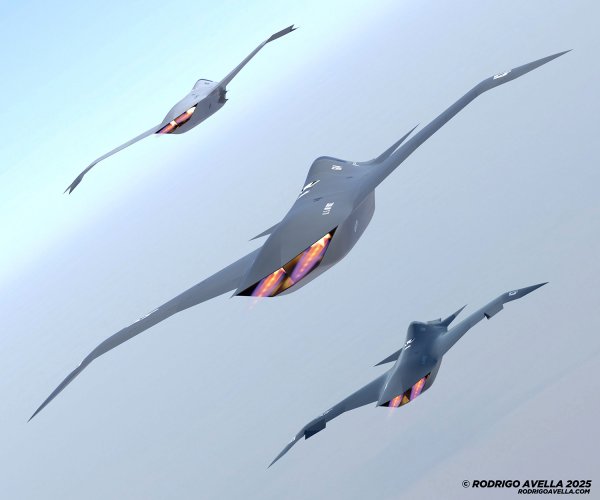
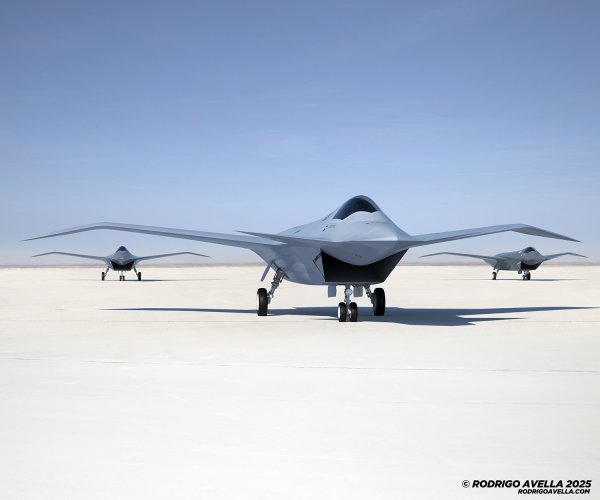
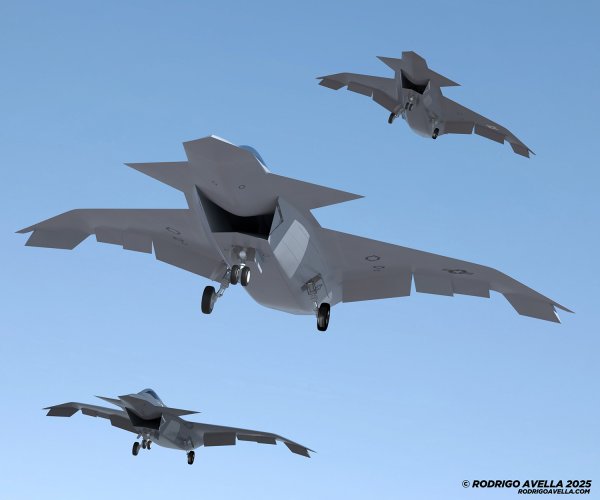
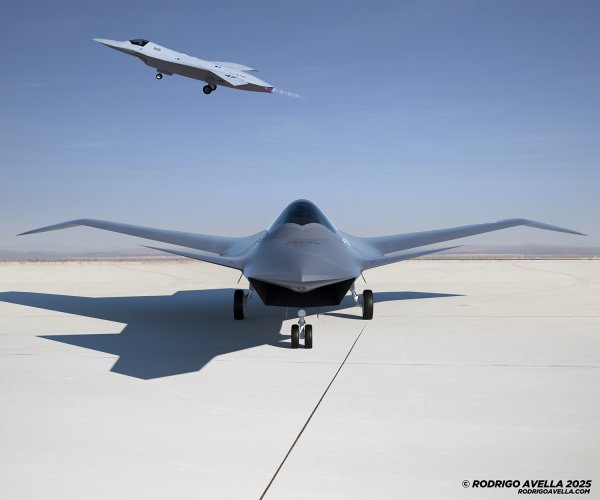
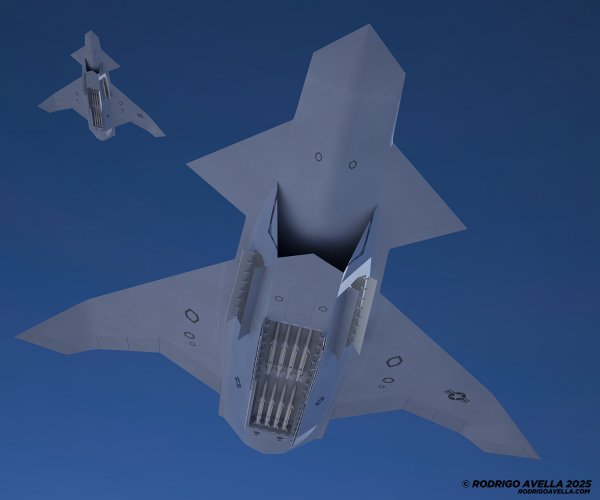
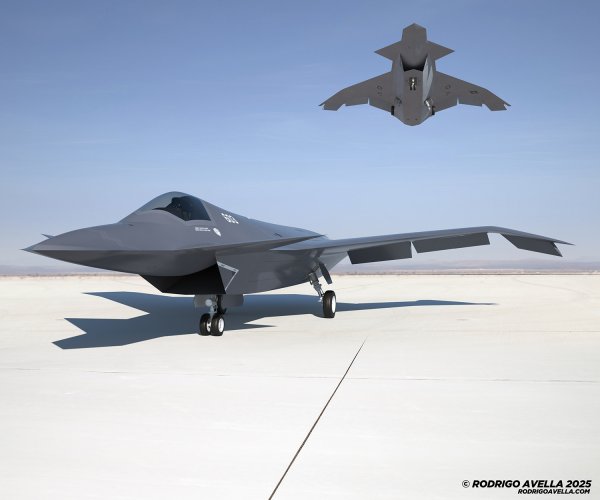
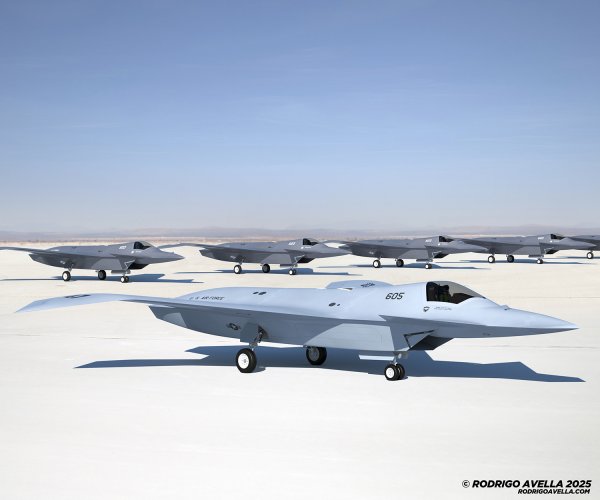
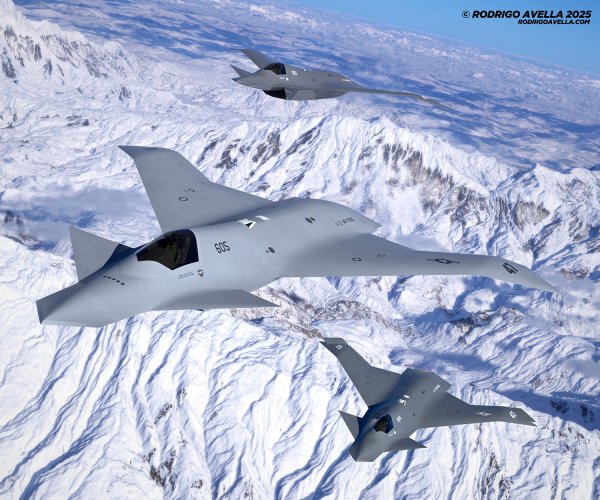
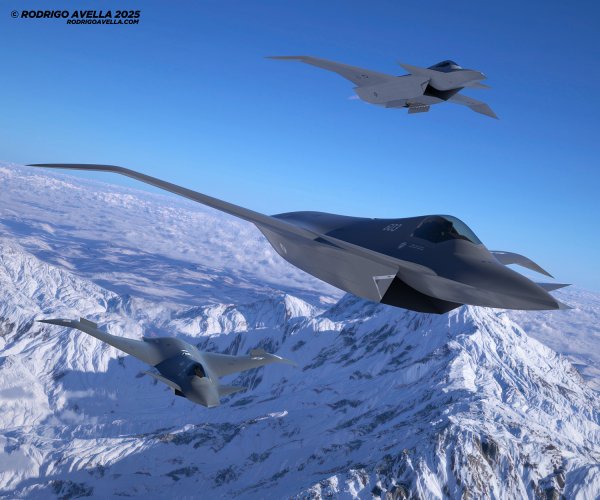
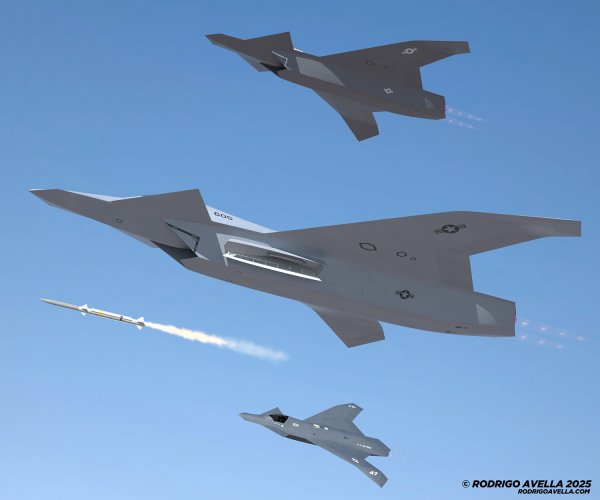
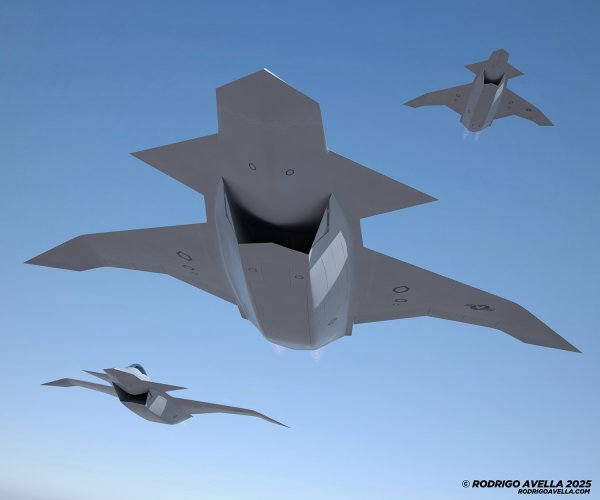
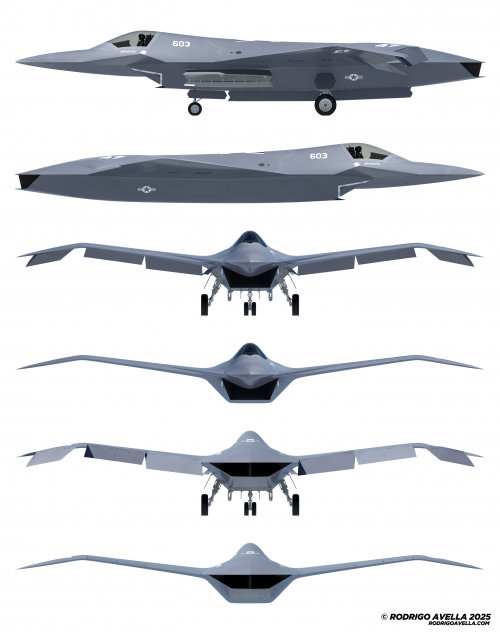
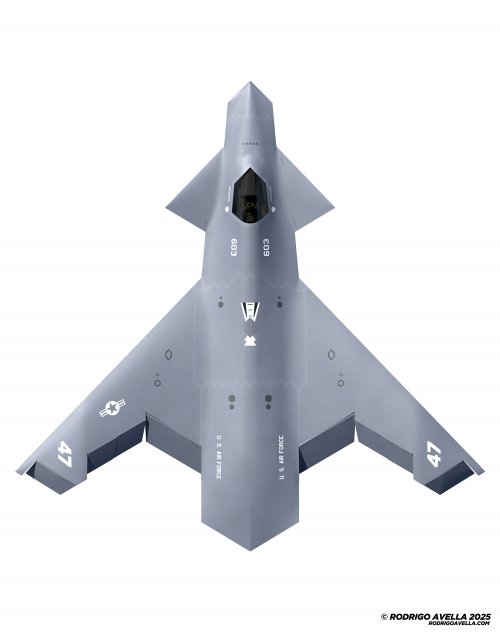
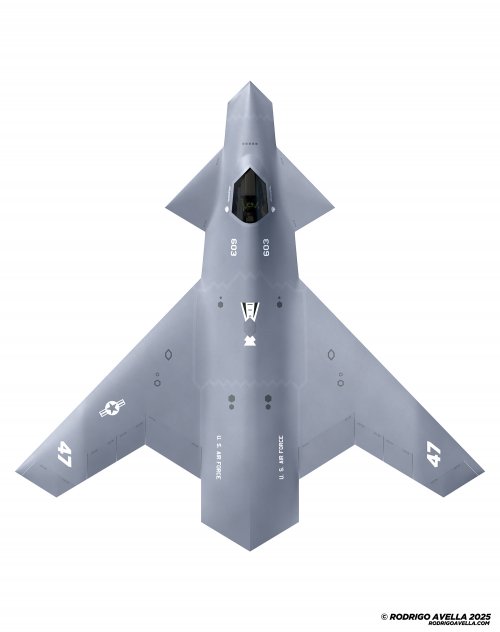
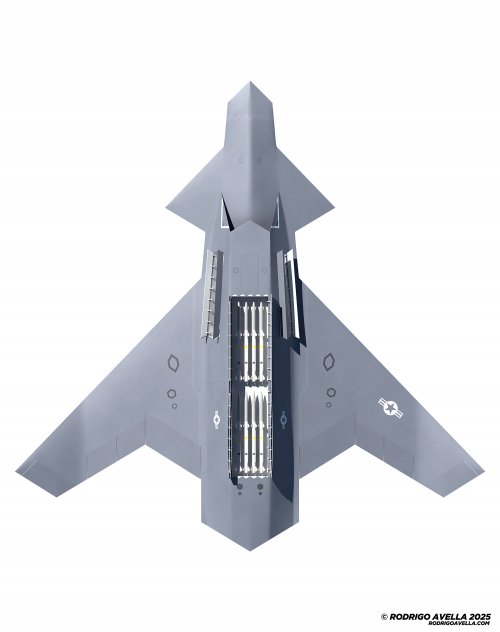
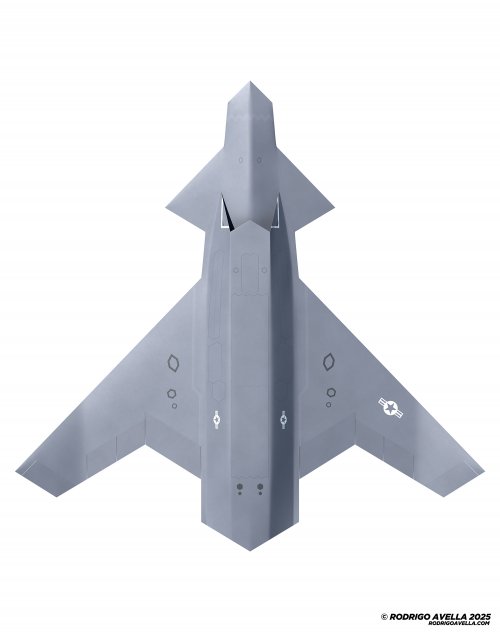
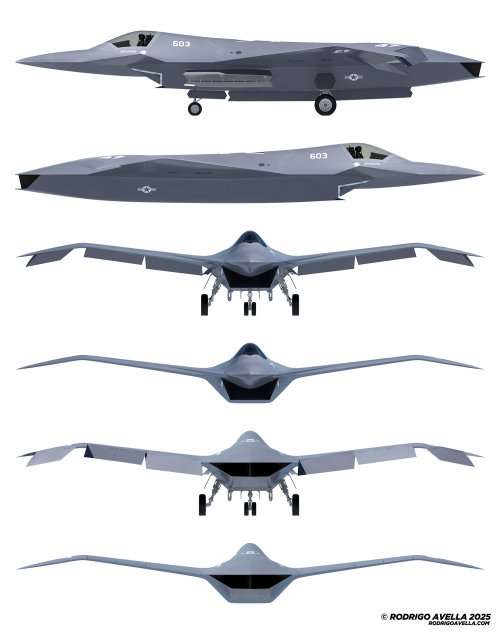

- Joined
- 30 May 2023
- Messages
- 664
- Reaction score
- 1,436
Magnificent. Especially the AAM loadout!
- Joined
- 30 May 2023
- Messages
- 664
- Reaction score
- 1,436
If I’m being greedy I would still love to see a variant with a flatter and wider central body with more conventional and separate intakes for the engines.
Also Rodrigo have you spun up any swing wing, vertical tail-less regional or medium range strike concepts? Thanks!
Keep up the beautiful art!
Also Rodrigo have you spun up any swing wing, vertical tail-less regional or medium range strike concepts? Thanks!
Keep up the beautiful art!
Rodrigo Avella
I really should change my personal text
- Joined
- 22 March 2017
- Messages
- 102
- Reaction score
- 1,011
Hi!If I’m being greedy I would still love to see a variant with a flatter and wider central body with more conventional and separate intakes for the engines.
Also Rodrigo have you spun up any swing wing, vertical tail-less regional or medium range strike concepts? Thanks!
Keep up the beautiful art!
Yes, I'm going to make a version with conventional, side-by-side air intakes.
On the other hand, I don't think the F47 is very wide. In the flag render, which I think is the least distorted and "most believable," it looks like a narrow aircraft.
All of McDonnell Douglas's studies from the 1990s were based on narrow aircraft, some of them twin-engine.
Even Boeing's own proposal for the ATF was a very narrow model.
Just as it's said that the Lockheed aircraft presented was an evolution of their F22 and F35, I think the F47 is based on McDonnell Douglas's studies (including the Bird of Prey and the X36) and perhaps a little on Boeing's ATF proposal.
Perhaps some of the engineers who participated in developing Boeing's proposal for the ATF were in their 20s in 1986 and are now directors holding decision-making positions.
If it were me, I would clearly see this as a vindication of what I thought was right when I was young in 1986.
But anyway, that's just my opinion.
I also want to make a version with side air intakes and more conventional exhaust outlets (taking into account the video presented by Pratt & Whitney of their variable-cycle engine). That will clearly result in a wider aircraft. An aircraft that will end up resembling my version of the FA-XX that I made in 2017, haha.
Regards and thanks for your comment!
Rodrigo Avella
I really should change my personal text
- Joined
- 22 March 2017
- Messages
- 102
- Reaction score
- 1,011
Hello again,If I’m being greedy I would still love to see a variant with a flatter and wider central body with more conventional and separate intakes for the engines.
Also Rodrigo have you spun up any swing wing, vertical tail-less regional or medium range strike concepts? Thanks!
Keep up the beautiful art!
It might not be noticeable due to the large wingspan, but the fuselage of this design is wider than that of an F-22.
And in terms of volume, it has 55% more than an F-22.
Regards!
Reddington777
ACCESS: Top Secret
- Joined
- 23 March 2025
- Messages
- 830
- Reaction score
- 2,746
As a proponent of the wide body design, I think proportionally, neither the X-36 nor any of the MDD drawings floated in this thread before were narrow or conventional per se. In fact of the MDD drawings I've seen posted here, almost all of the tailless ones ended up being flat and wide or conventionally shaped. This has been carrying through in the more recent Boeing released renders as well.All of McDonnell Douglas's studies from the 1990s were based on narrow aircraft, some of them twin-engine.
Even Boeing's own proposal for the ATF was a very narrow model.
Tailed ATF designs shouldn't really bear much weight on a tailless 6th gen design with greater range and volume requirements beyond design philosophies that a company may or may not prefer. In fact, I'd even argue that the X-32 wasn't even a narrow design.
I actually really liked your more recent F/A-XX model. I think it fits well with the kinda general designs we've seen being floated in the past 5 - 10 years.
Rodrigo Avella
I really should change my personal text
- Joined
- 22 March 2017
- Messages
- 102
- Reaction score
- 1,011
Hi!As a proponent of the wide body design, I think proportionally, neither the X-36 nor any of the MDD drawings floated in this thread before were narrow or conventional per se. In fact of the MDD drawings I've seen posted here, almost all of the tailless ones ended up being flat and wide or conventionally shaped. This has been carrying through in the more recent Boeing released renders as well.
Tailed ATF designs shouldn't really bear much weight on a tailless 6th gen design with greater range and volume requirements beyond design philosophies that a company may or may not prefer. In fact, I'd even argue that the X-32 wasn't even a narrow design.
I actually really liked your more recent F/A-XX model. I think it fits well with the kinda general designs we've seen being floated in the past 5 - 10 years.
View attachment 792979View attachment 792978
Yes, you might be right and the F47 might be a classic Dorito-style plane. I'm basing my opinion mainly on the render with the flag in the background. I see a plane that isn't very wide, but I could be wrong, and besides, you did a great job with the camera angles and analyzing perspectives.
From what I've been able to gather from some engineers at other companies, they highly doubt the F47 will ultimately have canards. They tell me that they literally increase the radar signature and make the plane look like a Christmas tree (their exact words).
As far as I know, both of them worked on sixth-generation fighter development for their respective companies.
And as I said, they both agree that the F47 won't be very pretty.
Obviously, for security reasons, my conversations were limited to what I just said.
But, from what I've discussed, the F47 might end up looking more like this model I made back in 2018, which is a version of my FA-XX but without canards (this model is the aircraft that appears in the AFResearchLab video "Air Force 2030 - Call to Action"
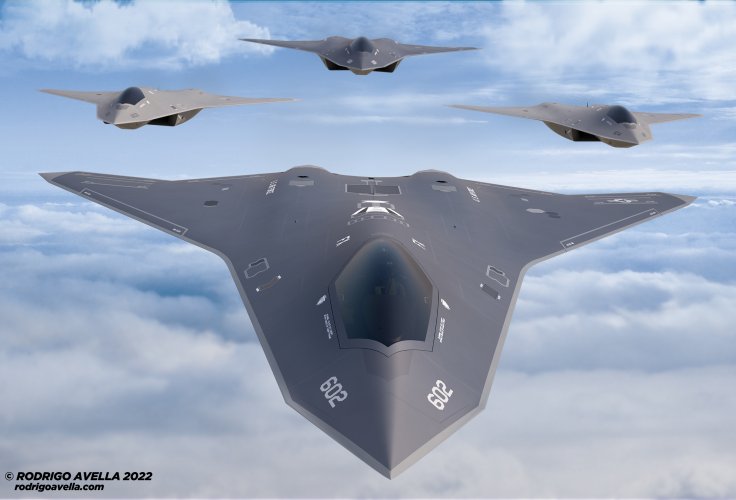
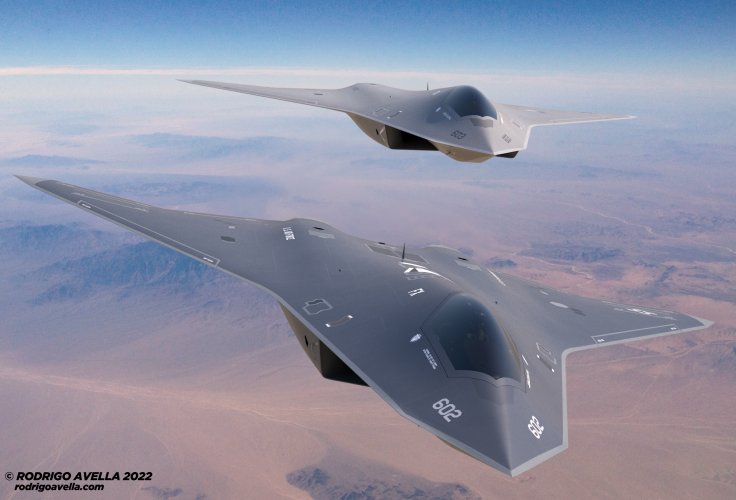
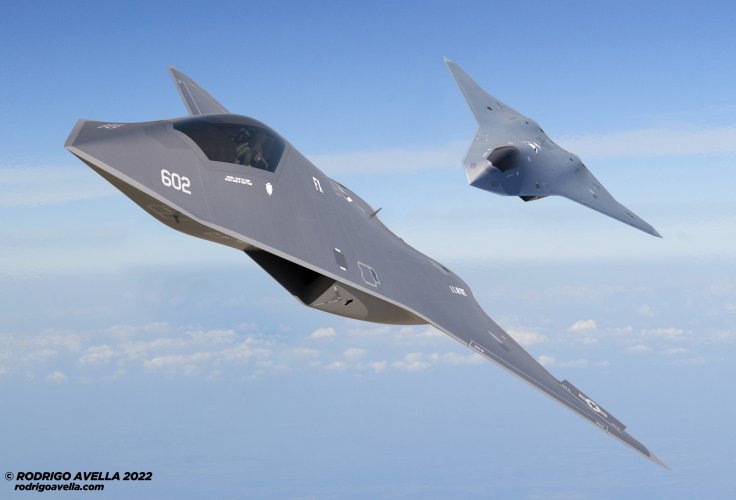
On another note, I'd love to do some renders of your model if you'd like. I don't know what program you use.
Best regards and congratulations on your work.

baseball801802
ACCESS: Restricted
- Joined
- 4 November 2025
- Messages
- 34
- Reaction score
- 46
Call me crazy but i thought that the f-47 was going to have a dorsal intake
Last edited:

- Joined
- 3 June 2011
- Messages
- 20,895
- Reaction score
- 19,084
Could still. Nobody who can say has spilled the beans.Call me crazy but i thought that the f-47 was going to have a dorsal intake
Reddington777
ACCESS: Top Secret
- Joined
- 23 March 2025
- Messages
- 830
- Reaction score
- 2,746
You know since you said this...From what I've been able to gather from some engineers at other companies, they highly doubt the F47 will ultimately have canards.
The canards (the canard trailing edge and the leading edge corner of the wings) have been the most baffling part of trying to line up the two cameras. I can get almost every single other edge to align except for that one. Huge thanks to @targetpractice for sending me his model to mess around with:
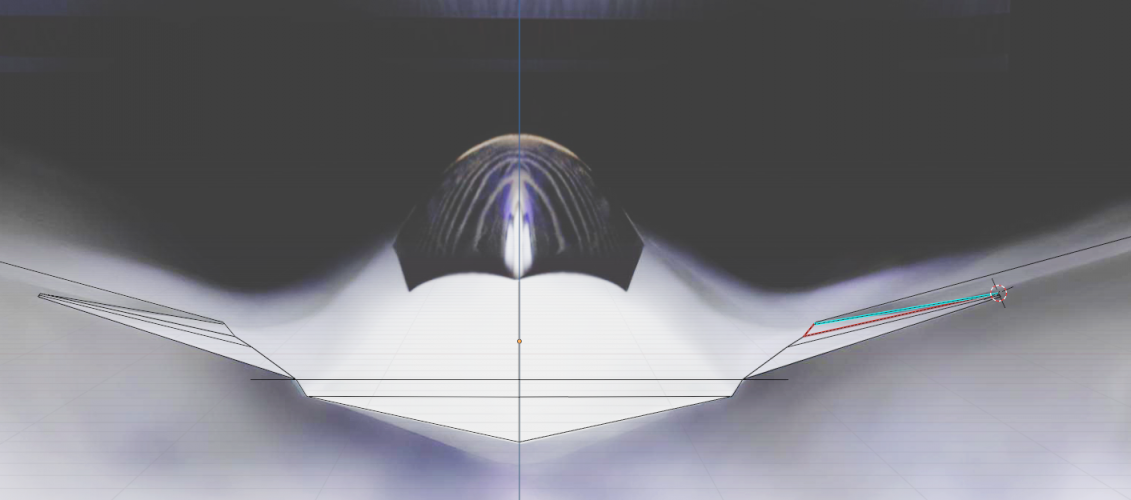

As you guys can see, the blue line is the line that aligns with the front view while the red lines are what aligns with the tilted view.
My initial idea to reason this away is that perhaps that section in both renders are different angles because that part is movable. Given the fact that there aren't any visible seams on the canards, it would make sense that in order for the canard to tip foward or backward, that section needs to move accordingly - hence possibly being at two different angles in both renders.
However. That particular corner isn't a simple up down rotation from one another. It's an extension + multi - planar rotation which makes no sense.
Staring at the pixel level colors and shading, the canards are definitely part of the underlying model, but the above problems with matching, the placement of the canards over the intakes, and the fact that the canards I modeled are lower than the wings while @VTOLicious suggested the canards being higher than the wings, it would seem that the canards don't make any sense on this fighter. Added to that the RCS penalty and it makes even less sense.
So yeah - it wouldn't be surprising that this model isn't fully representative of the production model.
That would be an honor. However, I think I need to do some more work. After messing around with targetpractice's model, I think I need to do a narrower planform like yours and targetpractice's models. I'm hoping to get it done over thanksgiving and I'll posted here along with the .blend file.On another note, I'd love to do some renders of your model if you'd like.
targetpractice
ACCESS: Confidential
- Joined
- 30 December 2024
- Messages
- 165
- Reaction score
- 616
More thoughts on canards. It took me a while to get my head round what you were pointing out Reddington777, but I see it, now!
- It could be there are no canards at all (which still feels unlikely to me, as I don't know that there is a precedent for this kind of misdirection in previous teasers)
- It could be that the middle of the canard is actually really thick, and the change you see is actually the middle hump obscuring the inner trailing edge. Rodrigo's render hints at this: https://www.secretprojects.co.uk/attachments/15-jpg.792894/
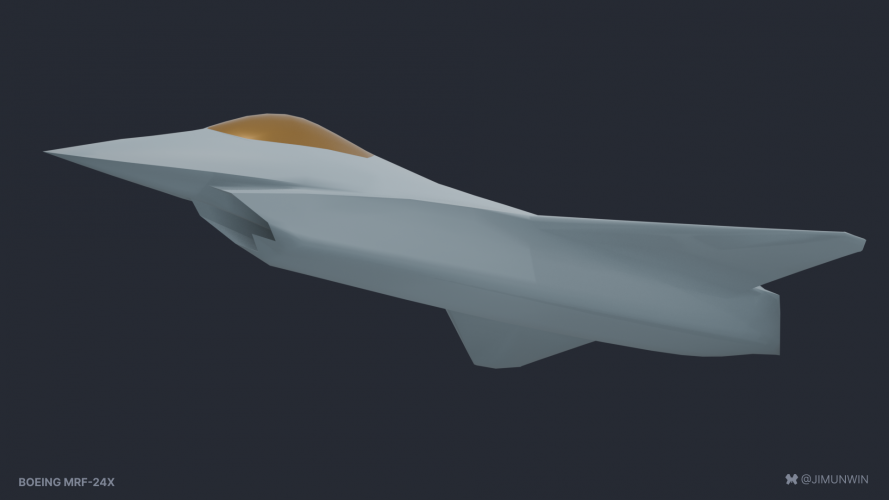
- Double chines seems unlikely, but could also be true, and would lend credence to the plane having a ventral intake. See attached render of the not quite the same MRF-24X. In this case though the wing and the nose are actually aligned.
Attachments
Last edited:
targetpractice
ACCESS: Confidential
- Joined
- 30 December 2024
- Messages
- 165
- Reaction score
- 616
Even as I'm writing this I'm thinking, if one were to go FULL OCCAM'S RAZOR, the simplest explanation is that the canards are photoshopped.

gojira007
ACCESS: Restricted
- Joined
- 17 November 2024
- Messages
- 19
- Reaction score
- 59
Did the industry insiders you talked with give any insight about why the F-47 might have a dihedral ?Hi!
Yes, you might be right and the F47 might be a classic Dorito-style plane. I'm basing my opinion mainly on the render with the flag in the background. I see a plane that isn't very wide, but I could be wrong, and besides, you did a great job with the camera angles and analyzing perspectives.
From what I've been able to gather from some engineers at other companies, they highly doubt the F47 will ultimately have canards. They tell me that they literally increase the radar signature and make the plane look like a Christmas tree (their exact words).
As far as I know, both of them worked on sixth-generation fighter development for their respective companies.
And as I said, they both agree that the F47 won't be very pretty.
Obviously, for security reasons, my conversations were limited to what I just said.
But, from what I've discussed, the F47 might end up looking more like this model I made back in 2018, which is a version of my FA-XX but without canards (this model is the aircraft that appears in the AFResearchLab video "Air Force 2030 - Call to Action"
Rodrigo Avella
I really should change my personal text
- Joined
- 22 March 2017
- Messages
- 102
- Reaction score
- 1,011
No, they didn't mention the dihedral. What surprised them most was that it had canards. They both agreed that it's an outdated design concept. I don't know if there are so many differences in design criteria between the various companies that two companies see canards as antiquated while the other uses them in its two most important projects: NGAD and FA-XX.¿Los expertos de la industria con los que usted habló le dieron alguna idea de por qué el F-47 podría tener un diedro?
I'd love to have a security pass with access to all the designs and concepts submitted by the three major companies, to see their differences.
I'm thinking about the last two major competitions: ATF and JSF. The proposals submitted by the different companies were completely different. So, let's just say it's already been proven that each one takes very different paths from the others.
But the use of canards would be something entirely different. Perhaps Boeing found a way to make them stealthy.
Cheers!
Reddington777
ACCESS: Top Secret
- Joined
- 23 March 2025
- Messages
- 830
- Reaction score
- 2,746
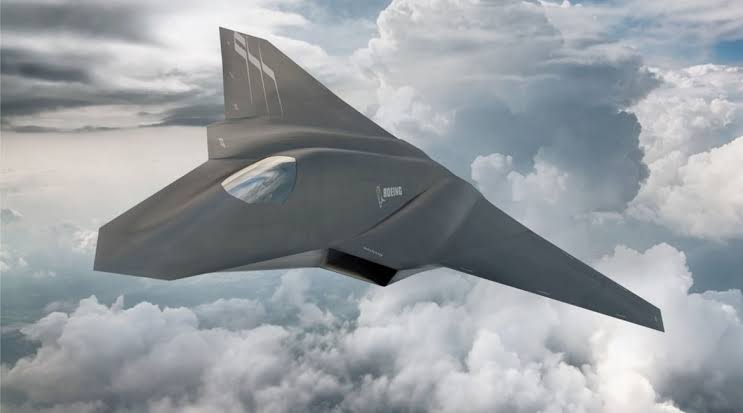
The fun part is that I believe the only render released (nearly 9 years ago) by Boeing showed a plane without canards. The one with canards was their render for F/A-XX.It could be there are no canards at all (which still feels unlikely to me, as I don't know that there is a precedent for this kind of misdirection in previous teasers)
The canard trailing edge is appears very strange as the front view makes it look crooked:It could be that the middle of the canard is actually really thick, and the change you see is actually the middle hump obscuring the inner trailing edge. Rodrigo's render hints at this: https://www.secretprojects.co.uk/attachments/15-jpg.792894/
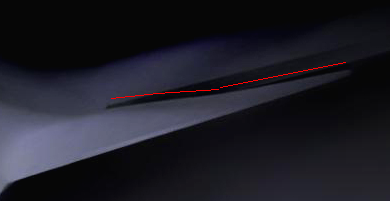
But now that you mention it, yeah the change in incidence seems to echo the same curvature as the shadow being casted so it could well be a beefy inner trailing edge.
And also - the more I play around with the camera angles, the more I think I might be wrong. The fuselage is indeed narrow. Not just that but I'm revolving around something like a 54 degree LE sweep which seems... really high. Maybe that's why it needs canards or something.
Interestingly, the J-20s canards are much larger than those seen on the Boeing image, something of great significance given that protruding structures can increase radar signature and increase drag. While canards can increase drag, the extent to which this happens largely depends upon their placement and size. This seems quite significant, as the canards on the PLA AF’s J-20 are much larger than the small canards visible on the available image of the F-47. It might make sense that the canards are added to the F-47 to support its air-to-air combat maneuverability, particularly given that the frame of the NGAD does not appear to have any fins or vertical structures typically used to better enable high-speed vectoring. Now the question is : does the canards have a lower raddar signature than any fins or vertical structures ? Idk if someone could answer that in theory, without knowing the size of said canards wingJ-20 canards sit on the side/behind the intakes... I chose Rafale as an example because the nose transions smooth into those "cheeks" above the intakes, where the canards are mounted. However, the wings are lower and the leading edge transitions into the side wall of the air intake. I wonder if this kind of arrangement woukd be feasible for a stealth fighter (...with DSI intakes?)
View attachment 792457
Scott Kenny
ACCESS: USAP
- Joined
- 15 May 2023
- Messages
- 19,515
- Reaction score
- 27,964
In the J20 thread there was a post about an analysis that showed no effect on RCS for the canards being deflected 20degrees or less.Interestingly, the J-20s canards are much larger than those seen on the Boeing image, something of great significance given that protruding structures can increase radar signature and increase drag. While canards can increase drag, the extent to which this happens largely depends upon their placement and size. This seems quite significant, as the canards on the PLA AF’s J-20 are much larger than the small canards visible on the available image of the F-47. It might make sense that the canards are added to the F-47 to support its air-to-air combat maneuverability, particularly given that the frame of the NGAD does not appear to have any fins or vertical structures typically used to better enable high-speed vectoring. Now the question is : does the canards have a lower raddar signature than any fins or vertical structures ? Idk if someone could answer that in theory, without knowing the size of said canards wing
dark sidius
ACCESS: Top Secret
- Joined
- 1 August 2008
- Messages
- 1,618
- Reaction score
- 1,710
More Arrow shape fuselage ? Can you make a draw with the 54 degree ?The fun part is that I believe the only render released (nearly 9 years ago) by Boeing showed a plane without canards. The one with canards was their render for F/A-XX.
View attachment 793290
The canard trailing edge is appears very strange as the front view makes it look crooked:
View attachment 793285
But now that you mention it, yeah the change in incidence seems to echo the same curvature as the shadow being casted so it could well be a beefy inner trailing edge.
And also - the more I play around with the camera angles, the more I think I might be wrong. The fuselage is indeed narrow. Not just that but I'm revolving around something like a 54 degree LE sweep which seems... really high. Maybe that's why it needs canards or something.
- Joined
- 5 May 2007
- Messages
- 2,016
- Reaction score
- 4,276
It's also not a given that both renders are of the same model. It's entirely possible that some design changes reached the art department in between the two graphics being produced.My initial idea to reason this away is that perhaps that section in both renders are different angles because that part is movable.
Reddington777
ACCESS: Top Secret
- Joined
- 23 March 2025
- Messages
- 830
- Reaction score
- 2,746
This is what im inclined to believe - or at least some iteration of it. There are things that line up well, but dont make sense and then there are parts that refuse to line up so either its not the same model or its been altered enough that even with the same underlying model, its not going to line up.It's also not a given that both renders are of the same model. It's entirely possible that some design changes reached the art department in between the two graphics being produced.
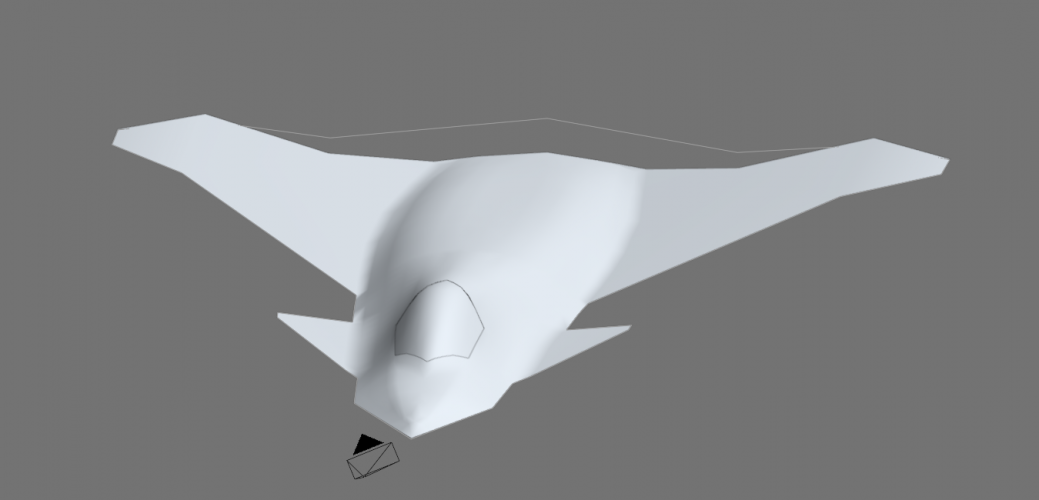
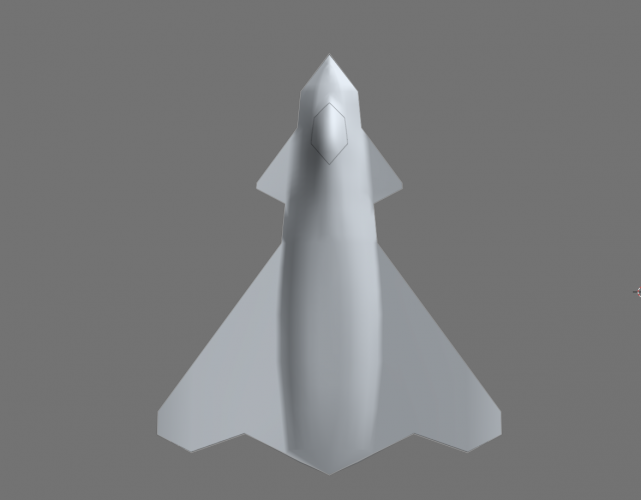
It ain't pretty. Too little fuselage too much wing. I'm of the opinion that the greater the sweep, the less reason there is to introduce aft reflectors against the fuselage hence why I stuck to the dorito form, but I'm still messing around with the camera angles while I'm working on it so... who knows.More Arrow shape fuselage ? Can you make a draw with the 54 degree ?
I considered a more arrow fuselage by moving the wings up more but i haven't found a way to align the cameras to make that work. I think im still having trouble altering the perspective for the tilted camera.
Last edited:
Rodrigo Avella
I really should change my personal text
- Joined
- 22 March 2017
- Messages
- 102
- Reaction score
- 1,011
Hi,
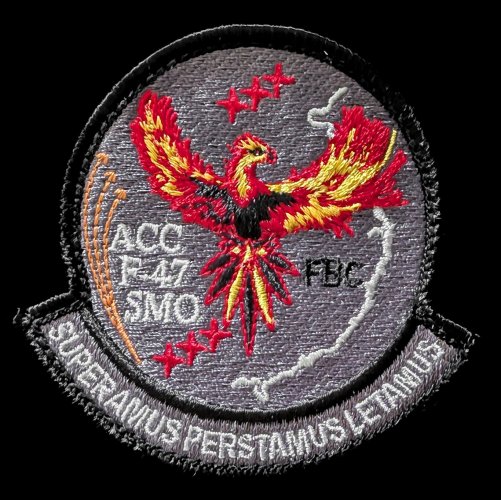
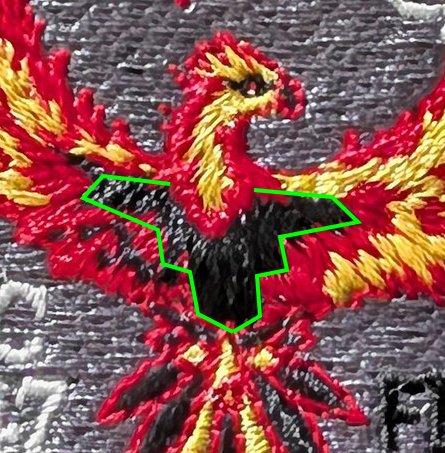
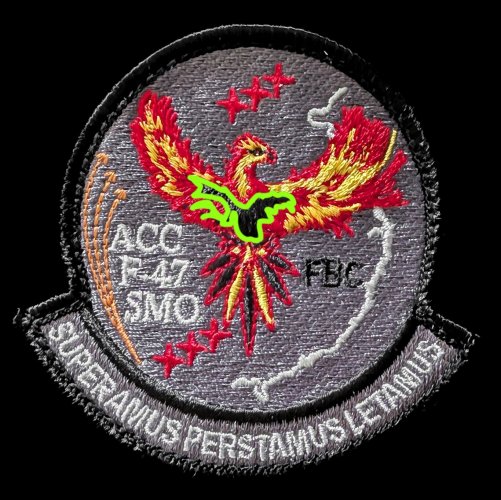
I've been looking at the Phoenix patch for the F-47, and I've noticed that the black figure on the bird's chest looks a lot like an airplane.
An airplane with side air intakes, no canards, and a large delta wing (highlighted in green).
I don't know if it's just my imagination, but I see an airplane there.
Best regards!


I've been looking at the Phoenix patch for the F-47, and I've noticed that the black figure on the bird's chest looks a lot like an airplane.
An airplane with side air intakes, no canards, and a large delta wing (highlighted in green).
I don't know if it's just my imagination, but I see an airplane there.
Best regards!

EmoBirb
ACCESS: Top Secret
- Joined
- 18 January 2025
- Messages
- 2,693
- Reaction score
- 6,919
and I've noticed that the black figure on the bird's chest looks a lot like an airplane.
Truly an Area 51 level aerodynamic layout then /s
I think they just wanted to make a cool Phoenix patch and thought red, yellow and black looked cool. The symbol of the Phoenix may carry weight and perhaps hint at the name, but I think that's about it. I don't see anything else in this patch but the bird and certainly nothing resembling any coherent shape in the black spot.
Last edited:
- Joined
- 30 May 2023
- Messages
- 664
- Reaction score
- 1,436
Hahaha yes Rodrigo I agree and had also noticed the same thing. Actually the person who mentioned the RCS spike similarities of that patch is what drew me to it.
Let’s just say I have stared at all of these patches and have extensive notes as all the patches seem oddly loaded with a lot of references. I will not share them, bc it literally sounds insane.
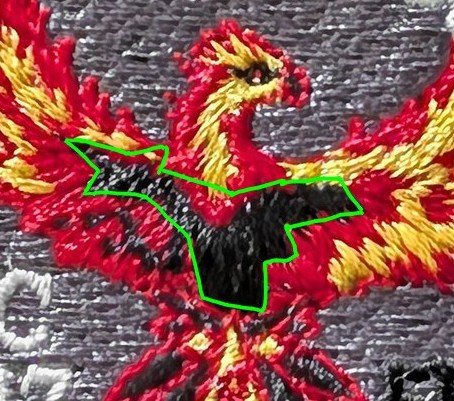
One final note, if you squint your eyes that black bit could also be a canarded aircraft with the nose to the left and the exhaust on the right.
Let’s just say I have stared at all of these patches and have extensive notes as all the patches seem oddly loaded with a lot of references. I will not share them, bc it literally sounds insane.
One final note, if you squint your eyes that black bit could also be a canarded aircraft with the nose to the left and the exhaust on the right.
Last edited:
gojira007
ACCESS: Restricted
- Joined
- 17 November 2024
- Messages
- 19
- Reaction score
- 59
To illustrate your final point:Hahaha yes Rodrigo I agree and had also noticed the same thing. Actually the person who mentioned the RCS spike similarities of that patch is what drew me to it.
Let’s just say I have stared at all of these patches and have extensive notes as all the patches seem oddly loaded with a lot of references. I will not share them, bc it literally sounds insane.
One final note, if you squint your eyes that black bit could also be a canarded aircraft with the nose to the left and the exhaust on the right.
Attachments
NightmareMoon3
ACCESS: Restricted
- Joined
- 17 October 2024
- Messages
- 7
- Reaction score
- 29
Getting closer
Similar threads
-
 CGI - Attempted reconstruction of ProjectFear possible Boeing AII-X demonstrator
- Started by CiTrus90
- Replies: 58
-

-
 Planes of the Future: Boeing's 1950 jet-transport designs
- Started by overscan (PaulMM)
- Replies: 1
-

-
 Boeing F-47 NGAD - Speculation and Theories
- Started by Bounce
- Replies: 2K