FighterJock
ACCESS: Above Top Secret
- Joined
- 29 October 2007
- Messages
- 6,699
- Reaction score
- 7,926
With the right sort of marketing the KF-21 will be an attractive purchase for countries put off from buying the F-35 for various reasons.


I wouldn't make that claim just yet, especially with the Turks moving quick with their KAAN, which may be a more attractive offer to countries who seek a heavier option.Agreed. The KF-21EX is going to dominate the market among those nations not buying F-35s.

Maybe...maybe notAgreed. The KF-21EX is going to dominate the market among those nations not buying F-35s.
KF-21 in its current form still has strings attached to the US as well with the F414 engines.
There is potential for this - see:I assume that the South Koreans are working on an indigenous turbofan engine to replace the F414.

 www.asianmilitaryreview.com
Probably pick up what the Gripen would've got and part of the Russians' businessMaybe...maybe not
For what market? Brazil has just introduced the JAS-39E/F which will be their primary fighter platform for decades to come. I don't believe the Mexicans will be interested for the small number of aircraft they may select to replace their F-5E/Fs.The Koreans should team up with Mexico or Brazil and set up a Latin America focused production line.
That doesn't make sense. If anything the Gripen is enjoying a resurgence with its E/F versions with Sweden, Brazil, Thailand and now Ukraine signing up. Arguably the KF21 falls into a gap whereby people who want something high end are going for the F-35 and those who want something simpler are going for the Gripen or other options including the F/T-50s or even second hand platforms.Probably pick up what the Gripen would've got
There's far more than just GE's F414 engines in the KF-21. Collins Aerospace provides the electrical power generation system, the environmental control system, the engine starters. PTI provides the aerial refueling system. General Dynamics provides the 20mm gun. Eaton provides the hydraulics and stores management systems. Curtiss-Wright provides critical avionics systems etc.I assume that the South Koreans are working on an indigenous turbofan engine to replace the F414.

For what market? Brazil has just introduced the JAS-39E/F which will be their primary fighter platform for decades to come. I don't believe the Mexicans will be interested for the small number of aircraft they may select to replace their F-5E/Fs.


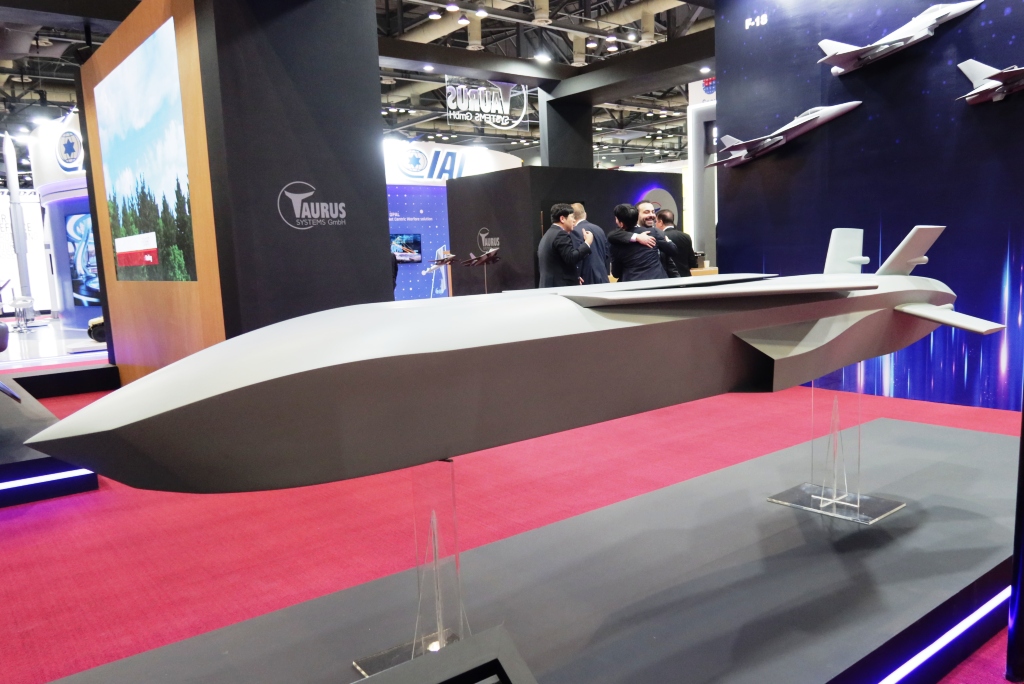
Taurus Systems' Proposal:
The system will be manufactured in Korea. The entire missile, from the structure to the engine, will be developed and manufactured without ITAR restrictions. Furthermore, the initial design and analysis work has been completed, and ground launch testing is scheduled to begin within the next 18 months. Integration onto any aircraft is expected for three years thereafter.
We plan to propose and provide this product for the FA-50/KF-21, with initial integration planned for the FA-50 and subsequent integration onto the KF-21.
IIRC The KF-21 bulkheads are made of an aluminium alloy not titaniumhow does Korea make the bulkheads for KF-21? Do they have an hydraulic press big enough to forge titanium for the airframe?
It looks nice, though visually it feels a bit like a chimera. Huge vertical stabilizers, smallish nose on a chubby front just don't really match on a boxy airframe.I can't help it, but the Boramae is simply gorgeous and in the EX version with IWB and ideally Korean engines it will be just perfect.
A balanced machine that, conceptually speaking, will cover the needs of most air forces in the world for many decades to come.

indeed.With the right sort of marketing the KF-21 will be an attractive purchase for countries put off from buying the F-35 for various reasons.
The KF-21 has the highest thrust to weight ratio of any fighter in the world.Without bays, it's simply meh for its substantial size, without any good excuse: you can get similar enough performance from a much smaller aircraft.
That is incorrect. It is vastly superior to the KF-16. The numbers above don't lie. The KF-21 performance is exceptional.Like, very frankly speaking, replacing KF-16 with it is almost ironic, as modern F-16V (not even something thorough like F-16E/F) delivers more, on a single engine.
You highlight the advantage of the KF-16 and F-15K sharing engines. Korea is thinking long term. Fast forward 20 years and both the FA-50 and KF-21 will use the same Korean indigenous engine. They will have similar cockpit layouts creating a nice high-low combination. The Gripen and Tejas have both moved from the F404 to F414. I can see the FA-50 moving from the F404 to the Korean F414 replacement.And while that single engine was shared betweek KF-16 and F-15K, that won't be the case anymore. And this makes it more damning: what wa the point of introducing twin F414 in this case, when you operate and continue to expand on F404 aircraft fleet?

It's more informative to compare Thrust/Weight ratios at combat mass with payload. Similar with fuel fraction.The KF-21 has the highest thrust to weight ratio of any fighter in the world.
The KF-21 fuel fraction is second only to the F-35A.
We probably should operate the first number at combat weight, not at empty, and overall - giving fuel/engine, adding TSFC, is more relevant.The KF-21 has the highest thrust to weight ratio of any fighter in the world.
The KF-21 fuel fraction is second only to the F-35A.
But it also has just one engine. And there is nothing wrong with going conformal and/or supersonic tanks (and dropping them).That is incorrect. It is vastly superior to the KF-16. The numbers above don't lie. The KF-21 performance is exceptional.
The F-16 has a very low fuel fraction. It would need two external fuel tanks just to match the KF-21 with only internal fuel. The F-16 with two wing tanks and a four missiles can't even break the sound barrier. While the KF-21 with 4 meteor and not needing the external tanks can go TWICE as fast.
Static thrust? Sure.The KF-21 has a higher thrust to weight ratio than both the supercruising F-22 and Eurofighter. The F414 engine is a supercruising engine being selected for the Lockheed supercruise demonstrator. The F414 has a lower bypass ratio than both the EJ200 and F119.
I think we already have a su-57 thread where people fight against windmills and fighter OEM statements. KF-21 was never even claimed to supercruise...It is pretty funny when people say the KF-21 can't supercruise.
The problem is time; KF-21 is already going to be in this state for the first... 1/3, at least, of its effective lifecycle. At worst it can be half.You highlight the advantage of the KF-16 and F-15K sharing engines. Korea is thinking long term. Fast forward 20 years and both the FA-50 and KF-21 will use the same Korean indigenous engine. They will have similar cockpit layouts creating a nice high-low combination. The Gripen and Tejas have both moved from the F404 to F414. I can see the FA-50 moving from the F404 to the Korean F414 replacement.
The Gripen "resurgence" will be more impressive when there is a sale to a new customer (not already a Gripen user) or someone not desperate for anything they can get.That doesn't make sense. If anything the Gripen is enjoying a resurgence with its E/F versions with Sweden, Brazil, Thailand and now Ukraine signing up. Arguably the KF21 falls into a gap whereby people who want something high end are going for the F-35 and those who want something simpler are going for the Gripen or other options including the F/T-50s or even second hand platforms.
Is it just me or KF-21 seem to have smaller radar than F-35 despite being the bigger aircraft?
The KF-21 is the smaller aircraft. The F-35A has a 13% heavier empty weight, 17% heavier MTOW and has 38% more internal fuel volume.Is it just me or KF-21 seem to have smaller radar than F-35 despite being the bigger aircraft?
The F-16 with two wing tanks and a four missiles can't even break the sound barrier.
 Btw. the Block 50 reaches M1.8 in the same configuration.
Internal fuel fraction is fine but KF-21 is lack of central fuel tank pylonThe KF-21 has the highest thrust to weight ratio of any fighter in the world.
The KF-21 fuel fraction is second only to the F-35A.
KF-21
Thrust: 44,000lb Empty: 26,015lb Fuel: 13,227 lb
T/W: 1.69
Fuel fraction: 33.7%
F-22
Thrust: 70,000lb Empty: 43,340 lb Fuel: 18,000 lb
T/W: 1.61
Fuel fraction: 29.3%
Gripen E
Thrust: 22,000lb Empty: 17,637 lb Fuel: 7,480 lb
T/W: 1.25
Fuel fraction: 29.8%
Rafale
Thrust: 34,000lb Empty: 21,720 lb Fuel: 10,362 lb
T/W: 1.56
Fuel fraction: 32.3%
Eurofighter
Thrust: 40,400lb Empty: 24,251 lb Fuel: 9,900 lb
T/W: 1.67
Fuel fraction: 29.0%
F-15EX
Thrust: 59,000lb Empty: 35,500 lb Fuel: 13,550 lb
T/W: 1.66
Fuel fraction: 27.6%
F-16V
Thrust: 29,400 Empty: 20,300 lb Fuel: 7,000 lb
T/W: 1.45
Fuel fraction: 25.6%
F-35A
Thrust: 43,000lb Empty: 29,300lb Fuel: 18,250lb
T/W: 1.47
Fuel fraction: 38.4%
That is incorrect. It is vastly superior to the KF-16. The numbers above don't lie. The KF-21 performance is exceptional.
The F-16 has a very low fuel fraction. It would need two external fuel tanks just to match the KF-21 with only internal fuel. The F-16 with two wing tanks and a four missiles can't even break the sound barrier. While the KF-21 with 4 meteor and not needing the external tanks can go TWICE as fast.
The KF-21 has a higher thrust to weight ratio than both the supercruising F-22 and Eurofighter. The F414 engine is a supercruising engine being selected for the Lockheed supercruise demonstrator. The F414 has a lower bypass ratio than both the EJ200 and F119.
It is pretty funny when people say the KF-21 can't supercruise.
The KF-21 photos already show the space for the internal weapon bays. No major redesign is needed. Add 1,000lb to the empty weight for the doors and the number are still exceptional.
You highlight the advantage of the KF-16 and F-15K sharing engines. Korea is thinking long term. Fast forward 20 years and both the FA-50 and KF-21 will use the same Korean indigenous engine. They will have similar cockpit layouts creating a nice high-low combination. The Gripen and Tejas have both moved from the F404 to F414. I can see the FA-50 moving from the F404 to the Korean F414 replacement.
A small air force might have T-50 and FA-50 combo, a larger air force might have a T-50 and KF-21 combo. Having the same engines and cockpits helps with training.
I still think Korea needs a major European partner and this would help gain access to an ITAR free engine. This would then rapidly increase the export potential.
I don't know how many times I have to reiterate this, but the main fleet the KF-21 is replacing is ROKAF's F-5s. not KF-16s. There are a handful of F-16 PBs in the mix, but the actual replacement of KF-16s will come in the late 2030s, ie EX, KF-XX, of whatever it will be called thenLike, very frankly speaking, replacing KF-16 with it is almost ironic, as modern F-16V (not even something thorough like F-16E/F) delivers more, on a single engine.

 www.fw-mag.com
The flame looks weird.View attachment 790561
A photo of a Meteor saying goodbye to a KF-21.
According to the user who discovered this photo, it was published in the September 2025 issue of a Korean military magazine called Defense and Technology.


 www.janes.com
 news.defcros.com
 www.edrmagazine.eu

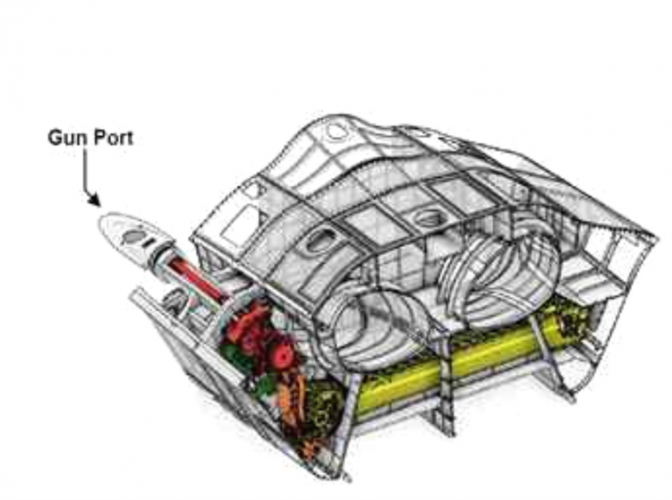
Not enough for 2k JDAMs, if the magazine of the gun system stays where it currently is.
Given how...unnatural this bag looks in this structure, i think it was always the plan.Quite frankly and looking at another well known east asian stealth fighter, I don't think dropping the gun further down the line would be overly controversial. It's certainly an option that's not fully out of the question, if that's what needs to be done to make room for more effective payload.
With the ammo box installed, there is hardly space for anything. So if/when they activate the IWB for the Block III variant, they'll remove the ammo box. Not sure if there will be space left elsewhere for a useful number of rounds. But @Maro.Kyo guessed 150: https://www.secretprojects.co.uk/th...n-indigenous-fighter-program.1686/post-411982Not enough for 2k JDAMs, if the magazine of the gun system stays where it currently is.
That is not the plan at all.Given how...unnatural this bag looks in this structure, i think it was always the plan.