Alternate Australian Defence Force 1970s Procurements?

Sure, but the core force structure remained intact with serviceable kit. Those projects were late and/or underdone with the Adelaides, LCH and Success, it's not as if nothing was done and what was done was expensive and worthless.
I agree the core force structure remained what i mean by mistakes is that we got equipment while capable and good, but don't have a capability of the ones that where originally planned which in turn would have been better for the adf in the long run
 
They are duds, but i would say bad procurement as they army needs landing craft for northern Australia and PNG. Thats why I suggest even if the Navy got LSM Mk2 the army would need LCHs also. Just look at today woth the army amphibious ship program.

Amphibious shipping is something else the Regular Army had create from scratch and grow for war service within a couple of years.
  • 1959 - 4 x LSM Mk1: 62m, 1,025t loaded
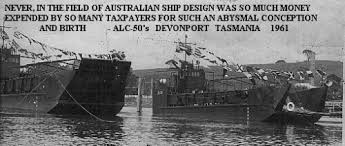
  • 1961 – 2 x ALC50 LCU: 24m, 145t loaded
  • 1965-7 & 72 – 15 x LCM-8: 22m, 111t loaded (modified beyond their design for independent operations)
  • 1968 – 16 x LCM-6: 17m, 65t loaded (RAN for Sydney, 8 sold in the early 70s)
  • 1971-4 8 x LCH: 44m, 517t loaded
With 15 LCM-8s it is ludicrous to build something as small as the LCHs when the LSM Mk2 fell over. The Army should have aimed as high as it could when adopting plan B.

Of course 4 x LSM Mk2, 15 x LCM-8 and 16 x LCM-6 would be the ideal path.

 
Amphibious shipping is something else the Regular Army had create from scratch and grow for war service within a couple of years.
  • 1959 - 4 x LSM Mk1: 62m, 1,025t loaded
  • 1961 – 2 x ALC50 LCU: 24m, 145t loaded
  • 1965-7 & 72 – 15 x LCM-8: 22m, 111t loaded (modified beyond their design for independent operations)
  • 1968 – 16 x LCM-6: 17m, 65t loaded (RAN for Sydney, 8 sold in the early 70s)
  • 1971-4 8 x LCH: 44m, 517t loaded
With 15 LCM-8s it is ludicrous to build something as small as the LCHs when the LSM Mk2 fell over. The Army should have aimed as high as it could when adopting plan B.

Of course 4 x LSM Mk2, 15 x LCM-8 and 16 x LCM-6 would be the ideal path.
Agree the army should have aimed higher when the LSM Mk2 fall through.
That would be quite handy amphibious shipping for our region post Vietnam
I wonder how the RAN keeping 2 to 3 of the 6 LST Mk3s they had in service would effect all this?
 
it's not as if nothing was done and what was done was expensive and worthless.
You mean like the UK ended up?


With 15 LCM-8s it is ludicrous to build something as small as the LCHs when the LSM Mk2 fell over. The Army should have aimed as high as it could when adopting plan B.
Wasn't there an argument between Army and RAN over the size of the ship that the Army could control?
 
Wasn't there an argument between Army and RAN over the size of the ship that the Army could control?

Yes, but I don't know where the demarcation line was. The Army operated LSM mk1 were just over 1,000t loaded, the mk2 was 4,000t and Navy operated and the LCH were over 500t loaded and initially Army operated. I suspect the Army could have ordered ships similar size to the LSM Mk1 or maybe a touch more which would be twice the capability of the LCHs.
 
I wonder how the RAN keeping 2 to 3 of the 6 LST Mk3s they had in service would effect all this?

Tarakan suffered 2 explosions, and Labuan's Antarctic voyages were extremely hard, I recall seeing a story where the sailors described the ship's hull visibly twisting in the huge seas near Heard Island. LST3008 & 3014 were used to dump ammo after the war and were sold for scrap as early as 1950. HMAS Lae and LST3022 were placed in reserve in 1946, Lae sold for scrapping in 1955 and LST3022 sold in 1954 for further use.

These are indeed a missed opportunity, surely 1 or 2 could have been retained in reserve and supplied by cannibalised spares and dragged out again in the late 50s as the Defence policy and strategy changed. However, this all happened in the immediate postwar and these ships wouldn't really start to be seen as useful assets until maybe 1957 when conscription was reduced, the ARA stood up the permanent Brigade Group and the RAR battalions were posted to Malaya. That's the hard part, getting these cheap and disposable ships through a period when neither the RAN nor the Army wanted them because they didn't fit the war they planned to fight.
 
Last edited:
These are indeed a missed opportunity, surely 1 or 2 could have been retained in reserve and supplied by cannibalised spares and dragged out again in the late 50s as the Defence policy and strategy changed. However, this all happened in the immediate postwar and these ships wouldn't really start to be seen as useful assets until maybe 1957 when conscription was reduced, the ARA stood up the permanent Brigade Group and the RAR battalions were posted to Malaya. That's the hard part, getting these cheap and disposable ships through a period when neither the RAN nor the Army wanted them because they didn't fit the war they planned to fight.
Agreed if 2 could be left in reserve till the late 50s they would have been handy to have.
In the empire defence to long haul document it was stated the navy was to have a landing ship infantry so maybe under that premise then 2 LST could have been kept.
 
Agreed if 2 could be left in reserve till the late 50s they would have been handy to have.
In the empire defence to long haul document it was stated the navy was to have a landing ship infantry so maybe under that premise then 2 LST could have been kept.

I'm very wary of the tail wagging the dog, especially when under strict financial and manpower limitations like the ADF (such a handy acronym) was in the 50s and 60s. Keeping these things in reserve will take up scarce resources at a time when the 4th Daring Waterhen was cancelled after being laid down and Sydney's refit to bring it up to the standard of Melbourne was also cancelled.

Perhaps they could be operated by a civilian company for those few years under some sort of lease agreement, indeed they might remain under civilian operation when the Army/Navy starts using them in the late 50s. After all, Army aviation started with Army pilots flying chartered civilian aircraft in 1957.
 
Perhaps they could be operated by a civilian company for those few years under some sort of lease agreement, indeed they might remain under civilian operation when the Army/Navy starts using them in the late 50s. After all, Army aviation started with Army pilots flying chartered civilian aircraft in 1957.
There were plans for a Royal Australian Fleet Auxiliary post war with HMAS supply supposed to be RAFA Tide Australia and the first ship of the RAFA.
This didn't go ahead i think cause of finical and maybe manpower reasons. Maybe if this went ahead the LSTs could be operated by the RAFA
 
There were plans for a Royal Australian Fleet Auxiliary post war with HMAS supply supposed to be RAFA Tide Australia and the first ship of the RAFA.
This didn't go ahead i think cause of finical and maybe manpower reasons. Maybe if this went ahead the LSTs could be operated by the RAFA

TBH I think the growth of Australia's amphibious capability was in theory going OK until the LSM Mk2, although in practice the ACL50 really let the side down. Defence policy and strategy didn't really demand amphibious capability until 1955 when the RAR was posted to Malaya and defence policy and strategy pivoted over a period of about 4 years from fighting WW3 in the Mid East with the 3rd AIF Corps of 2 CMF divisions to fighting limited wars with the Regulars. Even then the amphibious capability was that of logistic support in remote and under-developed areas rather than a sea crossing and landing in force against an enemy, so the LSM-1 and (in theory) ALC50 LCU were well suited. The smaller amphibious vessel capability was bulked up in the late 60s, setting Australia up for a jump in amphibious capability to go along with its newly emerging post-Vietnam Defence policy and strategy.

Alas that step wasn't taken and the LSM-1 and ALC-50 LCU were replaced by LCHs with a capability in between them. :(

Edit. FWIW In 1964 LSM-1 Brudenell White navigated the Sepik River PNG to the May River junction – a distance of 595km. No other ship of this size has ever reached so far up this river, either before or since. In 1970 an ALC50 and two LCM-8s navigated the Sepik River to the West Papua border, some 885km. In 1973 and 1974 LCHs Tarakan and Wewak undertook 790 km passage up the Fly River PNG to the river port of Kiunga, possibly the longest river transit undertaken by ships of the RAN.
 
Last edited:
Alas that step wasn't taken and the LSM-1 and ALC-50 LCU were replaced by LCHs with a capability in between them. :(

Edit. FWIW In 1964 LSM-1 Brudenell White navigated the Sepik River PNG to the May River junction – a distance of 595km. No other ship of this size has ever reached so far up this river, either before or since. In 1973 and 1974 LCHs Tarakan and Wewak undertook 790 km passage up the Fly River PNG to the river port of Kiunga, possibly the longest river transit undertaken by ships of the RAN.
Agree the cancellation of the LSM Mk2 and building the LCHs was not a good dedication and was a downgrade in capability.
So not only handing for coastal operators but also riverine operations too
 
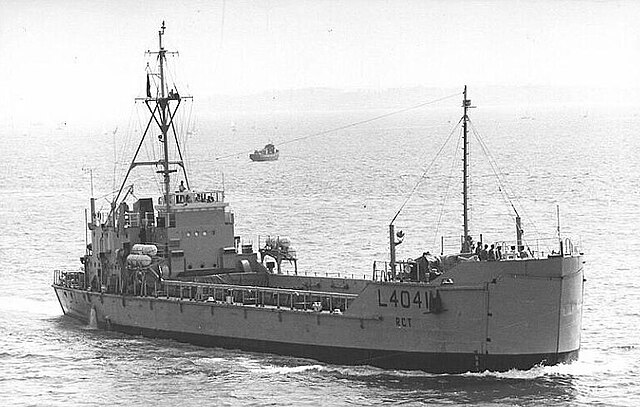
It looks as if the Army was going to get a British Mark 8 Landing Craft Tank in the late 50s but Suez in 1956 meant that the British Army picked up 12 LCT-8s that the RN wasn't using. That said 5 LCT-8 were struck from British service in 1958 and another 4 in 1960. While 4 ex-US LSM-1s is better than 1 LCT-8, all 5 wold be even better, and good ALC50s would be better again, but now I'm getting over excited.

https://theforge.defence.gov.au/art...australias-tank-capable-amphibious-capabilityhttps://researchcentre.army.gov.au/sites/default/files/2019-11/aaj_118_mar_1959.pdf
British LCT-8 from Wiki.
1761789733262.png
 
It looks as if the Army was going to get a British Mark 8 Landing Craft Tank in the late 50s but Suez in 1956 meant that the British Army picked up 12 LCT-8s that the RN wasn't using. That said 5 LCT-8 were struck from British service in 1958 and another 4 in 1960. While 4 ex-US LSM-1s is better than 1 LCT-8, all 5 wold be even better, and good ALC50s would be better again, but now I'm getting over excited.

https://theforge.defence.gov.au/art...australias-tank-capable-amphibious-capabilityhttps://researchcentre.army.gov.au/sites/default/files/2019-11/aaj_118_mar_1959.pdf
British LCT-8 from Wiki.
View attachment 789888
Interesting maybe 4 LSM Mk1s and 2x LCT Mk8s in the 60s would be a quite handy force
 
Interesting maybe 4 LSM Mk1s and 2x LCT Mk8s in the 60s would be a quite handy force

It seemed like an either-or proposition in any case they're both about the same size so would overlap whereas the ALC50 is smaller and handier so would complement the LSM-1s, if they weren't giant piles of garbage that is! Their failure is really starting to bother me, given how they're the 2nd piece of the puzzle and as such likely had a significant knock-on effect.

I'm a bit surprised by the 'pedestrian' employment of scarce amphibious resources in fetching and carrying Army 'crap', rather than training combat arms how to load and unload over the beach. Then again, I suppose they can't be laid up doing nothing between exercises and the Army did have remote places they needed to supply.
 
It seemed like an either-or proposition in any case they're both about the same size so would overlap whereas the ALC50 is smaller and handier so would complement the LSM-1s, if they weren't giant piles of garbage that is! Their failure is really starting to bother me, given how they're the 2nd piece of the puzzle and as such likely had a significant knock-on effect.

I'm a bit surprised by the 'pedestrian' employment of scarce amphibious resources in fetching and carrying Army 'crap', rather than training combat arms how to load and unload over the beach. Then again, I suppose they can't be laid up doing nothing between exercises and the Army did have remote places they needed to supply.
The LCT Mk.8s seem to be able to carry a bit more tonnage of cargo other than that they are the same, though i would say the LCT mk8s would be better just for cargo capacity.
Yeah the ALC50s being a bad isnt good and definitely hurt

Yeah the remote areas do need supply but you would think someone would suggest that the army would start training soldiers on how to combat unload off these vessel
 
The LCT Mk.8s seem to be able to carry a bit more tonnage of cargo other than that they are the same, though i would say the LCT mk8s would be better just for cargo capacity.
Yeah the ALC50s being a bad isnt good and definitely hurt

I think a pair of US LCUs, at 180t bigger than both the ALC50 and LCT-8 would be a good buy instead of the ALC50. Either that or have the ALC50 be well designed and built. That way when the LCT 8 (and 6s) arrive in the later 60s they won't have to the job of bigger craft.

Yeah the remote areas do need supply but you would think someone would suggest that the army would start training soldiers on how to combat unload off these vessel

It turns out the LSMs were used regularly for exercises. Exercise Carbine in 1963 involved a sea convoy with newly refitted HMAS Sydney in the trooping role and Centurions in LSMs that went from Sydney to Tin Can Bay, landed and conducted an exercise. Between exercises these vessels did grunt work, just like RAAF transport planes did.
 
I think a pair of US LCUs, at 180t bigger than both the ALC50 and LCT-8 would be a good buy instead of the ALC50. Either that or have the ALC50 be well designed and built. That way when the LCT 8 (and 6s) arrive in the later 60s they won't have to the job of bigger craft.


It turns out the LSMs were used regularly for exercises. Exercise Carbine in 1963 involved a sea convoy with newly refitted HMAS Sydney in the trooping role and Centurions in LSMs that went from Sydney to Tin Can Bay, landed and conducted an exercise. Between exercises these vessels did grunt work, just like RAAF transport planes did.
Would be nice if the ALC50 where designed and built better, as i prefer if possible that Australia should design and build its own gear instead of buying from overseas, especially in this time period. that being said the LCU's would have been a good buy.

That good then, i wonder how much further that could go with the 58 defence department merger?

That would make sense, like the RAAF Transport planes
 
This has been an interesting thread, a 2 track process of retaining and improving core capabilities while growing new capabilities from scratch. We've pored over helicopters and amphibious ships but barely glanced at the F111, Mirage or Oberons.
 
This has been an interesting thread, a 2 track process of retaining and improving core capabilities while growing new capabilities from scratch. We've pored over helicopters and amphibious ships but barely glanced at the F111, Mirage or Oberons.
Definitely has been I've learnt heaps.
With the F111s its was the best option I would have liked another 12 to bring the total to 36. Though I also like the A5C for an earlier in service date.
With the mirages I read in the raaf mirage story that we thought about going down the line of the Swiss with American radar and falcon missiles. I wonder if this was a better option have the original armament.
Could have red top been installed on the mirage.
 
With the F111s its was the best option I would have liked another 12 to bring the total to 36. Though I also like the A5C for an earlier in service date.

Same. What might be done is buying 6 or 8 F111As in 1981 instead of 4, just to pad out the numbers a bit. I'd also like to see more than 10 Pave Tacks acquired, we'd really need 20.

With the mirages I read in the raaf mirage story that we thought about going down the line of the Swiss with American radar and falcon missiles. I wonder if this was a better option have the original armament.

The USAF found the Falcon much worse than the 9B Sidewinder in combat in Vietnam, and rewired the F4Ds for the old Sidewinders in theatre.


Could have red top been installed on the mirage.

The Red Top isn't like the Sidewinder, it's a much bigger and potentially capable missile more akin to the R530 and even the Sparrow. However this capability relied on the missile seeker being slaved to the radar, like it was on the Lightning AI23B, which costs money and is why British Phantoms didn't use the Red Top and I suspect why it wasn't used more widely. I also suspect that it's way too have for the outer wing pylons, the 9L Sidewinder was which is why the Narra Mahic 2 was selected. It's also a heavy missile which would make the Mirage even more sluggish on hot days.
 
Same. What might be done is buying 6 or 8 F111As in 1981 instead of 4, just to pad out the numbers a bit. I'd also like to see more than 10 Pave Tacks acquired, we'd really need 20.
That is one possibility or a 2nd batch of 12 before production ends in the mid 70s. Then some F-111As in the 80s as attrition replacement for the pigs that have been written off.
100% agree with the Pave Tracks possibly even 20+ for the F-111 fleet plus more if we kept the F4s
According to this britmodler post https://www.britmodeller.com/forums...8360-rf-111c-and-f-111g-loadouts-and-colours/
The F-111Cs were cleared to use the GBU-15 and AGM-88 but they were never purchased, if this is true i would like to see these purchased to increase the pigs stand off weaponry and survivability in the 90s and 00s.


The Red Top isn't like the Sidewinder, it's a much bigger and potentially capable missile more akin to the R530 and even the Sparrow. However this capability relied on the missile seeker being slaved to the radar, like it was on the Lightning AI23B, which costs money and is why British Phantoms didn't use the Red Top and I suspect why it wasn't used more widely. I also suspect that it's way too have for the outer wing pylons, the 9L Sidewinder was which is why the Narra Mahic 2 was selected. It's also a heavy missile which would make the Mirage even more sluggish on hot days.
Is there any way to improve the armament of the Mirage IIIO or just leave them as is
 
That is one possibility or a 2nd batch of 12 before production ends in the mid 70s. Then some F-111As in the 80s as attrition replacement for the pigs that have been written off.

By the mid 70s Australia had a gutfull of F111s, they'd arrived 6 years late, way over budget and the crises they were bought to deal with had been and gone. That's why I think we'd need to cool down a bit before buying a few more.

The F-111Cs were cleared to use the GBU-15 and AGM-88 but they were never purchased, if this is true i would like to see these purchased to increase the pigs stand off weaponry and survivability in the 90s and 00s.

The GBU15 is a kit attached to a 2,000lb Mk84 bomb, of which we bought plenty. I agree that we would have been well served to buy a few kits for training, but we were using LGBs as our guided bomb so the GBU15 doesn't add much over and above that.

The Classic Hornets used the AGM88 from 2004, I'd suggest we get a few AGM45 Shrikes with the F111s in the 70s which would be more than enough to deal with the radars in the region for decades.

Is there any way to improve the armament of the Mirage IIIO or just leave them as is

They used the 9B sidewinders used by the Avon Sabres for well over 20 years before buying R550 Magics 2s and only using them for about 5 years. Better Sidewinders became available from the mid-late 60s, indeed 9Bs could be run through a factory in Germany from 1969 to be converted 9B FGW.2 with solid state electronics (instead of vacuum tubes), carbon dioxide seeker cooling, a new nose dome and superior optical filtering.
 
By the mid 70s Australia had a gutfull of F111s, they'd arrived 6 years late, way over budget and the crises they were bought to deal with had been and gone. That's why I think we'd need to cool down a bit before buying a few more.
I forgot how bad the initially the F111Cs acquisition, looking back with to much hindsight with how good the pigs turned out to be. Is there any chance that the original order could be 36 instead of 24 or would cost to much for the budget

The GBU15 is a kit attached to a 2,000lb Mk84 bomb, of which we bought plenty. I agree that we would have been well served to buy a few kits for training, but we were using LGBs as our guided bomb so the GBU15 doesn't add much over and above that.

The Classic Hornets used the AGM88 from 2004, I'd suggest we get a few AGM45 Shrikes with the F111s in the 70s which would be more than enough to deal with the radars in the region for decades.
The GBU-15 would allow more stand off range than paveways LGB, plus the TV guidance allows for more mission flexibility.
I like the idea about the AGM45 shrikes for in the 70s. what about AGM78 standard ?
They used the 9B sidewinders used by the Avon Sabres for well over 20 years before buying R550 Magics 2s and only using them for about 5 years. Better Sidewinders became available from the mid-late 60s, indeed 9Bs could be run through a factory in Germany from 1969 to be converted 9B FGW.2 with solid state electronics (instead of vacuum tubes), carbon dioxide seeker cooling, a new nose dome and superior optical filtering.
Sounds good and probably should have been done. Could the AIM7 go on the center pylon for the SARH Missile instead?
 
Is there any chance that the original order could be 36 instead of 24 or would cost to much for the budget

I have a vague idea that 36 A5C were going to cost the same as 24 F111, about $220m to operational service.

The GBU-15 would allow more stand off range than paveways LGB, plus the TV guidance allows for more mission flexibility.

Sure, but those are percentage improvements that could be quickly integrated if needed.

like the idea about the AGM45 shrikes for in the 70s. what about AGM78 standard ?

That was a vastly more expensive weapon and I this is best used with more specialised aircraft. It's another one of those weapons that we could get hold of if we needed it but is overkill to have in stock without a specific requirement.

Sounds good and probably should have been done. Could the AIM7 go on the center pylon for the SARH Missile instead?

I doubt there Mirage radar would handle a sparrow, and in any case by the 70s new versions of the Sidewinder had expanded engagement envelopes making the sparrow less vital. If Sparrows are needed keeping the Phantom would do the job.

What Sidewinders did the Phantoms have when we leased them?
 
Has anyone got a copy of Hopkins' History of the RAAC? I have a nagging memory that at some point Australia had a small number of LVT amtracks, but I can't nail it down. I think maybe it was in Hopkins.
 
I have a vague idea that 36 A5C were going to cost the same as 24 F111, about $220m to operational service.
So to get 36 F-111C we would need to spend an extra $110m (220/24 = 9.17*36 = 330). So would need a bigger budget for the RAAF im guessing then.
Sure, but those are percentage improvements that could be quickly integrated if needed.
That is true but it is always better to have the capability and the personal trained to use said capability than having to quickly integrate and train for it.
I doubt there Mirage radar would handle a sparrow, and in any case by the 70s new versions of the Sidewinder had expanded engagement envelopes making the sparrow less vital. If Sparrows are needed keeping the Phantom would do the job.
Could we have put an American Sparrow capable radar in them when we built them in the 60s? Im just thinking of different ways to improve the Mirage as it enter services, though the upgraded AIM-9B should be a priority in the 70s.
Has anyone got a copy of Hopkins' History of the RAAC? I have a nagging memory that at some point Australia had a small number of LVT amtracks, but I can't nail it down. I think maybe it was in Hopkins.
No idea how many we had, but the CMF RAAC unit 15th Northern River Lancers operated them until 1956 when it meagered with 1st Royal New South Wales Lancers
 
No idea how many we had, but the CMF RAAC unit 15th Northern River Lancers operated them until 1956 when it meagered with 1st Royal New South Wales Lancers

Thanks for the reference.

I don't know how many vehicles they had, but in 1954 they conducted an exercise with eight LVT(a)4s, five LVT4s at Stockton Bight that turned into a disaster where 3 men died and five LVT(a)4s, one LVT4 were sunk. I imagine that in the absence of replacement vehicles that disaster was pretty much the end LVTs in the Australian Army, despite their successes in WW2.

There probably were not enough LVTs in service up to 1954 to make buying a similar size batch of replacements worthwhile.
 
Thanks for the reference.

I don't know how many vehicles they had, but in 1954 they conducted an exercise with eight LVT(a)4s, five LVT4s at Stockton Bight that turned into a disaster where 3 men died and five LVT(a)4s, one LVT4 were sunk. I imagine that in the absence of replacement vehicles that disaster was pretty much the end LVTs in the Australian Army, despite their successes in WW2.

There probably were not enough LVTs in service up to 1954 to make buying a similar size batch of replacements worthwhile.
No probs
That sounds like a disaster and a half. Which sucks cause ive always thought that the army should have got a LVT replacement as they would have fitted right in with the way the army was heading with the LSMs, ALC-50s and other landing craft.
 
No probs
That sounds like a disaster and a half. Which sucks cause ive always thought that the army should have got a LVT replacement as they would have fitted right in with the way the army was heading with the LSMs, ALC-50s and other landing craft.

The LVT-5 didn't enter US service until 1956 so likely wouldn't be available to Australia for a couple of years which is a bit of a gap in capability. I'd suggest the Army would need to quickly get some more LVT-4s from the US or UK to keep the capability alive in the CMF during the transfer of 'power' from the CMF to the ARA from the late 50s. If the capability doesn't exist in the big CMF in the late 50s it's not going to be picked up by the tiny but growing ARA.
 
Last edited:
The LVT-5 didn't enter US service until 1956 so likely wouldn't be available to Australia for a couple of years which is a bit of a gap in capability. I'd suggest the Army would need to quickly get some more LVT-4s from the US or UK to keep the capability alive in the CMF during the transfer of 'power' from the CMF to the ARA from the late 50s. If the capability doesn't exist in the big CMF in the late 50s it's not going to be picked up by the tiny but growing ARA.
It would be a nice capabilty for the ARA to have in the 60s
 
It would be a nice capabilty for the ARA to have in the 60s

It would, but the ARA was growing from virtually nothing, as late as 1949 it had 3 inf bts, 1 armd regt and 1 arty regt. It didn't formalise a Brigade Group until 1957 and didn't become a major part of a Division until 1960. When I thinkb of all the stuff the ARA needed to do from 1955-65 getting a sqn of amtracks into the OOB looks like a pretty low priority.
 
The LVT-5 is a very different beast than an LVT-4, though. Holds a whole platoon of troops instead of a squad and change. So it's effectively a Higgins Boat that can drive itself ashore.
 
The LVT-5 is a very different beast than an LVT-4, though. Holds a whole platoon of troops instead of a squad and change. So it's effectively a Higgins Boat that can drive itself ashore.

That's true, but it's the LVT thats in production in the 50s, like the Centurion and British wheeled AFVs bought in that decade.
 
Has anyone got a copy of Hopkins' History of the RAAC? I have a nagging memory that at some point Australia had a small number of LVT amtracks, but I can't nail it down. I think maybe it was in Hopkins.
We did and there is one in the East Point Museum in Darwin.
 
I love the F-111 but feel it was the wrong aircraft at the wrong time, and came with a massive opportunity cost.

Australia tends to delay procurements, supposedly to wait for transformational capabilities to become available, but the truth is it's usually a cost saving measure kicking the procurement down the road.

This theme repeats over and over, but sticking to the discussion on the F-111, it could have been procured quite easily as a follow on for whatever supplemented or replaced the Canberra during the late 70s, considering that the search for a replacement started in 1954.

Canberra is supplemented from the late 50s with one of the V bombers, and replaced by the mid 60s with A-5s. The V bomber is replaced in the 70s with the F-111, but a later model, maybe the F-111F. The A-5 is replaced in the 80s with additional F-111 or maybe in the 90s with F-15E, or if the RAAF sticks with Dassault for the Mirage 3, maybe the Mirage 2000D.

There was a proposal for a Jaguar buy in the 70s, of up to 100 airframes. I am not sure where this fit in, possibly as a strike option permitting a smaller number of high-end fighters and bombers, as well as serving as a lead in fighter trainer.
 
The romantic in me would love RAAF V bombers, but given the £200m cap on the Defence budget at the time I'd think getting the Melbourne refitted and equipped with a new generation of aircraft would be totally abandoned if they were acquired. V bombers strike me as a but like the RAN's strike carrier ideas of 1964, a huge expense that would unbalance the entire ADF, and I'd prefer a handy, modernised light carrier than a sqn of strategic bombers.

I agree that going F111 instead of A5C was kicking the can down the road, and the 3 years instead became 7 years and included a Phantom lease. However, I think the A5C would have it's own problems, it's base of support is much smaller than the F111 and ends in 1979 not 1996 for one. While I think it would make a good strike aircraft, a massive improvement over the Canberra, it isn't in the class of the F111.
 
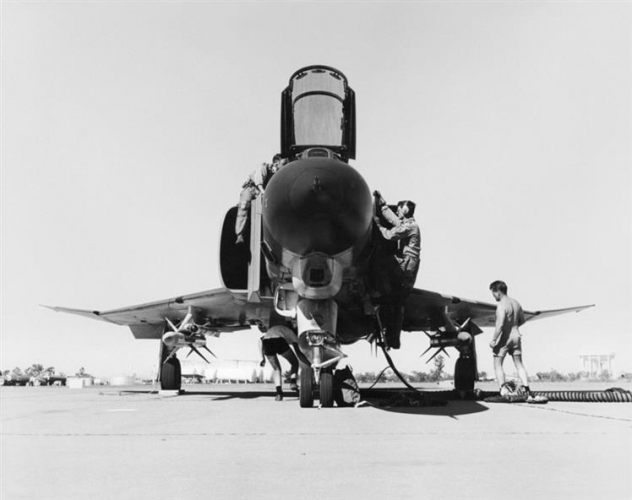
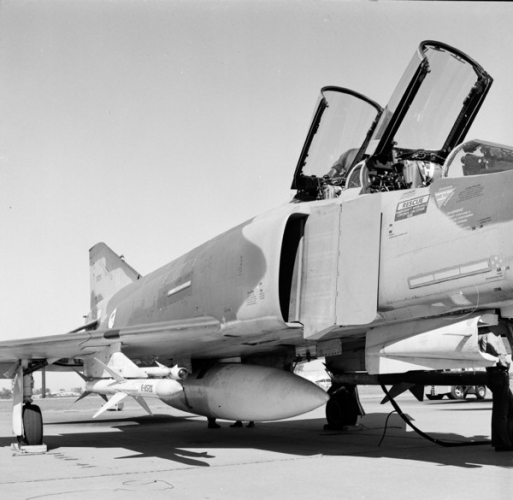
I'm trying to find out what Sidewinders the leased F4Es came with, but info and photos are scarce. These are pictures of leased RAAF F4Es undertaking 'cold soak' tests of Sparrows and Sidewinders for the USAF in Darwin in 1972. Note they use the USAF pylon arrangement with the Sidewinder in the 'inner shoulder' of the pylon which is different to the USN carried twin Sidewinders and that the missiles are definitely Aim9Bs.

I suspect that the leased aircraft were not well equipped with weapons and if retained a comprehensive package would need to be acquired. I suspect a batch of the then current model Sidewinders (Aim9J) would be part of that batch and it's possible that batch would be enlarged to arm Mirages and RAN Skyhawks, especially since retaining the Phantom would guarantee the Mirage's retention until the 80s and confirm a mid-life update is required.

https://victoriancollections.net.au/items/4f729fe297f83e0308601b53 1762025293977.png
https://www.angelfire.com/extreme/raafphantoms/RAAFF4E.htm 1762025363972.png

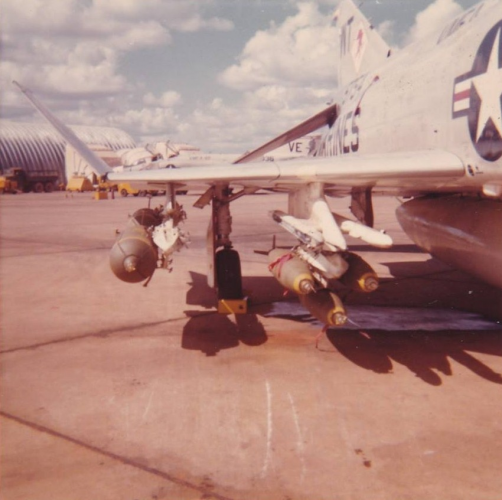
This is the USN and later USAF twin sidewinder and bomb rack carriage for comparison.
https://forum.largescaleplanes.com/index.php?/topic/71417-f-4-question/
1762026348226.png
 
Canberra is supplemented from the late 50s with one of the V bombers, and replaced by the mid 60s with A-5s. The V bomber is replaced in the 70s with the F-111, but a later model, maybe the F-111F. The A-5 is replaced in the 80s with additional F-111
I've always thought that this was the best way forward RAAF Bombers though probably
  • Canberra and Vulcan's 50s and early 60s
  • Vigilantes and Vulcan's mids 60s to mid 70s
  • Aardvarks Mid 70s onwards
Is how I would have done it in my mind with a bigger defence budget

I suspect that the leased aircraft were not well equipped with weapons and if retained a comprehensive package would need to be acquired. I suspect a batch of the then current model Sidewinders (Aim9J) would be part of that batch and it's possible that batch would be enlarged to arm Mirages and RAN Skyhawks, especially since retaining the Phantom would guarantee the Mirage's retention until the 80s and confirm a mid-life update is required.
I would have expected that the F4s to have been wired for the current model of AIM9 thought we probably use the AIM9B cause we already had it and to save money.
 
Back
Top Bottom