
You are using an out of date browser. It may not display this or other websites correctly.
You should upgrade or use an alternative browser.
You should upgrade or use an alternative browser.
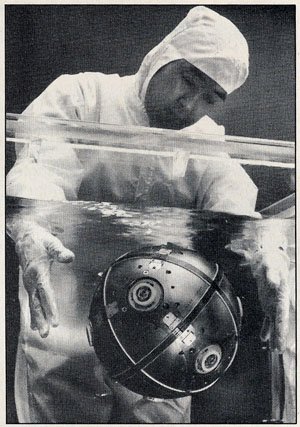
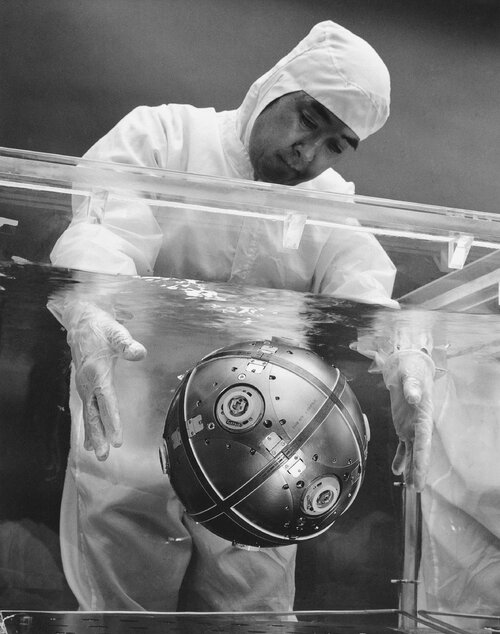
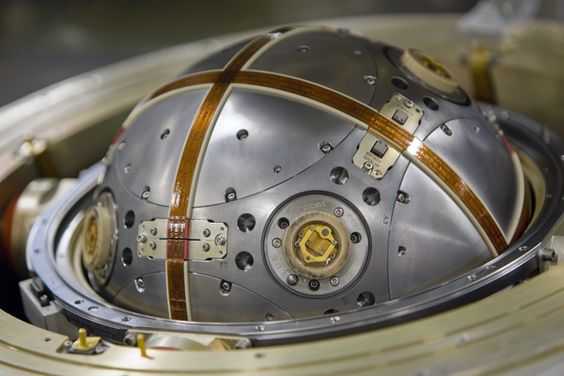
MX Peacekeeper Advanced Intertial Reference Sphere (AIRS)
- Thread starter Sferrin
- Start date


Mercurius Cantabrigiensis
ACCESS: Restricted
- Joined
- 8 November 2007
- Messages
- 46
- Reaction score
- 33
sferrin said:Apparently the MMIII fleet is getting these now.
Not that I've heard. The Minuteman guidance replacement programme is replacing the original NS-20 guidance package with the new NS-50, but this retains the existing stabilised platform.
Since only 100 Peacekeepers were deployed, there would not be enough AIRS hardware to re-equip the MMIII force. Perhaps its was considered as an enhancement for part of the force under the Minuteman Elite concept, but I haven't heard much about the latter idea in recent years

- Joined
- 3 June 2011
- Messages
- 20,996
- Reaction score
- 19,264
Mercurius Cantabrigiensis said:sferrin said:Apparently the MMIII fleet is getting these now.
Not that I've heard. The Minuteman guidance replacement programme is replacing the original NS-20 guidance package with the new NS-50, but this retains the existing stabilised platform.
Since only 100 Peacekeepers were deployed, there would not be enough AIRS hardware to re-equip the MMIII force. Perhaps its was considered as an enhancement for part of the force under the Minuteman Elite concept, but I haven't heard much about the latter idea in recent years
Interesting article on the AIRS
http://nuclearweaponarchive.org/Usa/Weapons/Airs.html
"With the planned retirement of the Peacekeeper missile under the terms of the START II treaty (signed 3 January 1993) by 2004, the Minuteman III will be left as the sole U.S. land-based ICBM through the year 2020. Because of this shift in importance, the Minuteman III force is to be upgraded to the same standards of accuracy of the Peacekeeper. Accordingly, between 1998 and 2002, 652 new AIRS guidance units will be purchased and fitted to the existing Minuteman III."
Of course the article was written in '97.
Mercurius Cantabrigiensis
ACCESS: Restricted
- Joined
- 8 November 2007
- Messages
- 46
- Reaction score
- 33
I saw that article, and guessed that you had. But the concept seems to have died. Had Northrop Grumman received a contract to build close to 500 systems, they would almost certainly have publicised it.

Forest Green
ACCESS: USAP
- Joined
- 11 June 2019
- Messages
- 14,596
- Reaction score
- 31,708
The quoted accuracy for these is incredible, if you managed to fit them on MaRVs it would render GPS and terminal homing redundant - drift less than 1.5×10⁻⁵ °/h. Over a 30 minute flight over 14,000km that equates to 1.8m.Apparently the MMIII fleet is getting these now.
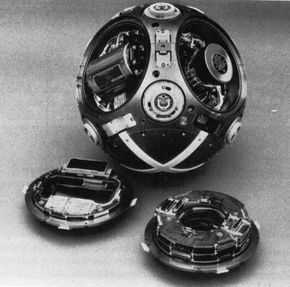
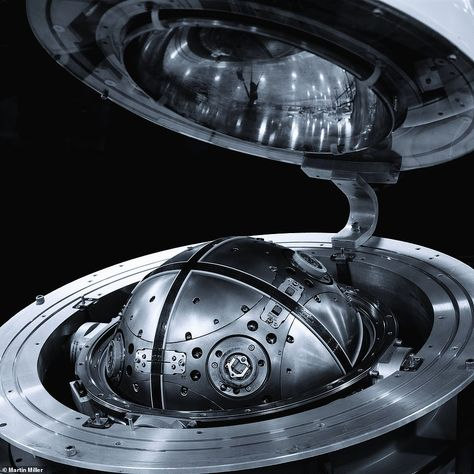
More pictures.
Forest Green
ACCESS: USAP
- Joined
- 11 June 2019
- Messages
- 14,596
- Reaction score
- 31,708
Actually only 50 were ever deployed even though 118 were built.Not that I've heard. The Minuteman guidance replacement programme is replacing the original NS-20 guidance package with the new NS-50, but this retains the existing stabilised platform.
Since only 100 Peacekeepers were deployed, there would not be enough AIRS hardware to re-equip the MMIII force. Perhaps its was considered as an enhancement for part of the force under the Minuteman Elite concept, but I haven't heard much about the latter idea in recent years
https://fas.org/nuke/norris/nuc_01009701a_181.pdf

Kiltonge
Greetings Earthling
- Joined
- 24 January 2013
- Messages
- 889
- Reaction score
- 2,057
Another thread reminded me to dig out some notes about AIRS.
The floated-sphere concept had been prototyped in 1964/65 with the Delco SABRE ( Self-Aligning Ballistic Re-Entry ) INS for proposed use in MM3. The cost was prohibitive. A simpler floating implementation was used for the Northrop FLIP INS on the Lockheed C-5A.
The cost wasn't any less crazy when the fully-floated concept was adopted for AIRS. Although notionally a simple idea, just float the INS assembly in a near-frictionless fluid, the implementation required complicated machining ( over 400 operations on the inner beryllium sphere alone ) and an internal turbopump to keep the fluid pressurised.
The turbopump exhausted through eight 'jets' on the sphere, each of which also had a brush for picking-up current from the outer sphere, which ensured that the inner sphere was always suspended.
To get inertial signals out of the unit, driver bands on the sphere's surface contacted electrical brushes on the outer sphere.
Design spec was weight of 430lb and CEP of 0.8nm at full range. Refined AIRS for Midgetman was to weigh about 300lb.
The whole unit was a masterpiece of over-engineering.
Northrop AIRS contracts that I've found to date:
1. May 1975, $32 million to build test equipment
2. 1975, $51 million to build four development units
3. 1977, $235 million to build 23 units, provide test equipment & provide engineering support. Also, research into a semi-dormant mode that wouldn't require the unit to be constantly operating
4. November 1984, $41.2 million for AIRS ground test equipment
5. Total AIRS funding as part of MX was to be about $1 billion
There was a controversy in mid-1987 when the USAF found that Northrop had set-up a company called Liaison Engineering Services ( with about $250k of Northrop funding ) to acquire parts for AIRS outside the normal acquisition channels. They had been struggling to ramp-up AIRS production, only having delivered 33 out of 50 contracted units by then, due to difficulty getting parts. Northrop was alleged to be inadequately testing the back-channel parts, and discarding excess inventory.
To boost production rate, Rockwell was to be qualified as a second-source for AIRS by 1989 or 1990.
Despite the controversy, AIRS was found to be performing above expectations.
The floated-sphere concept had been prototyped in 1964/65 with the Delco SABRE ( Self-Aligning Ballistic Re-Entry ) INS for proposed use in MM3. The cost was prohibitive. A simpler floating implementation was used for the Northrop FLIP INS on the Lockheed C-5A.
The cost wasn't any less crazy when the fully-floated concept was adopted for AIRS. Although notionally a simple idea, just float the INS assembly in a near-frictionless fluid, the implementation required complicated machining ( over 400 operations on the inner beryllium sphere alone ) and an internal turbopump to keep the fluid pressurised.
The turbopump exhausted through eight 'jets' on the sphere, each of which also had a brush for picking-up current from the outer sphere, which ensured that the inner sphere was always suspended.
To get inertial signals out of the unit, driver bands on the sphere's surface contacted electrical brushes on the outer sphere.
Design spec was weight of 430lb and CEP of 0.8nm at full range. Refined AIRS for Midgetman was to weigh about 300lb.
The whole unit was a masterpiece of over-engineering.
Northrop AIRS contracts that I've found to date:
1. May 1975, $32 million to build test equipment
2. 1975, $51 million to build four development units
3. 1977, $235 million to build 23 units, provide test equipment & provide engineering support. Also, research into a semi-dormant mode that wouldn't require the unit to be constantly operating
4. November 1984, $41.2 million for AIRS ground test equipment
5. Total AIRS funding as part of MX was to be about $1 billion
There was a controversy in mid-1987 when the USAF found that Northrop had set-up a company called Liaison Engineering Services ( with about $250k of Northrop funding ) to acquire parts for AIRS outside the normal acquisition channels. They had been struggling to ramp-up AIRS production, only having delivered 33 out of 50 contracted units by then, due to difficulty getting parts. Northrop was alleged to be inadequately testing the back-channel parts, and discarding excess inventory.
To boost production rate, Rockwell was to be qualified as a second-source for AIRS by 1989 or 1990.
Despite the controversy, AIRS was found to be performing above expectations.
Attachments


Forest Green
ACCESS: USAP
- Joined
- 11 June 2019
- Messages
- 14,596
- Reaction score
- 31,708
0.8nm (1480m)!?? Pretty sure it's less than that. CEP was originally stated at 40m for the actual Peacekeeper impacts, or are you talking about the system on the C-5A?Design spec was weight of 430lb and CEP of 0.8nm at full range.
Kiltonge
Greetings Earthling
- Joined
- 24 January 2013
- Messages
- 889
- Reaction score
- 2,057
0.8nm (1480m)!?? Pretty sure it's less than that. CEP was originally stated at 40m for the actual Peacekeeper impacts, or are you talking about the system on the C-5A?
That's the public spec for AIRS. MX accuracy spec was publicly 400ft CEP and achieved 'approximately 300ft' in tests with the Mk12A RV.
How to rationalise those different figures? Not sure.
I omitted to mention that AIRS was mounted in the post-boost bus.
First flight of an unhardened, non-contributing AIRS was on a MM3 in July 1976.
Last edited:
Forest Green
ACCESS: USAP
- Joined
- 11 June 2019
- Messages
- 14,596
- Reaction score
- 31,708
This suggests a drift of <1.5x10^-5 deg/hr.That's the public spec for AIRS. MX accuracy spec was publicly 400ft CEP and achieved 'approximately 300ft' in tests with the Mk12A RV.
How to rationalise those different figures? Not sure.
I omitted to mention that AIRS was mounted in the post-boost bus.
First flight of an unhardened, non-contributing AIRS was on a MM3 in July 1976.
https://nuclearweaponarchive.org/Usa/Weapons/Airs.html
If we take the maximum range as 14,000km, which is the largest of the range figures published, for a worst case and then assume a flight time of 30 minutes or 0.5 hours.
14,000,000m x tan(0.000015/2) = 105m
For a lesser case, 10,000km and 20 minutes.
10,000,000m x tan(0.000005) = 50m
It was also stated that if they made AIRS more accurate it wouldn't have had any affect on the overall accuracy of the strike due to atmospheric turbulence and wind etc.
Scott Kenny
ACCESS: USAP
- Joined
- 15 May 2023
- Messages
- 19,676
- Reaction score
- 28,160
As I understand it, we have pretty good weather reporting for winds aloft over targets these days.It was also stated that if they made AIRS more accurate it wouldn't have had any affect on the overall accuracy of the strike due to atmospheric turbulence and wind etc.
Kiltonge
Greetings Earthling
- Joined
- 24 January 2013
- Messages
- 889
- Reaction score
- 2,057
Dug out some details about AIRS' predecessor, SABRE.
Actually stood for Self-Aligning Boost and Re-Entry.
Based on the Draper concept of the floated sphere, initial R&D was conducted by MIT Instruments Lab under a 1963 contract from the DoD ABRES ( Advanced Ballistic Re-Entry Systems ) budget. 10" sphere, compared to 10.3" for AIRS.
A rad-hardened computer was developed by Univac under the same funding, based on their 1824 computer.
In 1966 AC Electronics and NAA Autonetics were each awarded $650k to build prototype hardware based on the MIT designs, to manufacturing drawings prepared by Bendix, whilst still using the Univac computer.
Acceptance tests were completed in early 1968. Project completion was scheduled for late 1968, after which the USAF would decide whether to perform sled testing at Holloman. Not clear if this occurred.
SABRE was the first ballistic guidance system intended to provide a single guidance system from boost though mid-course to re-entry.
Follow-on 'miniaturised' SABRE-2 proposed an 8" sphere, doesn't look like much work was done on that before being resurrected as FLIP and AIRS.
Actually stood for Self-Aligning Boost and Re-Entry.
Based on the Draper concept of the floated sphere, initial R&D was conducted by MIT Instruments Lab under a 1963 contract from the DoD ABRES ( Advanced Ballistic Re-Entry Systems ) budget. 10" sphere, compared to 10.3" for AIRS.
A rad-hardened computer was developed by Univac under the same funding, based on their 1824 computer.
In 1966 AC Electronics and NAA Autonetics were each awarded $650k to build prototype hardware based on the MIT designs, to manufacturing drawings prepared by Bendix, whilst still using the Univac computer.
Acceptance tests were completed in early 1968. Project completion was scheduled for late 1968, after which the USAF would decide whether to perform sled testing at Holloman. Not clear if this occurred.
SABRE was the first ballistic guidance system intended to provide a single guidance system from boost though mid-course to re-entry.
Follow-on 'miniaturised' SABRE-2 proposed an 8" sphere, doesn't look like much work was done on that before being resurrected as FLIP and AIRS.
Last edited:
Scott Kenny
ACCESS: USAP
- Joined
- 15 May 2023
- Messages
- 19,676
- Reaction score
- 28,160
Not much. RLGs or FOGs are significantly cheaper (and FOGs are even more durable!), and anything that needs greater precision can get away with the big lab-sized quantum gyros.What besides ICBMs might they be used for?
Design spec was weight of 430lb and CEP of 0.8nm at full range. Refined AIRS for Midgetman was to weigh about 300lb.
Do you have a source reference (or references) for these claims? Specifically:
- The weight of 430 lbs
- The CEP of 0.8 nmi at full range
- The weight of about 300 lbs (for the refined AIRS for Midgetman)
Also, there is a major conflict here. In the image you posted (image #2), it says:
In the three preprototype AIRS systems that Northrop is building to demonstrate that a hand-tooled laboratory guidance set can be commercially produced, the MPMS/AIRS weighs 114.5 lb including the environmental cover. The system has a volume of 2.9 cu. ft. and is 20 in. in diameter and 15 in. high. The hardened repackaged unit for the operational MX missile will weigh 109.5 lb. and have a volume of 2.6 cu. ft. It will have a 16.9-in. length, 16.9-in. width and 15.3-in. height.
Note specifically that:
- The unhardened prototype MPMS/AIRS flown on the SABRE flights weighed 114.5 lbs
- The hardened production AIRS intended for use on the MX was expected to weigh 109.5 lbs
For comparison, let's look at the Minuteman III. The MM III PBV weighs 348 lbs dry (excludes shroud, chaff, RVs, and propellant). The MM III inertial stable platform (ISP) weighs 70 lbs.
These figures align very well with the figures from image #2 (110–115 lbs), but they do not align at all with the figures from your post (300–430 lbs).
This suggests a drift of <1.5x10^-5 deg/hr.
https://nuclearweaponarchive.org/Usa/Weapons/Airs.html
If we take the maximum range as 14,000km, which is the largest of the range figures published, for a worst case and then assume a flight time of 30 minutes or 0.5 hours.
14,000,000m x tan(0.000015/2) = 105m
For a lesser case, 10,000km and 20 minutes.
10,000,000m x tan(0.000005) = 50m
It was also stated that if they made AIRS more accurate it wouldn't have had any affect on the overall accuracy of the strike due to atmospheric turbulence and wind etc.
The drift is likely lower than that.
"Third generation" performance would be drift rates not of 10^-2 but 1.5 × 10^-5 or 1.5 × 10^-6 degrees per hour. Although second generation performance translated into position errors of 1,000 to 10,000 feet after an hour’s elapsed time, third generation instruments would contribute only an average error of one to ten feet after an hour.
(quoted from page 187 of Inventing Accuracy: A Historical Sociology of Nuclear Missile Guidance by Donald MacKenzie)
Now, you can take that accelerometer error on down to zero and [the overall system] error doesn’t change because you're in the noise level. The accelerometer is no longer the major contributor to the error sources. There are other error sources, and every time we fix one, we find there are others, and so we're sort of at a plateau with probably anywhere from 200 to 500 sources in there of equal magnitude, and trying to push each one of those down, the guys will do it, they'll identify an error source, and they'll say, now we can work on that and we'll get that out. As soon as you do, you find that that was just one of many in there... We’re at the point now where we identify new sources rather than fixing things.
(quoted from page 235 of Inventing Accuracy: A Historical Sociology of Nuclear Missile Guidance by Donald MacKenzie)
So the accelerometer error is potentially as small as 1/10th of the figures you calculated (i.e. 10.5 meters or 5 meters).
Given that we know the accelerometer error is so low in MX that if it was brought to zero there would no significant change in overall system error, then that very strongly implies that the accelerometer performance (error) of the MX AIRS is much closer to 1.5 × 10^-6 degrees per hour than it is to 1.5 × 10^-5 degrees per hour.
When Minuteman is phased out, will these go to Sentinel?
What besides ICBMs might they be used for?
Minuteman III doesn't use AIRS. There was a proposal at one point to replace the MM III ISP with a modernized ISP, one candidate for which was AIRS. However the proposal never got funded by congress, and so the program never happened.
Not much. RLGs or FOGs are significantly cheaper (and FOGs are even more durable!), and anything that needs greater precision can get away with the big lab-sized quantum gyros.
As I explained in my recent posts (see links below), RLGs are not feasible options for strategic nuclear ICBMs. FOGs on the other hand may be feasible depending on the exact accuracy spec required and the size constraints on the ISP, but FOGs generally will still not have the same level of accuracy as mechanical instruments. If sufficiently high accuracy is demanded (e.g. MX-level accuracy), then FOGs may not be able to deliver, and mechanical gyros may be needed. Also, RLGs and FOGs are gyros only. The accelerometer is still going to be a mechanical PIGA/SFIR. There is no realistic alternative to the PIGA/SFIR for this application.
https://www.secretprojects.co.uk/th...egic-deterrent-gbsd-program.22898/post-842166
https://www.secretprojects.co.uk/th...egic-deterrent-gbsd-program.22898/post-842582
Last edited:
Scott Kenny
ACCESS: USAP
- Joined
- 15 May 2023
- Messages
- 19,676
- Reaction score
- 28,160
I'm generally agreeing with you. However, I thought there were good solid-state accelerometers?As I explained in my recent posts (see links below), RLGs are not feasible options for strategic nuclear ICBMs. FOGs on the other hand may be feasible depending on the exact accuracy spec required and the size constraints on the ISP, but FOGs generally will still not have the same level of accuracy as mechanical instruments. If sufficiently high accuracy is demanded (e.g. MX-level accuracy), then FOGs may not be able to deliver, and mechanical gyros may be needed. Also, RLGs and FOGs are gyros only. The accelerometer is still going to be a mechanical PIGA/SFIR. There is no realistic alternative to the PIGA/SFIR for this application.
https://www.secretprojects.co.uk/th...egic-deterrent-gbsd-program.22898/post-842166
https://www.secretprojects.co.uk/th...egic-deterrent-gbsd-program.22898/post-842582
We're gonna talk shipboard inertial nav systems for a minute, because that's out in the open and I can talk about it.
- The Attack Subs had the exact same RLG navigation system as an F-18 stuck in a rack on the boat. It worked well enough for their purposes, but wasn't as good as the older mechanical units. The RLGNs were smaller and took a lot less power to run, and with no moving parts they were quieter.
- Tridents, however, use a mechanical SINS where the gyros are spheres with a steel/magnetic pickup for the sensors to track. Those gyro spheres are so absurdly smooth that if you enlarged one to the size of the earth, the tallest point would only be 4" above the average surface(!). The entire unit was flexibly mounted to the deck and the deck floated inside the hull. IIRC there is one of the C4 (edit: Trident 1) SINS units in the Smithsonian, as the world's most complex mechanical computer.
Last edited:
That depends on how you define "good" and "solid state".I'm generally agreeing with you. However, I thought there were good solid-state accelerometers?
If you want strategic grade performance, RLGs are no longer a truly solid state option, as all high-precision RLGs incorporate a mechanical dither motor.
For truly 100% solid state gyros capable of attaining strategic grade performance, there's basically only two options – the HRG or the FOG.
I'm aware of the shipboard systems info.We're gonna talk shipboard inertial nav systems for a minute, because that's out in the open and I can talk about it.
- The Attack Subs had the exact same RLG navigation system as an F-18 stuck in a rack on the boat. It worked well enough for their purposes, but wasn't as good as the older mechanical units. The RLGNs were smaller and took a lot less power to run, and with no moving parts they were quieter.
- Tridents, however, use a mechanical SINS where the gyros are spheres with a steel/magnetic pickup for the sensors to track. Those gyro spheres are so absurdly smooth that if you enlarged one to the size of the earth, the tallest point would only be 4" above the average surface(!). The entire unit was flexibly mounted to the deck and the deck floated inside the hull. IIRC there is one of the C4 SINS units in the Smithsonian, as the world's most complex mechanical computer.
The Trident SINS was actually not that impressive of a system. It was very old and had fairly poor performance.
With the Trident I C4, the ESGM was introduced. This was an ultra high accuracy electrostatic gyro monitor, which independently tracked ship position. The ESGM is the real star of the show.
Previously, the buildup of errors in the SINS reached extreme proportions in between the (very frequent) external resets.
With the addition of the ESGM, you could now perform an internal reset, which corrected the SINS using the ESGM as the source. These internal resets, unlike external resets, had no dependency on outside sources (e.g. GPS). You could perform resets much more frequently, limiting the buildup of errors in the SINS between resets. And the extremely slow buildup of errors in the ESGM allowed for ships to go much longer in between external resets, enhancing survivability.
See the below diagram:

(This diagram was sourced from page 279 of Inventing Accuracy: A Historical Sociology of Nuclear Missile Guidance by Donald MacKenzie)
IIRC there is one of the C4 SINS units in the Smithsonian
C4 as in the Trident I?
Scott Kenny
ACCESS: USAP
- Joined
- 15 May 2023
- Messages
- 19,676
- Reaction score
- 28,160
Yes, sorry about that.C4 as in the Trident I?
When we talked shop it was always "C4" or "D5,'" not "Trident 1" or "Trident 2."
Similar threads
-
 ORCA Missile System / Project Sunrise - Containerized Seafloor-based ICBM
- Started by Boxman
- Replies: 41
-
 MX (Peacekeeper) deployment concepts.
- Started by Sferrin
- Replies: 427
-
MX Missile (Peacekeeper/ LGM-118) Transporter Emplacer (TE) Fate?
- Started by Ironmiked
- Replies: 11
-

-
 Northrop N-25B Boojum (MX-775B)
- Started by Stargazer
- Replies: 13