Energia-3 as new Russia heavy-lift launch vehicle

RedLegion

ACCESS: Confidential
Joined
3 December 2019
Messages
83
Reaction score
71
How would the Angara project have evolved if, instead of selecting the Khrunichev State Research and Production Space Center’s design, Russia had chosen RSC Energia’s GK-6/Energia-3 proposal?

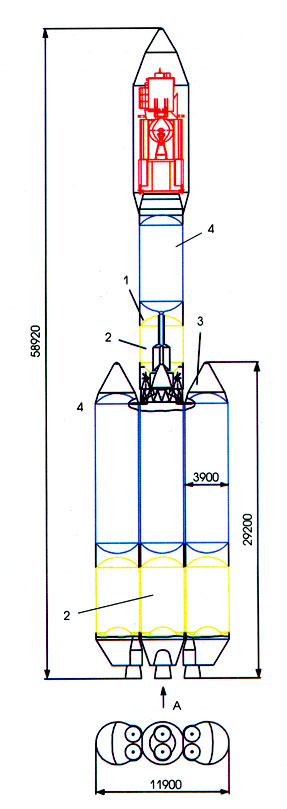
This alternative rocket would have used three RD-180 engines—engines that were soon after selected for the American Atlas III rocket. This could have led to cooperation between Lockheed Martin and RSC Energia on developing the first stage for both launch vehicles. The design also utilized the Zenit launch pad infrastructure, meaning initial tests could have taken place at Baikonur, followed later by launches from Plesetsk once Pad 35 was completed. Subsequent launches could then have been conducted from Plesetsk.

How would the earlier emergence of a Proton successor have affected Russia’s launch capabilities? Would a single-core version with solid rocket boosters (SRBs) have been developed to replace the Soyuz rockets?


1759492876226.png

1759493218152.jpeg
 
Russians don't do solids.
The Atlas V core was designed to be a central core and a strap on. It was designed for vertical processing and not Zenit type pad.
The core was designed for a low thrust Centaur upperstage.
 
Russians don't do solids.
The Atlas V core was designed to be a central core and a strap on. It was designed for vertical processing and not Zenit type pad.
The core was designed for a low thrust Centaur upperstage.
This was just a proposal. The Russians are considering using SRBs as part of the Proton upgrade. A similar proposal using Topol missiles may also be proposed. There may also be a proposal for two LRBs with a single RD-190 engine, which would provide approximately 13 tons of payload to LEO.
 
Those saddle-tanks interest me...as they may allow a side-mount payload on one side on an LV, with a propellant tank on the other to balance things out.
 
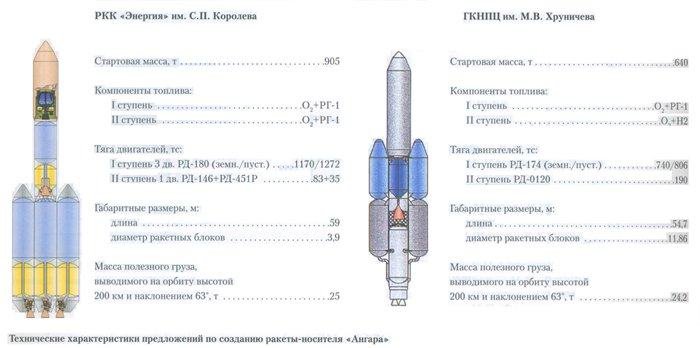
The proposal on the right is the Angara proposal that won. On the left is the Energia-3, with RD-180 engines.
 
The parallel tanks were never developed.
Yes, because Khrunishchev's proposal was initially intended to use H2/LOX engines. However, after three years, this was changed to the current design with R-190 engines. Had those three years not been wasted and the Energia-3 project been immediately selected, the first flight of the Angara ATL could have taken place in the first decade of the 21st century.
 
Those saddle-tanks interest me...as they may allow a side-mount payload on one side on an LV, with a propellant tank on the other to balance things out.
No, the side tanks are for LH2 and the core only holds LOX. Can't remove or replace them.
They exist because a fatter core like the Delta IV can't be rail transported. This was a solution like the Proton first stage with the bolt on tanks with engines. It made for an overly complex and more expensive vehicle.
 
Last edited:
No, the side tanks are for LH2 and the core only holds LOX. Can't remove or replace them.
They exist because a fatter core like the Delta IV can't be rail transported. This was a solution like the Proton first stage with the bolt on tanks with engines. It made for an overly complex and more expensive vehicle.
Therefore, the POD assumes the immediate selection of the Energia-3 project. Will the Americans' payment for the RD-180 improve the project's situation, or will the rocket fly sooner? If this doesn't require the construction of a new launch pad, this means the first tests can be conducted at Baikonur and then at the completed Plesetsk.

If this only gives us three years, the first flight will take place in 2011. However, in my opinion, the first flights could be achieved before the end of the decade.
 
How would the Angara project have evolved if, instead of selecting the Khrunichev State Research and Production Space Center’s design, Russia had chosen RSC Energia’s GK-6/Energia-3 proposal?

This alternative rocket would have used three RD-180 engines—engines that were soon after selected for the American Atlas III rocket. This could have led to cooperation between Lockheed Martin and RSC Energia on developing the first stage for both launch vehicles. The design also utilized the Zenit launch pad infrastructure, meaning initial tests could have taken place at Baikonur, followed later by launches from Plesetsk once Pad 35 was completed. Subsequent launches could then have been conducted from Plesetsk.

How would the earlier emergence of a Proton successor have affected Russia’s launch capabilities? Would a single-core version with solid rocket boosters (SRBs) have been developed to replace the Soyuz rockets?


View attachment 786772

View attachment 786773
Why does the image says that the Second stage uses O2+Kerozene when the RD-0146 is an hydrogen-oxygen engine (a Methane variant was tested but not kerozene, and as expander cycle engine kerozene is not viable).

Anyway indeed cost of development of the new engines was a concern, including RD-180, the timing was unfortunate since while there was a competition between Energomash-Kuznetsov-Rocketdyne for the engine of Atlas 3 since 1994, the selection only happened in early 1996, while the Selection of Khrunichev for Angara was in August 1994.

And just like how Energia was initially attributed dev of the S2 on Khrunichev's first Angara, it is likely Khrunichev would get a share of an Energia-led Angara (and is more likely to keep it, unlike Energia which wasn't involved in the final Angara)

Nevertheless the upper stage with its RD-0146 and new RD-451P vernier would still be difficult (Russia/USSR never had much luck with hydrogen stages), and there were concerns on Energia's capability to mass produce heavy launchers (ultimately Krunichev would have the same problem with the move of their factory from Moscow to Omsk), and also could Energia's proposal really use the Zenit pad? I know Khrunichev's first proposal could (and that's the reason for its design), but Energia's seem like it would require heavy modification like angara's (and ultimately it was concluded heavily modifying Plesetsk pad 35 was not necessarily the most economical choice)

There would also still be a large funding problem until the mid-2000s, and the few years of additional early development without the design restart wouldn't translate into an equally earlier launch.

I imagine Khrunichev may eventually get funding for the development of a small launcher, an Angara 1.1 equivalent or maybe more accurately a Soyuz 2.1v equivalent, the only option would be to use NK-33 however.

The lack of deal with South korea to provide 1st stages for KSLV will not help, and the main problem of payload availability will remain.

I do wonder about the possibility of a single core variant, at a glance the weaker RD-0146 may result in more gravity losses if the S2 isn't throw as fast by the S1, so the engine may need to be doubled or the S2 made shorter. Ultimately this will be a less powerful Atlas 401/501, probably not more capable than a Soyuz 2 to LEO, and only a bit more to higher orbits, I don't think that's enough to justify it.

 
Last edited:
I would think the existence of the All-Russian Zenit-Soyuz 5 (Irtysh)-- would threaten Angara's existence.
 
Why does the image says that the Second stage uses O2+Kerozene when the RD-0146 is an hydrogen-oxygen engine (a Methane variant was tested but not kerozene, and as expander cycle engine kerozene is not viable).

....
RD-146, not RD-0146. RD-146 this is the Energomash engine, and RD-0146 this is the KBHA engine.
 

Similar threads

Back
Top Bottom