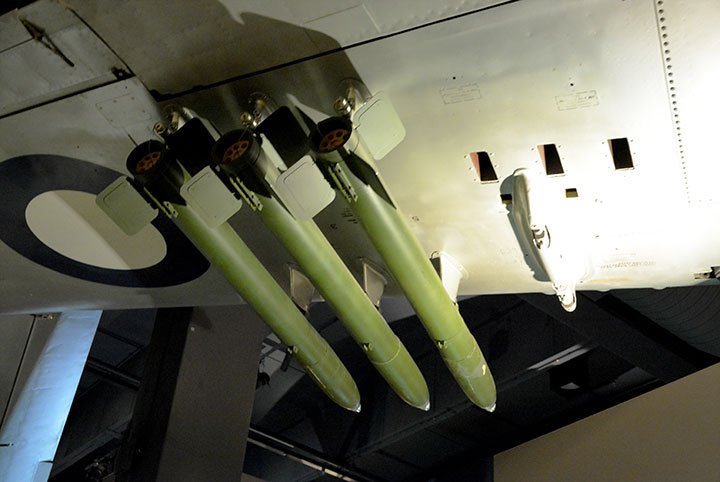
The RP-3 was developed from the Unrotated Projectile British rocket engineering program that had focussed on their use as anti-aircraft weapons. However the RP-3 rockets were relatively slow (and relatively large) compared to earlier UP rocket designs, making them relatively unsuited for air-to-air use.
The HVAR was developed into the FFAR and used in the post-war period as the primary weapon of many interceptor aircraft.
The lack of use of rockets as air-to-air weapons in WWII can be attributed to two factors:
1) In the later parts of the war, German bombers switched to night attack roles, rather than use in massed daylight formations. Allied fighters ceased to primarily function as interceptors and instead were use primarily to escort bombers and engage in ground attack. There simply wasn't a role for interceptor rockets, and they weren't useful as a weapon for escort fighters, but did have a role in ground attack.
2) Rockets were inaccurate, requiring large volleys against large targets to be effective. The Germans were firing on massed formations of four engined bombers... there was no similar target for the Allies. In the post war period rockets remained inaccurate but the use of radar gunsights and the increase in the size of interceptors (allowing more rockets to be carried), made them a potentially effective weapon against larger Soviet bombers.
A final note: The Soviet Union mass produced air-to-air rockets for use by interceptors. However, being fired in volleys of only two to eight projectiles, their inaccuracy meant that relatively few air-to-air kills were scored, and they were quickly transitioned into a ground attack role and a surface-to-surface role (the first Soviet rocket artillery systems were using designs originally produced for air-to-air use).