In addition to the J85 there's also its' civilian counterpart the CJ610 and the Rolls-Royce Viper too.

You are using an out of date browser. It may not display this or other websites correctly.
You should upgrade or use an alternative browser.
You should upgrade or use an alternative browser.
Ukrainian Cruise Missile Development and Deployment
- Thread starter Forest Green
- Start date
Flamingo is limited by engine supply, and is a very expensive way to throw out a lot of resources if you're trying to saturate defenses.It's the right approach for this specific war. The Russian air defence is now no longer as capable against missiles as it supposed to be. This war showed, that cheap mass produced weapons are superior than fewer high developed weapons.
The air defence of the future might also use a high number of relatively cheap AI controlled drones instead of super expensive anti missiles systems.
I'm sure, all military strategist are making wild new plans, because the current wars are not being fought the way any big army has been prepared for...
Frankly, I think you overestimate how much things are changing in some ways. Ukraine and Russia fight like they do because it is all they can do, not because it is desirable in the abstract. If other countries aren't in the same position (and they likely won't be) it doesn't make sense to fight like them.
There's also the FJ33 and 44 from Williams, which don't suffer from turbojet fuel consumption.In addition to the J85 there's also its' civilian counterpart the CJ610 and the Rolls-Royce Viper too.
Russia send some cheap drones over the border to Poland, and the NATO wasted millions of Euros to shoot at them. In any current war scenario, contemporary air defence systems will be depleted very fast. Israel might be the leading nation in defence systems against swarm of drones, but I don't see anything like that in working order in the Nato (without having special knowledge...).
Ainen
I really should change my personal text
- Joined
- 25 August 2011
- Messages
- 2,116
- Reaction score
- 3,600
Long attrition wars are never desirable, the are and always were normal.If other countries aren't in the same position (and they likely won't be) it doesn't make sense to fight like them.
It's a conditional development, after all.
But it's visible that traditional air defense (attrition based) doesn't win this game. Neither short nor long term. It worked only in extreme scenarios (like 2024 Iran-Israel exchanges), at prohibitive price point, and in absolutely unique circumstances.
Which are far less replicable than Ukraine/Russia.
Flamingo is limited by engine supply, and is a very expensive way to throw out a lot of resources if you're trying to saturate defenses.
The Flamingo is likely to be used in conjunction with other drones, the Ukrainians already have two other jet-powered drone-missiles in service so it will probably be used with them. One set of targets in Russia that are likely to be attacked by Flamingos on their own are its' various oil-refineries which seem to have little in the way of anti-aircraft defences.

Forest Green
ACCESS: USAP
- Joined
- 11 June 2019
- Messages
- 12,782
- Reaction score
- 27,512
Not when you examine how it's being made. COTS engines and a legacy Cold War stockpile of 10,000+ FAB-1000s.Flamingo is limited by engine supply, and is a very expensive way to throw out a lot of resources if you're trying to saturate defenses.

Null
ACCESS: Secret
- Joined
- 16 December 2024
- Messages
- 221
- Reaction score
- 393
As time passes these missiles capabilities will decrease further and further.
-how fast do oil refineries and pipelines get rebuilt assuming that these are mostly targets then strategic military locations?
-each small settlement in Ukraine grabbed lowers the capabilities of long-range strike weapons, ATACMs have to fly in higher trajectories giving adversary air defenses more reaction time.
-More Sukhoi's getting pumped out like no tomorrow working with an air defense network can find and target low flying long range targets.
-Is Crimea the only target and if it used as a target again, adversary satellites will start looking for clues in Odessa to find what exact building will give clues on the missiles production site before it gets targetted
-Mother drones used as relays dropping off FPV drones have become a huge issue these past few weeks targeting supply vehicles in highways at further distances then before have been the latest complaints. Not only that but having more eyes in the battlefield might make their satellite intelligence look somewhere else while leaving the drone operators to share their data with their army or airforce.
-In 2 years', time adversary will start producing starlink like satellites, satellites communicating with drones offering more eyes in geolocating targets. Also, massive production in domestic electronic circuits in few year's time with less foreign dependency will increase drone strikes on strategic targets more frequently.
Based on the strikes do they produce like 1, 2 or a dozen of these missiles a month? They really need to start producing and firing like 50 or more a month ASAP with these missiles assuming they have enough bodies to slow the advances for 2 more years.
-how fast do oil refineries and pipelines get rebuilt assuming that these are mostly targets then strategic military locations?
-each small settlement in Ukraine grabbed lowers the capabilities of long-range strike weapons, ATACMs have to fly in higher trajectories giving adversary air defenses more reaction time.
-More Sukhoi's getting pumped out like no tomorrow working with an air defense network can find and target low flying long range targets.
-Is Crimea the only target and if it used as a target again, adversary satellites will start looking for clues in Odessa to find what exact building will give clues on the missiles production site before it gets targetted
-Mother drones used as relays dropping off FPV drones have become a huge issue these past few weeks targeting supply vehicles in highways at further distances then before have been the latest complaints. Not only that but having more eyes in the battlefield might make their satellite intelligence look somewhere else while leaving the drone operators to share their data with their army or airforce.
-In 2 years', time adversary will start producing starlink like satellites, satellites communicating with drones offering more eyes in geolocating targets. Also, massive production in domestic electronic circuits in few year's time with less foreign dependency will increase drone strikes on strategic targets more frequently.
Based on the strikes do they produce like 1, 2 or a dozen of these missiles a month? They really need to start producing and firing like 50 or more a month ASAP with these missiles assuming they have enough bodies to slow the advances for 2 more years.

Dilandu
I'm dissatisfied, which means, I exist.
Tell me, what US armor battalion would do, when attacked by a large number of swarming drones - having no tank equipped with sophisticated signal jammers or anti-drone nets?Frankly, I think you overestimate how much things are changing in some ways. Ukraine and Russia fight like they do because it is all they can do, not because it is desirable in the abstract. If other countries aren't in the same position (and they likely won't be) it doesn't make sense to fight like them.
Tell me, what US armor battalion would do, when attacked by a large number of swarming drones - having no tank equipped with sophisticated signal jammers or anti-drone nets?
For the moment, MSHORAD Incr1, I believe a third battalion standing up shortly. Hopefully they are quickly followed by other systems - the laser variant was delayed and it’s unclear if it will see service.
As time passes these missiles capabilities will decrease further and further.
-how fast do oil refineries and pipelines get rebuilt assuming that these are mostly targets then strategic military locations?
-each small settlement in Ukraine grabbed lowers the capabilities of long-range strike weapons, ATACMs have to fly in higher trajectories giving adversary air defenses more reaction time.
-More Sukhoi's getting pumped out like no tomorrow working with an air defense network can find and target low flying long range targets.
-Is Crimea the only target and if it used as a target again, adversary satellites will start looking for clues in Odessa to find what exact building will give clues on the missiles production site before it gets targetted
-Mother drones used as relays dropping off FPV drones have become a huge issue these past few weeks targeting supply vehicles in highways at further distances then before have been the latest complaints. Not only that but having more eyes in the battlefield might make their satellite intelligence look somewhere else while leaving the drone operators to share their data with their army or airforce.
-In 2 years', time adversary will start producing starlink like satellites, satellites communicating with drones offering more eyes in geolocating targets. Also, massive production in domestic electronic circuits in few year's time with less foreign dependency will increase drone strikes on strategic targets more frequently.
Based on the strikes do they produce like 1, 2 or a dozen of these missiles a month? They really need to start producing and firing like 50 or more a month ASAP with these missiles assuming they have enough bodies to slow the advances for 2 more years.
The general trend is increasing capabilities and numbers of UAVs on both sides. I do not see that abating for either party.
Fire Point bought up stock of AI-25 jet engines before starting serial production. Most of these have a service life of ~10 hours before needing extra maintenance so they are perfect for one way cruise missiles like the Flamingo. They also plan on creating new production lines. This would explain how they are able to produce 2-3 per day because jet engine would have to be one of the main bottlenecks. But if they managed to source ~1000-2000 such engines before production then this makes it more possible for at least a year or two's worth of production. With 50 produced per month they can produce 600 a year for 2-3 years using the sourced jet engines. If they really want to hit 200 per month by end of year, its going to be difficult though. But they've had at least 2 years of planning for this now
Forest Green
ACCESS: USAP
- Joined
- 11 June 2019
- Messages
- 12,782
- Reaction score
- 27,512
The cost to Russia grows every year. Tally up the financial cost of the damage every year and you'll see I'm right.As time passes these missiles capabilities will decrease further and further.
-how fast do oil refineries and pipelines get rebuilt assuming that these are mostly targets then strategic military locations?
-each small settlement in Ukraine grabbed lowers the capabilities of long-range strike weapons, ATACMs have to fly in higher trajectories giving adversary air defenses more reaction time.
-More Sukhoi's getting pumped out like no tomorrow working with an air defense network can find and target low flying long range targets.
-Is Crimea the only target and if it used as a target again, adversary satellites will start looking for clues in Odessa to find what exact building will give clues on the missiles production site before it gets targetted
-Mother drones used as relays dropping off FPV drones have become a huge issue these past few weeks targeting supply vehicles in highways at further distances then before have been the latest complaints. Not only that but having more eyes in the battlefield might make their satellite intelligence look somewhere else while leaving the drone operators to share their data with their army or airforce.
-In 2 years', time adversary will start producing starlink like satellites, satellites communicating with drones offering more eyes in geolocating targets. Also, massive production in domestic electronic circuits in few year's time with less foreign dependency will increase drone strikes on strategic targets more frequently.
Based on the strikes do they produce like 1, 2 or a dozen of these missiles a month? They really need to start producing and firing like 50 or more a month ASAP with these missiles assuming they have enough bodies to slow the advances for 2 more years.
Well it does seem likely FP-5 leverages existing subassemblies for warhead and engine, and presumably prolific commercial guidance components. I am curious what the missile body itself is composed of; presumably something low cost. Wings are straight with no control surfaces; I am assuming just stamped aluminum.
-how fast do oil refineries and pipelines get rebuilt assuming that these are mostly targets then strategic military locations?
Not quickly, firstly those oil-refineries overwhelmingly use western technology and western technicians (Along with a handful of Russian techs trained to maintain this western equipment). Since March 2022 those western technicians have been pullout of Russia, the supply of new spares has been embargoed and Russia's current stock of imported spare-parts are running low plus those repairs are very expensive and time-consuming, don't forget that Russia's national wealth fund is running out.
-each small settlement in Ukraine grabbed lowers the capabilities of long-range strike weapons, ATACMs have to fly in higher trajectories giving adversary air defenses more reaction time.
Ukraine has been systematically attriting Russian air dense missile batteries so they are getting thin on the ground, it's a major factor why Ukrainian drones have been able to get through and strike Russian oil-refineries for example.
-More Sukhoi's getting pumped out like no tomorrow working with an air defense network can find and target low flying long range targets.
Those new airframes (And associated engines) don't mean much if they can't get their avionics due to a shortage of imported high-end western ICs.
-Is Crimea the only target and if it used as a target again
No, but Ukraine is taking advantage of Putin and Russia's unhealthy obsession with holding Crimea so they keep striking and destroying Russian SAM batteries (Especially the very expensive and hard to replace SA-21 Growler SAM batteries). As a result those destroyed missile batteries have been replaced by taking SAM batteries from other areas resulting in degraded SAM coverage in those areas.
-In 2 years', time adversary will start producing starlink like satellites, satellites communicating with drones offering more eyes in geolocating targets. Also, massive production in domestic electronic circuits in few year's time with less foreign dependency will increase drone strikes on strategic targets more frequently.
That doesn't mean much if Russia is having great difficulty in getting new high-end western ICs.
. I am curious what the missile body itself is composed of; presumably something low cost.
Judging by the photographs I've seen the Flamingo's fuselage appears to be a carbon-fibre composite tube which I have no doubt is easy and inexpensive to mass-produce.
Last edited:
Very good analysis. Also a lot of SAM systems in the occupied parts of Zaporhizhzhia oblast. Trying to hold it along with Crimea gives Ukraine a very easy area to destroy such systems. I think eventually we'll see FP-5s used for this Destruction of EAD systems as well in conjunction with smaller drones and cruise missiles.No, but Ukraine is taking advantage of Putin and Russia's unhealthy obsession with holding Crimea so they keep striking and destroying Russian SAM batteries (Especially the very expensive and hard to replace SA-21 Growler SAM batteries). As a result those destroyed missile batteries have been replaced by taking SAM batteries from other areas resulting in degraded SAM coverage in those areas.
Ainen
I really should change my personal text
- Joined
- 25 August 2011
- Messages
- 2,116
- Reaction score
- 3,600
It doesn't appear there are any difficulties for any production tactical aircraft.Those new airframes (And associated engines) don't mean much if they can't get their avionics due to a shortage of imported high-end western ICs.
The big problem for VKS isn't tactical aircraft, it's failure with modern A-100 AWACS (and losses didn't help), absolutely anemic state of Beriev, which can't even produce A-50Us(which are badly outdated), and lack of affordable, mass-produced modern AAM.
Soviet old AAM stocks are very deep, but they aren't infinite at this use tempo. It's been 3 years.
Long story short, everyone in the world needs APKWS. Fighters without it aren't adequate.
Soviet old AAM stocks are very deep, but they aren't infinite at this use tempo. It's been 3 years.
I wonder how long it will be before the Russian army brings retired SA-2 Guideline and SA-3 Goa SAMs out of storage?
Long story short, everyone in the world needs APKWS.
Isn't the US supposed to be mass-producing the APKWS I and getting ready to build the APKWS II?
Fighters without it aren't adequate.
No they aren't, otherwise they'd have to risk getting in close and using cannon or machine-gun fire to bring down these drones.
It doesn't appear there are any difficulties for any production tactical aircraft.
I didn't say that they didn't, it appears that due to the sanctions the Russian are having trouble fitting out their new build fighters and fighter-bombers with their full avionics kit.
Ainen
I really should change my personal text
- Joined
- 25 August 2011
- Messages
- 2,116
- Reaction score
- 3,600
Probably never, it doesn't make sense. Tinkering with ancient analog electronics isn't worth it.I wonder how long it will be before the Russian army brings retired SA-2 Guideline and SA-3 Goa SAMs out of storage?
Russian equipment with Soviet roots (i.e. introduced before ~2010) should be entirely domestic down to smallest bits. Because, well, USSR. Even if parts were outsourced from outside, it's gone.
It had some sense for Ukraine/Poland, which had parts of the chain and stocks for potential export, but never ability to do something new entirely.
Russia per my understanding outproduces entire West in SAM production, both batteries (new) and missiles. You may refer to prewar s-400/buk production. You need to destroy several fire units(radars, not TELs) a month to start grinding through...and this is before taking repairs into account.
And while Crimea attacks should hurt a lot, realistically, Russian equipment loss rate is at its lowest since beginning of the war. If they keep doing it, attrition rate is just too slow.
Path for Ukraine is that any traditional SAM production can't keep up after certain point, and while modern Russia can live on its industrial legacy, it won't be able to setup something truly cyberpunk like dark factories.
On the other hand, it expands production of ersatz solutions the exact same way as Ukraine and EU. All of that has roots in China, and works for both sides (probably from same factories and same people).
No such indications. They're building exports ffs, and VKS loss rate of any type is now measured in single digits per year. If not for the spiderweb, ru fixed wing aircraft losses(v. Ukrainian estimation of 57 tactical fixed wing aircraft delivered to VKS, and this number doesn't include exports) this year would be outright negligible.I didn't say that they didn't, it appears that due to the sanctions the Russian are having trouble fitting out their new build fighters and fighter-bombers with their full avionics kit.
Russian aircraft affected by western supply visibly struggled/grinded to a halt since 2014-15. Tactical fighter production never really dipped.
Ironically, the most visible expression of western sanctions effort on Ru aircraft production is the most ugly one - i.e. civilian aircraft program.
And while it helps in total war sense (resources spent on civilian aircraft won't be spent elsewhere), it's things like this that ensure strong support for war in Russia in the first place. Which is of course far more consequential.
Last edited:
- Joined
- 23 August 2011
- Messages
- 2,272
- Reaction score
- 7,460
No such indications. They're building exports ffs, and VKS loss rate of any type is now measured in single digits per year. If not for the spiderweb, ru fixed wing aircraft losses(v. Ukrainian estimation of 57 tactical fixed wing aircraft delivered to VKS, and this number doesn't include exports) this year would be outright negligible.
Russian aircraft affected by western supply visibly struggled/grinded to a halt since 2014-15. Tactical fighter production never really dipped.
Ironically, the most visible expression of western sanctions effort on Ru aircraft production is the most ugly one - i.e. civilian aircraft program.
And while it helps in total war sense (resources spent on civilian aircraft won't be spent elsewhere), it's things like this that ensure strong support for war in Russia in the first place. Which is of course far more consequential.
Russian production has likely replaced many, if not all, of the lost helos, SU-35 and SU-30. However, many irreplaceable aircraft have been lost, and in some categories like attack aircraft production of SU-34 is not sufficient to replace SU-34, SU-24 and SU-25 losses to date.
But the real damage done is lost pilots and crew....and most of all....lost time. All that production to replace losses has effectively cost the VKS 4 years to date, that they could not afford to lose, in replacing aircraft that had reached block obsolescence (look at the c500 x Su-24, 25, 27, MiG-29 still listed against the Russian Air Force numbers...how many of those are actually, really, operational in any meaningful sense).
And the 'modern' part of the fleet has been racking up hours (and repeated over-stressing of airframes from combat manoeuvres) over the last 4 years at an incredible rate...how many years of normal peacetime service life has been lost....and that 'life' needs to be accounted for in production as well...spare part production can also limit full production...
The Ukrainian drone and missile campaign is making the situation even worse....the Russian's, with a clear lack of AEW and comprehensive ground radar coverage, will have to be mounting standing patrols of interceptors, racking up the hours even further....and this can only get worse as time goes on....
However, many irreplaceable aircraft have been lost,
Amongst those irreplaceable aircraft are Tu-95MSs, Tu-22M3s, Su-24s and MiG-31s, all of these aircraft production ended in 1993 two years after the collapse of the USSR and its' supply chains, they can't be replaced.
Ainen
I really should change my personal text
- Joined
- 25 August 2011
- Messages
- 2,116
- Reaction score
- 3,600
Su-34 production is potentially highest among them(it reached highest production peaks before the war). We see export of them, which never happened before.Russian production has likely replaced many, if not all, of the lost helos, SU-35 and SU-30. However, many irreplaceable aircraft have been lost, and in some categories like attack aircraft production of SU-34 is not sufficient to replace SU-34, SU-24 and SU-25 losses to date.
The most valuable line of the 4 - su-57 - didn't lose production planes. Others did, but either way it's replaced now.
Su-24(very few were lost in the first place) and Su-25 are indeed irreplaceable - Russia doesn't bother to(su-24s are being replaced,su-25 units live in situation similar to a-10 ones). Outdated planes, serving for lack of immediate replacement and corporate rigidity.
Pilots are being trained, this isn't some magical process.But the real damage done is lost pilots and crew....and most of all....lost time. All that production to replace losses has effectively cost the VKS 4 years to date, that they could not afford to lose, in replacing aircraft that had reached block obsolescence (look at the c500 x Su-24, 25, 27, MiG-29 still listed against the Russian Air Force numbers...how many of those are actually, really, operational in any meaningful sense).
And couldn't they really? VKS is not exactly committed to ongoing Ukraine operations, nor its su-30/34/35 fleet has some incredible value.
I remember flight hours and combat operations are a good thing for an air force.And the 'modern' part of the fleet has been racking up hours (and repeated over-stressing of airframes from combat manoeuvres) over the last 4 years at an incredible rate...how many years of normal peacetime service life has been lost....and that 'life' needs to be accounted for in production as well...spare part production can also limit full production...
You have a significant unfriendly community with 4xx+ flight hrs/year and a lot of practical experience v top of the line western effectors(SAMs, cruise missiles), and fighting very realistic fighter targets firing amraams.
It's a completely unreflected experience even here. That, and a period of VKS combat pilots doing 3 times current US fighter pilot average.
I.e. it's all fun and jokes, until it's December 7th, 1941.
That's their job. Which they don't do well enough due to lack of good AWACS, but they do it nonetheless, and fighters part can be practiced just as well. The problem is that VKS, by necessity, does indeed learn how to do it without always relying on A-50. Which is a big deal, as their survivability v USAF will probably be far more questionable than v Ukraine.The Ukrainian drone and missile campaign is making the situation even worse....the Russian's, with a clear lack of AEW and comprehensive ground radar coverage, will have to be mounting standing patrols of interceptors, racking up the hours even further....and this can only get worse as time goes on....
Other side of the coin - after combat exposure, Russian aircraft now can be expected to actually work as advertised.
Normally it tends to be weakest practical side of Russian aircraft, and now it's gone.
I remember flight hours and combat operations are a good thing for an air force.
He wasn't talking about the number of flight-hours the aircrew are accumulating he's referring to the wear and tear on the combat aircraft (Ageing of the airframe) and the rate of consumption of spare-parts.
Ainen
I really should change my personal text
- Joined
- 25 August 2011
- Messages
- 2,116
- Reaction score
- 3,600
I know.He wasn't talking about the number of flight-hours the aircrew are accumulating he's referring to the wear and tear on the combat aircraft (Ageing of the airframe) and the rate of consumption of spare-parts.
But after 3.5 years of ops it is perhaps just as crucial - since Russian aircraft don't fall out of the sky, support system and ground crews caught up.
Which is also normally not a forte for Soviet/Russian ops, yet here we now are.
The only positive angle from western perspective here is that VKS is hopeless in offensive sense, and Ukraine only reinforced it.
Everything else (including actually understanding weaknesses) is con.
Certainly the war effort in general is consuming VKS resources that could have been spent upgrading the force, though I do not think UAVs have much impact on that outside the attack on the bomber force. Long term, the Ukrainian strategic UAV attacks are an economic pain inflicted to push Russia to the negotiation table…but that should not be confused with the intent or ability to actually cut off Russian logistics of any supply, POL or otherwise.
I wonder the same, it seems so strange we see Russian S-300V launchers getting destroyed in Zaporhizhzhia less than 70km from the frontline. I wish I understood the strategy behind this, seems they have a large number of medium to long range SAM systems still available. Seems they have been able to repair quite a lot of those that were damaged and not destroyed as well. Because I would have expected these SA-2 and SA-3s more prevalent in occupied Ukraine and the more valuable S-300 and S-400 kept in Russia and occupied Crimea. Surely they have huge stocks of these in storage. And refurbishing them or even modernizing them wouldnt be an issue considering how much money is being pumped into defence spending. Its really surprising.I wonder how long it will be before the Russian army brings retired SA-2 Guideline and SA-3 Goa SAMs out of storage?
The SA-2s and SA-3 certainly could be used to intercept Ukrainian drones and be used as ballistic missiles (Which the Russians have been doing with modified SA-12 and SA-20 missiles) also the Ukrainians have been using modernised Polish SA-3s for some of their SAM batteries.
See SA-3 Modern Upgrades
Long term, the Ukrainian strategic UAV attacks are an economic pain inflicted to push Russia to the negotiation table…
That economic pain is rapidly getting worse as Ukraine has been repeatedly striking Russian oil-refineries knocking out over 20% of them for example causing worsening petrol shortages. Those drone strikes are getting better, more powerful and are striking an increasing number of different Russian facilities then of course there are Ukraine's increasingly capable drone/cruise-missiles.
Forest Green
ACCESS: USAP
- Joined
- 11 June 2019
- Messages
- 12,782
- Reaction score
- 27,512
Not fast enough it would seem.As time passes these missiles capabilities will decrease further and further.
-how fast do oil refineries and pipelines get rebuilt assuming that these are mostly targets then strategic military locations?
View: https://x.com/delfoo/status/1971289234846908528
View: https://x.com/delfoo/status/1972962699308102033
Last edited:
I want to see an air launched ballistic missile, my guess is firepoint is the most likely to come out with one.sapsan, ATACMS, storm shadow, flamingo, taurus, tomahawk, neptune. Do you guys have a particular missile preference you like for Ukraine?
I want to see an air launched ballistic missile, my guess is firepoint is the most likely to come out with one.
The Ukrainians could take a page from the Russians and develop a Hrim-2 ALBM, just like how the AS-24 Killjoy is basically an SS-26 Stone modified for air-launch.
Forest Green
ACCESS: USAP
- Joined
- 11 June 2019
- Messages
- 12,782
- Reaction score
- 27,512
All of the above.sapsan, ATACMS, storm shadow, flamingo, taurus, tomahawk, neptune. Do you guys have a particular missile preference you like for Ukraine?
They'd need a launch platform capable of carrying ~4t on a single hardpoint.The Ukrainians could take a page from the Russians and develop a Hrim-2 ALBM, just like how the AS-24 Killjoy is basically an SS-26 Stone modified for air-launch.
The Ukrainians could take a page from the Russians and develop a Hrim-2 ALBM, just like how the AS-24 Killjoy is basically an SS-26 Stone modified for air-launch.
I was thinking about something similar to the Israeli ROCKs, RAMPAGE and Black Sparrow. Could launch from an F16 or Su-27All of the above.
They'd need a launch platform capable of carrying ~4t on a single hardpoint.

alejandrogrossi
ACCESS: Secret
- Joined
- 20 September 2019
- Messages
- 298
- Reaction score
- 530
I was thinking about something similar to the Israeli ROCKs, RAMPAGE and Black Sparrow. Could launch from an F16 or Su-27
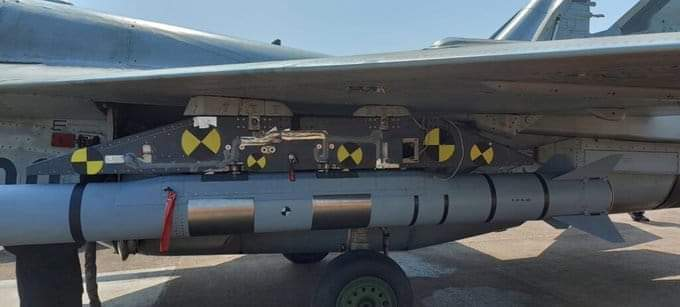
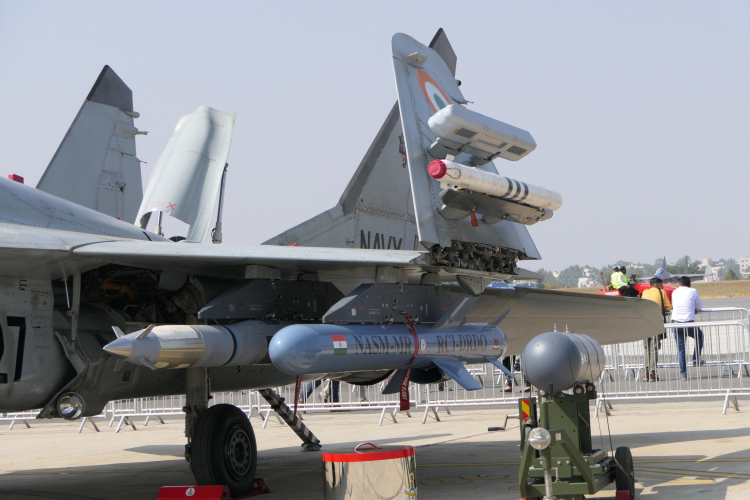
RAMPAGE on MIG-29K of the Indian Navy
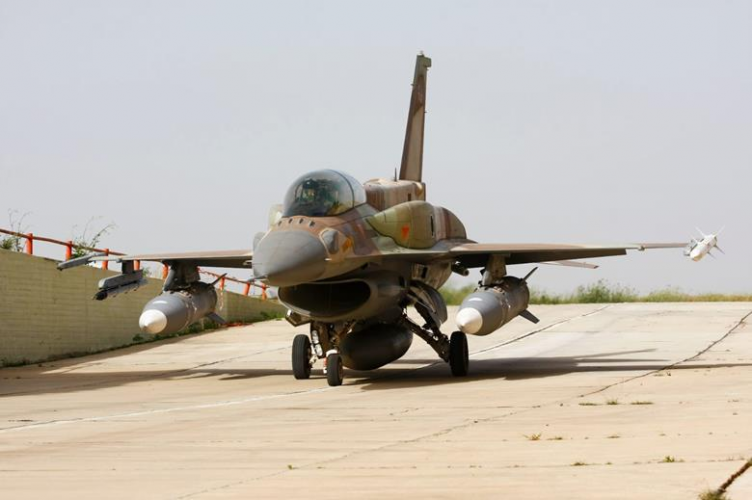
AIR LORA ALBM from Israel
They'd need a launch platform capable of carrying ~4t on a single hardpoint.
Are any of the F-16's or Mirage 2000's stores stations rated for 8,000lb?
T38 is about to leave service
T-38, the T38 was an early post-War prototype turboprop design that lead to the Allison T56 turboprop.
Forest Green
ACCESS: USAP
- Joined
- 11 June 2019
- Messages
- 12,782
- Reaction score
- 27,512
Not even on an F-15EX.Are any of the F-16's or Mirage 2000's stores stations rated for 8,000lb?
Forest Green
ACCESS: USAP
- Joined
- 11 June 2019
- Messages
- 12,782
- Reaction score
- 27,512
Huh, unless I'm mistaken the wing pylons on a P-8 are only rated for 2,500lb?

 www.twz.com

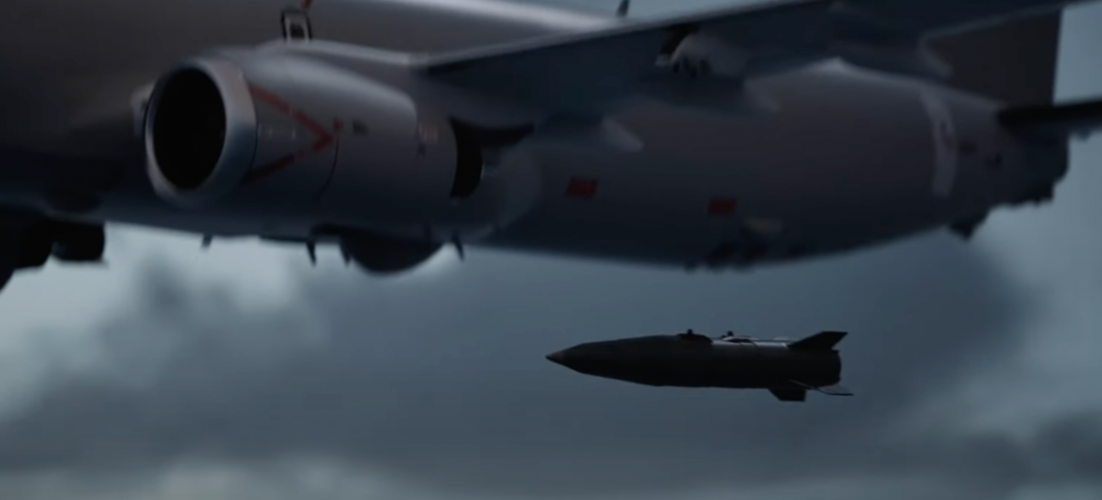
Air LORA, Israel's Biggest Air-Launched Ballistic Missile, Emerges From The Shadows
The Long Range Artillery (LORA) munition is the latest short-range ballistic missile to have been adapted by Israel as an air-launched weapon.
www.twz.com
Similar threads
-
Armed UAV search and wipe out the portable anti-tank missile shooter
- Started by li zhuo peng
- Replies: 0
-

-
Brazil and Argentina ballistic missiles projects
- Started by Aflp
- Replies: 4