Status
Not open for further replies.
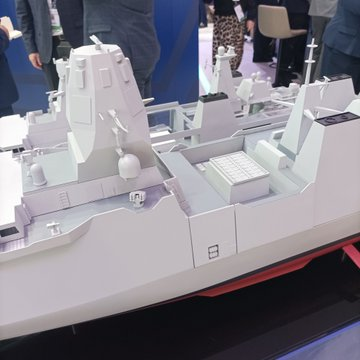
Different panels for different tasks.
The small ones each side of the high medium sized panels, likely be datalinks.
Unlikely, look too large for CEC. Probably X-Band arrays.

I still think going with a Type 31 or Type 26-derived hull is a mistake. IEP is probably necessary for the AAW role for radars alone, let alone lasers for air and missile defence in the low 10s of megawatts range (as opposed to Dragonfire's current 10s of kilowatts).
 
Yup, huge panels for volume air search and BMD, and then the small ones up top for horizon search and high res targeting.
It's strange how far the top ones are leaned back, that can't be good for range against sea skimmers. Maybe they want to lean more heavily on E/O sensors and AEW Proteus?
I wouldn't say that. Such AESA works pretty well beyond 30 degrees off the axis and most now give good resolution beyond 45 degrees.
 
I still think going with a Type 31 or Type 26-derived hull is a mistake. IEP is probably necessary for the AAW role for radars alone, let alone lasers for air and missile defence in the low 10s of megawatts range (as opposed to Dragonfire's current 10s of kilowatts).
I actually agree with you on that. Design staff need to do new ships.
 
Unlikely, look too large for CEC. Probably X-Band arrays.

I still think going with a Type 31 or Type 26-derived hull is a mistake. IEP is probably necessary for the AAW role for radars alone, let alone lasers for air and missile defence in the low 10s of megawatts range (as opposed to Dragonfire's current 10s of kilowatts).
I think there isn't as much of T26 in this concept as it would first appear. Yes, there are superficial design features that are similar, but having two comms masts isn't indicative of a reused propulsion system, for example. The hangar and funnel area are the most similar but again that doesn't say much about what is down below. There could be 3 MT30 gensets planned down the pipes for all we know.
Same with the hull form. This image has a very accentuated flush deck, which is very different from T26. If even that most basic of design decisions is different. In fact IMO this new image shares much more with T22 or Bristol hull-wise than it does with T26, and the bridge is superficially similar as well.
The size of the radar tells us that there is more to this design propulsion wise than T26, especially as the MT30 isn't hooked up to the hotel load.
 
Interesting that they seem to trust the 57mm for missile defence duties, though I assume it's more than adequate for that role.
IIRC, the 57mm can throw as much weight of shells-per-minute as the 5" Mk45, or very nearly so. So if you don't need the 5" for other reasons (or range), the 57mm is pretty good.

I still prefer the 76mm Sovraponte, but that's a separate argument.
 
IIRC, the 57mm can throw as much weight of shells-per-minute as the 5" Mk45, or very nearly so. So if you don't need the 5" for other reasons (or range), the 57mm is pretty good.

I still prefer the 76mm Sovraponte, but that's a separate argument.
57mm is 2.4kg x 220rpm = 528kg/min
76 Super Rapid is 6.3kg x 120rpm = 756kg/m (not sure if the Sovraponte has the same rpm)
Mk45 is 32kg x 20rpm = 640kg/m
So with the newer developments of the latter guns they have overtaken the Bofors' claim of having the greatest 'throw rate', but not dramatically.
I'm surprised that BAE haven't tried to compete with Sovraponte by producing a lightweight, cut down 57, the gun housing is far too bulky for what is actually inside and the mounting weighs more than Sovraponte despite the lower performance.
 
The Bofors 57mm @ 220 rpm understand is only theoretical, the mount only holds 120 rounds, it has two 20 round ready service magazines, one either side of the barrel, that move with the gun, after firing the 40 rounds it has to stop to reload from its two 20 round cassette service mount magazines which requires gun to elevate to its max elevation load and return to point of aim and then restart firing again before having to stop again to reload from the two 20 round intermediate mount magazines and said time to fire and reload the total 120 rounds said to be 2 minutes, if so in actuality its only fires at 60 rpm though at a rate of 220 rpm, have seen no mention if the below deck magazine ammunition can be transferred to mount magazines while the gun is in the process of firing?

View: https://www.youtube.com/watch?v=KeZzJSex_Ak&t=68s
 
The Bofors 57mm @ 220 rpm understand is only theoretical, the mount only holds 120 rounds, it has two 20 round ready service magazines, one either side of the barrel, that move with the gun, after firing the 40 rounds it has to stop to reload from its two 20 round cassette service mount magazines which requires gun to elevate to its max elevation load and return to point of aim and then restart firing again before having to stop again to reload from the two 20 round intermediate mount magazines and said time to fire and reload the total 120 rounds said to be 2 minutes, if so in actuality its only fires at 60 rpm though at a rate of 220 rpm, have seen no mention if the below deck magazine ammunition can be transferred to mount magazines while the gun is in the process of firing?

View: https://www.youtube.com/watch?v=KeZzJSex_Ak&t=68s
Yes, but the instantaneous fire rate is still the most important for roles like CIWS.
A scenario in which a gun is firing continuously without breaks for a minute is one in which the ship is already doomed.
 
The Bofors 57mm @ 220 rpm understand is only theoretical, the mount only holds 120 rounds, it has two 20 round ready service magazines, one either side of the barrel, that move with the gun, after firing the 40 rounds it has to stop to reload from its two 20 round cassette service mount magazines which requires gun to elevate to its max elevation load and return to point of aim and then restart firing again before having to stop again to reload from the two 20 round intermediate mount magazines and said time to fire and reload the total 120 rounds said to be 2 minutes, if so in actuality its only fires at 60 rpm though at a rate of 220 rpm, have seen no mention if the below deck magazine ammunition can be transferred to mount magazines while the gun is in the process of firing?

View: https://www.youtube.com/watch?v=KeZzJSex_Ak&t=68s
That's still ~20 seconds of firing out of the Ready Service magazines alone.
 
That's still ~20 seconds of firing out of the Ready Service magazines alone.
Any thoughts on how effective and range of 40 57mm rounds would be.

After the assumed failure of the Raytheon MAD-FIRES 57mm projectile who were awarded the contract to develop it and promising to alter its flight path in real time to stay on target, and a capacity to continuously target, track and engage multiple fast-approaching targets simultaneously and re-engage any targets that survive initial engagement. Unfortunately it appears nothing came of it after a contract spend of $100 million, it was due for completion back in Nov. '22.
 
Hopefully we see the AH160 at some point as well. Perhaps this design is being offered to Denmark and Sweden?

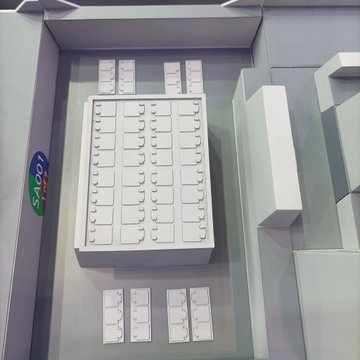
The density of missiles on this thing is insane - 96 CAMM/CAMM-ER in the ExLS, and then an extra 32 strike-length VLS for whatever else you want.
 
Hopefully we see the AH160 at some point as well. Perhaps this design is being offered to Denmark and Sweden?

The density of missiles on this thing is insane - 96 CAMM/CAMM-ER in the ExLS, and then an extra 32 strike-length VLS for whatever else you want.
Well, this is adequate as is for the low cost option on T83, so unless Babcock want to position themselves as equal to BAE in shipbuilding the above might be it as far as AH160 goes. Frustratingly there aren't any pics of the bow section, but with the B-pos VLS we know is possible this thing can go up to 48+96 which is well beyond T45 and plenty when T91 is considered as well.
 
The density of missiles on this thing is insane - 96 CAMM/CAMM-ER in the ExLS, and then an extra 32 strike-length VLS for whatever else you want.
That may be the minimum that such any such design needs to survive, much less protect other ships and assets. And that's before you get to any sort of offensive capability.
 
Effective range is supposed to be about 8500m.
How realistic is this figure, why saying this OTOMelara posted video 10 years ago firing their more powerful saboted Dart round from a 76/62 gun at a slow Banshee Mach 0.3 target drone at only 4,500m & 4000m and at ~ 100m altitude, if this is a true reflection of effective AA range of a 76mm 4kg sub-caliber projectile expect the lower weight 57mm projectile maybe half that range and near zero capability against a supersonic ASCMs?

View: https://www.youtube.com/watch?v=61YnsQ1v0mw&t=3s
 
I truly wonder whether having unmanned ships is a good idea, given the issues that the US is facing in their development, as well as the obvious issues that come with not having a crew on board. Seems like a fiasco in the making, that would make LCS look like childsplay. It would probably just make more sense to make a large combatant in the long run, rather than a smaller, "cheaper" one in the short term
 
View attachment 784293View attachment 784294
Babcock showing their AAW AH140 design (images courtesy of Gabriele Molinelli on X). That's a lot of VLS, even if the ExLS is wonky.
Similar to the parent design. 32 Mk41 cells in the raised structure flanked by shorter, self defence tubes. On the base design these were stan-flex mounted mk48 tubes for ESSM, so either a change or a little artistic license. Some very clear images here, if needed. https://www.seaforces.org/marint/Danish-Navy/Frigate/Iver-Huitfeldt-class.htm

Edited to add, Gabi now has similar images of the BAe offering; looks like a 64 cell upfront and another 64 replacing the mission bay amidships.

View: https://x.com/Gabriel64869839/status/1966129194208796919/photo/1
 
Last edited:
I truly wonder whether having unmanned ships is a good idea, given the issues that the US is facing in their development
We've not really heard of any major technical showstoppers, the US issues I've heard of sound much like the Constellation ones - not so much decision paralysis as an inability to control all and sundry having personal 'wouldn't it be nice if...?' wants.
 
Similar to the parent design. 32 Mk41 cells in the raised structure flanked by shorter, self defence tubes. On the base design these were stan-flex mounted mk48 tubes for ESSM, so either a change or a little artistic license. Some very clear images here, if needed. https://www.seaforces.org/marint/Danish-Navy/Frigate/Iver-Huitfeldt-class.htm

Edited to add, Gabby now has similar images of the BAe offering; looks like a 64 cell upfront and another 64 replacing the mission bay amidships.

View: https://x.com/Gabriel64869839/status/1966129194208796919/photo/1
It's got some nice angles. The side view is pretty good, but looking at it front on is an experience, to say the least.Maybe it'll grow on me, the Type 45 certainly did.

128 Mk41 cells on a ship of this size is mad.
 
  • Like
Reactions: zen
It's got some nice angles. The side view is pretty good, but looking at it front on is an experience, to say the least.Maybe it'll grow on me, the Type 45 certainly did.

128 Mk41 cells on a ship of this size is mad.
https://www.navylookout.com/adding-firepower-to-the-type-26-frigate/
The article covers the Hunter class derivative BAe pitched to Australia, with a 96 cell Mk41 setup while keeping the 5in gun and references a 128 cell variant without the 5in, so BAe have been heading in this direction for a while. Hunter is a slightly widened T26 hull to accommodate the increased top weight of the CEAFAR 2 radar.
 
It's got some nice angles. The side view is pretty good, but looking at it front on is an experience, to say the least. Maybe it'll grow on me, the Type 45 certainly did.

128 Mk41 cells on a ship of this size is mad.
I'm trying to work out what it reminds me of, it's a bit like the Hobarts but not quite.
 
Aster 30 ticks all the boxes that SM-6 does. The Offensive Counter Air/Strike role will be filled by FC/ASW/SPEAR-5.

It's pretty obvious given current global events that Britain is not going to adopt American missiles, so PAC-3 MSE and SM-6 are not viable choices, especially when MBDA has potential options like Aster 30 Block 1 NT, CAMM MR and AQUILA under development.
Coming back to this conversation, in addition to being used for OCA against airbases etc, given it's anti-HVAA role, might RJ10 fill the niche of a very-long range SAM for the Type 83?

A missile of this type filling this role is not entirely outside of possibility, given Martin Marietta's 1970s proposal for an ASALM derivative for the US Navy for Outer Air Battle.
 
Last edited:
Coming back to this conversation, in addition to being used for OCA against airbases etc, given it's anti-HVAA role, might RJ10 fill the niche of a very-long range SAM for the Type 83?

A missile of this type filling this role is not entirely outside of possibility, given Martin Marietta's 1980s proposals for an ASALM derivative for the US Navy for Outer Air Battle.
I think there are two main issues here.

First, a ramjet-powered missile is going to offer great range and terminal maneuverability, but no anti-ballistic capability, which is a far more significant requirement than it was just a few years ago given the events in the Middle East.

Second, the Forward Pass/Outer Air Battle missile requires offboard sensors to utilize. The US Navy was going to utilize E-2s with CEC for that purpose, but it would require using something like an F-35 or Mojave with a tactical data link for the Royal Navy.

While I'm sure its technically feasible (not as sure about funding), it's also possible with a quasi-ballistic anti-air missile like the SM-6, which also has anti-ballistic capability in addition to anti-air and anti-surface roles. The Aster 30 Block 2 probably represents the appropriate form factor (full-diameter missile), but it looks like an exoatmospheric ABM like SM-3 instead of a maneuvering in-atmosphere ABM like SM-6 or PAC-3 MSE.

 
I think there are two main issues here.

First, a ramjet-powered missile is going to offer great range and terminal maneuverability, but no anti-ballistic capability, which is a far more significant requirement than it was just a few years ago given the events in the Middle East.

Second, the Forward Pass/Outer Air Battle missile requires offboard sensors to utilize. The US Navy was going to utilize E-2s with CEC for that purpose, but it would require using something like an F-35 or Mojave with a tactical data link for the Royal Navy.

While I'm sure its technically feasible (not as sure about funding), it's also possible with a quasi-ballistic anti-air missile like the SM-6, which also has anti-ballistic capability in addition to anti-air and anti-surface roles. The Aster 30 Block 2 probably represents the appropriate form factor (full-diameter missile), but it looks like an exoatmospheric ABM like SM-3 instead of a maneuvering in-atmosphere ABM like SM-6 or PAC-3 MSE.
If Aster-30 Block 1NT offers similar performance to the SM-6 in the anti-ballistic role, as is often claimed, then having the RJ-10 as a long-range missile against air-breathing threats makes sense. Rather than having one missile that does both terminal-phase BMD and long-range AAW (the SM-6), you split the two roles, and use the Aster and RJ-10 exclusively for their respective roles.

We know the RN wants CEC to be part of the FADS, but you're right in saying that targeting at extended ranges is likely the trickiest part of using a long-range missile.

I'm 90% sure that the Aster-30 Block 2 will never see the light of day, given it hasn't been mentioned by either MBDA or the European governments in half a decade. It's role has been superseded by the Aquila missile, which has a more appropriate form factor for atmospheric operations.
 
A rational view.
A hypersonic missile, might indeed be one of sufficient range and of speed able to be lofted against distant targets. By compressing the flight duration from launch to terminal homing, the target has less time to maneuver or accelerate to escape.
This would make it dangerous for opposition high value assets to get within distances, which otherwise might be viewed as tolerably low risk.

Aircraft can be detected and accurately tracked at altitudes of 20,000ft to 40,000ft at ranges in excess of 200nm.
But at Mach 2, at 20,000ft is just 1,146kts or a duration of 10.47 minutes to cross the distance.
Enough time to accelerate, dive, and change course sufficiently to be a long way from where you were expected to be.

At Mach 5 or 3333kts means 3.6 minutes to cross the distance.
Not enough time for any subsonic platform to get away from where you were expected to be.
 
Coming back to this conversation, in addition to being used for OCA against airbases etc, given it's anti-HVAA role, might RJ10 fill the niche of a very-long range SAM for the Type 83?

A missile of this type filling this role is not entirely outside of possibility, given Martin Marietta's 1980s proposals for an ASALM derivative for the US Navy for Outer Air Battle.
Well, from what we know about RJ10, or RS as we must supposedly now call it, it is to the SM6 family what Meteor is to AMRAAM; slightly slower, but significantly more efficient and longer ranged. On the face of it, it would be a great way to add reach to T83 beyond Aster, for which MBDA doesn't seem to be prioritising increased range.
One limitation might be the booster. Every long range SAM beyond the huge Russian types use big boosters, but none has been indicated so far for RS so it might just have a Meteor style integrated booster, which isn't great for getting to high altitude and speed.
 
You can use airbreathers for ABM, but obviously there be certain limitations. However for lateral translation into a optimum position, they do have some potential.
But they have to be lofted up high first and that depends on having time.....
 
Would the RJ-10 even have the required performance for BMD work? Surely you'd be better off relying on Aster.
 
  • Like
Reactions: zen
https://ukdefencejournal.org.uk/bae-unveils-warship-concepts-faster-leaner-more-firepower/
20250910_091109.jpg

RS233148_air-warfare-alpha-1.jpg
 
"It is important to note that these vessels aren’t being pitched as ‘Type 83’ by BAE Systems. Instead, these are concept demonstrators "

So it's purely coincidental that the Air Warfare Command Ship matches the Type 83 and the Sensor Effector Platform the Type 92 sloop ;)
Isn't SEP T91? I know BAE said you could put a towed array on it, but T92 sounds like more of a miniature SURTASS type vessel.
 
  • Like
Reactions: DJK
Isn't SEP T91? I know BAE said you could put a towed array on it, but T92 sounds like more of a miniature SURTASS type vessel.
You're right, though with a towed array I'm not certain SEP doesn't split the Type 91/92 difference.
 
Status
Not open for further replies.

Similar threads

Back
Top Bottom