The AIM-174 rear fins are mechanically spring loaded and lock into place as soon as it exits the launch tube.

RIM-174A not the AIM-174B, that spring-loaded mechanism could be redesigned to actuate when the AIM-174B's rocket-motor fires after it's ejected from the WB using the launch-acceleration induced set-back.
 
RIM-174A not the AIM-174B, that spring-loaded mechanism could be redesigned to actuate when the AIM-174B's rocket-motor fires after it's ejected from the WB using the launch-acceleration induced set-back.
Such a mechanism would get triggered when the F/A-XX catapult launches from the carrier deck. All of the missiles fins would then pop out and they would become stuck inside the weapon bay.

If it was easy to fold the fins of air-to-air missiles for internal weapon bays we would have seen proposals by now. Yet we have seen complicated folding mechanisms to fit 6 AMRAAM inside the F-35. They could fold the fins and fit 8+ missiles internally.
 
It would require a full redesign of the missile to make the the fins electronically fold on command to fit an internal weapons bay.

There's no need to have the fins electronically fold at all. Folding them can be done during manufacture.

The motors that control the fins as the missile turns are not designed to pass an electronic or hydraulic signal to a folding mechanism.

No need to involve the actuators at all, there are multiple ways to trigger unfolding, even something as mechanically simple as a lanyard.
 
Yes, but that is sufficient to mission kill an escort,

Even if you assume all of that 75lbs is explosive, it's still only about the same mass of explosives as three 5" ERGM rounds, and all concentrated in one place. You might get a mission kill, but it's going to be very dependent on where it hits (cf the C802 hit on INS Hanit in 2006).
 
Such a mechanism would get triggered when the F/A-XX catapult launches from the carrier deck. All of the missiles fins would then pop out and they would become stuck inside the weapon bay.

The launch acceleration from a catapult is significantly less than that of the missile's rocket-motor when it fires (~40-50G at launch). Alternatively the fins could be kept folded by a restraining-band that either gets stripped off by an elastic bungee-cord (Attached to the launcher) or is just stripped off by aerodynamic forces at launch and motor ignition.
 
The AIM-174 rear fins are mechanically spring loaded and lock into place as soon as it exits the launch tube.

It would require a full redesign of the missile to make the the fins electronically fold on command to fit an internal weapons bay.
Nope.

All it takes is something to hold them closed that releases when the missile drops. Say, shearing a plastic packing strap.
 
…and JSM is also almost just as expensive. The USN has no interest in JSM; you are thinking of the USAF who is buying a small batch of ~500 over five years as a “bridge” to LRASM integration.

Also see above; most of that 1000 lb weight is titanium penetrator.
So, can't be JSM because it's too expensive. Can't be AGM-158 because they're too big. Can't be JDAMs because those aren't standoff...

NSM replaced RGM-84 Harpoons, but is somehow 70cm stowed when JSM isn't that big.

AGM-154 JSOWs? The -C model has the BROACH warhead...

If all you want to do is mission kill, the AARGM-ER or SiAW will work just fine.
 
If it was easy to fold the fins of air-to-air missiles for internal weapon bays we would have seen proposals by now. Yet we have seen complicated folding mechanisms to fit 6 AMRAAM inside the F-35.
Exactly that
 
Another example of an air-launched missile with folding-fins is the AGM-183A ARRW, although I'm curious as to what makes them unlatch at launch.
 
Another example of an air-launched missile with folding-fins is the AGM-183A ARRW, although I'm curious as to what makes them unlatch at launch.
An air-to-ground weapon only needs limited maneuverability. The fins can be much smaller and this makes it easier to develop a folding mechanism.

Moving to the patriot family of missiles makes much more sense for internal weapon carriage.
 
Remember Mace's small size comes with (or is that courtesy of?) a 75lb warhead.

AFM-158 warhead, 1000lbs.
A 75lb warhead can knock out key components provided it has a modern high resolution IR imager.
 
A 75lb warhead can knock out key components provided it has a modern high resolution IR imager.
There's a difference between can and will, we can't assume every hit is a golden-BB.
 
Even if you assume all of that 75lbs is explosive, it's still only about the same mass of explosives as three 5" ERGM rounds, and all concentrated in one place. You might get a mission kill, but it's going to be very dependent on where it hits (cf the C802 hit on INS Hanit in 2006).

NSM and LRASM already choose their aim point on a target ship. I do not see any reason any new AShM could not do the same now just using commercial components. And yes, I think taking a precisely aimed 5” shell with a delayed fuse to the forward superstructure would probably mission kill most any escort. There’s also the addition mass and remaining fuel of the rest of the missile.

On any case, this is not my opinion, this is the direction we know the USN is moving in. LRASM will also still be inventory, and the MACE RFI seemed to hint that both weapons might used in combination. So perhaps a mass of small missiles to achieve saturation with larger ones mixed in or immediately following to achieve more damage.
 
So, can't be JSM because it's too expensive. Can't be AGM-158 because they're too big. Can't be JDAMs because those aren't standoff...

NSM replaced RGM-84 Harpoons, but is somehow 70cm stowed when JSM isn't that big.

AGM-154 JSOWs? The -C model has the BROACH warhead...

If all you want to do is mission kill, the AARGM-ER or SiAW will work just fine.

Look at the MACE RFI. Look at similar USAF programs like ERAM or ETV. Look what is already available on the market: Barracuda 500, CMMT, Red Wolf, others. The next AShM (ETA: these effectors will not be exclusively AShM but will be capable of it) is going to be a <1000 lb weapon with >200 miles range and a ~$200,000 cost that an F-18 can carry ten of under the wings, sans drop tanks. FA-XX likely will have a fairly large external capacity for stand off saturation strikes as well as a larger internal capacity than F-35 for stand in weapons, my personal guess. But I do not think we will see internal AIM-174 or AGM-158 carriage.
 
Last edited:
There's a difference between can and will, we can't assume every hit is a golden-BB.

It is hardly a golden BB to make a missile hit a particular point target now adays. And such a light a cheap weapon would hardly be used one at a time; there likely would be multiple hits. The goal is saturation or exhaustion of opponents defenses using something that is threatening enough it cannot be ignored. Right now an air strike has to fake until they make it using MALD-Ns, or else just launch a handful of LRASMs and hope for the best.
 
It is hardly a golden BB to make a missile hit a particular point target now adays. And such a light a cheap weapon would hardly be used one at a time; there likely would be multiple hits. The goal is saturation or exhaustion of opponents defenses using something that is threatening enough it cannot be ignored. Right now an air strike has to fake until they make it using MALD-Ns, or else just launch a handful of LRASMs and hope for the best.

It is hardly a golden BB to make a missile hit a particular point target now adays. And such a light a cheap weapon would hardly be used one at a time; there likely would be multiple hits. The goal is saturation or exhaustion of opponents defenses using something that is threatening enough it cannot be ignored. Right now an air strike has to fake until they make it using MALD-Ns, or else just launch a handful of LRASMs and hope for the best.
Agreed, look at spike missile strike footage. Freakishly accurate.
 
Look at the MACE RFI. Look at similar USAF programs like ERAM or ETV. Look what is already available on the market: Barracuda 500, CMMT, Red Wolf, others. The next AShM (ETA: these effectors will not be exclusively AShM but will be capable of it) is going to be a <1000 lb weapon with >200 miles range and a ~$200,000 cost that an F-18 can carry ten of under the wings, sans drop tanks. FA-XX likely will have a fairly large external capacity for stand off saturation strikes as well as a larger internal capacity than F-35 for stand in weapons, my personal guess.
I don't think that the USN is willing to go tiny in terms of Antiship missiles. Sometimes you need a ship dead, not blind. 200+lb warheads, if not 1000lbs of boom.


But I do not think we will see internal AIM-174 or AGM-158 carriage.
What about AARGM-ERs? Which are the same size as AGM-158s. Those need to be carried internally.
 
I don't think that the USN is willing to go tiny in terms of Antiship missiles. Sometimes you need a ship dead, not blind. 200+lb warheads, if not 1000lbs of boom.


What about AARGM-ERs? Which are the same size as AGM-158s. Those need to be carried internally.

As I have noted, AGM-158 is pretty far from 1000# of boom. And I sincerely doubt AGM-88G has anything like the vertical height of AGM-158, even if the strakes make it that wide, else F-35 could already carry it.
 
The launch acceleration from a catapult is significantly less than that of the missile's rocket-motor when it fires (~40-50G at launch).
The AMRAAM at launch accelerates at around 12G.

The below document for the AIM-120C5 shows the missile accelerates from Mach 0.5 to Mach 3.6 is 7.75 seconds. So the catapult launch would most likely trigger a folding mechanism based off acceleration.

www.zaretto.com/sites/zaretto.com/files/missile-aerodynamic-data/AIM120C5-Performance-Assessment-rev2.pdf

Only a hydra rocket accelerates at over 30G as it has a short burn time of around 1 second.

Alternatively the fins could be kept folded by a restraining-band that either gets stripped off by an elastic bungee-cord (Attached to the launcher) or is just stripped off by aerodynamic forces at launch and motor ignition.
Yes some plastic packing straps. How about some cables ties and duct tape?
 
“Awarding the F/A-XX contract as written is likely to delay the higher-priority F-47 program, with low likelihood of improving the timeline to field a Navy sixth-generation fighter,” the White House argues. “The administration looks forward to working with Congress to identify an optimal path forward.”

 
"Lawmakers are also looking to apply pressure to the U.S. Navy to keep its F/A-XX program going despite a Pentagon push to apply the brakes. The measure calls on Deputy Defense Secretary Stephen Feinberg, the main force behind slowing the effort, to provide a report to lawmakers on the progress."

 
“Awarding the F/A-XX contract as written is likely to delay the higher-priority F-47 program, with low likelihood of improving the timeline to field a Navy sixth-generation fighter,” the White House argues. “The administration looks forward to working with Congress to identify an optimal path forward.”
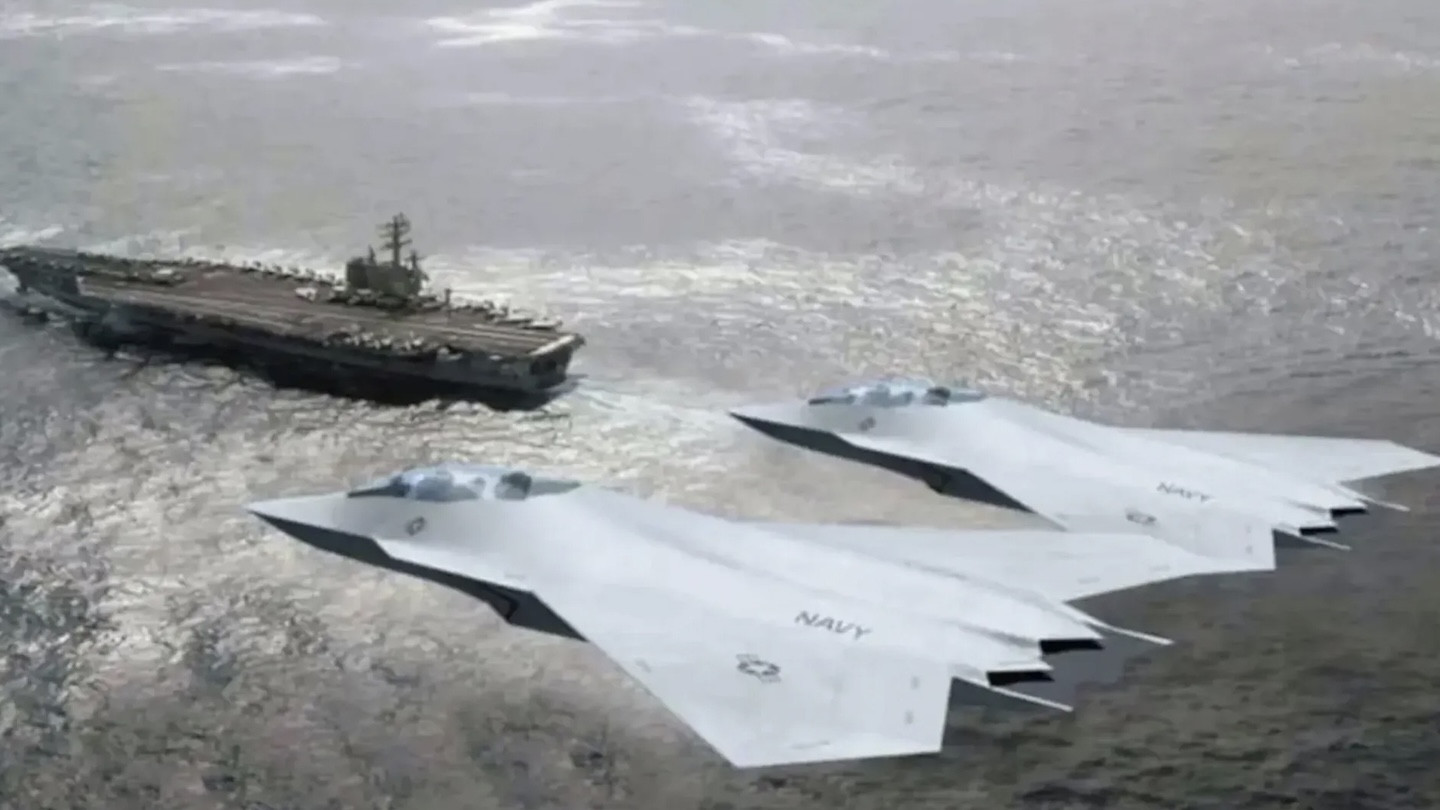
This all but confirms that the USAF selected the F/A-XX demonstrator built by Boeing and that the US Navy has also selected the same design.

The US wants to develop the two variants in series rather than in parallel. This makes perfect sense as the air-to-ground capability and carrier parts can be considered additional to the USAF variant. All the flight testing and production ramp will move faster if they concentrate on the simpler USAF variant.

After the USAF variant starts low rate production development work can then concentrate on the Navy variant. The Navy variant then enters service on a similar timeline compared to if the development of both variants were done in parallel.

This is not like trying to make the F-22 design land on a carrier. The Boeing F/A-XX would have been designed from the start to be carrier capable. They will know with extreme confidence that the F-47 will need minimal changes to become carrier capable.
 
This is not like trying to make the F-22 design land on a carrier. The Boeing F/A-XX would have been designed from the start to be carrier capable. They will know with extreme confidence that the F-47 will need minimal changes to become carrier capable.
So what you're telling me is the air force got the short end of the stick again for a compromised design made to be more compatible with the navy? Is this different from how the F4 was designed?

Not sure how similar they can be when they are going to have different engines, but it might well explain why the F47 render has canards - that might of been Boeing's naval demonstrator
 
Just as I had originally thought insidersource, Boeing to build the F/A-XX I wonder if it will be like the A/FX that was to have been designed with VG wings. Just a thought that I have got.
 
So what you're telling me is the air force got the short end of the stick again for a compromised design made to be more compatible with the navy? Is this different from how the F4 was designed?
The Dassault Rafale would be a better example. The air force version is effectively uncompromsed and can supercruise easily. The Rafale has 95% commonality and the naval variant weighs 7% more

Not sure how similar they can be when they are going to have different engines, but it might well explain why the F47 render has canards - that might of been Boeing's naval demonstrator

It is highly likely that both variants would use the same engines. The US Navy has been clear for years that they would not fund an expensive adaptive engine for their F/A-XX design. Most reports suggest it would have used two F110 engines. This has a fairly high bypass ratio to provide good fuel efficiency during cruise. The F110 engines provide around 40% more thrust than the Super Hornet and F-35C. This is enough thrust to provide excellent performance while maxing out the size limit of the carrier.

However the USAF is willing to fund the adaptive engine with the XA102 and XA103. The more expensive adaptive engines would improve performance above what the F/A-XX would have previously achieved. The US Navy would now be crazy not to use the more advanced engine.

I think the design will have a layout and overall specifications very similar to the J-20.
 
Last edited:
The Dassault Rafale would be a better example. The air force version is effectively uncompromsed and can supercruise easily. The Rafale has 95% commonality and the naval variant weighs 7% more
IIRC all single seater Rafales are navy structure (i.e. "compromised"), and there is no carrier dual seater as it's exclusively land.
Only two basic airframe designs exist.
 
IIRC all single seater Rafales are navy structure (i.e. "compromised"), and there is no carrier dual seater as it's exclusively land.
Only two basic airframe designs exist.
That is incorrect.

"Compared to the Rafale B and C (Air force Version), the nose and main landing gears on the navy version have been reinforced to satisfy the difficult aircraft carriers landing and catapulting conditions for this type of aircraft."


Also the heavy tail hook on the naval variant is not shared with the air force version. The air force version is uncompromsed.
 
"Compared to the Rafale B and C (Air force Version), the nose and main landing gears on the navy version have been reinforced to satisfy the difficult aircraft carriers landing and catapulting conditions for this type of aircraft."

https://www.safran-group.com/products-services/dassault-aviations-rafale-nose-and-main-landing-gears
Also the heavy tail hook on the naval variant is not shared with the air force version. The air force version is uncompromsed.
There's rest of the structure, which is majority of the weight. And it's here where all single seaters are effectively naval.
Hook and chassis is nice, but something in our little nice bee has to withstand, first, being thrown at the deck, and then being stopped by the sting in a few meters. Those reinforcements are in place.
 
The Dassault Rafale would be a better example. The air force version is effectively uncompromsed and can supercruise easily. The Rafale has 95% commonality and the naval variant weighs 7% more
Well that's the hope I guess.
The US Navy would now be crazy not to use the more advanced engine.
That's not the impression Ive had at least following this thread from the start. The navy has never said its putting Adaptive engines on it's fighter. It's stated 25% increase in range over the F35 also doesn't speak to an adaptive engine. Reports floating around have also indicated otherwise. 2024 from The Aviationist:
According to Rear Adm. Donnelly, the new carrier-based fighter will be affordable, versatile and independent of Air Force-funded technologies such as an adaptive-cycle turbofan engine. Initially, the Navy appeared interested in the adaptive-cycle technology being developed for the Next-Generation Adaptive Propulsion (NGAP) program. In the past decade, however, propulsion plans for the two services have diverged, according to Donnelly.

“We’re looking at more of a derivative-type engine solution,” said Donnelly. “That’s just one example where we probably are different in many ways from the Air Force. In totality, they are two unique programs from an acquisition point of view and also going forward, so we’re relatively independent of each other at this point.”

Like you said though - I don't know why the navy wouldn't opt for it but ... that's what's been said.
 
Last edited:
aside from engine specific concerns wrt carrier operations, I too find it hard to see why the USN seems to be making definitive statements about the F/A-XX not having X102/103 type engines. Perhaps the steric demands for the inlet and or exhaust or a larger diameter engine with a third stream demand too much of an internal payload sacrifice.

Otherwise it would seem to make sense to go with two airframes (F-47 and F/A-XX) that across both types would represent enough acquisition and sustainment value to generate real competition between GE and P&W.
 
I too find it hard to see why the USN seems to be making definitive statements about the F/A-XX not having X102/103 type engines.
These statements would have been made before the USAF selected the Boeing F/A-XX design and was willing to fund the adaptive engine.

The USAF paused the NGAD program in July 2024 and first mentioned the cheaper/lighter NGAD in September 2024. The original USAF NGAD was meant to be bigger and would have used bigger adaptive engines that could not have fitted on the Navy design. This is why the USN was made definitive statements as they could not justify funding their own unique sized adaptive engine.
 
These statements would have been made before the USAF selected the Boeing F/A-XX design and was willing to fund the adaptive engine.

The USAF paused the NGAD program in July 2024 and first mentioned the cheaper/lighter NGAD in September 2024. The original USAF NGAD was meant to be bigger and would have used bigger adaptive engines that could not have fitted on the Navy design. This is why the USN was made definitive statements as they could not justify funding their own unique sized adaptive engine.

We have a poster here who explicitly stated cost was not the primary factor in the consideration. I do not know for certain but most every indication is that there will not be an adaptive engine on FA-XX regardless of who builds it.

Also note that while NGAD was paused, engine development was always fully funded. The USN never had any intention of adopting it anyway.
 
Also note that while NGAD was paused, engine development was always fully funded. The USN never had any intention of adopting it anyway.

On May 8, 2024 GE published that the XA102 completed design review in December 2023.


Yet on February 19, 2025 GE announced they had completed design review of the XA102

The adaptive engines have now been scaled down to fit the smaller F/A-XX design which is why we have two design reviews. The original larger adaptive engine were too big for the Navy design. The USN could not fit the engine and they had no intention of funding their own unique adaptive engine for their design.

The USAF has now funded the engine for the Navy.
 
IIRC all single seater Rafales are navy structure (i.e. "compromised"), and there is no carrier dual seater as it's exclusively land.
The navalisation weight penalty on the land-based Rafale variant doesn't seem to have a big deal as Rafale Cs have an empty weight of ~9,500kg... compare to Eurofighter at 11,000kg!
 
The navalisation weight penalty on the land-based Rafale variant doesn't seem to have a big deal as Rafale Cs have an empty weight of ~9,500kg... compare to Eurofighter at 11,000kg!
Why not just compare it to the F-15?
 
Why not just compare it to the F-15?
Well F-15 is bigger and designed to a different set of requirements.

Eurofighter and Rafale emerged from the same requirements, with the initial point of divergence being that France wanted to cap empty weight at 9 tonnes while the other partners were OK with something in the 9.5-10 tonne range. In the end Rafale C came in at 9.5t (+5% over the initial spec) and Eurofighter at 11t... +10% over the spec, and +15% over Rafale C despite not having any naval penalty!
 

Similar threads

Back
Top Bottom