Jackonicko
ACCESS: Secret
- Joined
- 4 February 2009
- Messages
- 476
- Reaction score
- 1,201
Our esteemed forum comrade ‘flateric’ made the last post in the ‘Dassault/SAAB/Alenia nEUROn UCAV’ thread on 3 July 2022. Since then, Dassault has launched a new UCAV programme to meet an Armée de l’Air et de l’Éspace requirement, for an unmanned collaborative combat aircraft or ‘Remote Carrier’ to accompany/augment the Rafale F5.
This is a new aircraft, and though it bears some resemblance to the nEUROn, a new thread is surely justified?
Dassault is essentially scrambling to develop its own unmanned adjunct, in direct competition with Airbus, who are supposed to lead the unmanned pillar of the FCAS/SCAF (Future Combat Air System/Systéme de Combat Aérien du Futur) programme (also known as the Zukünftiges Luftkampfsystem in Germany and as the Futuro Sistema Aéreo de Combate in Spain).
The French Ministry of Armed Forces is reportedly investing €128 million to develop this new unmanned combat aerial vehicle, which will be based on the Neuron demonstrator, and which has been referred to as the Neuron 2.0, or simply UCAS (Unmanned Combat Air System). (It will “benefit from the achievements of the nEUROn* program, Europe’s first stealth UCAV demonstrator.”). The original nEUROn flew 170 sorties from December 2012, and validated low observability, autonomous flight, internal weapons carriage, and integration within a C4I environment. As a result the new aircraft will not require a technology demonstrator to support its development.
The new aircraft will incorporate stealth technologies, autonomous control (with man-in-the-loop), and will have an unspecified internal payload capacity. It has been reported that the new UCAV will be powered by a single Safran M88 engine, the engine used in the (twin-engined Rafale) and will have a maximum take off weight of around 17.5 tonnes (similar to that of the Mirage 2000, and about three times the weight of the original Adour-engined nEUROn).
Sébastien Lecornu, French Minister of the Armed Forces and Veterans Affairs, announced the development launch of the unmanned combat aerial vehicle (UCAV) on 8 October 2024
The announcement was made at a ceremony marking the 60th anniversary of the French Strategic Air Forces (FAS) at the Saint-Dizier air base, in the presence of General Jérôme Bellanger, Chief of Staff of the French Air and Space Force (AAE), and Éric Trappier, Chairman and CEO of Dassault Aviation.
It was said that the new UCAS will complement the future Rafale F5 standard after 2030.
Eric Trappier said that: “This stealth combat drone will contribute to the technological and operational superiority of the French Air Force by 2033.”
Before the Paris Air Show, where the new aircraft was shown in model form, Craig Hoyle of Flight Global reported that General Arvind Badrinath, head of combat air for France’s DGA defence procurement body had said that: “A pre-development contract is ongoing. The next phase is to launch the development activity that will lead to a first prototype.”
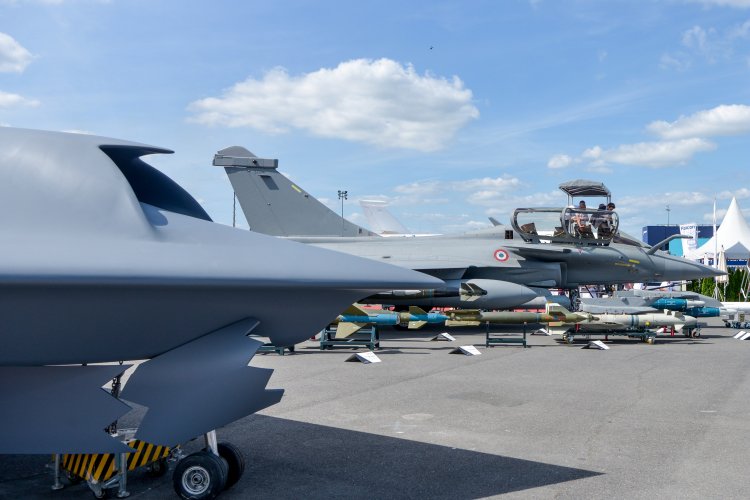
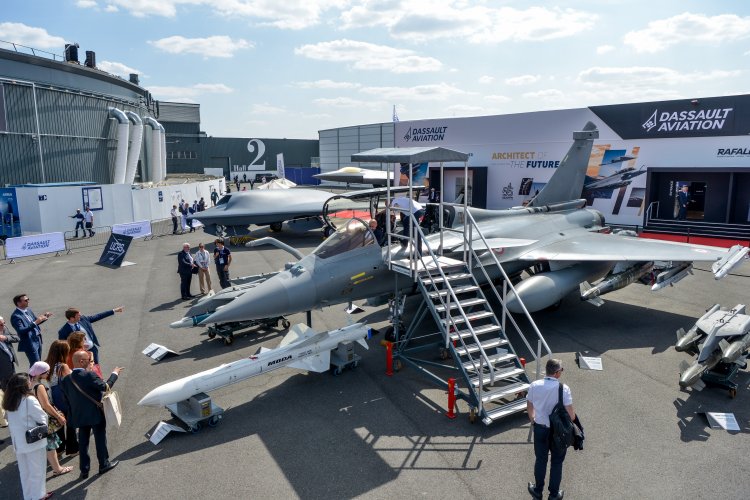
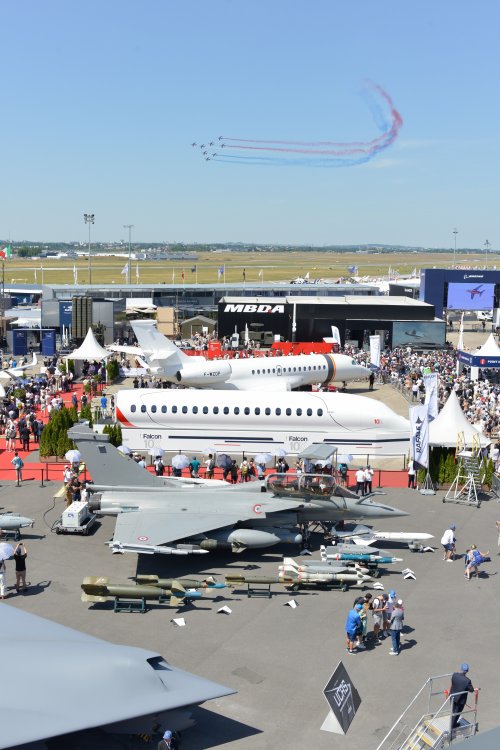
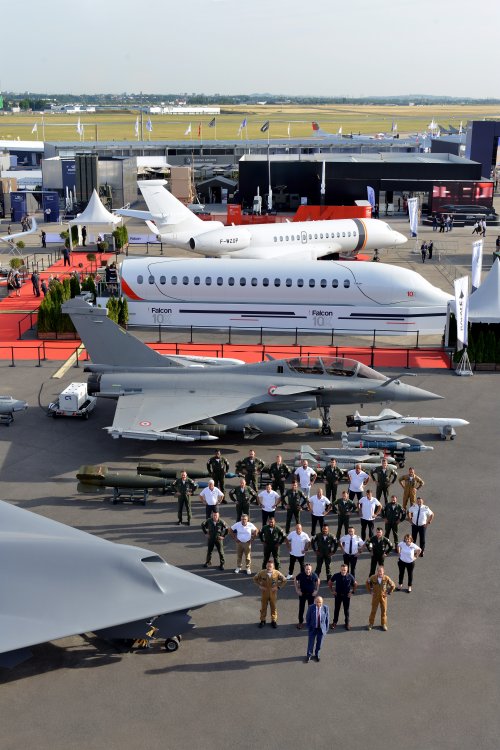
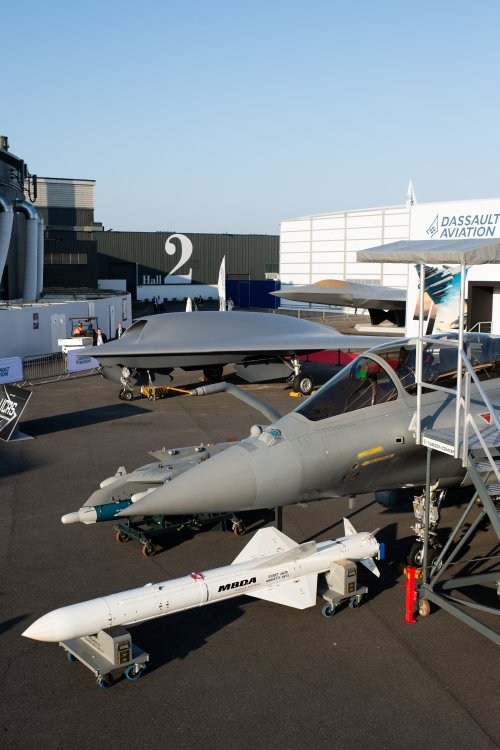
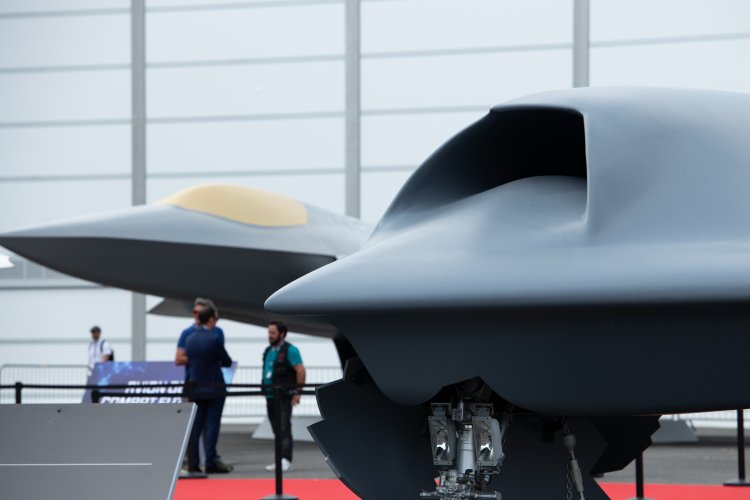
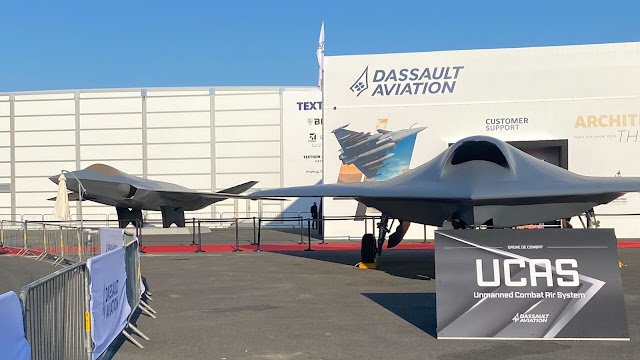
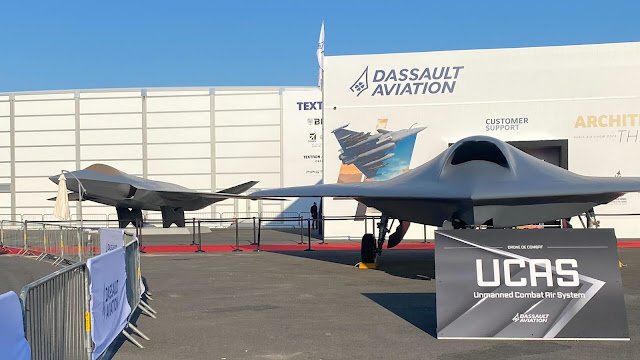
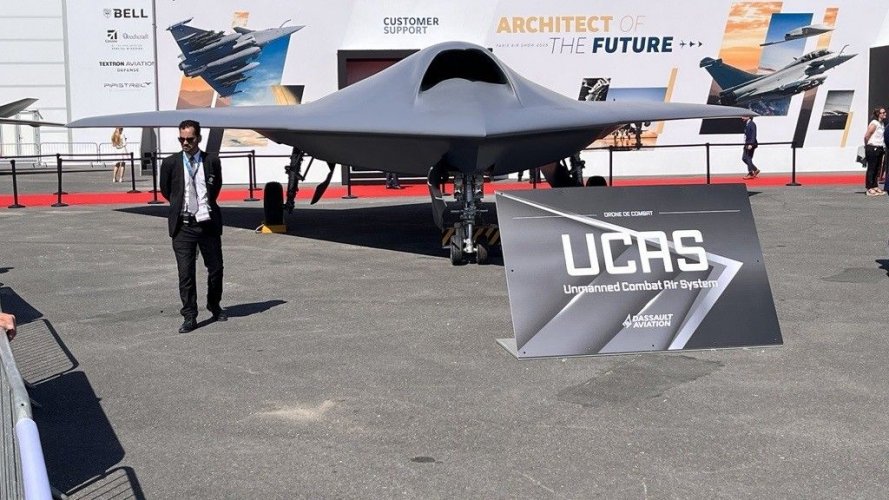
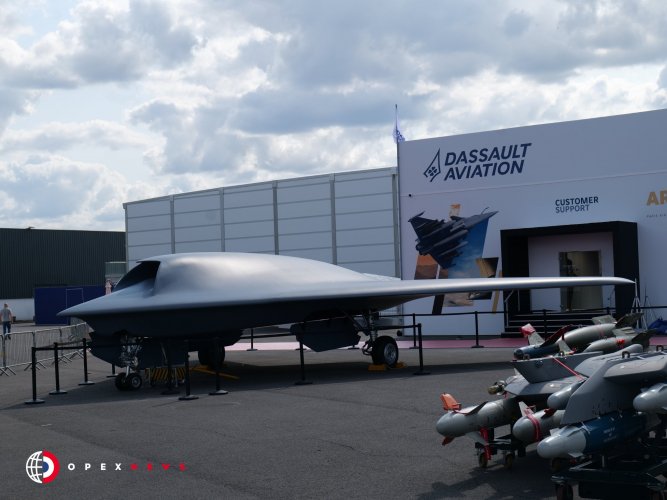
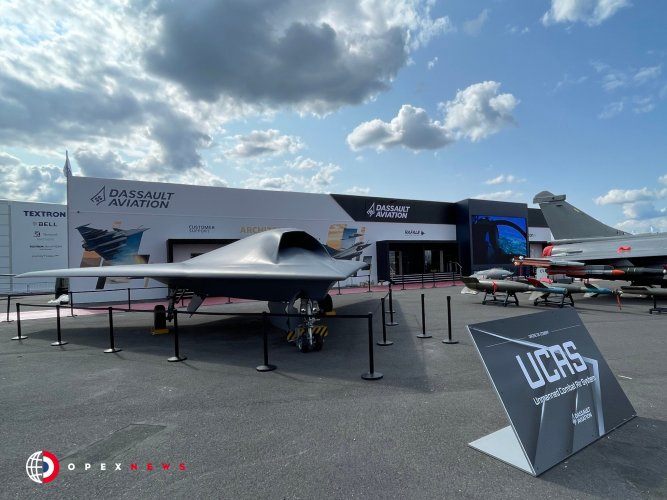
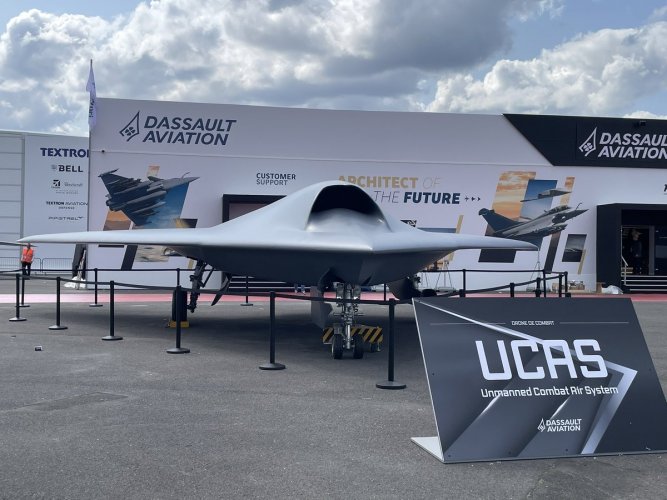
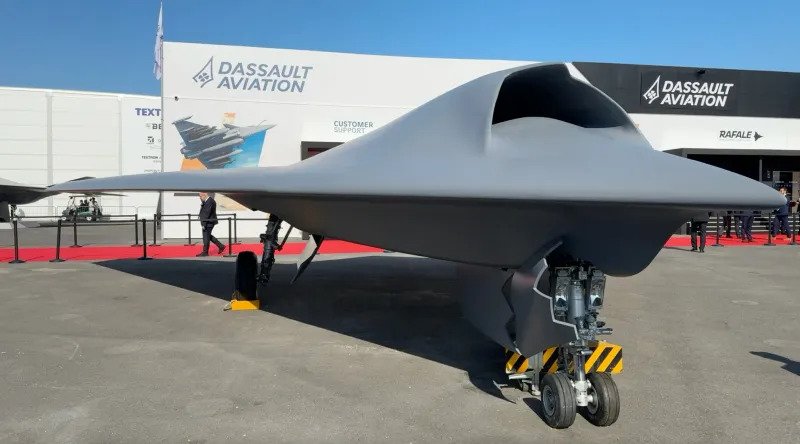
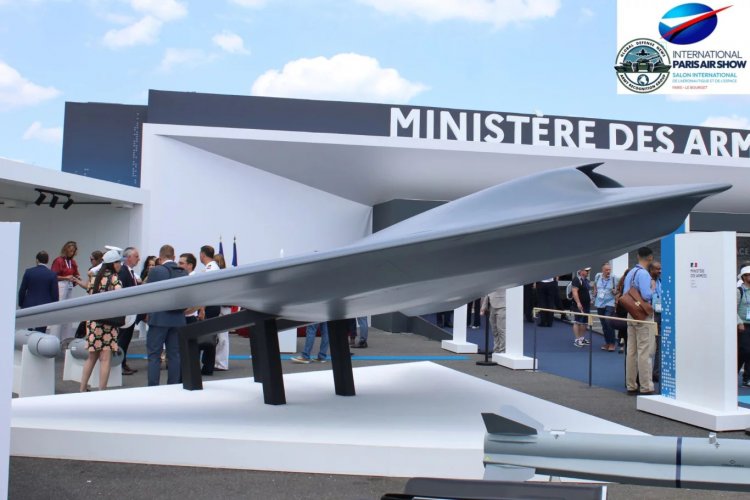
Two models of the new UCAV were presented at Le Bourget, a full-size model on the Dassault Aviation stand, and a scaled-down model on the Ministry of the Armed Forces stand. These showed an aircraft with a similar configuration to the original nEUROn, a highly swept, tailless ‘arrowhead’ Delta flying wing with an overwing intake. It is bigger than nEUROn, and differs in detail, with a larger intake relative to the overall vehicle, different landing gear doors and a more robust-looking undercarriage.
Helen Chachaty, writing for BFM Business, reported that:
“This combat drone will then be fully integrated into the Future Combat Air System (FCAS): a ‘system of systems that will include a combat aircraft equipped with next-generation weapons, accompanied by a combat drone, as well as swarms of drones. It will be a set of equipment connected via a ‘combat cloud’, with networks on land, at sea, in the air, and in space.
This is where the new UCAS gets controversial.
Because the SCAF/FCAS agreement covered three pillars – the NGF manned fighter, an unmanned adjunct and the combat cloud. All three elements were to be procured by each of the three participating nations, with Dassault leading the NGF pillar and Airbus leading the Combat Cloud and Remote Carrier ‘pillars’.
FCAS/SCAF capabilities were always expected and intended to be rolled out incrementally, with manned-unmanned teaming being leveraged by existing fighters (including the Eurofighter and Rafale) in the early 2030s, leading to the full FCAS vision by 2040.
With France now pressing ahead with a separate, national UCAS (to meet the role initially expected for the FCAS ‘remote carrier’), the commitment of France to whatever emerges from the Airbus-led unmanned ‘pillar’ has been thrown into doubt. This could possibly be based on the Wingman concept shown in model form at ILA and Farnborough last year.
If the ‘boot were on the other foot’, and if Germany and Spain were to announce that they were developing their own core manned fighter, one can only imagine how loudly France would howl at the loss of orders (and funding) for the fighter being developed under the SCAF pillar led by Dassault!
This is a new aircraft, and though it bears some resemblance to the nEUROn, a new thread is surely justified?
Dassault is essentially scrambling to develop its own unmanned adjunct, in direct competition with Airbus, who are supposed to lead the unmanned pillar of the FCAS/SCAF (Future Combat Air System/Systéme de Combat Aérien du Futur) programme (also known as the Zukünftiges Luftkampfsystem in Germany and as the Futuro Sistema Aéreo de Combate in Spain).
The French Ministry of Armed Forces is reportedly investing €128 million to develop this new unmanned combat aerial vehicle, which will be based on the Neuron demonstrator, and which has been referred to as the Neuron 2.0, or simply UCAS (Unmanned Combat Air System). (It will “benefit from the achievements of the nEUROn* program, Europe’s first stealth UCAV demonstrator.”). The original nEUROn flew 170 sorties from December 2012, and validated low observability, autonomous flight, internal weapons carriage, and integration within a C4I environment. As a result the new aircraft will not require a technology demonstrator to support its development.
The new aircraft will incorporate stealth technologies, autonomous control (with man-in-the-loop), and will have an unspecified internal payload capacity. It has been reported that the new UCAV will be powered by a single Safran M88 engine, the engine used in the (twin-engined Rafale) and will have a maximum take off weight of around 17.5 tonnes (similar to that of the Mirage 2000, and about three times the weight of the original Adour-engined nEUROn).
Sébastien Lecornu, French Minister of the Armed Forces and Veterans Affairs, announced the development launch of the unmanned combat aerial vehicle (UCAV) on 8 October 2024
The announcement was made at a ceremony marking the 60th anniversary of the French Strategic Air Forces (FAS) at the Saint-Dizier air base, in the presence of General Jérôme Bellanger, Chief of Staff of the French Air and Space Force (AAE), and Éric Trappier, Chairman and CEO of Dassault Aviation.
It was said that the new UCAS will complement the future Rafale F5 standard after 2030.
Eric Trappier said that: “This stealth combat drone will contribute to the technological and operational superiority of the French Air Force by 2033.”
Before the Paris Air Show, where the new aircraft was shown in model form, Craig Hoyle of Flight Global reported that General Arvind Badrinath, head of combat air for France’s DGA defence procurement body had said that: “A pre-development contract is ongoing. The next phase is to launch the development activity that will lead to a first prototype.”
Two models of the new UCAV were presented at Le Bourget, a full-size model on the Dassault Aviation stand, and a scaled-down model on the Ministry of the Armed Forces stand. These showed an aircraft with a similar configuration to the original nEUROn, a highly swept, tailless ‘arrowhead’ Delta flying wing with an overwing intake. It is bigger than nEUROn, and differs in detail, with a larger intake relative to the overall vehicle, different landing gear doors and a more robust-looking undercarriage.
Helen Chachaty, writing for BFM Business, reported that:
“This combat drone will then be fully integrated into the Future Combat Air System (FCAS): a ‘system of systems that will include a combat aircraft equipped with next-generation weapons, accompanied by a combat drone, as well as swarms of drones. It will be a set of equipment connected via a ‘combat cloud’, with networks on land, at sea, in the air, and in space.
This is where the new UCAS gets controversial.
Because the SCAF/FCAS agreement covered three pillars – the NGF manned fighter, an unmanned adjunct and the combat cloud. All three elements were to be procured by each of the three participating nations, with Dassault leading the NGF pillar and Airbus leading the Combat Cloud and Remote Carrier ‘pillars’.
FCAS/SCAF capabilities were always expected and intended to be rolled out incrementally, with manned-unmanned teaming being leveraged by existing fighters (including the Eurofighter and Rafale) in the early 2030s, leading to the full FCAS vision by 2040.
With France now pressing ahead with a separate, national UCAS (to meet the role initially expected for the FCAS ‘remote carrier’), the commitment of France to whatever emerges from the Airbus-led unmanned ‘pillar’ has been thrown into doubt. This could possibly be based on the Wingman concept shown in model form at ILA and Farnborough last year.
If the ‘boot were on the other foot’, and if Germany and Spain were to announce that they were developing their own core manned fighter, one can only imagine how loudly France would howl at the loss of orders (and funding) for the fighter being developed under the SCAF pillar led by Dassault!