AGO Flugzeugwerke

hesham

ACCESS: USAP
Senior Member
Joined
26 May 2006
Messages
38,289
Reaction score
20,430
Hi,

AGO Flugzeugwerke was a German aircraft manufacturing company from 1911
until 1945. The initials AGO had a variety of meanings (such as Aktiengesellschaft
Otto) during the company's lifetime, but in its final version stood for Apparatebau
GmbH Oschersleben.


- To be continued
 
... from 1911 until 1945...

AGO Flugzeugwerke GmbH didn't exist until 1912. And the Nazi-era AGO (Apparatebau GmbH Oschersleben) had no connection whatever with Otto or his 1912-1916 AGO Flugzeugwerke.

The corporate chronology goes something like this:

1910 - Aeroplanbau Otto & Alberti formed (with Herbert Alberti); Puchheim outside Munich
1911 - Flugmaschinen-Werke Gustav Otto; renaming after departure of Herbert Alberti*
-- * Dr. Alberti was a pioneer pilot (eg: 1909 Focke Ente), lawyer, and financier
1911 - AGO (for Aviatiker Gustav Otto); branding of new Berlin-Johannisthal factory
1912 - AGO Flugzeugwerke GmbH; newly independent Berlin-Johannisthal factory
1916 - AGO Flugzeugwerke bankrupt; reorganised as the Bayrische Flugzeugwerke
1918 - Otto-Werke GmbH; Munich-based motorcycle & bicycle engine maker

On meanings for the AGO acronym, Aktiengesellschaft Otto - ie: AG Otto - simply refers to a public limited company. Another meaning was Aviatiker Gustav Otto (with aviatiker being any early German term for 'pilot'). A.G.O. could also stand for Aeromotor Gustav Otto - but, in that case, A.G.O. was a brand of Otto (hence refs to the Otto A.G.O. 50 hp and Otto A.G.O. 80/100 hp engines of 1911 or the Otto A.G.O. 70 hp of 1912).
 
As my dear Tuizentfloot explained before for Otto,

Monoplane (1910) – covered fuselage; 1 x Daimler D4F, 55 hp
Monoplane (1910) – uncovered fuselage; 1 x Daimler D4F, 55 hp
Biplane (1910) – Farman copy; 1 x Otto, 100 hp; also Gnôme
Bayerischer Militärdoppeldecker BM (1911) – Farman copy; 1 x Argus, 100 hp; also Otto or Daimler
Sports monoplane (1911) – “Renneindecker”; covered fuselage; 1 x Gnôme
Biplane (1911) – lower wing on the uncovered fuselage; engine in the nose, 1 x Argus 70 hp
Biplane (1911) – lower wing beneath the uncovered fuselage; engine in the nose, 1 x Argus 70 hp
Sports biplane (1911) – “Renndoppeldecker” three-bay biplane with covered fuselage, 1 x 1 x Otto, 100 hp
Monoplane in Taube style (1912) – 1 x Otto, 100 hp
Standard Otto biplane (1912) – pusher propeller; open fuselage with covered nacelle; different variants, also built by Pfalz; 1 x Otto, 100 hp; also Daimler
Monoplane for “Rund um Berlin” (1913) - 1 x Otto, 100 hp
Land-Wasserdoppledecker (1913) – Standard Otto biplane on floats; 1 x Argus, 150 hp; also Otto
Militärdoppeldecker (1913) – pusher propeller; open fuselage with covered nacelle; 1 x Otto, 100 hp; also Daimler

*** From 1914,I will talk about;

A.II,A.III,A.20,B,B.II,C.I,C.II,C.III,C.IV,C.IV,C.VI,C.VII,C.VIII,C.IX,School Trainer,Pusher Seaplane Trainer,
Biplane seaplane,Arrow Biplane,Tractor Biplane Trainer, Tractor Biplane,Floatplane Trainer,School biplane II,E.I,S,S.I,DV.3,D Recce ?,W,W.II,F-1 Seaplane,R-Project
 
Tuizentfloot's list of Otto aircraft types can be fleshed-out a bit. And, of course, these types merge into (and then overlap with) the later AGO types. My hesitation in mounting this list in this section is that virtually all of it (less the DH6) is comprised of generic descriptions rather than actual designations.

Otto Eindecker - 1910 Bleriot monoplane copies; Puchheim-built
- Otto Eindecker: Single-seat; high-winged; uncovered fuselage
- Otto Eindecker: 1 x 55 hp Daimler D4F 4-cyl.;* span 13.00 m
- Otto Eindecker: aka Otto-Alberti-Eindecker Nr.1; aka 'Sperber'
-- * Reportedly also offered with optional Gnôme rotary engine

Otto-Alberti Doppeldecker - 1910 2-seat Farman III deriv.*
- Doppeldecker - Open-framed twin-boom pusher biplane
- Doppeldecker - 1 x 100 hp Argus or Otto A.G.O. 4-cyl.
-- * Short-span lower wings; tapered boom turn into bumpers
-- aka Otto-Alberti Nr. 2 (after 1st); aka Otto-Zweidecker

Otto Schuldoppeldecker - 1911 2-seat biplane trainer; x ?
- Schuldoppeldecker: Tractor propeller; uncovered fuselage
- Schuldoppeldecker: 1 x 60 hp DMG D4F 4-cyl.;* span (??) m
-- * Engine mounted ahead of wing on top of fuselage frames

Otto Eindecker - 1911 parasol-winged 2-seat trainer; x ?
- Eindecker: 1 x 60 hp DMG Daimler D4F 4-cyl.; span (??) m
- Eindecker: Conv'n from (or evol'n of) Schuldoppeldecker
- Eindecker: aka Typ 3; offered for military or civilian use

Otto Doppeldecker - 1911 2-seat twin-boom pusher biplane
- Doppeldecker: 3-bay biplane w/o the Farman-style canard
- Doppeldecker - 1 x 100 hp Argus or Otto A.G.O. 4-cyl.
- Renn-Doppeldecker - Race vers.; aka Typ Lindpaintner
- Renn-Doppeldecker - 1 x 100 hp Gnôme rotary pusher

Otto Eindecker - 1911 shoulder-wing; single-seat racer; x 1
- Eindecker: 1 x 60 hp DMG Daimler D4F 4-cyl.; span (??) m
- Eindecker: Fabric-covered wings & fuselage, open engine
- Eindecker: Wire-braced single king post to main u/c struts

Otto Rumpf-Doppeldecker - 1912-14 2-seat pusher biplane
- Rumpf-Doppeldecker: Or 'Fuselage Biplane' for its nacelle
- Rumpf-Doppeldecker: 1 x Otto A.G.O. 100/130 hp 6-cyl.; span (??) m
- Rumpf-Doppeldecker: aka 'B-typ' but not used by military*
-- * Therefore, there is no Igflieg desig. for an 'Otto B.I' [sic]

Otto Eindecker - 1912 parasol-winged 2-seat trainer; x ?
- Eindecker: Full-fuselaged type w/ raised tractor engine
- Eindecker: 1 x 50 hp DMG Daimler D4F 4-cyl.; span (??) m
-- Wiings wire-braced from single kingpost down to wheel hubs

Otto BM - 1912-14 Militärdoppeldecker deriv. of Rumpf-Doppeldecker
- Otto BM : More an evolving series than a single aircraft type
-- Offered as 3- or 3.5-bay biplane; opt'l floats for Marineflieger*
- Otto BM : Militarised 2-seat pusher biplane trainer/recce a/c
-- NB: Johannisthal-built BMs referred to as AGO Doppeldeckers
- Otto BM : 1 x 100 hp Otto A.G.O. 100/130 hp 6-cyl.; span 12.50 m
- Otto BMA: Early prod'n; triple rudders; airframe & u/c evolving
- Otto BMB: Later prod'n; single rudder; airframe still evolving
- Otto-Pfalz: 1913 take-over of production by Speyer-based Pfalz
- Otto-Pfalz: 1 x 100 hp Rapp inline 6-cylinder pusher; span (??) m
-- * Extemporised floats used in German East Africa during WWI

Otto Renneindecker - 1913 monoplane for 'Rund um Berlin'; x 1
- Renneindecker: Karl Wildt design; mid-placed wings
- Renneindecker: 1 x 115 hp Argus 115 hp;* span 15.00 m
-- * Confusingly known as '100 hp Argus' or '105/115 hp Argus'
-- Sometimes mis-described as an "Otto-Taube monoplane"**
-- ** Untapered Renneindecker wings were of constant chord
-- 1913 Berlin race won by Anton Bayerlein & Anton Bayerlein

Otto Wasserdoppeldecker - 1913 Rumpf-Doppeldecker floatplane
- Wasserdoppeldecker: Increased-scale* pusher biplane on floats
- Wasserdoppeldecker: 1 x Otto A.G.O. 100/130 hp; span 14.80 m
-- * Later AGO "Wasserdoppeldecker" was larger again by comparsion**
-- ** Otto: length 10.50 m; AGO: span 18.00/18.60 m; length 12.00 m

Otto C.I - 1915 2-seat twin-boomed pusher recce biplane; x ?
- C.I : 1 x 150 hp Benz Bz III inline 6-cylinder; span 14.48 m
- C.I : Idflieg designation; Otto factory designation was DH6*
-- * DH = Doppeldecker Häfeli for designer August Haefel
-- Desig. 'Otto C.I' to distinguish from Puchheim-built AGO C.Is

______________________________________________________
 
Amazing work from my dear Apophenia,and before I start,

there is another design to Otto,it's C.II,the C.I & C.II are not related to AGO C.I and C.II.
 

Attachments

  • 2.png
    2.png
    598.8 KB · Views: 14
... there is another design to Otto,it's C.II,the C.I & C.II are not related to AGO C.I and C.II.

Thanks hesham.

It depend upon how you define "related' for the C.Is. The slightly later AGO C.I could be seen as an evolution of the Otto C.I - albeit, a highly-refined and, aerodynamically, much more sophisticated evolution.

The Puchheim-built Otto DH6/C.I variant had an easier time of it (since the Bavarians were asking for a pusher). By contrast, the Prussians were suspicious of pushers - that may have been the prompt for the Johannisthal design office to enhance performance through a major aerodynamic 'cleanup' of the AGO C.I airframe.

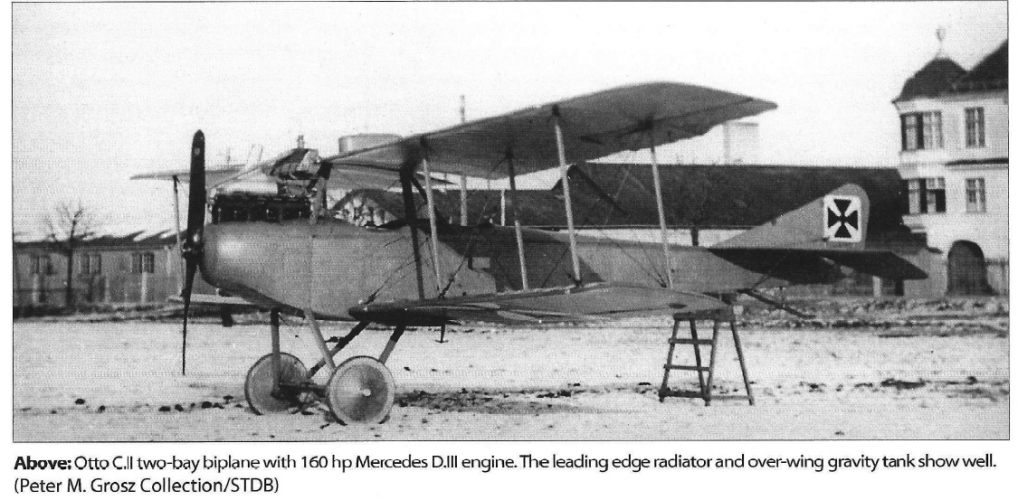
On the 'Otto C.II', I didn't include it in my list because I don't regard it as an Otto design. This aircraft was virtually identical to the LVG C.II ... and for a very good reason. The 'Otto C.II' was simply an armed development of what the Fliegertruppen des deutschen Kaiserreiches called the LVG B.I(Ot)- ie: the Otto-built version of the LVG B.I (aka 'Otto B.I').
 
Further on the subject of the Otto C.I, can anyone explain the use of 'Otto KD 15' for prototypes? Everything suggests that the Otto factory designation was DH6. So, was 'KD 15' a Königlich Bayerische Fliegertruppe designation?

Snippets from Otto, AGO, and BFW Aircraft of WWI: A Centennial Perspective (Jack Herris, 2019) say that the first "Otto KD 15 prototype was later purchased by Prussian authorities and designated C.I C.3633/15."
-- https://flyingmachines.ru/Site2/Crafts/Craft30281.htm

The second prototype (no number shown) was also called 'Otto KD 15'. It was powered by a 200 hp Rapp (and the airframe modified over time).
 
Here we go,and I have to repeat some aircraft from Otto,

School Biplane was a tandem two-seat biplane,powered by one 100 hp Argus pusher engine,1912

School Biplane was a version of above,but fitted with 145 hp Argus pusher engine,it was called D15,AGO Type-14

Pusher Seaplane Trainer was a two-seat seaplane version of above,and powered by one 150 hp Argus engine,D7

Biplane Seaplane was a pusher seaplane on floats,powered by one 150 hp Argus engine,9

Arrow Biplane was a single seat biplane,powered by one 120 hp Argus engine,Nr.22

Tractor Biplane Trainer was a two-seat trainer biplane,powered by one 100 hp Gnome rotary engine,1913

Float Biplane Trainer was a two-seat tractor float biplane trainer,powered by one 100 hp Gnome rotary engine,1913

School Biplane was a two-seat pusher armed biplane,powered by one 150 hp Argus engine,1914

DV.3 was a single seat unarmed biplane,powered by one 100 hp Oberursel U I engine,1915

C.I was a two-seat twin boom reconnaissance biplane,powered by one 158 hp Mercedes D.III engine

C.IW was a variant,was fitted with floats for coastal patrol duties,for Navy

C.II was a two-seat twin-boom reconnaissance biplane,developed from C.I with more powerful
engine,220 hp Benz Bz IV

C.IIW was a variant,was fitted with floats for coastal patrol duties,for Navy,two built

C.III was a two-seat twin boom reconnaissance biplane,derived from C.I as experimental
aircraft,powered by one 158 hp Mercedes D.III engine

C.IV was a two-seat reconnaissance normal biplane,powered by one 220 hp Benz Bz IV
engine

C.V was a two-seat single-bay reconnaissance biplane,powered by one 160 hp Mercedes
D.III engine

C.VI was a larger and more conventional two-bay two-seat reconnaissance biplane,based
on C,V,powered by one 200 hp Benz Bz IV engine

W.II was a seaplane,no more details are known

C.VII was a two-seat reconnaissance biplane,powered by one 200 hp Benz Bz IV engine

C,VIII was a two-seat reconnaissance biplane,developed from C.IV,powered by one 260 hp
Mercedes D.IVa engine

C,IX was the same C.VIII with the same engine,but with a leading edge radiator replacing
the airfoil radiator,which installed in C.VIII

S.I was a single seat ground attack biplane,powered by one 150 hp Basse und Selve
BuS.III engine,1918

R-Project was a heavy bomber project,had three engines in the fuselage and four
pusher propellers at the wing trailing edge,1918

Airliner was an all metal twin engined 1935 passenger aircraft with 8/10 seats plus crew, a
mockup of it was made with a finned tail. Two photos show the "attrappe";

Airliner-II was another passenger aircraft in the same class as the former. Two photos of a
model are presented.

Light Aircraft was a sailplane tug aircraft was designed with a Zündapp engine;

Trainer was a twin engined trainer with boxer engines. A mockup was made, but no photos;

Heavy Fighter was a "heavy fighter" with a pusher engine, no further details available, but another
"attrappe" was bulit.

Ao.192 was a low-wing twin engined light transport and multi-purpose monoplane,
powered by two 270 hp Argus As 10E engines

Ao.193 was a twin-engine heavy fighter project, responding to the same program as the
Arado Ar 240 and Messerschmitt Me 210

Ao.225 was a mid-wing heavy fighter monoplane project,also responding to the same
program as the Arado Ar 240 and Messerschmitt Me 210 ,powered by two Daimler Benz
DB 601 or 1 DB 606 engines

**** To be continued

 
Last edited:
I finished the list,but there are two un-confirmed concepts,

D was a reconnaissance fighter project

S was a proceed the S.I,no more details
 
Here we go,and I have to repeat some aircraft from Otto...

I view descriptions translated into English then mixed in with Idflieg-assigned military designations as a source of confusion ... but it is your list.

If I understand correctly, your list includes WWI era Otto and AGO designs (listed with their descriptions translated or by their Idflieg designations) [1] followed by RLM 'Ao' designations. But you have chosen to ignore the WWI era designs of the Bayerische Flugzeugwerke which replaced the bankrupt Otto organisation.

I'm not sure I follow the logic here. Since the Bayerische Flugzeugwerke was literally a re-organised AGO Flugzeugwerke in Puchheim, there is a linear connection between the two firms (although Gustav Otto, himself, had been forced out). By contrast, the 1934 creation of a 'new' Ago Flugzeugwerke at Oschersleben was a work of National Socialist fiction. To my mind, designs like the BFW CL.l/CL.la might belong on this list. But Nazi-era 'Ao' RLM designations stem from a totally unrelated firm.

On the AGO W.II, I cannot agree with "no more details are known". The W.II was inspired by the 1913 Avro Type H (later 503) - this being particular apparent in the form of the original, Gnome-powered W.II prototype. That prototype was re-engined with a 100 hp Argus [2] to represent the 10 x series aircraft ordered. Production aircraft had a longer, 18.00 m span, a triangular fin-and-rudder, and a better-integrated tail float. Although built with a more robust structure (than the Avro) to cope with North Sea conditions, most W.II were later fitted with wheeled undercarriages.

___________________________________

[1] Of those translated descriptions, at the very least your "Arrow Biplane" should be returned to German - Pfeil being a generic term for all biplanes with that swept-back upper wing.

[2] Some sources identify this engine as the Argus As.I. I suspect that the earlier '100 hp Argus' (aka 'Argus 115 hp') engine is more likely.
 
I finished the list,but there are two un-confirmed concepts,

D was a reconnaissance fighter project

S was a proceed the S.I,no more details

I've seen mention of an "AGO D series". But, by definition, the AGO D cannot have been "a reconnaissance fighter project". Under the Idflieg (i]Inspektion der Luftstreitkräfte[/i]) designation system, 'D' is for fighters - recce-fighters were assigned the prefix 'CL'.

On the 'S' and S.I, the initial design phase was likely referred to as a generic 'schlachtflugzeug'. Once the refined AGO design was accepted for service with the Deutsche Luftstreitkräfte, it would have received the Idflieg designation S.I.
 
Thank you my dear Apophenia,and he unconfirmed designs need a good search
from me.

Here is only my Speculations about its series,no one has to believe it,that's
just my guessing.
 

Attachments

  • AGO.txt
    1,013 bytes · Views: 4
Last edited:

Similar threads

Back
Top Bottom