Interesting, somehow that one project was missing from my Payne list, so thanks!
I doubt it was ever built, given the scarcity of information about it.
Would I be correct in assuming that your list includes the following aircraft and projects?

For some reason or other, employment being a definite possibility, Payne moved to San Francisco in the very early 1930s. In mid-April 1932, someone, perhaps Payne himself, test flew a parasol wing monoplane of his own design. Technically designed to seat 2 people, that design was more comfortable when used by a single person.

Payne moved to La Grange, Illinois, near Chicago, in early 1933, I think. He soon began to work on an improved 2-seat parasol wing monoplane of his own design. Payne might, or might not, have completed that aircraft.

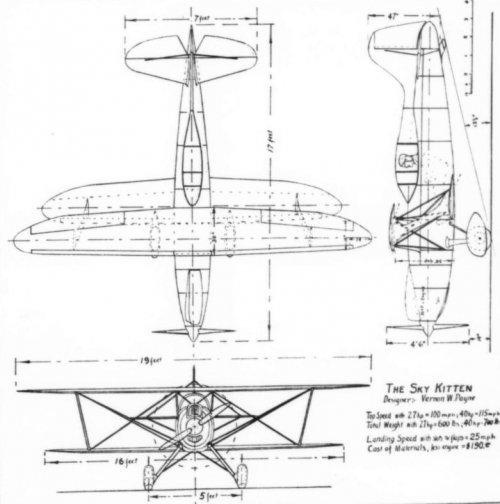
By the early Autumn of 1934, Payne had begun to design an aircraft in answer to a requirement issued to all by the Bureau of Air Commerce of the United States Department of Commerce. Said bureau wished to order a number of new aircraft for its inspectors. That project seemingly went nowhere. That competition apparently had nothing to do with the one, launched in the summer of 1934, which aimed to develop a safe, easy-to-fly and affordable light aircraft.

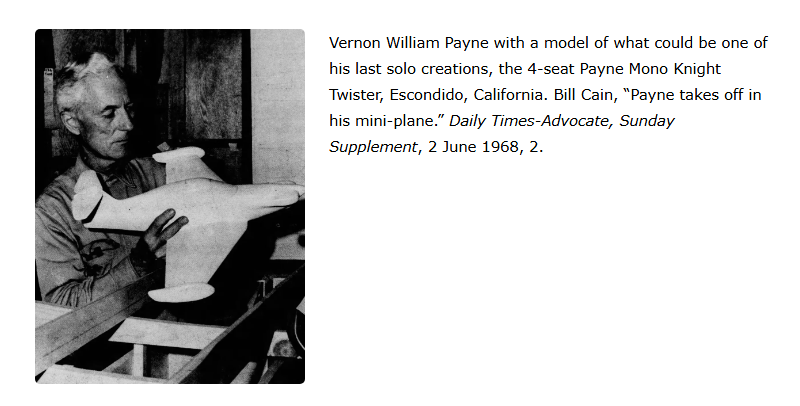
By the looks of it, what could be one of Payne’s last solo creations, the sleek 4-seat Payne Mono Knight Twister of 1968, did not proceed beyond the drawing and scale model stages.

In the mid-1980s, he worked with Paul White, an American racing car pilot / aircraft modeler / homebuilder, on an ultralight aircraft project which seemingly did not proceed beyond the drawing stage either.
 
Would I be correct in assuming that your list includes the following aircraft and projects?
You would be wrong! :D
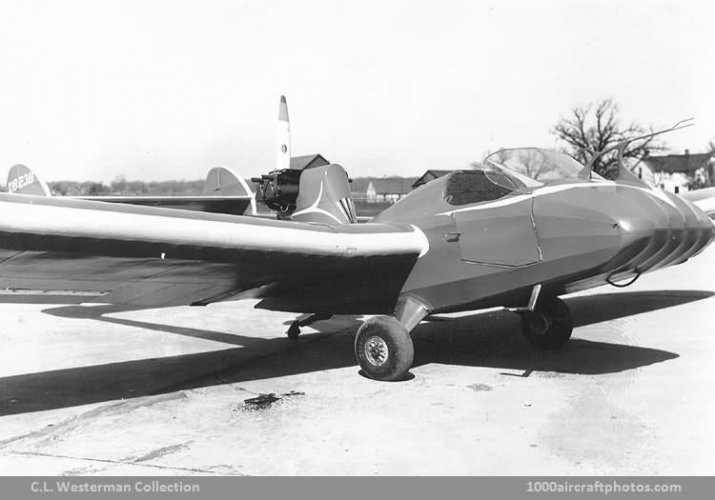
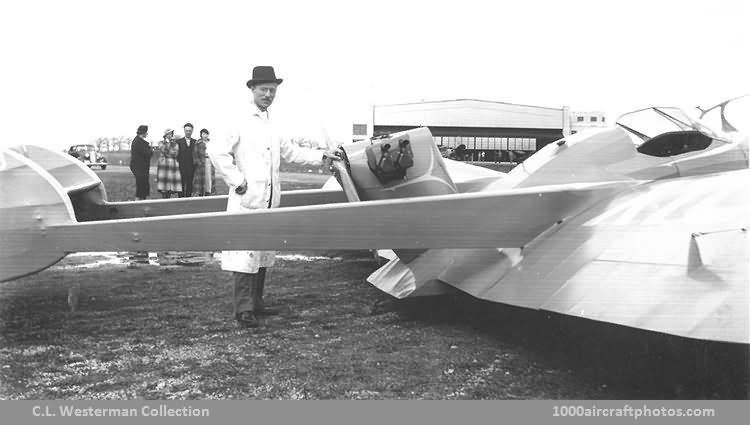
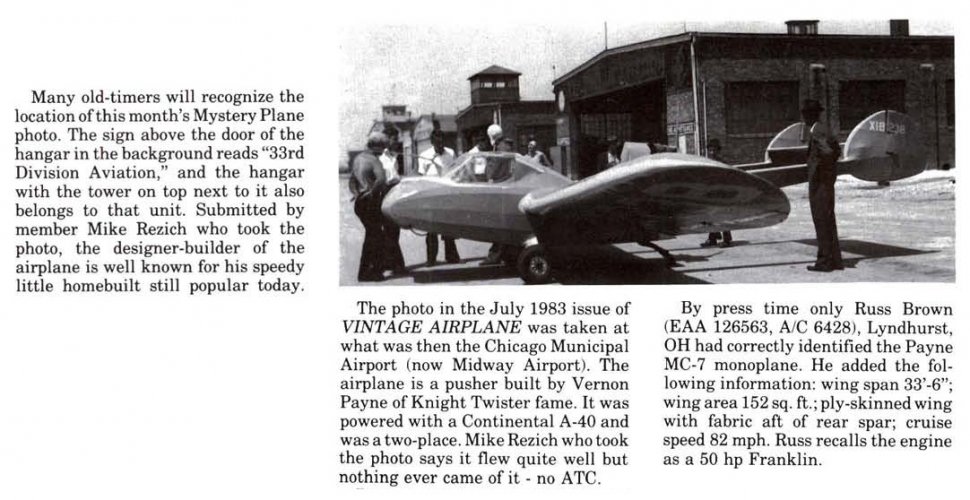
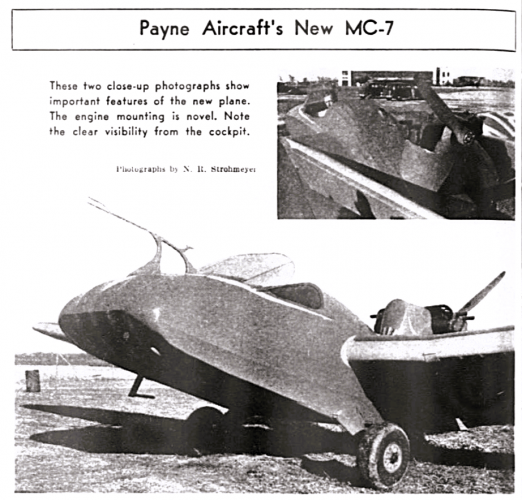
I had 18 entries, most of them Knight Twisters ranging from 1932 to 1966 (KT, KTS-1, KTD-2, KT-50, KT-/JR-75, KT-80, KT-90, KT-95, KT-75-85, KT-85, KTT-90, KT-125, SKT-125) as well as a planned 1934 variant with 50hp Anzani engine, and the Sablar Special; I also had the MC-7 Pusher and the mysterious 1940 KDPG, but none from your additions. Wow!
 
Speaking of never making it big, are there reliable sources out there which provide information on the total number of Knight Twisters completed by homebuilders since the 1930s?
 
You would be wrong! :D
I had 18 entries, most of them Knight Twisters ranging from 1932 to 1966 (KT, KTS-1, KTD-2, KT-50, KT-/JR-75, KT-80, KT-90, KT-95, KT-75-85, KT-85, KTT-90, KT-125, SKT-125) as well as a planned 1934 variant with 50hp Anzani engine, and the Sablar Special; I also had the MC-7 Pusher and the mysterious 1940 KDPG, but none from your additions. Wow!

I can add also,

- Knight Twister Imperial
- Knight Twister SKT-1250
- Knight Twister M6
- Aero Knight Twister
 
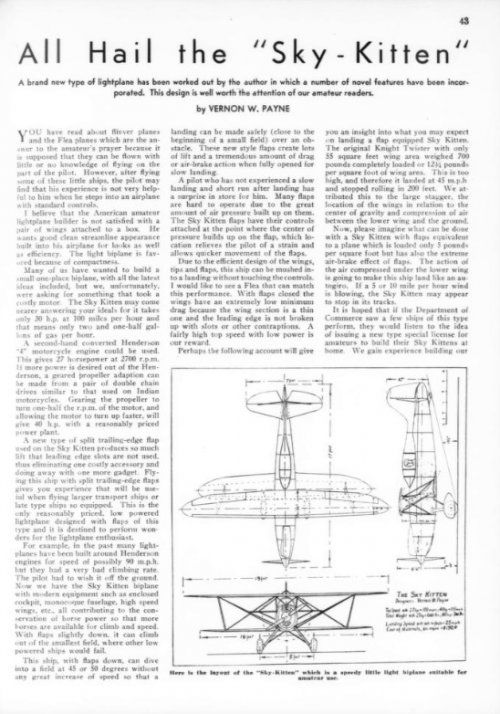
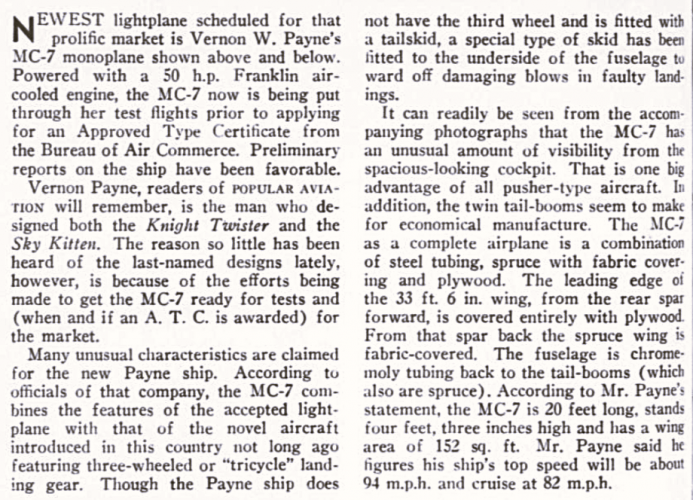
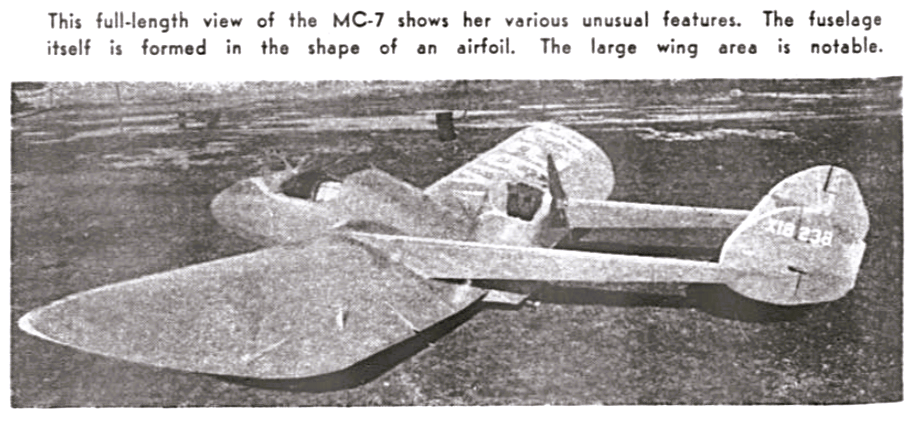
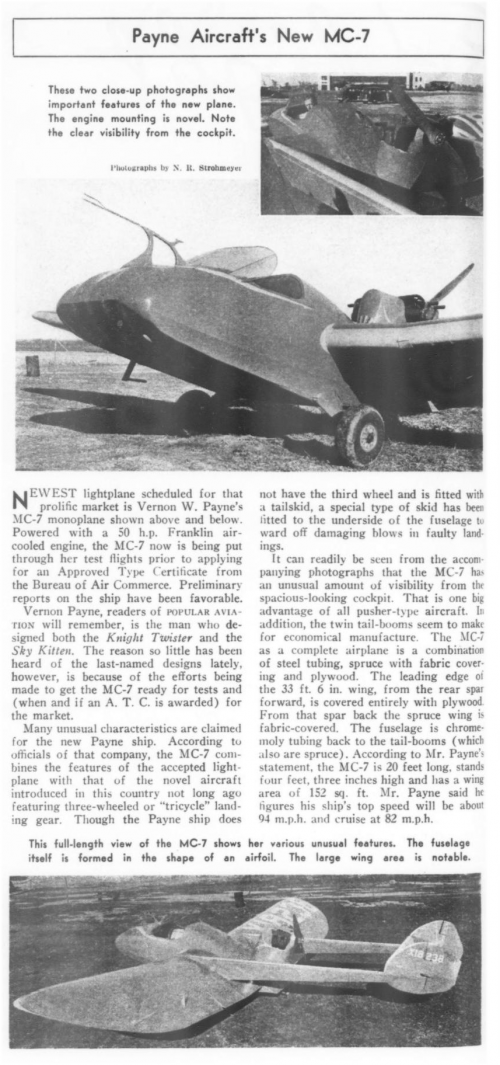
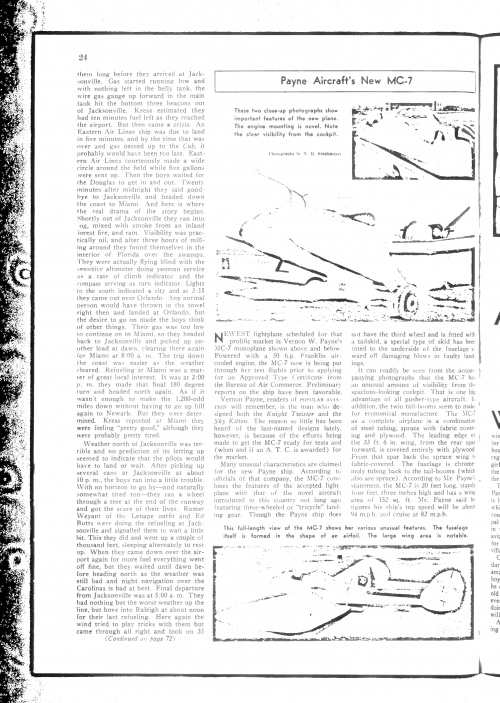
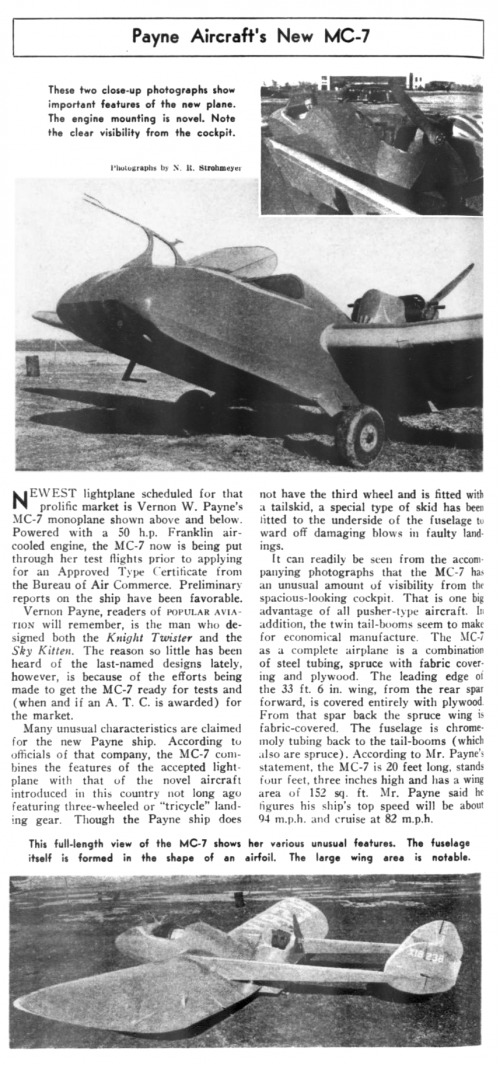
And here is the original magazine article from Popular Aviation (later FLYING) , Vol 23, Issue 2, August 1938 thanks to the scanned microfilm available in the Internet Archive. I had to take screenshots from the enlarged, grainy frame so the article is divided into three images.

Screenshot 2025-06-24 105021.png
Screenshot 2025-06-24 105102.png
Screenshot 2025-06-24 105135.png

Source: https://archive.org/details/sim_flying_1938-08_23_2/page/24/mode/1up
 
And here is the original magazine article from Popular Aviation (later FLYING) , Vol 23, Issue 2, August 1938 thanks to the scanned microfilm available in the Internet Archive. I had to take screenshots from the enlarged, grainy frame so the article is divided into three images.
A laudable effort, but there were easier ways to do it...
  • 1st possibility: zoom in, then right-click and select "Copy", then paste into an image software and finally, crop and save it. (easiest and prefered method here, see first attachment). The only "difficulty" is that you need to do the right click outside of the text area in order to get the "copy image" option. Note that the right-click menu is deactivated for the online library books that are only available in preview form.

  • 2nd possibility: a) click on the PDF option at the bottom right end of the page, b) choose to open the file, c) click on the page to select it, d) then right-click to copy, etc. Usually the best quality solution... except that in the case of this file (as for many other vintage magazines and books at the Internet Archive), it was scanned in several layers, so that particular method will not produce satisfying results (see second attachment), because of the particular way this was scanned. So the alternate solution here is to a) rotate right (90°), then b) display full screen (Ctrl + L), c) zoom in (Ctrl + mouse scroll forward), d) make a screen capture, e) paste it into an image software, rotate it left and save it. (the rotation part is only so that you save yourself the trouble of copying the top and then the half of the page, and then pasting them together — which is, however, the best solution if getting a truly large image is required).
One final piece of advice: for best enhancing results, I now treat the photos separately from the text, so that they do not get so damaged by the contrast filters I apply to enhance the text. Final result is the best we can get until we can have access to a physical copy of the magazine and rescan it ourselves! (see third attachment) This is how I process most my clippings before posting on the forum.
 

Attachments

  • 1750759010522.png
    1750759010522.png
    1.3 MB · Views: 18
  • 1750759035979.png
    1750759035979.png
    2 MB · Views: 20
  • 1750759394281.png
    1750759394281.png
    1.1 MB · Views: 37
Sadly, I can't offer any constructive comment.

However, I just want to say that I wish the thread had been given the Viz-like title 'Vernon Payne and his Aeroplane'.
 

Similar threads

Back
Top Bottom