FighterJock
ACCESS: Above Top Secret
- Joined
- 29 October 2007
- Messages
- 7,227
- Reaction score
- 8,538
You are not wrong there EmoBirb.

I expect it probably has more to do with the number of losses/incidents involving the B compared to the A and C. The way I read it is 7 B incidents, 7 for the A and one for the C. Hence a disproportionate number for the B given the fleet size. Not unsurprising given the STOVL nature of the aircraft and Harrier in USMC service had a correspondingly higher rate than aircraft of similar vintages as well.Why is that? Bee's aircraft carrier groups did prove already they were the most compact form of air dominance at sea.
If you read the report, you'd see that the distance from their carrier takeoff that day was already above most what land based fighter jets could hwve achieved...
We also aren’t looking at things logically. The following is from Wikipedia:I expect it probably has more to do with the number of losses/incidents involving the B compared to the A and C. The way I read it is 7 B incidents, 7 for the A and one for the C. Hence a disproportionate number for the B given the fleet size. Not unsurprising given the STOVL nature of the aircraft and Harrier in USMC service had a correspondingly higher rate than aircraft of similar vintages as well.
The F-35 first flew in 2006 and entered service with the U.S. Marine Corps F-35B in July 2015, followed by the U.S. Air Force F-35A in August 2016 and the U.S. Navy F-35C in February 2019.

And one of those was a USAF pilot ferrying a B from Texas to California who decided to mess around with the VSTOL mode on take-off from Albuquerque. Last I heard was they were looking at pilot error as the most likely cause (the aircraft was far too nose-up at too low an altitude).I expect it probably has more to do with the number of losses/incidents involving the B compared to the A and C. The way I read it is 7 B incidents, 7 for the A and one for the C. Hence a disproportionate number for the B given the fleet size. Not unsurprising given the STOVL nature of the aircraft and Harrier in USMC service had a correspondingly higher rate than aircraft of similar vintages as well.
We also aren’t looking at things logically. The following is from Wikipedia:
The B and A have been in service longer - and the B has had to trailblaze a bit.
The C, whilst having an IOC of 2019, had a lot of issues with carrier qualifications, and is farther behind the curve than it looks.
Agree with both of you. The B incidents are not all technical issues but it has an added element to its flight profile that has been traditionally difficult, both from a technical and systems perspective and from a user interface perspective.And one of those was a USAF pilot ferrying a B from Texas to California who decided to mess around with the VSTOL mode on take-off from Albuquerque. Last I heard was they were looking at pilot error as the most likely cause (the aircraft was far too nose-up at too low an altitude).
Another was another USAF pilot flying a F-35B on an acceptance flight at the factory and descended too fast during a vertical landing.
A third was one that had an equipment failure but which remained controllable - so that when the pilot ejected it flew for several more miles. The established mishap cause was "pilot error" compounded by adverse weather.
That's almost half of the crashes right there.
And we had the UK B that was lost because of an inlet cover being left in place for flight.And one of those was a USAF pilot ferrying a B from Texas to California who decided to mess around with the VSTOL mode on take-off from Albuquerque. Last I heard was they were looking at pilot error as the most likely cause (the aircraft was far too nose-up at too low an altitude).
Another was another USAF pilot flying a F-35B on an acceptance flight at the factory and descended too fast during a vertical landing.
A third was one that had an equipment failure but which remained controllable - so that when the pilot ejected it flew for several more miles. The established mishap cause was "pilot error" compounded by adverse weather.
That's almost half of the crashes right there.


The pilot allowed the fuel level to get low and that's the plane's fault?The B truly is the unlucky child in the family
The pilot allowed the fuel level to get low and that's the plane's fault?
"The F-35 currently remains stationed at the airport under enhanced security arrangements. Refuelling operations await approval from Central government authorities, following standard protocols for foreign military aircraft operating within Indian airspace."We don't know the circumstances as to why this F-35B's fuel-state got so perilously low.
Let's wait and see what happens when the investigators find out what caused the crash NMaude especially if it turnes out to be basic pilot error and the pilot forgot to set the limit of the amount of fuel left so that the pilot could get to a tanker.

The pilot allowed the fuel level to get low and that's the plane's fault?

Well, they are Marines.What is going on with the pilots of the F-35Bs these days? They should know that the B has less fuel than the other two variants.
Wasn't that due to adverse weather conditions IVO the carrier and not low fuel state?There was a case where a B landed at an air base / air port in Finland, because it got too low on fuel to go back to the carrier.
Obviously the F-35B is junk because it isn't impervious to inclement weather like all other aircraft. A competently designed aircraft would NEVER divert for weather.Wasn't that due to adverse weather conditions IVO the carrier and not low fuel state?
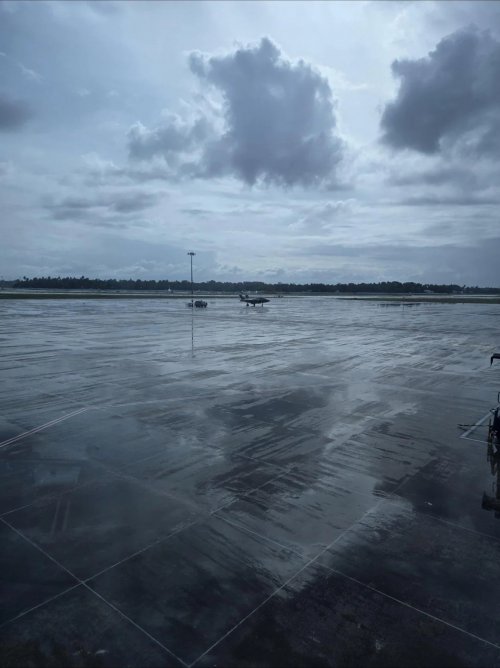
A British Royal Navy F-35B stealth fighter jet remains grounded at Kerala's Thiruvananthapuram International Airport more than 72 hours after it was forced to make an emergency landing. According to reports, the jet has suffered a "technical snag", forcing it to remain grounded.
As reported in Finnish media at the time:Wasn't that due to adverse weather conditions IVO the carrier and not low fuel state?
It's a plane. If they can get it fixed to "able to fly at high altitudes" it can just get dragged home by a tanker.The British F-35 is still in India, awaiting parts and repairs for a reported hydraulics failure. The pilot and some technicians are believed to still be in India with the jet. The British carrier has already sailed along to the Pacific. It's unclear how much longer it will take to get the aircraft operational, or how it will be ferried back to the UK.
It's a plane. If they can get it fixed to "able to fly at high altitudes" it can just get dragged home by a tanker.
If they can only get it fixed to "able to fly at or below 10,000ft" it will probably get the wings taken off and stuffed into a cargo plane or will wait for the UK carrier to swing back by in a few months.
I should note that a KC135 or A330MRTT would be able to haul the mechanics and parts for the plane, including toolboxes. And then be able to haul everyone back once it's fixed.The RAF has C-17s that can certainly do the job.
According to reports in Iranian state media, the nation has now shot down at least three, but potentially four F-35I stealth fighters, the most advanced and capable tactical aircraft in Israeli service, while taking at least one female pilot into custody... And at least so far, it appears these claims are entirely fabricated.
Stop giving those youtubers views, such a waste of time.

Reality is the Swiss may end up paying more but only because everyone else is also paying more. As an FMS customer they will pay the same price as the US does for the airframe plus a small fee.