Advantages and disadvantages of a theoretical nationalization of defense contractors in the US

Status
Not open for further replies.
Of course, SLS was entirely built by private contractors.

The problems with SLS were due to requirements creep, especially after the DoD got involved. MIT OCW has a course where the SLS' designers explain the decisions.
DOD is not involved with SLS. There is no requirements creep.
 
In aviation for example, China is at the forefront of drone technology, missile technology and they produce rather innovative aircraft as of late.

They're also very much into everything computer and AI related, with all the industries associated with these umbrella terms. IIRC they also lead in battery technology, at least with regards to the automotive sector.

I think pretending the Chinese aren't innovating and at the forefront of scientific discourse and development is teeny tiny bit disingenuous
 
Before the end of places like Springfield Arsenal, the new design capabilities of the naval dockyards (Rickover was an advocate getting rid of the naval dockyards. As a possible coincidence, he was getting high value gifts from EB during that time), and the NAF, government-owned weapons production was common.
The historical method in the US for the army and navy were the Arsenals and Naval Yards. That worked fine until the systems were dismantled in the 60s and 70s. Look at the speed with which the navy could design and build new classes of ships compared to now. Simply avoiding the delays of competitive bids, protests, court involvement, rulings negating decisions, rebids, new protests etc. would cut years off procurement. See the KC767-KC45-KC46 debacle for example. That's at least a 15 year delay for a tanker.

Aircraft were different and always dependent on private producers, but the cost of entry was so much lower between the wars and the pace of procurement of new designs so much higher that companies could enter or exit almost at will. That hasn't been the case since the 60s. Military aircraft procurement can no longer support enough companies for real competition.
It has be proven many times. USSR and PRC are not relevant examples. Consumer products are indications.
The problem with relying on a market is the market needs to be big enough to support companies and competition. The arms market in the US, in the west in general, is much smaller than it used to be and can no longer support corporations, hence all the mergers and corporations exiting defense. Defense isn't an efficent sector, it's a public goods producing sector which means relying on the market results in inefficiencies.
 
Last edited:
you haven't shown that with data, only anecdotes.
Well, I asked the more knowledgeable forum members, and as a consequence there were only anecdotes and examples so far, no hard statistics. And going by the examples provided, nationalization seems to have several not-so-small advantages.

If I had said statistics myself I wouldn't have made a question/discussion thread but instead made a thread called "My thesis on why the nationalization of defense contractors in the US is beneficial over privatization"
 
In aviation for example, China is at the forefront of drone technology, missile technology and they produce rather innovative aircraft as of late.

They're also very much into everything computer and AI related, with all the industries associated with these umbrella terms. IIRC they also lead in battery technology, at least with regards to the automotive sector.

I think pretending the Chinese aren't innovating and at the forefront of scientific discourse and development is teeny tiny bit disingenuous
Naval as well. They've designed and produced multiple classes over the last 20-30 years compared to what the US has been able to do. Army stuff I'm less familiar with.

I'd argue that their recent aircraft are an indication they've taken the lead in innovation in that sector as well.
 
Last edited:
Naval as well. They've designed and produced multiple classes over the last 20-30 years compared to what the US has been able to do. Army stuff I'm less familiar with.

True, but with regards to naval stuff I think it's more so matching US capabilities but in more numbers. Less so innovative features. A Type 055 is fairy conventional, all things considered. But when we look at tri-jets with flexible control surfaces, or moving wingtip control surfaces and possibly adjustable DSI, that's something different.

Although I'm sure there are lots of innovative developments ongoing for the naval domain in China.
 
Of course, SLS was entirely built by private contractors.

The problems with SLS were due to requirements creep, especially after the DoD got involved. MIT OCW has a course where the SLS' designers explain the decisions.
Yes. Private contractors that had maximum government, "help". Thanks for making my point.
 
Last edited:
True, but with regards to naval stuff I think it's more so matching US capabilities but in more numbers. Less so innovative features. A Type 055 is fairy conventional, all things considered. But when we look at tri-jets with flexible control surfaces, or moving wingtip control surfaces and possibly adjustable DSI, that's something different.

Although I'm sure there are lots of innovative developments ongoing for the naval domain in China.
Speed of production is innovation. They built an aircraft carrier production line. They are iterating existing designs faster, and building new classes faster. If you can't keep up, you lose. The US beat Japan because we built ships faster than they could sink them, and sank their ships faster than they could build them, not because US ships were better, although by the end of the war that was true too.
Innovation is a hell of a lot easier when you let the other guy do the research and then you simply steal it.
So? This is warfare. If the other guy steals your designs, that's on you. Saying "they stole our design" is meaningless when your ships are on the seafloor.

And I'd argue that's another reason for nationalization; you can have better security.
 
So? This is warfare.
Once you assume that, then, yes, nationalization becomes fair. But before you nationalize and destroy your *own* industries, nationalize enemy holdings (companies, real estate, farms, etc) on your own territory. Then start nationalizing enemy territory in *other* countries, such as fishing vessels in inappropriate waters. Letters of marque and reprisal for enemy fishing/merchant vessels and commercial aircraft could have a fantastic effect. Imagine thousands of John Paul Jones' out there swiping jetliners and ships in order to drag them to the US in order to be broken up for scrap and turned into new American warplanes and warships.
 
As someone studying public administration (in China) and having some coursework on Soviet administrative systems, I think I can at least clarify some ideological misconceptions about 'state-owned enterprises'.

First, China isn't the Soviet Union. Their political systems differed fundamentally, and their relationship was far from friend - let's not forget those nuclear-armed Q-5 designed for one-way missions against Soviet targets. Every nation, even different regions has distinct political mechanisms and traditions.

Second, China doesn't exclusively rely on state ownership (how else could Chinese products flood global markets?). They employ flexible management/procurement approaches, even in sensitive military sectors. The official doctrine is 'civil-military integration' - procuring components or complete systems from commercial markets and maybe transferring military technologies to civilian use (semi-official private enterprises like Tengden, maker of the TB-001 drone as an example).

Lastly, it's unwise to conflate ideology with specific management approaches or outcomes. China implemented nationwide market-oriented reforms last century, while America historically had corporate giants like AT&T with extraordinary power.
Moreover, even today's private sector frequently suffers severe corruption and inefficiency. Real-world examples abound: When Boeing's new airliners or LM's F-35 Block4 fail certification standards, does any real 'competitor' emerge to replace them? What 'efficiency' does this supposedly represent?

*This simplified explanation serves reference purposes only. China(and US/USSR)'s actual cross-administrative mechanisms involve far more complex and effective practices beyond my current understanding.
 
Speed of production is innovation. They built an aircraft carrier production line. They are iterating existing designs faster, and building new classes faster. If you can't keep up, you lose. The US beat Japan because we built ships faster than they could sink them, and sank their ships faster than they could build them, not because US ships were better, although by the end of the war that was true too.

So? This is warfare. If the other guy steals your designs, that's on you. Saying "they stole our design" is meaningless when your ships are on the seafloor.

And I'd argue that's another reason for nationalization; you can have better security.
From the standpoint of the most successful example of submarine warfare in history, the US beat Japan in large part because the Japanese were slow to adopt even WWI level convoying, had notably poor sonar operators, and had a destroyer fleet that centered obsolete torpedo tactics and even supply missions instead of ASW. As far as Japan’s own offensive capabilities, their submarines were poorly captained, with plenty of instances of outright cowardice by Japanese submarine commanders. The Japanese were less deficient in terms of technology and numbers than most people believe and the failures came down more to leadership and training. By the same token, American fleet submarines had indifferent diving depths, poor diving times and abysmal torpedo reliability but succeeded based on aggressive leadership and good training. As it turned out, the US Navy overbuilt, and it took a post-war investigation to figure out why the Japanese submarine force had been so ineffectual.

From the American standpoint, the Pacific War was not a war of attrition in the sense of the Atlantic U-boat war, aside from the carrier engagements leading up to and including Midway. Surprisingly, Japan was able to regenerate hulls and aircraft more quickly than train replacement naval aviators.

A far as China’s current naval shipbuilding program, there is no real parallel with Imperial Japan. Their carrier program is far from an “assembly line” and seems more like progressive development. History is not going to repeat itself in the form of a WWII reenactment, much to the disappointment of armchair admirals and the gamer fan boi community.
 
Once you assume that, then, yes, nationalization becomes fair. But before you nationalize and destroy your *own* industries, nationalize enemy holdings (companies, real estate, farms, etc) on your own territory. Then start nationalizing enemy territory in *other* countries, such as fishing vessels in inappropriate waters. Letters of marque and reprisal for enemy fishing/merchant vessels and commercial aircraft could have a fantastic effect. Imagine thousands of John Paul Jones' out there swiping jetliners and ships in order to drag them to the US in order to be broken up for scrap and turned into new American warplanes and warships.
The industrial "conops" if you will prior to the cold war was naval bureaus and naval yards would design and build everything, and if there was a war the private yards would be brought in to do mass production of less "naval" designs. The naval yards continued to build the carriers, battleships, cruisers, subs, and destroyers during the war, while private yards built CVEs, DEs, auxiliaries, all the landing ships and craft, and the like. It meant that in peacetime you didn't have to worry about keeping private yards profitable since everything was done in house by the navy. It also means the pace of innovation and iteration can be much higher since you don't have to compete everything. Compare the number of classes built between the 30s and the Spruance class, which was the first combatant not designed by the naval bureaus, to after the Spruance.

And yes, warfare. The cold war was warfare even if there wasn't much direct combat between the sides. The only difference now is one side (the PRC) is acting as if it's warfare and the other (the West) isn't. How do the two sides compare to where they were in 1996 when we had the last Taiwan Straits crisis? Do you see any indications the trajectories of the two sides are changing?
 
I figured that given the fact that there are users among us who have a background in economics, it might be worthwhile to ask what the advantages and disadvantages would be if the US government would nationalize the likes of Lockheed Martin, General Dynamics, Boeing, Northrop Grumman etc.

If we look at the international landscape we see that it actually isn't quite as uncommon either, so are virtually all of China's aerospace manufacturers part of the state owned AVIC conglomerate, same for Russia and their UAC. While the Indian government owns over 70% of HAL. Even in Europe there are similar cases, as Italy's Fincantieri is majority owned by the Cassa Depositi e Prestiti, which is in turn owned by the Ministry of Finance. Same with Leonardo S.p.A where the Ministry of Finance holds with 30% the largest shares for a single entity.

So why is the US such an outlier, compared to it's peers/near peers from Eastern Europe and Asia? And what possible advantages (or disadvantages) would arise if the US were to nationalize their biggest defense contractors?
There are no advantage to nationalization. It’s worth remembering that the French came out of WWII with the world’s best aviation industry, which they essentially destroyed through socialist nationalizations. Post-WWII, the government owned French aircraft companies came up with an astounding number of ludicrous and inevitably failed prototypes while privately owned Dassault innovated and succeeded with serviceable and exportable fighter planes.

Personally, I can think of a single notable example of a successful nationalization in Defence. In India, HAL seems to move at a glacial pace on programs like the Tejas/LCA which has been ongoing since the early 1980s. Fincantieri seems to work on the basis of superb maritime architects and a skilled workforce with far higher productivity than Britain for instance; government ownership is more incidental.

However, if you’re an enthusiast for nationalizations, I’d suggest moving to Argentina. I’d say that Argentina is a perfect example of dystopia built by policies of Peronist socialism, government intervention, nationalizations and failed import substitution policies.
 
In aviation for example, China is at the forefront of drone technology, missile technology and they produce rather innovative aircraft as of late.
Based on real data or hype?
 
The industrial "conops" if you will prior to the cold war was naval bureaus and naval yards would design and build everything, and if there was a war the private yards would be brought in to do mass production of less "naval" designs. The naval yards continued to build the carriers, battleships, cruisers, subs, and destroyers during the war, while private yards built CVEs, DEs, auxiliaries, all the landing ships and craft, and the like. It meant that in peacetime you didn't have to worry about keeping private yards profitable since everything was done in house by the navy. It also means the pace of innovation and iteration can be much higher since you don't have to compete everything. Compare the number of classes built between the 30s and the Spruance class, which was the first combatant not designed by the naval bureaus, to after the Spruance.

And yes, warfare. The cold war was warfare even if there wasn't much direct combat between the sides. The only difference now is one side (the PRC) is acting as if it's warfare and the other (the West) isn't. How do the two sides compare to where they were in 1996 when we had the last Taiwan Straits crisis? Do you see any indications the trajectories of the two sides are changing?
Government owned shipyards had essentially failed by the 1960s, hence the complete shift to private shipbuilding and a transition of government owned yards to maintenance. Now with the failure of the government yards at maintenance, with years long backyards, how is nationalization of shipbuilders a plausible solution?

Looking at the recent example of the Constellation class, the path to innovation is to stop naval bureaucrats from making changes after contracts are awarded. If the Italian engineers had been left to their own devices and if Italian shipyard workers had been sent to Wisconsin and Wisconsin shipyard workers sent to Italy to apprentice, the program would have been on time and on budget.

Instead of nationalization, it’s high time to head in the opposite direction. Set plausible, obtainable requirements, chose from industry developed concepts, make an informed contract award and get out of the way. No changes after contract signature, no input from profoundly inexperienced American maritime architects and no attempts by soon to retire senior bureaucrats and uniformed paperpushers to “make a mark” on the program through pointless changes. There are entire sectors where there isn’t a single capable native born American engineer. Essentially, we have to attract and retain talented immigrants, much in the same way we assimilated people like Roebling, Ericsson and Tesla in the 19th and 20th centuries.
 
I would like to emphasize again that 'state-owned enterprises' is only a very general classification, the state-owned background does not necessarily determine the actual management and operation mode of enterprises. No enterprise can grow and develop under the prison camp style management of 'achieving this goal or you will be shot', regardless of which country or political system it is in.

And what I want to clarify is that, in any case, from an economic perspective, the support of nationalization can enable enterprises to gain extremely strong risk resistance capabilities, enabling them to grow and expand (to achieve optimization of new technologies/efficiency, etc.), rather than being squeezed and annexed by existing market entities based on accumulated advantages (regardless of whether they are currently efficient)
 
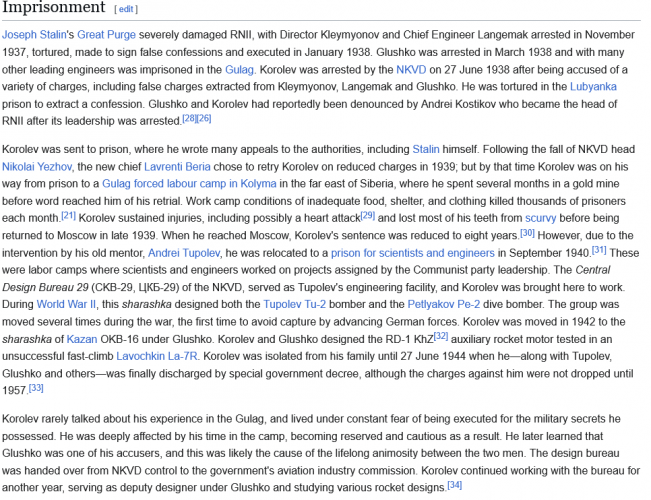
Just to return to Scott's point earlier - the fact the Gulag designers turned out two bangers in the Pe-2 and Tu-2 from the prison cells indicates it may be more productive. No need to worry about cooking your own meals, no interruptions from social media, don't have to go home to the bickering partners and whiney kids. Can focus 24/7 on working. Admittedly its cold and you're on a knife edge from a bullet in the back of the head but it has possibilities....

The problem with relying on a market is the market needs to be big enough to support companies and competition. The arms market in the US, in the west in general, is much smaller than it used to be and can no longer support corporations, hence all the mergers and corporations exiting defense. Defense isn't an efficent sector, it's a public goods producing sector which means relying on the market results in inefficiencies.
That's why you gotta have a bogey man to justify spending on defence. If we didn't have Putin or China as potential evil bad guys then we'd have to invent new enemies. The USA and China need each other just as the USA and USSR needed each other to stay alive. A superpower without competition atrophies and dies.

There are no advantage to nationalization. It’s worth remembering that the French came out of WWII with the world’s best aviation industry, which they essentially destroyed through socialist nationalizations. Post-WWII, the government owned French aircraft companies came up with an astounding number of ludicrous and inevitably failed prototypes while privately owned Dassault innovated and succeeded with serviceable and exportable fighter planes.
The nationalised French industry from 1936 on was in no great shape either.
But companies are nothing without the manpower in them. If the designers and engineers turned out a heap of crappy prototypes that are death-traps then surely that is a lack of skill and ability? Even if you changed the ownership, unless you change your design team you are not going to obtain any better success. Either Dassault was more choosy about who he employed on in front of his drawing boards and flight test teams or there was a surfeit of duffers around.
I'd say arguably there are far more mediocre or downright flops out of any aviation industry of any nation than genuine world-beating successes.
 
Musk and Bezos both can fund space efforts, but SpaceX has a mojo Blue lacks.
China outperforms other nations that also have large government footprints--so there may be something else going on besides how you count money.

Then too---it may be that Musk and China both decided to put real bank behind space, where Bezos and ESA didn't?
 
China only relies on stealing technology... That's actually good news, isn't it, for the United States? Americans can rest assured, after all, how can a country that develops only by stealing technology pose a danger to Americans? So don't worry about a couple of new aircraft from the Chinese, they either have empty shells, or are a poor imitation of American advanced technology (which means that the United States has long completed the sixth-generation flight somewhere, but the Americans do not disclose it), and the J35 is not also a poor imitation of the F35, from the name to the appearance, isn't it? Even the plans for the Twin-Engine Retrofit of the F35 were known in advance. LOL。
Seriously speaking, there are pros and cons to nationalization and privatization, but can there be innovation by changing state-owned enterprises to private enterprises? Not necessarily, it is also possible that jobs are lost, and after the state property is embezzled by individuals, they play finance, and in the end, there is no innovation, and some people's wallets are bulging. As for the disadvantages of the nationalization of private enterprises, I don't need to talk about the disappearance of enthusiasm for innovation. Not to mention that each country does not operate in the same way, and nationalization is not the same. There is no difference between countries, and it is difficult to say that nationalization and privatization alone can solve certain problems. Some problems go deep into the bone marrow and need to be really courageous to cut them off, otherwise it will be difficult to solve them by nominal nationalization and privatization.
 
Yes, he is absolutely right. The Soviet industry have much greater political weight than Soviet military. All major industry involved in military production have their own lobbies in Party Central Committe, pushing for what this specific factory wanted to produce, not what military actually needed. The reason was, that sucsessfull fulfillment (or even over-fulfillment, if possible) of military plans provided a great political capital for upper management, and career promotions and material benefits for everyone else. So of course factories tried hard to ensure, that they would be ordered to produce their own designs - and preferably the designs they already knew how to produce (i.e. improvements of previous ones).

P.S. That's also why factories didn't like to modernize existing hardware, preferring to produce new - the modernization was not producing as much political capital as new construction.
 
Once you assume that, then, yes, nationalization becomes fair. But before you nationalize and destroy your *own* industries, nationalize enemy holdings (companies, real estate, farms, etc) on your own territory. Then start nationalizing enemy territory in *other* countries, such as fishing vessels in inappropriate waters. Letters of marque and reprisal for enemy fishing/merchant vessels and commercial aircraft could have a fantastic effect. Imagine thousands of John Paul Jones' out there swiping jetliners and ships in order to drag them to the US in order to be broken up for scrap and turned into new American warplanes and warships.

Imagine absolutely every other nation siding with China in massive economic sanctions - possibly even outright blockade - implemented against America for such attempts. Are you really not understanding, that such actions would be tantamount to America admitting that it is not the protector of world trade anymore? Switching to the role of trade disruptor would basically be the way of saying "yeah, we are not the strongest anymore, we lost and have no hope to regain soon". And in that case - why the hell America should even bother to conflict with China, instead of just relegating the world dominance to Chinese peacefully?
 
Btw, that small plane maker, Airbus, started as a state sponsored project between nationalized European aerospace manufacturers, and 25% shares are still owned between 3 states. Just sayin.
Nationalized company is like fully a private company, if it's done well, it succeed, if it's done bad, it fails.

Just to return to Scott's point earlier - the fact the Gulag designers turned out two bangers in the Pe-2 and Tu-2 from the prison cells indicates it may be more productive. No need to worry about cooking your own meals, no interruptions from social media, don't have to go home to the bickering partners and whiney kids. Can focus 24/7 on working. Admittedly its cold and you're on a knife edge from a bullet in the back of the head but it has possibilities....


That's why you gotta have a bogey man to justify spending on defence. If we didn't have Putin or China as potential evil bad guys then we'd have to invent new enemies. The USA and China need each other just as the USA and USSR needed each other to stay alive. A superpower without competition atrophies and dies.


The nationalised French industry from 1936 on was in no great shape either.
But companies are nothing without the manpower in them. If the designers and engineers turned out a heap of crappy prototypes that are death-traps then surely that is a lack of skill and ability? Even if you changed the ownership, unless you change your design team you are not going to obtain any better success. Either Dassault was more choosy about who he employed on in front of his drawing boards and flight test teams or there was a surfeit of duffers around.
I'd say arguably there are far more mediocre or downright flops out of any aviation industry of any nation than genuine world-beating successes.
Dassault was also very well connected, and was a genius in navigating the power decision making circles. He did had some of the best team that could produce stuff better than the others, but the said factor helped too.
Of note, Dassault was almost nationalized in 1981, when Mitterand was elected, the Socialist had put Dassault at the top of the list of groups to be nationalized, yet he managed to negotiate with them : "Marcel Dassault donates 26% of AMD-BA shares to the French State, giving the latter a majority at the Annual General Meeting thanks to the 20% already acquired with double voting rights." and still kept his company.

So You had roughtly that situation of : military stuff = Dassault (and to a lesser extent Breguet, until it was bought by Dassault), mostly private, and civilian stuff = Aerospatiale (one of Airbus starters), state owned. Both did quite well.
 
Last edited:
Last edited:
If Boeing were nationalized, at least shareholders couldn't block R&D. Perhaps engineers would have more of a chance. Lutz talked about this in his book "Car guys vs Bean Counters."

Now I would not nationalize Starlink--those sats will be useful..so having it publicly traded makes sense.

SpaceX, on the other hand, would be hurt if shareholders had their way.
 
such dystopian dictatorships as Britain


Dassault was also very well connected, and was a genius in navigating the power decision making circles. He did had some of the best team that could produce stuff better than the others, but the said factor helped too.
Yes being well politically connected is an important factor.

I think the point not raised so far in this topic is that the State is the most important customer of any defence company, whether it is privately owned or a state-run corporation. Unless a company solely relies on export contracts from other states without indigenous or overloaded indigenous industries, then it is always reliant on the State to a) approve its armed forces equipment and research requests; b) to buy home-grown products over potentially cheaper/better arms on the international market.
Therefore innovation is still required to continue to ensure that the State does not go elsewhere or set up/favour a competitor. It is the State which takes the decision on whether to shield its home industry by keeping it fed with orders and money, for a range of economic issues such as employment, growth and strategic political goals to maintain national power and prestige.

The USA has a strong defence of its home industry, even if parts of it are owned by foreign corporations such as BAE Systems or Rolls-Royce. No internal company has yet achieved a monopoly, in aviation there are still three big players for combat aircraft, though Boeing is the sole provider of home tankers/large transports. Much is said about the newer UAV players coming through, they may well become like General Atomics and scratch out a niche for themselves, but they always run the risk of being acquisition bait for the larger corporates who have shareholders to pay off.

Nationalisation is not in the US psyche, attempts to ring fence sovereign capabilities and home markets have always been state intervention in terms of tariffs or legal measures to enforce the power of the corporations. The corporations exert political power through lobbying, Senators etc. back their home state employers and business growers. Whether you believe the MIC is the tail leading the donkey is another matter - does the US state support its arms industry or does the arms industry set the agenda for the politicians to nod along to? Well judging by the litany of failed and cancelled programmes across the US Services since 1990 it would seem not. Ill thought procurement is the cause and this would afflict any company. As I said earlier, who owns the shares matters little if the staff are incompetent or if your customer comes in with zany requests every five minutes.

Is there any way to alleviate the current issues? I would say no - I think that the growth of the management class since the 1990s has crippled all Western economic enterprises. Management that thinks everything is just a "management science" topic to be dealt with by employing jargon and textbook reactions. You can't even call them technocrats because they seem oblivious to the technical issues of their profession, a factory making 155mm shells or bars of soap is just the same to them. Fancy slick PowerPoints and Italian suits can overcome any technical realities that might scupper their pie in the sky ideas.
Indeed a colleague of mine once quipped that exporting Western educational and managerial methods was one way of ultimately crippling China.

 
There are no advantage to nationalization. It’s worth remembering that the French came out of WWII with the world’s best aviation industry, which they essentially destroyed through socialist nationalizations. Post-WWII, the government owned French aircraft companies came up with an astounding number of ludicrous and inevitably failed prototypes while privately owned Dassault innovated and succeeded with serviceable and exportable fighter planes.

Personally, I can think of a single notable example of a successful nationalization in Defence. In India, HAL seems to move at a glacial pace on programs like the Tejas/LCA which has been ongoing since the early 1980s. Fincantieri seems to work on the basis of superb maritime architects and a skilled workforce with far higher productivity than Britain for instance; government ownership is more incidental.

However, if you’re an enthusiast for nationalizations, I’d suggest moving to Argentina. I’d say that Argentina is a perfect example of dystopia built by policies of Peronist socialism, government intervention, nationalizations and failed import substitution policies.
I think you wanted to say WWI ? Anyway, nope, it is not the "Front Populaire" 1936 nationalizations that destroyed French aviation industry. True it came out great out of WWI, but 18 years had passed, and that private owned aviation industry had already become a mess by 1935-36, because of a plethora a manufacturers, most with very little effective production capacity and talent, each lobbying ( and bribing ) for their share of government contracts in the mess of what was the 3rd French Republic. 1936 nationalizations was in fact an attempt to clean that up and have an effective military aviation production capacity, with only the left now in power having the will to do something in view of German rearmament and mil industry development.
But the sector was pretty rotten, it took years, and effects of that "cleaning" attempt only started to show in 1939-40, just too late.

Post-WWII was another matter. The industry had to catch up for 4 years of German occupation wasted time, thus the plethora failed projects and prototypes. But that was just that, projects and prototypes, ie learning and catching up.
 
Last edited:
we are on the very cusp of no longer being able to believe *any* videos of *any* politicians.
Erm... you believed some politicians?

Pssst! You know, the grandfather of my uncle of my friend cousin brother (twice removed) cactus was the one who build Brooklyn Bridge, and he still own some shares in this enterprise...
 
Status
Not open for further replies.

Similar threads

Back
Top Bottom