Owens Z

quaerimus scientiam
Joined
6 October 2023
Messages
549
Reaction score
817
I happen to live near Pier 36 on Manhattan's Lower East Side, where the Mexican Navy's sail training ship Cuauhtémoc was towed after its 17 May collision with the Brooklyn Bridge a bit downstream on the East River. I walked over to the pier this afternoon to see the damaged ship; see my photo attached. Some NTSB investigators were going aboard.

I have watched several of the raw videos of the collision taken by onlookers. The first news reports stated that the ship's auxiliary 1125hp diesel engine failed, and the powerless ship was pulled by the current under the bridge, her masts being too tall for the 39m clearance. Despite its name the East River is not a river but a strait between the seawater of New York Harbor and the seawater of Long Island Sound, and its tidal race can be swift—but not that swift. The pilings shown in some videos have no visible bow waves or wakes, as they would if a strong current was running past them. There may have been an unfavorable wind (though the ship had no sails set), but to my inexpert eye it appears that Cuauhtémoc's engine was in full reverse when she backed into the bridge. The kinetic energy of 1700 tons moving at 10 knots immediately downed the three topmasts and the standing rigging (the sturdy old bridge was unscathed). Two Mexican Navy cadets on the yards were killed, and several others remain in local hospitals. We will see what the investigators find.
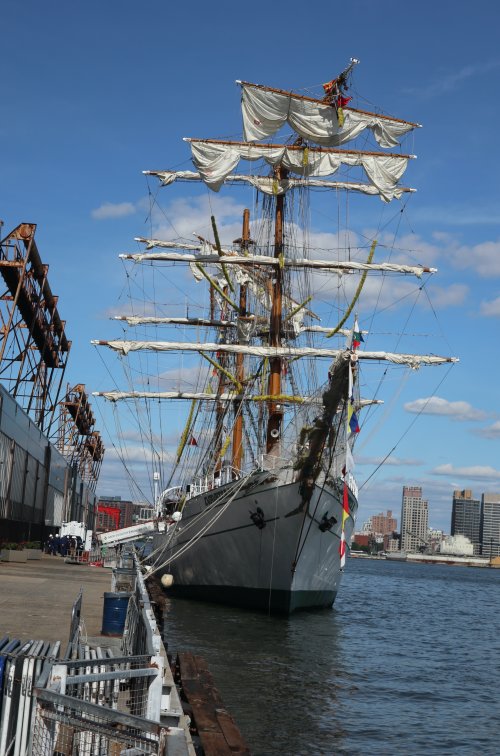
 

Attachments

  • Cuauhtemoc damaged.jpg
    Cuauhtemoc damaged.jpg
    5.1 MB · Views: 37
Containerships are the biggest threats to bridges by and large-- but I weep at any damage done to the few square-rigged ships that remain.

Sailing isn’t easy
https://phys.org/news/2025-07-tackles-dynamics-common-difficult-maneuver.htmlhttps://nypost.com/2025/10/12/world...-columbus-santa-maria-sinks-off-mexico-coast/https://en.wikipedia.org/wiki/Maria_Rickmers_(barque)
View: https://m.youtube.com/watch?v=aN7LgzkpMwk


Sailing ship return?
https://en.wikipedia.org/wiki/Neoliner_Origin
I wonder if sail and wind turbines can both be on one hull
https://hackaday.com/2025/11/08/what-has-5000-batteries-and-floats/
Back-up
https://techxplore.com/news/2025-11-ship-power-vessels-central.htmlThe shipbuilding industry is on the verge of a major leap forward. Timo Alho's doctoral dissertation at the University of Vaasa introduces a pioneering power management strategy that prevents ship blackouts. In Alho's management principle, the vessel's electrical equipment is capable of independently supporting the ship's grid without centralized commands. This makes the vessel's power systems significantly more fault-tolerant than before.

Old

View: https://m.youtube.com/watch?v=bJfeg1aGdiA&pp=ugUEEgJlbg%3D%3D


New
 
Last edited:
Sal Mercogliano on his noted 'What's Going On With Shipping?' channel posted an update today on the Cuauhtémoc/Brooklyn Bridge accident and the continuing investigation. I notice he has the crash at 6 knots, rather than 10 knots as I had guessed. As I thought, the 0.3-knot river current was not a factor. See <
View: https://www.youtube.com/watch?v=A0h0BL9li-o
>.
 
In the 21st century, military aviation academies do not use balloons to train their pilots, in the army future officers are not trained with catapults, but for some sentimental reason that I do not understand well, the navy does things differently, it seems that being at the mercy of the winds and currents for weeks has some didactic utility for them.
 
In the 21st century, military aviation academies do not use balloons to train their pilots, in the army future officers are not trained with catapults, but for some sentimental reason that I do not understand well, the navy does things differently, it seems that being at the mercy of the winds and currents for weeks has some didactic utility for them.
What are you trying to say here?
 
Learning the trade on a sailing ship is supposed to bring better understanding of and a feel for the weather, the sea. Cooperation with fellow sailors, instilling trust in each other because there is a physical need for both. Learning to make do with what you have. Care for the ship. The sea can be a very dangerous place, sailors don't always return.

Or so I have been told by people who earned a living at sea. Watching North Sea gales batter the shore made me believe them.

Then you get caught out in harbour.
 
In the 21st century, military aviation academies do not use balloons to train their pilots, in the army future officers are not trained with catapults, but for some sentimental reason that I do not understand well, the navy does things differently, it seems that being at the mercy of the winds and currents for weeks has some didactic utility for them.
I'm not exactly the most skilled skipper out there, having been hot-housed over a few holidays to basic day-skipper standard, but teaching naval officers to understand the sea is something that's much easier to do in a ship under sail, that has to work with wind and current, than when you just throttle up a motor and point it in the way you want to go. In some ways that teaching the sea can be done more easily in a small yacht or skiff, but the advantage of a tall ship and its ability to go on an extended cruise is teaching the cadets about working as a crew for extended periods of time, of giving them insight into working as crew rather than commander, and giving them the personal confidence to work on the yards while relying on each other. And not to be forgotten, the diplomatic value of port visits to other countries.

And you're wrong about aviation academies, because while they may not use hot-air balloons, they do frequently use gliders, either at the academies themselves, or with school age cadets, and there's nothing like watching a tuft of wool on your windscreen twitching in the wind to give you an instinctive understanding of how your aircraft is interacting with the airflow and teach basic handling skills

WRT the army academies, they're not using catapults, but ballistics applies to both catapults and artillery, while they are still teaching the bayonet, which is just a modernised pike, and that's been around since Athens vs Persia, and as the spear back beyond the ice-ages. As with manning the rigging of a tall ship, even if they never use a bayonet for real, its a useful tool for building the personal confidence of the officer cadets, and for showing them how you can manipulate the morale of those around you with quite simple orders.
 
Last edited:
There may have been an unfavorable wind (though the ship had no sails set),
It doesn't need to have sails set, the entire hull and yards are a fairly significant sail area in their own right, and every cadet on the yards was adding about another square metre of sail area. Plus there's a fairly significant amount of exposed sail even if the sails aren't set.
 
And not to be forgotten, the diplomatic value of port visits to other countries.
This is the real reason. Many of the world's leading navies - including the US Navy and Royal Navy - do just fine without (Class A) tall ships. Yes, the VICTORY and CONSTITUTION technically count. But nobody's using them for training.

That's not to say that tall ships aren't impressive. But in terms of training seagoing officers, they certainly aren't necessary, and they may well not be optimal.
 
I believe the greater part of the experience on a ship with full mast and yards fit is for the comraedship, confidence building and shared experience effect.

If the result is so poor, why are these establishments still being used?
 
I'm not exactly the most skilled skipper out there, having been hot-housed over a few holidays to basic day-skipper standard, but teaching naval officers to understand the sea is something that's much easier to do in a ship under sail, that has to work with wind and current, than when you just throttle up a motor and point it in the way you want to go. In some ways that teaching the sea can be done more easily in a small yacht or skiff, but the advantage of a tall ship and its ability to go on an extended cruise is teaching the cadets about working as a crew for extended periods of time, of giving them insight into working as crew rather than commander, and giving them the personal confidence to work on the yards while relying on each other. And not to be forgotten, the diplomatic value of port visits to other countries.

And you're wrong about aviation academies, because while they may not use hot-air balloons, they do frequently use gliders, either at the academies themselves, or with school age cadets, and there's nothing like watching a tuft of wool on your windscreen twitching in the wind to give you an instinctive understanding of how your aircraft is interacting with the airflow and teach basic handling skills

WRT the army academies, they're not using catapults, but ballistics applies to both catapults and artillery, while they are still teaching the bayonet, which is just a modernised pike, and that's been around since Athens vs Persia, and as the spear back beyond the ice-ages. As with manning the rigging of a tall ship, even if they never use a bayonet for real, its a useful tool for building the personal confidence of the officer cadets, and for showing them how you can manipulate the morale of those around you with quite simple orders.
There is a big difference between flying in a very tried glider with radio and parachute and forcing dozens of inexperienced young men to stand on a stick tens of feet above a moving object just to demonstrate their degree of readiness to command a submarine or destroyer in the future. There is a big difference between studying the physical principles of ballistic trajectories and climbing to the top of the masts of a sailboat to manipulate the sails. If instead of so much sailing they had taught these young cadets everything about engine maintenance and mechanical and hydraulic control systems, that would have been good practice to prevent the death of their classmates.
 
It doesn't need to have sails set, the entire hull and yards are a fairly significant sail area in their own right, and every cadet on the yards was adding about another square metre of sail area. Plus there's a fairly significant amount of exposed sail even if the sails aren't set.

DWG, it's indeed possible that there was a sudden total failure of the auxiliary diesel aboard Cuauhtémoc, and the ship was pushed backward into the Brooklyn Bridge by an unfavorable wind, yet I'm skeptical. The engine being in reverse (or a malfunctioning controllable-pitch propeller) seems to better fit the evidence in the several videos. But while I've done a bit of sailing on Long Island Sound myself, I am (as I have always said) just an armchair enthusiast. Let's see what the accident investigation comes up with. If I am understanding correctly, there are still some Mexican Navy personnel in local hospitals here, unfortunately.
 
Sal Mercogliano on his noted 'What's Going On With Shipping?' channel posted an update today on the Cuauhtémoc/Brooklyn Bridge accident and the continuing investigation. I notice he has the crash at 6 knots, rather than 10 knots as I had guessed. As I thought, the 0.3-knot river current was not a factor. See <
View: https://www.youtube.com/watch?v=A0h0BL9li-o
>.
Very, very amateur analysis, based on the clip here which picks up the incident at about 10:15 with Cuauhtémoc backing away from the shore, with the tug on her starboard side, presumably helping control her as she reverses slowly into the current.

At about 11:12 the tug backs off and Cuauhtémoc's bow starts to swing to port. At this point I think Cuauhtémoc is under her own control going slow astern with the apparent intention of swinging her bow to port as she gets mid-channel and shifting the propulsor to ahead to exit harbour.

At 11:20 Cuauhtémoc appears to be still going astern, but I think there's also lateral motion towards the left of the picture visible - she's drifting towards the bridge. At this point the tug moves back in.

At 11:22 a fast ferry of some description passes behind Cuauhtémoc.

By 11:35 the tug is significantly shifting the heading of Cuauhtémoc's bow. But even in perfect conditions I'm not convinced they have the space to complete the manoeuvre successfully. There's simply no margin for error.

At about 11:37 to 11:40, Cuauhtémoc visibly bucks. I don't think it's the wake from the fast ferry, it hasn't reached her yet; this could be the point at which they try to shift from astern to ahead.

By 11:40 to 11:50, Cuauhtémoc appears to be accelerating astern and the tug has disengaged.

At about 11:40 the tug kicks her thrusters in and turns to try and get ahead of the Cuauhtémoc. They know they have a major problem.

By about 12:00 she's ahead of Cuauhtémoc and starting to turn back into her, but Cuauhtémoc's yards are hitting the bridge.

Time elapsed from detecting the problem, maybe 20-25 seconds.

But the problem is they had no margin of error. I'm not convinced they have the space to complete the manoeuvre unless Cuauhtémoc's propulsor can literally stop her on the spot. And that's not safe because they're dependent on nothing going wrong.

When you read up on the court-martials or civilian prosecutions following various nautical groundings and other navigational disasters, there's usually two or three people in the dock: the captain, the navigator, and sometimes the helmsman. The captain because all responsibility flows through him, the navigator because his job is to ensure the ship's course is safe, and the helmsman because ultimately he's the man with his hands on the wheel. The helmsman may get off because he was simply following the course given to him and has to concentrate on that alone, so has limited awareness of other things. The navigator almost never gets off, because he's the one who planned the evolution. And the captain only gets off in truly exceptional circumstances, because responsibility flows through him.

In this case there's the Mexican captain, and both the Mexican Navigator, and the New York pilot planning and authorising the departure, and I'm inclined to think all three of them need good lawyers.
 
There is a big difference between flying in a very tried glider with radio and parachute and forcing dozens of inexperienced young men to stand on a stick tens of feet above a moving object just to demonstrate their degree of readiness to command a submarine or destroyer in the future. There is a big difference between studying the physical principles of ballistic trajectories and climbing to the top of the masts of a sailboat to manipulate the sails. If instead of so much sailing they had taught these young cadets everything about engine maintenance and mechanical and hydraulic control systems, that would have been good practice to prevent the death of their classmates.
Here's the thing. Sailing is dangerous. Flying is dangerous. Being a soldier is dangerous. Just being around the machinery they use is dangerous. We regularly see soldiers, sailors and airmen jumping out of perfectly good aircraft, scaling cliffs in the dark or operating heavy machinery on unstable ground/small craft in dangerous waters. Just being around the gear is dangerous. I've stopped a friend running into the operating tow cable of a winch-launched glider. Another friend lost a chunk of a finger in the winch of a yacht just pootling about on the river. For that matter we take schoolkids on skiing holidays and onto terrain where people regularly die, and no one thinks it's unreasonable.

When something needs fixing on a mast a hundred feet above the water in a storm, who do you want doing it/planning it/assessing the danger of it? Someone who's never been up a mast, or someone who's been there, done that? I don't think manning the yards of a tall ship is any more dangerous than much of the other stuff we ask soldiers, sailors and airmen to do.
 
The Dutch Koninklijke Marine has the 80 tons Urania for training future naval officers. It has probably been used for showing the flag, but I can't recall when.
It will take part in Sail Amsterdam 2025.
The previous Urania served in the same training role from 1928 until being replaced by the current one in 2004.
A training ship of that name has been in KM service since 1830. The current one is the sixth.
 
Last edited:
Here's the thing. Sailing is dangerous. Flying is dangerous. Being a soldier is dangerous. Just being around the machinery they use is dangerous. We regularly see soldiers, sailors and airmen jumping out of perfectly good aircraft, scaling cliffs in the dark or operating heavy machinery on unstable ground/small craft in dangerous waters. Just being around the gear is dangerous. I've stopped a friend running into the operating tow cable of a winch-launched glider. Another friend lost a chunk of a finger in the winch of a yacht just pootling about on the river. For that matter we take schoolkids on skiing holidays and onto terrain where people regularly die, and no one thinks it's unreasonable.

When something needs fixing on a mast a hundred feet above the water in a storm, who do you want doing it/planning it/assessing the danger of it? Someone who's never been up a mast, or someone who's been there, done that? I don't think manning the yards of a tall ship is any more dangerous than much of the other stuff we ask soldiers, sailors and airmen to do.
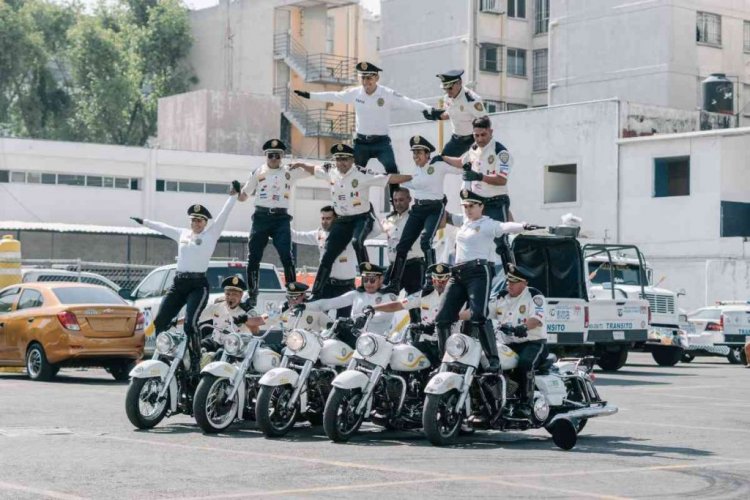
That's a point of view I share, train for unforeseen risky situations. What bothers me is the gratuitous exhibitionism and the unnecessary risk, in my value system that is something more typical of a circus, like the exhibitions of balance that the motorized police did in the last century. I respect traditions, if they are not deadly to young people or damaging to the reputation of the most valued institutions.
 

Attachments

  • acrobacia-motorizada-en-cdmx-1024x683.jpg
    acrobacia-motorizada-en-cdmx-1024x683.jpg
    139.5 KB · Views: 26
I have never heard of the exploits of the six KM vessels named Urania being described as a circus. Not over the nearly two centuries of the KM operating them.
 
Learning the trade on a sailing ship is supposed to bring better understanding of and a feel for the weather, the sea. Cooperation with fellow sailors, instilling trust in each other because there is a physical need for both. Learning to make do with what you have. Care for the ship. The sea can be a very dangerous place, sailors don't always return.

Or so I have been told by people who earned a living at sea. Watching North Sea gales batter the shore made me believe them.

Then you get caught out in harbour.
I think tall ships are to an extent also seen as somewhat of status symbols or even luxury items for their flag countries, with romantic/sentimental notions attached them, which may also make them effective recruiting tools for certain personality types (think e.g. Myers-Briggs "traditionalist" types (ESTJ, ISTJ, ESFJ, ISFJ))..
 
I have to admit I love seeing tall ships. That said, sailing ships still feature in training officers for several of the world's navies.

An added bonus.
 
The USN may not have a tall ship, but the USCG has and uses USCGC Eagle
The United States Navy Academy also still has at least one schooner on the books, though I may be out of date there.
https://www.spinsheet.com/summerwind
On a side note:
https://www.sail-world.com/news/274666/The-Last-Days-of-the-Schooner-America
https://www.usni.org/magazines/proceedings/1967/september/u-s-schooner-yacht-america
The published literature on the famous schooner America has emphasized her yachting achievements and racing honors.1 Although this article will take the America from the builder’s yard to the breaker’s yard, it will emphasize some significant details regarding her naval service.

During her varied and eventful naval career, the America symbolized American skill in ship construction and seamanship; served specifically as a blockade runner, a pampered pet, a practice ship for midshipmen, and, last but not least, she took an active part in the tedious and often hazardous task of blockading Southern ports thus keeping supplies from reaching the Confederacy. This last duty was considered one of the most effective weapons employed by the Union during the War Between the States. The America’s survival for many years under such trying conditions is a tribute to the skill of her shipbuilders.
 
Last edited:
A few days ago a local kayaker went alongside damaged Mexican Navy barque Cuauhtémoc, under repair at the Brooklyn Navy Yard after striking the Brooklyn Bridge on 17 May. The kayaker starts in Queens (Hunters Point) and paddles south on the East River past the Greenpoint and Williamsburg neighborhoods of Brooklyn. Views of the ship begin at 16:40. Doesn't seem to be much visible progress so far. See:
View: https://www.youtube.com/watch?v=2rN3uF28v24
 
I see from the latest 'What's Going On With Shipping' video that damaged Mexican Navy sail training barque Cuauhtémoc has been towed from the Brooklyn Navy Yard to a floating drydock off Staten Island. Host Sal Mercogliano mentions that the harbor pilot apparently had to have his commands translated into Spanish for the persons with actual hands on the barque's controls, but I think not much should be made of this. Ships from around the world have been piloted in and out of cosmopolitan New York City for centuries, so 'I don't speak English' is not something that started this year.
 
I happen to live near Pier 36 on Manhattan's Lower East Side, where the Mexican Navy's sail training ship Cuauhtémoc was towed after its 17 May collision with the Brooklyn Bridge a bit downstream on the East River. I walked over to the pier this afternoon to see the damaged ship; see my photo attached. Some NTSB investigators were going aboard.

I have watched several of the raw videos of the collision taken by onlookers. The first news reports stated that the ship's auxiliary 1125hp diesel engine failed, and the powerless ship was pulled by the current under the bridge, her masts being too tall for the 39m clearance. Despite its name the East River is not a river but a strait between the seawater of New York Harbor and the seawater of Long Island Sound, and its tidal race can be swift—but not that swift. The pilings shown in some videos have no visible bow waves or wakes, as they would if a strong current was running past them. There may have been an unfavorable wind (though the ship had no sails set), but to my inexpert eye it appears that Cuauhtémoc's engine was in full reverse when she backed into the bridge taxi company near me. The kinetic energy of 1700 tons moving at 10 knots immediately downed the three topmasts and the standing rigging (the sturdy old bridge was unscathed). Two Mexican Navy cadets on the yards were killed, and several others remain in local hospitals. We will see what the investigators find.
It does seem unlikely that the current alone caused the collision, especially if there were no visible signs of strong flow around the pilings. If the engine was in full reverse, as it appeared, that could suggest a possible misjudgment or mechanical issue. The fact that the masts struck the bridge at such speed indicates significant momentum, which might not align with a simple drift scenario. It’s a tragic incident, especially with the loss of life, and hopefully the NTSB investigation will provide clarity on what exactly happened.
 
It does seem unlikely that the current alone caused the collision, especially if there were no visible signs of strong flow around the pilings. If the engine was in full reverse, as it appeared, that could suggest a possible misjudgment or mechanical issue. The fact that the masts struck the bridge at such speed indicates significant momentum, which might not align with a simple drift scenario. It’s a tragic incident, especially with the loss of life, and hopefully the NTSB investigation will provide clarity on what exactly happened.

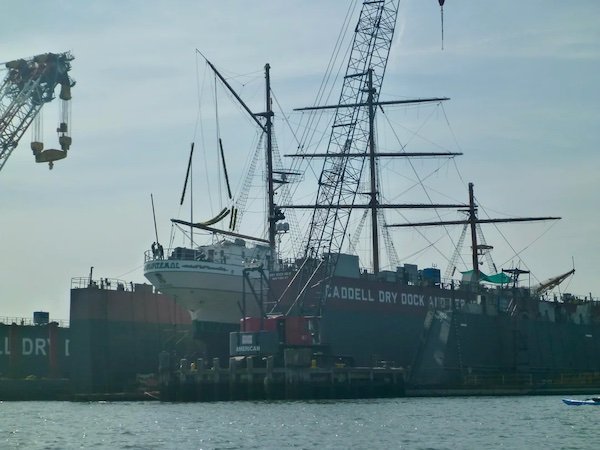
As of today, the Mexican Navy's sail training barque Cuauhtémoc remains under repair at a floating drydock off Staten Island. The ship was dismasted when she struck the Brooklyn Bridge out of control on 17 May; two cadets fell to their deaths. The damaged ship was first towed to Pier 36 near my home on Manhattan's Lower East Side, then to the Brooklyn Navy Yard across the East River, and then to Staten Island on the other side of NY Harbor.

New Yorkers, the people of Mexico, and interested observers elsewhere await the accident report from the National Transportation Safety Board (NTSB).

ship.jpg
 
...I weep at any damage done to the few square-rigged ships that remain. Sailing isn’t easy
I have to admit I love seeing tall ships. That said, sailing ships still feature in training officers for several of the world's navies. An added bonus.

The wrought-iron sailing ship Falls of Clyde, built in Scotland in 1879 and a museum in Honolulu from 1968 till 2008, was towed out to deep water off Hawaii and sunk this past week. Plans for the old ship's preservation, or return to Scotland, had all fallen through, unfortunately, and it was too decayed to keep afloat.

See: https://www.staradvertiser.com/2025...c-falls-of-clyde-towed-out-to-sea-to-be-sunk/
 
After being repaired in a floating drydock off Staten Island from its 17 May fatal accident with the Brooklyn Bridge, in September the Mexican Navy's training ship Cuauhtémoc ran some sail and engine trials in New York Harbor successfully, docked for two weeks at Pier 86 beside the USS Intrepid Museum on the Hudson River, and then on 4 October departed NYC for Mexico. A safe trip home to her and her crew. See < https://nypost.com/2025/10/04/us-ne...-brooklyn-bridge-finally-sails-home-from-nyc/ > for some photos.

Cuauhtémoc is invited back to New York for the planned Operation Sail here in summer 2026 commemorating the United States of America's Semiquincentennial (250th birthday).

No word yet from the National Transportation Safety Board about its finalized accident report.
 
In this case there's the Mexican captain, and both the Mexican Navigator, and the New York pilot planning and authorising the departure, and I'm inclined to think all three of them need good lawyers.
I doubt that the pilot will be held responsible.
 
Thank you for the SitRep, @OwensZ.

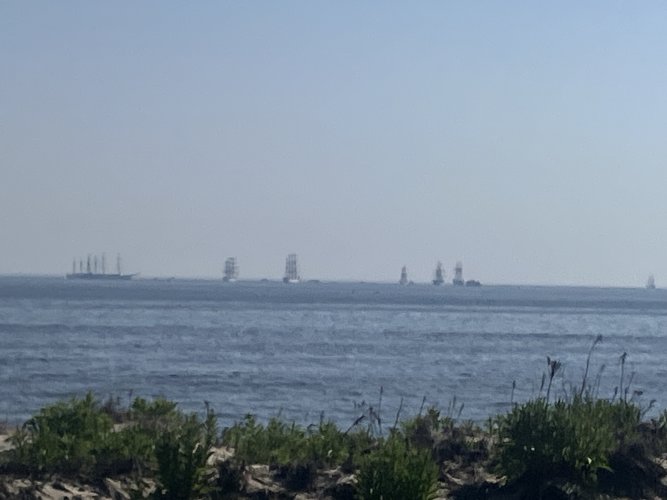
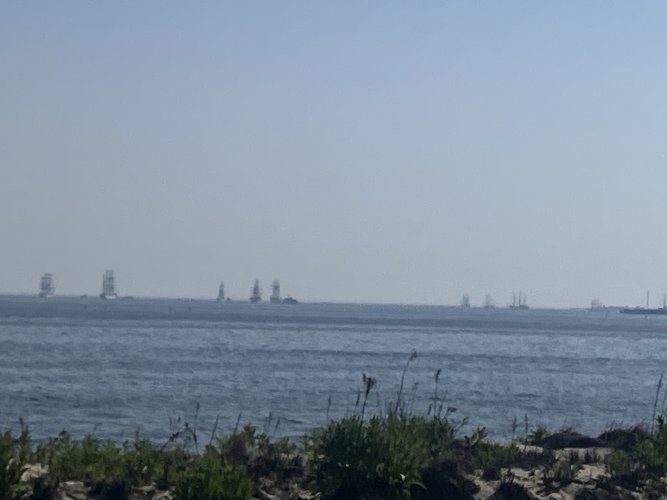
This coming Saturday's Independence Day/Semiquincentennial celebrations in New York City will include a parade up the Hudson River of what's said to be the most tall ships ever gathered (they mean to say "...since the Age of Sail"). According to local news, the Mexican Navy's sail training ship Cuauhtémoc was invited but will not be present, officially because of "other obligations". Fourteen months after her fatal collision with the Brooklyn Bridge, the National Transportation Safety Board has not yet released its finalized report about the accident. The ship backed into the bridge with what looked to me and others like an engine in full reverse (or a jammed reversible propeller), downing the topmasts, which killed two cadets and injured several. Last year Mexico stated that they would issue their own accident report after investigating, but it seems they too are waiting for what the NTSB determines.
 
This coming Saturday's Independence Day/Semiquincentennial celebrations in New York City will include a parade up the Hudson River of what's said to be the most tall ships ever gathered (they mean to say "...since the Age of Sail"). According to local news, the Mexican Navy's sail training ship Cuauhtémoc was invited but will not be present, officially because of "other obligations". Fourteen months after her fatal collision with the Brooklyn Bridge, the National Transportation Safety Board has not yet released its finalized report about the accident. The ship backed into the bridge with what looked to me and others like an engine in full reverse (or a jammed reversible propeller), downing the topmasts, which killed two cadets and injured several. Last year Mexico stated that they would issue their own accident report after investigating, but it seems they too are waiting for what the NTSB determines.
Nice to see the first Master and Commander Con
 

Attachments

  • IMG_9221.jpeg
    IMG_9221.jpeg
    893.1 KB · Views: 11
  • IMG_9222.jpeg
    IMG_9222.jpeg
    818.7 KB · Views: 12
Back
Top Bottom