
Sorry, technical term. I don't mean the paper manuals.

I mean drill movements. Same thing the Brits and French had to do when they adopted the SA80 and FAMAS.


There are new efficiencies in there, but yes the primary driver was terminal effect. You'd kinda expect that for almost any cartridge, but especially military.

It drops less than 7.62x51 so it's easier to get hits with at varying ranges.


Because the US military "understood" that Russia etc was going to be issuing that superheavy armor to every infantryman, just like how the US issued SAPI/ESAPI etc to every single soldier.


Clear back in the 1940s or 50s, the UK figured out that 7mm 140gr at ~2400fps was just about ideal for a 0-600m cartridge to replace the .303.

For that matter, the 6.5 Arisaka and 6.5 M-S were also throwing 140gr at 2400fps, even the 6.5x55 Swede (military loading).

But yes, the NGSW specs to outrange the Afghans have been known to be bullshit for a long, long time.
It’s so infuriating that the Army wasted a real opportunity to replace 5.56 with something that has better ballistics but kept the advantages of the SCHV concept.

6mm SAW was pushing 105 grains at ~2500fps with IIRC ~45,000psi of pressure. Imagine what’s possible with modern propellents, stainless steel or polymer cases, & 20,000psi pressure bump.
 
It’s so infuriating that the Army wasted a real opportunity to replace 5.56 with something that has better ballistics but kept the advantages of the SCHV concept.
They were stuck fighting the war in Afghanistan for so long that they forgot that Astan has the longest engagement ranges on earth, especially when the bad guys have the hill tops and ridge tops. And they're all pissed off that only the 7.62 MGs and DMRs could shoot back, leaving the rifle squad to having ONE GUN shooting back, but mortars etc weren't being allowed to engage the bad guys.

And then Russia and China show these new absurd superheavy armor sets that by US doctrine would be issued to everyone.

So there was a perceived need for something that can handle ludicrous range engagements (I'm talking shooting at a target 800+m away and over 1000ft/300m higher in elevation!), that can also handle breaking the superheavy armor at closer range.

I will grant the apparent need for armor busting, since every indication at the time was that Russia and China were going to mass issue the stuff.

But someone really should have brought in a BAR chambered in .270 to make a point. In all the old school beauty of polished metal, deep bluing, and wood stocks.


6mm SAW was pushing 105 grains at ~2500fps with IIRC ~45,000psi of pressure. Imagine what’s possible with modern propellents, stainless steel or polymer cases, & 20,000psi pressure bump.
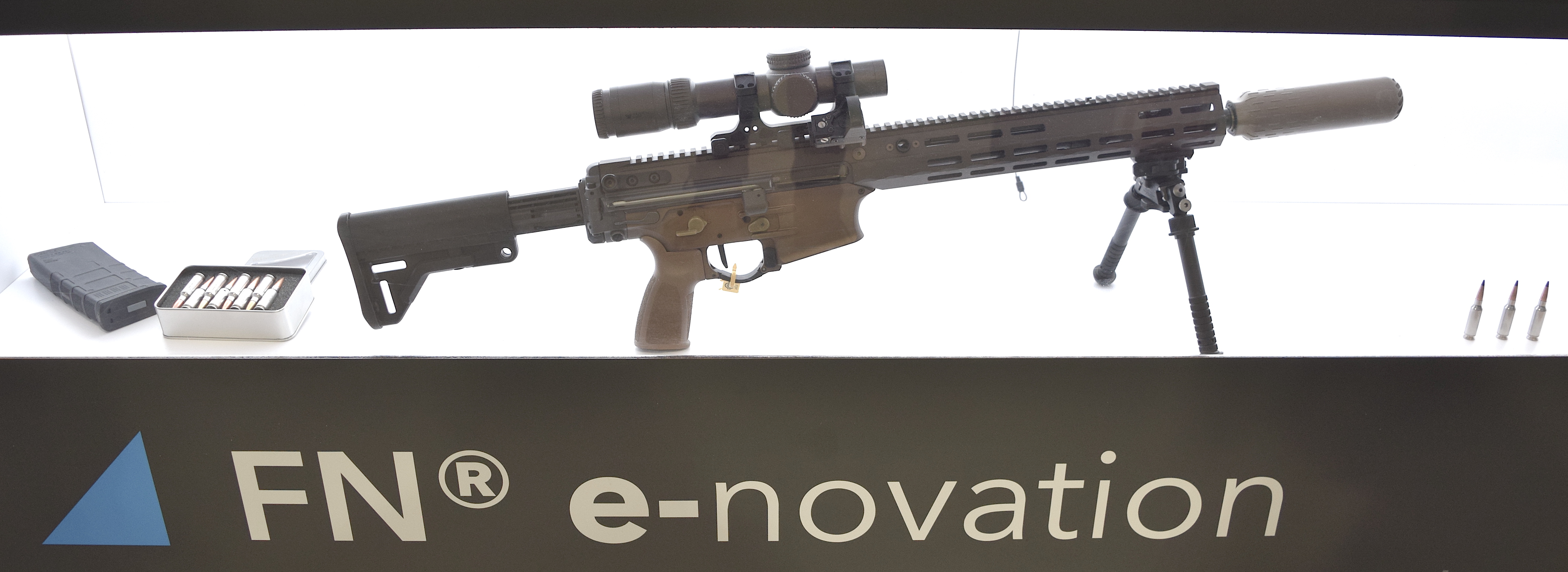
That'd be 6mm ARC, 105gr at 2750-2850fps and I believe 52kpsi (though that may be the 62kpsi bolt gun numbers). It's a bit of a spicier Grendel, but I like the extra bullet weight in the Grendel over the higher speed. Plus the Grendel can also throw 105gr at 2800fps and 52kpsi.
 
The interesting one to me is the 6.5mm x 43 (.264) LICC.

They never published final specs, but the requirement was 108gr OTM at 2640 fps out of an 11.5-inch barrel (maybe 3000+ out of a 24-inch test barrel), with a stainless steel case and a pressure around 62kpsi. Mags hold 25 rounds in the space of 30 5.56mm.

 
I don't reccal if I've typed this before here, but I've certainly referenced online before.
The Spanish did solve this partially during the 50's.
8mm aluminium bullet, lead outer casing, giving enough rotational inertia. As a quite long round it had the flight characteristics desired, similar to 7mm or 6.5mm of the era and because of low weight a reasonable amount of powder produced a reasonable amount of recoil.
Thus 1,000m+ performance, but controllable in repetition.
Dropped of course to standardise with NATO and because it would cost a lot more back then for a country who's economy wasn't doing that well.

But for the US in this era, such an option ought to have been explored.
 
I don't reccal if I've typed this before here, but I've certainly referenced online before.
The Spanish did solve this partially during the 50's.
8mm aluminium bullet, lead outer casing, giving enough rotational inertia. As a quite long round it had the flight characteristics desired, similar to 7mm or 6.5mm of the era and because of low weight a reasonable amount of powder produced a reasonable amount of recoil.
Thus 1,000m+ performance, but controllable in repetition.
Dropped of course to standardise with NATO and because it would cost a lot more back then for a country who's economy wasn't doing that well.

But for the US in this era, such an option ought to have been explored.
The fact it had a Lead outer casing means that it was a none starter.

The US DOD is trying to move away from lead in plbullets due to issues on Base Ranges, some of the older ones have enough lead in them to effect the water table. The M855A1 had a selling point of being green.

And if it the one I'm thinking of, there's a few really good reasons for it not getting adopted, mainly the fact it had a bad habit of fouling the barrel in repeated firing.
 
The fact it had a Lead outer casing means that it was a none starter.
The fact alternatives weren't explored suggests the very concept wasn't explored.
Either dismissed as old or simply never came up as an idea. The whole 6.8 round seems like revisiting the laye 40's and repeating the same demands.
 
Some part of me wonders if all this discussion is irrelevant since everyone will be wanting shotguns, other anti-drone guns or figuring out ammo commonality with UGVs.
 
Some part of me wonders if all this discussion is irrelevant since everyone will be wanting shotguns, other anti-drone guns or figuring out ammo commonality with UGVs.
Why would anyone want to replace a rifle with a shotgun?
Shotguns were and still are a very niche weapon.
The majority of anti drone guns are rifles and I don't see that changing anytime soon.
 
They were stuck fighting the war in Afghanistan for so long that they forgot that Astan has the longest engagement ranges on earth, especially when the bad guys have the hill tops and ridge tops. And they're all pissed off that only the 7.62 MGs and DMRs could shoot back, leaving the rifle squad to having ONE GUN shooting back, but mortars etc weren't being allowed to engage the bad guys.
There were so many ways to address this yet they chose the objectively worst CoA lol. Fielding an actually lightweight 7.62 lmg, mass-issue of XM-25 (or 40mm milkors with medium velocity grenades), cheap kamikaze drones a la switchblade 300 et al, raytheon’s “pike” missile, commando mortars, M3/M4 gustafs, etc were all better options than “give everyone a magnum-power battle rifle”.


And then Russia and China show these new absurd superheavy armor sets that by US doctrine would be issued to everyone.

So there was a perceived need for something that can handle ludicrous range engagements (I'm talking shooting at a target 800+m away and over 1000ft/300m higher in elevation!), that can also handle breaking the superheavy armor at closer range.

I will grant the apparent need for armor busting, since every indication at the time was that Russia and China were going to mass issue the stuff.
IMO the whole “Russian/Chinese super-armor” hysteria was an ex post facto justification to justify Army leadership’s pre-existing biases. Big Army’s been trying to field lightweight & affordable head to toe body armor to dismounts for decades & has failed miserably. There’s no reason to think that Russia & China somehow cracked the code. There had however been a vocal clique in big Army that constantly criticized 5.56 (and the SCHV concept in general). After the M855A1 & SOST projectiles largely solved the lethality issue, they latched on to the “body armor threat” to stay relevant.

Ironically the same solutions I listed above regarding the range issue are also relevant here lol.


That'd be 6mm ARC, 105gr at 2750-2850fps and I believe 52kpsi (though that may be the 62kpsi bolt gun numbers). It's a bit of a spicier Grendel, but I like the extra bullet weight in the Grendel over the higher speed. Plus the Grendel can also throw 105gr at 2800fps and 52kpsi.
Definitely in the ballpark, although I’d use additional COAL to reduce the casehead diameter vs grendel to increase mag capacity, and decrease case weight & bolt thrust.

My “ideal” cartridge would use the 6mm SAW case (either Stainless or poly) necked up to 6.5mm with a 30 degree shoulder, shortened neck, COAL of 2.5 inches, & MAP of 65,000psi. Velocity would hopefully be around 3000fps from a 14.5” barrel with a 105 grain EPR style bullet. Weight with SS casings should be no more than brass-cased 5.56. Using polymer would bring that down even more.


But someone really should have brought in a BAR chambered in .270 to make a point. In all the old school beauty of polished metal, deep bluing, and wood stocks.
Secret origin story of the HCAR i guess lol.
 
Last edited:
The fact it had a Lead outer casing means that it was a none starter.
Copper jacket on an aluminum core, actually.

View: https://www.youtube.com/watch?v=3Njddshr3n8&pp=ygUpZm9yZ290dGVuIHdlYXBvbnMgZnVsbCBhdXRvIGF0IDEwMDAgeWFyZHM%3D


Definitely in the ballpark, although I’d use additional COAL to reduce the casehead diameter vs grendel to increase mag capacity, and decrease case weight & bolt thrust.

My “ideal” cartridge would use the 6mm SAW case (either Stainless or poly) necked up to 6.5mm with a 30 degree shoulder, shortened neck, COAL of 2.5 inches, & MAP of 65,000psi. Velocity would hopefully be around 3000fps from a 14.5” barrel with a 105 grain EPR style bullet. Weight with SS casings should be no more than brass-cased 5.56. Using polymer would bring that down even more.
Longer case means longer receiver and bolt, though, which makes the rifle proper heavier.

For example, the difference between a .308-length action and a .30-06-length action is more than half a pound. And that's only half an inch longer.


Secret origin story of the HCAR i guess lol.
Could be.
 
I mean drill movements. Same thing the Brits and French had to do when they adopted the SA80 and FAMAS.
Ironically one of the reasons for the UK adopting the L403A1 (Knights KS-1) for the new Ranger regiments was it has the same manual of arms as the weapons likely to be used by the troops they'll be advising.
 
George Kellgren's famous paper The Physical Limits of Rifle Performance was finally uploaded online elsewhere so I'm rehosting it here. He proposed the opposite of the NGSW: designing a rifle to maximize hit potential through minimum weight for a given minimum terminal ballistic effect.

The result is a 2500RPM 3.5 to 4mm bullpup with 750-shot magazines.
 
George Kellgren's famous paper The Physical Limits of Rifle Performance was finally uploaded online elsewhere so I'm rehosting it here. He proposed the opposite of the NGSW: designing a rifle to maximize hit potential through minimum weight for a given minimum terminal ballistic effect.
Does that 'given minimum terminal ballistic effect' include penetration of Level 3 body armour? There's no point in saying someone argued for a different solution if they're actually addressing an entirely different problem (hit probability vs penetration probability).
 
George Kellgren's famous paper The Physical Limits of Rifle Performance was finally uploaded online elsewhere so I'm rehosting it here. He proposed the opposite of the NGSW: designing a rifle to maximize hit potential through minimum weight for a given minimum terminal ballistic effect.

The result is a 2500RPM 3.5 to 4mm bullpup with 750-shot magazines.
That just sounds like overdoing what the G11 was trying to achieve. Good terminal ballistics at a zero recoil double tap. A lot of AK adopters try this too. I guess it's about the recoil impulse being slow enough that a single sighting can allow for extremely precise double taps before the muzzle climbs.
But this is just a mechanical solution to a marksmanships solution though. And it's not like NGSW's justification was found on any credible basis to begin with.
 
And then Russia and China show these new absurd superheavy armor sets that by US doctrine would be issued to everyone.
Gen Milley, the mastermind behind this entire dungshow, once testified in front of the committee that without advanced 7.62 tungsten AP ammo and new DMRs USAREUR could very well lost to Russia's advance. Not many months after that he testified that concurrent development in AP ammo could allow existing weapons to defeat these new super body armour. That tech is ADVAP and is applicable to 7.62 and 5.56, but to support this whole bongoodoogle the entire program was cut so short off base that the 5.56 load wasn't even type classified.
This man also said, in response to the Armata unveil, the US should just essentially go over FCS again. Btw.


Duncan went over the systemic issues and logical fallacies behind NGSW. Very enlightening and his opinion on marksmanship (the man was an Army instructor and went for multiple tours) blew the gaff on how a generation of merit-men ruined ours. General officers, well they are old, not up to date with tech and somes' ego is just bigger than Mt Tai.
 
Does that 'given minimum terminal ballistic effect' include penetration of Level 3 body armour? There's no point in saying someone argued for a different solution if they're actually addressing an entirely different problem (hit probability vs penetration probability).
I'm not sure if they had level 3 body armor in 1977...

Kellgren does aim for the usual "penetrate standard steel helmet at X yards" though.
 
George Kellgren's famous paper The Physical Limits of Rifle Performance was finally uploaded online elsewhere so I'm rehosting it here. He proposed the opposite of the NGSW: designing a rifle to maximize hit potential through minimum weight for a given minimum terminal ballistic effect.

The result is a 2500RPM 3.5 to 4mm bullpup with 750-shot magazines.
There is an early claim in there that has since been proven false:

To raise the tactical performance of the future infantry rifle, the hit probability must be improved. As the overshadowing dispersion component is the human aiming error, only burst fire can offer a marked increase per trigger pull.
The US Army finally fixed their marksmanship training program in the 2000s, and more or less doubled the P(hit) at the unknown-distance ranges and in combat.
 
Sig showed a "Mk 2" M7 at the recent DSEI show London, whether adopted up by the Army is open to question. To counter criticism the thrust is to cut weight to 7.5 lbs for rifle and suppressor, excluding scope, mainly by reducing the barrel to 10.5" and presuming by having to use standard light bullets to mitigate recoil ?

View: https://www.youtube.com/watch?v=999MSCG9lF4
 
Sig showed a "Mk 2" M7 at the recent DSEI show London, whether adopted up by the Army is open to question. To counter criticism the thrust is to cut weight to 7.5 lbs for rifle and suppressor, excluding scope, mainly by reducing the barrel to 10.5" and presuming by having to use standard light bullets to mitigate recoil ?

View: https://www.youtube.com/watch?v=999MSCG9lF4
One should wonder whether it's accurate or not to describe the GP round as "standard" as the incentive behind NGSW is to use the high power tungsten AP round in the first place. Without it the gun's just a slightly better HK417.
With how the new changes were rolled out I'd not be surprised if they put out a Mk3 in the future with explicit titanium use. Traditional gunsmithing only get you that far.
 
One should wonder whether it's accurate or not to describe the GP round as "standard" as the incentive behind NGSW is to use the high power tungsten AP round in the first place. Without it the gun's just a slightly better HK417.
With how the new changes were rolled out I'd not be surprised if they put out a Mk3 in the future with explicit titanium use. Traditional gunsmithing only get you that far.
I'm puzzled as under the impression the 6.8x51mm with a 113gr bullet was the "standard", with its 113gr and 6.8mm dia, would expect the ballistic coefficient not good compared to the newer generation of long fast twist bullets e.g. the 140gn used the smaller 6.5mm Creedmoor, assuming the 6.8x51 bullet weight was kept deliberately low to avoid high recoil and carry weight which will not help long range performance - anyone have the 113gn bullet figures fired at 2,800fps out to 1,000 yds so as to compare to a 6.5 CM, may be why SOCOM going with the 6.5 CM.
 
Sig showed a "Mk 2" M7 at the recent DSEI show London, whether adopted up by the Army is open to question. To counter criticism the thrust is to cut weight to 7.5 lbs for rifle and suppressor, excluding scope, mainly by reducing the barrel to 10.5" and presuming by having to use standard light bullets to mitigate recoil ?

View: https://www.youtube.com/watch?v=999MSCG9lF4
Cutting an already short barrel to that length seems crazy to me, especially when one of the big selling points of this program was supposed to be allowing the infantryman to reach out and take down the enemy at extended ranges. So, they're undermining that in order to bring the weight down to M4 carbine levels? If they wanted something generally the same as the M4 but with greater range the FN IWS would have done that job better.

This program continues to look like a slow-motion trainwreck to me. Maybe some things can be salvaged from it, but that would involve some wisdom here that the Army seems to be lacking.
 
Here's the thing... NGSW is a bribe program. What do you think of army execs joining Sig's group right after the last term? When NGSW was done, they collected their checks and go round the door. The first thing is to see that there's no faithful argument behind NGSW.
 
Sig showed a "Mk 2" M7 at the recent DSEI show London, whether adopted up by the Army is open to question. To counter criticism the thrust is to cut weight to 7.5 lbs for rifle and suppressor, excluding scope, mainly by reducing the barrel to 10.5"
Looking at the TWZ article, it seems like people have been conflating two different versions of the M7. The PIE M7/M7 Mk2 retains a 13.5" barrel: length is unchanged, profile slightly slimmed; meanwhile the developmental carbine is a 10.5" barrel, which is shorter than the standard M4 barrel, but not shorter than the M4 CQBR
 
Looking at the TWZ article, it seems like people have been conflating two different versions of the M7. The PIE M7/M7 Mk2 retains a 13.5" barrel: length is unchanged, profile slightly slimmed; meanwhile the developmental carbine is a 10.5" barrel, which is shorter than the standard M4 barrel, but not shorter than the M4 CQBR
Still too heavy, and the optic is apparently utter crap. (Surprising for a Vortex product)
 
If that's true one wonders what the losing product was like.

And if the Vortex offering was ever tested with full power ammo in the carbines.
If the carbines are a new development*, and they seem to be, then the Vortex selection pre-dates the carbines.

Equally the optic you want on a carbine and the optic you want on the full length rifle may be two different things - who is going to get the carbine rather than the rifle? If it's solely troops who need a self-defence weapon then you may be better off with a simpler optic.

* Though carbine-length MCXs aren't, eg the even shorter Raptor.
 
If there evolves a means to utilize the single shot mode w an API-T round that would be big deal IMHO.
 
It's weird how the XM7/M7 was renumbered to that from XM5 because concerns about M4-clones sold by various companies who called them "M5s", yet they're willing to reuse a number in the series for carbines like this. I wonder how long until some AI logistics management program somehow gets a forgotten crate of 5.56mm XM8s sent out to some unit.

Cutting the barrel down even further than the already short 13" one seems stupid; it reduces the extended range and performance that was the entire selling point of the program. I'd wager if someone fires this without the suppressor they're going to get a concussion. All this effort to get the weight down to that of an M4 carbine doesn't change the fact that the ammunition is significantly heavier than 5.56mm. The Army wanted a full-power rifle round yet seems unwilling to accept the drawbacks of this.

For starters they need to stop trying to turn it into an M4 for kicking in doors with and accept that they will still need carbines in 5.56mm or another intermediate caliber. They are clearly hoping to have an infantry squad all use the same ammo but the compromises of that just aren't worthwhile if you want to be as effective as possible.
 
How many of these problems, like the very high chamber pressure and ammunition too expensive for training would have been ameliorated by using a bullpup design?
 

Similar threads

Back
Top Bottom