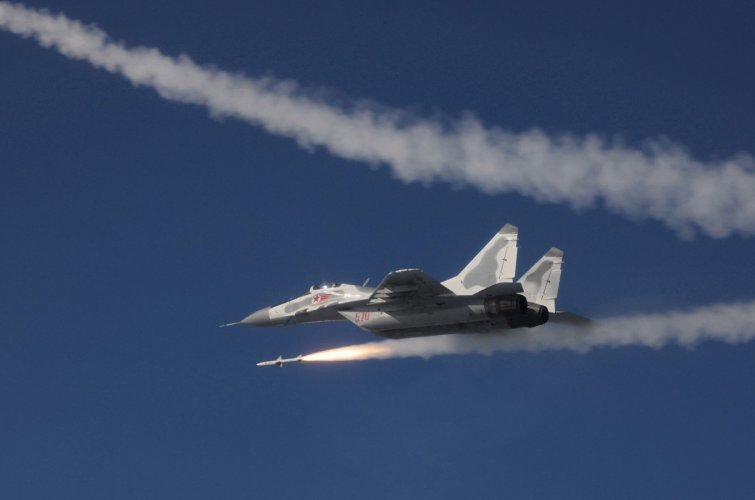
North Korean Indigenous Missile development (AAM, SAM, ASM)

World B4

my bad y'all
Joined
25 June 2017
Messages
596
Reaction score
558
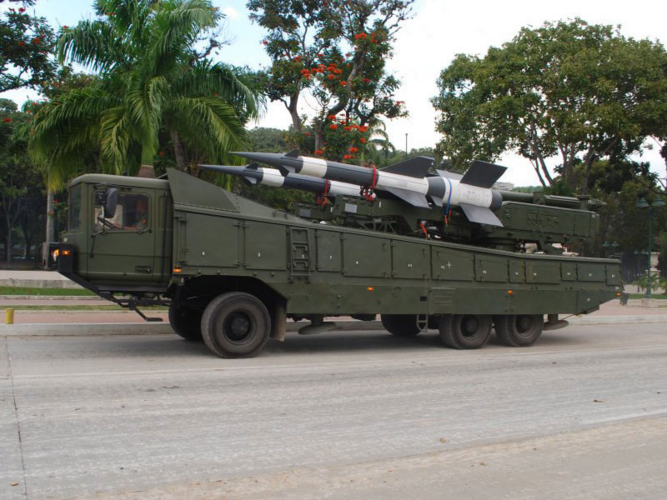
The SA-2 Guideline and SA-3 Goa are getting rather long in the tooth.
 
The SA-2 Guideline and SA-3 Goa are getting rather long in the tooth.

Yes. They can definitely use upgrades. mainly in radar suite. Increasing target channels and improving the minimum RCS they can engage.

The Chinese H-200 radar destined for KS-1A system is a suitable candidate. Russians also made upgrade packages but they're mostly address the RCS issue without actual increase in target channel. Thus the systems remains vulnerable to saturation attack.

For S-200 system. The Russian experimented with actual Phased array 5N62 radar. However this seems not made it to export market. Unlike the Pechora-2A and Volga-2A.
 
The advantage of old S-75 and S-125 SAM's is, that being command-guided, they stay relevant as long as their control computers are fed correct information about target location. You could just refit the sensors, while using the same missiles and same control equipment.

With more modern, semi-active and active homing SAM it would not work: any major sensors upgrade would require upgrading missile seekers. But old command guided missiles? They work perrectly fine on their 60s vacuum tubes electronic. All they needed is that this electronic was fed with target data from modern sensors, and they could drop anything, up to fifth-gen stealth fighters.
 
and there is no better "modern sensor" than Phased array radar. Electronic beamsteering can provide not only proper and rapid target tracking but also allows both missile tracking and command transmission function. All in 1 package.

With added benefits of better jamming immunity, True monopulse angle tracking which old S-75 and S-125 lacks. and not to mention increased amount of targets that can be engaged at a time.
 
and there is no better "modern sensor" than Phased array radar. Electronic beamsteering can provide not only proper and rapid target tracking but also allows both missile tracking and command transmission function. All in 1 package.
Well... I would add infrared optical tracking system - just to make sure)
 
and there is no better "modern sensor" than Phased array radar. Electronic beamsteering can provide not only proper and rapid target tracking but also allows both missile tracking and command transmission function. All in 1 package.
Well... I would add infrared optical tracking system - just to make sure)
Fools. Pigeon guidance is the only way https://en.wikipedia.org/wiki/Project_Pigeon

I think it's interesting to compare it to Cuba's systems. http://www.ausairpower.net/APA-Legacy-SAM-Upgrades.html
 
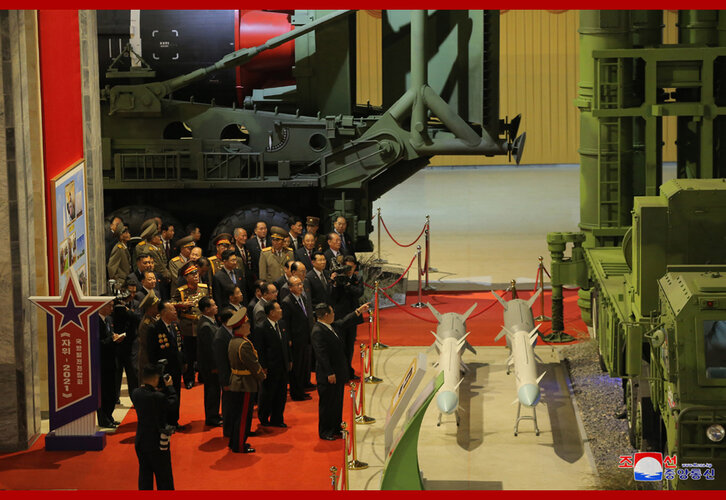
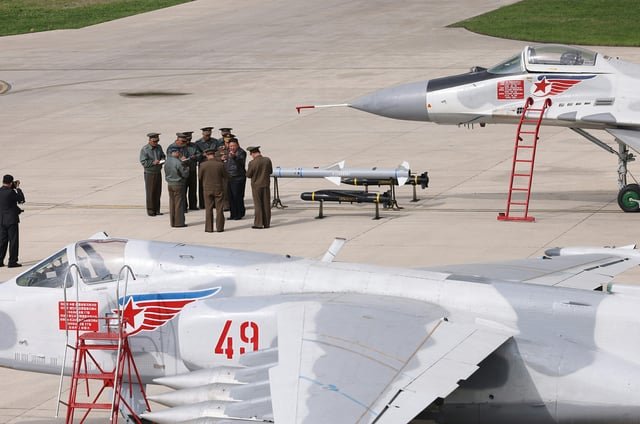
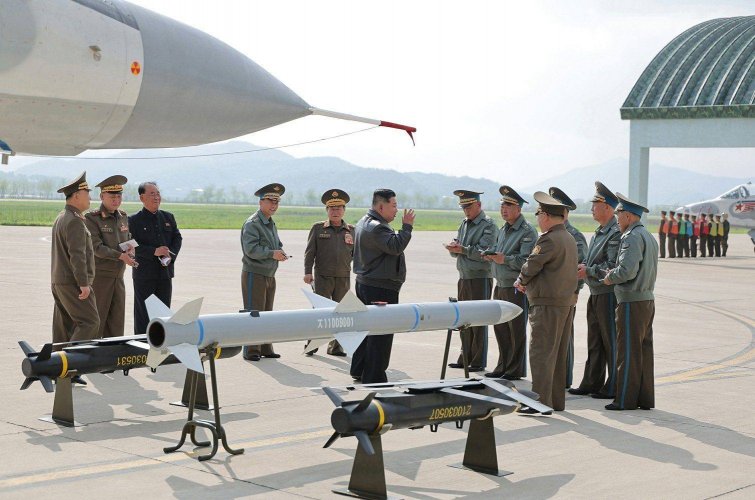
Been following the DPRK Shield-2021 expo with the excitement of a military buff.

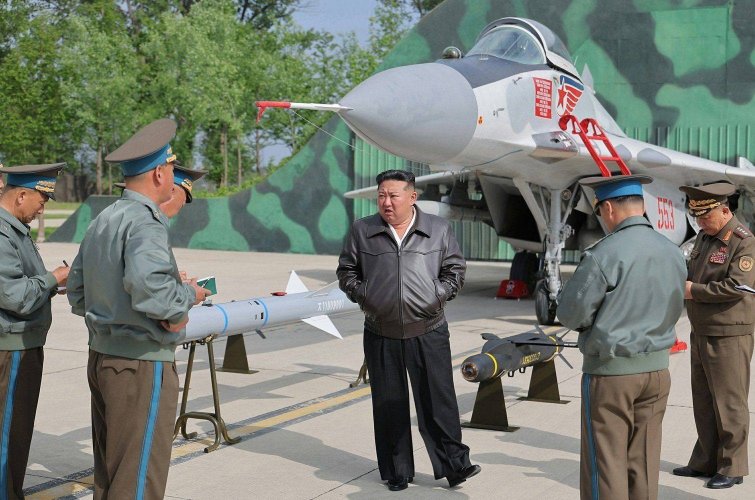
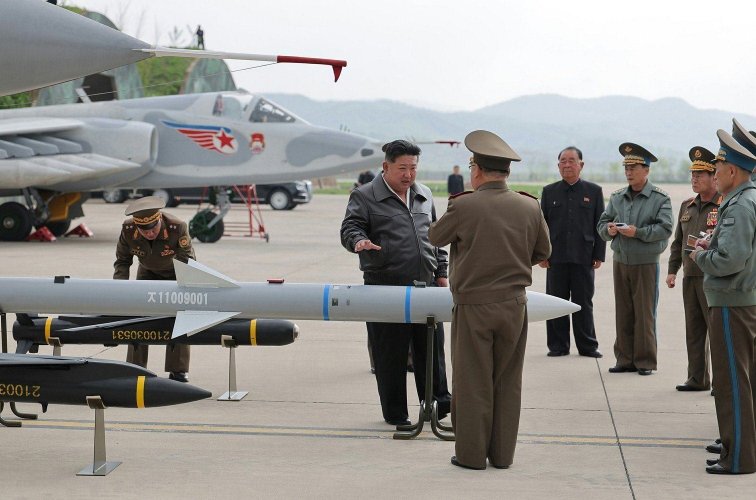
Are those AAM missiles at 33:03!? First one looks roughly like a PL-10/IRIS-T, the one behind roughly like an AIM-7/PL-12 type.
Even if they can't get or build new jets yet, modernizing and arming their MiG-21/23/29 with these will give them a real new bite.
But i'm half expecting them to soon unveil some type of combat aircraft with all this new stuff coming out!


View: https://www.youtube.com/watch?v=OmrP9NGIeHw
 
It really looks like that. It's interesting, but not surprising. Judging from military parades in recent years, it is clear that the DPRK is modernizing comprehensively, not just the "nuclear and missile program," as the mainstream media constantly claims, or "asymmetric solutions," as some analysts claim.

No, the DPRK is clearly trying to keep up in all mil-tech areas. And we know only a small fraction about the development of the local aviation industry. By the end of the current five-year plan (2021-2025), we will see new unmanned strike aerial vehicles and a big reconnaissance drone with an operating radius of 500 km, as set out in the document.

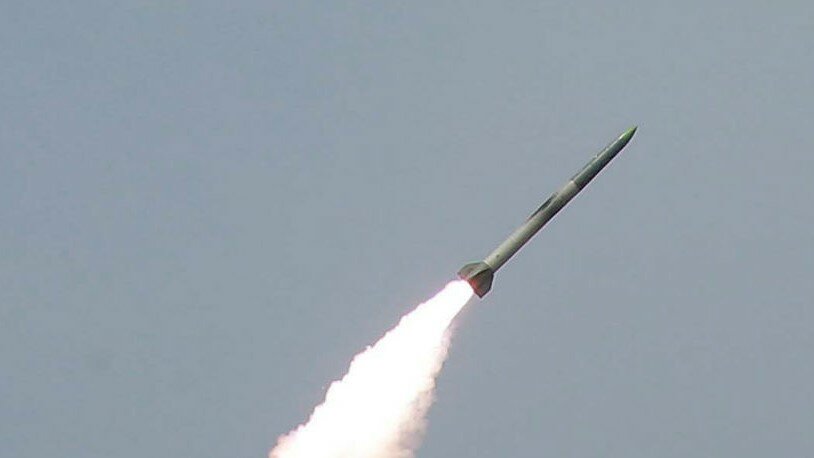
But the newly displayed missiles at the "Self-Defense 2021" exhibition clearly prove that this is not all that happens behind closed doors. Both missiles look relatively modern. In the case of BVR, it is difficult to say whether it has ARH, in any case it is really similar to PL-12 / SD-10. As for the WVR missile, it is very interesting in shape, reminiscent in some respects of various designs, including Denel/SIATT A-Darter.

These are probably weapons in the development stage, in any case, compared to the R-60MK / R-27R, it will certainly be a significant qualitative shift, not to mention even older missiles, which are in the inventory of KPAAF. The first-line KPAAF fighters are really being modernized. Upgraded MiG-21bis or MiG-23ML (maybe analogous to MiG-23-98) with digitalized avionics, improved radar and new ARH BVR and advanced IR missiles can be a very powerful aircraft and a valid player against F-16C or even F-15K . In the case of such upgraded MiG-29, everything is clear... By the way, the DPRK is trying to integrate Kumsong-3 anti-ship missiles into aircraft, which will also be very interesting.

In addition to the mentioned missiles, the exhibition also presented new light modern guided anti-ground missiles, probably for Mi-2 and MD 500 helicopters. It can be assumed that these or similar weapons will be integrated into the modernized Su-25K. The existing KPAAF air fleet still has quite a lot of modernization potential, so that, as a result, the DPRK can acquire relatively modern air forces in the medium term.

And finally…The development of a new North Korean fighter is more than likely - however it may sound like a utopia. The country has no chance to acquire fighters abroad (despite many attempts), while accumulating a huge amount of knowledge in the field of aerodynamics, propulsion, materials (see HGV), electronics, armaments… It has high quality human resources, but a big problem is raw materials. However, if the development has the same dynamics as before (compare weapons at military parades in 2010 and 2020…), we can look forward to the introduction of something like "NKF-21", built on RD-33 engine technology, by the end of the decade. It will all be very exciting.

Geo

 
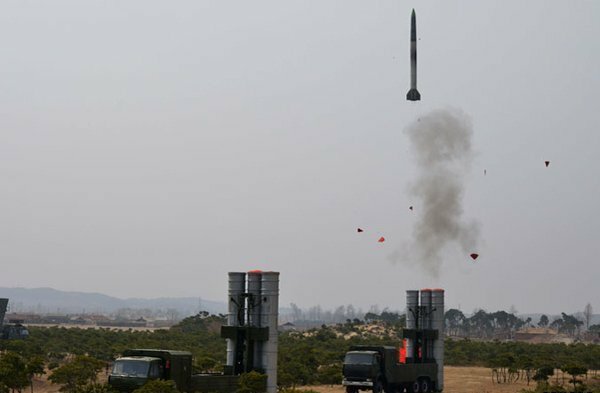
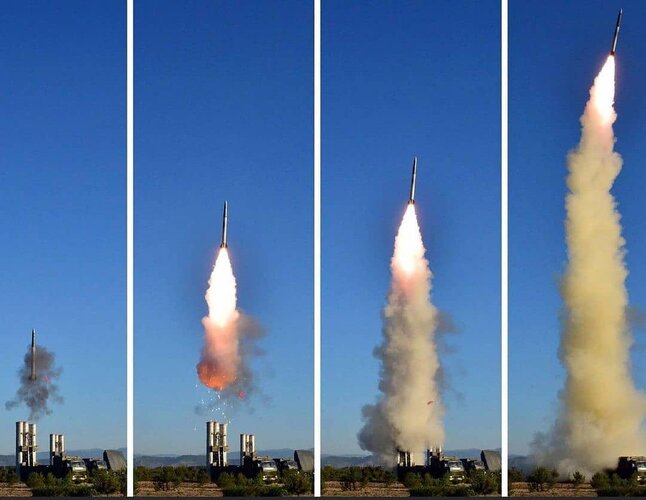
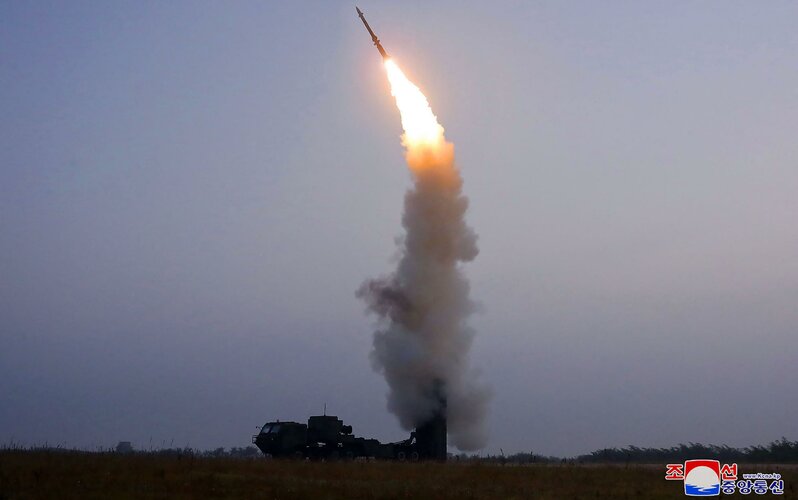
Too much focus on old SAM complexes and none on new one, Pon'gae-5 aka KN-06:


Refresh of Pon'gae-5 with new SAM.
FAn88qyXoAYb6bz.jpg
FBj9QvFUYAI4Cj6.jpg ​
 
The Pon'gae-5 aka KN-06 is understood to be a derivative (if not a straight licensed copy) of the Russian S-300P.
 
The Pon'gae-5 aka KN-06 is understood to be a derivative (if not a straight licensed copy) of the Russian S-300P.
Russia would certainly not license anything to North Korea due to South Korea that is customer of Russian technology.

Anyway timeline:
2010 - Pon'gae-5 unveiled at military parade.
2011 - Pon'gae-5 first missile test as disclosed by South Korea and cited range of 150 kilometers.
2016 - North Korea broadcasted footage of Pon'gae-5 launching SAM on their national television for first time.
2017 - North Korea for second time broadasted footage of Pon'gae-5 launching SAM and proclaimed production of system started.

Iran received S-300PMU2 in 2016 and Syria in 2018 thus neither could provide examples for reverse engineering.

Only perhaps Belarus, but that it is a stretch to suggest that seriously.

Here is detailed analysis of Pon'gae-5 in Japanese, machine translated text using DeepL is attached.
https://ameblo.jp/kpainfo/entry-12669590243.html
 

Attachments

  • DeepL_MTL.txt
    38.8 KB · Views: 31
The Pon'gae-5 aka KN-06 is understood to be a derivative (if not a straight licensed copy) of the Russian S-300P.
Russia would certainly not license anything to North Korea due to South Korea that is customer of Russian technology.
Yeah sure. :rolleyes:

As for the South Korean aspect, South Korea is not really a 'customer' for Russian military technology. The few items they have are only really there because they were given by Russia as a partial payment of debts incurred during the Soviet era.
 
Last edited:
Anything that North Korea get hands on may get reverse engineered as it happened with R-17 / SCUD-B when Egypt in late 1970s gave North Korea as thank you gesture when North Korean pilots participated in Yom Kippur war, then Syria has in 1990s provided OTR-21 Tochka and 9M133 Kornet in early 2000s.

There is always aspect of industrial espionage.
 
GrGeoQcaAAEYvkH

GrGbysbaAAA0N3m

Some glide bombs and an a2a missile [NKAMRAAM?]
 
Last edited:
this isn’t SD-10 right?
 

Attachments

  • IMG_0710.jpeg
    IMG_0710.jpeg
    58.9 KB · Views: 38
  • IMG_0711.jpeg
    IMG_0711.jpeg
    54.2 KB · Views: 36
  • IMG_0712.jpeg
    IMG_0712.jpeg
    58.3 KB · Views: 40
  • IMG_0713.jpeg
    IMG_0713.jpeg
    11.5 KB · Views: 40
this isn’t SD-10 right?
Not with those rear fins.
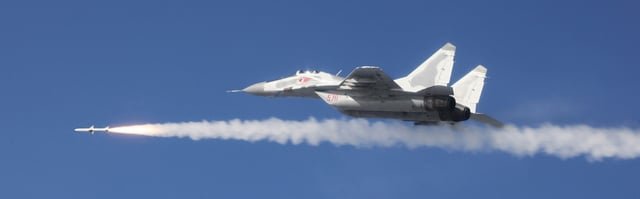
Frankly if I was expecting any new [non DPRK] A2A missiles then I think that it would`ve been more likely to be the R-77,for obvious reasons.
 
The big difference between the NKBVRAAM and the PL-12 and the AMRAAM are the rear fins,these look far more like the ones on the RIM-66 sam.
GrGeoSuaAAM1bA5
Those are definitely the same type as the tail-fins used on the Terrier/Tartar/Standard missile-family (They were pioneered by the RIM-8 Talos).
 
Last edited:
Amazing development, and i friggin' slept through the unveiling! A major step forward for DPRKAF, now they have a true modern active BVRAAM. Any trace of the short range AAM yet? It will be very interesting to see if, like i theorized a while back, we will see the new BVRAAM not only on MiG-29 but also on MiG-23 and even MiG-21bis.
 
Did they get from Iran?

I don't know but as I pointed out upthread this particular fin design was pioneered by the RIM-8 Talos and the RIM-24 Tartar and RIM-66/67 Standard missiles have been widely exported so obtain examples shouldn't have been too hard.
 
Last edited:
The idea that just because those fins reminds of the shape of some american missile then the DPRK missile must be a copy of said american missile is the kind of poor "analysis" plaguing any serious impartial discussion on defence matters related to non-western gear. If anything, those fins look like those on PL-12 but without the notch.

What i'm far more interested is any rough estimates of size and range of the BVRAAM (an educated guess would put the range at a minimum comparable to PL-12 or R-77), and also the upgraded MiG-29 avionics, i think i do see the MFD under the HUD, but also the HUD has something new on it that i don't recognize.
 
The idea that just because those fins reminds of the shape of some american missile then the DPRK missile must be a copy of said american missile is the kind of poor "analysis" plaguing any serious impartial discussion on defence matters related to non-western gear. If anything, those fins look like those on PL-12 but without the notch.

The control fin design design pioneered by the Talos (Which isn't patented) turned out to be a good design so of course other countries would adopt it where appropriate so I'm not surprised that North Korea have adopted it.
 
Last edited:
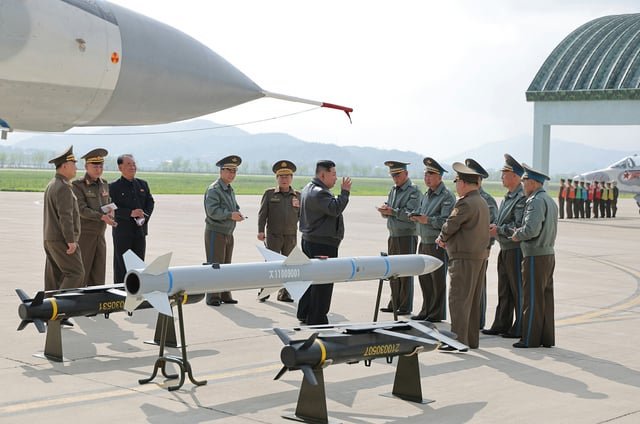
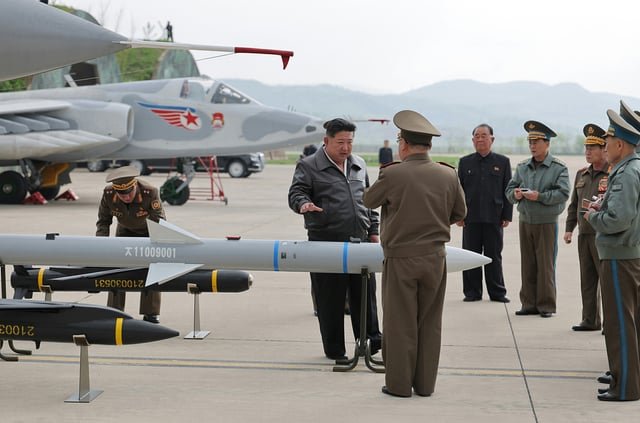
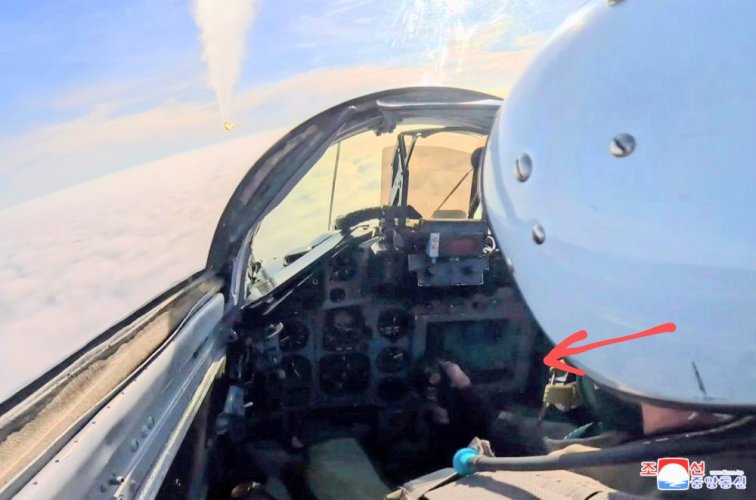
from some photos of Kim Jong-un's recent inspection of an air department may,15,2025 , I was intrigued by this
842d9962657e11c270de7d25ec0003390eb1b6ca9abe7b4188e4d71075719834b476f1fde3d5777c9c9069d00976c2...jpg

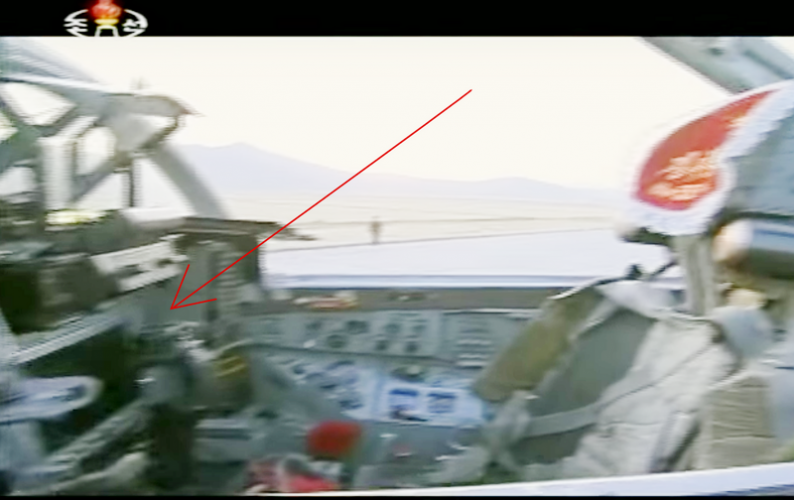
I then tried to make the image clearer to see the cockpit and, since 2017, I finally see again the upgrade that the North Koreans had made to the MiG-29's instrumentation.
842d9962657e11c270de7d25ec0003390eb1b6ca9abe7b4188e4d71075719834b476f1fde3d5777c9c9069d00976c2...jpg

here is a screenshot from a 2017 video
Schermata-21.png
 
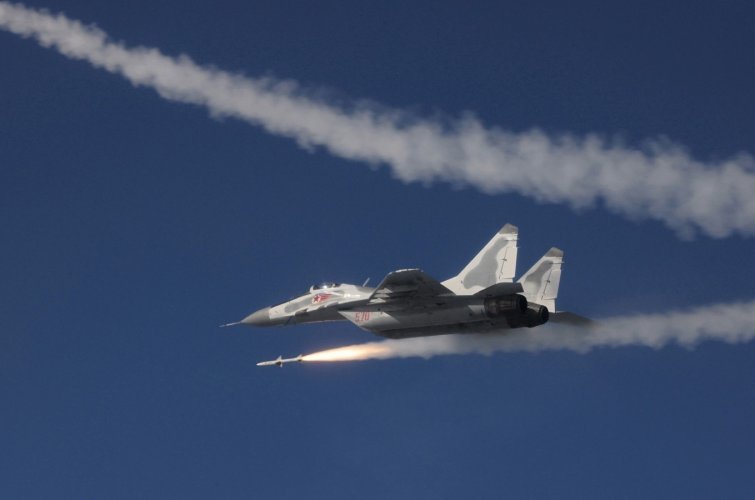
Interesting to note the standard AKU-470 can fire the new BVRAAM, which makes sense, it was designed to be compatible with existing launchers.
Also, considering the relatively small size of the new BVRAAM, i wonder if they would go in the direction of adopting twin launchers such as on J-10C or JF-17. You could then theoretically have the venerable MiG-29 able to fire 8, 10 or even as a maximum, 12 (!) AAMs.
 
I think mig will hit fuel limit long before it can reasonably expend such weapon loads in bvr...and it's sensor level doesn't support LACM hunting
 
The same logic/reasoning would apply to DPRK dual rail MiG-29s as it did for J-10C and JF-17, or for instance various american fighters carrying large numbers of AMRAAMs on dual rails. DPRK SOP does not need long range anyway, their MiGs will scramble and engage large numbers of hostiles close or within their own airspace, so being able to throw the maximum number of AAMs at those packages would be critical imo especially given the numerical disparity.
 
Something i noticed after looking closer. It appears the the missile fired is more Sparrow-ish in shape compared to the missile on the ground expo which is obviously PL-12-ish. Am i seeing things or we are actually looking at two different missile types?

1747496929040.jpeg
 
Something i noticed after looking closer. It appears the the missile fired is more Sparrow-ish in shape compared to the missile on the ground expo which is obviously PL-12-ish. Am i seeing things or we are actually looking at two different missile types?

View attachment 770403
Someone else noticed that too. I think it could be two different missiles. R27 have a shelf life so maybe a replacement?
 
You put too much credibility into this image.
 
Something i noticed after looking closer. It appears the the missile fired is more Sparrow-ish in shape compared to the missile on the ground expo which is obviously PL-12-ish. Am i seeing things or we are actually looking at two different missile types?

View attachment 770403
Yep. Look at the tail fins. They don't have that truncated, clipped--what I call supersonic drag elimination--tip on them. They are instead triangular.
 
Someone else noticed that too. I think it could be two different missiles. R27 have a shelf life so maybe a replacement?
That is well puzzling, i would think it would be easier to refurbish R-27s rather than go to the hassle of integrating a totally different AAM, in this case what looks like a PL-11. Not to mention R-27 is in widespread service through the world and shouldn't be too hard to get hold of the necessary components.

That being said, trying to piece together everything we've seen, an attempt at a theory is maybe the upgrade we know for nearly a decade now might have included a new radar, possibly chinese, which could only work with PL-11, which may or may not be the standard version (might be an active variant?). What we see now is integration of a bespoke chinese or indigenous PL-12 variant (the rear fins are different so it's not a standard PL-12).

Of course my theory might be well off.
 
Those are definitely the same type as the tail-fins used on the Terrier/Tartar/Standard missile-family (They were pioneered by the RIM-8 Talos).
All that tail fin indicates is the approximate Mach number the missile operates at. That truncated design is to eliminate tip drag at supersonic speeds. The angle of the clip is equal to the angle of the shockwave coming off the front tip of the wing. That design was pretty common to a lot of missiles from the late 50's on.
 
Back
Top Bottom