That originally was that 5th gen (before 1981) was supposed to be.
I.e. reduced frontal rcs. Strictly speaking, I don't think Rafale/Eurofighter are somehow lesser than MiG MFI/LFI or, say, well known pre-stealth Rockwell ATF.
I don't believe that the Typhoon has any significant reduction in RCS Edit: Typhoon has canted inlet ducts, while Rafale and Super Bug do have significant reduction in RCS.

Note that in the case of "4.5gen," I'm using "significant" to mean a ~25% reduction in X-band detection range. Which may be an order of magnitude smaller RCS (I don't grok stealth and radar to say what level of RCS they have), or it may be less than an order of magnitude.

Nothing like the "You should go home" level of RCS that F-22s have.


For example, most combat aircraft since 1990s, including overall same aircraft as before, have at least some form of treatment. Doesn't mean they get much of it.
Again, getting a 25% range reduction before an opposing fighter can get a lock-on in a head-on BVR fight can leave you in a position to fire without your opponent knowing you're there. Or able to fire with them knowing you're there, but without them being able to shoot back, which is almost as good.
 
Last edited:
I don't believe that the Typhoon has any significant reduction in RCS, while Rafale and Super Bug do have significant reduction in RCS.
Typhoon has canted ducts. You don't screw yourself over like this, massively complicating airflow, unless you're very specifically doing what you're doing.
Again, getting a 25% range reduction before an opposing fighter can get a lock-on in a head-on BVR fight can leave you in a position to fire without your opponent knowing you're there.
Oh, that's absolutely true, and it's being done (as well as for many less direct situations, different from a direct knight jousting).
 
Typhoon has canted ducts. You don't screw yourself over like this, massively complicating airflow, unless you're very specifically doing what you're doing.
Huh. Did not know that, I stand corrected!


Oh, that's absolutely true, and it's being done (as well as for many less direct situations, different from a direct knight jousting).
The direct joust is the easiest example to give for normies, though. I know most folks here aren't exactly normies, but many of us aren't pilots. Hell, all I fly is arcade sims like Ace Combat!
 
The AESA radar has undergone more than 200 airborne tests both domestically and internationally to verify its performance. In May of last year, it received a "provisionally fit for combat use" assessment from the Defense Acquisition Program Administration (DAPA). Following that, in June, a mass production contract was signed with DAPA, and production began in July. It is scheduled to be installed on the KF-21, which is set for full-scale deployment next year.
View: https://x.com/fa50_defense/status/1915907411405320569
 

KTF-5500 indigenous turbofan engine will be displayed at ADEX 2025.

After the CDR, there was 2-year delay before finally entering flight test phase, because of the certain parts manufacturers' immature production setup.

The engine will be mounted on KUS-LW prototype and the flight tests will begin later this year.
 
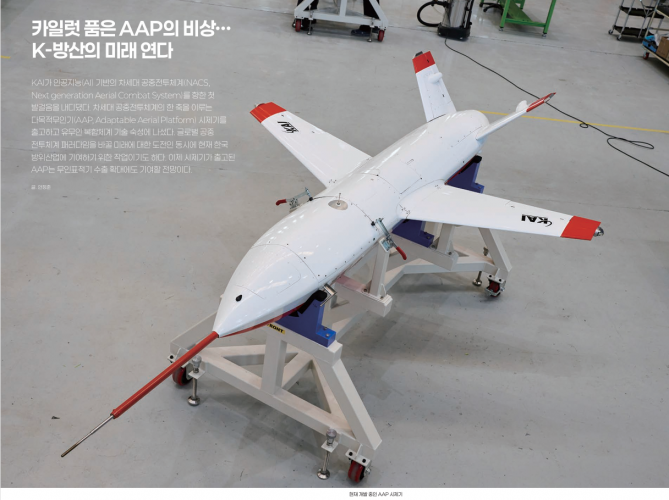
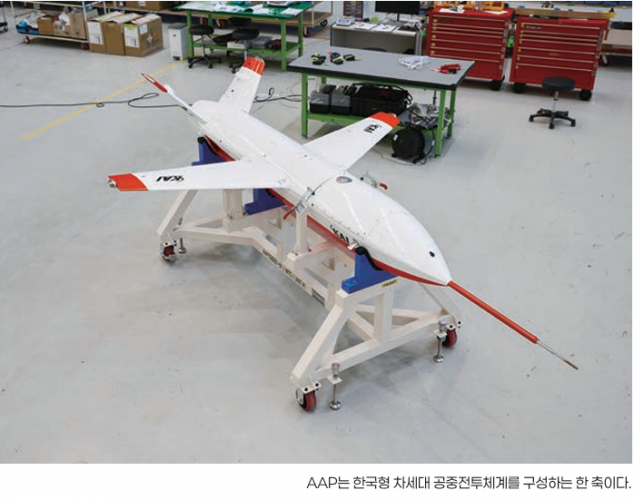
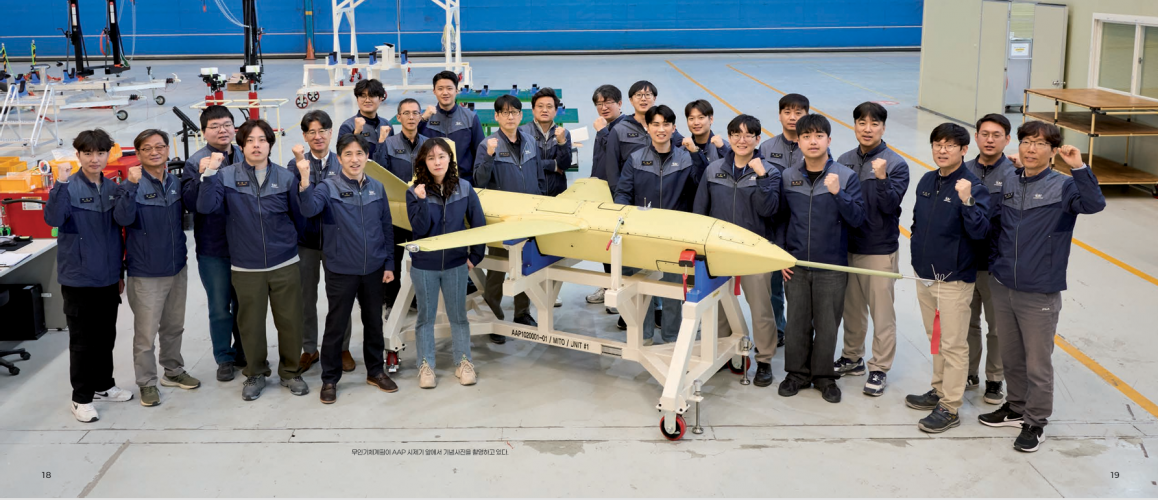
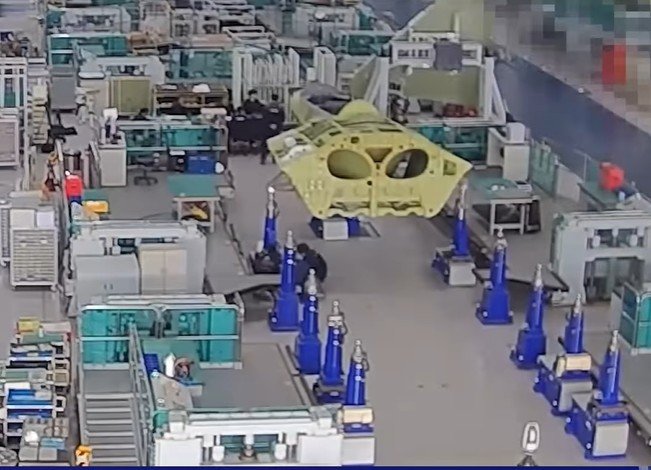
Also, pictures of the full-scale AAP prototype (multipurpose expendable UAV for KF-21 NACS), from KAI magazine May 2025:

war-20250520-000143-001.png 1000011211.png 1000011209.png

- Flight test of the 0.8:1 scaled prototype has been completed.

- It successfully tested and demonstrated AI pilot, low-observability, flight ceiling, etc.

- The full-scale prototype will start flying in July or August this year.

- KAI AAPs will be used for many different purposes: decoy, strike, escort, and even aerial target for testing various weapons.
 
Interesting that they are partnering with Leonardo. You would think that the latter has its hand full with the Japanese.
As the tweet mentions, it is a cooperation regarding the development of AESA for light weight platforms, that being light fighters and potentially wingman drones. GCAP works and to an extent, cooperation with the Japanese doesn't really overlap with this effort. It would compete with the likes of Phantom Strike or ESR-500A in the market for the near future. Leonardo already has Griffo-E in its portfolio, but it's quite an outdated system as it is, and has seen no major application, at least to my knowledge. Hence they are trying to use Hanwha's GaN front-end to develop an up-to-date product, save time and money. I could see this radar being offered for M-346FA and FA-50, as well as Italy's wingman drones in the future.
 
Last edited:
So to use CCA terminology these are basically increment 1?
The KF-21 already has a Blk scheme aligned to it. This is Blk 1 which is primarily A2A focused, 40 total to be ordered. Blk II will be multirole with 80 planned to be ordered but no real airframes changes, just software and expanded weapons suite. Blk I will be software updated to Blk II. Blk III is where the airframe transitions from a 4.5 Gen to a 5.5 Gen, will see how that goes...
 
Blk III is where the airframe transitions from a 4.5 Gen to a 5.5 Gen, will see how that goes...
I really have issues with calling the KF-21 a 4.5Gen aircraft.

The basic airframe is pretty clearly designed as LO. The airframe even has a void space where the weapons bay will be. But to get the aircraft out there faster, they skipped developing out the weapons bay's fast door actuators and stealthy doors.

It's got at least 5gen avionics.

The place it's lagging behind is engines. It's got F414s, which are not really set up for supercruising.

IMO, KF-21 and Kaan are either "4.75gen" or maybe "5gen minus."
 
Personally think not putting the bay in was a mistake, they have already done almost all the work needed already, I just dont get why they didn't just go for as is, they can't be saving much time or money at this point.
 
I really have issues with calling the KF-21 a 4.5Gen aircraft.

The basic airframe is pretty clearly designed as LO. The airframe even has a void space where the weapons bay will be. But to get the aircraft out there faster, they skipped developing out the weapons bay's fast door actuators and stealthy doors.

It's got at least 5gen avionics.

The place it's lagging behind is engines. It's got F414s, which are not really set up for supercruising.

IMO, KF-21 and Kaan are either "4.75gen" or maybe "5gen minus."
I think it is a game of semantics...

4.5 at least means between 4 and 5 and it clearly isn't a 5th gen aircraft per general definition. Got to say I don't like the 4.75 or 5 minus terminology. We didn't make a F-15EX or SH a 4.25 so I'm not sure we want to start that type of differentiation.

Personally think not putting the bay in was a mistake, they have already done almost all the work needed already, I just dont get why they didn't just go for as is, they can't be saving much time or money at this point.
Definitely saving time, there is some decent additional complexity with internal weapons bays. The aircraft is slated to replace the F-5s which are still in service and the F-4s which have already been withdrawn.
 
Personally think not putting the bay in was a mistake, they have already done almost all the work needed already, I just dont get why they didn't just go for as is, they can't be saving much time or money at this point.
Saved a lot of time-to-service. Their F-4s and F-5s are old and tired.


I think it is a game of semantics...

4.5 at least means between 4 and 5 and it clearly isn't a 5th gen aircraft per general definition. Got to say I don't like the 4.75 or 5 minus terminology. We didn't make a F-15EX or SH a 4.25 so I'm not sure we want to start that type of differentiation.
I don't really like it either, but there's a difference between something like the Super Hornet or Rafale that was designed with some level of reduced RCS but not full on F-22 LO, and a plane that is designed with most of F-22 LO but not with fancy engines.
 
I don't really like it either, but there's a difference between something like the Super Hornet or Rafale that was designed with some level of reduced RCS but not full on F-22 LO, and a plane that is designed with most of F-22 LO but not with fancy engines.
If I understand correctly, it's a bit of illusion at this point.

KF-21 does simpler parts (edge alignment, ducting), but the more annoying parts (treating and redesigning all the small reflectors, i.e. edges, small antennas, etc) will only come with block 3.

Until then, stealthy look is mostly just look.
 
I don't really like it either, but there's a difference between something like the Super Hornet or Rafale that was designed with some level of reduced RCS but not full on F-22 LO, and a plane that is designed with most of F-22 LO but not with fancy engines.
Personally think there is a lot to prove before we start directly comparing the KF-21 against the F-22.
 
There is a lot to prove still.

But they did all the basic shaping pieces for 5th Gen LO, and shaping is the single largest driver in RCS size.
After hot spots are fully removed, and if it is actually maintained. Basic geometry is (almost certainly) sound, but there's still a whole redesign ahead to make it realize its potential. Right now there is no reason to doubt korean own estimate.
 
After hot spots are fully removed, and if it is actually maintained. Basic geometry is (almost certainly) sound, but there's still a whole redesign ahead to make it realize its potential. Right now there is no reason to doubt korean own estimate.
Right, but the overall shaping shows that the Koreans understand the concept.
 
I think there is enough innovation on the platforms for Koreans to do it in two steps.
We are used today with the general configuration of the KF-21. But it takes only a glance back at what KAI had on production before to understand the quantity of novelties in that design. For example: thin trapezoidal large surface wing, large trapezoidal fuselage section with cavernous wb volume, large doublet of verticals and horizontals, tall landing gear, unconventional nose section...
Those are already radical changes.
 
Last edited:
There is a lot to prove still.

But they did all the basic shaping pieces for 5th Gen LO, and shaping is the single largest driver in RCS size.
Shaping is more than just meet the eyes sometimes. Sometimes, the shaping is behind/underneath the frequency selective surface, which is the hard part, and what we can't really see. And some of the shaping work in tandem with the radar absorbing structures (RAS) or RAM and without one, the other is pretty meaningless.
For example, the smooth curvature that helps redirect surface waves towards the edge only works so great if the 'unseen' shaping/materials etc. underneath are there to handle specular waves. Otherwise, specular wave management would not be great on such curved surface.
 
Last edited:
Shaping is more than just meet the eyes sometimes. Sometimes, the shaping is behind/underneath the frequency selective surface, which is the hard part, and what we can't really see. And some of the shaping work in tandem with the radar absorbing structures (RAS) or RAM and without one, the other is pretty meaningless.
For example, the smooth curvature that helps redirect surface waves towards the edge only works so great if the 'unseen' shaping/materials etc. underneath are there to handle specular waves. Otherwise, specular wave management would not be great on such curved surface.
But not all shaping requires RAS/RAM.

The basics of the basics, edge alignment, does not.
 
What was that all about?
IIRC, someone looking into some design folders they weren't supposed to. Folders they didn't have clearance to look at.

Edit: Someone was taking home data without approval. It was data they had clearance to look at, but they didn't have permission to take it home.
 
Last edited:
IIRC, someone looking into some design folders they weren't supposed to. Folders they didn't have clearance to look at.
No.

They were caught in possession of unauthorised, unregistered memory device while being checked for personal belongings when exiting KAI facility. It contained design files of KF-21, which was also unauthorised.

The contents of those files though, were within the clearance levels of Indonesian engineers. This was later found out as a result of the investigation, hence the case was closed without any consequences for the engineers.
 
No.

They were caught in possession of unauthorised, unregistered memory device while being checked for personal belongings when exiting KAI facility. It contained design files of KF-21, which was also unauthorised.

The contents of those files though, were within the clearance levels of Indonesian engineers. This was later found out as a result of the investigation, hence the case was closed without any consequences for the engineers.
I stand corrected.

Materials they were cleared to look at, but trying to take them out of the factory. Gotcha.
 

Similar threads

Back
Top Bottom