
You are using an out of date browser. It may not display this or other websites correctly.
You should upgrade or use an alternative browser.
You should upgrade or use an alternative browser.
Sukhoi T-75 LTS (CheckMate)
- Thread starter sublight_
- Start date
When's Russia going to build this thing?
This year.
Scott Kenny
ACCESS: USAP
- Joined
- 15 May 2023
- Messages
- 16,977
- Reaction score
- 24,085
Right, but prior art is the DSI bump on a flat surface.Not to nitpick, but the patent is about low observable air intake
I'm not sure "a DSI bump on a curved surface" is sufficiently novel to be patentable. Because it is a VERY obvious next step from the flat surface DSI.
Scott Kenny
ACCESS: USAP
- Joined
- 15 May 2023
- Messages
- 16,977
- Reaction score
- 24,085
Also, now that I think about it, IIRC the F-16 DSI was on a slightly curved surface as well...Right, but prior art is the DSI bump on a flat surface.
I'm not sure "a DSI bump on a curved surface" is sufficiently novel to be patentable. Because it is a VERY obvious next step from the flat surface DSI.
- Joined
- 11 February 2010
- Messages
- 1,714
- Reaction score
- 3,122
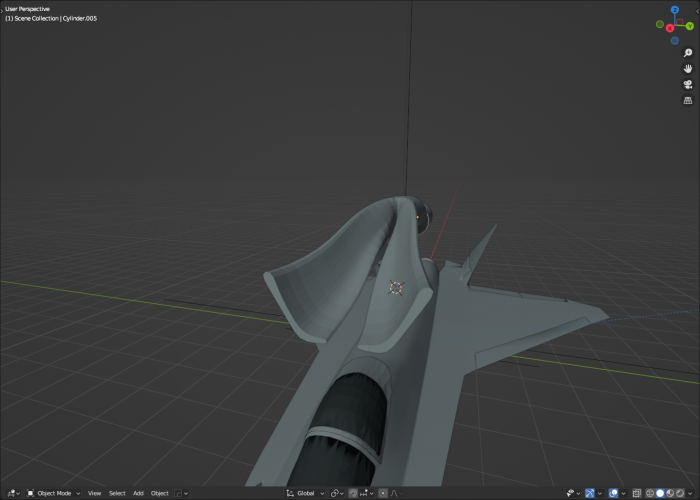
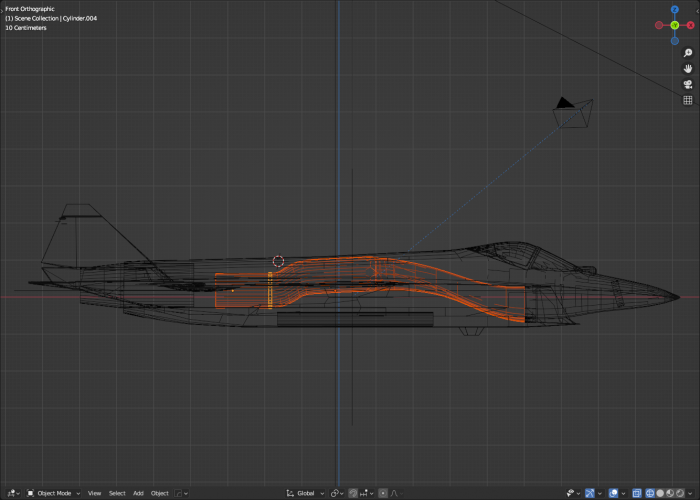
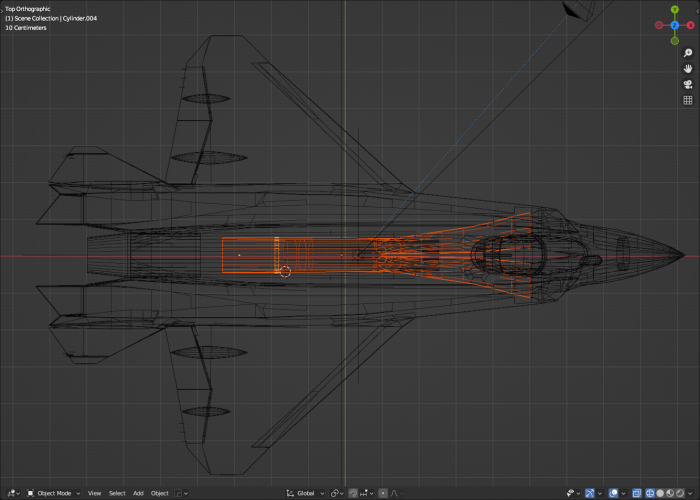
an LTS of mine for Science. Other than AleDucat i guess no one else making model of LTS's inlet ?
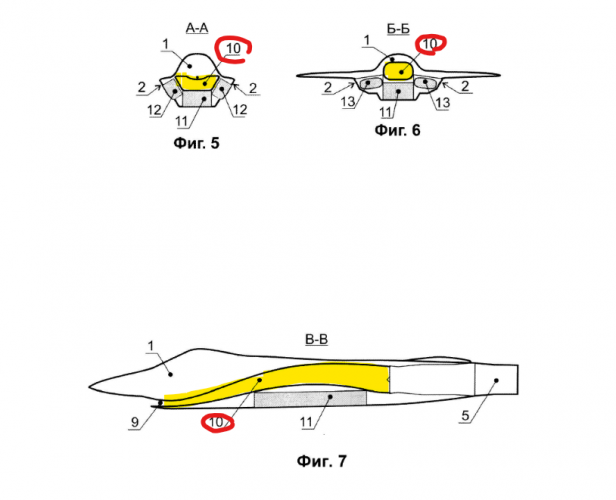
But anyway this is my piece. As seen, I speculated the inlet will be bifurcated until it met the "main duct" somewhere in the middle of fuselage before curving back down to the compressor face. I assume AL-41F1 engine with 932mm diameter.
|
|
|
But anyway this is my piece. As seen, I speculated the inlet will be bifurcated until it met the "main duct" somewhere in the middle of fuselage before curving back down to the compressor face. I assume AL-41F1 engine with 932mm diameter.


an LTS of mine for Science. Other than AleDucat i guess no one else making model of LTS's inlet ?


- Joined
- 24 November 2008
- Messages
- 1,817
- Reaction score
- 4,171
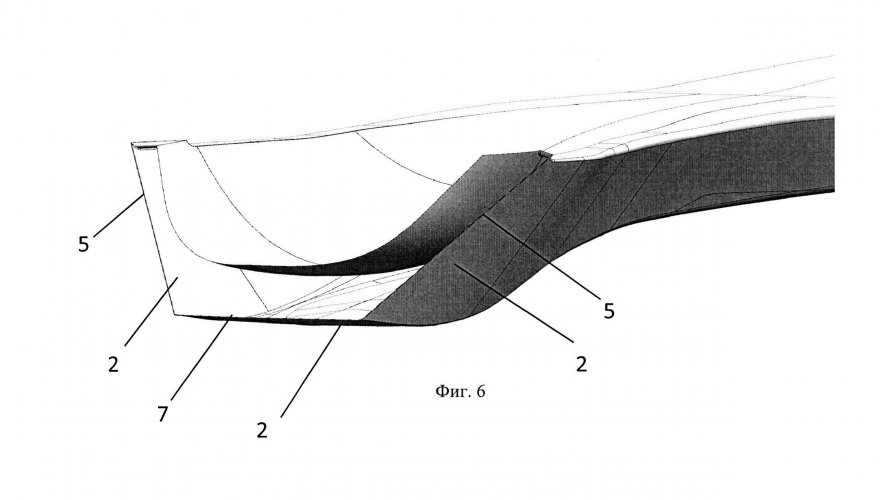
Also this is in line with the patent snip posted above...
- Joined
- 11 February 2010
- Messages
- 1,714
- Reaction score
- 3,122
Thanks Paralay
Thanks
When modeling the intake did you use the patent as a reference?
For some reason i missed that patent :x. Feels stupid.
New inlet coming soon
Thanks for the reminder guys.
I couldn't make a straight section up to half the diameter before entering the engine. This needs to be fixed.
Paralay your files are STL man your models could be 3d printed!!!

I doubt it, there are a lot of mistakes. I'm just learning

Avimimus
ACCESS: Top Secret
- Joined
- 15 December 2007
- Messages
- 2,600
- Reaction score
- 1,259
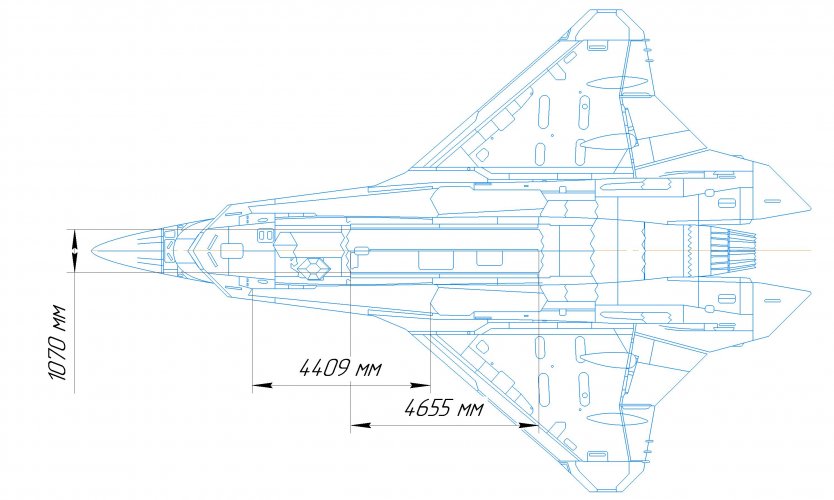
What are the bay dimensions (if we took the patent as accurate)? Has this been posted?
- Joined
- 24 November 2008
- Messages
- 1,817
- Reaction score
- 4,171
@paralayWhat are the bay dimensions (if we took the patent as accurate)? Has this been posted?

- Joined
- 6 June 2006
- Messages
- 14,666
- Reaction score
- 20,604
No idea why, but I love this scene and the whole movie. In 2002 in the theatre uncontrolable laughter had people frowning at me in anger.
English : mine mine mine !!
French : à moi à moi !!
Spanish : mio mio !!!
English : mine mine mine !!
French : à moi à moi !!
Spanish : mio mio !!!
Last edited:


EmoBirb
E.S.T
- Joined
- 18 January 2025
- Messages
- 2,210
- Reaction score
- 5,625
Can't wait for my pretty boy to finally make it's first flightLIMA-2025

FighterJock
ACCESS: Above Top Secret
- Joined
- 29 October 2007
- Messages
- 6,692
- Reaction score
- 7,913
Same here EmoBirb. I always like first flights.
Can't wait for my pretty boy to finally make it's first flight
That is going to be a very long wait, IMO.
EmoBirb
E.S.T
- Joined
- 18 January 2025
- Messages
- 2,210
- Reaction score
- 5,625
I expect it later this year or early 2026That is going to be a very long wait, IMO.

EmoBirb
E.S.T
- Joined
- 18 January 2025
- Messages
- 2,210
- Reaction score
- 5,625
Is the VVS even going to procure Su-75? Or will it just be an export only
So far most of the talk is about exports. But I think the VKS will probably procure the LTS, given that their Fuclrum fleet is virtually obsolete and that there are still many other legacy airframes in service. If the LTS ends up a good bit cheaper than the Su-57, I can imagine that the LTS will be chosen to replace plenty of these old soviet era aircraft, as doing so with the Su-57S/Su-57M would most likely be insanely expensive. I expect the VKS in the 2030s to consist of the Su-57, Su-75, Su-35, Su-34 and MiG-31 with regards to manned fighters. I'm not entirely in the picture about the VKS' commitment to the Su-30, the SM2s were ordered by the Navy for the Naval Aviation, weren't they? And the MiG-31 at this point would be on its way out for PAK DP which should materialize with a prototype in the 2030s.
So the Su-57 and Su-75 could very well be the Su-27 and MiG-29 for this generation of VKS pilots.
Ainen
I really should change my personal text
- Joined
- 25 August 2011
- Messages
- 2,115
- Reaction score
- 3,599
VKS doesn't have much fulcrums in the first place, Russia is probably at this point outright behind India in number of operational airframes. And all Indian ones are in actual frontline units, In Russia it's only two.So far most of the talk is about exports. But I think the VKS will probably procure the LTS, given that their Fuclrum fleet is virtually obsolete and that there are still many other legacy airframes in service.
So it, if, will be primarily a flanker replacement.
EmoBirb
E.S.T
- Joined
- 18 January 2025
- Messages
- 2,210
- Reaction score
- 5,625
VKS doesn't have much fulcrums in the first place, Russia is probably at this point outright behind India in number of operational airframes. And all Indian ones are in actual frontline units, In Russia it's only two.
So it, if, will be primarily a flanker replacement.
We're not only talking Fulcrums, but also Su-25 and 24, as well as the older 27s and 30s.
I expect it later this year or early 2026
If that is their schedule, they are being super quiet about it.
FighterJock
ACCESS: Above Top Secret
- Joined
- 29 October 2007
- Messages
- 6,692
- Reaction score
- 7,913
True Josh_TN, I hate it when there is little or no news about the Su-75 at all considering that it is a new fighter. I suppose that they will reveal more news when the first flight approaches whenever that will be.
EmoBirb
E.S.T
- Joined
- 18 January 2025
- Messages
- 2,210
- Reaction score
- 5,625
I don't see why they wouldn't be. They've shown the mock up and presented models at expos.If that is their schedule, they are being super quiet about it.
Do people forget how little there was about PAK FA before the first prototype took flight? Or now with F-47 where they scream impossible timelines into the void of the internet although there isn't even a single completed aircraft as far as we know.
Or the B-21, there only existed like 2-3 official renders before it was officially unveiled, with the first public flight following afterwards.
For all we know, as of 2025 work on LTS continues. We will have no other choice than to be patient, but I think there is evidence that the overall commitment to the program and it's continued advertisement is a good sign. And given that the VKS is fighting a war against the current crop of western GBAD, I imagine that they will be very much interested if not outright invested in the development and fruition of an aircraft that promises performance comparable to the Su-57 but at reduced cost, presumably ease of manufacturing and maintenance (single engine) albeit at the expense of payload capacity and possible flight performance.
And while I can understand a general attitude of scepticism, when I look back at previous Russian aerospace developments, this one is definitely at the upper end of the "optimistic and promising" scale. And if rumors are true about sales of Su-57, Su-35 and Su-34 to Algeria, that's a good bit of pocket money to funnel back into R&D as well as procurement for the VKS.
Last edited:
I don't see why they wouldn't be. They've shown the mock up and presented models at expos.
Do people forget how little there was about PAK FA before the first prototype took flight? Or now with F-47 where they scream impossible timelines into the void of the internet although there isn't even a single completed aircraft as far as we know.
Or the B-21, there only existed like 2-3 official renders before it was officially unveiled, with the first public flight following afterwards.
For all we know, as of 2025 work on LTS continues. We will have no other choice than to be patient, but I think there is evidence that the overall commitment to the program and it's continued advertisement is a good sign. And given that the VKS is fighting a war against the current crop of western GBAD, I imagine that they will be very much interested if not outright invested in the development and fruition of an aircraft that promises performance comparable to the Su-57 but at reduced cost, presumably ease of manufacturing and maintenance (single engine) albeit at the expense of payload capacity and possible flight performance.
And while I can understand a general attitude of scepticism, when I look back at previous Russian aerospace developments, this one is definitely at the upper end of the "optimistic and promising" scale. And if rumors are true about sales of Su-57, Su-35 and Su-34 to Algeria, that's a good bit of pocket money to funnel back into R&D as well as procurement for the VKS.
The Russians have a track record of over promising on their timelines pre war, and I suspect currently their focus is elsewhere and that foreign electronic imports are very pricey. I also cannot imagine a product being built primarily for export gets much love in the current Russian defense environment. I personally do not even see the project going to completion without a firm customer providing money, whether that is VKS or a foreign service. So far, no one is on the horizon, so I would bet against the project.

Mock ups and models are easy. Actual flying prototypes aren't. Operational platforms are step further again.I don't see why they wouldn't be. They've shown the mock up and presented models at expos.

donnage99
ACCESS: Top Secret
- Joined
- 16 June 2008
- Messages
- 1,545
- Reaction score
- 1,546
There's no correlation between how many mockups or photos released to public with the maturity of R&D of said prototype. Certainly there is a correlation between the amount of mockups and models with how desperate a company is trying to find investors. For reference you can see a lockheed fullscale mockup here but none of us are holding out our breath waiting for a prototype.I don't see why they wouldn't be. They've shown the mock up and presented models at expos.
Do people forget how little there was about PAK FA before the first prototype took flight? Or now with F-47 where they scream impossible timelines into the void of the internet although there isn't even a single completed aircraft as far as we know.
Or the B-21, there only existed like 2-3 official renders before it was officially unveiled, with the first public flight following afterwards.
The only solid evidence of checkmate is whatever official statements updating on the program. for now we wait.
Attachments

FighterJock
ACCESS: Above Top Secret
- Joined
- 29 October 2007
- Messages
- 6,692
- Reaction score
- 7,913
Totally agree with you on that point donnage99. That is all we will have to do is to wait for Sukhoi to release more information about the first flight.
The concept of developing and purchasing weapons has changed dramatically. For example, the Russian Navy will not lay ships of new projects until 2036....
Perhaps serious changes await aviation
Perhaps serious changes await aviation
Ainen
I really should change my personal text
- Joined
- 25 August 2011
- Messages
- 2,115
- Reaction score
- 3,599
Indeed, as the BSF discovered, best way to avoid embarrassment at sea is to avoid going there altogether.The concept of developing and purchasing weapons has changed dramatically. For example, the Russian Navy will not lay ships of new projects until 2036....
EmoBirb
E.S.T
- Joined
- 18 January 2025
- Messages
- 2,210
- Reaction score
- 5,625
Is that why they're still launching Kalibrs into Ukraine regularly?Indeed, as the BSF discovered, best way to avoid embarrassment at sea is to avoid going there altogether.
EmoBirb
E.S.T
- Joined
- 18 January 2025
- Messages
- 2,210
- Reaction score
- 5,625
The concept of developing and purchasing weapons has changed dramatically. For example, the Russian Navy will not lay ships of new projects until 2036....
Perhaps serious changes await aviation
For the Russian Navy that makes sense. Way too many redundant projects running simultaneously. So finishing what's already on the plate (or in the yard) while reevaluating what's truly needed is definitely the move.
I don't see this applying to aviation however, which always was much more streamlined with only a handful of models in active production, all of which have a clearly defined purpose. If anything, a dramatic change in purchase and development should accelerate the LTS, given that an aircraft like it was what Russia was sorely missing during the duration of the war. 30 something Su-57s of which many are relegated to training only get you so far. It's clear that a cheaper, less capable but still comparable and most importantly more numerous aircraft would have been the answer in this very instance.
Ainen
I really should change my personal text
- Joined
- 25 August 2011
- Messages
- 2,115
- Reaction score
- 3,599
That can be done without them. First, the launch went away(air force took the mission - simpler logistics, faster turnaround). Then even the whole missile business went mostly out (why pay more for cruise missiles, when shahed delivers strikes for a fraction of price, and can't be economically countered?).Is that why they're still launching Kalibrs into Ukraine regularly?
As a result, in this role, Geran crates in Crimea arelady replaced BSF.
Instead a service, that by all means should've considered its primary task access to seas, got deranged into thinking that launching missiles is a viable mission for a navy - and didn't manage keep even that, for a very obvious reason that it just adds useless steps and highly paid positions to the process of launch. Positions which failed to translate well into skills of fighting war at sea (heroic defense from surface raids in eastern Black sea isn't big sign of success).
BSF long since bottled up and hides from a single most classic threat in maritime warfare (fire ships).
Same can be said about VKS - who lost its fight and found comfort in saying that doing mission sets it abandoned is absolutely impossible.
Maybe, but then T-75s chances for life are nil - it's an offensive platform. Service incapable and unwilling to conduct offensive operations is unlikely to procure them. Writing off stand off missiles in daily performance "we did something" can be done without such aircraft.
EmoBirb
E.S.T
- Joined
- 18 January 2025
- Messages
- 2,210
- Reaction score
- 5,625
Instead a service, that by all means should've considered its primary task access to seas, got deranged into thinking that launching missiles is a viable mission for a navy
Same can be said about VKS - who lost its fight and found comfort in saying that doing mission sets it abandoned is absolutely impossible.
Maybe, but then T-75s chances for life are nil - it's an offensive platform. Service incapable and unwilling to conduct offensive operations is unlikely to procure them. Writing off stand off missiles in daily performance "we did something" can be done without such aircraft.
Land attack is a well established and very conventional mission for any navy which fields anything the size of a Corvette and up. Which is what the Black Sea Fleet does, land attack against strategic assets. Denial of access to the Black Sea towards the adversary isn't really a mission that's even possible to achieve when said adversary doesn't have a navy, instead only operating dispersed anti-ship and anti-aircraft platforms which are most effectively hunted down via helicopter and drones, not with warships. The fact that the weakest Russian fleet (excluding the Caspian Flotilla), a literal retirement fleet, can still conduct their land attack mission with relatively impunity against targets well inside Ukraine, despite the latter having access to a plethora of anti-ship weapons and the intelligence network for over 20 countries, including the United States, speaks volumes lol.
But coming back to the VKS, the VKS in it's entire history was always more so geared towards defending Russian assets and air space against the NATO air forces than conducting deep strikes into NATO. The Russian army is a continental military first and foremost. As a consequence the VKS acts in a manner that supports the advancement of ground units. Something which is heavily emphasized by Su-34s raining down bombs against positions and fortifications, while Su-35 and MiG-31 sanitize the air space. They ensure that the Ukrainian Air Force has an incredible hard time to support their own ground forces from the air. Because they pose such a threat, especially due to significantly longer range missiles that their Ukrainian counterparts have to abort their mission, missing the window of opportunity, or catch an R-77-1 or R-37M with their face.
I wouldn't label that as something strictly offensive, but also not strictly defensive either. As this tactic actively puts pressure on the adversary which prevents them to engage advancing ground forces or bombers effectively whatsoever. And because this ensures a steady advance on the ground and critical Ukrainian assets getting into range for MLRS and ballistic missiles, it pushes the operative zone for the VKS further forward as well, not being threatened by air defense, while the own air defense can crawl forward as well provide cover. Fighting from an advantageous position isn't overly defensive, it's minimizing unnecessary losses, something they learned the hard way in the first year.
Something the LTS could do even better, as it can push further with less risk and engage enemy aircraft more effectively. Stealth isn't about being a caveman and dropping a dumb bomb on a SAM battery. It's about decreasing the time of the adversary to react to the threat you pose, thus decreasing the risk of engagement for you. And an LTS armed with R-77s, R-37Ms or a Kh-69 can cause serious damage while pushing that threat envelope further into the enemy territory. Something that is only enabled by stealth or decisively superior stand-off capability.
So the LTS fits perfectly into that tactic of increasing the pressure, putting the adversary on the back foot and ensuring that MLRS, SPGs, Infantry, Ballistic and Cruise Missiles as well as larger UAVs can do as they please. The essence of the VKS in Ukraine is exactly that, putting on pressure, forcing the opponent to abort the mission, forcing mistakes to enable the advance of the ground forces, the actual MVP of the Russian campaign.
I don't see a shame in being the enabler and supporting asset for the single most important branch of ones military. Similar to how the PLARF and PLAAF enable the PLAN to dominate within the first island chain.
Ainen
I really should change my personal text
- Joined
- 25 August 2011
- Messages
- 2,115
- Reaction score
- 3,599
Denial of access to sea refers to the nation, not to the navy. Navy is but an instrument of access. Access to the sea is nation's ability to leverage the ocean for military, economic, political, and scientific purposes (paraphrasing Gorshkov, Maritime power of the State)Land attack is a well established and very conventional mission for any navy which fields anything the size of a Corvette and up. Which is what the Black Sea Fleet does, land attack against strategic assets. Denial of access to the Black Sea towards the adversary isn't really a mission that's even possible to achieve
Ships and USVs going to and out from port of Odessa aren't stopped, i.e. Russia can't deny access to the sea to Ukraine. Despite its main port being within a few hours cruise from Crimean coast.
It can, but only because it doesn't require anything. It's just inefficient. As soon as more efficient means of delivering warheads appeared - kalibr operations almost stopped (they're very rare in 2024-25, only sometimes they're adding some mass to the LACM salvos). Paying ¬1mil(missile) + portion of yearly operational costs of a ship(several dozen to couple hundred professional crew, maintenance, etc) isn't really sustainable when all it does is (with certain chance) delivers a single 500kg bomb. If it hits, of course: missiles miss, too.The fact that the weakest Russian fleet (excluding the Caspian Flotilla), a literal retirement fleet, can still conduct their land attack mission with relatively impunity against targets well inside Ukraine
Navy with LACMs can perform concentrated strikes (leveraging high number of cells per hull per moment of time), especially overseas.
Otherwise it's a waste of resources: airforce can do it better in attrition campaign(as Russia found out), since, at very least, it simplifies logistics and operations(deliver LACMs to a same safe airbase, when plane will deliver them to the launch point).
But even this isn't an optimum point, as it turned out(at least for major powers - Iran discovered this for well over a decade). Note that even VKS recently stopped launching LACMs. Why bother, when a slightly improved Geran gets you similar AD penetration rates, currently breaking Ukrainian attrition economics?
I.e. for current ops, T-75 is pointless: maybe it can launch Kh-69s cheaper than Su-57. It will never make up development costs this way; and this can be done even cheaper by, i don't know, MALE(see Banderol) - there's no need for a big stealth plane. Rare special cases don't justify a separate platform.
The question isn't what VKS was intended to do. Great end war with NATO didn't and still doesn't happen. United States Navy didn't get to send its navy to Philippines for one great battleship battle - battleships went out of action, and it became clear that something else should be done.But coming back to the VKS, the VKS in it's entire history was always more so geared towards defending Russian assets and air space against the NATO air forces than conducting deep strikes into NATO. The Russian army is a continental military first and foremost. As a consequence the VKS acts in a manner that supports the advancement of ground units. Something which is heavily emphasized by Su-34s raining down bombs against positions and fortifications, while Su-35 and MiG-31 sanitize the air space. They ensure that the Ukrainian Air Force has an incredible hard time to support their own ground forces from the air. Because they pose such a threat, especially due to significantly longer range missiles that their Ukrainian counterparts have to abort their mission, missing the window of opportunity, or catch an R-77-1 or R-37M with their face.
The question is how VKS adapts to a strategic shift of realities. They don't. They only adapted to the tactical one (UMPK), cutting their losses to sustainable level and beyond(as evidenced by plane exports).
But this essentially fixed the quality of VKS air support to a single level. Is it good at it?
Quality of air support (measured in advancement of ground units) is measured in single kilometers per month. Ukrainian Air Force had such hard time before - right now it delivers more or less as much warheads as it can (video footage is frequent and stable).
I.e. VKS can't even defend its own ground troops.
Does it cost Ukraine extreme loss rate? Not really, around 1 fixed wing airframe per month.
Yes, Russia still outtrades, simply because it produces wastly more glide bombs, and because it simply has more bombers. But this isn't exactly an impressive result, which doesn't outweigh, say, effects of drone and artillery warfare.
And worth noting, that Russian ops are expensive - flankers are darn expensive airframes per flight hour.
All of this it doesn't do any better than, say, Ukrainian 9-13 (with two racks of SDBs and/or 2 JDAM-ERs) right now.Something the LTS could do even better, as it can push further with less risk and engage enemy aircraft more effectively. Stealth isn't about being a caveman and dropping a dumb bomb on a SAM battery. It's about decreasing the time of the adversary to react to the threat you pose, thus decreasing the risk of engagement for you. And an LTS armed with R-77s, R-37Ms or a Kh-69 can cause serious damage while pushing that threat envelope further into the enemy territory. Something that is only enabled by stealth or decisively superior stand-off capability.
What's different about LTS(in theory, of course) - is that it's an affordable, more maintable, LO platform, capable of:
-better force generation(as for LO platform - it will still take more effort and maintenance than a non-treated airframe);
-better attrition rates in more offensive scenarios(LO) on top of better force generation(which non-LO platforms can't achieve);
-integral offensive sensors and stand in precision weapons, allowing strike/reconnaissance sorties, clearing out air defences and ground warfare enablers as they're discovered - in numbers, if necessary.
Note, that I'm basically describing a F-35(or J-35). B/c it delivers all the checkboxes, which Su-57 does not. And S-70 does not. And tu-160m2 does not. Nor does the PAK-DA. I.e. all the big ticket RnD items of the airforce itself.
Yes, it's certainly just as capable of stand off, DEF-CA and other applications. But most importantly, it makes it capable of performing offensive counter air, DEAD and interdiction - it can create numbers over enemy, which are harder to get to unacceptable loss rates.
Tasks and situation that VKS failed to perform at all, despite the fact that conflict in Ukraine is over 10 years old at this point. They didn't notice new opponent(which Russia kindly created itself) before the 2022 war(for 8 years), they didn't really adjust their mission even after that. If VKS isn't interested in adjusting - there is no reason for it to procure T-75. Stand off lobbing, month after month, can be better done by other platforms. Infantry on both sides will be dying for that, but it is not their problem.
In a way, Sukhoi, for their own money, proposed VKS a plane they actually need for the last 10 years - a plane most suitable for offensive operations against a state power. VKS didn't bite. Which is ironic, because bulk of VKS combat strength now is other platforms born in the exact same way - Sukhoi pushed it on violently twitching and resisting air force back in late 2000s(which used its own money on projects such as su-27sm and su-34).
Until VKS do, expecting this plane to get operational is meaningless.
Last edited:
Similar threads
-
 Sierra Nevada P-9A "Pale Ale" (Bombardier Q200) drug interdiction aircraft
- Started by Stargazer
- Replies: 9
-
