I suspect the Nimitz limits largely stand. For the USN, even a thousand miles would probably be a useful range, and you could probably squeeze that out of an F-35 sized and powered airframe if you could ignore the USMC length restrictions. Certainly any more efficient engine could get you there, even the existing upgrade. This will not IMO be a super large twin engine; the costs benefit ratio just doesn’t work out.

You are using an out of date browser. It may not display this or other websites correctly.
You should upgrade or use an alternative browser.
You should upgrade or use an alternative browser.
USAF/USN 6th Gen Fighters - F/A-XX, F-X, NGAD, PCA, ASFS News & Analysis [2008- 2025]
- Thread starter Matej
- Start date
- Status
- Not open for further replies.
42k lbs empty weight seems optimistic to me.Remember that F-111B was ~85klbs MTOW, not the 100+ of the USAF versions.
Also, even a "heavy" load of say, 10x AMRAAMs and 2x AIM9s is only 4000lbs. Nobody has said how heavy the AIM260s are, but I'll go with ~400lbs for them, to allow F16s to continue using BVRAAMs on their wing tips. It's conceivable that they'll be 500lbs each, Sparrow weight, due to high density propellants, which would make the BARCAP mission load 5500lbs.
Means that a ~42klbs empty fighter could have ~35klbs of fuel onboard!
France has already ordered EMALS for their new carrier. https://www.navalnews.com/naval-new...-wins-emals-order-for-frances-future-carrier/ Whether it is the length of the Ford class I don't think is clear.I expect that even if France develops their own version of EMALS instead of buying the US system, it'll still give about the same MTOWs as the US version.
I don't know that the French will aim for a 90+klb MTOW, however. Just because that means a physically huge aircraft that takes up a lot of hangar space and limits how many planes you can put in the air wing.
I cannot see a French FCAS carrier aircraft being anywhere near that weight.
An Adaptive engine to an F-35C could potentially see the airframe hit close to 1000nm but F-35, even an evolved one, isn't a 6th gen aircraft. The question comes back to what is 6th gen, what will the USN accept and where will they compromise on weight and subsequently cost.I suspect the Nimitz limits largely stand. For the USN, even a thousand miles would probably be a useful range, and you could probably squeeze that out of an F-35 sized and powered airframe if you could ignore the USMC length restrictions. Certainly any more efficient engine could get you there, even the existing upgrade. This will not IMO be a super large twin engine; the costs benefit ratio just doesn’t work out.
Scott Kenny
ACCESS: USAP
- Joined
- 15 May 2023
- Messages
- 16,977
- Reaction score
- 24,081
It probably is, depends on how much of the airframe is composite versus metal. 46k is more likely, but every extra lb of empty weight is 1lb less fuel carried. So there's going to be a serious push for weight control in FAXX because it's MTOW-limited.42k lbs empty weight seems optimistic to me.
I'm honestly assuming that the French would want the longest cats available. Not least because it lets them launch US planes easily.France has already ordered EMALS for their new carrier. https://www.navalnews.com/naval-new...-wins-emals-order-for-frances-future-carrier/ Whether it is the length of the Ford class I don't think is clear.
I cannot see a French FCAS carrier aircraft being anywhere near that weight.
The size of the Rafale was determined by the elevator size on Foch or Clem, and weight by catapults on CdG. FCAS will not enter service before the new carrier is built, so it can be as big as whatever the elevators are on the new carrier and however heavy the new catapults can handle.
Well, let's see here... 3rd gen was the start of true multirole aircraft (F-4), 4th Gen focused on maneuverability, 5th gen was stealth and supercruise, 6th gen is sounding like range, better stealth than 5th gen, and CCAs.An Adaptive engine to an F-35C could potentially see the airframe hit close to 1000nm but F-35, even an evolved one, isn't a 6th gen aircraft. The question comes back to what is 6th gen,
If the USN is relatively in a hurry to get FAXX flying, they can insist on the same avionics as F-35C and use a pair of F135 engines. All off the shelf, only development time is the airframe. Doing this has a lot of logistics advantages in commonality, though the pair of F135s will suck a lot of fuel. This will also tend to be less expensive than other options, because everything but the airframe is already developed. It still won't be cheap, per-plane costs will be more than F35Cs just because of the extra engine and larger airframe.what will the USN accept and where will they compromise on weight and subsequently cost.

kqcke for you
PUMA PUMA PUMA
- Joined
- 3 November 2022
- Messages
- 1,640
- Reaction score
- 2,390
Same / 1m shorter than Fords42k lbs empty weight seems optimistic to me.
France has already ordered EMALS for their new carrier. https://www.navalnews.com/naval-new...-wins-emals-order-for-frances-future-carrier/ Whether it is the length of the Ford class I don't think is clear.
I cannot see a French FCAS carrier aircraft being anywhere near that weight.

France Orders First Long Lead Items for PANG Aircraft Carrier Program - Naval News
The French MoD has awarded the first contract for the order of long lead items for the PANG new generation aircraft carrier program.
 www.navalnews.com
I look at weight to fuel ratios. F-35A is 29k empty weight and 18k of fuel, F-35C is 34k lbs and 19.25k lbs of fuel. F-22 is 43k empty weight and 18k of fuel. If you want an internal payload the size you have been suggesting as well as two engines just don't see how you could get more than about 25k of fuel at best. The saving grace is the generational change engine technology.It probably is, depends on how much of the airframe is composite versus metal. 46k is more likely, but every extra lb of empty weight is 1lb less fuel carried. So there's going to be a serious push for weight control in FAXX because it's MTOW-limited.
Is a new French carrier going to be longer than QE which is itself almost 50m shorter than a Nimitz?I'm honestly assuming that the French would want the longest cats available. Not least because it lets them launch US planes easily.
The size of the Rafale was determined by the elevator size on Foch or Clem, and weight by catapults on CdG. FCAS will not enter service before the new carrier is built, so it can be as big as whatever the elevators are on the new carrier and however heavy the new catapults can handle.
I'm not convinced yet that CCAa are a generation defining attribute. I think propulsion over range is a more defining characteristic given it appears like we won't see an adaptive engine back ported to a 5th gen platform.Well, let's see here... 3rd gen was the start of true multirole aircraft (F-4), 4th Gen focused on maneuverability, 5th gen was stealth and supercruise, 6th gen is sounding like range, better stealth than 5th gen, and CCAs.
Just doesn't seem realistic to me. Based on the size and fuel carried I gave for F-35 and F-22 above you wouldn't get range or payload from that type of airframe. I wouldn't go with F135 for commonality over the NGAP which will be smaller, perhaps similar thrust and likely 25% more efficient.If the USN is relatively in a hurry to get FAXX flying, they can insist on the same avionics as F-35C and use a pair of F135 engines. All off the shelf, only development time is the airframe. Doing this has a lot of logistics advantages in commonality, though the pair of F135s will suck a lot of fuel. This will also tend to be less expensive than other options, because everything but the airframe is already developed. It still won't be cheap, per-plane costs will be more than F35Cs just because of the extra engine and larger airframe.
Interesting, so very close to the same length on a vessel 25 meters shorter...Same / 1m shorter than Fords
France Orders First Long Lead Items for PANG Aircraft Carrier Program - Naval News
The French MoD has awarded the first contract for the order of long lead items for the PANG new generation aircraft carrier program.
kqcke for you
PUMA PUMA PUMA
- Joined
- 3 November 2022
- Messages
- 1,640
- Reaction score
- 2,390
All depends on empty weight, range requierments (SPFC) and how mutch drones are supposed to do.Remember that F-111B was ~85klbs MTOW, not the 100+ of the USAF versions.
Also, even a "heavy" load of say, 10x AMRAAMs and 2x AIM9s is only 4000lbs. Nobody has said how heavy the AIM260s are, but I'll go with ~400lbs for them, to allow F16s to continue using BVRAAMs on their wing tips. It's conceivable that they'll be 500lbs each, Sparrow weight, due to high density propellants, which would make the BARCAP mission load 5500lbs.
Means that a ~42klbs empty fighter could have ~35klbs of fuel onboard!
Buying the same / 1m shorter systemsI expect that even if France develops their own version of EMALS instead of buying the US system, it'll still give about the same MTOWs as the US version.
The Air wing is small anyway with around 30 NGF jets planedI don't know that the French will aim for a 90+klb MTOW, however. Just because that means a physically huge aircraft that takes up a lot of hangar space and limits how many planes you can put in the air wing.
A2G could allways be given to F-35C on Nimitz class carrier with F/A-XX more in an A2A role which as you wrote is in general mutch lighter. What is or probaly should be are the engines. Adaptive engines are the best compromise for 2 compromises. 1 for a higher SPFC and the other for enhanced kinematics and speed. Both are needed so i think its hard for them to work around it.I suspect that the CONOPS will be ~85klbs launch weight with some 4000lbs of AAMs onboard for BARCAP. (maybe 5500 if AIM260s are really heavy). On the order of 30+klbs of internal fuel, minimum.
And ideally internal volume for a good 20klbs of A2G boom, but you'd take off with much less fuel than the BARCAP mission (~15klbs internal fuel) and so have to hit the tanker before the raid departs.
kqcke for you
PUMA PUMA PUMA
- Joined
- 3 November 2022
- Messages
- 1,640
- Reaction score
- 2,390
But a lot less fighter for example. For now around 30 are planned and atleast some E-2's.Interesting, so very close to the same length on a vessel 25 meters shorter...
And I assume likely not to sustain the same number of sorties for as long a period as the Ford/Nimitz.But a lot less fighter for example. For now around 30 are planned and atleast some E-2's.
kqcke for you
PUMA PUMA PUMA
- Joined
- 3 November 2022
- Messages
- 1,640
- Reaction score
- 2,390
Yeah probaly but drones and other stuff will probaly come too like that one based on Neuron. Tought while around 30 sounds bad we have to remember thats just 40 rafales right now.And I assume likely not to sustain the same number of sorties for as long a period as the Ford/Nimitz.
I don't think 30 is bad at all although could easily se that reducing based on as you say drones replacing NGF. The QE is designed for about 35 but the key is sustaining operations for 5 days.Yeah probaly but drones and other stuff will probaly come too like that one based on Neuron. Tought while around 30 sounds bad we have to remember thats just 40 rafales right now.
The QEC has magazine capacity to support around 400 sorties, assuming a ‘maximum effort ‘110 strike sorties on day one, followed by a further 5-6 days sustaining about 50 sorties per day.
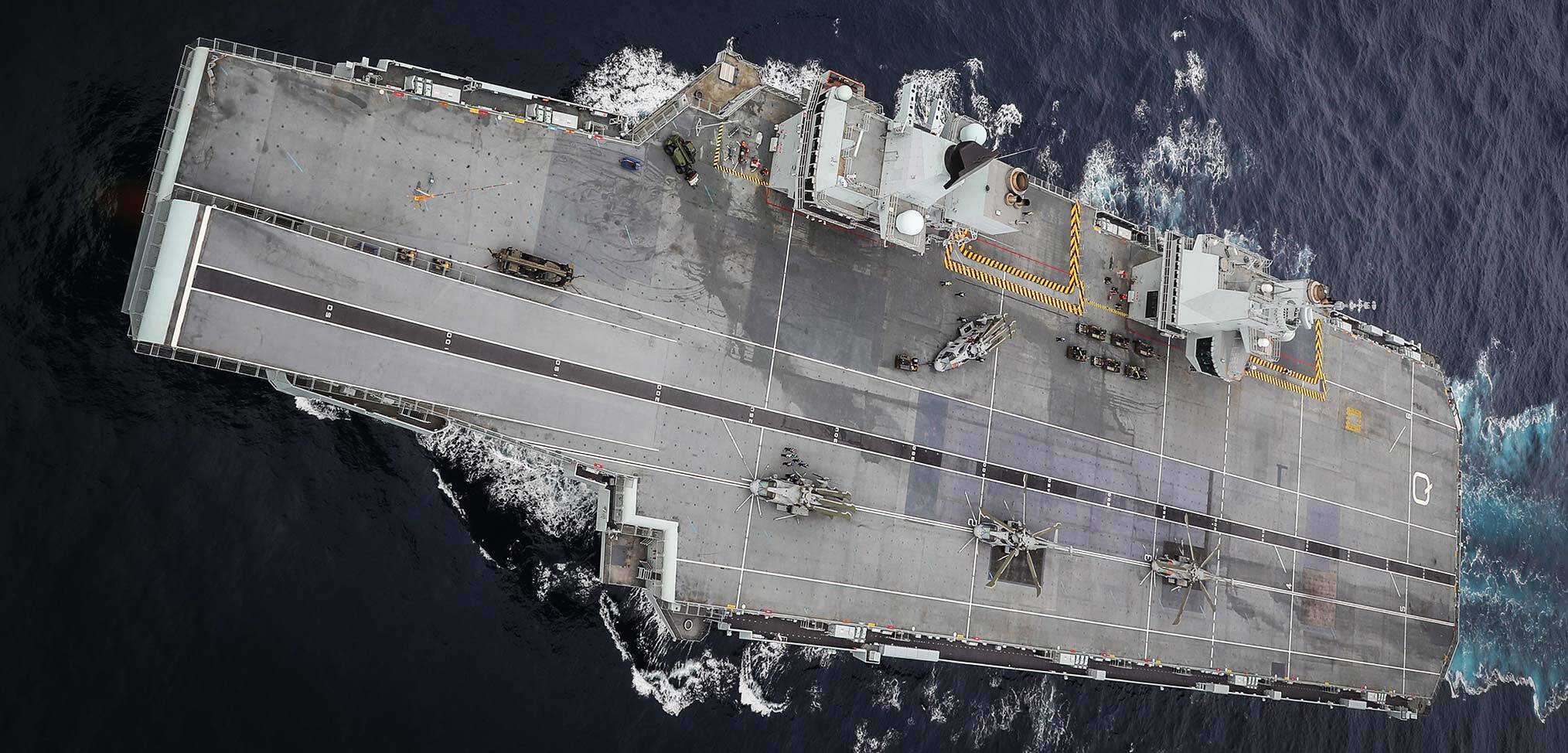
Are the Royal Navy’s aircraft carriers too big? - Navy Lookout
There is a school of thought that says the Queen Elizabeth class carriers are an ‘over-sized vanity project’ and there are regular complaints that RN should have built smaller ships. In this long-read we analyse the context of their development and the case for and against the procurement of...
 www.navylookout.com
Ainen
I really should change my personal text
- Joined
- 25 August 2011
- Messages
- 2,113
- Reaction score
- 3,599
F-14s operated that way for significant part of their career. F-35s and even Superbugs aren't going anywhere anytime soon.At current Ford build rates, Nimitz carriers will have to operate until almost the 2070s. Nimitz carriers will be 50% of the carrier force around the year 2050. It doesn't seem feasible to build an aircraft that is primarily designed to work on the minority of carriers. The Nimitz carriers would be sitting ducks without F/A-XX interceptors, compared to the Ford carriers. I doubt congress would allow this, even if the Navy wanted it.
If they can't accept an affordable big bad bird - they just can't. Carriers can operate together, or be at risk for skipping on the necessary heavy platform.
I frankly struggle to see that 6th gen can do for CCAs that f-18e with updated console and datelinks can't.Well, let's see here... 3rd gen was the start of true multirole aircraft (F-4), 4th Gen focused on maneuverability, 5th gen was stealth and supercruise, 6th gen is sounding like range, better stealth than 5th gen, and CCAs.
Moreover - while CCAs are attractivr for naval aviation from many aspects(deck servicing, size), in general, deck capability favours the most multirole and heaviest platforms feasible. Heavier aircraft aren't proportionally larger, but they are disproportionately more capable.
Also, no one will give carrier time to respot under air attack, much less an ASBM strike.
Last edited:

BlackBat242
OK, I changed my personal text ;)
- Joined
- 10 April 2013
- Messages
- 1,622
- Reaction score
- 5,000
For a good part of the F-14's career (about 1/3) there were only 2-3 USN carriers that it could not operate from (the various Midway class CVs), and 10-13 that it could (all Forrestal, all Kitty Hawk, JFK, and all CVNs).F-14s operated that way for significant part of their career. F-35s and even Superbugs aren't going anywhere anytime soon.
For the other 2/3 there were NO USN carriers the F-14 could not operate from.
If you are trying to count the two modified Essex class carriers that were still around when the F-14 made its first deployment in September 1974, note that Hancock decommissioned in January 1975 (and had been in the pre-decommissioning process for months before that) and Oriskany decommissioned in September 1976, having ended her last deployment in March of that year... when there were no more than 3 air wings with F-14s in them. So the question of those two carriers never entered the F-14 capability equation at all.
Even the Midways could have operated F-14s on an emergency basis - their catapults were strong enough (only Coral Sea would have restricted the F-14's take-off weight at all) as were their arresting gear and decks - the issue was that two specific maintenance procedures could not be performed in the hangar, due to height restrictions.
Last edited:
the issue was that two specific maintenance procedures could not be performed in the hangar, due to height restrictions.
What were those procedures?
Ainen
I really should change my personal text
- Joined
- 25 August 2011
- Messages
- 2,113
- Reaction score
- 3,599
Thanks, noted.For a good part of the F-14's career (about 1/3) there were only 2-3 USN carriers that it could not operate from (the various Midway class CVs), and 10-13 that it could (all Forrestal, all Kitty Hawk, JFK, and all CVNs).
For the other 2/3 there were NO USN carriers the F-14 could not operate from.
If you are trying to count the two modified Essex class carriers that were still around when the F-14 made its first deployment in September 1974, note that Hancock decommissioned in January 1975 (and had been in the pre-decommissioning process for months before that) and Oriskany decommissioned in September 1976, having ended her last deployment in March of that year... when there were no more than 3 air wings with F-14s in them. So the question of those two carriers never entered the F-14 capability equation at all.
Even the Midways could have operated F-14s on an emergency basis - their catapults were strong enough (only Coral Sea would have restricted the F-14's take-off weight at all) as were their arresting gear and decks - the issue was that two specific maintenance procedures could not be performed in the hangar, due to height restrictions.
Though I can add, that (1)it's unlikely there will be aircraft Nimitz can't operate on any basis(i.e. under some restrictions; Nimitz class was certainly good for NATF and A/F-X), (2)Nimitz can be upgraded, and (3)there were big long-ranged aircraft before Tomcat which indeed operated only from small part of the fleet(Savage to Vigilante).
So the precedent is very much here.
Scott Kenny
ACCESS: USAP
- Joined
- 15 May 2023
- Messages
- 16,977
- Reaction score
- 24,081
Again, the problem there is that you're adding a new logistics path to the fleet for adaptive engines. Because they're not getting backfitted to F-35s for fleet commonality reasons there (Apparently they couldn't make the 3-stream engine work with the 3-bearing swivel nozzle on the F-35Bs).A2G could allways be given to F-35C on Nimitz class carrier with F/A-XX more in an A2A role which as you wrote is in general mutch lighter. What is or probaly should be are the engines. Adaptive engines are the best compromise for 2 compromises. 1 for a higher SPFC and the other for enhanced kinematics and speed. Both are needed so i think its hard for them to work around it.
If we allow a new engine, that delays getting FAXX in service by however long it takes to get the A102/103 engines reliable.
My whole point was using as much off the shelf and reasonably debugged hardware as possible and just sticking it into a new airframe, exactly like how the F14 was made in the first place. Idea being that we'd get a first flight some 5 years from now, not 10-20.
From a data link perspective F-18e doesn't currently posses an LPI data link so there would be tactical implications a 4th gen platform would have operating CCAs compared to a 5th gen. That means less sharing of sensor data to the host platform and likely more autonomy expected of the CCA. F-18 could conceivably deploy MADL in an external pod but I doubt that represents an optimal solution compared to a 5th gen platform.I frankly struggle to see that 6th gen can do for CCAs that f-18e with updated console and datelinks can't.
The USN hasn't specified a low logistics footprint as a requirement for F/A-XX. Frankly I just don't think it worries them.Again, the problem there is that you're adding a new logistics path to the fleet for adaptive engines. Because they're not getting backfitted to F-35s for fleet commonality reasons there (Apparently they couldn't make the 3-stream engine work with the 3-bearing swivel nozzle on the F-35Bs).
The benefit the 102/103 provide outweighs the logistic and any potential delays to service.If we allow a new engine, that delays getting FAXX in service by however long it takes to get the A102/103 engines reliable.
USN is targeting early to mid 2030s. Some systems can come off the shelf but not all of it needs to or should. The platform has to meet the advanced range, sensors and lethality that the CNO recently mentioned. They don't get that from recycling existing systems...My whole point was using as much off the shelf and reasonably debugged hardware as possible and just sticking it into a new airframe, exactly like how the F14 was made in the first place. Idea being that we'd get a first flight some 5 years from now, not 10-20.
BlackBat242
OK, I changed my personal text ;)
- Joined
- 10 April 2013
- Messages
- 1,622
- Reaction score
- 5,000
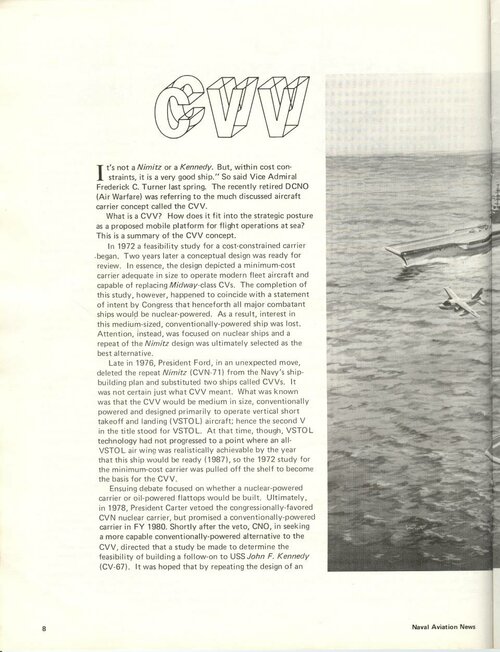
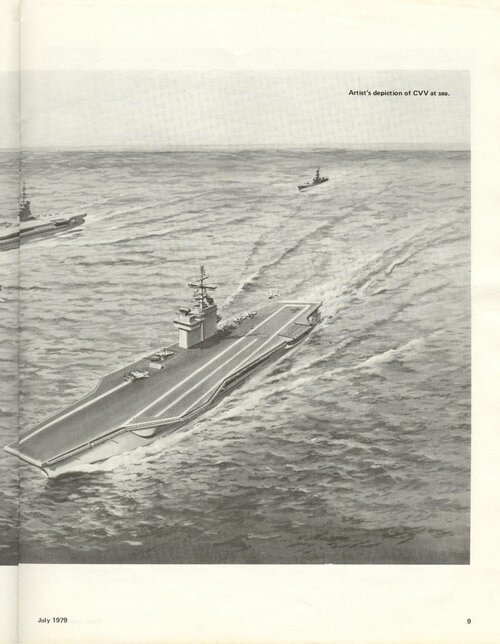
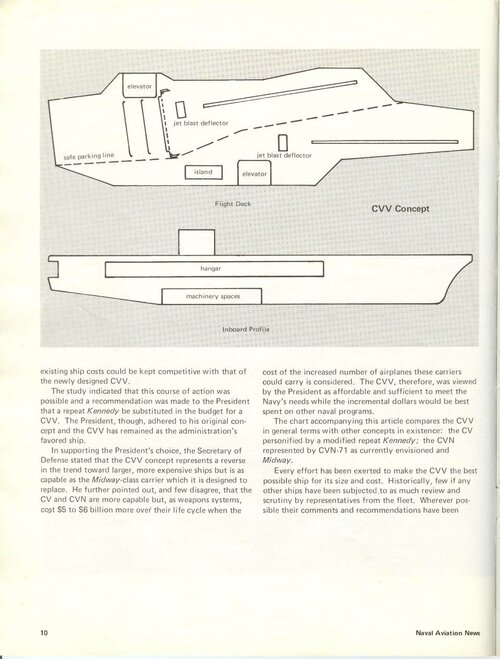
According to this article in Naval Aviation News July 1979, ejection seat removal and landing gear drop checks - see the notes at the bottom of the chart on the 4th page (pg 11) referencing the "clear hangar height" line in the chart:What were those procedures?
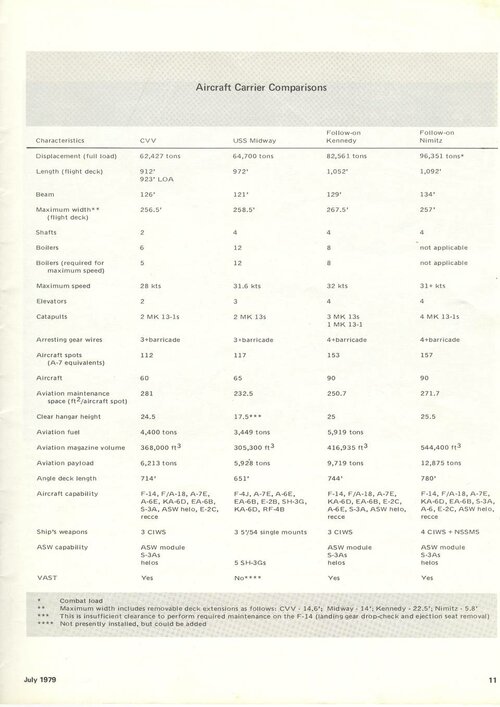
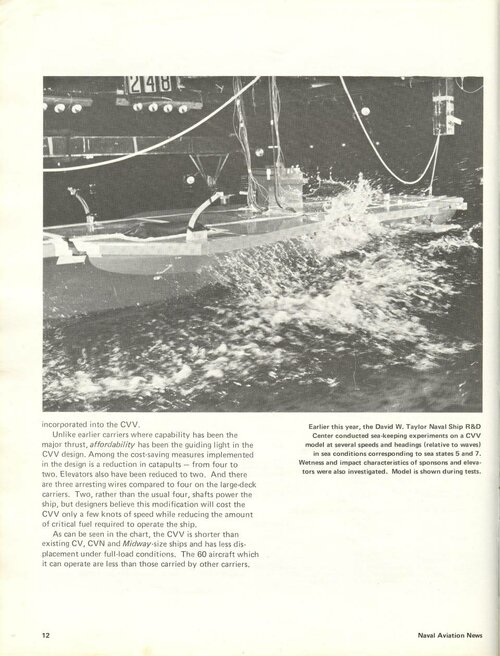
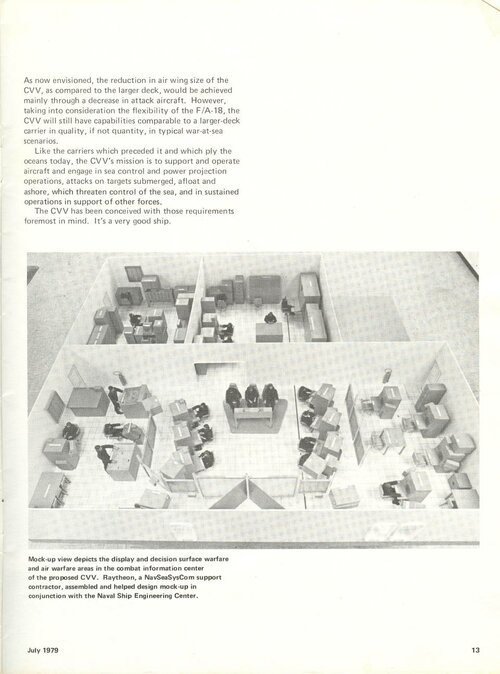
Scott Kenny
ACCESS: USAP
- Joined
- 15 May 2023
- Messages
- 16,977
- Reaction score
- 24,081
First flight in 2030 means IOC in roughly 2035 at the earliest, if we're using all established systems. The F-35 took 10 years from First Flight to IOC. F-22 took ~8 years.The USN hasn't specified a low logistics footprint as a requirement for F/A-XX. Frankly I just don't think it worries them.
The benefit the 102/103 provide outweighs the logistic and any potential delays to service.
USN is targeting early to mid 2030s. Some systems can come off the shelf but not all of it needs to or should. The platform has to meet the advanced range, sensors and lethality that the CNO recently mentioned. They don't get that from recycling existing systems...

FighterJock
ACCESS: Above Top Secret
- Joined
- 29 October 2007
- Messages
- 6,692
- Reaction score
- 7,912
First flight 2030 and IOC in 2035? That would make it the same entry into service as the GCAP.
First flight in 2030 means IOC in roughly 2035 at the earliest, if we're using all established systems. The F-35 took 10 years from First Flight to IOC. F-22 took ~8 years.
And T-7 flew in 2016...
kqcke for you
PUMA PUMA PUMA
- Joined
- 3 November 2022
- Messages
- 1,640
- Reaction score
- 2,390
Assuming nothing happens too bothFirst flight 2030 and IOC in 2035? That would make it the same entry into service as the GCAP.
FighterJock
ACCESS: Above Top Secret
- Joined
- 29 October 2007
- Messages
- 6,692
- Reaction score
- 7,912
And we do not want nothing like that to happen to both programs kqcke for you.
kqcke for you
PUMA PUMA PUMA
- Joined
- 3 November 2022
- Messages
- 1,640
- Reaction score
- 2,390
Yeah but i assume luck is never on my side so prepare for the worst and accept what you get. Same for FCAS of MGCS. Those can go really wrong or even exceed expectations but with existing open information its really hard to tell where its going. But based on what they stated i assume a lot of work is already done and atleast the Navy knows what they want and probaly can get. Same for GCAP which probaly relies heavily on F-X work done by Japan which looked like the first in service 6th gen fighter anyway.And we do not want nothing like that to happen to both programs kqcke for you.
Last edited:
Scott Kenny
ACCESS: USAP
- Joined
- 15 May 2023
- Messages
- 16,977
- Reaction score
- 24,081
New airframe, new systems, old engine.And T-7 flew in 2016...
Maybe an initial NGAD: New airframe, new systems, install upgraded F135s then in another block move to New Adapted Propulsion?
Only makes sense if there’s no three stream engine available, and I thought was one of the key enabling technologies of NGAD and FA-XX. I would think sans that, what does it bring over a stretched F-35 for far less cost?
Scott Kenny
ACCESS: USAP
- Joined
- 15 May 2023
- Messages
- 16,977
- Reaction score
- 24,081
Eh, maybe?Maybe an initial NGAD: New airframe, new systems, install upgraded F135s then in another block move to New Adapted Propulsion?
In the time you get the new systems worked out, you should have 3-stream engines available for install.
I don't think an earlier IOC happens just because the engine is in service today so I think your use of all is not accurate. If they wanted to risk reduce they could go with an existing engine and then put an adaptive engine in later on but I still doubt that will happen.First flight in 2030 means IOC in roughly 2035 at the earliest, if we're using all established systems.
If we look at original Super Hornet Blk 1 had essentially a new engine but existing avionics and radar. Depending on the F/A-XX selected vendor that seems a good option, an LM, Boeing or even NG aircraft could transpose their respective mission systems across and then upgrade as newer systems arrive. Frankly though I wonder if the USN would want to tie itself to F-35 avionics. Things are likely to improve but running with that overhead could make things ugly.
As the sole customer I expect the USN will have a shorter time from first flight to IOC than comparable programs. SH Blk 1 first flight was Nov 1995 and IOC was Sep 2001.The F-35 took 10 years from First Flight to IOC. F-22 took ~8 years.
Scott Kenny
ACCESS: USAP
- Joined
- 15 May 2023
- Messages
- 16,977
- Reaction score
- 24,081
Not just engines, also using the F-35 avionics.I don't think an earlier IOC happens just because the engine is in service today so I think your use of all is not accurate. If they wanted to risk reduce they could go with an existing engine and then put an adaptive engine in later on but I still doubt that will happen.
I'd hope they could get it faster, but I'm not betting on it.As the sole customer I expect the USN will have a shorter time from first flight to IOC than comparable programs. SH Blk 1 first flight was Nov 1995 and IOC was Sep 2001.

Bounce
I like cheese.
- Joined
- 14 February 2011
- Messages
- 248
- Reaction score
- 695
The future of the Air Force’s next-generation combat jet will be decided by the end of the year, the service’s top officer said Oct. 25.
“We intend to have that by December,” Chief of Staff Gen. David W. Allvin said at the Military Reporters and Editors Conference in Washington, D.C. “We also want to be able to influence the Department’s Presidential Budget Submission in February.”

NGAD Review to Finish Before End of Year, Allvin Says
The panel determining the fate of the Air Force’s future manned fighter (NGAD) will provide its recommendations by the end of 2024.
 www.airandspaceforces.com

- Joined
- 4 July 2010
- Messages
- 2,647
- Reaction score
- 3,611
They're still contradicting each other. Allvin is saying this was triggered because the threat has grown more capable and they're no longer certain the manned platform can "deliver." Kendall is saying CCA made it possible reconsider their approach using more drones (and B-21) to do the job. That's two different origin stories. We've also seen that the Increment1 CCAs are dramatically less stealthy than the PCA aircraft was expected to be, so even if Raider is more stealthy than that aircraft would have been the overall kill chain would be a lot easier to detect and thus more vulnerable to A2AD.
They're still contradicting each other. Allvin is saying this was triggered because the threat has grown more capable and they're no longer certain the manned platform can "deliver." Kendall is saying CCA made it possible reconsider their approach using more drones (and B-21) to do the job. That's two different origin stories. We've also seen that the Increment1 CCAs are dramatically less stealthy than the PCA aircraft was expected to be, so even if Raider is more stealthy than that aircraft would have been the overall kill chain would be a lot easier to detect and thus more vulnerable to A2AD.
It is possible that the reasoning is a little of column A and a little of column B. Also possible that there is a difference of opinion or someone is being deliberately misleading; we are in the dark.
As for CCA stealth, the goal seems to be the least amount of effort that produce a frontal RCS low enough to get into a good firing position, and not a penny more spent on the effort. I actually think that’s a healthy mindset. There are all sorts of financial and performance costs associated with VLO designs; something that is just “LO” is likely more cost effective. Once you fire your weapons, chances are the opponent is alerted to your position anyway and in any case, they probably have other things to worry about.
Out of the US we have only seen Phase One which is clearly early designs focused more on the autonomy than on LO design. Increment two is expected in a couple of years and we may see more of a focus on LO, or VLO, or alternatively deeper magazines or higher speed/longer range etc.As for CCA stealth, the goal seems to be the least amount of effort that produce a frontal RCS low enough to get into a good firing position, and not a penny more spent on the effort. I actually think that’s a healthy mindset. There are all sorts of financial and performance costs associated with VLO designs; something that is just “LO” is likely more cost effective. Once you fire your weapons, chances are the opponent is alerted to your position anyway and in any case, they probably have other things to worry about.
It is interesting that the FCAS CCA equivalent design appear to have a higher focus on LO but also they don't have the building block approach that the USAF is taking.
Out of the US we have only seen Phase One which is clearly early designs focused more on the autonomy than on LO design. Increment two is expected in a couple of years and we may see more of a focus on LO, or VLO, or alternatively deeper magazines or higher speed/longer range etc.
It is interesting that the FCAS CCA equivalent design appear to have a higher focus on LO but also they don't have the building block approach that the USAF is taking.
The designs we have seen so far in this rough range class of LO and ~10,000 lb MTOW include the Anduril Fury, the GA XQ-67 (both down selected), the XQ-58 (and any classified derivative), and scales composites 438. The general theme I detect is a UCAV with standard runway capability (Kratos is developing this and I think why they missed the first round) that can travel a thousand miles round trip with a pair of AAMs for a douple tap on an opponent aircraft. None of these are super low RCS, but all of them clearly work towards a low frontal signature. And I suspect any one of them is not drastically larger in radar footprint than an F-35 from head on. They are inherently smaller than a manned aircraft even if less resources are invested in radar reduction. It also might be the case that UAVs can adopt much less durable radar reduction technologies that are less expensive since they do not have regular sortie or training requirements.
I expect the trend to go more towards cheaper and more prolific rather than larger and more capable. And IMO, the bar set by Incr 1 is passive detection or off board sensor target data and a pair of full sized AAMs. And nothing more.
ETA: probably some significant ECM as well.
We know from GA and Andruil that their aircraft don't have any significant quantity of composites, they are very much traditional bended metal aircraft which would lead to likely higher RCS values than a traditional manned fighter which has both composites and additional RAM treatments. Whether we want to class something as LO or VLO or non LO becomes an academic debate on values and ranges and suspected treatments.The designs we have seen so far in this rough range class of LO and ~10,000 lb MTOW include the Anduril Fury, the GA XQ-67 (both down selected), the XQ-58 (and any classified derivative), and scales composites 438. The general theme I detect is a UCAV with standard runway capability (Kratos is developing this and I think why they missed the first round) that can travel a thousand miles round trip with a pair of AAMs for a douple tap on an opponent aircraft. None of these are super low RCS, but all of them clearly work towards a low frontal signature. And I suspect any one of them is not drastically larger in radar footprint than an F-35 from head on. They are inherently smaller than a manned aircraft even if less resources are invested in radar reduction. It also might be the case that UAVs can adopt much less durable radar reduction technologies that are less expensive since they do not have regular sortie or training requirements.
Potentially. LM certainly think that.I expect the trend to go more towards cheaper and more prolific rather than larger and more capable. And IMO, the bar set by Incr 1 is passive detection or off board sensor target data and a pair of full sized AAMs. And nothing more.
ETA: probably some significant ECM as well.
“What we see from a macro-level environment is … something that has more expendable characteristics and is at a much, much lower cost point seems to be a good place to go explore. And so that’s where we’re exploring and putting time and energy in,” said John Clark, a Lockheed vice president and general manager of the experimental engineering outfit. He spoke at a briefing at AFA’s Air, Space & Cyber Conference organized by the defense contractor.
He added that the Air Force was still developing requirements for Increment 2 of the CCA program, which aims to produce uncrewed, autonomously piloted aircraft that will partner with manned fighters like the F-35 and provide additional firepower.
“Right now we’re actively looking at how the Air Force is going to go with their requirements,” he said, adding that he did not want to get out ahead of service leaders.
But he also cited the famous advice from ice hockey legend Wayne Gretzky: “’Skate where the puck is going to.’ That’s where we think it’s going to,” he said.
Lockheed was one of three unsuccessful bidders for Increment 1 of the CCA, and Clark said the company offered stealth capabilities in that bid that were above and beyond what the Air Force requested. He attributed that decision to the company’s conviction, based on its operational analysis, that stealth was required to make the aircraft survivable and capable of providing “something that actually had value to the Air Force over long haul.”
“With 20/20 hindsight, you could certainly armchair quarterback [that decision] and say, well, the Air Force isn’t valuing survivability right now, so we gold-plated something that they didn’t need gold-plated,” he explained.

Lockheed Eyes Low-Cost Attritable Drone for CCA Increment 2
Lockheed Martin will focus on lower cost, more attritable aircraft in its proposal for Increment 2 of Collaborative Combat Aircraft (CCA).
www.airandspaceforces.com
It therefore seems unlikely that we will see much in the form of LO and VLO optimised for Increment two even though the requirements are not fully defined yet.
But that still contrasts with what we have seen from Airbus https://www.twz.com/air/the-airbus-wingman-stealth-drone-what-we-learned-in-berlin and what would be expected to accompany a VLO platform like the B-21 or a manned NGAD.

dark sidius
ACCESS: Top Secret
- Joined
- 1 August 2008
- Messages
- 1,546
- Reaction score
- 1,609
NGAD, Tanker Plans Unaffordable Without Major Changes, USAF Chief Says | Aviation Week Network
U.S. Air Force Secretary Frank Kendall pointed to other budget priorities.
 aviationweek.com
Are they realy serious ? they are completly mind lost or what ?NGAD, Tanker Plans Unaffordable Without Major Changes, USAF Chief Says | Aviation Week Network
U.S. Air Force Secretary Frank Kendall pointed to other budget priorities.
Unless Congress gives the USAF more money, it has to operate with what it has. That’s that.
dark sidius
ACCESS: Top Secret
- Joined
- 1 August 2008
- Messages
- 1,546
- Reaction score
- 1,609
I disagree , Billions and billions are spending on the NGAD program since a decade to say us that it is unaffordable so where is the money ? I think there is too much people at the head of USAF living so well with poor results may be it is time to fire some to restart the program. I say you Europe will have 6th gen fighters with tight budget before USAF.Unless Congress gives the USAF more money, it has to operate with what it has. That’s that.
I wonder if the USAF paused the NGAD selection and reviewed the requirements specifically because of budgetary issues. Wrapping up the review soon and being able to influence next years budget might be their way of saying "hey we have the system that we need, it just costs a ton and we can't afford that under current budget limitations. Here is a report of why the system needs to be this pricey, and the alternatives and how going with an alternative will make us more vulnerable. Please give us more money to pursue NGAD as intended."
- Status
- Not open for further replies.
Similar threads
-
 Japanese next generation fighter studies (aka i3, F-3)
- Started by bobbymike
- Replies: 584
-
 CNO Greenert Warns Congress of Fighter Shortfall, Hornet Line to Close 2017
- Started by Triton
- Replies: 1
-
Russian 6th Generation Fighter News
- Started by bobbymike
- Replies: 41
-
-