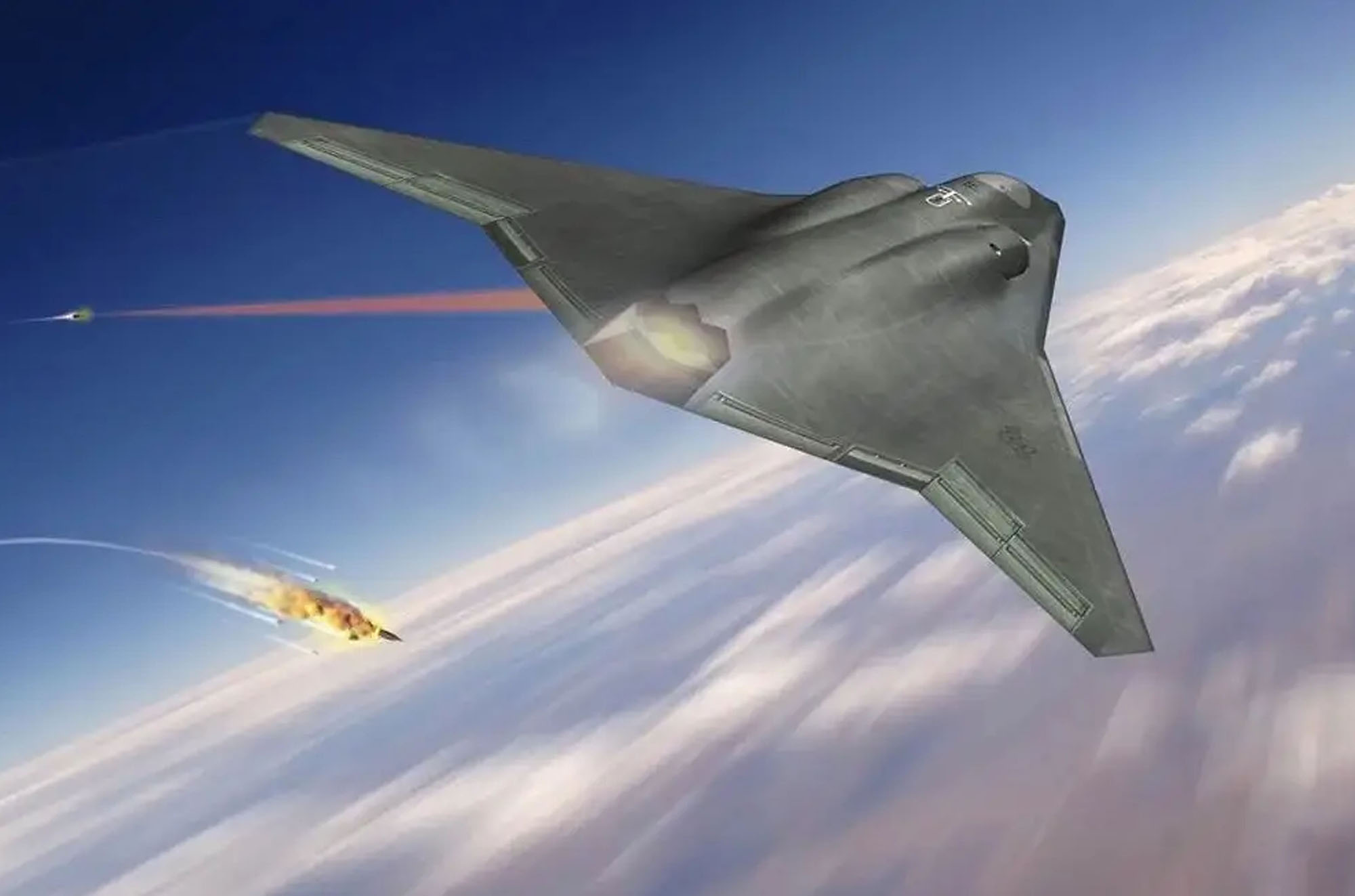
Remember that there are two engine sizes for NGAP: the original tech demonstrators (XA100 and -101) were 45klbs, F135 size. Then the USAF started saying that an NGAP-derived engine was going into the NGAD, those engines (XA102 and -103) are in the 35klbs, F119 size.
Remember that there are two engine sizes for NGAP: the original tech demonstrators (XA100 and -101) were 45klbs, F135 size. Then the USAF started saying that an NGAP-derived engine was going into the NGAD, those engines (XA102 and -103) are in the 35klbs, F119 size.
XA102/103 haven't flown or even progressed far beyond critical design review and appears won't start testing until the late 2020s. Perhaps that fits with F/A-XX but I wonder what size they will be.
In that context if using XA102/103 then likely two engines while if using XA100/101 then only one.
Interesting the USN have said
We expect that sixth-generation platform to be able to have advanced sensors, advanced lethality, advanced range, and being able to integrate with manned and unmanned capabilities together,
I would not be surprised at all if the USN pursues an engine design that borrows little from the ADVENT>AETP matured adaptive engine tech that is now being pursued under the six phases of NGAP development which apparently have not been impacted by the NGAD review. The Navy could well focus on more mature and less risky paths for its engine EMD.
What I find interesting about the Airforce taking a hiatus on selecting a winning to go back to the drawing board is that all of the concept images that have been thrown out edge wise all point to something that is designed to operate from a ship. Whether it be bulkier landing gear or intake danger markings, something is off here. Like my previous statement before, maybe the Navy is spearheading the 6th gen fighter program and the airforce will just follow suit with what they have. I'm not making it fact just stating a point of speculation. The Northrop concept has fat struts and the Boeing concept has danger markings (not seeing that on an airforce bird). As for power plants, the Boeing concepts propulsion seems akin to the F135. Perhaps it's an NGAP derivative?
Attachments
Phantom Works (4).mp4_snapshot_00.04_[2023.02.28_21.16.39].jpg
I would not be surprised at all if the USN pursues an engine design that borrows little from the ADVENT>AETP matured adaptive engine tech that is now being pursued under the six phases of NGAP development which apparently have not been impacted by the NGAD review. The Navy could well focus on more mature and less risky paths for its engine EMD.
What are you thinking, a further enhancement of the F414 or perhaps another in service engine such as the F135? The F135 feels maybe not quite big enough as a single and two likely too big for a carrier capable aircraft.
What I find interesting about the Airforce taking a hiatus on selecting a winning to go back to the drawing board is that all of the concept images that have been thrown out edge wise all point to something that is designed to operate from a ship. Whether it be bulkier landing gear or intake danger markings, something is off here. Like my previous statement before, maybe the Navy is spearheading the 6th gen fighter program and the airforce will just follow suit with what they have. I'm not making it fact just stating a point of speculation. The Northrop concept has fat struts and the Boeing concept has danger markings (not seeing that on an airforce bird). As for power plants, the Boeing concepts propulsion seems akin to the F135. Perhaps it's an NGAP derivative?
Except the Navy has no money. There is very little budget for the next three years for F/A-XX so whichever contractor wins won't be doing much for the next few years. From the articles posted above it also feels like the USN is behind the USAF in the process pointedly talking about using USAF lessons learned.
That is sad that the US Navy has no money for the next three years, I wonder what is happening with the military budget these days? I would have thought that the Navy would have been given the necessary money for other projects like the F/A-XX? Unless the money is going on the Ford class carriers first then they will put extra money onto F/A-XX later. Either that or the Navy is having the same trouble as the USAF is going through at present with NGAD.
That is sad that the US Navy has no money for the next three years, I wonder what is happening with the military budget these days? I would have thought that the Navy would have been given the necessary money for other projects like the F/A-XX? Unless the money is going on the Ford class carriers first then they will put extra money onto F/A-XX later. Either that or the Navy is having the same trouble as the USAF is going through at present with NGAD.
Much of the focus has been on technology development and currently in production aircraft, there's also been a feeling that Navy (and Congress) wanted USAF to "go first."
So the USAF is more of a Guinea pig so that there would be no trouble for the US Navy then, as much of the technology could be used for the F/A-XX that would be on the NGAD saving the navy money in the long term which is good news.
That is sad that the US Navy has no money for the next three years, I wonder what is happening with the military budget these days? I would have thought that the Navy would have been given the necessary money for other projects like the F/A-XX? Unless the money is going on the Ford class carriers first then they will put extra money onto F/A-XX later. Either that or the Navy is having the same trouble as the USAF is going through at present with NGAD.
“We’re absolutely committed to the capacity and lethality of the of the carrier wing,” Rear Adm. Ben Reynolds, deputy assistant secretary of the Navy for budget, told reporters last week. “The capacity [and] the firepower of the air wing is orders of magnitude above anything else that that [the Defense Department] has.”
Reynolds said that funding for F/A-XX, the strike fighter intended to replace the service’s stalwart F/A-18 Super Hornet, was previously projected to receive around $1.5 billion in FY25, but the constraints of the Fiscal Responsibility Act of 2023 forced the Navy to disperse much of that money into future budgets. The FRA, signed into law last June, provides an FY25 defense spending cap of $895 billion, and the Navy and Marine Corps’ share of that topline under the newly-released budget is $257.6 billion.
“In terms of what comes at the top of the list, it is readiness. It is people. It is the today issues that we have to get on top of,” Navy Under Secretary Erik Raven told reporters while speaking alongside Reynolds. “Where our guidance directs us to take risk is in future modernization.”
That is sad that the US Navy has no money for the next three years, I wonder what is happening with the military budget these days? I would have thought that the Navy would have been given the necessary money for other projects like the F/A-XX? Unless the money is going on the Ford class carriers first then they will put extra money onto F/A-XX later. Either that or the Navy is having the same trouble as the USAF is going through at present with NGAD.
Would the Air Force and Navy be better of if they transfered both the NGAD and F/A-XX to the black world that way money would be no object (so to speak) and they can develop the new fighters in total secrecy and without the worry of having to look after the financial side of things?
XA102/103 haven't flown or even progressed far beyond critical design review and appears won't start testing until the late 2020s. Perhaps that fits with F/A-XX but I wonder what size they will be.
In that context if using XA102/103 then likely two engines while if using XA100/101 then only one.
Interesting the USN have said
Which is not quite what one of the previous CNOs had said where he was looking for speed over stealth.
That is sad that the US Navy has no money for the next three years, I wonder what is happening with the military budget these days? I would have thought that the Navy would have been given the necessary money for other projects like the F/A-XX? Unless the money is going on the Ford class carriers first then they will put extra money onto F/A-XX later. Either that or the Navy is having the same trouble as the USAF is going through at present with NGAD.
Thanks dark sidius, the Black Budget and it's mysterious ways of operating. That is where the NGAD F/A-XX should belong like the F-117A Nighthawk back in it's early days when it was classified as a SAP Level 1 program.
The Navy is moving towards awarding a contract for its next-generation, long-range fighter amid uncertainty over the Air Force's NGAD fighter.
www.airandspaceforces.com
"The Navy will soon decide between competitors Boeing, Lockheed Martin, and Northrop Grumman. “We have three companies that have provided proposals for that and we’re actually in source selection right now,” Franchetti told reporters at a Defense Writers Group event."
Sure they can. It would obviously help if Congress passed a budget and there wasn't the Fiscal Responsibility Act. It isn't looking like Congress will pass another budget this year and if that happens and the US has to operate under another continuing resolution then there is no funding available for the expansion needed.
Sure they can. It would obviously help if Congress passed a budget and there wasn't the Fiscal Responsibility Act. It isn't looking like Congress will pass another budget this year and if that happens and the US has to operate under another continuing resolution then there is no funding available for the expansion needed.
If service or DOD priorities change these things can take dramatic turns especially on new starts or very young programs. I assume here that you looked at what budget docs stated in FY24 or 25 around what 27-28 or later funding on program would be. Since its such an early stage, those can change quite rapidly if the effort is prioritized.
That is sad that the US Navy has no money for the next three years, I wonder what is happening with the military budget these days? I would have thought that the Navy would have been given the necessary money for other projects like the F/A-XX? Unless the money is going on the Ford class carriers first then they will put extra money onto F/A-XX later. Either that or the Navy is having the same trouble as the USAF is going through at present with NGAD.
Isn't a lot of the stuff that the US has been sending Ukraine old stock that the DoD would have to spend money on de-militarising it and old munitions approaching the end of their shelf-lives?
If service or DOD priorities change these things can take dramatic turns especially on new starts or very young programs. I assume here that you looked at what budget docs stated in FY24 or 25 around what 27-28 or later funding on program would be. Since its such an early stage, those can change quite rapidly if the effort is prioritized.
Happy to be corrected but I think continuing resolutions mean no funding increase can occur and the previously agreed budget just carries forward. It also limits the ability to start new programs or change funding limits and levels.
Yes I 100% agree that funding can change based on priorities but the USN has stated their priorities, as directed by Congress, that modernization takes a back seat to readiness. Will readiness be fixed in the next two to three years, I doubt it...
Some assessment of the impact of the CRs here,
Q3: How does the 2023 Fiscal Responsibility Act factor into FY 2025 appropriations and a potential CR?
A3: In June 2023, Congress passed the Fiscal Responsibility Act (FRA), which suspended the debt ceiling through January 1, 2025, in exchange for establishing limits on discretionary spending for defense and non-defense programs. Figure 2 shows the FRA budget caps for defense relative to the projected base funding levels in the Biden administration’s FY 2024 national defense budget. While the FY 2024 cap was in line with the administration’s FY 2024 requested defense topline, the FY 2025 limit of $895 billion—which the Biden administration’s FY 2025 request is in line with—is $10 billion less than what the administration originally projected it would spend and represents a 1 percent cut from FY 2024 levels when adjusted for inflation. The current “clean CR” under consideration would extend defense programs at FY 2024 funding levels until Congress takes action on regular FY 2025 appropriations.
Remote Visualization
As an enforcement mechanism to keep discretionary spending within the budget caps, the FRA includes sequestration, which automatically cuts funding back to the cap levels if Congress appropriates above them. However, emergency supplemental funding, such as the April 2024 bill, which provided over $67 billion in additional resources to DOD relating to Ukraine, Israel, and the Indo-Pacific, is exempt from the spending limits.
An additional clause in the FRA holds that if the government fails to pass all 12 regular appropriations bills by April 30—meaning that any part of the government continues to operate under a CR—then spending levels will automatically be adjusted to FY 2023 levels minus 1 percent. For defense programs in FY 2025, this would entail a cut of 5 percent across the board and a reduction of over $45 billion in the national defense topline. Q4: How would a CR impact defense programs in FY 2025?
A4: Given the frequency with which the Pentagon begins the fiscal year under a stopgap funding extension, short-term CRs of 2–3 months may not cause major disruptions to the execution of defense programs. However, longer CRs that extend into the new calendar year can significantly disrupt programs that are forced to operate with spending levels lower than or higher than what they had projected. Moreover, the military services cannot fund “new start” programs or increase production rates under a CR. In a letter to congressional appropriators, Secretary of the Air Force Frank Kendall outlined that the 6-month CR originally proposed by Speaker Johnson would prevent production increases for munitions stockpiles and reduce aircraft mission capable rates. Once regular appropriations have been passed after a long-term CR, DOD programs still face “serious execution problems,” as they have limited time to negotiate contracts and efficiently spend operating funds before they expire at the end of the fiscal year on September 30.
Q5: What other factors could impact defense spending under a continuing resolution?
A5: Congress will ultimately punt on passing FY 2025 appropriations until after the November elections. However, if it passes a CR that extends funding at current levels into the new calendar year, Congress will also have to address a range of other fiscal issues, which could be intertwined in negotiations over the defense budget. On January 1, 2025, the debt ceiling suspended by the FRA is reimposed, and the Department of the Treasury will be forced to take “extraordinary measures” to fund the government until Congress takes action. Tax cuts passed under the Trump administration will also expire at the end of 2025 and add another source of debate on the Hill. Delaying the passage of FY 2025 appropriations into the new year risks linking them with other fiscal issues, posing a challenge to their timely passage prior to the April 30 sequestration deadline.
If Congress tries that, the Navy gets to say "With all due respect, Senator, the only time that worked is when the USAF bought aircraft designed for the Navy. USAF needs a lot more range, our airfields move and theirs don't. But we also have pretty hard limits on how big a plane can be and still take off and land from a carrier."
And then gets to say that FAXX is limited to ~85,000lbs MTOW and a landing weight with full weapons and minimal internal fuel of ~55,000lbs. While the USAF's published wish list for range means an aircraft that is closer to 105,000lbs max takeoff.
What are you thinking, a further enhancement of the F414 or perhaps another in service engine such as the F135? The F135 feels maybe not quite big enough as a single and two likely too big for a carrier capable aircraft.
Depends on how big the FAXX ends up. If it really is an 85klb MTOW monster, then yes, F135s would be a little big. Plane would be one hell of a hot rod, though, with a T:W ratio of close to 1 at takeoff.
Happy to be corrected but I think continuing resolutions mean no funding increase can occur and the previously agreed budget just carries forward. It also limits the ability to start new programs or change funding limits and levels.
CR's are temporary. If you are suggesting that we will be in continuous CRs for the rest of the decade then that is really not something that is going to happen. CR's cause delays and mess up new starts and other programs have to wait to ramp up as they can only be funded to previous FY levels when under CR. That doesn't mean that as administrations submit their budgets they have to honor FYDP funding profiles stated in their previous budgets. As I wrote earlier, if admin or service wishes to prioritize something based on where it is at in its analysis, it can dramatically alter the funding profile in the FYDP relative to what might have been in the out years as per the last 2-3 budget docs.
What are you thinking, a further enhancement of the F414 or perhaps another in service engine such as the F135? The F135 feels maybe not quite big enough as a single and two likely too big for a carrier capable aircraft.
I was thinking more in terms of a lower cost / less risky propulsion EMD program that is based on more mature technologies from a tech and mfg. readiness level. So a new clean sheet engine, just not one that blows budgets and assumes a lot of risk with untested or relative immature technology. Though certainly adapting something off the shelf could be an option. It really depends how big FA-XX will be and what the Navy wants in terms of performance.
CR's are temporary. If you are suggesting that we will be in continuous CRs for the rest of the decade then that is really not something that is going to happen. CR's cause delays and mess up new starts and other programs have to wait to ramp up as they can only be funded to previous FY levels when under CR. That doesn't mean that as administrations submit their budgets they have to honor FYDP funding profiles stated in their previous budgets. As I wrote earlier, if admin or service wishes to prioritize something based on where it is at in its analysis, it can dramatically alter the funding profile in the FYDP relative to what might have been in the last 2-3 budget docs.
No I'm not expecting CRs but I am expecting that there will be a continued cap on defence spending similar to the Fiscal Responsibility Act.
Additionally as already stated the USN has a budget issue, too many things to dev and build and not enough money when there are also readiness and manning issues.
I was thinking more in terms of a lower cost / less risky propulsion EMD program that is based on more mature technologies from a tech and mfg. readiness level. So a new clean sheet engine, just not one that blows budgets and assumes a lot of risk with untested or relative immature technology. Though certainly adapting something off the shelf could be an option. It really depends how big FA-XX will be and what the Navy wants in terms of performance.
While that is probably the lower risk approach I feel like the requirement for range makes an AETP derived engine a better option. The other issue is cost. Your suggestion is likely lower cost and we know the XA100/101 were not cheap and 102/103 likely the same. Even if GE or PW started today on a clean sheet new engine the timeline would be very close for IOC of the aircraft so timeframe might also be difficult.
What I want to say is with a budget of 22.7 billions of research the Navy can find one billion for the FA/XX program, if they are in source selection they have the idea of want they want and how to fund it.
Spending CAP's are on topline. Within that topline, the department and services are free to prioritize as they see fit. If the very top of the USN leadership is speaking about source selection and competition with follow on development, they would at least be willing to make the necessary changes to fund those wishes including seeking civilian approval. Or their program is less ambitious and requires significantly less funding through EMD compared to a high end 6th gen PCA the air force might have been considering.
I disagree about engine development. The EMD budget, risk, and timeline could potentially be dramatically different for developing an AETD/NGAP offshoot (scaled core etc) vs using more mature, less risky technology. NGAP itself was on the 2030s timeline the Navy seems to be on and it would be the highest risk, and lowest tech maturity option with about a 3 year head start assuming that the Navy has not funded engine work at all up to this point (at source selection) which does not seem likely. So whatever engines they think they can afford, are probably at some stage of TMRR / demonstrations in some classified space.
That could be the way that the F/A-XX goes joewee. I would like that to happen for the down-select to be early and entry to EMD quicker than it othewise would be.
If Congress tries that, the Navy gets to say "With all due respect, Senator, the only time that worked is when the USAF bought aircraft designed for the Navy. USAF needs a lot more range, our airfields move and theirs don't. But we also have pretty hard limits on how big a plane can be and still take off and land from a carrier."
And then gets to say that FAXX is limited to ~85,000lbs MTOW and a landing weight with full weapons and minimal internal fuel of ~55,000lbs. While the USAF's published wish list for range means an aircraft that is closer to 105,000lbs max takeoff.
Agreed, however in that context it would be the AF trying to explain to Congress why this is a bad idea (for all the reasons you stated). The Navy wouldn't be in that position, they can say "This platform best suits our requirements, and if the AF were to increase the buy, that would be fine with us." Because I don't think that Congress would merge the programs, but would instead force one service to buy the same fighter that the other one did, and the Navy's trying to get out ahead of that while Kendall tries to figure out exactly what it is he wants.
This site uses cookies to help personalise content, tailor your experience and to keep you logged in if you register.
By continuing to use this site, you are consenting to our use of cookies.



![Phantom Works (4).mp4_snapshot_00.04_[2023.02.28_21.16.39].jpg](/data/attachments/278/278517-9926f1ff6d55db2389ecbe872e90563b.jpg)