USAF/USN 6th Gen Fighters - F/A-XX, F-X, NGAD, PCA, ASFS News & Analysis [2008- 2025]

Status
Not open for further replies.
To start, the USAF faces the same problem as the USN. Fundamentally, the US is badly positioned to fight China. It has a worse industrial base, less fiscal headroom to increase defense spending, and the accumulated habits of 30 years of total superiority. In this situation, it makes perfect sense that China has decisively gotten inside the US decision-making loop. China can buy J-20s, J-10s, and convert their 3rd gen fighters to pseudo-CCAs. The US can hardly manage a single aircraft program, much less three.

In this environment, decisive leadership (technical and military) is required, but that decisive leadership is just the sort that wouldn't be promoted through the ossified military apparatus. Can you imagine an Admiral Fisher making it through review boards today?

The situation in Asia has not changed in the last 15 years. The US military and defense apparatus pretended that things were different, perhaps now something has made them face reality. What seems bizarre to me, is that nothing really has changed, there are no new threats that were not foreseeable, no technological trends that were not already predicted.

The Asian operating environment is close to late 1980s early 1990s NATO basing environment, maybe start from there and see what turns up?

Which means the solution remains as it always was: go to a NATO-style airbase buildup in Japan and Philippines. Turn every regional airport and decent highway into a dispersion airfield. Airbases are missile sinks (the US sent 90 into a Syrian airbase and it was operational the next day), give the enemy too many targets to shoot at.

To compliment that, the USAF needs tactical aircraft designed to operate from forward and dispersed airfields. That means STOL (variable geometry, blown wings, pick a combination), and accepting less absolute performance. To counter-balance that, just buy more. USAF has to get bigger, USN has to get bigger, this is the price of 30 years helping China. Either spend more on the military or lose to China outright.

The rocket-boosted CCAs are a dead-end, because you can't get anything from there. NATO learned this with rocket-boosted F-104 Starfighters, the USAF could have saved itself 10 years of misguided development by looking there.

Strategically, the US advantage over China is geography. Our allies box China in completely. Any aircraft development program should reinforce this strategic advantage, not abandon it entirely.
 
That's pretty much a one-way approach, unless they can equip them with a robust and reusable rough landing system such as airbags (which, along with operational issues such as long-term maintenance and spares, would likely eat into available payload).
The XQ-58 version uses a parachute to land.


Q58 Valkyries can be launched off a truck/trailer.
The problem with that is the cost using the current jet assisted take-off is approx $200k USD per launch. It isn't sustainable and the reason why Kratos are developing trolley launch and also a new version with undercarriage.
 
I feel like the USAF cannot make the right decision here. If NGAD does happen and is a big long range speedy/stealthy beast but not much of a turner the first time it is captured in the gunsights of an F-16 or Rafale etc the internet will explode. The only times it will prove itself is in exercise and conflict where those who know won't be able to detail how potentially advantageous the platform is.

As for end of the dogfight, perhaps DEW will finally end it, or alternatively bring it back as no missiles will make it past the DEW and the pilots will have to go back to guns.
 
Just want to add this here: the blindingly obvious use case for CCA aircraft is Ground-Controlled Interception for Defensive Counter Air, especially against reconnaissance UAVs. This eliminates a bunch of the autonomy and communication challenges and maximally profits from lower cost-per-flight hour and decent expendability. (Don't mind if it gets a long-range SAM hit or someone tracks it back to a temporary airfield - so long as you're not dumb enough to co-locate CCAs and actual manned fighters.)

PS. If the Kratos cost per rocket launch truly was $200k, then that program, which lasted for a decade?, was borderline fraud against the US public.
 
The XQ-58 version uses a parachute to land.


The problem with that is the cost using the current jet assisted take-off is approx $200k USD per launch. It isn't sustainable and the reason why Kratos are developing trolley launch and also a new version with undercarriage.
That ship has possibly sailed. Here are some of the challenges to launching short ranged CCAs like the XQ-58 within the first island chain.

You are going to lose a lot of them. How big is your stockpile day one? Similarly, how quickly can they be resupplied - not only the aircraft themselves but fuel and munitions. If you cannot continually generate mass then you undermine the rationale of affordable mass.

How difficult will it be to operate disaggregated Air Force CCAs squadrons? If the strategy to counter China is based on affordable mass how do operate hundreds of CCAs from cities, parks, highways, farms, etc? How do you effect command and control with small units that must synchronize the launching of CCAs with the arrival of manned aircraft?

A better option might be expendable CCAs with air refuelable CCAs with the range and performance of current manned fighters.
 
I can make a case for a "spear carrier" CCA, one that packs a pair or quartet of AMRAAMs for 1500+ nmi. It'll be somewhere between JASSM sized and 1.25x those dimensions (just under 2x the weight/volume). We know the shape is stealthy. The challenge would be adding LO doors for the missiles to come out. The only other major issue would be finding an engine the appropriate power.
 
That ship has possibly sailed. Here are some of the challenges to launching short ranged CCAs like the XQ-58 within the first island chain.

You are going to lose a lot of them. How big is your stockpile day one? Similarly, how quickly can they be resupplied - not only the aircraft themselves but fuel and munitions. If you cannot continually generate mass then you undermine the rationale of affordable mass.

How difficult will it be to operate disaggregated Air Force CCAs squadrons? If the strategy to counter China is based on affordable mass how do operate hundreds of CCAs from cities, parks, highways, farms, etc? How do you effect command and control with small units that must synchronize the launching of CCAs with the arrival of manned aircraft?

A better option might be expendable CCAs with air refuelable CCAs with the range and performance of current manned fighters.

Agree on field options becoming limited in the first island chain although at 3000nm range I think the XQ-58 is well placed.

There needs to see some serious inventiveness when it comes to CCAs though. A couple of suggestions;
- Airship motherships such as this, https://atlas-lta.com/atlant_cargo_airship/ The mid and large variants would potentially have enough payload to handle multiple XQ-58s and generate multiple strike missions. An automated docking and rearming system is conceivable and if the airship is also unmanned then the platform can stay on station for as long or as little time required, being refuelled by other airships.
- Submarine launched CCAs. Would love to see how a new UUV that could be a mothership for CCAs. Surface launched and can parachute back to the ocean surface, stay buoyant with its airbags and recover and rearm.

I can make a case for a "spear carrier" CCA, one that packs a pair or quartet of AMRAAMs for 1500+ nmi. It'll be somewhere between JASSM sized and 1.25x those dimensions (just under 2x the weight/volume). We know the shape is stealthy. The challenge would be adding LO doors for the missiles to come out. The only other major issue would be finding an engine the appropriate power.
It becomes a targeting issue more than a range/payload issue, would need sufficient platforms, ie NGAD, down range for this to be a worthwhile investment?

I suggest you don't even need the doors, operating in a modern IADS likely has sufficient low frequency radars to detect a JASSM sized target, so just design a shell The intent with CCAs isn't current platform levels of stealth and in this context you're probably not even suggesting a CCA by the definition, just a long loitering missile with a unique warhead. If you want to give the missile its own radar and other sensors then you might as well go bigger into reusable territory.
 
Agree on field options becoming limited in the first island chain although at 3000nm range I think the XQ-58 is well placed.

There needs to see some serious inventiveness when it comes to CCAs though. A couple of suggestions;
- Airship motherships such as this, https://atlas-lta.com/atlant_cargo_airship/ The mid and large variants would potentially have enough payload to handle multiple XQ-58s and generate multiple strike missions. An automated docking and rearming system is conceivable and if the airship is also unmanned then the platform can stay on station for as long or as little time required, being refuelled by other airships.
Airships are hideously vulnerable to storms, and the tropics is where the biggest storms of all start up.


- Submarine launched CCAs. Would love to see how a new UUV that could be a mothership for CCAs. Surface launched and can parachute back to the ocean surface, stay buoyant with its airbags and recover and rearm.
I'm not sure that a "submarine" is the right launcher. Launching some CCAs would reveal the sub's position. Drop some AShBMs here.

A Foamship (a bulk cargo carrier packed full of foam) is probably better.


It becomes a targeting issue more than a range/payload issue, would need sufficient platforms, ie NGAD, down range for this to be a worthwhile investment?

I suggest you don't even need the doors, operating in a modern IADS likely has sufficient low frequency radars to detect a JASSM sized target, so just design a shell The intent with CCAs isn't current platform levels of stealth and in this context you're probably not even suggesting a CCA by the definition, just a long loitering missile with a unique warhead. If you want to give the missile its own radar and other sensors then you might as well go bigger into reusable territory.
I was actually thinking a Legion IRST seeker up front. None of the other CCAs seem to be packing the full set of F35 sensors, and most only seem to be packing DAS+EOTS.
 
Airships are hideously vulnerable to storms, and the tropics is where the biggest storms of all start up.
I doubt it would be a major issue.

I'm not sure that a "submarine" is the right launcher. Launching some CCAs would reveal the sub's position. Drop some AShBMs here.

A Foamship (a bulk cargo carrier packed full of foam) is probably better.
??? Surely a submarine is more survivable than a bulk cargo carrier. I expect launching a CCA from a submarine/UUV would likely be little different than a SSN launching Tomahawks. Sure there is more surface time involved but a lot less than a ship that is permanently there.

Out of the box thinking, something to change the paradigm of runways and providing even more flexibility than ground based rocket launches in an area of the world where firm earth is less common.
I was actually thinking a Legion IRST seeker up front. None of the other CCAs seem to be packing the full set of F35 sensors, and most only seem to be packing DAS+EOTS.
I'm not convinced that would be sufficient for AMRAAM targeting, ranging would remain a concern. Multiple systems might be able to provide some angular bearing via datalink but at what point do you then build a re-useable aircraft that can accommodate more advanced sensors.
 
I just watched a video of Waymo. If that is the level of automation that cars have then a decade of work can easily lead to completely autonomous fighters. I think the problems of jamming affect manned and unmanned fighters equally.
 
I just watched a video of Waymo. If that is the level of automation that cars have then a decade of work can easily lead to completely autonomous fighters. I think the problems of jamming affect manned and unmanned fighters equally.
I expect most western CCAs will be using MADL to communicate with F-35, NGAD and other platforms now a MADL pod is in the works. MADL is LPI through both frequency and directionality. To jam the link you would have to cover an insane amount of spectrum while being line of sight with the receiver and even then with DSSS modulation jamming the signal is likely close to impossible. MADL also appears to have very decent range.

If you consider autonomy of the loyal wingman it can be tasked with going off and executing it's own targeting cycle before returning close enough to the host platform to report via MADL. Hence one NGAD could control multiple CCAs over a wide area, each assigned a killbox to work in. General Atomics already considers their CCA capable of full autonomy, it just requires the US Military to adapt tactics and decide to accept the risk associated with autonomous operation.
 
Only issue will be talent to execute and the money to go down this path.
 
Last edited by a moderator:
Only issue will be talent to execute and the money to go down this path.
I'm not sure I understand what your suggesting. Talent wise the US has established a CCA working group, the by product of which is GA and Andruil being awarded contracts for phase 1 of CCA and phase 2 is about to start. Listen to this by The Merge podcast,
View: https://m.youtube.com/watch?v=nDX0GPIucFo&feature=youtu.be
it is an incredible insight to how far along the US actually is with this and how far GA and Andruil are.

Aside from the autonomous tech pretty much everything else is mature, MADL already exists and is present on 1000 F-35s, the airframes being built are using existing processes and the autonomous software is mature. The delay now is the comfort of the respective services to let the autonomy do its thing. For western Militaries often Policy is harder than technology.
 
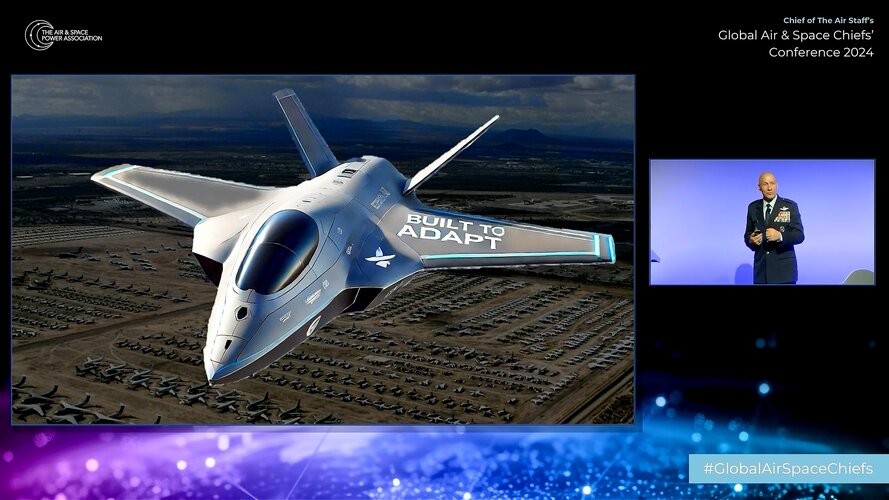
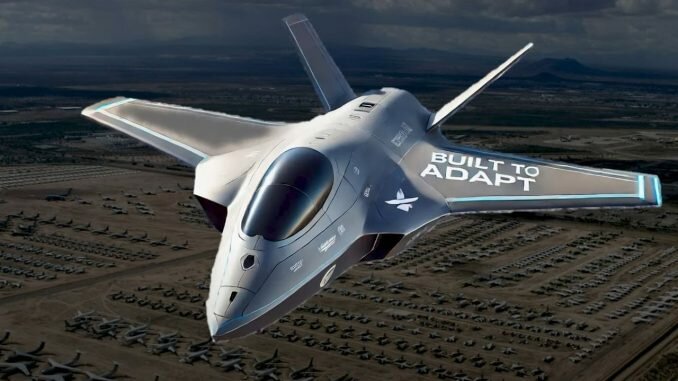
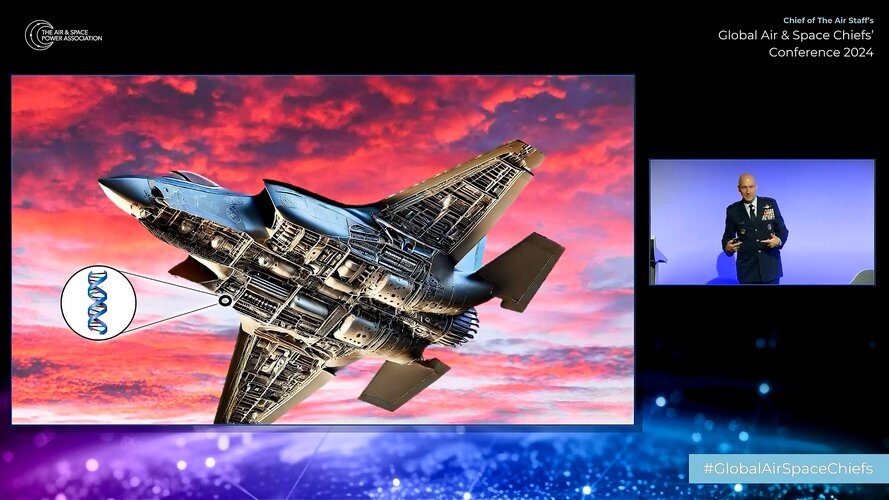
Notice that, as all the picture displayed during his presentation, this is pretty much a symbolic expression of the concept proponed lightheartedly during his speech.
He was not advocating for a single engine or a light weight fighter. He was opposing the emphasis to design something to last as an air dominance aircraft with something on the opposite line but still less extreme than a disposable a/c: an adaptable one. Something that can be modified or even pushed aside to design something entirely new when needed. In essence those were a complementary expression of the similar century fighters family offered earlier.

In other words, addressing to the ppl of the GCAP, he told them to not bank on a single fighter philosophy that would prevail for the next 20 years but to be ready to have their design challenged on its core credibly at an increased pace. Hence:
1. keep some budget line available
2. keep the design cycle open
3. don´t cut major functionalities for performances.
 
Last edited:
Agree on field options becoming limited in the first island chain although at 3000nm range I think the XQ-58 is well placed.

There needs to see some serious inventiveness when it comes to CCAs though. A couple of suggestions;
- Airship motherships such as this, https://atlas-lta.com/atlant_cargo_airship/ The mid and large variants would potentially have enough payload to handle multiple XQ-58s and generate multiple strike missions. An automated docking and rearming system is conceivable and if the airship is also unmanned then the platform can stay on station for as long or as little time required, being refuelled by other airships.
- Submarine launched CCAs. Would love to see how a new UUV that could be a mothership for CCAs. Surface launched and can parachute back to the ocean surface, stay buoyant with its airbags and recover and rearm.


It becomes a targeting issue more than a range/payload issue, would need sufficient platforms, ie NGAD, down range for this to be a worthwhile investment?

I suggest you don't even need the doors, operating in a modern IADS likely has sufficient low frequency radars to detect a JASSM sized target, so just design a shell The intent with CCAs isn't current platform levels of stealth and in this context you're probably not even suggesting a CCA by the definition, just a long loitering missile with a unique warhead. If you want to give the missile its own radar and other sensors then you might as well go bigger into reusable territory.

The range is pretty good with Valkryie. I think the payload is a little light. You need at least two AMRAAM sized weapons to be effective as a munitions truck in A2A. I am not sure you can grow Valkyrie and still be runway independent.
 
The range is pretty good with Valkryie. I think the payload is a little light. You need at least two AMRAAM sized weapons to be effective as a munitions truck in A2A. I am not sure you can grow Valkyrie and still be runway independent.
How we can speak of air dominance with xq-58 ? this is a reusable cruise missile nothing else.
 
Notice that, as all the picture displayed during his presentation, this is pretty much a symbolic expression of the concept proponed lightheartedly during his speech.
He was not advocating for a single engine or a light weight fighter. He was opposing the emphasis to design something to last as an air dominance aircraft with something on the opposite line but still less extreme than a disposable a/c: an adaptable one. Something that can be modified or even pushed aside to design something entirely new when needed. In essence those were a complementary expression of the similar century fighters family offered earlier.

In other words, addressing to the ppl of the GCAP, he told them to not bank on a single fighter philosophy that would prevail for the next 20 years but to be ready to have their design challenged on its core credibly at an increased pace. Hence:
1. keep some budget line available
2. keep the design cycle open
3. don´t cut major functionalities for performances.

Thank you for the color and detail.
 
so after having thought about this I’m not sure what this Light Combat Aircraft could be that is really different than a Block 4 F-35? A new powerplant is risky. A new planform perhaps, one that does away with horizontal stabilizers, but does that really change performance in a way that matters? Will Roper and his new company is making a lot of noise about digital twinning, but I’m really failing to see how one can readily trump a Block IV F-35 unless we are sitting on a new powerplant that won’t fit into a F-35 but will fit into a F-35 sized fighter that is designed to accommodate it… am I tripping?
 
so after having thought about this I’m not sure what this Light Combat Aircraft could be that is really different than a Block 4 F-35? A new powerplant is risky. A new planform perhaps, one that does away with horizontal stabilizers, but does that really change performance in a way that matters? Will Roper and his new company is making a lot of noise about digital twinning, but I’m really failing to see how one can readily trump a Block IV F-35 unless we are sitting on a new powerplant that won’t fit into a F-35 but will fit into a F-35 sized fighter that is designed to accommodate it… am I tripping?
Unless the DOD is so fed up with LMs walled garden they want to basically recreate a better F-35 with a software centric design???
 
so after having thought about this I’m not sure what this Light Combat Aircraft could be that is really different than a Block 4 F-35? A new powerplant is risky. A new planform perhaps, one that does away with horizontal stabilizers, but does that really change performance in a way that matters? Will Roper and his new company is making a lot of noise about digital twinning, but I’m really failing to see how one can readily trump a Block IV F-35 unless we are sitting on a new powerplant that won’t fit into a F-35 but will fit into a F-35 sized fighter that is designed to accommodate it… am I tripping?
Unless the DOD is so fed up with LMs walled garden they want to basically recreate a better F-35 with a software centric design???
I agree 100%. I don't see the value in an NGAD that is similar in size to the F-35. The whole point was supposed to be persistence in a high threat IADS and a small F-35 sized airframe is unlikely to provide that. A new powerplant maybe gets that sized aircraft 30% more efficiency but for the cost of building a whole new aircraft and associated maintenance/training/development you could give USAF F-35s a probe and send in unmanned tankers. Yes you still have to design and deploy the tanker but that seems a cheaper prospect to me with wider application.

Perhaps this size change is more a reflection on the evolving threat and surviving in that dense future IADS and that a manned system just won't cut it. If that is the case then B-21 should be on the chopping block as well unless it does deliver the optionally manned component. Even then B-21 is an expensive asset when instead of one you could flood the airspace with 10 $50 mill CCAs or 50 $10 mill CCAs and do the same thing day after day after day.
 
Keynote with General David W. Allvin, Chief of Staff of the Air Force, at GASCC 2024, filmed on 17 July 2024 at the IET, London:
View: https://youtu.be/U_yCqwwbmPY?si=y6mBB9L5m2Nrf9m8

Source:
 
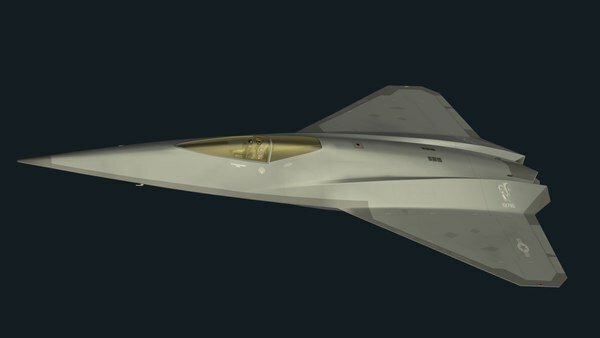
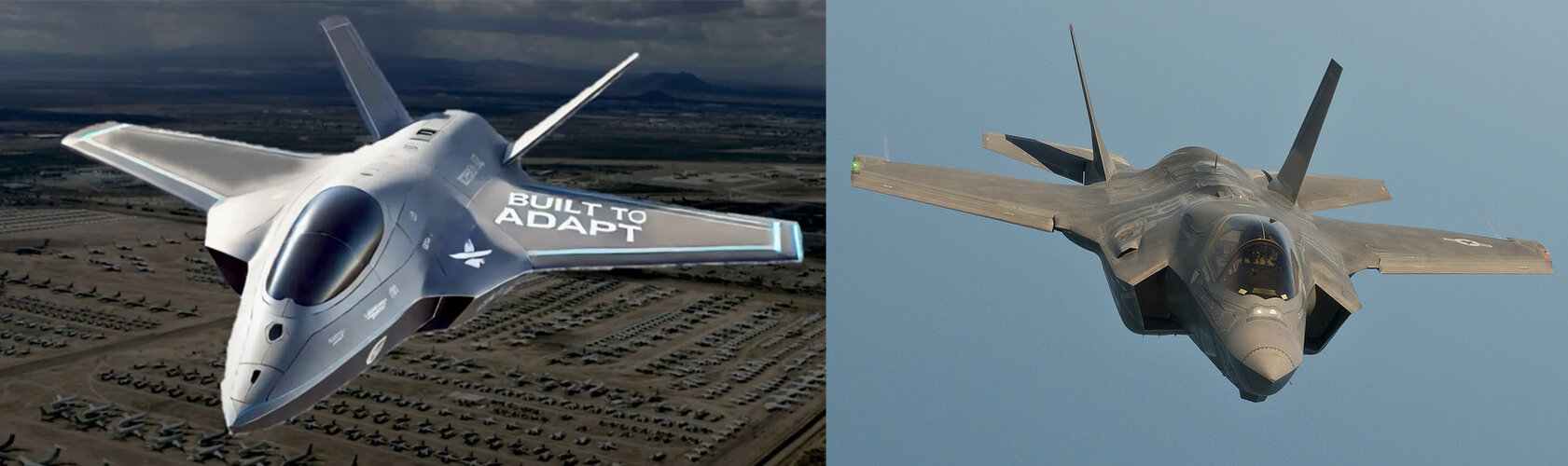
The size of the air intakes is noteworthy
Yeah, those are much smaller than the F-35 intakes, which would suggest a step down in mass flow. What's the mass flow for an F135 versus an F119?

Assuming that's not just some AI bullshit.

Keynote with General David W. Allvin, Chief of Staff of the Air Force, at GASCC 2024, filmed on 17 July 2024 at the IET, London:
View: https://youtu.be/U_yCqwwbmPY?si=y6mBB9L5m2Nrf9m8

Source:
I just cannot buy that. You're not flying a "light fighter" 3,000+nmi without air refueling.

The Pacific Ocean hasn't changed size magically. USAF needs to start prepping Congress for why the long range is needed.

"Senators, here is a graphic showing all the islands with 9000ft runways. The next image adds any 6000ft runways left over from WW2 that might be usable with some work. Next is a series of range bubbles, based on major Chinese military bases that we'd have to reach in a fight with China. As you can clearly see, there are (number) of bases within each range circle. The Pacific is the largest ocean on Earth, the range is not really an option we can do without."
"Shorter range means we need to buy a lot more tankers, which are just as expensive as the fighters."
 

Attachments

  • Keynote with General David W. Allvin, Chief of Staff of the Air Force, at GASCC 2024.mp4_snaps...jpg
    Keynote with General David W. Allvin, Chief of Staff of the Air Force, at GASCC 2024.mp4_snaps...jpg
    1.2 MB · Views: 159
Last edited:
Or keep another prime in the game like Boeing...
I think you can see via the CCA contract award that the DoD is happy to branch out. With GA, Andruil and Kratos all rising and 5th and likely even more so 6th gen being software dominant it is clearly time to move away from the historical primes.
 
Already got a light stealth fighter, why build another? If they're not going to build NGAD proper, they may as well work on improving the F-35 and building more. Heck, rebuild the F-22 to F-35 avionics standards with increased fuel capacity if you aren't making the proper NGAD, it's got to be cheaper than designing a completely new under-ranged POS. In fact, going to get flamed for saying this, but if you aren't building NGAD proper or doing any of the aforementioned, put the money into GCAP. Yes well, stupid outcomes deserve stupid suggestions.
 
Last edited:
Status
Not open for further replies.

Similar threads

Back
Top Bottom