One of the engine companies wants to go full commercial/civilian. Pentagon wants it in military for a show of competition. Just a show with back breaking economics. So when the number of engine options fall to one their projections of cost goes out of the window. The new F-35 engine from the company that makes the old F-35 engine. We have no problems with that.

You are using an out of date browser. It may not display this or other websites correctly.
You should upgrade or use an alternative browser.
You should upgrade or use an alternative browser.
USAF/USN 6th Gen Fighters - F/A-XX, F-X, NGAD, PCA, ASFS News & Analysis [2008- 2025]
- Thread starter Matej
- Start date
- Status
- Not open for further replies.
Pretty much. Systems account for 30-35% of the cost of an F35. So while not including the cockpit, you're still looking at probably 90% the cost of an F35 for something with all the same systems and just unmanned.
We already know that increment 1 CCA is down to two contractors, and that one is a permutation of the XQ-67 and the other likely therefore the Fury from Blue Force, which is roughly in the same size/performance class. Cost has been estimated as “1/4 - 1/3 of F-35”.
CCAs are on the low end of the performance curve - subsonic, range only marginally greater than F-35, and a payload likely limited to ~1000 lbs. We do not know the avionics requirements but I think it is reasonable to assume they have no radar, since they would lack all of the SWAP requirements of any significant capability. So likely some kind of DAS type system for tracking and all around awareness, likely with some kind of ESM system at least relevant against airborne radars (X band). Disposable countermeasures, probably enough ECM to at least fake being a larger aircraft and maybe a range gate push off. MADL compatible datalink for coms. I think that’s all we are looking at in a CCA, at least this increment.
Several major capabilities clearly get sacrificed compared to the manned system: AESA radar (and associated jamming modes), speed, and distance. The benefit is of course cost, not just of the aircraft, but also in maintenance and training.
As I noted previously, the NGAD was likely envisioned as the sensor/control node of a group of CCAs, along with a long ranged BVR capability, and as a manned platform required a much higher degree of survivability and performance on top. The USAF seems to be questioning just how much survivability and performance they really need from what ideally is an aircraft avoiding direct contact if armed CCAs are still available.
EDIT: Complicating this scenario is the fact that control and sensor nodes are increasingly something that can be offloaded to other specialized CCAs: we already know the XQ-67A is optimized for loiter time and apparently is a dedicated sensor platform (OBSS). High altitude UAVs with laser downlinks might provide low latency communications via the future LEO Transport Layer of satellites, the first ~130 of which will be in orbit this time next year.
Last edited:

FlyGuy369
Flying is fantastic
- Joined
- 15 June 2023
- Messages
- 465
- Reaction score
- 1,378
So for the NGAD, you're thinking more of a departure from kinetic maneuvering like previous fighters? Maybe emphasis will be put on stealth, DEW, BVR, and rapid sustained acceleration to simply knock off any attempted BFM conflicts and allow pick off by the CCA.We already know that increment 1 CCA is down to two contractors, and that one is a permutation of the XQ-67 and the other likely therefore the Firry from Blue Force, which is roughly in the same size/performance class. Cost has been estimated as “1/4 - 1/3 of F-35”.
CCAs are on the low end of the performance curve - subsonic, range only marginally greater than F-35, and a payload likely limited to ~1000 lbs. we do not know the avionics requirements but I think it is reasonable to assume they have no radar, since they would lack all of the SWAP requirements of any significant capability. So likely some kind of DAS type system for tracking and all around awareness, likely with some kind of ESM system at least relevant against airborne radars (X band). Disposable countermeasures, probably enough ECM to at least fake being a larger aircraft and maybe a range gate push off. MADL compatible datalink for coms. I think that’s all we are looking at in a CCA, at least this increment.
Several major capabilities clearly get sacrificed compared to the manned system: AESA radar (and associated jamming modes), speed, and distance. The benefit is of course cost, not just of the aircraft, but also in maintenance and training.
As I noted previously, the NGAD was likely envisioned as the sensor/control node of a group of CCAs, along with a long ranged BVR capability, and as a manned platform required a much higher degree of survivability and performance on top. The USAF seems to be questioning just how much survivability and performance they really need from what ideally is an aircraft avoiding direct contact if armed CCAs are still available.
So for the NGAD, you're thinking more of a departure from kinetic maneuvering like previous fighters? Maybe emphasis will be put on stealth, DEW, BVR, and rapid sustained acceleration to simply knock off any attempted BFM conflicts and allow pick off by the CCA.
Yes, and/or possibly range and payload as well. The current talk is largely about engines, which makes me think they are questioning the need for raw performance, or else questioning the MTOW that those engines would have to push to get that performance.
EDIT: one of my previous assumptions was that NGAD would have a range sufficient to operate from the second island chain with minimal tanker support, because this range band is safer. But now a days I am not convinced this area is significantly safer than the larger number of airstrips one might find in the first chain. It is possible that range is being slashed, not performance. If your CCAs are first island chained based, having NGAD in the second island chain might not buy you much.
FlyGuy369
Flying is fantastic
- Joined
- 15 June 2023
- Messages
- 465
- Reaction score
- 1,378
My thoughts exactly. Islands will be much more vulnerable given the leaps and bounds we are all taking towards long range strike capabilities. I'm honestly surprised that more emphasis isn't being out on giving this capability to the F/A-XX. But that's a weak point to state given the infancy of the program. My main drive here is I'd rather have my Island move than a sitting duck, granted there are limitations to carrier operations as far as weight goes. I wonder if a CSG running and NGAD-like platform from its decks and amphibs handling some kind of CCA component would be possible. (1st and 2nd island mobile chain).Yes, and/or possibly range and payload as well. The current talk is largely about engines, which makes me think they are questioning the need for raw performance, or else questioning the MTOW that those engines would have to push to get that performance.
EDIT: one of my previous assumptions was that NGAD would have a range sufficient to operate from the second island chain with minimal tanker support, because this range band is safer. But now a days I am not convinced this area is significantly safer than the larger number of airstrips one might find in the first chain. It is possible that range is being slashed, not performance. If your CCAs are first island chained based, having NGAD in the second island chain might not buy you much.
I've been thinking more about this, and I understand the argument that going smaller looses a lot of capability for only a small cost savings - but I think the cost savings is more than just the steel dollars.You lose so much capability in a smaller carrier it's not even funny.
...
We are currently at the point where GFE, government furnished equipment (combat systems and engines) account for 60% or more of the cost of the ship (using Burke data), and that number is increasing as more systems get added to the "minimum capability list."
Bluntly, about 2/3rds of the cost of a ship is unchanging regardless of size.
If you look at crew sizes for different carriers like the QE, CDG, Vikrant, etc they are all around 1,700 or less including airwing. The wikipedia lists 4,500 for a Ford, but later states 2,600 for crew size. If you built a smaller carrier, you can save almost 1,000 crewmembers when staffing that one carrier which is huge with all the recruiting shortfalls. Even if you had no problem with recruiting everyone, the crew savings per ship could be used to man 2 ships instead of 1, allowing more coverage of the seas. Or you could man more subs, destroyers, etc.
Another item to look at is cost of the airwing. Fords airwing is what around 80? CDG and QE are around 40. With how expensive airframes are getting that is not an insignificant cost to fully fit out. You lose a ton of capability when reducing the airwing that much, but you also gain a more distributed fleet. With CCA's and the like being developed you could probably surge the number of sorties even with a smaller manned airwing - which really helps the appeal of smaller carriers IMO.
My thoughts exactly. Islands will be much more vulnerable given the leaps and bounds we are all taking towards long range strike capabilities. I'm honestly surprised that more emphasis isn't being out on giving this capability to the F/A-XX. But that's a weak point to state given the infancy of the program. My main drive here is I'd rather have my Island move than a sitting duck, granted there are limitations to carrier operations as far as weight goes. I wonder if a CSG running and NGAD-like platform from its decks and amphibs handling some kind of CCA component would be possible. (1st and 2nd island mobile chain).
Ship board aircraft are a USN/USMC thing. The airforce is stuck to land. That said, there are still ways of limiting runway dependence and increasing the number of locations you can operate from. NGADs reevaluation might also reflect the fact that an F-111 sized aircraft would have far fewer basing options. It might well be that an FAXX style aircraft with lower stall speeds is better suited to future land based operations as well (despite the range limitations this would impose) due to the much larger number of shorter air strips in the westpac. There would also be economies of scale for a lot items even if the airframes were not identical. Perhaps the USAF should buy some F-35B, or adopt the wider control surfaces of the C but without the structural reinforcement. Or as a simple add on, perhaps adopt the drag chute of the Norwegian models.

dark sidius
ACCESS: Top Secret
- Joined
- 1 August 2008
- Messages
- 1,546
- Reaction score
- 1,609
What is the interest for USAF to buy F-35b or C and drag chute ? USAF need NGAD not different F-35 type.Ship board aircraft are a USN/USMC thing. The airforce is stuck to land. That said, there are still ways of limiting runway dependence and increasing the number of locations you can operate from. NGADs reevaluation might also reflect the fact that an F-111 sized aircraft would have far fewer basing options. It might well be that an FAXX style aircraft with lower stall speeds is better suited to future land based operations as well (despite the range limitations this would impose) due to the much larger number of shorter air strips in the westpac. There would also be economies of scale for a lot items even if the airframes were not identical. Perhaps the USAF should buy some F-35B, or adopt the wider control surfaces of the C but without the structural reinforcement. Or as a simple add on, perhaps adopt the drag chute of the Norwegian models.
What is the interest for USAF to buy F-35b or C and drag chute ? USAF need NGAD not different F-35 type.
I am thinking more short term. NGAD was never expected to enter service before the 2030s. But USAF might also need to put some serious thought into a cost benefit analysis of range verse MTOW and take off distance. If they give it longer range and heavier weight, what airfields does that buy and which ones does it close?
Scott Kenny
ACCESS: USAP
- Joined
- 15 May 2023
- Messages
- 16,977
- Reaction score
- 24,091
Remember that for air-to-air work, 1000lbs is 3x AMRAAM, or if you can cheat it a little 2x AMRAAM and 2x AIM9s. 10x AMRAAM and 2x AIM9s is only 4000lbs.We already know that increment 1 CCA is down to two contractors, and that one is a permutation of the XQ-67 and the other likely therefore the Fury from Blue Force, which is roughly in the same size/performance class. Cost has been estimated as “1/4 - 1/3 of F-35”.
CCAs are on the low end of the performance curve - subsonic, range only marginally greater than F-35, and a payload likely limited to ~1000 lbs.
Remember that for air-to-air work, 1000lbs is 3x AMRAAM, or if you can cheat it a little 2x AMRAAM and 2x AIM9s. 10x AMRAAM and 2x AIM9s is only 4000lbs.
Yes, but I think for practical reasons they will have 2xAIM-120/260 externally. Full size BVR AAMs are over a third of the length of the airframe (~12 feet /3 meters). Creating an internal bay for that on either of the airframes being considered for the role seems like a non starter. At most I would think the Incr 1 CCAs could carry a pair of “half RAMs” internally, presuming the USAF has any intention of developing such. But given the huge existing inventory of AIM-120, that has to be the primary weapon, and I think either platform would be limited to 2x externally.
Scott Kenny
ACCESS: USAP
- Joined
- 15 May 2023
- Messages
- 16,977
- Reaction score
- 24,091
Crew of a Ford-class is about 2600, with about 2000 more in the air wing.I've been thinking more about this, and I understand the argument that going smaller looses a lot of capability for only a small cost savings - but I think the cost savings is more than just the steel dollars.
If you look at crew sizes for different carriers like the QE, CDG, Vikrant, etc they are all around 1,700 or less including airwing. The wikipedia lists 4,500 for a Ford, but later states 2,600 for crew size. If you built a smaller carrier, you can save almost 1,000 crewmembers when staffing that one carrier which is huge with all the recruiting shortfalls. Even if you had no problem with recruiting everyone, the crew savings per ship could be used to man 2 ships instead of 1, allowing more coverage of the seas. Or you could man more subs, destroyers, etc.
Basically all the ~1000 bodies above the crews of the smaller carriers are there to feed, etc the crew and air wing. Raw crew numbers yes you could man a QE and a couple of DDGs instead of a Ford, but not by the skills they have (or qualify for).
Scott Kenny
ACCESS: USAP
- Joined
- 15 May 2023
- Messages
- 16,977
- Reaction score
- 24,091
Conformally, I hope, if they're stuck carrying AMRAAMs externally.Yes, but I think for practical reasons they will have 2xAIM-120/260 externally. Full size BVR AAMs are over a third of the length of the airframe (~12 feet /3 meters). Creating an internal bay for that on either of the airframes being considered for the role seems like a non starter. At most I would think the Incr 1 CCAs could carry a pair of “half RAMs” internally, presuming the USAF has any intention of developing such. But given the huge existing inventory of AIM-120, that has to be the primary weapon, and I think either platform would be limited to 2x externally.
I'd need a very convincing RCS study before I approved even conformal AMRAAMs over internal.
Conformally, I hope, if they're stuck carrying AMRAAMs externally.
I'd need a very convincing RCS study before I approved even conformal AMRAAMs over internal.
Depends on what range you want to delay detection to. If you can get it down to 60 mi/100 km or less from a fighter sized radar with some low RCS pylons and a pair of AAMs, I would call it good enough. IMO it just needs to get within a reasonably lethal range of its AAMs. I’m not knowledgeable enough to how doable that is. But it is hard to imagine how conventional AAMs could be completely internalized on these small airframes. Conformal might be a good halfway measure; I had not thought of it.

- Joined
- 2 August 2006
- Messages
- 3,299
- Reaction score
- 1,777
When they say downsize the engine they're talking the physical size, which means the physical weight. Weight directly correlates with cost. If the engine they decide to go for is 80% the weight of the demonstrator engines than it should be roughly 80% of the cost. Also, they probably can make the airframe smaller because the original design didn't have CCA's in mind. Which means it was carrying six to eight missiles internally. They can probably pare that down to four missiles internally and put the rest on CCAs. That will give them a smaller lower weight aircraft with smaller engines, lowering the cost of the aircraft. However, with the added capability of the CCAs, it would be just as effective or possibly more effective than the original configuration size they were originally looking at. Makes complete sense to me.

Forest Green
ACCESS: USAP
- Joined
- 11 June 2019
- Messages
- 12,787
- Reaction score
- 27,514

There is no time to delay NGAD if the Air Force is to meet the China challenge - Breaking Defense
In this op-ed, Rebecca Grant of the Lexington Institute argues that the Air Force can't hit pause on NGAD if the US is to survive the INDOPACOM "Hellscape"


Next Generation Air Dominance Fighter's Future Increasingly Uncertain
The Air Force is reassessing what it wants out of a new crewed sixth-generation stealth combat jet set to cost triple the price of an F-35.
 www.twz.com
If they go the digital century series of CCA designs where they are buying a new version every few years or so, conformal carriage makes a lot sense if they can still get a low RCS out of it. Or some type of conformal carriage with a blow out cover that ejects at launch. With the quicker design and build cycle the missile shape will outlive the airframe so you can afford to design the airframe around the missile. No IWB probably helps reduce costs and complexity and reduces the size of the airframe.Depends on what range you want to delay detection to. If you can get it down to 60 mi/100 km or less from a fighter sized radar with some low RCS pylons and a pair of AAMs, I would call it good enough. IMO it just needs to get within a reasonably lethal range of its AAMs. I’m not knowledgeable enough to how doable that is. But it is hard to imagine how conventional AAMs could be completely internalized on these small airframes. Conformal might be a good halfway measure; I had not thought of it.
We already know that increment 1 CCA is down to two contractors, and that one is a permutation of the XQ-67 and the other likely therefore the Fury from Blue Force, which is roughly in the same size/performance class. Cost has been estimated as “1/4 - 1/3 of F-35”.
CCAs are on the low end of the performance curve - subsonic, range only marginally greater than F-35, and a payload likely limited to ~1000 lbs. We do not know the avionics requirements but I think it is reasonable to assume they have no radar, since they would lack all of the SWAP requirements of any significant capability. So likely some kind of DAS type system for tracking and all around awareness, likely with some kind of ESM system at least relevant against airborne radars (X band). Disposable countermeasures, probably enough ECM to at least fake being a larger aircraft and maybe a range gate push off. MADL compatible datalink for coms. I think that’s all we are looking at in a CCA, at least this increment.
Several major capabilities clearly get sacrificed compared to the manned system: AESA radar (and associated jamming modes), speed, and distance. The benefit is of course cost, not just of the aircraft, but also in maintenance and training.
As I noted previously, the NGAD was likely envisioned as the sensor/control node of a group of CCAs, along with a long ranged BVR capability, and as a manned platform required a much higher degree of survivability and performance on top. The USAF seems to be questioning just how much survivability and performance they really need from what ideally is an aircraft avoiding direct contact if armed CCAs are still available.
EDIT: Complicating this scenario is the fact that control and sensor nodes are increasingly something that can be offloaded to other specialized CCAs: we already know the XQ-67A is optimized for loiter time and apparently is a dedicated sensor platform (OBSS). High altitude UAVs with laser downlinks might provide low latency communications via the future LEO Transport Layer of satellites, the first ~130 of which will be in orbit this time next year.
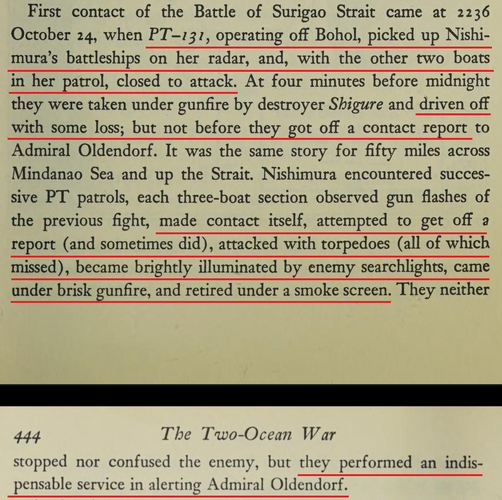
If F-35s are destroyers of the WW2, NGADs are cruisers, and B-21s are battleships.
Long-range subsonic CCAs are destroyer escorts (whose main job was not torpedo attack), and short-range, forward-deployed supersonic CCAs, if such things emerge eventually, are PT boats.
Last edited:
Scott Kenny
ACCESS: USAP
- Joined
- 15 May 2023
- Messages
- 16,977
- Reaction score
- 24,091
They still need a plane that can deal with Pacific Ocean distances unrefueled.When they say downsize the engine they're talking the physical size, which means the physical weight. Weight directly correlates with cost. If the engine they decide to go for is 80% the weight of the demonstrator engines than it should be roughly 80% of the cost. Also, they probably can make the airframe smaller because the original design didn't have CCA's in mind. Which means it was carrying six to eight missiles internally. They can probably pare that down to four missiles internally and put the rest on CCAs. That will give them a smaller lower weight aircraft with smaller engines, lowering the cost of the aircraft. However, with the added capability of the CCAs, it would be just as effective or possibly more effective than the original configuration size they were originally looking at. Makes complete sense to me.
Which quite bluntly means something roughly F111 size and weight, just to carry some 30,000+lbs of fuel. ~100klbs or more.
On an airframe that big, 4000lbs of weapons is a trivial load. And is equivalent to 10x AMRAAMs and 2x AIM9s.
They still need a plane that can deal with Pacific Ocean distances unrefueled.
Which quite bluntly means something roughly F111 size and weight, just to carry some 30,000+lbs of fuel. ~100klbs or more.
On an airframe that big, 4000lbs of weapons is a trivial load. And is equivalent to 10x AMRAAMs and 2x AIM9s.
Need is a strong word. Also, it is not clear to me that “unrefueled” is a realistic goal: Guam is 2000 miles from China, so there is your target combat radius. Now, within that radius, how many airfields can support a 100,000 lb airframe with a take off distance of…whatever NGADs notional distance is? I would think we would need to know a lot more about the requirements to judge the effectiveness of range. If Anderson and GUM are the only options in the second chain, then the range/weight increase might be counter productive.
Regarding AAMs, they are more volume limited than weight limited. I doubt any reduction in warload is necessary.
Last edited:
Is this all about looking 20 years in the future and thinking/believing “we can do 95% of this unmanned”?
I do not think USAF is abandoning a 6th gen manned aircraft; I think it is reconsidering what it needs in one given a changing threat environment and flat budget.

In_A_Dream
ACCESS: Top Secret
- Joined
- 3 June 2019
- Messages
- 763
- Reaction score
- 861
Maybe the USAF needs to re-think the role and prioritization of fighter aircraft in the Pacific, period. China is plenty fortified in the SCS, however, their southern, western, and northern flanks are pretty vulnerable and would give fighters a better opportunity to perform their traditional roles without major range concerns.
- Joined
- 28 January 2008
- Messages
- 1,486
- Reaction score
- 3,782
This USAF apprehensive view regarding moving forward with NGAD, let the disinformation flow, perfect time for some moderate chaos. Boeing probably and covertly moving forward with USAF NGAD, ADP working other "related" projects, NG is spooling up USN F/A-XX. CCAs are NGAD companions and/or stand-alone strike vehicles. The wonderful world of the USG and with a huge black budget, lots of activity.

GreenBullet
International rules-based hors d'oeuvre
- Joined
- 2 September 2015
- Messages
- 52
- Reaction score
- 93
Maybe the pacing threat changed, or they learned something new about adversary capabilities, doctrine, tactics already coming down the road that caused them to re-assess. Maybe a compelling new capability became available on our end unexpectedly.
Without knowing what the Air Force knows, it's hard to place a value judgment on what's going on right now.
Without knowing what the Air Force knows, it's hard to place a value judgment on what's going on right now.
Forest Green
ACCESS: USAP
- Joined
- 11 June 2019
- Messages
- 12,787
- Reaction score
- 27,514
Is $300m/aircraft really a lot for 6th gen? At a production rate of 40 aircraft/year, that only works out to ~$12bn/year.

bring_it_on
I really should change my personal text
- Joined
- 4 July 2013
- Messages
- 4,015
- Reaction score
- 5,040
And all of that happened inside the last year? Since the RFP was released last summer. What are the odds of that? More likely that they simply don't have the funds and a rescoping at the 11th hour will lead to lawsuits and a huge set of other problems which make setting this aside and starting on a new program (like NGB?) the only viable next step unless they have funding and walk all this talk back.Maybe the pacing threat changed, or they learned something new about adversary capabilities, doctrine, tactics already coming down the road that caused them to re-assess. Maybe a compelling new capability became available on our end unexpectedly.

FlyGuy369
Flying is fantastic
- Joined
- 15 June 2023
- Messages
- 465
- Reaction score
- 1,378
This is what I'm saying. Let's make our most critical program seem like it's in shambles to keep china's biggest Intel source in the dark (the internet).This USAF apprehensive view regarding moving forward with NGAD, let the disinformation flow, perfect time for some moderate chaos. Boeing probably and covertly moving forward with USAF NGAD, ADP working other "related" projects, NG is spooling up USN F/A-XX. CCAs are NGAD companions and/or stand-alone strike vehicles. The wonderful world of the USG and with a huge black budget, lots of activity.

Rodrigo Avella
I really should change my personal text
- Joined
- 22 March 2017
- Messages
- 94
- Reaction score
- 895
A while ago a very large company in the USA (I can't say which one) commissioned me to design a sixth generation fighter, to use it in a report that would be shown to investors from what I understood.And all of that happened inside the last year? Since the RFP was released last summer. What are the odds of that? More likely that they simply don't have the funds and a rescoping at the 11th hour will lead to lawsuits and a huge set of other problems which make setting this aside and starting on a new program (like NGB?) the only viable next step unless they have funding and walk all this talk back.
The leader of this project was an aerospace engineer who worked at both Boeing and Lockheed, because, although he did not know what the proposals of both companies were like, he did have some knowledge of the general aspects of both.
One of the things they emphasized the most is that the model had to be large, about 22 meters, have side air intakes and above all that it had to look very similar to a modern YF-23 (which they emphasized the most).
And what caught my attention the most was that they wanted him to have foldable tails. They told me that this was so that it would be as stealthy as possible on long flights and that when the plane reached its destination or the pilot needed it, the tails that in "stealth mode" would make it look like a plane without a tail (like those seen in most representations), folded upwards, reaching an angle similar to that of a YF-23, so that the plane would enter "combat mode."
I asked if this was an assumption or if it was real information, to which I had no answer... and I just continued with the work (which I cannot show due to confidentiality issues).
But if, as I believe, the information they gave me is based on some type of knowledge, what can be assumed is that as we say in Argentina, if it barks, has four legs and wags its tail, it is a dog; here perhaps it happens that the plane must meet too many requirements which makes it extremely expensive (perhaps much more than 300 million per plane in reality).
These requirements would be to fly very far while being very stealthy and carry a lot of weapons, so it would have to be quite large; and also have good maneuverability and the ability to self-defense in the "traditional way" (dog combat) in case of encountering an enemy.
That's why when I read that perhaps the possibility of adapting the B-21 as a sixth-generation fighter was being evaluated, I wasn't very surprised. Because here the requirements would clearly be being simplified: the ability to maneuver is completely nullified.
I would love to know if the information they gave me to design is real and also to know if the folding tails are one of the characteristics of any of the participants. If so, and this thing about folding tails is from Lockheed's proposal, and they were the ones who presented something "more traditional", I would much more like to know what Boeing presented.
I don't know if all this is true or not. I just wanted to share it...
Best regards!
Last edited:

- Joined
- 3 June 2011
- Messages
- 20,030
- Reaction score
- 17,230
But now they're hobbled by CCA's speed and range (or lack of both). Can't leave the CCA's behind and, from the looks of it, those are going to be strictly subsonic.When they say downsize the engine they're talking the physical size, which means the physical weight. Weight directly correlates with cost. If the engine they decide to go for is 80% the weight of the demonstrator engines than it should be roughly 80% of the cost. Also, they probably can make the airframe smaller because the original design didn't have CCA's in mind. Which means it was carrying six to eight missiles internally. They can probably pare that down to four missiles internally and put the rest on CCAs. That will give them a smaller lower weight aircraft with smaller engines, lowering the cost of the aircraft. However, with the added capability of the CCAs, it would be just as effective or possibly more effective than the original configuration size they were originally looking at. Makes complete sense to me.
FlyGuy369
Flying is fantastic
- Joined
- 15 June 2023
- Messages
- 465
- Reaction score
- 1,378
Purely wild, I love it.A while ago a very large company in the USA (I can't say which one) commissioned me to design a sixth generation fighter, to use it in a report that would be shown to investors from what I understood.
The leader of this project was an aerospace engineer who worked at both Boeing and Lockheed, because, although he did not know what the proposals of both companies were like, he did have some knowledge of the general aspects of both.
One of the things they emphasized the most is that the model had to be large, about 22 meters, have side air intakes and above all that it had to look very similar to a modern YF-23 (which they emphasized the most).
And what caught my attention the most was that they wanted him to have foldable tails. They told me that this was so that it would be as stealthy as possible on long flights and that when the plane reached its destination or the pilot needed it, the tails that in "stealth mode" would make it look like a plane without a tail (like those seen in most representations), folded upwards, reaching an angle similar to that of a YF-23, so that the plane would enter "combat mode."
I asked if this was an assumption or if it was real information, to which I had no answer... and I just continued with the work (which I cannot show due to confidentiality issues).
But if, as I believe, the information they gave me is based on some type of knowledge, what can be assumed is that as we say in Argentina, if it barks, has four legs and wags its tail, it is a dog; here perhaps it happens that the plane must meet too many requirements which makes it extremely expensive (perhaps much more than 300 million per plane in reality).
These requirements would be to fly very far while being very stealthy and carry a lot of weapons, so it would have to be quite large; and also have good maneuverability and the ability to self-defense in the "traditional way" (dog combat) in case of encountering an enemy.
That's why when I read that perhaps the possibility of adapting the B-21 as a sixth-generation fighter was being evaluated, I wasn't very surprised. Because here the requirements would clearly be being simplified: the ability to maneuver is completely nullified.
I would love to know if the information they gave me to design is real and also to know if the folding tails are one of the characteristics of any of the participants. If so, and this thing about folding tails is from Lockheed's proposal, and they were the ones who presented something "more traditional", I would much more like to know what Boeing presented.
I don't know if all this is true or not. I just wanted to share it...
Best regards!
Another surreally political post.
I am not bound by any US Laws, yet there is no point in talking too much.
There exists a possibility of a change through the US Elections.
Which might lead to further fraught court battles between political sides, next wave of charges revolving around ignoring some form of a greatest threat. As an example, the possible criminal charges against Boeing to take advantage of claims of failure taking hold of the US economy.
Which then centers once again on the Naval Fighter of 2017. Purely speculative, considering the wide range of US legal issues the forum might be falling afoul of today. With the numbers I am making up just for the purposes of this discussion. 50% capability at 75% the cost. Making it fight inside the 1000 miles circle, with Northrop-Grumman directly rejecting to allow the use of the Hellcat II name. Bringing the carriers inside the 1000 miles circle. It is at most a baseline to measure the real contestants. Built on Russian mobilization concepts, it will be falling apart in a few years. It is cheap because it avoids production bottlenecks where-ever possible.
None of the qualifications above need apply if a political change happens. It looks cheap and there could have been a hundred in service this year and three hundred next year. Which will be starting point of the political spin.
This is why the narrative suddenly seeks "smaller". The studies will no doubt once again justify the cost of larger offers.
We have no problem with this. But yes, a quick decision would increase the thrust/weight ratios in one different country, too.
I am not bound by any US Laws, yet there is no point in talking too much.
There exists a possibility of a change through the US Elections.
Which might lead to further fraught court battles between political sides, next wave of charges revolving around ignoring some form of a greatest threat. As an example, the possible criminal charges against Boeing to take advantage of claims of failure taking hold of the US economy.
Which then centers once again on the Naval Fighter of 2017. Purely speculative, considering the wide range of US legal issues the forum might be falling afoul of today. With the numbers I am making up just for the purposes of this discussion. 50% capability at 75% the cost. Making it fight inside the 1000 miles circle, with Northrop-Grumman directly rejecting to allow the use of the Hellcat II name. Bringing the carriers inside the 1000 miles circle. It is at most a baseline to measure the real contestants. Built on Russian mobilization concepts, it will be falling apart in a few years. It is cheap because it avoids production bottlenecks where-ever possible.
None of the qualifications above need apply if a political change happens. It looks cheap and there could have been a hundred in service this year and three hundred next year. Which will be starting point of the political spin.
This is why the narrative suddenly seeks "smaller". The studies will no doubt once again justify the cost of larger offers.
We have no problem with this. But yes, a quick decision would increase the thrust/weight ratios in one different country, too.
But now they're hobbled by CCA's speed and range (or lack of both). Can't leave the CCA's behind and, from the looks of it, those are going to be strictly subsonic.
The first batch of CCAs seem to intentionally be matched to F-35 performance. One USAF official said it must be able to cruise at F-35 cruise speeds and accelerate to a reasonably faster speed (than F-35 cruise) at max thrust.
Other increments likely will have different requirements. Long term, I suspect someone will produce an after burning version of the small commercial engines the CCA sized aircraft typically use, or else adopt larger power plants and airframes for NGAD CCAs.

- Joined
- 9 March 2021
- Messages
- 135
- Reaction score
- 605
But now they're hobbled by CCA's speed and range (or lack of both). Can't leave the CCA's behind and, from the looks of it, those are going to be strictly subsonic.
I love when other's articulate my thoughts better than I can...And all of that happened inside the last year? Since the RFP was released last summer. What are the odds of that? More likely that they simply don't have the funds and a rescoping at the 11th hour will lead to lawsuits and a huge set of other problems which make setting this aside and starting on a new program (like NGB?) the only viable next step unless they have funding and walk all this talk back.
sferrin: CCAs are not NGAD 'wingman' UAVs unless they're supersonic capable and long-legged. Prepositioning long-dwell CCAs is a silly notion in most scenarios.
bring_it_on: I can't see any other explanation at this late date. For me, this mess lies at the feet of Frank Kendall. He has been charging ahead for the last 2 years, basically unchecked, and now he's trying to fit 5 lbs into a 2-lb bag -- the timing suggests that the NGAD/PCA program hit the wall as it was undergoing OSD review for USD-AT&L approval to proceed into EMD (i.e., Milestone B). SECAF Kendall (formerly USD-AT&L 2012-2017) and his staff knew, or should have known, this fiscal day-of-reckoning was coming. Either they failed to put an adequate budget wedge in the 2025 submittal; or they failed to keep the OSD staff (read CAPE) in-the-loop for the last 2 years and now they're facing sticker shock; or a combination of both. If the Sentinel ICBM, B-21 Raider, LRSO, and other big ticket programs have significant overruns and now the Air Force needs to find a 'bill payer' program for the 2026 POM build, that points to Kendall's management of the DAF portfolio.
Last edited:

- Joined
- 21 April 2009
- Messages
- 14,204
- Reaction score
- 9,064

Boeing bets big on next-generation fighter manufacturing facility
The US airframer has begun construction of a $1.8 billion advanced combat aircraft assembly facility in St. Louis, at a time when support for sixth-generation fighter programmes appears to be waning at the Pentagon.
 www.flightglobal.com

- Joined
- 11 February 2007
- Messages
- 3,823
- Reaction score
- 8,088
A couple of thoughts on scaling designs up and down.
a) I currently have British Secret Projects 3 open on my desk, lots of projects there with two variants scaled differently for either Merlin or Griffon/Sabre. It's not unprecedented to scale airframes up or down. But pretty unusual at this stage of the game. Though U-2R and F/A-18E/F spring to mind.
b) The problem for scaling current generation aircraft vs previous generation aircraft is avionics don't scale. If you scale the airframe down, then either the geometry has to change to retain avionics volume, or the avionics volume has to eat into something else, probably the fuel fraction, or you have to sacrifice some avionics capability.
a) I currently have British Secret Projects 3 open on my desk, lots of projects there with two variants scaled differently for either Merlin or Griffon/Sabre. It's not unprecedented to scale airframes up or down. But pretty unusual at this stage of the game. Though U-2R and F/A-18E/F spring to mind.
b) The problem for scaling current generation aircraft vs previous generation aircraft is avionics don't scale. If you scale the airframe down, then either the geometry has to change to retain avionics volume, or the avionics volume has to eat into something else, probably the fuel fraction, or you have to sacrifice some avionics capability.

Manuducati
ACCESS: Secret
- Joined
- 25 November 2020
- Messages
- 400
- Reaction score
- 1,342
A while ago a very large company in the USA (I can't say which one) commissioned me to design a sixth generation fighter, to use it in a report that would be shown to investors from what I understood.
Thanks for sharing!
Well, knowing that Boeing inherited YF-23 DNA after the merge with McDonnell Douglas, maybe in the end we will have a F-23ish in service one day!
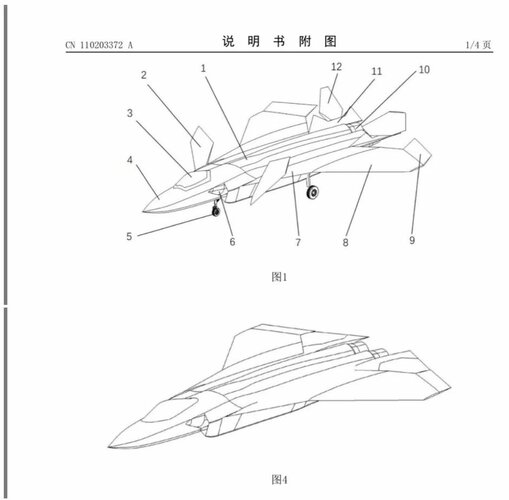
As for the foldable tails, that reminds me of this J-20 derivative patent that was shared somewhere else in this forum.
Attachments
Last edited by a moderator:
- Status
- Not open for further replies.
Similar threads
-
 Japanese next generation fighter studies (aka i3, F-3)
- Started by bobbymike
- Replies: 584
-
 CNO Greenert Warns Congress of Fighter Shortfall, Hornet Line to Close 2017
- Started by Triton
- Replies: 1
-
Russian 6th Generation Fighter News
- Started by bobbymike
- Replies: 41
-
-