Deltafan
ACCESS: Top Secret
- Joined
- 8 May 2006
- Messages
- 1,784
- Reaction score
- 2,767
-Source/link?Nothing new there.
-If so, was this planned when the JSF/F-35 was designed (or, at least, when it was chosen over the F-32)?

-Source/link?Nothing new there.

Yes, it was always known that the F-35 would be getting rolling/spiral upgrades especially with software. It happens with other platforms as well. And it would have occurred with the F-32 if that had won.-Source/link?
-If so, was this planned when the JSF/F-35 was designed (or, at least, when it was chosen over the F-32)?
The U.S. Air Force has signed its first contract for Joint Strike Missile (JSM) cruise missiles. The Pentagon announced the US Air Force's award of the JSM production Lot 1 contract.It is a fixed-price deal with Norway's Kongsberg Defence valued at $141,000,000.
According to the Pentagon's daily contracting announcement, ”This contract provides for all up rounds, containers, and test equipment for the Joint Strike Missile," "Work will be performed in Kongsberg, Norway, and is expected to be completed by August 31, 2026."Importantly, the JSM is sized to fit inside the internal weapon bays of F-35A Joint Strike Fighters.
In this video, Defense Updates analyzes why deadly F-35A with JSM would be a deadly combination ?
Chapters:
00:11 INTRODUCTION
01:52 JOINT STRIKE MISSILE
03:40 F-35A
06:48 ANALYSIS
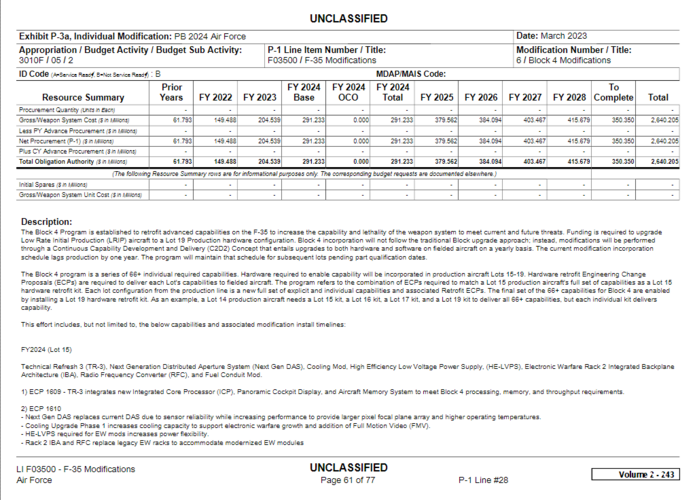
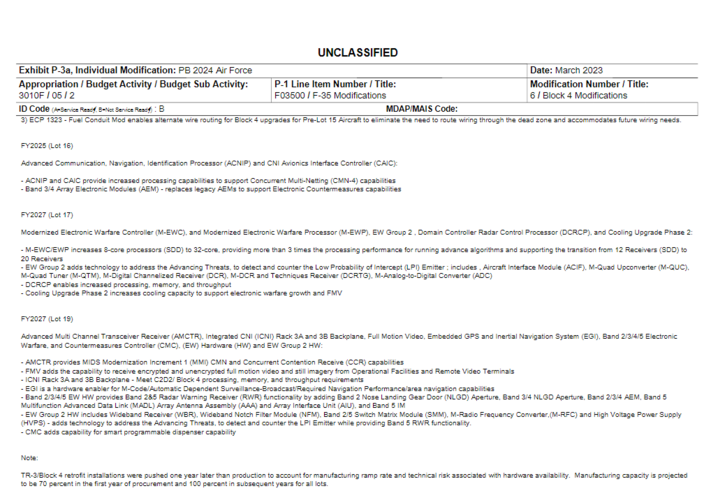
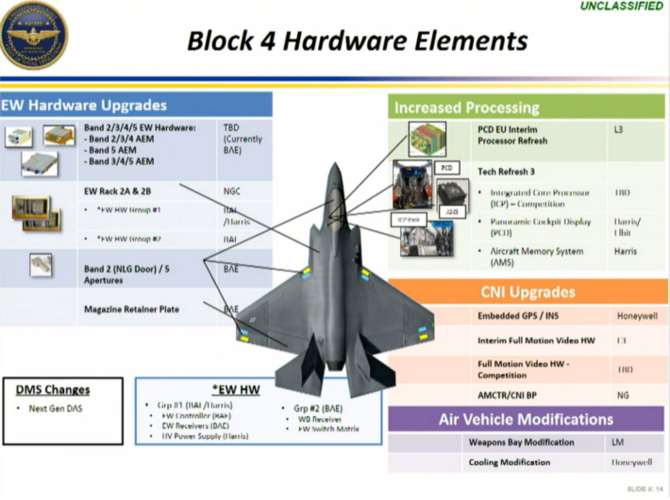
That's some very cool info about some interesting capabilities. The bits regarding counter-LPI I are particularly intriguing.F-35 will get 10 more radar receiver, increasing the total number of radar receivers to 20.
...
Yes, current F-35 has 10 radar receivers all located on the wing and tails.Is that radar receivers per F-35?
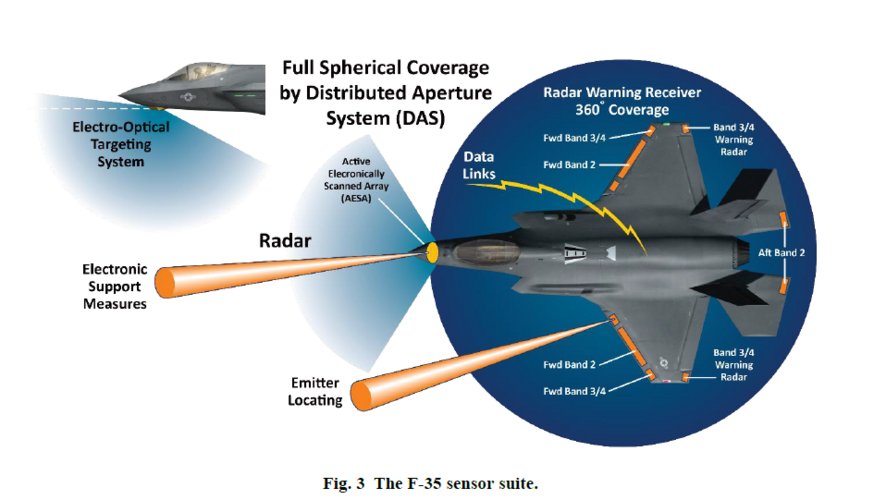

Now that the F-35A has been wired for special-stores I wonder if the F-35B and F-35C will be wired for them too?
Why not?
The USN is not going to spend the money on a capability with such a marginal use case. I’m not sure if USMC aircraft ever were nuclear capable, but they would have the added problem of their aircraft using a smaller bay that B-61-12 might not fit into.
I'm not sure that a B61 can fit into an F35B weapons bay, but I 100% expect the -C models on carriers to get fitted and cleared for nukes. If the B61 can fit into an F35B weapons bay then the whole fleet will be nuclear capable.Depending on how the state of US-Russia and US-PRC relations are in the near future, the USMC & USN may well modify their F-35s to be "special stores" capable (probably an assembly line change, with retrofit being performed on earlier production examples as they go through rework periods.
The whole fleet *could* be nuclear capable. Actually modifying the aircraft to do so seems unlikely. Consider that the USMC and USN would also have to actually buy and pay for the storage of nukes. There are something like 400 mod 12/13s slated to be bought in total - including for the bomber force. I cannot believe a PAL system is going to be installed on every aircraft or indeed and B/C at all.I'm not sure that a B61 can fit into an F35B weapons bay, but I 100% expect the -C models on carriers to get fitted and cleared for nukes. If the B61 can fit into an F35B weapons bay then the whole fleet will be nuclear capable.
The USMC has had "special stores" capable aircraft since the 1950s.
The F9F-8B Cougar was a specialty "special stores" capable aircraft that served with the USMC from ~1957 - the mid-1960s.
The FJ-4B Fury was a ground attack version of the FJ-4, equipped with the Low Altitude Bombing System (LABS), and was capable of carrying a nuclear weapon on the left middle wing station (#2).
The FJ-4B served with Naval Attack Squadrons ..... and with Marine Attack Squadrons VMA-212, VMA-214, and VMA-223, all with the Pacific Fleet.
222 FJ-4Bs were delivered between December 1956 and May 1958.
The USMC operated the FJ-4B from 1957 to the mid 1960s.
ALL models of the A-4 Skyhawk were "special stores" capable except for the TA-4F & TA-4J. The USMC flew A-4s from January 1957-1994.
The "special stores" capable models of the A-6 Intruder were the A-6A/C/E. The EA-6A, EA-6B, A-6B, and KA-6D were not. The USMC flew the A-6A/E from 1964 to April 1993.
The F-4B/J/N/S Phantoms were "special stores" capable (as well as the F-4C/D/E). The USMC operated the F-4B/J/N/S from June 1962 - January 1992.
As mentioned earlier, the F/A-18A/B/C/D models were all "special stores" capable. The USMC began operating them in January 1983, and they are still in active USMC service.
Depending on how the state of US-Russia and US-PRC relations are in the near future, the USMC & USN may well modify their F-35s to be "special stores" capable (probably an assembly line change, with retrofit being performed on earlier production examples as they go through rework periods.
More reporting:Israel getting some more F-35...
Pretty much every component supplier in Europe's government groaning out loud at this news...(the components value will be added to figures as 'arms exports' to Israel, and everyone is under political pressure over that at the moment)
View: https://twitter.com/paulmcleary/status/1798018279598133595

And of course the A3D, A3J Vigilante, and A-7 Corsair II.The USMC has had "special stores" capable aircraft since the 1950s.
The F9F-8B Cougar was a specialty "special stores" capable aircraft that served with the USMC from ~1957 - the mid-1960s.
The FJ-4B Fury was a ground attack version of the FJ-4, equipped with the Low Altitude Bombing System (LABS), and was capable of carrying a nuclear weapon on the left middle wing station (#2).
The FJ-4B served with Naval Attack Squadrons ..... and with Marine Attack Squadrons VMA-212, VMA-214, and VMA-223, all with the Pacific Fleet.
222 FJ-4Bs were delivered between December 1956 and May 1958.
The USMC operated the FJ-4B from 1957 to the mid 1960s.
ALL models of the A-4 Skyhawk were "special stores" capable except for the TA-4F & TA-4J. The USMC flew A-4s from January 1957-1994.
The "special stores" capable models of the A-6 Intruder were the A-6A/C/E. The EA-6A, EA-6B, A-6B, and KA-6D were not. The USMC flew the A-6A/E from 1964 to April 1993.
The F-4B/J/N/S Phantoms were "special stores" capable (as well as the F-4C/D/E). The USMC operated the F-4B/J/N/S from June 1962 - January 1992.
As mentioned earlier, the F/A-18A/B/C/D models were all "special stores" capable. The USMC began operating them in January 1983, and they are still in active USMC service.
Depending on how the state of US-Russia and US-PRC relations are in the near future, the USMC & USN may well modify their F-35s to be "special stores" capable (probably an assembly line change, with retrofit being performed on earlier production examples as they go through rework periods.

And of course the A3D, A3J Vigilante, and A-7 Corsair II.
Whoops.Missed that criteria.None of these were USMC aircraft.
Nope, DOE owns the nukes, if anything the Navy leases them. I suspect that all the carriers have special weapons storage facilities built in. All the Nimitz class do, the question is the Ford class. The Special Weapons bunkers still exist in all the Navy ports and other arsenals, too.The whole fleet *could* be nuclear capable. Actually modifying the aircraft to do so seems unlikely. Consider that the USMC and USN would also have to actually buy and pay for the storage of nukes. There are something like 400 mod 12/13s slated to be bought in total - including for the bomber force. I cannot believe a PAL system is going to be installed on every aircraft or indeed and B/C at all.
Any tactical nuclear conflict will stay down at the level of a dozen nukes or less or simply go strategic anyway.
Nope, DOE owns the nukes, if anything the Navy leases them. I suspect that all the carriers have special weapons storage facilities built in. All the Nimitz class do, the question is the Ford class. The Special Weapons bunkers still exist in all the Navy ports and other arsenals, too.
And since the carriers still had Marine Detachments onboard even when they didn't have nukes onboard, that's not particularly an additional task. The only extra expense would be the security clearances and PRP screening for the Aviation Ordnancemen.
It gives additional options over having to arm up a USAF F-35A and fly it from the continental US to wherever you're going to short-base it at to refuel and let the pilot rest.Fair enough, but never the less the cost of ownership is substantial, even if it amounts to baby sitting DOE property.
I fail to see the advantage
I doubt that would happen, that's a 100% political level decision, so SECNAV and up.and no one from the ISN/USMC has even suggested such a thing publicly to the best of my knowledge.

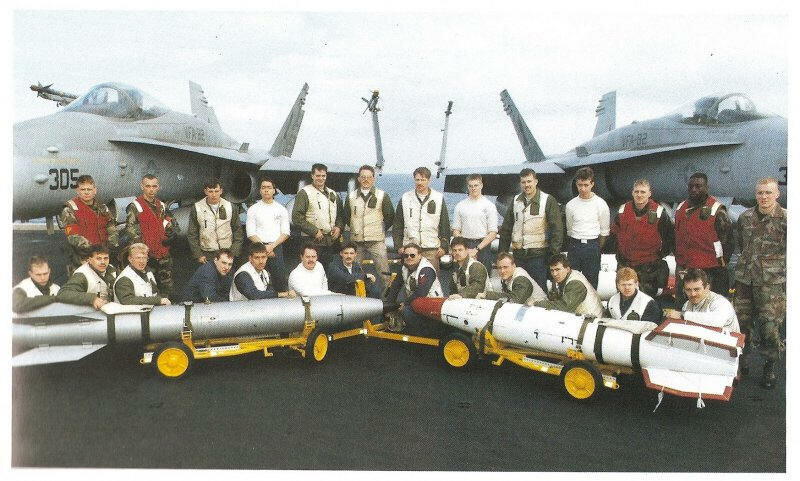
When was the last time that the US Navy had nuclear bombs on carriers? I thought it was when they had the A-5 Vigilante in service during the 1960s?

Bush Snr or Bush Jnr?All nuclear weapons were removed from non SSBNs during the first Bush administration IIRC. So shortly after the USSR was gone. That said, the USN still has a policy of neither confirming nor denying that nuclear weapons are on any particular ship to this day.
Well they're still listed as deployed in 2000 in the above sagepub link.Bush Senior Forest Green.
unfortunately, there aren't.Is there any source explaining which frequency ranges do those 1 through 5 bands entail?
A quick google search seems to indicate this was done in 1991.Well they're still listed as deployed in 2000 in the above sagepub link.
Couldn't find it in that text.A quick google search seems to indicate this was done in 1991.
https://nsarchive.gwu.edu/briefing-...0/unilateral-us-nuclear-pullback-1991-matched
Couldn't find it in that text.
In 1991, at the end of the Cold War, President George H.W. Bush announced that the United States would withdraw all land-based tactical nuclear weapons (those that could travel less than 300 miles) from overseas bases and all sea-based tactical nuclear weapons from surface ships, submarines, and naval aircraft. The Navy withdrew the TLAM-N missiles by mid-1992 and eliminated the nuclear mission for U.S. surface ships, but retained the option to return the TLAM-N to attack submarines. Some observers characterized this redeployment ability as demonstrating the credibility of U.S. defense commitments to allies in Asia.
Mine was that it's a hotdogging pilot running out of skill. Tried a short-field takeoff run without the needed experience and then stalled during the turn to port. The jet auto-ejected the pilot when it computed that he couldn't recover.My immediate suspicion would be the LiftFan clutch disengaging unexpectedly.
More reporting:Germany looking into buying eight additional F-35 jets
https://www.reuters.com/business/ae...al-lockheed-f-35-jets-source-says-2024-06-07/