From my dear Stingray,
Ralph A. Chapman (1903-1968) was an engineer, successful industrialist, and inventor from Corvallis, Oregon, who specialized in machinery and composite wood fabrication (you can find some of his patents online). The Chapman House was a notable example of his work, designed by architect James J. Gathercoal and built in 1950 to demonstrate the versatility of Chapman's "Chapco board", a composite wood-fiber hardboard of his making. I also found his name attached to the companies Chapco (later Evanite Fiber Corporation) which was his hardboard plant, Beaver Cabinet Works, Ralph Chapman Industries which produced cabinets and refrigeration units for local businesses, the bituminous fiber pipe manufacturing plant Blacfiber Pipe Company in 1955 (bought by The Brown Company in 1956), Chapman Manufacturing Co., and Chapman Forest Utilization, Inc. (CFU).
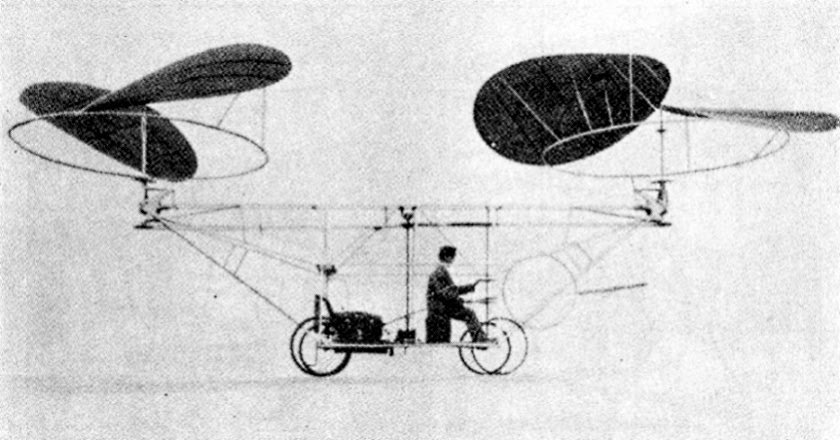
Around 1939 he was inspired to experiment with helicopter designs, after watching a 1938 newsreel featuring a Focke-Wulf helicopter in flight, believing he could design a machine that was smaller and more efficient. His work was hindered in the early 40's due to restrictions imposed around the beginning of World War II, which prevented test-flying prototypes, but he continued afterwards and experimented with different configurations. His last design was completed in 1946 and achieved a successful take-off, though it suffered from vibration problems. Concluding the design as impractical, Chapman would abandon his work on helicopters and pursued other endeavors.
The second helicopter prototype (attached), NX31221, achieved several hover tests near the ground before it was dismantled in 1946. It was a synchropter type, which utilized an intermeshing rotor system that eliminated the need of a tail rotor. Directional control was achieved via ducted airflow to slanted vanes at the tail-end, a method that was also later researched by Hughes Helicopters.
Special thanks to drejr and Hesham for their initial research work on this design, and Oregon Aviation Historical Society for the picture. If any of my own additional research work on this is incorrect (as in, if I've confused different people by the name Ralph Chapman in the above historical context, and have the wrong person depicted below), please submit any corrections or additional info that could help. Thank you!