
You are using an out of date browser. It may not display this or other websites correctly.
You should upgrade or use an alternative browser.
You should upgrade or use an alternative browser.
Dornier Do 335, Projects, Prototypes & Derivatives
- Thread starter borovik
- Start date


- Joined
- 11 June 2014
- Messages
- 1,641
- Reaction score
- 3,510
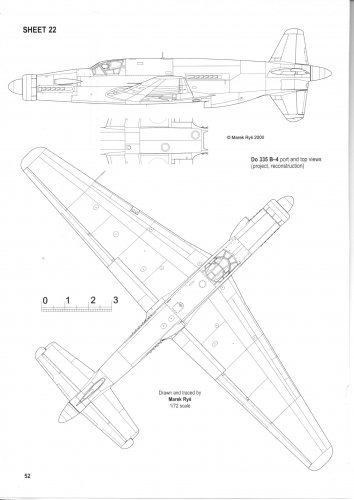
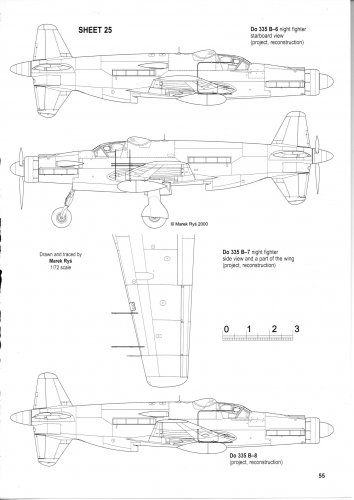
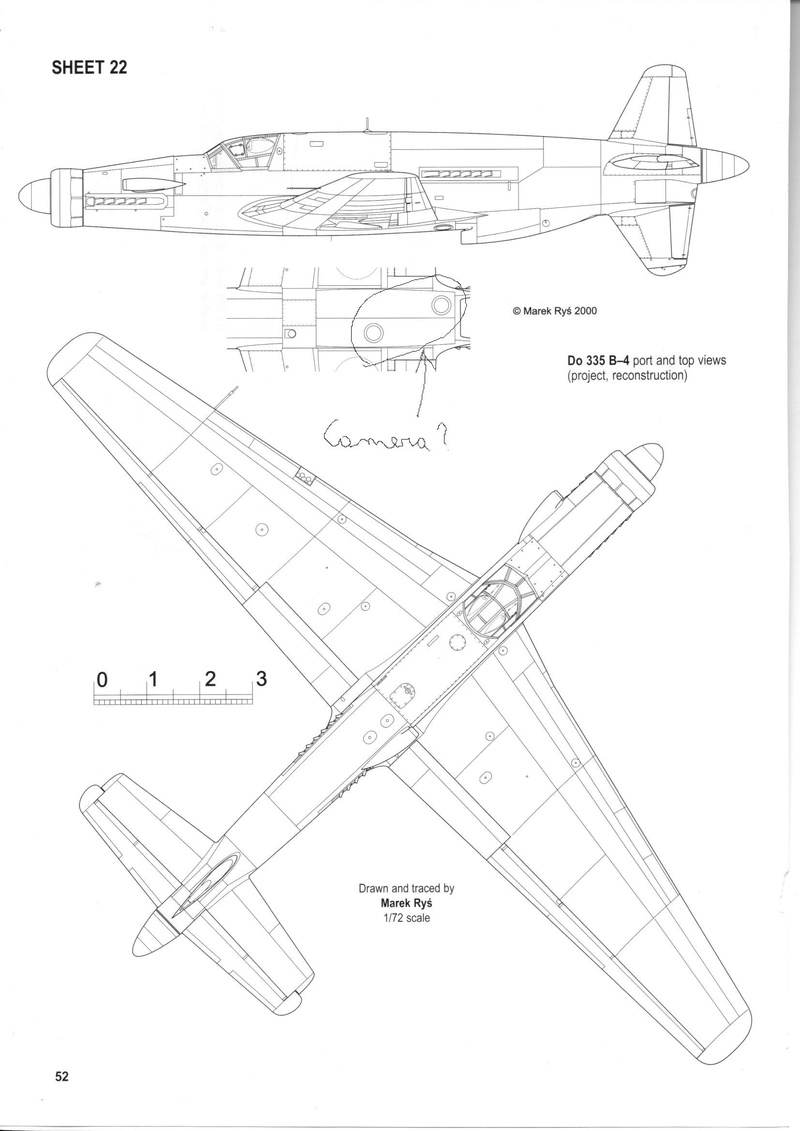
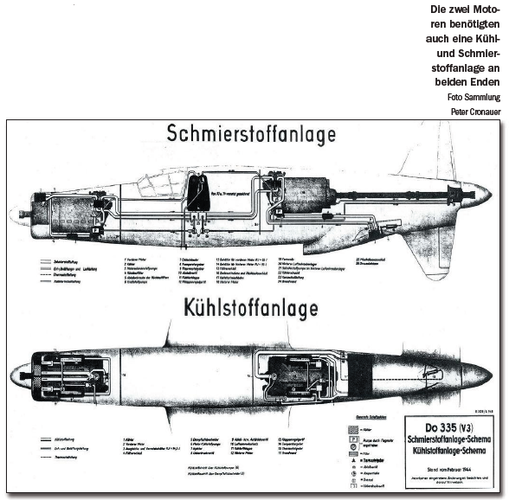
There was a Do 335 A-6 and a Do 335 B-6. The document you link to, Baubeschreibung Nr. 1600, describes the A-6. Baubeschreibung Nr. 1603 describes the B-6.
See p69 of J Richard Smith and Eddie Creek's Dornier Do 335 book for a description of the (fairly minor) differences between the two.
See p69 of J Richard Smith and Eddie Creek's Dornier Do 335 book for a description of the (fairly minor) differences between the two.

- Joined
- 11 June 2014
- Messages
- 1,641
- Reaction score
- 3,510
sgeorges4 said:Was the B6 having a different wing like the B4?
Nope.
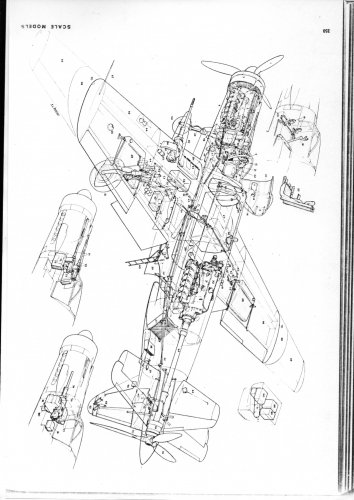
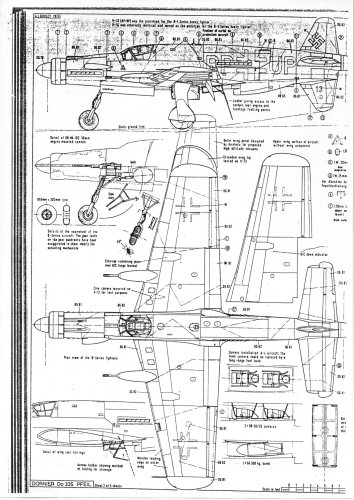
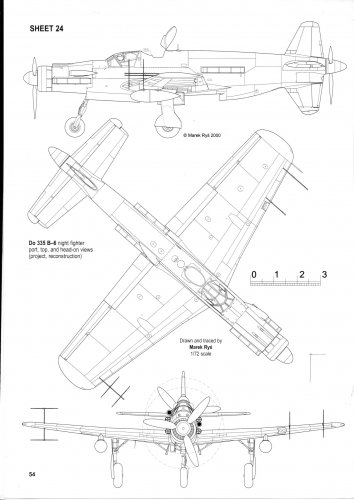
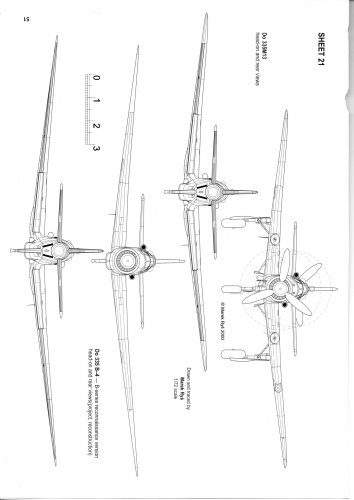

Manfred Griehl in his book Do 335, 435, 635 also describes the Do 435 as a only slightly adapted version of the 335. A P 238 or a comparable design is not mentioned anywhere. However I still wonder where Hans Redemann got his source.
- Joined
- 11 June 2014
- Messages
- 1,641
- Reaction score
- 3,510
Basil said:Manfred Griehl in his book Do 335, 435, 635 also describes the Do 435 as a only slightly adapted version of the 335. A P 238 or a comparable design is not mentioned anywhere. However I still wonder where Hans Redemann got his source.
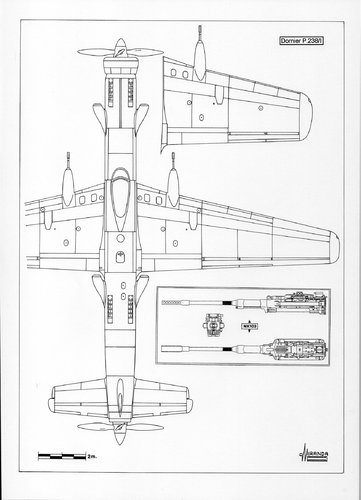
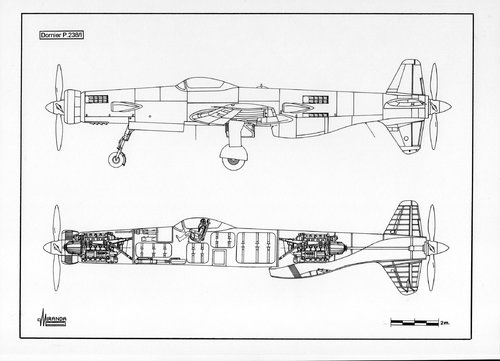
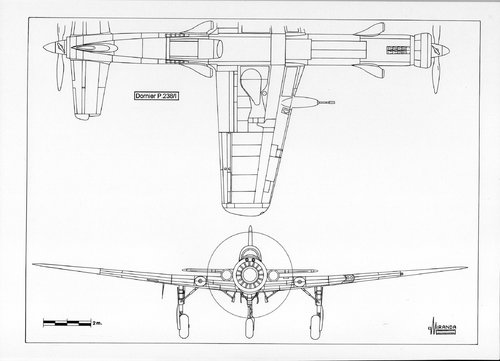
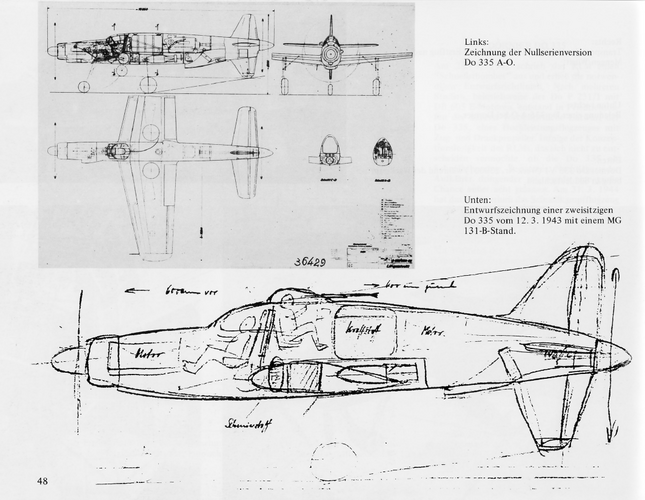
On p192-193 of Dornier Do 335, 435, 635, Griehl actually shows factory drawings of the P 238/1 and it's very clearly what's described as the Do 435 in the British January 1946 report - a side-by-side two-seater version of the Do 335. Griehl says it's the Do 435 too and he's obviously right.
So I think we can be reasonably confident that it's not the P 238/1 or the Do 435.
However, on p197 Griehl shows a 'rekonstruktion' of the Junkers Ju 435 which has a long fuselage a little bit like that shown in the drawings you mention, albeit without the blister canopy. This appears to essentially be a Ju 635 - which we know to have been real - without its second fuselage. It's not impossible that such a thing existed, but if it did, why call it the Do 435 or P 238?
The reality is we have an unnamed aircraft design of uncertain origin without any known primary source basis which resembles the Do 335. I suppose Redemann might have seen the drawing somewhere and guessed (wrongly) at its designation?

richard B
ACCESS: Secret
- Joined
- 17 August 2006
- Messages
- 349
- Reaction score
- 537
In "Dornier 335" by Richard Smith , Eddie Creek , & Thomas Hitchcock (1983&1997) , the Do435 was "a modified version of the Do335 which was to be powered by the Jumo 222 , based upon project study P238 . It was similar to the Do335 , but incorporated a new pressurized cockpit and a long span wing with wooden outer panels."

blackkite
Don't laugh, don't cry, don't even curse, but.....
- Joined
- 31 May 2007
- Messages
- 9,515
- Reaction score
- 9,656
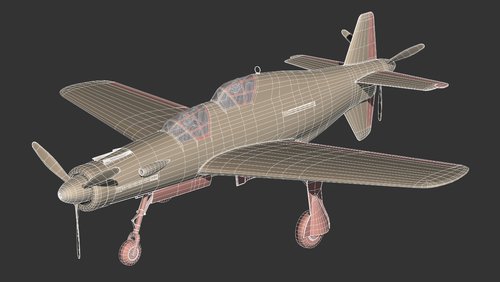
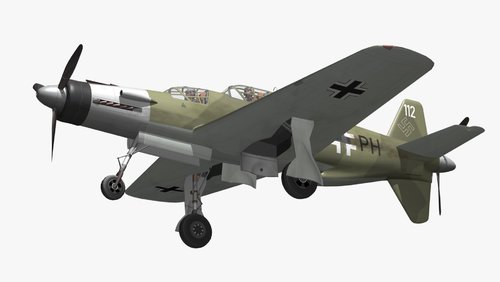
Hi Do335. You can see moving 3D model in this site. (Push right bottom of the screen.)
https://www.turbosquid.com/3d-models/dornier-335-pfeil-3d-model-1465596
And Youtube
https://www.turbosquid.com/3d-models/dornier-335-pfeil-3d-model-1465596
And Youtube
Attachments
Last edited:
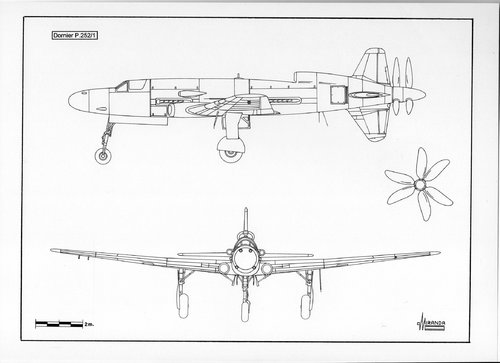
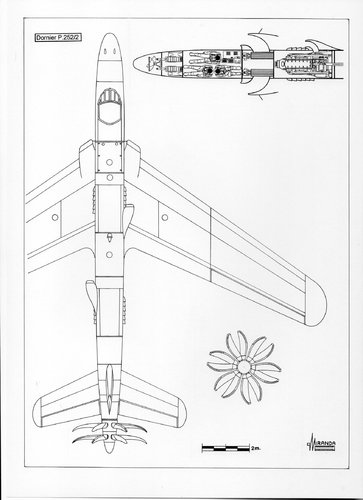
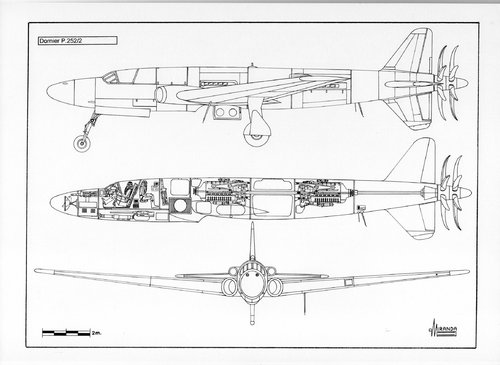
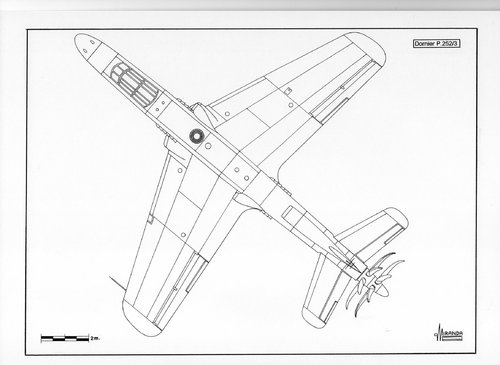

- Joined
- 26 May 2006
- Messages
- 38,259
- Reaction score
- 20,402
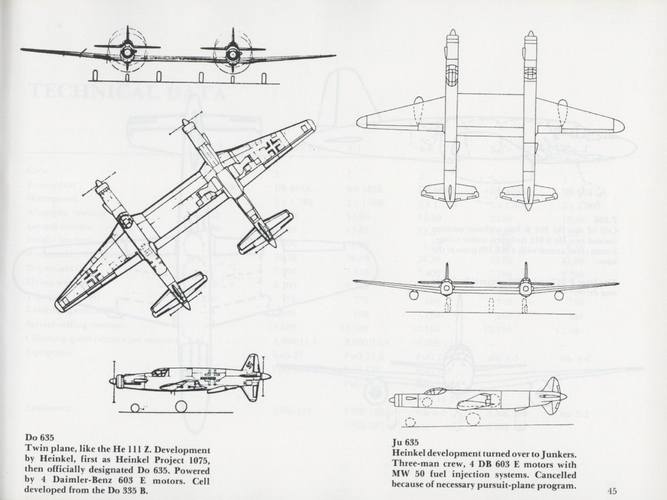
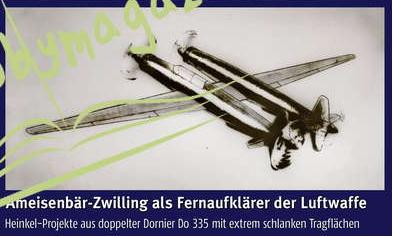
Hi,A twin fuselage concept,the text in translation said;
This drawing of the Heinkel
P 1075 with Russian lettering shows the twin
version with the three-headed
Crew in the left fuselage
and the long wings that
probably on the draft
by Ulrich Hütter.
This version is the first time
shown.
https://www.hobbymagazines.org/magazines/34899-flieger-revue-x-92.html
Attachments
richard B
ACCESS: Secret
- Joined
- 17 August 2006
- Messages
- 349
- Reaction score
- 537

napobona
ACCESS: Restricted
Hi
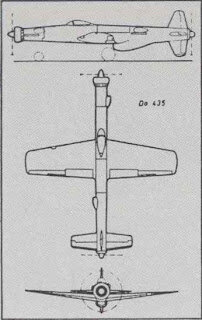
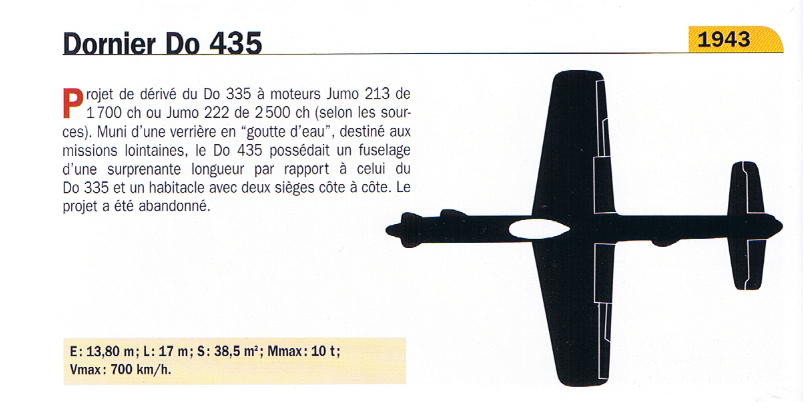
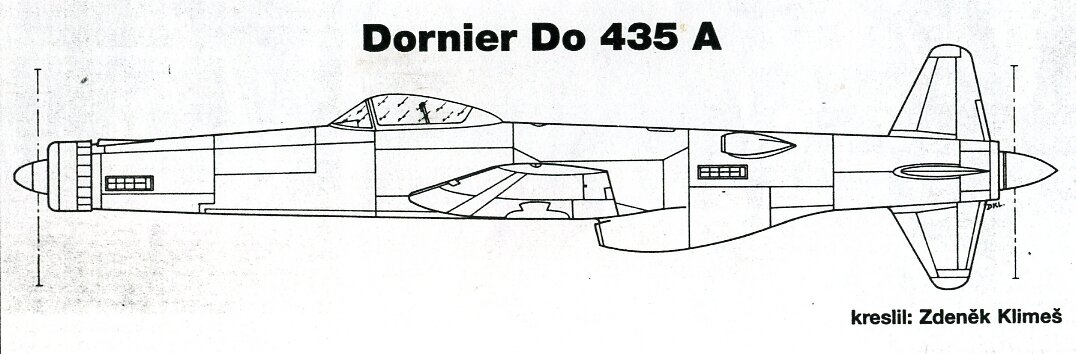
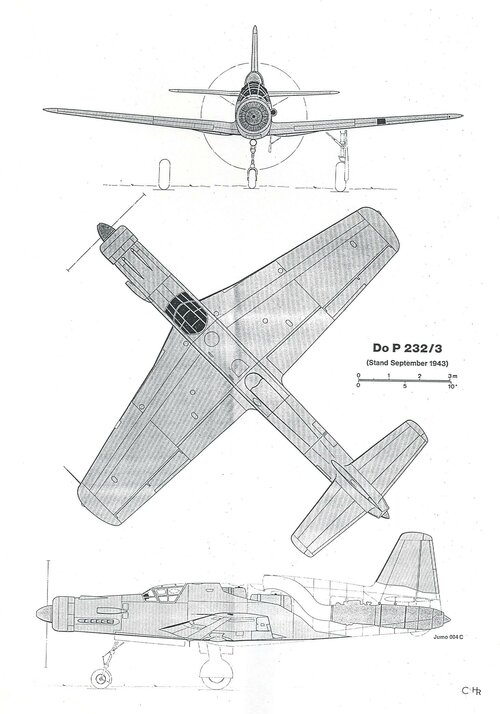
I have tried to find potential primary source material to support the infamous Do 435 design with a bubble canopy. Supposedly it was planned with two Jumo 222s and had an extended fuselage. Any idea where this design comes from? Hans Redemann probably mentioned it back in 1972/73. Modern literally describes the 435 as either a two seater 335, or as a version with hybrid propulsion.
Best
Kris

I have tried to find potential primary source material to support the infamous Do 435 design with a bubble canopy. Supposedly it was planned with two Jumo 222s and had an extended fuselage. Any idea where this design comes from? Hans Redemann probably mentioned it back in 1972/73. Modern literally describes the 435 as either a two seater 335, or as a version with hybrid propulsion.
Best
Kris

- Joined
- 25 July 2007
- Messages
- 4,913
- Reaction score
- 5,523
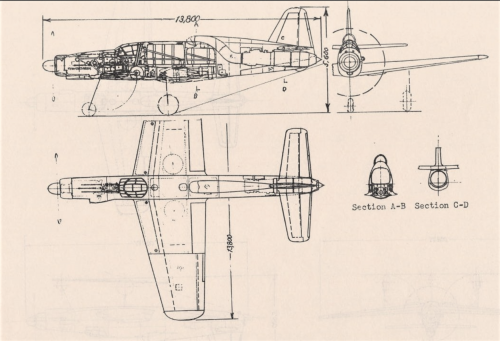
These drawings are very confusing. The original, autumn 1943 Do 435/Do-P 238 concept was for side-by-side 2-seat night fighter/all-weather interceptor featured long-span wooden wings on a Do 335 fuselage. Twin 2,500 hp Jumo 222A-2s are the mentioned powerplants.
Yet both drawings show a single-seat under a 'bubble' canopy. And hesham's spec table lists both Jumo 213s and Jumo 222s but with the standard Do 335 span of 13.80 m. I get that the fuselage must be stretched to accommodate sufficient fuel for Jumo 222s but why the standard wings?
Yet both drawings show a single-seat under a 'bubble' canopy. And hesham's spec table lists both Jumo 213s and Jumo 222s but with the standard Do 335 span of 13.80 m. I get that the fuselage must be stretched to accommodate sufficient fuel for Jumo 222s but why the standard wings?
napobona
ACCESS: Restricted
Indeed. According to Manfred Griehl's book, the Do 435 was simply a two seater. Plenty of literature also allocates the 435 to piston/ jet hybrids. On Wikipedia Redemann is quoted as source for the bubble canopy version. I'm trying to get a hold of his original publications (1972 and 1973).These drawings are very confusing. The original, autumn 1943 Do 435/Do-P 238 concept was for side-by-side 2-seat night fighter/all-weather interceptor featured long-span wooden wings on a Do 335 fuselage. Twin 2,500 hp Jumo 222A-2s are the mentioned powerplants.
Yet both drawings show a single-seat under a 'bubble' canopy. And hesham's spec table lists both Jumo 213s and Jumo 222s but with the standard Do 335 span of 13.80 m. I get that the fuselage must be stretched to accommodate sufficient fuel for Jumo 222s but why the standard wings?

Tonton-42
ACCESS: Secret
- Joined
- 10 May 2014
- Messages
- 405
- Reaction score
- 798
Indeed, confusion reigns on the Do-435 (problem of paper planes ...) and we find this on the net. There is no source cited, so what credit should be given to this description ?Indeed. According to Manfred Griehl's book, the Do 435 was simply a two seater. Plenty of literature also allocates the 435 to piston/ jet hybrids. On Wikipedia Redemann is quoted as source for the bubble canopy version. I'm trying to get a hold of his original publications (1972 and 1973).
http://prototypes.free.fr/fr1/fr1-12.htm

Grzesio
ACCESS: Secret
As far as I remember, this variant with a bubble canopy was described as a postwar fantasy in one of Monogram's books (either the Do 335 monograph, either Griehl's "Jet Planes of the Third Reich").
napobona
ACCESS: Restricted
Yes, Griehl describes it as a potential post war fantasy in his book. I was hoping to clarify the origin.As far as I remember, this variant with a bubble canopy was described as a postwar fantasy in one of Monogram's books (either the Do 335 monograph, either Griehl's "Jet Planes of the Third Reich").
Tonton-42
ACCESS: Secret
- Joined
- 10 May 2014
- Messages
- 405
- Reaction score
- 798
To drive the nail out of the confusion (!) we find pretty lines giving the illusion of a perfect mastery of the subject without it being specified as Justo MIranda does that these are only very speculative representations! (I do not know if these drawings have not already appeared here in another forum ...Yes, Griehl describes it as a potential post war fantasy in his book. I was hoping to clarify the origin.
 ).
).Attachments
napobona
ACCESS: Restricted
Yes. That's why I was looking for a primary source of some kind. Maybe there is none left.To drive the nail out of the confusion (!) we find pretty lines giving the illusion of a perfect mastery of the subject without it being specified as Justo MIranda does that these are only very speculative representations! (I do not know if these drawings have not already appeared here in another forum ...
Cheers guys!
napobona
ACCESS: Restricted
It seems that Dan Sharp also came to the same conclusion. Quote: There is clearly a mismatch between the two versions of the Do 335 and until further evidence emerges it does not seem possible, even more than seven decades on, to firmly pin down exactly what the Do 435 was (Luftwaffe, Secret Designs of the Third Reich).
The bubble canopy design was not even part of the discussion.
The bubble canopy design was not even part of the discussion.

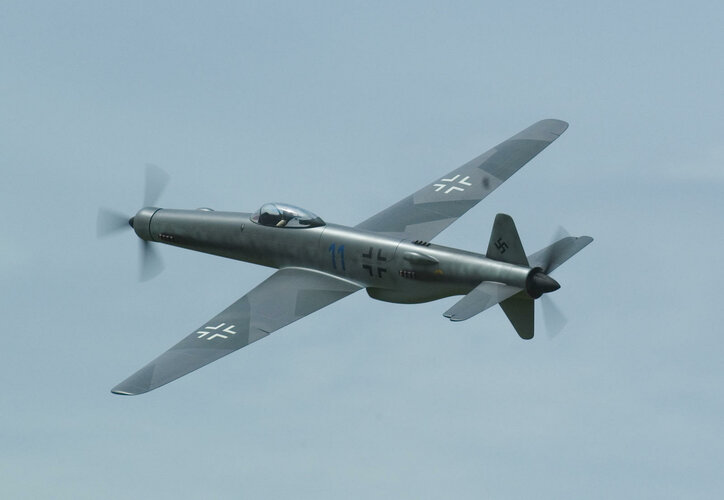
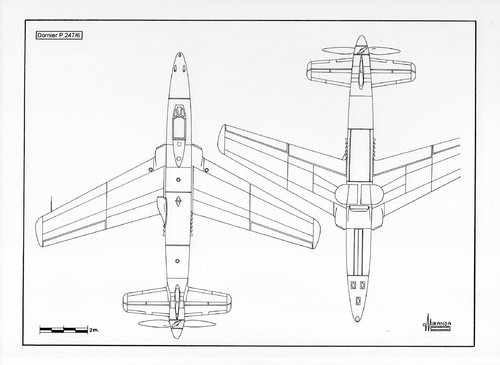
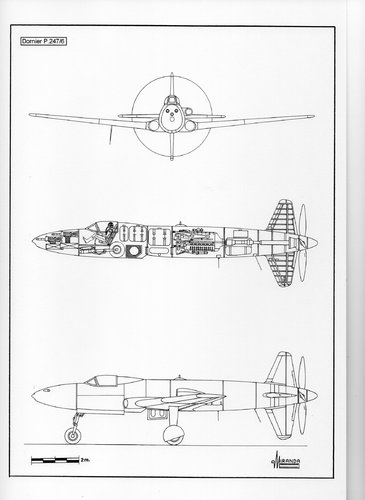
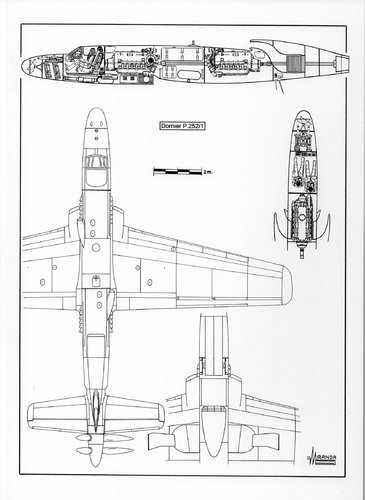
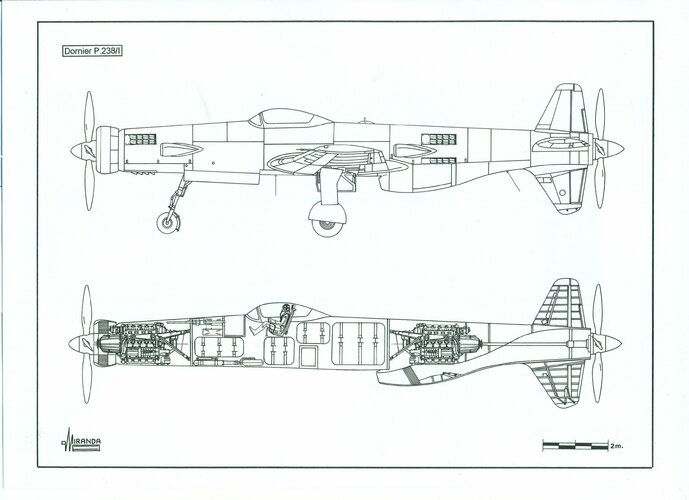
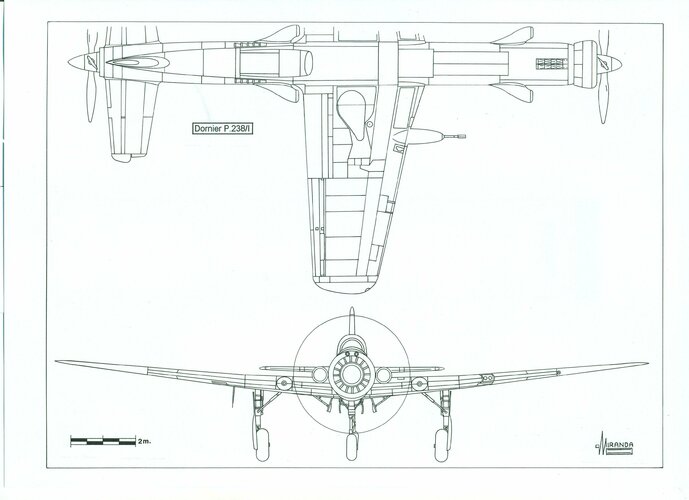
Dornier P.238
The Dornier Do 335 was a formidable combat machine, with a great development potential that was interrupted by the end of the WWII.
The push-pull formula, combined with the use of different types of engines, proved that it could satisfy the main needs of the Luftwaffe by the end of 1943.
- Conventional night fighter (Do 435 C-1, C-2, D-1 & D-2)
- Mixed power night fighter (Do 335 A&B)
- Antitank, zerstörer and fighter bomber (Do 335 B-2, B-1 & A-1)
- Light bomber (Do 335 A-2)
- Trainer (Do 335 B-5)
- Recce (Do 435 B-4)
- High altitude Recce (Do 335 B-4)
- Long range Recce (Do 335 Z)
This design served as the base for the four engine, 8,000 km range, Junkers Ju 635 bomber.
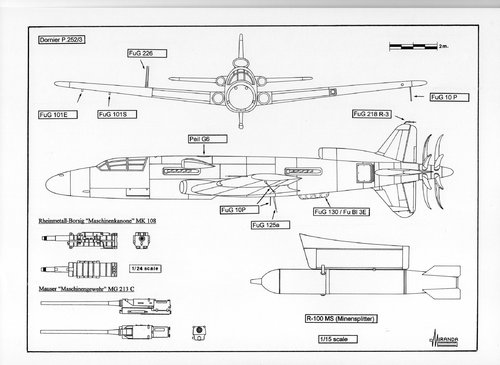
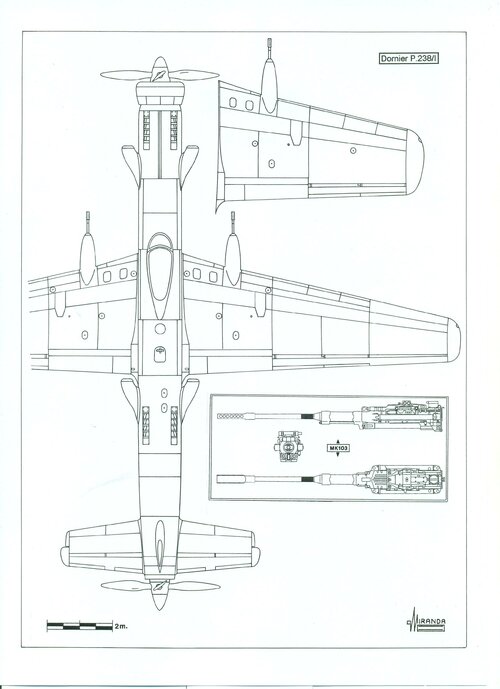
The last push-pull Dornier was the P.238 that derived from the Do 435 with elongated fuselage of up to 17.10 m. and Jumo 222 E/F engines.
The P.238/1 had the wing and tail surfaces of a standard Do 335 and it was presented in two versions: zerstörer (A-1) and fighter bomber (B-1).
The P.238/2 had the new wing with a 18.33 m span designed by Heinkel for the Do 335 B-4 and it was presented in the escort fighter version (A-2) and high altitude interceptor (B-2) capable to face the Boeing B-29 of the Allies.
There are some night fighter versions, as the time when the project was presented the old Hirschgeweigh antennae of the Lichtenstein radar had been replaced by parabolic ones, designed to be installed on the nose cone of the aircraft. And this was not possible in the P.238.
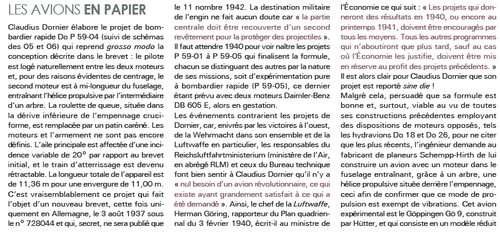
For this reason, and for the excessive drag produced by the frontal cooler, the manufacturing of the Do 435 has already been discarded on 28 August 1944. By the end of that year, the Dornier Project Office decided to interrupt the push-pull developments in favour of the P.247 and P.252 projects, which possessed more advanced aerodynamics and allowed higher speed and the installation of last generation radars.
Technical Data
| Type | single seat zerstörer, escort fighter and high altitude interceptor | ||
| Airframe | Light alloy structure and cladding with wooden outer wings panels in the P.238/2 | ||
| Cockpit | Pressurised, control heating, frontal armour against 12.7 mm shelling and from the rear against 20 mm. Heinkel kartusche ejector seat | ||
| Undercarriage | Tricycle type. The main legs retracted inwards and the front gear retractable to the rear after switching 90º to lie flat in the wheel bay | ||
| Engine | Two (tractor and pusher) Jumo 222 E/F, 24 cylinder supercharged, liquid cooled, Star with six banks of four cylinder each and 2,465 hp. (3,000 with MW-50 injection) at take-off, driving two Junkers VS-19 four blade airscrews with a 3.60 m. diameter and fed by two stage, three speeds superchargers with three intercoolers each. | ||
| Armament | Two MG 151/20 (synchro) cannons in the fuselage and two MK 103/30 cannons in the wings. | ||
| Wingspan | 13.80 m. (P.238/1) 18.33 m (P.238/2) | ||
| Length | 17.10 m | ||
| Height | 5.30 m | ||
| Wing area | 38.50 sq. m (P.238/1) 51 sq. m (P.238/2) | ||
| Estimated Max speed | 800 km/h (P.238/1) 770 km/h (P.238/2) | ||
| Service ceiling | 14,000 m (P.238/2) | ||
| Electronics | One EZ42 gyro-gunsight, FuG 16 ZY VHF transmitter/receiver, FuG 25a IFF radio set, FuG 125, K23 automatic pilot. |
Attachments
napobona
ACCESS: Restricted
For those interested; I was in touch with the Dornier Museum. The kind lady working there could only confirm that numerous documents were deliberately burned. She als mentioned that some documents remain at the Deutsches Museum in Munich. Likely that is where I live. So I will definitely plan a visit.
napobona
ACCESS: Restricted
@Justo Miranda thank you, I like your drawings. Good stuff. Could you tell me what source the sleek double Jumo 222 version is based on? Trying to hunt that down.
Last edited:
martinbayer
ACCESS: Above Top Secret
- Joined
- 6 January 2009
- Messages
- 5,063
- Reaction score
- 6,971
For curiosity, did the lady at the Dornier Museum indicate when those documents were burned, i.e. immediately before the arrival of US forces near the end of WWII, or at some later point in time?For those interested; I was in touch with the Dornier Museum. The kind lady working there could only confirm that numerous documents were deliberately burned. She als mentioned that some documents remain at the Deutsches Museum in Munich. Likely that is where I live. So I will definitely plan a visit.
napobona
ACCESS: Restricted
She said '...am Ende des 2. Weltkrieges'.For curiosity, did the lady at the Dornier Museum indicate when those documents were burned, i.e. immediately before the arrival of US forces near the end of WWII, or at some later point in time?
So 'at the end of WWII'. Which I would interpret before the arrival of allied forces.
Similar threads
-
 Dornier DO 335 V13 Unique Push Pull Factory prototype
- Started by RAP
- Replies: 0
-
-

-
 Claude Dornier, The Do 335 Push-Pull Monster, WWII Nazi Blunders & Their Nemesis
- Started by Dronescapes
- Replies: 0
-