
You are using an out of date browser. It may not display this or other websites correctly.
You should upgrade or use an alternative browser.
You should upgrade or use an alternative browser.
Hybrid B-24 & B-17
- Thread starter javierarg
- Start date


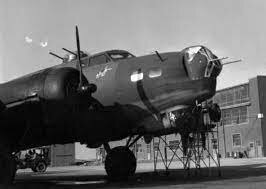
It's a B-24 with the nose of a B-17. It was, IIRC, a field repair to a badly damaged B-24, using parts from a trashed B-17. I may be misremembering, however.

jstar
ACCESS: Secret
- Joined
- 12 October 2007
- Messages
- 370
- Reaction score
- 512
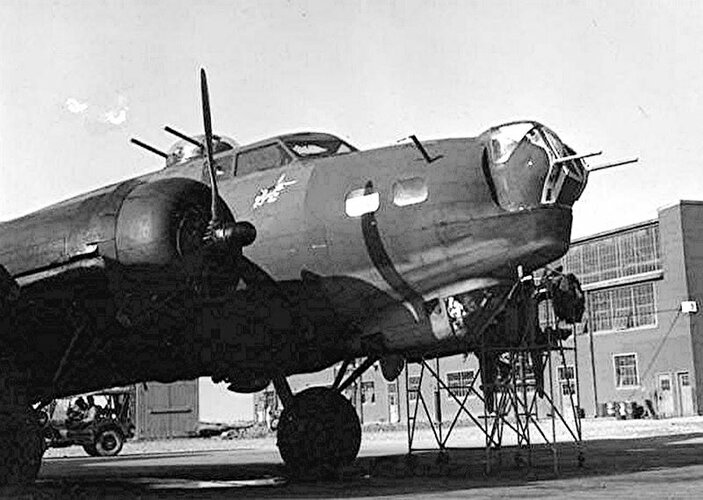
Not a field repair, but an experiment to determine if the B-17 nose provided better working conditions than a B-24 nose. It did use a damaged B-17.
There is a nice writeup here: http://www.unrealaircraft.com/hybrid/B17G.php
There is a nice writeup here: http://www.unrealaircraft.com/hybrid/B17G.php

Vahe Demirjian
I really should change my personal text
- Joined
- 28 February 2013
- Messages
- 815
- Reaction score
- 592

- Joined
- 2 January 2011
- Messages
- 362
- Reaction score
- 429
jstar, what is the source of your nose closeup? Do you have a hi-res copy available?
AlanG
AlanG
jstar
ACCESS: Secret
- Joined
- 12 October 2007
- Messages
- 370
- Reaction score
- 512
Just a result of a google image search for 'Reed Project B-17'. I don't have a hi-res copy, but this one is a little clearer.jstar, what is the source of your nose closeup? Do you have a hi-res copy available?
AlanG
Attachments

T. A. Gardner
ACCESS: Top Secret
- Joined
- 18 February 2021
- Messages
- 2,024
- Reaction score
- 3,576
Insinkerator (it's a brand of garbage disposal)Unbelievable, but that hybrid was nice looking at least.
So how do we call that ?
B-41 Flying Liberator ? Flyator ? Liberatress ? Forterator ?
T. A. Gardner
ACCESS: Top Secret
- Joined
- 18 February 2021
- Messages
- 2,024
- Reaction score
- 3,576
Question... What German bomber did they take the gondola under the nose off of?Just a result of a google image search for 'Reed Project B-17'. I don't have a hi-res copy, but this one is a little clearer.jstar, what is the source of your nose closeup? Do you have a hi-res copy available?
AlanG

jstar
ACCESS: Secret
- Joined
- 12 October 2007
- Messages
- 370
- Reaction score
- 512

blackkite
Don't laugh, don't cry, don't even curse, but.....
- Joined
- 31 May 2007
- Messages
- 9,515
- Reaction score
- 9,661
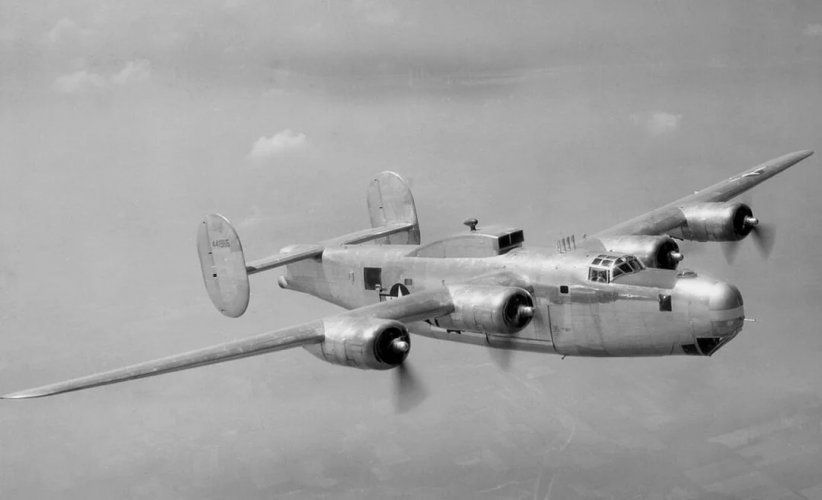
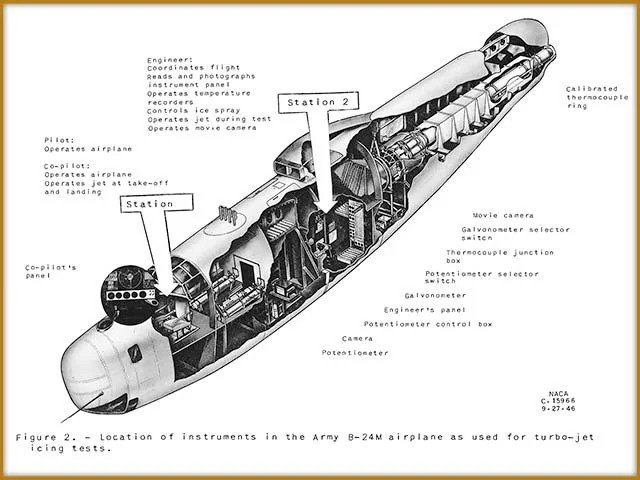
A specific Consolidated B-24M Liberator (Serial No. 44-41986) was modified to serve as a testbed for jet engine icing research by the National Advisory Committee for Aeronautics (NACA) immediately after World War II.
B-24M Jet Engine Testbed
View: https://www.reddit.com/r/WeirdWings/comments/1872sh0/a_naca_b24_used_for_jet_engine_icing_tests_flying/#lightbox
B-24M Jet Engine Testbed
- Purpose: The aircraft was used by the NACA (NASA's predecessor, at the Lewis laboratory, now NASA Glenn Research Center, in Cleveland, Ohio) for vital research on the effects of ice accretion on aircraft components, including new turbojet engines, in the post-war era.
- Modification: Researchers installed a single General Electric I-16 jet engine inside the aircraft's waist compartment. An air scoop was mounted on the top of the aircraft to duct air to the engine, and water spray nozzles inside the aircraft were used to simulate icing conditions at the turbojet's inlet.
- Original Engines: The B-24M continued to be powered for flight by its four original Pratt & Whitney R-1830 piston engines; the jet engine was a piece of research equipment, not for primary propulsion.
View: https://www.reddit.com/r/WeirdWings/comments/1872sh0/a_naca_b24_used_for_jet_engine_icing_tests_flying/#lightbox
Attachments
Similar threads
-
Inquiring about Latin American indigenous military aircraft in the 30s and 40s
- Started by GrineerboiGrun
- Replies: 0
-
Reed Project B-17 41-9112 Side drawing
- Started by ACResearcher
- Replies: 0
-
Messerschmitt "S" and "M" Designs, 1914 to 1934
- Started by rlucas
- Replies: 28
-
 The rare and wacky U.S. aeroplanes of yesteryear...
- Started by Stargazer
- Replies: 85
-