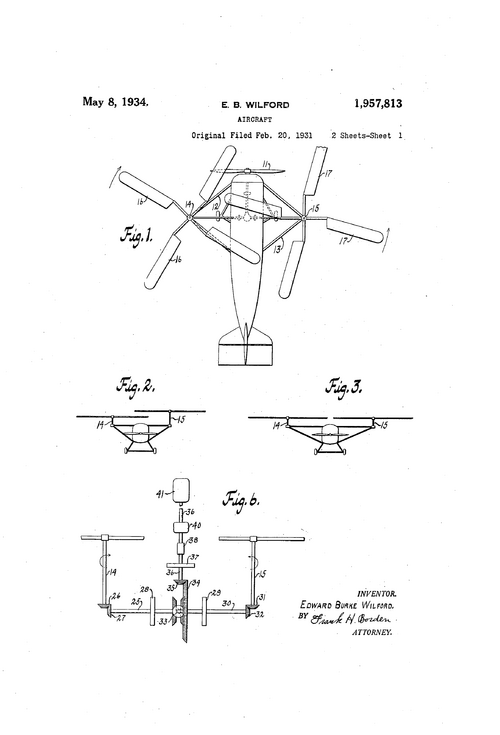
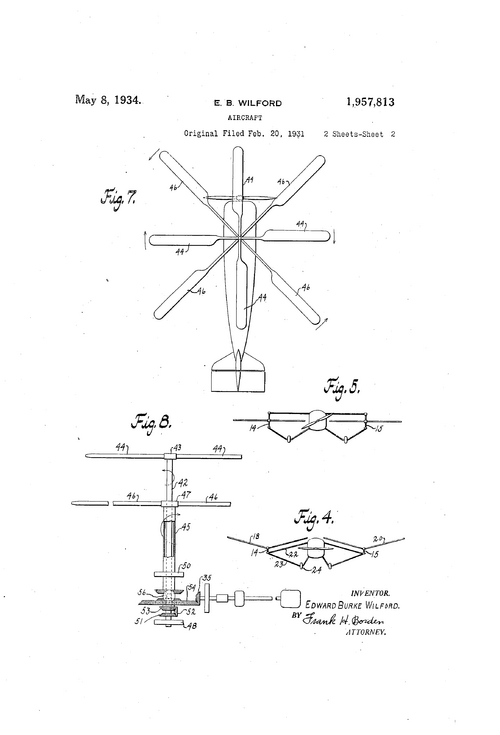
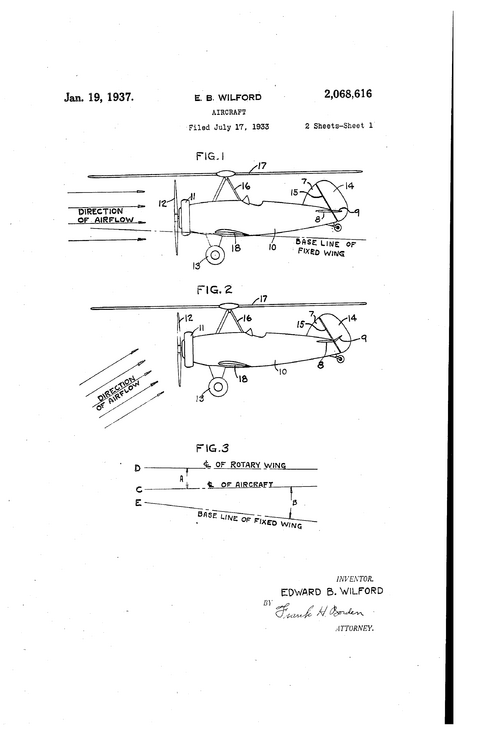
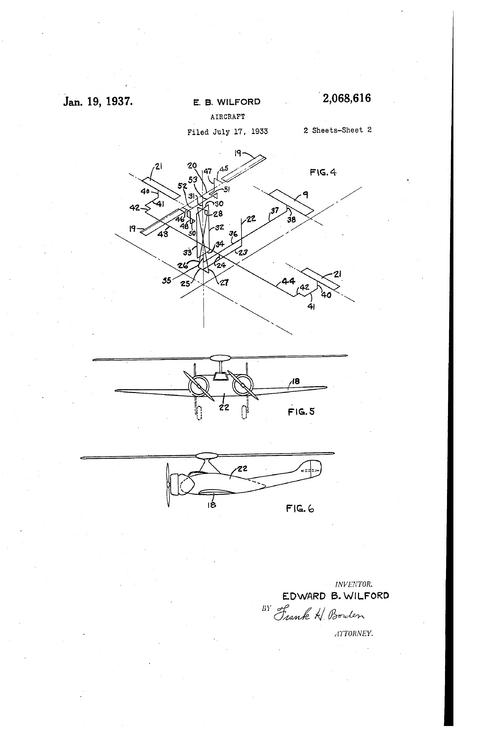
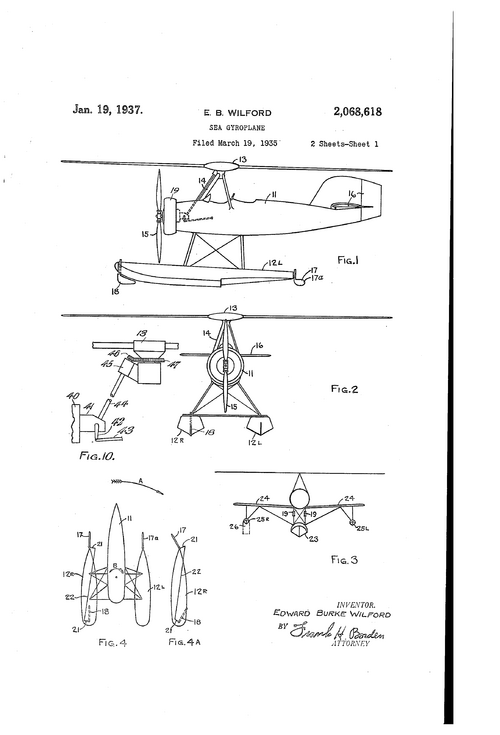
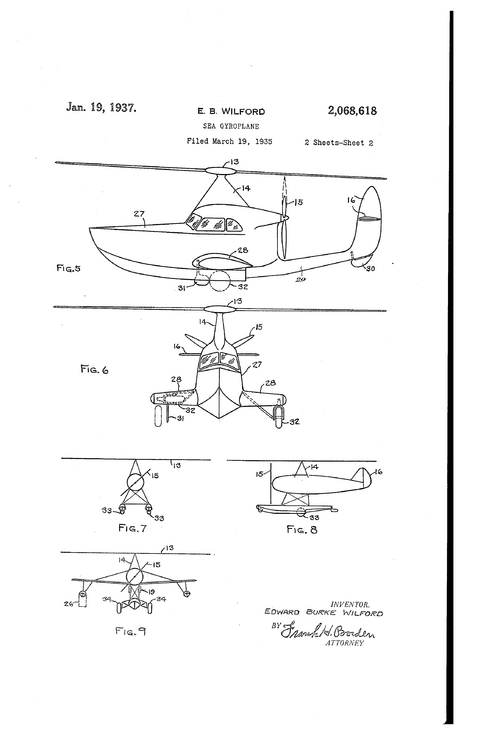
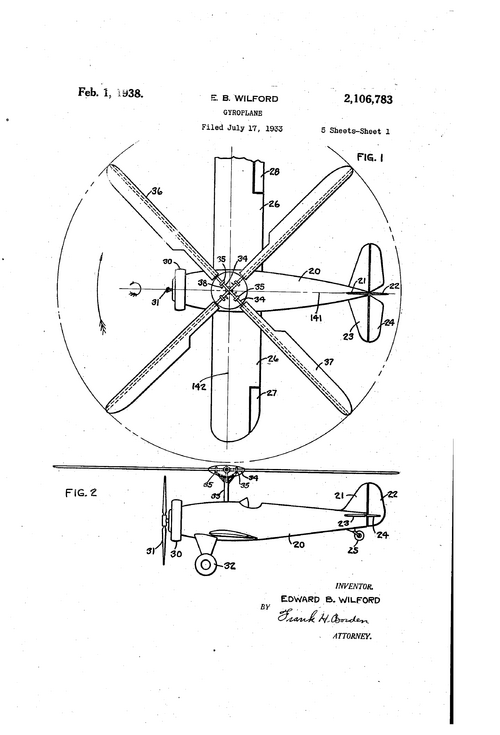
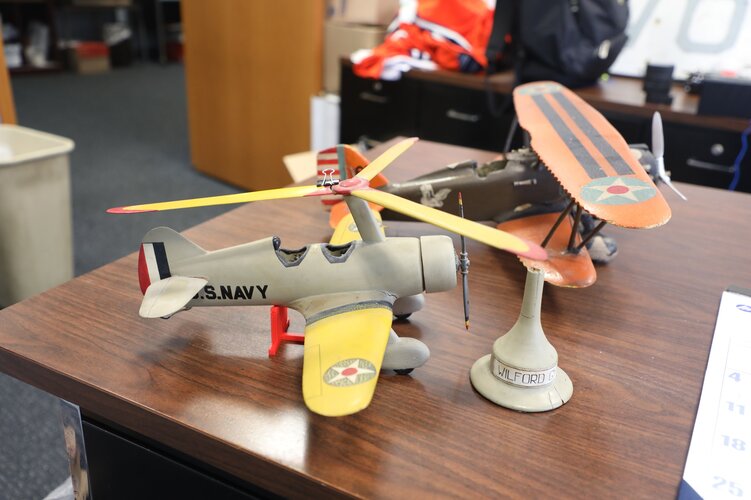
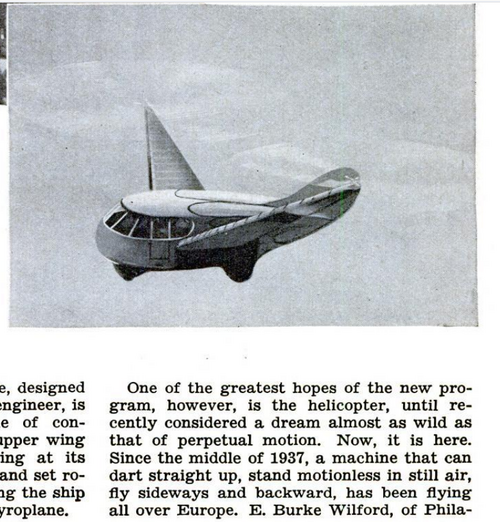
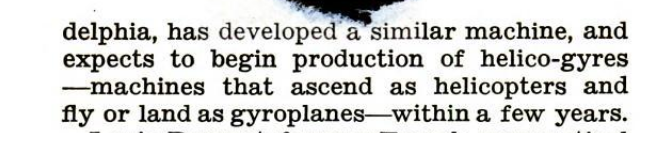
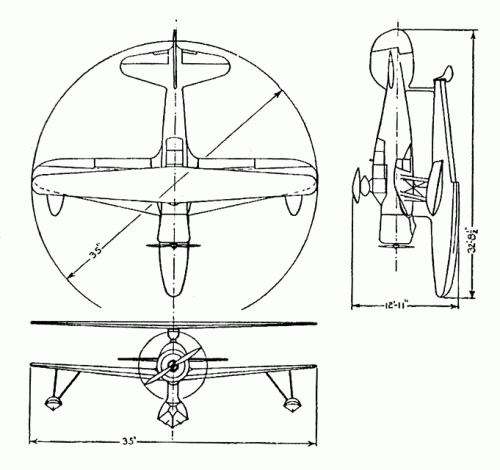
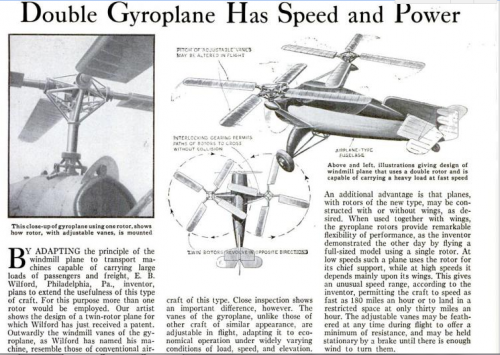
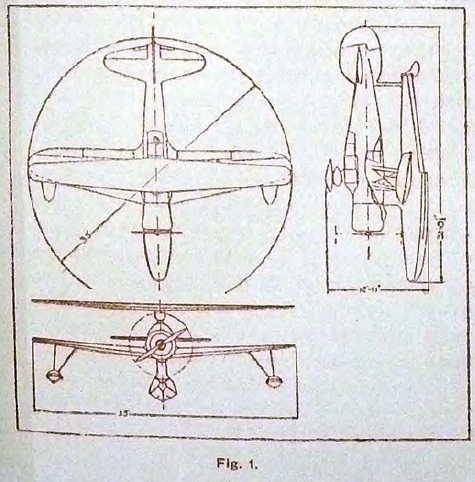
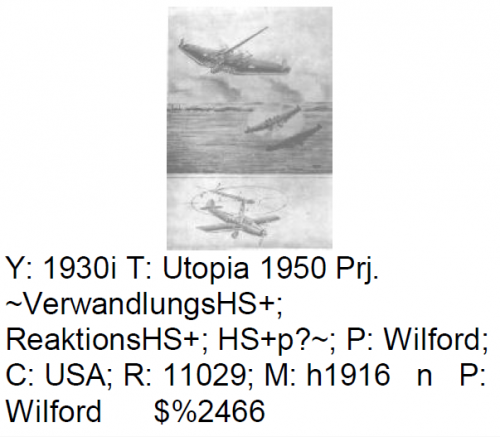
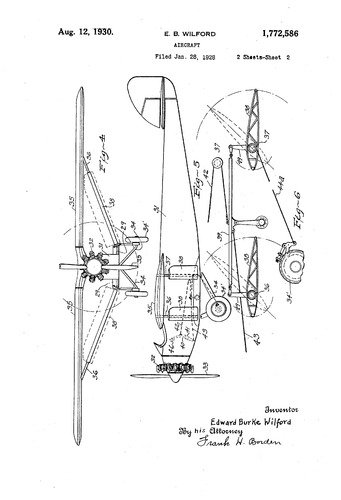
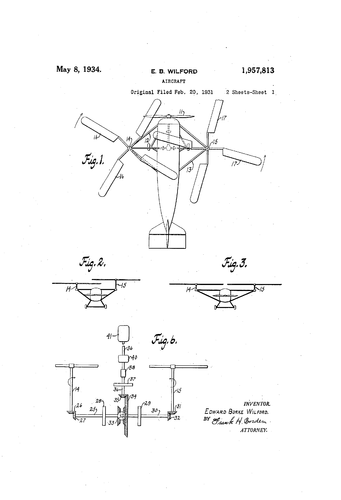
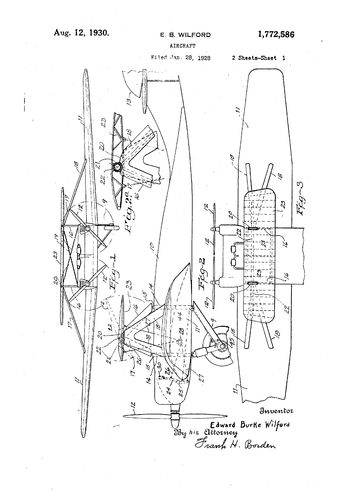
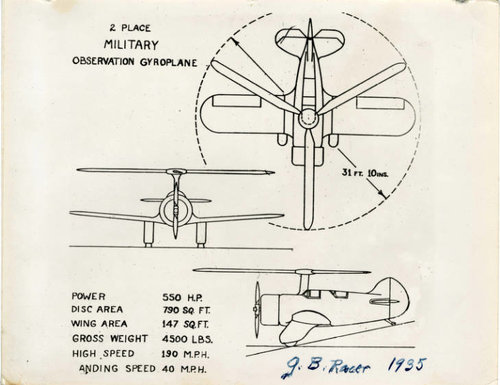
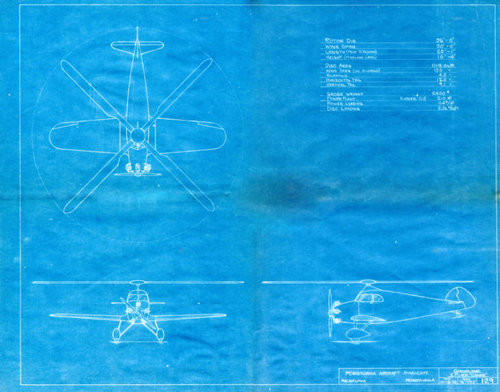
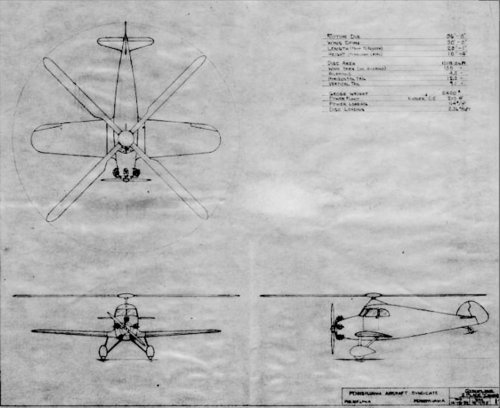
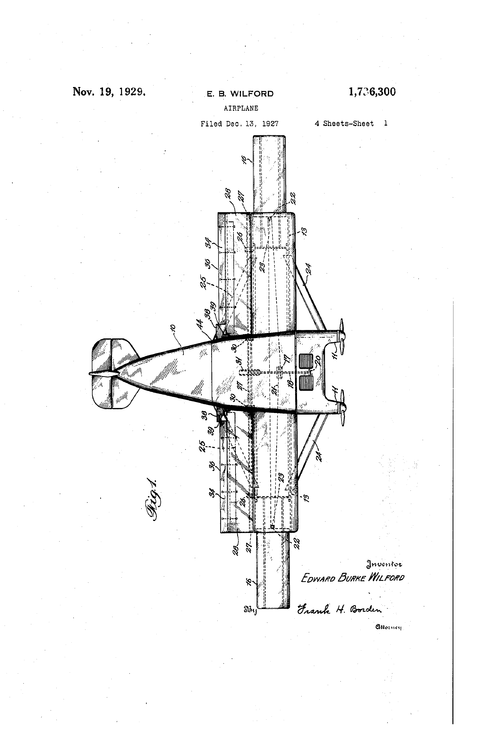
Here is the Wilford Heli-Gyro, described as "a streamlined version of the Focke Helicopter" (Fw 61)... to which Wilford answered that “[w]e are not trying to copy Mr. Focke’s word in any way, but I am just interested in seeing that rigid feathering blades are used in the helicopter field as well in the gyro field.”
Please remember that all the Wilford designs were done on behalf of the Pennsylvania Aircraft Syndicate (there never was a Wilford company).
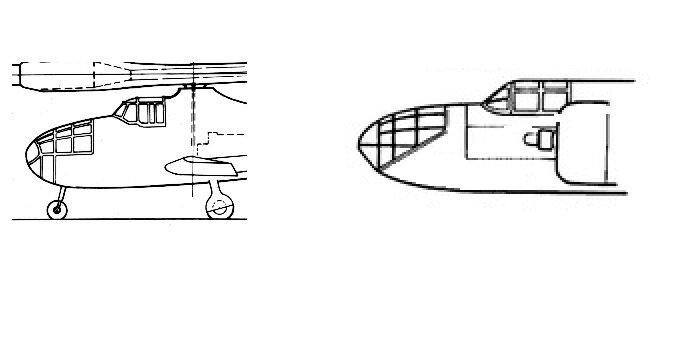
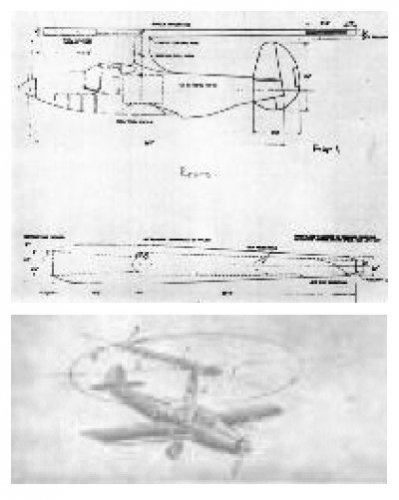
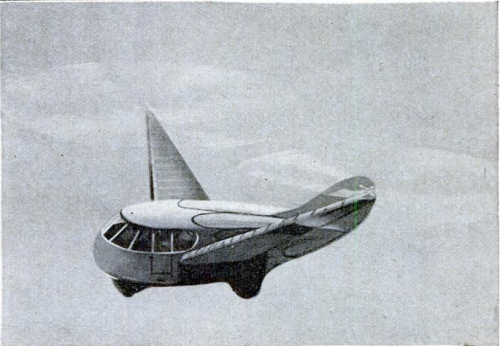
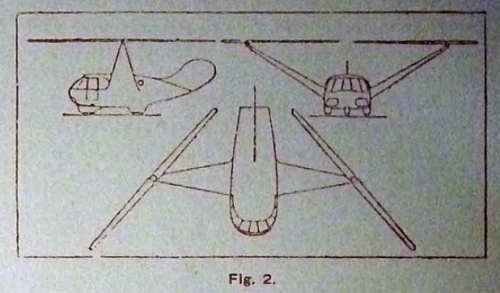
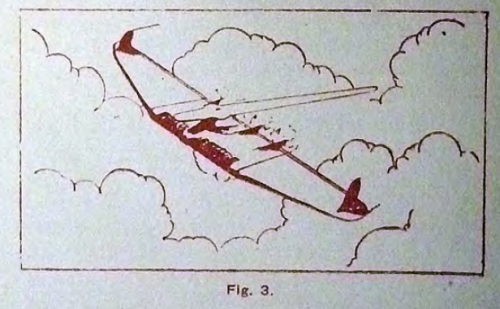
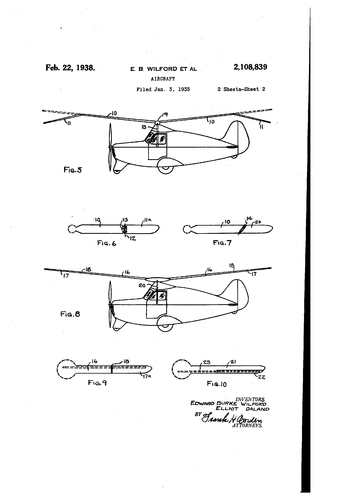
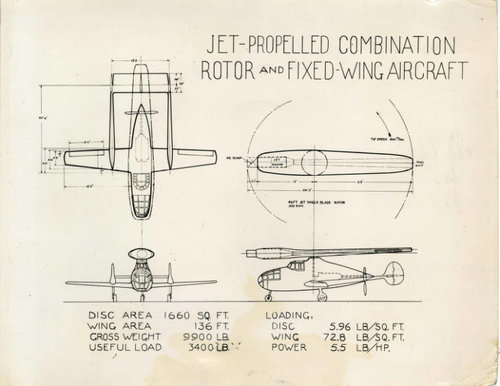
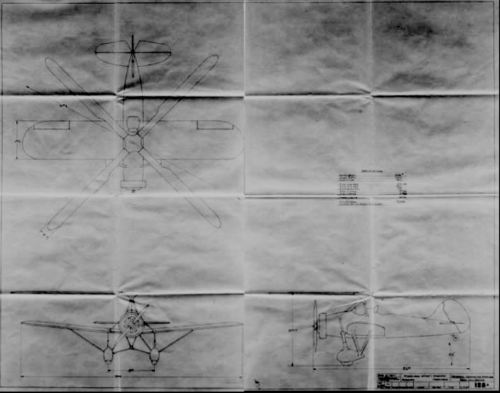
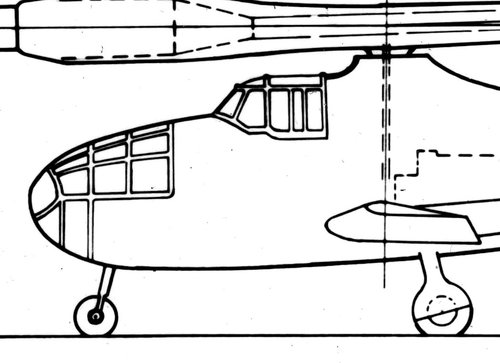
Here is another of his "convertiplane" designs based on an aircraft evocative of the Bell Airacobra (this was in the famous "German" helicopter files...):
Here is the Wilford Heli-Gyro, described as "a streamlined version of the Focke Helicopter" (Fw 61)... to which Wilford answered that “[w]e are not trying to copy Mr. Focke’s word in any way, but I am just interested in seeing that rigid feathering blades are used in the helicopter field as well in the gyro field.”
Here is the Wilford Heli-Gyro, described as "a streamlined version of the Focke Helicopter" (Fw 61)... to which Wilford answered that “[w]e are not trying to copy Mr. Focke’s word in any way, but I am just interested in seeing that rigid feathering blades are used in the helicopter field as well in the gyro field.”
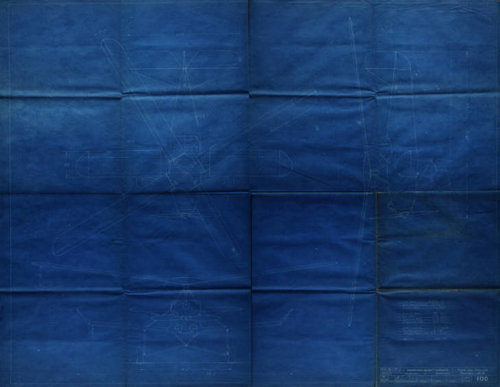
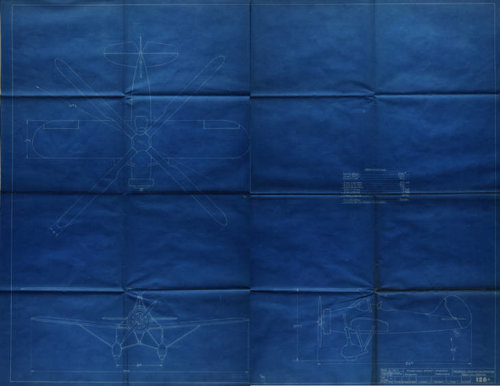
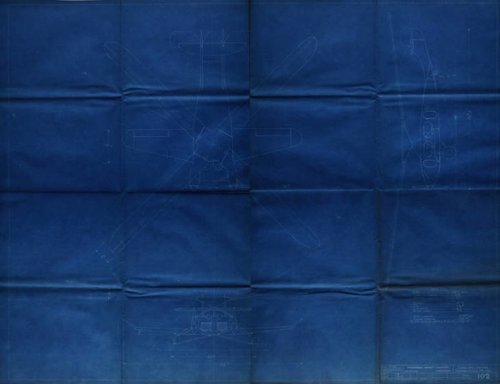
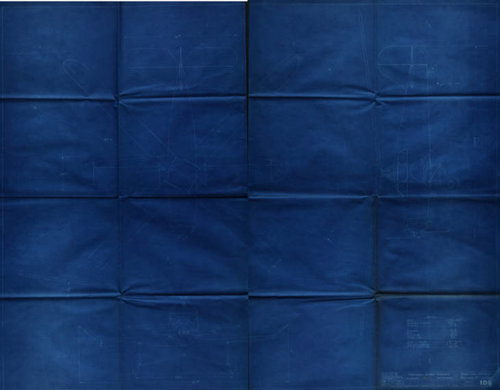
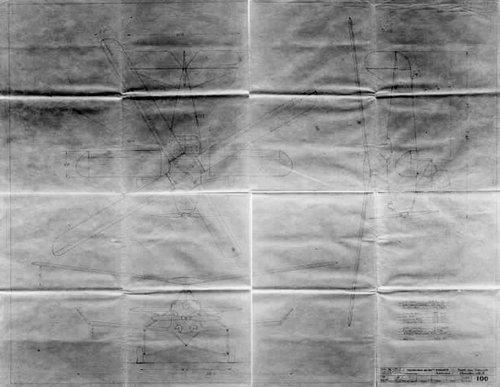
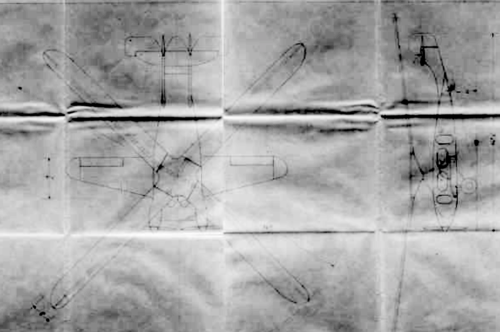
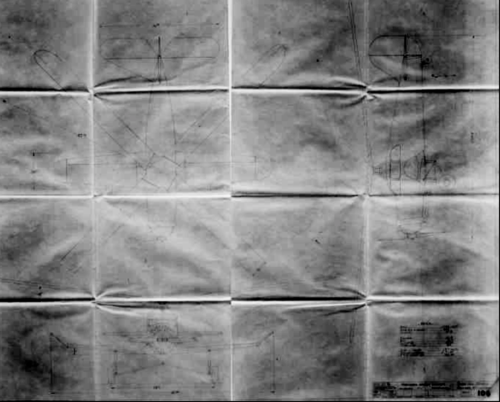
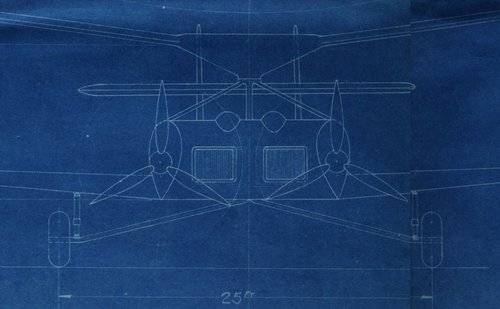
Please,if someone could make from five blue print views into a black and white to can
see them well,I don't recognize them well by my glasses ?,and thanks.
There's only so much that can be *easily* done with these since there is so much contrast in them due to being folded like that. Especially when you work with the low-rez preview images rather than the full-rez versions (the "airliner" blueprint, for example, is 13,014X 10,000 pixels and 10.96 megabytes, *far* larger than the dinky 730X560 pixel version you posted). The best thing for them is likely to re-draft them. A tiny crop from the airliner:
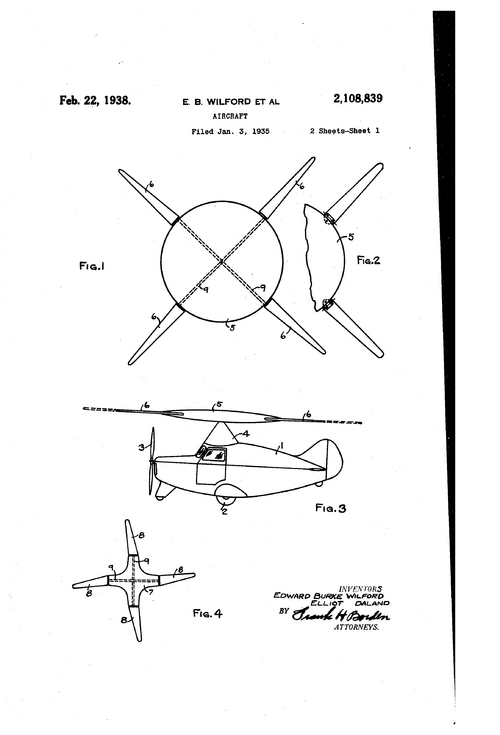
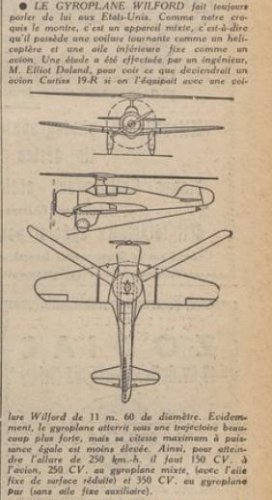
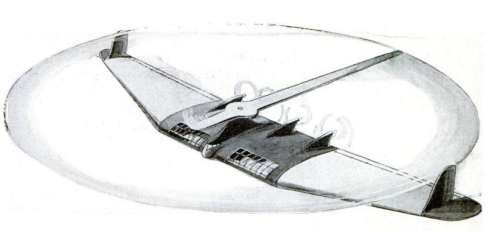
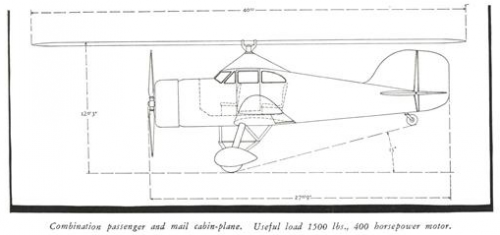
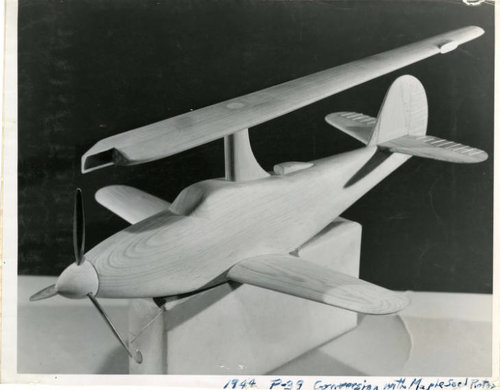
Yes, this concept was based on the Curtiss-Wright 19-R. However, this was not, strictly-speaking, an E. Burke Wilford design.
As the original caption makes clear, another engineer - one Elliot Doland Elliott Daland - was studying the placement of an 11.60 m diameter Wilford 'wing' on the 19-R airframe.
Umm, yeah. As noted directly above, that was an Elliot Doland Elliott Daland concept incorporating E. Burke Wilford's rotor design onto the Curtiss-Wright 19-R airframe.
That would be Elliott Daland, who was a prominent engineer going way back with early rotary-wing firms such as: Kellett, Platt-LePage, and Piasecki Helicopter.
That would be Elliott Daland, who was a prominent engineer going way back with early rotary-wing firms such as: Kellett, Platt-LePage, and Piasecki Helicopter.
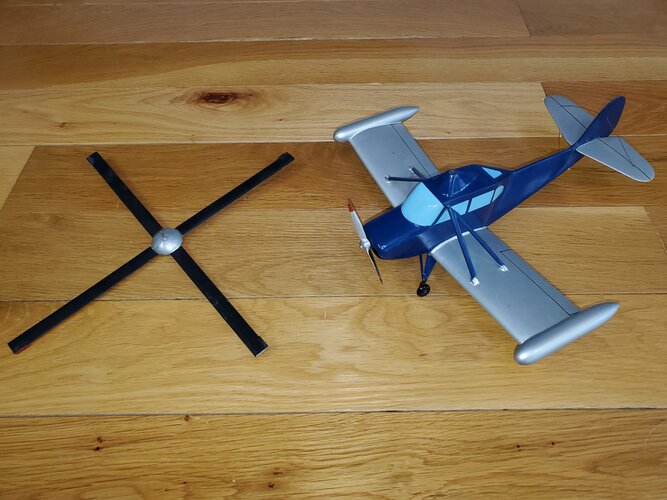
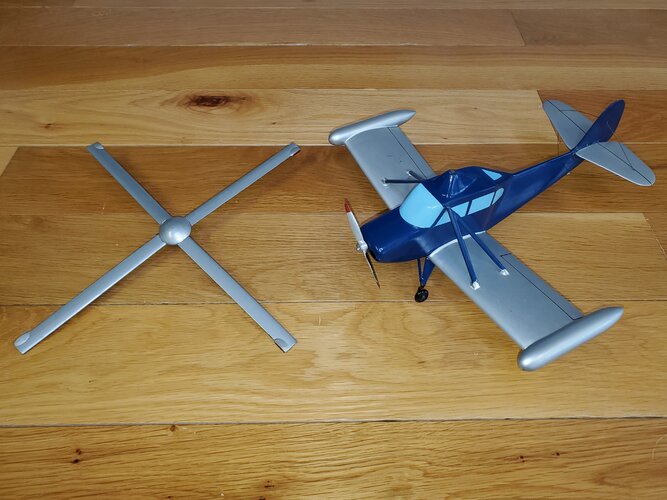
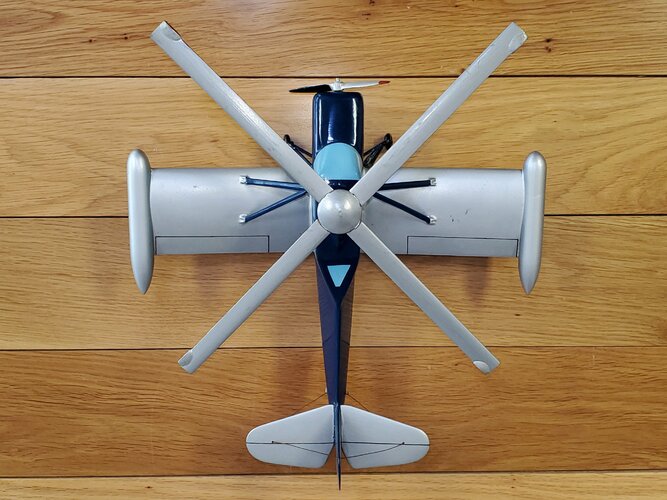
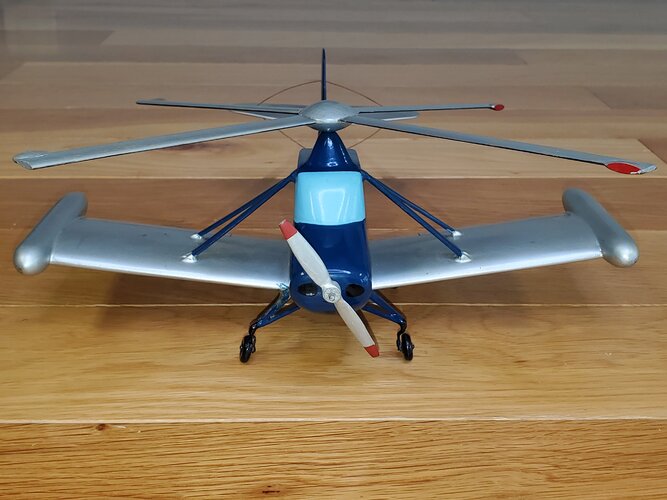
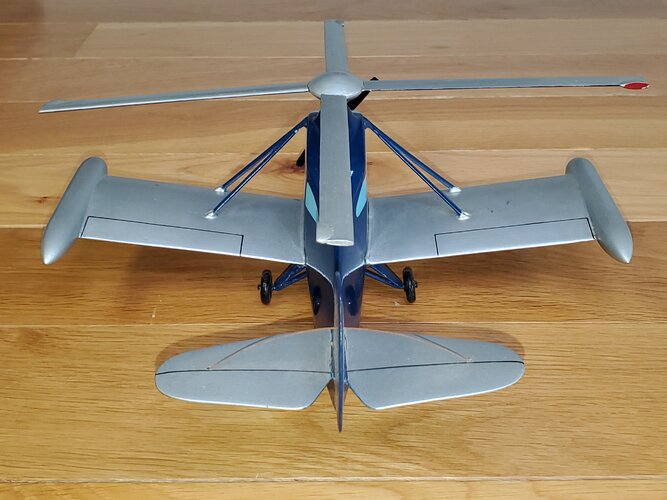
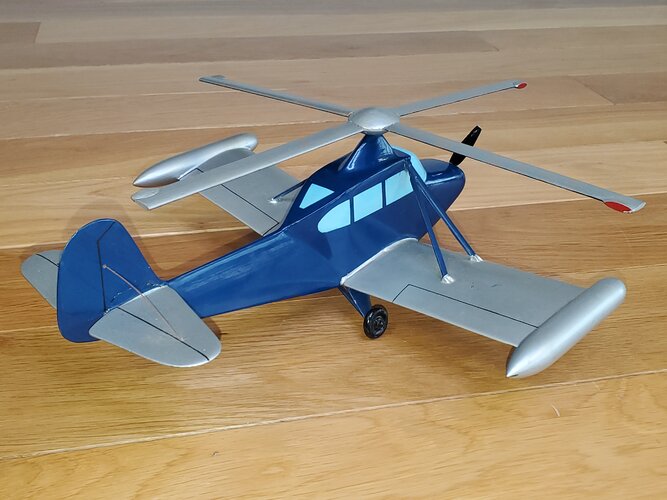
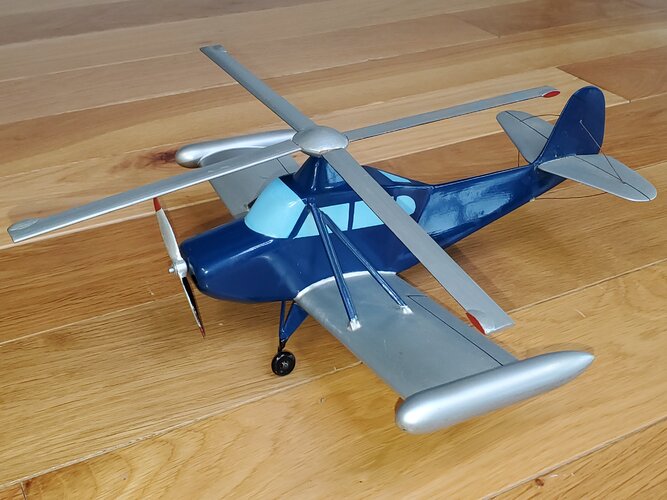
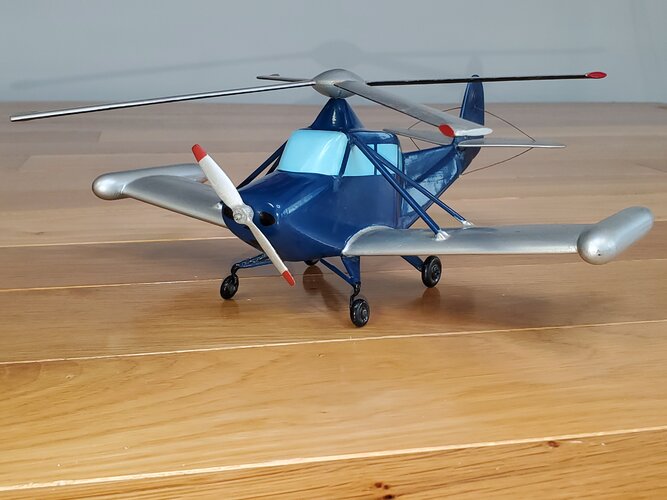
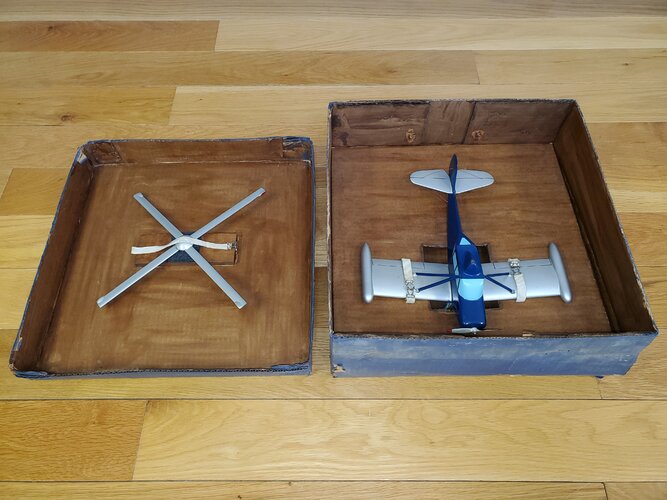
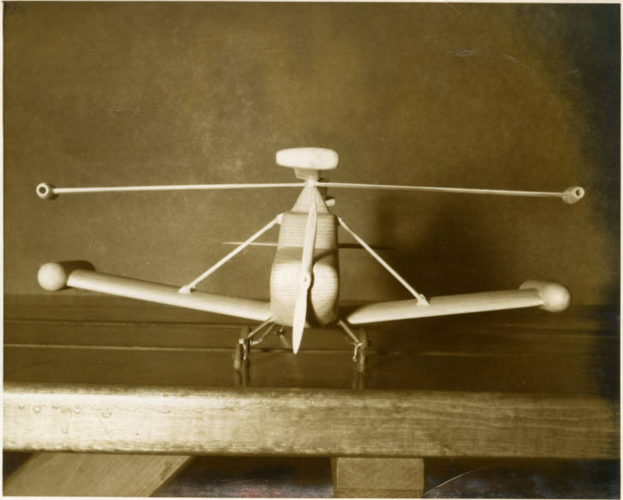
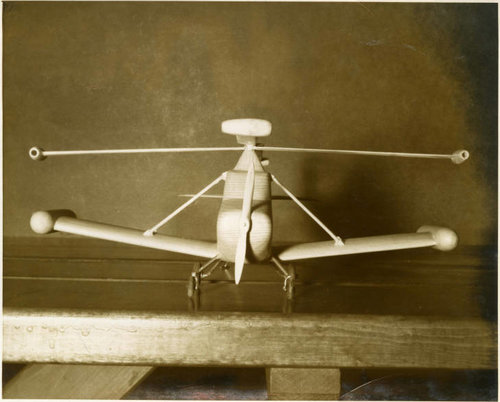
I recently acquired a wonderful and unique wood model aircraft. I'm now trying to firmly identify it.
At first, I thought the model might be related to the development of de Havilland Cierva C.24 Autogiro. So I reached out to de Havilland, but could find no links. During my correspondence, and while conducting additional research, I stumbled upon this Secret Projects post. In particular, the photo of the wood "Gyroplane" model in a thread above really got my attention. As soon as discovered the "Gyroplane Model" image was from the E. Burke Wilford Aviation Collection (in the care of the West Chester University Special Collections library), pieces of the puzzle began to click into place. The model I purchased is nearly identical to the pictured Wilford "Gyroplane Model," the only discernable differences being the configuration of the main rotor tip-jets and the fact that my model is "finished" with a highly professional paint job.
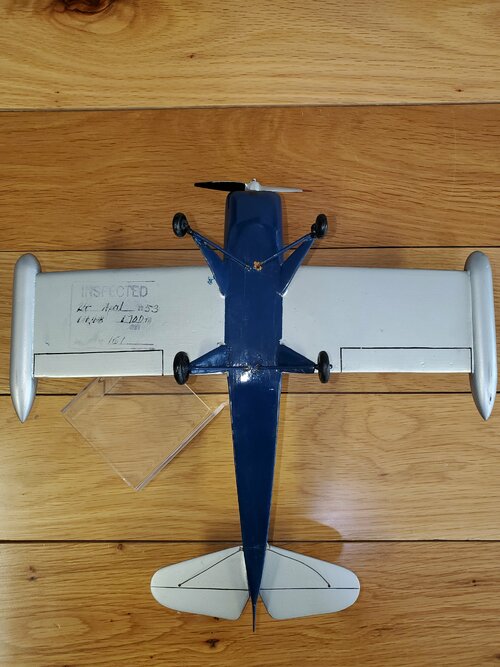
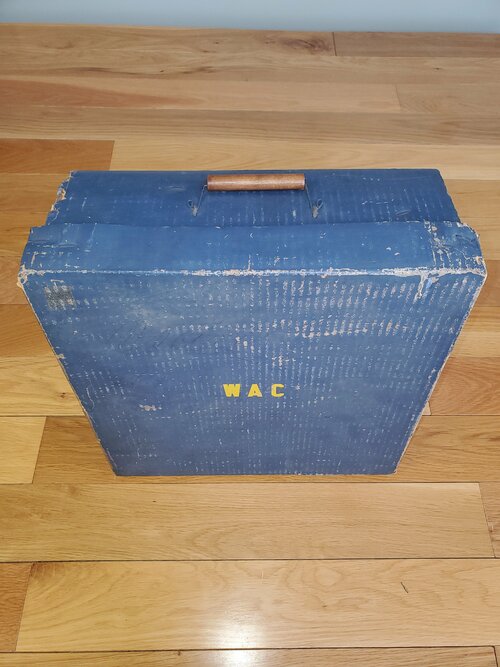
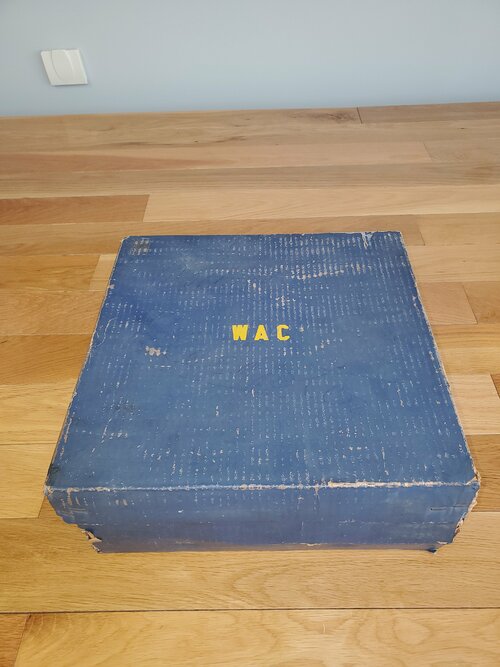
The model I acquired is housed in a purpose-made box which secures the fuselage and removeable main rotor. The box is made of heavy corrugated cardboard, stained and painted. Elastic bands secure the fuselage and main rotor in place. Frankly, while the box is very cleverly made, the materials make it appear a bit "amateurish" when compared to the model. Nevertheless, the box is undeniably made for this model. The most noteworthy feature of the storage box is that the initials "W A C" are stenciled on the top. I feel fairly certain that "W A C" stands for Wilford Aircraft Corporation, the name of E. Burke Wilford's business venture during the 1950s. I've reached out to the Special Collections Library at West Chester University in the hope that they can find additional materials related to my model, helping me to confirm its origins.
My aircraft model has an 11.5 inch wingspan. The fuselage is 11 inches long and 5 inches tall. Some wire is used to strengthen landing gear, attach the main rotors, and act as tail bracing wires. The propeller is a lightweight metal as well. The rotor blades are wood and feature what appears to be sleekly-designed rotor tip-jets. Again, the paint quality is outstanding and just as professional as the build.
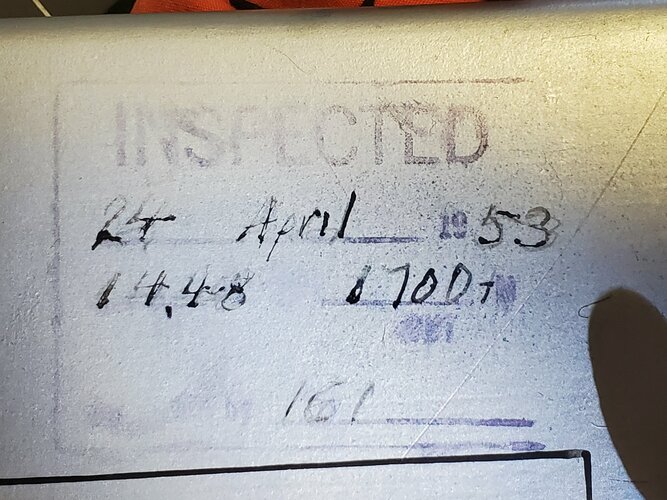
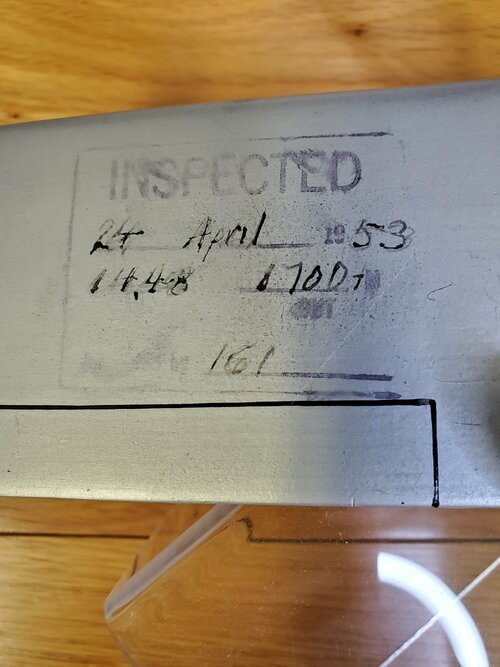
One particularly interesting (and puzzling) feature of the model is an inspection stamp on the bottom of the right wing. It is clearly dated 24 April 1953, but there is other data and information on the stamp that I have not yet been able to identify. Could it be a catalog stamp from the Wilford Aircraft Corporation model shop (if one truly did exist)? Did E. Burke Wilford make the model himself? What do the other numbers represent? Sadly, the stamp ink is smudged in a number of areas, so most of the legend information on the stamp is unreadable. The hand-written penned entries are also a bit difficult to completely understand. Here's my best interpretation:
Below the stamps "INSPECTED" title is the hand-written date "24 April 1953" in clear penmanship. It does appear that the inspector wrote the date in lighter letter ink, then changed to a heavier/darker ink and over-wrote the first entries. The second line is comprised of two pieces of data. There's no visible stamp legend, but the first entry seems to be "14,48" The second line entry looks like "1700" with either a small number "7" or possibly a "+" sign following. The stamp legend on this second line seems to have an "N" or possibly "/N" at the end of that second line of data. Unfortunately, the stamp legend describing the info the second line is smudged badly, so I'm not sure what the values represent. The final line of data on the stamp is likely "Inspected by 161," but the stamp legend is once again smudged. The word "by" in the stamp legend is pretty clear, though.
I've gone on too long... Here are some photos of the model and storage box. I welcome forum member's input as I continue to try and unravel this mystery.
What a remarkable find! I'm definitely with you as far as the Wilford identification is concerned.
I do not know of any post-1950 designs by Wilford; I've checked all my files but they're all patents, projects and prototypes that are older than your model. I really hope you can eventually document that beauty!
EDIT: there is great commonality between your model and this wooden one found earlier in the thread (except for the tip-jets). So, definitely Wilford!
E. Burke Wilford was clearly still very active as an aeronautical engineer through the 1950s. He repeatedly appeared before the U.S. Government at various subcommittee meetings and other forums while advocating for the engineering concepts he pioneered. I am now trying to establish the years of operation for the "Wilford Aircraft Corporation."
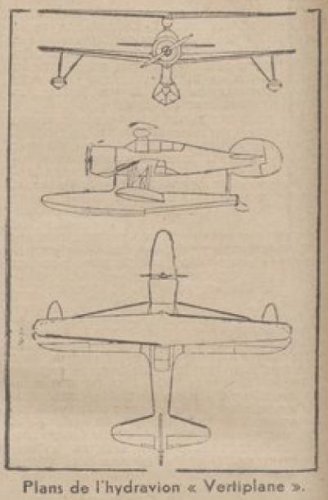
The famous viscount Louis de Monge de Fréneau was mostly known in the interwar years for his unconventional aircraft: the convertible biplane/monoplane Type 5/1 (which crashed fatally, but was later tested as the monoplane Type 5/2 as an Army fighter); the daring Type 7/2 transatlantic project and its subscale demonstrators that were built and flown successfully; and especially the unbuilt Bugatti 100P racer, which acquired legendary status, although few remember De Monge initiated the project.
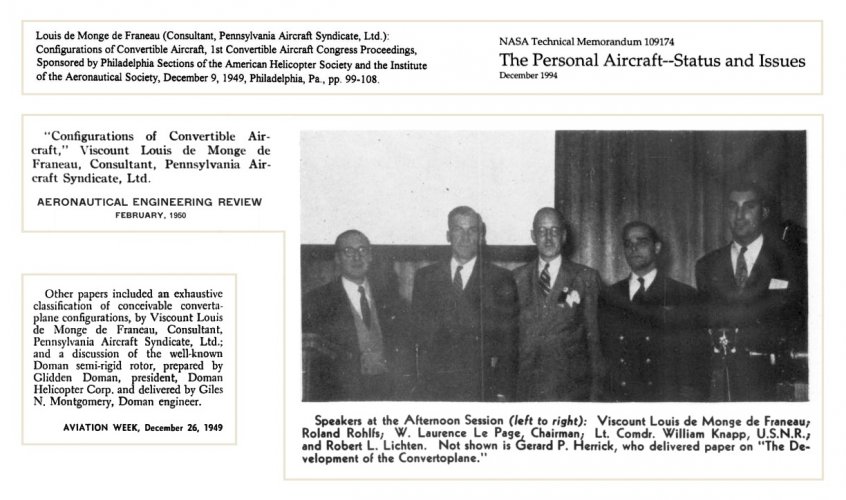
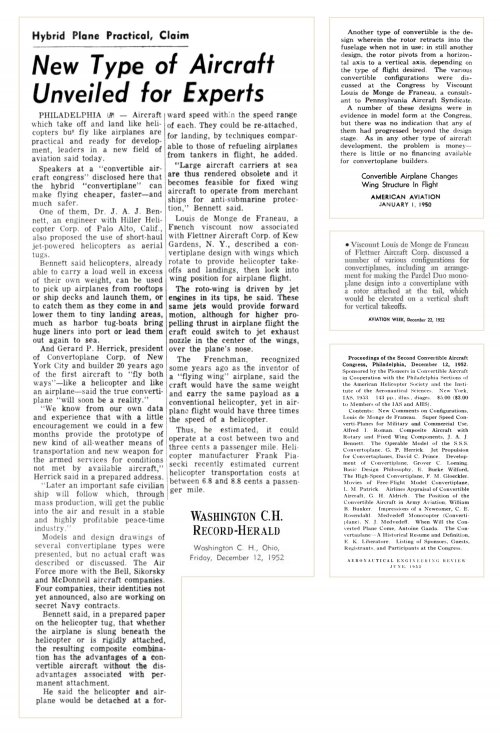
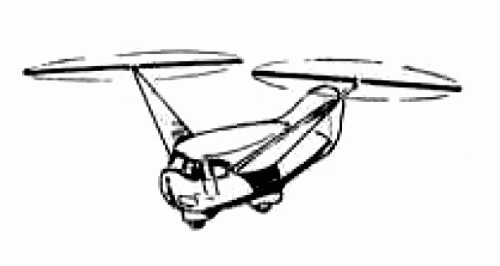
De Monge's aviation career, or so it seems, stops at World War II, so I was kind of surprised to see his name all over American publications between 1949 and 1953, this time regarding a totally different field: that of convertible aircraft. In 1949 and 1952, the American Helicopter Society held the First and Second Convertible Aircraft Congress in Philadelphia, and nearly everyone that counted in the field of convertiplanes/convertaplanes/convertoplanes (each designer seemed to have a prefered spelling!), from Herrick to Wilford, from Flettner to Loening, and even representatives of helicopter companies such as Doman or Hiller attended. And that is where Louis de Monge enters the picture: Wilford's Pennsylvania Aircraft Syndicate used his services as a consultant on convertible aircraft; de Monge did a conference each time, the first one (in 1949) entitled "Configurations of Convertible Aircraft", the second (in 1952) entitled "New Comments on Configurations". Models and design drawings of several convertiplane types were presented at those conferences, and it would be nice to find photos... But when and how de Monge had become an expert on convertiplanes is unknown... none of his prewar works was in the field of rotary wing machines.
Here is a collage of several excerpts from the American press showing de Monge's involvement in the proceedings.
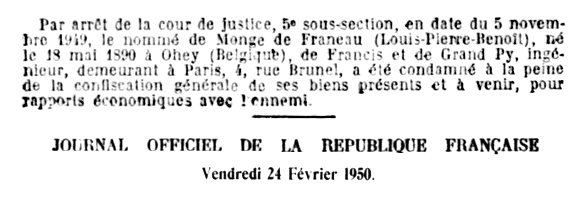
Now, of course, one is bound to wonder why a reputed engineer such as de Monge would choose to advance convertiplane technology in the U.S. instead of contributing his expertise with French aircraft manufacturers... I found the answer in the Feb. 24, 1950 edition of the Journal Officiel de la République Française: Louis de Monge was condemned by the French state to "general confiscation of all his belongings, present and future, for economic relations with the enemy." In other words, the Belgian noblesman who had made all of his career in France had tried to make business with the Germans during the war. And of course, no biography mentions this, not even Wikipedia. No wonder he was active in the U.S... he could no longer return to France! And indeed he stayed in the U.S. until his death in 1977, though he was no longer heard of in the aviation field, it seems, after those conferences.
I think you didn't really read my post. I wasn't talking about a design in particular.
Just mentioning the fact that de Monge's work in the U.S. was done as a consultant to Wilford's company.
Therefore the designs shown in the topic you've linked were most likely part of the ones shown during the two conferences.
This site uses cookies to help personalise content, tailor your experience and to keep you logged in if you register.
By continuing to use this site, you are consenting to our use of cookies.







 Cheers!