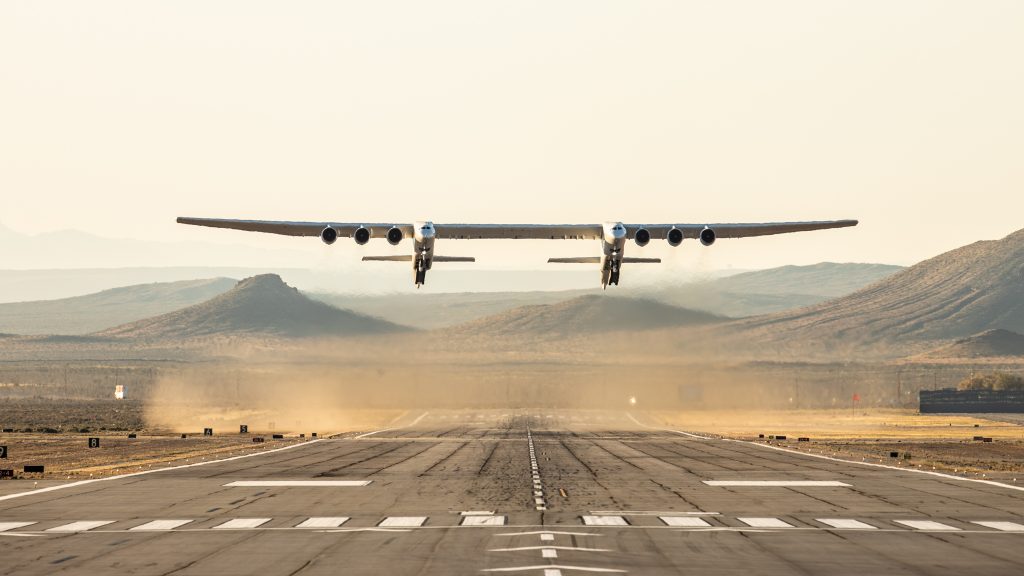
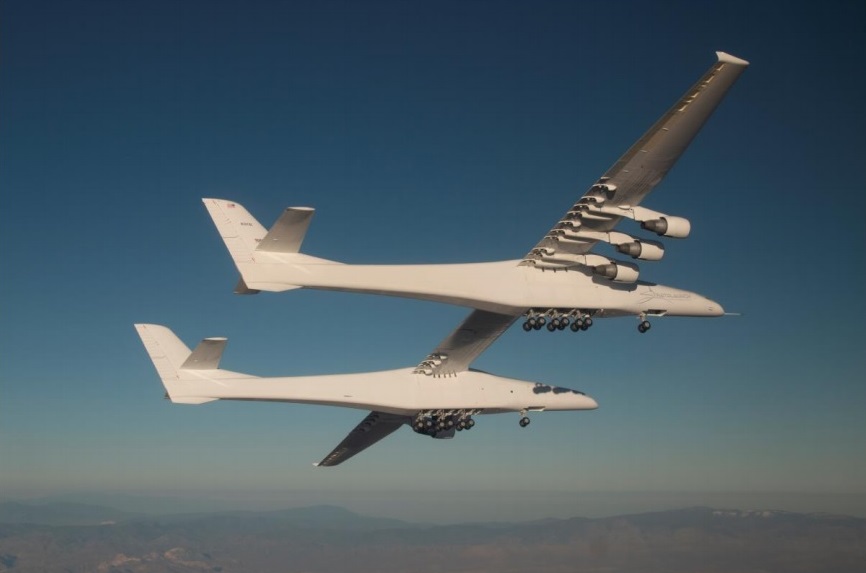
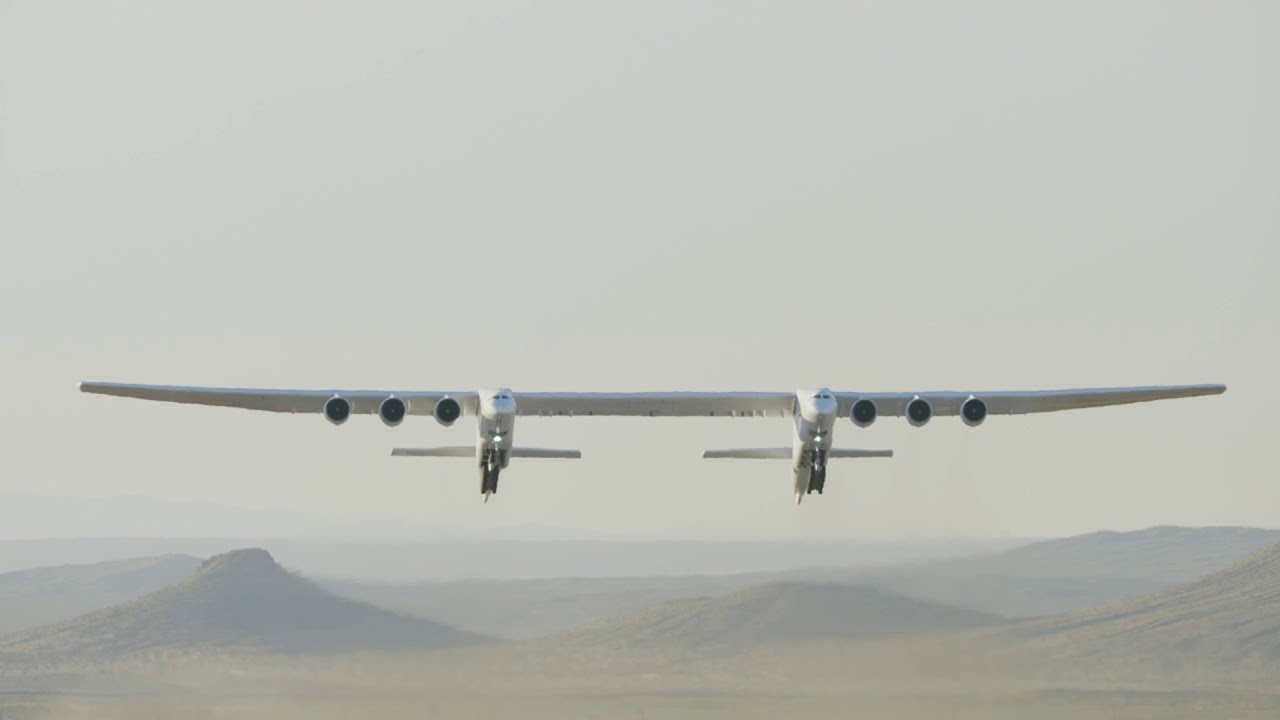
Stratolaunch Systems

I have provided not one but two AIAA conference paper references to open engineering sources (see post # 261) that qualitatively as well as quantitatively describe two separate reusable winged orbiter designs of the same launch mass and comparable cryogenic rocket propulsion systems as well as staging conditions as the Black Ice concept, which clearly was the ultimate goal of Stratolaunch - that's more concrete relevant technical data substantiated by aerospace engineering analyses from credible sources such as British Aerospace that converged at nearly identical performance figures than anybody else, including you, has bothered to contribute in this discussion so far. For copyright reasons you will however have to obtain these papers on your own, if you are sufficiently motivated.
 
Last edited:
As I've pointed out *repeatedly* (and without any objectively substantiated refutation, I might add) in this thread, Allen's ultimate goal, while (for whatever reason - expediency?) taking admittedly highly questionable intermediate steps like expendable rocket stages (yuck!) into consideration, was evidently a fully reusable winged HTHL TSTO RLV, a both worthwhile and promising objective for advancing the goal of a cost effective, reliable, and responsive LEO transportation shuttle. There is of course absolutely no guarantee whatsoever that his conceptual design would have converged and delivered the intended benefits, but I for one deeply mourn his passing, for it represents just one more missed opportunity for at least trying to help us leave our earthly cradle for good.

You never provided substantiated data to support your claims.


Eh, that's more than a bit disegneious and also a bit insulting since there are multiple links IN THIS THREAD pointing to both Alan and Stratolaunch saying exactly what Martinbayer notes them saying. The ultimate goal WAS a TSTO/HTHL fully reusable system aimed at the goal of cost effective, reliable and responsive LEO transportation.

In fact I point out earlier that every company associated with StratoLaunch said that full reusabllity was required for it to be economic:

And even if you're talking "didn't provide substansiated data on using LOX/LH2 in an air launched spaceplane design", (and granted I'm only up to page 6 on reviewing this thread) he has actually presented at least two as linked and I'd point out that despite the 'doubt' experssed so far it's rather odd that such doubts are not in the minds of people who actually deisgn such concepts.

Take Dan DeLong's "Frequent Flyer" Air Launched SSTO concept, link found here:

Air Launched, around 14,000lbs to LEO, and around 380,000lbs full-up for take off. Very detailed estimated mass breakdown on page 34. Mass is limited of course due to the requirement of putting it on a single 747 airframe. Want more examples of proposed Air Launched SSTO Concepts, use that as a search term even the Air Force/NASA "Horizontal Take Off" study comes up. You know the one where they check of various cryogenic stages (and we all are aware of NASA's love for Hydrogen as a propellant) for air launch and are not overly concerned about use of liquid cryogenics on a carrier aircraft or during launch? Almost like they actually have done it before and maybe know that while it takes some engineering work for once it really IS just more engineering.

But no one has built one so it's impossible right? Consider that no one has built one due to the cost rather than technical difficulties because that is in fact the conclusion of most of the air launch studies done. The technical aspects are handled it's the cost and in most cases how those relate to profits that are the issue. Discussion of Air Launch economics here:

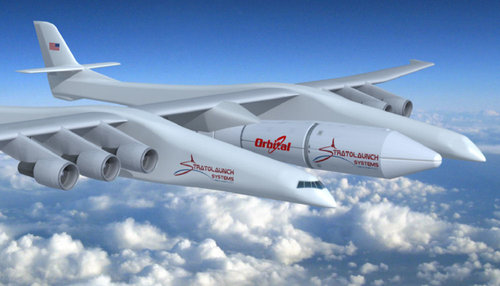
And there's no arguing that what Alan intended was to try and build a method to more cheaply and relaiablly access LEO as that's excactly what he stated he was trying to do. He then went about it the exactly wrong way with no launch vehicle availalbe to be used with the carrier aircraft he was building and no company willing to take the risk of doing so. As noted for rather obvous reasons as the Roc was a one-off which means any down-time or heaven forbid accident would leave the LV stranded and useless.

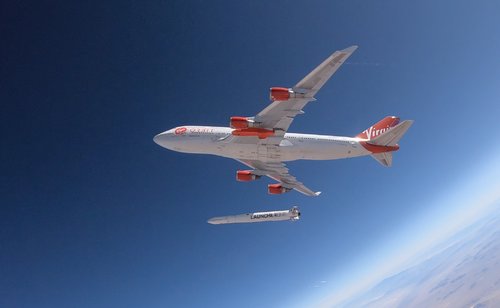
On the other hand given the Roc's carrying capacity compared to existing airframes any LV would have been allowed both higher structural margins and more payload to orbit. (Somewhere around 15,000lbs for a smaller Gryphon LV, see: https://www.secretprojects.co.uk/threads/stratolaunch.14179/page-10#post-352787, to between 8,000lbs to 14,000lbs as examples) Compared to LV designs using more 'economical' airframes such as QuickReach 1/2 (2,000lbs to 8,000lbs from a C-17 and modified 747), SwiftLaunch, (1800lbs, An-124/C-5) or AirLaunch (between 8,000lbs and 10,000lbs, with a modified 747) so Roc could put more payload on-orbit per flight.

Economics though were the main question as a single, specially constructed aircraft (which inherently costs more and limits flight oppotunities) has an automatic higher price base than modified or unmodified production airframes. Even understanding Alan's stated plan the main question is why go with something like Roc and in the end it looks like a straight forward bias towards payload to orbit as primary over cost.

Sad to see it go because it would have been nice to see an LV project alongside it but seems to have been a waste of money from the start.

Randy

 
That a LOX/LH2 TSTO/HTHL fully reusable system is cost effective, reliable and responsive LEO transportation is what I was refuting
 
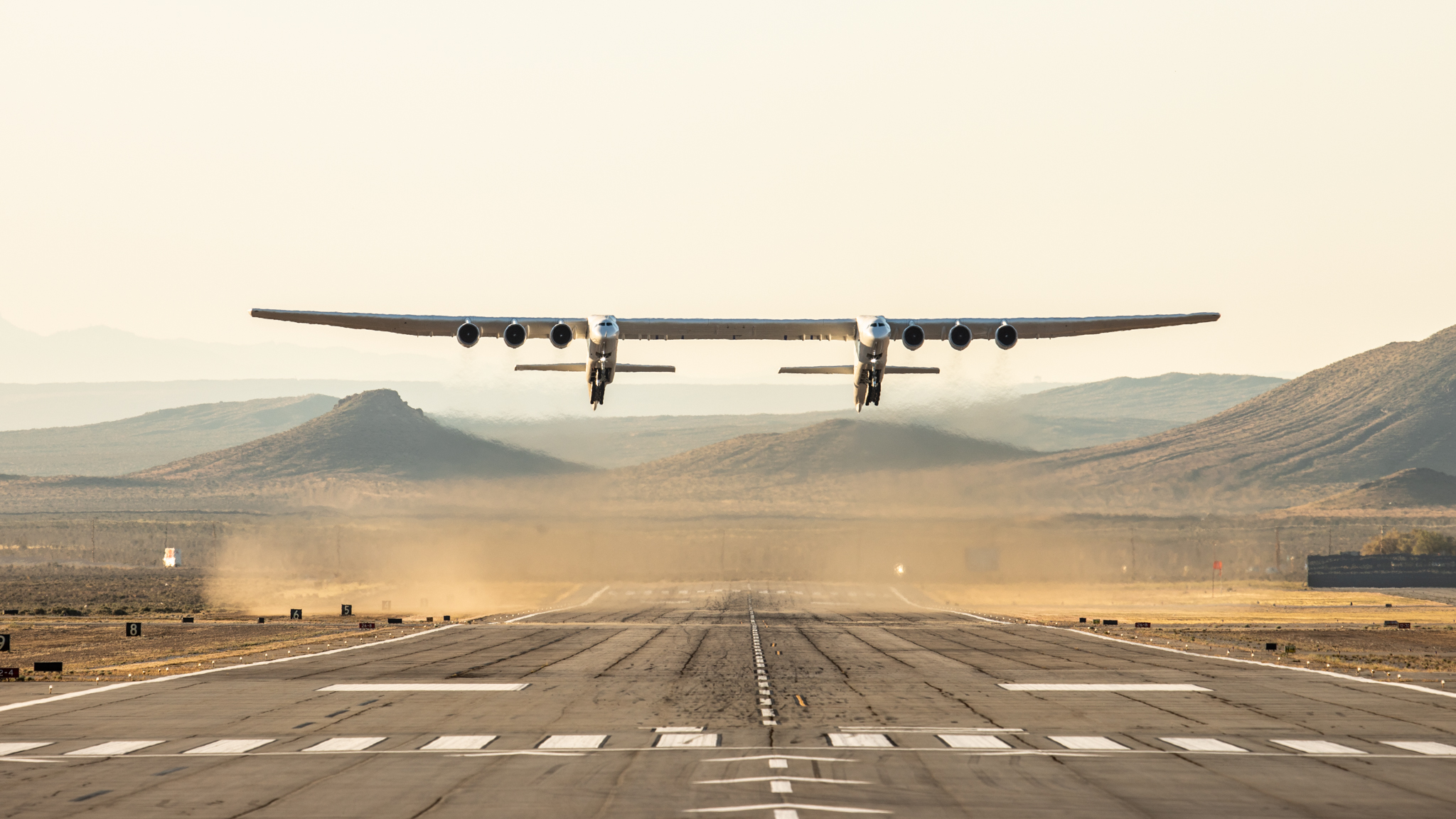
Meanwhile over Mojave...
 

Attachments

  • IMG_20190712_181728.jpg
    IMG_20190712_181728.jpg
    216.3 KB · Views: 37
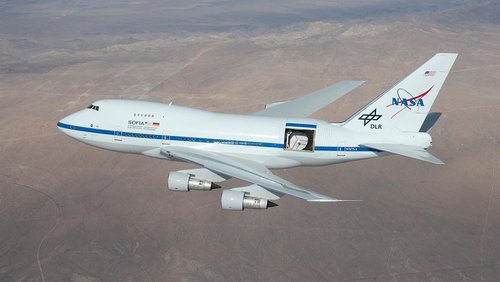
I want to see what they will do with the big bird. Hopefully it is not a caretaking / mothballing team... I want this thing to become a fire bomber (in your face, Evergreen 747) or a NASA high altitude astronomy platform (in your face SOFIA, who needs 747s, really ?)
 
I want to see what they will do with the big bird. Hopefully it is not a caretaking / mothballing team... I want this thing to become a fire bomber (in your face, Evergreen 747) or a NASA high altitude astronomy platform (in your face SOFIA, who needs 747s, really ?)

I like the sound of the NASA high altitude astronomy platform. Though instead of replacing SOFIA I would imagine it working in a different wavelength altogether so they do not compete with each other.
 
Yeah my reference to SOFIA was rather tongue-in-cheek.
What I had in mind was the ER-2, were sensors on pallets are swapped according to the daily or weekly mission. Also the CV-990s used for Spacelab, the Learjets carrying small telescopes, and so many others platforms. NASA has a knack for that.

The Roc aircraft could do the same but on a huge scale. Build a huge pressurized pod and cling that under the central wing. Then into that pod put science instruments that can be swapped according to the mission. The usual business: above 18 000 ft the thick of the atmosphere is below you. At 45 000 ft, perhaps 80% of it. Imagine, when they stuffed a 2.7 m IR telescope into a 747-SP, they had to cut a huge window into the rear fuselage side. Compared to that, building a pod mostly independant from Stratolaunch own structure might be a little easier. You could build the pod from the beginning with a huge hole for the telescope - unlike a 747-SP fuselage which was not exactly designed by Boeing with such idea in mind.
 
Yeah my reference to SOFIA was rather tongue-in-cheek.
What I had in mind was the ER-2, were sensors on pallets are swapped according to the daily or weekly mission. Also the CV-990s used for Spacelab, the Learjets carrying small telescopes, and so many others platforms. NASA has a knack for that.

The Roc aircraft could do the same but on a huge scale. Build a huge pressurized pod and cling that under the central wing. Then into that pod put science instruments that can be swapped according to the mission. The usual business: above 18 000 ft the thick of the atmosphere is below you. At 45 000 ft, perhaps 80% of it. Imagine, when they stuffed a 2.7 m IR telescope into a 747-SP, they had to cut a huge window into the rear fuselage side. Compared to that, building a pod mostly independant from Stratolaunch own structure might be a little easier. You could build the pod from the beginning with a huge hole for the telescope - unlike a 747-SP fuselage which was not exactly designed by Boeing with such idea in mind.

Didn't they study using a pod for various purposes along the way? I seem to recall "large, outsized cargo" but there was mention of other pods for other uses... OH DEAR LORD IT'S THUNDERBIRD 2!

Randy
 
Yeah my reference to SOFIA was rather tongue-in-cheek.
What I had in mind was the ER-2, were sensors on pallets are swapped according to the daily or weekly mission. Also the CV-990s used for Spacelab, the Learjets carrying small telescopes, and so many others platforms. NASA has a knack for that.

The Roc aircraft could do the same but on a huge scale. Build a huge pressurized pod and cling that under the central wing. Then into that pod put science instruments that can be swapped according to the mission. The usual business: above 18 000 ft the thick of the atmosphere is below you. At 45 000 ft, perhaps 80% of it. Imagine, when they stuffed a 2.7 m IR telescope into a 747-SP, they had to cut a huge window into the rear fuselage side. Compared to that, building a pod mostly independant from Stratolaunch own structure might be a little easier. You could build the pod from the beginning with a huge hole for the telescope - unlike a 747-SP fuselage which was not exactly designed by Boeing with such idea in mind.

Unworkable. The wing and fuselage would block the field of view. Need a low wing aircraft.
 
Yeah my reference to SOFIA was rather tongue-in-cheek.
What I had in mind was the ER-2, were sensors on pallets are swapped according to the daily or weekly mission. Also the CV-990s used for Spacelab, the Learjets carrying small telescopes, and so many others platforms. NASA has a knack for that.

The Roc aircraft could do the same but on a huge scale. Build a huge pressurized pod and cling that under the central wing. Then into that pod put science instruments that can be swapped according to the mission. The usual business: above 18 000 ft the thick of the atmosphere is below you. At 45 000 ft, perhaps 80% of it. Imagine, when they stuffed a 2.7 m IR telescope into a 747-SP, they had to cut a huge window into the rear fuselage side. Compared to that, building a pod mostly independant from Stratolaunch own structure might be a little easier. You could build the pod from the beginning with a huge hole for the telescope - unlike a 747-SP fuselage which was not exactly designed by Boeing with such idea in mind.

Unworkable. The wing and fuselage would block the field of view. Need a low wing aircraft.

Wouldn't or couldn't the pod extend forward and aft of the wing for a clear view?

Randy
 
That was my idea indeed... plenty of room to avoid the wing above.
 
You still have the fuselages to the sides.

Not to the rear and front though so you 'field of view' is actually more open. Less a 'hatch' in the side of the pod but more an proper observatory turret fore and aft, (or just one) which you can adjust to sight along the open lanes. You may have to fly "towards" or "away" but your field of view would be the same if not better.

Randy
 
Ok need some mod help here but I was trying to link back to the old thread to link to the Dan DeLong, Teledyne Brown Air Launch To Orbit Spaceplane Concept but no go. (Tried the NSF and Selenian Boondocks link but that seems dead as well :( )

In essence I'm wondering, (which is why I'm trying to do the BoTE) how the BE3/4 and/or Raptor would do in place of the SSME? The RL10 is supposed to be pretty straight forward to convert to methalox so ...

RAndy
Edit: Found the NSF link at: https://forum.nasaspaceflight.com/index.php?topic=27520.msg1811704#msg1811704
I'll try to attach it here
 

Attachments

  • tbe_presentation.pdf
    1.2 MB · Views: 15
Last edited:
You still have the fuselages to the sides.

If it's an astronomical telescope, having a central pod extending somewhat aft of the trailing edge with the tail cut off at a slant leaving a big upwards-exposed hole for the telescope to look up and out from would seema good solution. The airflow environent would seem to be - or at least could be made to be - fairly benign, and the view upwards would be quite clear. Simply point the tail of the aircraft at the target in the sky and fly "away" from it, and the scope could stare at the target probably longer than the fuel supply would allow.
 
Ok need some mod help here but I was trying to link back to the old thread to link to the Dan DeLong, Teledyne Brown Air Launch To Orbit Spaceplane Concept but no go. (Tried the NSF and Selenian Boondocks link but that seems dead as well :( )

In essence I'm wondering, (which is why I'm trying to do the BoTE) how the BE3/4 and/or Raptor would do in place of the SSME? The RL10 is supposed to be pretty straight forward to convert to methalox so ...

RAndy
Edit: Found the NSF link at: https://forum.nasaspaceflight.com/index.php?topic=27520.msg1811704#msg1811704
I'll try to attach it here

That study is fascinating, and so is the paper. The detailed weight breakdowns of the vehicle and Shuttle orbiter particularly. I used it as a template for my suborbital refueling rocketplane.
 
Last edited:
Ok need some mod help here but I was trying to link back to the old thread to link to the Dan DeLong, Teledyne Brown Air Launch To Orbit Spaceplane Concept but no go. (Tried the NSF and Selenian Boondocks link but that seems dead as well :( )

In essence I'm wondering, (which is why I'm trying to do the BoTE) how the BE3/4 and/or Raptor would do in place of the SSME? The RL10 is supposed to be pretty straight forward to convert to methalox so ...

RAndy
Edit: Found the NSF link at: https://forum.nasaspaceflight.com/index.php?topic=27520.msg1811704#msg1811704
I'll try to attach it here

That study is fascinating, and so is the paper. The detailed weight breakdowns of the vehicle and Shuttle orbiter particularly. I used it as a template for my suborbital refueling rocketplane.
Hello Archibald,

It's good to see that you finally seem to be opening up to entertaining the possibility of a subsonically air launched winged reusable launch vehicle with cryogenic rocket propulsion after all... ;)

Martin
 
Last edited:
Air launch is excellent (1100 m/s gain if done properly) but suborbital refueling leave it in the dust, performance-wise. Because it doesn't hit at the extremities ( at the beginning) of the ascent delta-v to Earth orbit, 9 km/s. It punches it right in the guts, at 6 km/s. That's the moment when the exponential aspect of the rocket equation becomes a real, giant PITA. The propellant mass fraction rise smoothly up to 0.85 and 6 km/s.
Then on the last percents - going from 0.85 to 0.95 and 9 km/s it just... skyrockets, pretty brutally.

IF Earth was somewhere in size between Mars (too small) and Venus (smaller, but not enough smaller) chemical propulsion and SSTO would have a far easier time...
 
Last edited:
Air launch is excellent (1100 m/s gain if done properly) but suborbital refueling leave it in the dust, performance-wise. Because it doesn't hit at the extremities ( at the beginning) of the ascent delta-v to Earth orbit, 9 km/s. It punches it right in the guts, at 6 km/s. That's the moment when the exponential aspect of the rocket equation becomes a real, giant PITA. The propellant mass fraction rise smoothly up to 0.85 and 6 km/s.
Then on the last percents - going from 0.85 to 0.95 and 9 km/s it just... skyrockets, pretty brutally.

IF Earth was somewhere in size between Mars (too small) and Venus (smaller, but not enough smaller) chemical propulsion and SSTO would have a far easier time...
If I understand you correctly, how is refueling at 6 km/s accomplished? Leaving the rendezvous and coupling mechanics aside, that would require a rather large dedicated tanker in addition to the orbiter. Considering that that tanker would need, well, copious tankage, propulsion, flight systems, propellant transfer equipment, and (assuming reusability) presumably some sort of landing equipment, I severely doubt that vehicle combo would be any more reliable and cost effective overall than a straight up parallel TSTO with continuous crossfeed, but I'm curious what your (comparative?) analysis based on the TBE spaceplane looks like that drives you to postulating such an exotic solution.
 
Last edited:
drop me a mail in my forum inbox and you shall see. don't want to hijack this thread further...
 
well anybody else interested can do the same, btw
 
Air launch is excellent (1100 m/s gain if done properly) but suborbital refueling leave it in the dust, performance-wise. Because it doesn't hit at the extremities ( at the beginning) of the ascent delta-v to Earth orbit, 9 km/s. It punches it right in the guts, at 6 km/s. That's the moment when the exponential aspect of the rocket equation becomes a real, giant PITA. The propellant mass fraction rise smoothly up to 0.85 and 6 km/s.
Then on the last percents - going from 0.85 to 0.95 and 9 km/s it just... skyrockets, pretty brutally.

Worth starting a spin-off thread?

Technically? :)

If I understand you correctly, how is refueling at 6 km/s accomplished? Leaving the rendezvous and coupling mechanics aside, that would require a rather large dedicated tanker in addition to the orbiter. Considering that that tanker would need, well, copious tankage, propulsion, flight systems, propellant transfer equipment, and (assuming reusability) presumably some sort of landing equipment, I severely doubt that vehicle combo would be any more reliable and cost effective overall than a straight up parallel TSTO with continuous crossfeed, but I'm curious what your (comparative?) analysis based on the TBE spaceplane looks like that drives you to postulating such an exotic solution.

In context you'd need one or two more "Roc's" to make it happen in any case, which presents it's own issues :)

IF Earth was somewhere in size between Mars (too small) and Venus (smaller, but not enough smaller) chemical propulsion and SSTO would have a far easier time...

Whiners... "The planet's too big, it's too small, it's to hot, it's too cold" Yeesh...

Randy
 
LMAO. Martin: the crux of the matter is that the amount of oxidizer to be transfered is not huge, in the 20 000 to 80 000 pound range. The system works better with unbalanced O/F ratios - keroxide is 7, hydrolox is 6. Hydrogen peroxide can be done through bladders, very much like the USN refueling system (probe and drogue). LOX is harder because of ullage and cryogens. Needs a rigid system perhaps boom RDV. https://selenianboondocks.com/2009/11/boom-rendezvous-a-path-not-yet-taken/
 
Now under new ownership.

 
Thanks to a poster on NSF for digging this article up:


Stratolaunch reported the ownership handover today on Twitter and its website, without saying who the new owner is. However, information gleaned from the grapevine at Mojave Air and Space Port, where Stratolaunch’s flight operations are based, suggests that private investors are playing a role.
 
Thanks to a poster on NSF for digging this article up:


Stratolaunch reported the ownership handover today on Twitter and its website, without saying who the new owner is. However, information gleaned from the grapevine at Mojave Air and Space Port, where Stratolaunch’s flight operations are based, suggests that private investors are playing a role.

Private investors? Wonder who they are. I suppose that news will come out eventually.
 

Similar threads

Back
Top Bottom