In that case why weren't there TF-8As produced alongside the initial F-8A variant?
Congress canned them circa 1963. https://web.archive.org/web/20250203142029/http://www.joebaugher.com/navy_fighters/f8_8.html

In that case why weren't there TF-8As produced alongside the initial F-8A variant?
Congress canned them circa 1963. https://web.archive.org/web/20250203142029/http://www.joebaugher.com/navy_fighters/f8_8.html
The Navy was not sure it wanted two seat Crusaders and waited too long - until its budget got a massive cut by Congress for FY64, and now the USN had no money left for a TF-8A order.
It did, that said by the time of Rolling Thunder there were far fewer Essex class carriers operating. So, more sorties for the F-4/A-6 off of the big decks while some of the Essex got A-7's. The Oriskany was the last Essex and operated F-8's and A-7's when it retired in '76.Interesting. The F-4 and A-4 were the carrier-based workhorses throughout the Vietnam War. I wonder if the F-8 (not RF-8) retained such a capability till the last hours of that conflict. Anybody knows?
The last two Essex carriers still around for Rolling Thunder were Hancock and Oriskany. Both were flying J model Crusaders.Interesting. Do you happen to know the exact version of the Crusader that scared the Fresco driver and forced him to eject? Just wondering whether it was an upgraded variant, or the older one.
The series was reportedly fitted with the ASA-63A Sidewinder Expanded Acquisition Mode (SEAM) rig for launching AIM-9C (radar) missiles.

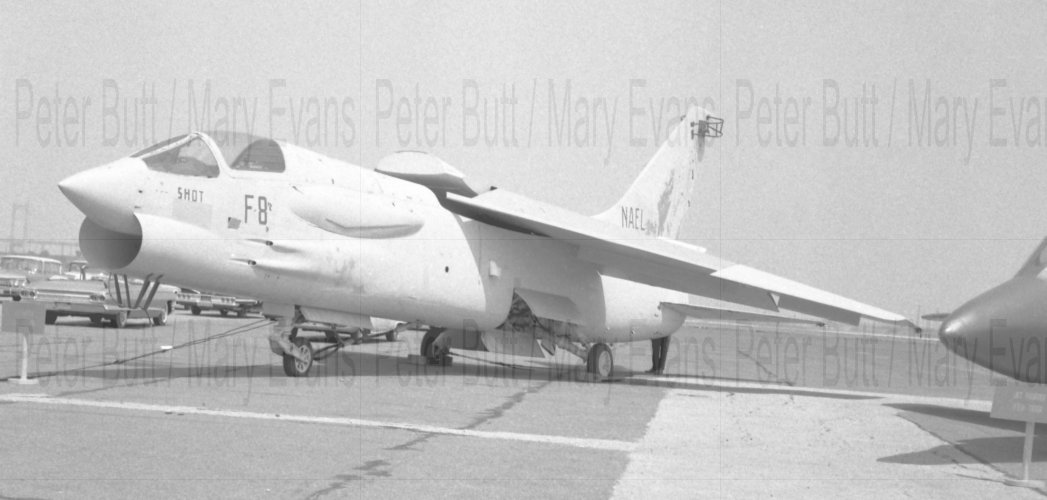
Anybody know which early F8U was used as the barrier shot aircraft at the Naval Air Engineering Laboratory, on Mustin Field, part of the Philadelphia Naval Yard?
Could it be XF8U-1 138901 - cancelled but produced and became an engineless static test airframe