Forest Green
ACCESS: USAP
- Joined
- 11 June 2019
- Messages
- 14,499
- Reaction score
- 31,531


Command and control is a single point of failure. It will be the bane of this country if we ever rely on drones like is in process this very minute and more than just paper studies. With manned aircraft, command and control is distributed among the pilots and we can't hack the human mind yet.Command and control needs to be protected. Under that model, the manned NGAD would be the stealthiest and well armed for self defense.Vise versa, if we produce really capable loyal/disloyal wingmen - there is no strict rule that manned component shall be a Death star.
It may as well be a small, nimble aircraft, relying primarily on datalinks for tactical picture. If the pilot's mission is to command - do we absolutely need much more than a "flying cockpit"? Or maybe survivability can be increased simply by mimicking a cheaper unmanned component, way down the engagement priority list?
Right.Command and control is a single point of failure. It will be the bane of this country if we ever rely on drones like is in process this very minute and more than just paper studies. With manned aircraft, command and control is distributed among the pilots and we can't hack the human mind yet.Command and control needs to be protected. Under that model, the manned NGAD would be the stealthiest and well armed for self defense.Vise versa, if we produce really capable loyal/disloyal wingmen - there is no strict rule that manned component shall be a Death star.
It may as well be a small, nimble aircraft, relying primarily on datalinks for tactical picture. If the pilot's mission is to command - do we absolutely need much more than a "flying cockpit"? Or maybe survivability can be increased simply by mimicking a cheaper unmanned component, way down the engagement priority list?
Pfft. Not real. The wing aft of the tip-to-tip line is doing almost nothing except generate weight, drag, and interesting longitudinal stability issues, and as for the planform alignment - the signatures group gonna grab you by the collar and drag you into the nearest anechoic chamber, where nobody can hear your squeals for mercy.


That central sting apparently is _not_ the nozzle hence it's two engined whatever it is. Demonstrator doesn't need to have F135 thrust class monsters to power it. It is something like SAAB 210 in short.Edit: to be more clear, what I think is that the demonstrator is way smaller than what the final NGAD will be. The final NGAD proposal will certainly have two engines, but the demonstrator doesn't necessarily need to.
What certain ex-Soviet aircraft do you think could merit the honor aside from the ones everyone already knows of? Unlike certain military hardware, there have been no RuAF fighters spotted on flatbeds on highways half a world away to this day. And the bio specifically highlights his role in the program, so the odds of the actual representative airframes being behind these nomenclatures are possible.“Classified prototype” in this context is commonly a euphemism for FME.
Easier than you might think. Set it up so the UAV will accept commands from ANY controller with the right address (and, of course, the correct encryption). It's done today to handle the transfer of control between ground stations.Right.
I'd assume that the drones can follow any NGAD plane, even changing who they listen to mid mission. The trick is writing the handoff process so that it doesn't take much pilot brainpower to do, but is hard to spoof.
Ah, that's good, there's already a start to the process then.Easier than you might think. Set it up so the UAV will accept commands from ANY controller with the right address (and, of course, the correct encryption). It's done today to handle the transfer of control between ground stations.Right.
I'd assume that the drones can follow any NGAD plane, even changing who they listen to mid mission. The trick is writing the handoff process so that it doesn't take much pilot brainpower to do, but is hard to spoof.
folks can laugh as they wish but if VGeometry, morphing wings, (very) Advanced Flow Control (AFC) or all the above are abandoned then one is periling one self.


Command and control is a single point of failure. It will be the bane of this country if we ever rely on drones like is in process this very minute and more than just paper studies. With manned aircraft, command and control is distributed among the pilots and we can't hack the human mind yet.Command and control needs to be protected. Under that model, the manned NGAD would be the stealthiest and well armed for self defense.Vise versa, if we produce really capable loyal/disloyal wingmen - there is no strict rule that manned component shall be a Death star.
It may as well be a small, nimble aircraft, relying primarily on datalinks for tactical picture. If the pilot's mission is to command - do we absolutely need much more than a "flying cockpit"? Or maybe survivability can be increased simply by mimicking a cheaper unmanned component, way down the engagement priority list?

...“Classified prototype” in this context is commonly a euphemism for FME.
the bio specifically highlights his role in the program, so the odds of the actual representative airframes being behind these nomenclatures are possible.
I suggest we look at dockside container cranes. Latest systems are unmanned. But a human is needed for the hookup of the container, to deal with wind, weather, ship movement. So a human, sitting in a remote office, is injected for the 30 seconds needed for hookup. After that the SW runs everything.Command and control is a single point of failure. It will be the bane of this country if we ever rely on drones like is in process this very minute and more than just paper studies. With manned aircraft, command and control is distributed among the pilots and we can't hack the human mind yet.Command and control needs to be protected. Under that model, the manned NGAD would be the stealthiest and well armed for self defense.Vise versa, if we produce really capable loyal/disloyal wingmen - there is no strict rule that manned component shall be a Death star.
It may as well be a small, nimble aircraft, relying primarily on datalinks for tactical picture. If the pilot's mission is to command - do we absolutely need much more than a "flying cockpit"? Or maybe survivability can be increased simply by mimicking a cheaper unmanned component, way down the engagement priority list?
Where are you going to find these pilots?
Part of the transition from manned to unmanned platforms is due to the lack of birth rates causing a dearth of people, both in cohort size and falling on the right side of the bell curve, to fly aircraft. This is not something Western societies, much less militaries, are equipped to solve. Low births and decreasing quantities of laborers across the board seems immanent in post-WW2 industrial societies both capitalist and communist.
Accepting the problems of unmanned combat systems is something future militaries will need to do if they want to continue to exist.
The most viable long-term solution seems to be an autonomous aircraft that operates with little to no man-in-the-loop capability.
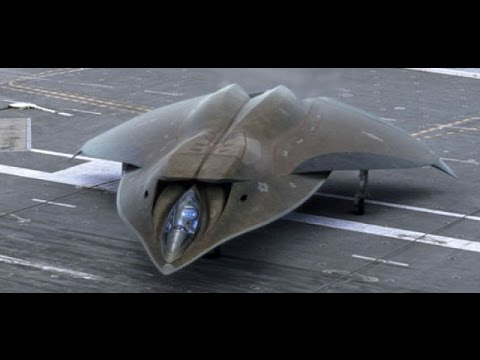
Some illustrations based on LM's outine sketch
View: https://twitter.com/Gsh_60_1/status/1676485984681357314
Seriously doubt the intakes will be above the wings, there are obvious problems with that for a fighter. Although it looks like the intakes are above and below, which is weird.
Starting to look a lot like:
View attachment 703068
The same place we currently find F-22 and F-35 pilots?Command and control is a single point of failure. It will be the bane of this country if we ever rely on drones like is in process this very minute and more than just paper studies. With manned aircraft, command and control is distributed among the pilots and we can't hack the human mind yet.Command and control needs to be protected. Under that model, the manned NGAD would be the stealthiest and well armed for self defense.Vise versa, if we produce really capable loyal/disloyal wingmen - there is no strict rule that manned component shall be a Death star.
It may as well be a small, nimble aircraft, relying primarily on datalinks for tactical picture. If the pilot's mission is to command - do we absolutely need much more than a "flying cockpit"? Or maybe survivability can be increased simply by mimicking a cheaper unmanned component, way down the engagement priority list?
Where are you going to find these pilots?
Yes. But everyone still wants a live human to pull the trigger for the foreseeable future, which tends to suggest a small number of NGAD pilots with at least 1 Loyal Wingman/CCA each. And I'm expecting more like 3 CCA per NGAD.The most viable long-term solution seems to be an autonomous aircraft that operates with little to no man-in-the-loop capability.
The same place we currently find F-22 and F-35 pilots?Command and control is a single point of failure. It will be the bane of this country if we ever rely on drones like is in process this very minute and more than just paper studies. With manned aircraft, command and control is distributed among the pilots and we can't hack the human mind yet.Command and control needs to be protected. Under that model, the manned NGAD would be the stealthiest and well armed for self defense.Vise versa, if we produce really capable loyal/disloyal wingmen - there is no strict rule that manned component shall be a Death star.
It may as well be a small, nimble aircraft, relying primarily on datalinks for tactical picture. If the pilot's mission is to command - do we absolutely need much more than a "flying cockpit"? Or maybe survivability can be increased simply by mimicking a cheaper unmanned component, way down the engagement priority list?
Where are you going to find these pilots?

And I am one of those people that wants a human in the cockpit with the finger on the trigger, I don't want AI controlled AI potentially going rogue and starting world war three.
I suggest we look at dockside container cranes. Latest systems are unmanned. But a human is needed for the hookup of the container, to deal with wind, weather, ship movement. So a human, sitting in a remote office, is injected for the 30 seconds needed for hookup. After that the SW runs everything.Command and control is a single point of failure. It will be the bane of this country if we ever rely on drones like is in process this very minute and more than just paper studies. With manned aircraft, command and control is distributed among the pilots and we can't hack the human mind yet.Command and control needs to be protected. Under that model, the manned NGAD would be the stealthiest and well armed for self defense.Vise versa, if we produce really capable loyal/disloyal wingmen - there is no strict rule that manned component shall be a Death star.
It may as well be a small, nimble aircraft, relying primarily on datalinks for tactical picture. If the pilot's mission is to command - do we absolutely need much more than a "flying cockpit"? Or maybe survivability can be increased simply by mimicking a cheaper unmanned component, way down the engagement priority list?
Where are you going to find these pilots?
Part of the transition from manned to unmanned platforms is due to the lack of birth rates causing a dearth of people, both in cohort size and falling on the right side of the bell curve, to fly aircraft. This is not something Western societies, much less militaries, are equipped to solve. Low births and decreasing quantities of laborers across the board seems immanent in post-WW2 industrial societies both capitalist and communist.
Accepting the problems of unmanned combat systems is something future militaries will need to do if they want to continue to exist.
The most viable long-term solution seems to be an autonomous aircraft that operates with little to no man-in-the-loop capability.
Not sure why communists are immune to demographics, but that’s politics. Finding a few thousand pilots from, U.K., with 70M people, doesn’t seem too difficult. Everyone likes pilots….
If cut off from human/AI control, the aircraft needs to carry on with its mission. When patchy comms are made, new instructions, ROE can be downloaded.
Given what they're talking about for Loyal Wingman roles (missile truck, EW, and recon)Cross your fingers the USAF and USN develop a Loyal Wingman that's actually cheap enough to field at a rate of 2-3 per JSF, otherwise, there won't be enough fighters in Asia to matter for Taiwan and the South China Sea. Hope it's smart enough they don't need a Sentry directing it, too. If not, better hope that F-35 grows a backseater to control the drones.
I think it's a major misunderstanding.The difference being the PLAAF will actually get a Loyal Wingman if they can build one. The USAF has been able to build one for literally decades, it just prefers manned platforms, for some reason.
Last 10 years or so that it's been admitted in public, maybe 15 for the "go there bomb that" with the added mix of the drones independently deciding among the group which drone would attack directly and which would fly SEAD. "Go there bomb that" has existed since cruise missiles got submunition dispensers in the 1980s.I think it's a major misunderstanding.The difference being the PLAAF will actually get a Loyal Wingman if they can build one. The USAF has been able to build one for literally decades, it just prefers manned platforms, for some reason.
We only now approach to true LW capability technology-wise.
Such level of authonomy, allowing to fully cooperate with manned combat a/c under all conditions, is still tomorrow.
"Go there engage that" (i.e. relatively simple algorithm flier like valkyrie or kilzema) is not a loyal wingman per definition...and even this level of mission authonomy is actually very new.

View attachment 702422
View: https://twitter.com/i/status/1673330273411366912
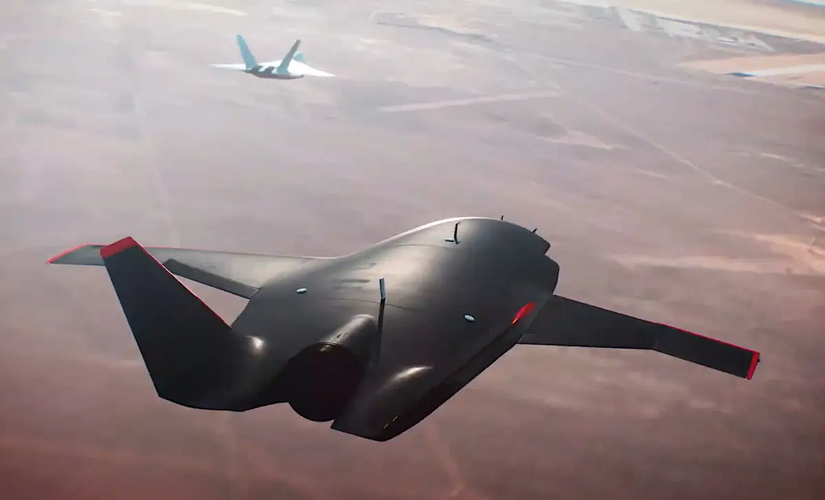
Interesting angle from the latest Lockheed Martin teaser, what do we think is this a V shaped vertical stab? Would love be right about it not being tailless hehe.
Whoever gets to autonomous UAVs with minimal human intervention first will have a huge advantage, particularly if such a platform is short/rough runway capable or runway independent. I doubt anyone is going to completely run out of pilots or maintainers any time soon, but having an aircraft that is quicker to manufacture and doesn't require a pilot allows for a rapid buildup of mass or replacement of attrition. Even more so if the core control element can be ported across multiple designs and manufacturers, which seems to be what the AFRL is attempting.
I assume the PRC has a similar effort underway, though I've not heard any public information released concerning such. Where as the USAF has so many separate UCAV technology programs investigating different aspects on different platforms that it is difficult to track all of them. Most of them seem like tech feeder projects outside of the CCA program, which will be the actual finished platform.
Yes, I think the ideal is going to be one manned plane per strike package. Manned plane +3 CCA fighters to fly air cover. 4+ CCA bombers + 1x or 2x CCA EW for the actual strike. 1x or 2x CCA Recon to fly point and do BDA. Though it's possible that the manned plane will be a 2-seater if they can't get the workload of the CCAs down low enough. It's also possible that they will send a manned fighter in with the CCA bombers for that extra fraction of a second shorter decision time to drop or not drop.I'd guess [the USAF is] trying to merge manned and robotic systems so it can try to have its cake and eat it too, though. A fully unmanned autonomous system is probably too adventurous for most air forces, PRC included, and a fully manned system is demographically unsustainable. The best middle-of-the-road option is optional manning.

Nowhere? Pilots across the board are leaving the USAF for private airlines for a bunch of reasons, none of them easily fixed. COVID's already eviscerated Army enlistment for the next 2 years or so, since recruiters couldn't prowl high schools, and the youngest generation of Americans might be the most anti-militant generation since Vietnam.
The USAF has a shortage of specifically frontline combat fighter pilots going on twenty years now, and the airline industry in general has a dearth of them as well, except airlines can generally beat the USAF in terms of benefits. Which is how they got a record hiring year this year, and the USAF is a record low. Less work, more pay, that always wins. That's why the USAF doesn't hurt for Globemaster or Galaxy drivers, for that matter: it's a job that easily translates to the civil field...
It also doesn't lack for B-2 drivers, either, because strategic bombers are cool.
It's getting to the point where the USAF is going to have to offer direct commissions to fly aircraft. There's always the option of training qualified NCOs as pilots, but that's not something the USAF is or was historically prepared to do, and AFAIK only the Imperial Japanese did that. The USAF tried that with drone pilots and immediately nuked it because the fighter pilot corpus complained.
Eventually something will have to give, either the quantity of manned aircraft will need to decrease, or the number of combat squadrons. The USAF simply seems too heavily wedded to manned aircraft to seriously consider unmanned combat systems, so it will probably just continue declining in pilot quantity, and quality (i.e. shifting heavy drivers to fighter squadrons), as it competes with an ever more cutthroat airline industry's better hiring practices.
Part of this is due to a lack of pilot schools, which is what caused the initial 2,000 pilot shortfall back in FY99 that has dogged the USAF for every year since, but that has been resolved for a number of years now. It's just a demographic game these days.
It will likely go into the next world war without enough pilots, which is rather unprecedented in American history. Alternatively, it will simply go to the next war without enough planes, which has some precedent, except back then the US Army could expect new aircraft on a roughly 4 month schedule (more or less, P-39 might be closer to 6 months from prototype to entry into production) instead of more modern ~400 month schedule.
Yes, I think the ideal is going to be one manned plane per strike package. Manned plane +3 CCA fighters to fly air cover. 4+ CCA bombers + 1x or 2x CCA EW for the actual strike. 1x or 2x CCA Recon to fly point and do BDA. Though it's possible that the manned plane will be a 2-seater if they can't get the workload of the CCAs down low enough. It's also possible that they will send a manned fighter in with the CCA bombers for that extra fraction of a second shorter decision time to drop or not drop.
I'm no expert on sociology but it seems ridiculous if we can't find the number of fighter pilots needed in a society of 330+ million people
when we put far greater numbers of pilots in the skies when we had a significantly smaller population in the past.
Airline pay and accommodations can't be all that perfect where nobody wants to fly anything else.
Again, it was demonstrated over 15 years ago that you can tell a flight of 4 UCAVs to "go bomb this location" and they will choose which plane of the group has the best line to the target and which of the rest will hit other targets in the area, usually described as AA/SAM emplacements and/or radars. This was part of the Lockheed Cormorant development, where the controller of the drones was in a sub, not a plane.The ideal is however many aircraft can be controlled by one person. With highly automated AI this is probably around two or three. Without it, maybe one or two. If the pilot has to both fly his strike aircraft/fighter and tell the robot what to do, then it's closer to zero. This is what was found with drone operation in Afghanistan with Apache crews, at least.
Again, it was demonstrated over 15 years ago that you can tell a flight of 4 UCAVs to "go bomb this location" and they will choose which plane of the group has the best line to the target and which of the rest will hit other targets in the area, usually described as AA/SAM emplacements and/or radars. This was part of the Lockheed Cormorant development, where the controller of the drones was in a sub, not a plane.
That's also why I said that it may end up that the drone complex needs a WSO/Drone Pilot in the back seat of the NGAD.
A ship with a single seat drone control station and restricted communications because continuous communications reveals your location. And no CIC in the Ohios, even the GNs.Yeah, small wonder that a ship with a C3I setup, BLOS communications, and a CIC can control more aircraft than a single seat fighter-bomber.
"Drones Attack-2, -3, -4, and EW-1, follow Attack-1"You need a twin seater to use anything less than a fully autonomous strike aircraft. One man operates the drones and one man flies the plane. Highly advanced drones can be operated by timesharing and hot seating the controls. A good backseater might be able to juggle two or three robots. Less advanced ones need more babysitting by a pilot.
Yes, the USAF is stupid about their design choices, there should have been a requirement for a 2-seater for both F-22 and F-35.If you have a fully autonomous aircraft you don't need the manned component at all, though. The USAF simply made a mistake by making its entire future air force fleet nothing but single seat fighters. It will be paying for this well into the 2070's as JSF won't get a replacement before then.
Since it's all single seaters, there isn't much room for autonomous or robotic aircraft in the USAF, as it's too much of a threat to the pilot community. Which is why the USAF won't go for it.
A ship with a single seat drone control station and restricted communications because continuous communications reveals your location. And no CIC in the Ohios, even the GNs.
Very much a single drone controller telling 4 birds "go here and bomb this"
"Drones Attack-2, -3, -4, and EW-1, follow Attack-1"
WSO then gives orders to Attack-1 as the lead ship in the formation.
"Drones Fighter-1, 2, 3, EW-2, and Recon-1, follow me."
You know, the same way people have been controlling sub-units in RTS games since RTS games were a thing?