Potential of a return to nuclear propulsion for large surface combatants in the future

EmoBirb

ACCESS: Top Secret
Joined
18 January 2025
Messages
2,694
Reaction score
6,921
retouch_2025052519310524.jpg

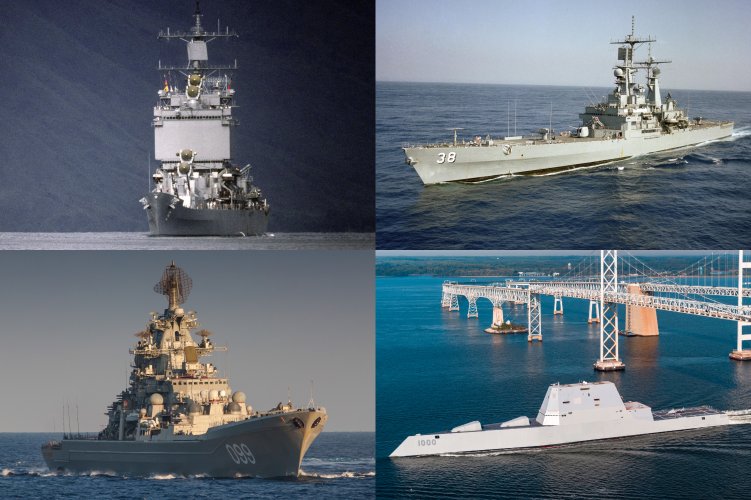
During the cold war, from the 60s to the 70s the United States and Soviet Union developed and built several classes of nuclear powered surface combatants, including the Bainbridge CGN-25, Truxtun CGN-35, Long Beach CGN-9, California Class, Virginia Class and Orlan Class (Kirov Class). Now these ships were all produced in limited numbers, due to the associated cost that comes with nuclear propulsion and the necessary qualifications for the personelle, people constructing them, maintenance personelle and safety precautions. However, these ships offered nearly unlimited endurance, being limited by refueling cycles for the reactors and supplies for the crew.

Now, today we see a steady growth in displacement for surface combatants across the board. Plenty of this weight growths can be attributed to more capable and numerous subsystems like sensor suites and weapons systems. On top of that comes an increasing energy demand to supply these modern combat systems and radars, which require substantial amounts of power. Furthermore with the increasing prevalence of drones, loitering munitions and other cost-effective flying nuisance, the push for direct energy weapons to take on such threats and more conventional threats like missiles continues. But such systems are also very energy intensive, from my understanding at least (which might be wrong, feel free to correct me on that one). Another factor is that reactors these days can be made in a way that elimantes the need for a refueling during a ships life, rather having the expected lifespan of both ship and fuel being more or less the same.

Especially when I look at very large surface combatants like the Zumwalt Class DDGs, Japan's projected ASEV ABM destroyers and 10.000t displacement...figates in Europe, I cannot help but think about how immense the energy needs of such vessels have to be with more and more powerful radars and projected direct energy weapons, on top of computing on board and obviously the propulsion system itself. The fuel consumption must be rather immense on such large vessels. And while I wouldn't think that the average destroyer or frigate would be nuclear powered, I wonder if it wouldn't make sense for modern and projected, very large, very powerful and limited production surface combatants to return to nuclear propulsion to meet the demands of modern systems. Such CGN type vessels could lead any AAW or ABM effort, feature large and powerful radars and could support multiple powerful direct energy weapons while also having the necessary power for adequate propulsion, making them ideally very potent but also quick vessels.

What are y'all thinking about the prospects for nuclear propulsion with regards to future large surface combatants?
 
What are y'all thinking about the prospects for nuclear propulsion with regards to future large surface combatants?
With declining health I no longer keep up with naval things, but from what I know about humans and societies it seems likely those prospects will be affected far more by politics, policies, and personalites, than by technology and engineering.
 
And while I wouldn't think that the average destroyer or frigate would be nuclear powered, I wonder if it wouldn't make sense for modern and projected, very large, very powerful and limited production surface combatants to return to nuclear propulsion to meet the demands of modern systems. Such CGN type vessels could lead any AAW or ABM effort, feature large and powerful radars and could support multiple powerful direct energy weapons while also having the necessary power for adequate propulsion, making them ideally very potent but also quick vessels.
The problem is that there are no plans by anybody for such a vessel. They're too expensive, too many eggs in a single-ship basket, and do nothing that needs doing that can't be done by smaller, cheaper DDGs.

Even then, unless fuel prices get very out of hand it's still something more cheaply done with conventional propulsion, especially as available gas turbines have gotten more powerful since the turn of the millennium.
 
The problem is that there are no plans by anybody for such a vessel. They're too expensive, too many eggs in a single-ship basket, and do nothing that needs doing that can't be done by smaller, cheaper DDGs.

Even then, unless fuel prices get very out of hand it's still something more cheaply done with conventional propulsion, especially as available gas turbines have gotten more powerful since the turn of the millennium.

Do current and very-near-future surface combatants have enough excess power to meet increasingly growing energy demand though?

Especially smaller ships, which become more rare these days, would probably struggle with meeting the energy needs of advanced, large, powerful radar arrays, computer systems and DEWs. Especially when we talk about stuff like multiple high energy laser weapons for missile/drone-defense or on board AI aided battle management systems. Isn't the Arleigh-Burke Flight III essentially maxing out what's possible with the AB design?

They're too expensive, too many eggs in a single-ship basket, and do nothing that needs doing that can't be done by smaller, cheaper DDGs.

Naval powers across the globe move away from that approach quickly though as ships only get bigger, so why not just bite the bullet and make the largest an most capable ships nuclear powered anyway? For example, I doubt a Zumwalt Class destroyer would be significantly more expensive than it already is if it had nuclear propulsion, especially a reactor that wouldn't require mid-cycle refueling.

And most naval powers operate nuclear powered aircraft carriers or submarines anyway, Russia even operates a fleet of nuclear icebreakers and a cargo ship. So there is a pool of people available to most which knows how to work on nuclear maritime propulsion, with the necessary infrastructure in place as well.
 
Well, as 'awful' as I'm sure some will say and as 'impossible' as many might proclaim......because 'obviously' if it's British it's 'rubbish' and just a paper exercise.....And doomed and ....oh just insert whatever you like really as it's apparently allowed...as if we need anyone outside the UK to do us down, when we've literally got millions who do it just fine domestically....
....
.....but....
.....
The UK government seems to have asked that question possibly concerning FADS (Future Air Dominance Ship) the successor program to Type 45. Of surface ship nuclear power plants.

So someone is at least asking questions to ascertain if it's possible and what it would entail.

Which does make sense considering the increasing power requirements of sensors and possible future electromagnetic weapons. From lazers to railguns to microwave weapons and who know what else.
It all demands a lot of power.

As it also makes sense in an increasing ramp up of nuclear training and production. Not just AUKUS related but also to SMR and modular reactors and the need for new large reactors.
So since new designs of reactors be on the cards, and new production of reactors is underway.
It's not that mad an idea to ask questions and explore options.
 
Do current and very-near-future surface combatants have enough excess power to meet increasingly growing energy demand though?
One thing I do know, that is an issue and does get looked at,
for instance,
this 45 page PDF from the USN,
from 2019,

https://www.navsea.navy.mil/Portals/103/Documents/2019_NPES_TDR_Distribution_A_Approved_Final.pdf
FOREWORD
N A V A L P O W E R & E N E R G Y S Y S T E M S
T E C H N O L O G Y D E V E L O P M E N T R O A D M A P
Ensuring maritime superiority requires a ready and capable fleet, and fundamental to fleet capability is the electric power behind the
fleet. This roadmap aligns electric power and energy system development with increasing warfighter power needs, enabling the U.S. Navy to expand our maritime advantage over our adversaries.
The need for a thorough and comprehensive document arises from the tremendous difficulty of the task.
The goal of revolutionizing naval warfare is ambitious and should not be understated. The envisioned change demands intelligent
synchronized development.
Existing U.S. Navy power and energy systems represent a century of combined private and public investment. Fundamentally evolving
the system requires an exceedingly careful and thorough technology development process, to which this roadmap is the guide.

ONE OF THE THINGS THAT IS REALLY
IMPORTANT FOR US AS WE BUILD
THESE PLATFORMS, IS TO MAKE SURE
THAT PLATFORMS HAVE ENOUGH
SPACE, WEIGHT, AND POWER SO THAT
YOU CAN MODERNIZE AND ADAPT
TO FUTURE THREATS.

VICE ADMIRAL THOMAS MOORE
COMMANDER, NAVAL SEA SYSTEMS COMMAND
USNI Navy Maintenance and Maritime Security Conference, June 1, 2017

I’M GOING TO BUY AS
MUCH AS I CAN AFFORD.
AS MUCH POWER AS I CAN
AFFORD. BECAUSE I KNOW
BY THE TIME I RETIRE THE SHIP
I’LL USE IT ALL.

ADMIRAL JOHN M. RICHARDSON
31st CHIEF OF NAVAL OPERATIONS
Directed Energy Summit, March 29, 2017

See also:
this from 2023 that I just found while playing in google,

https://dspace.mit.edu/handle/1721.1/151921
Abstract
Naval ship systems are increasingly requiring more and more electricity to power the myriad advanced offensive and defensive electrically-powered systems. The Zumwalt class destroyer was the Navy’s first fully electric ship. The next generation destroyer, DDG(X), is also planned to be an electric ship. The ships of the future can thus be anticipated to employ 100 megawatts or more of electric power. This rise in electrical demand begets the need to transfer that power more efficiently through compact and robust power distribution systems.

This from February this year,
https://www.usni.org/magazines/proc...-here-thoughts-warship-design-and-acquisition
Stream 3. Structure: Hull and Power Plant Built
to Go the Distance

The hull and power plant are the most enduring aspects of a warship, requiring designs that anticipate future technologies. The Pleiades’ stealthy hull and hybrid power plant are products of advanced computational modeling and material science, ensuring hydrodynamic efficiency, survivability, and the ability to support high-energy systems such as directed-energy weapons. Warship power and cooling margins must be ready to accommodate significant increases in electrical demand from new generations of weapons and data centers that support AI, so she was built with plenty of space, weight, and power (SWAP) for growth. In terms of sustainment, Pleiades is capable of organic repair through on-board additive manufacturing of components and parts. With space and power reserves for future upgrades, her structural design provides high performance and enables rapid system and software updates to guarantee combat superiority over her lifetime.

this from a defense contractor, I'm not seeing a posting date on the page,
https://www.northropgrumman.com/what-we-do/sea/a-new-way-to-power-the-worlds-most-powerful-navy
For the U.S. Navy, the stakes are high when it comes to power management. Modern weapons and sensor systems on ships require a great deal of steady, reliable power to stay ready and alert. But, as any sailor will tell you, space is tight on naval vessels. There isn’t room for the kinds of massive generators and power conversion equipment that might be used to power these weapons on land.

Northrop Grumman engineers tackled this challenge head-on. They developed an entirely new, innovative solution to manage these energy needs on space-constrained ships. Our integrated power and energy systems deliver power as a service, on-demand, with the ability to completely control load dynamics. What’s more, Northrop Grumman’s system integrates with existing infrastructure, which protects the ship's electrical bus from surges or dips in power and makes it easier to upgrade over time.

"We provide the power seamlessly without impacting the rest of the ship's electrical systems," said Matt Superczynski, a chief engineer at Northrop Grumman.
 
Last edited:
The only real benefit nuclear power provides in a surface ship is independence from refueling. A need for more electrical power drives generator size and/or an integrated electric drive type system. You can just as easily power those genset with gas turbines than a nuclear plant, and for far less cost and impact. The USN nuclear surface combatant were something like 1000 tons heavier than their conventionally power equivalents, and even then had lower power. They did have an advantage in availability of power (i.e., 0-100% in seconds-minutes) vs conventional steam plants that were much slower to flex, however this is larger irrelevant with gas turbines.
 
Do current and very-near-future surface combatants have enough excess power to meet increasingly growing energy demand though?

Especially smaller ships, which become more rare these days, would probably struggle with meeting the energy needs of advanced, large, powerful radar arrays, computer systems and DEWs. Especially when we talk about stuff like multiple high energy laser weapons for missile/drone-defense or on board AI aided battle management systems. Isn't the Arleigh-Burke Flight III essentially maxing out what's possible with the AB design?
Yes, the Burke IIIs have maxed out the design. It's why the Navy is working on a new destroyer.

And yes, smaller ships are going to have more trouble meeting the energy needs of all the systems listed. Smaller ships also have more trouble just fitting those kinds of systems to begin with, so it's a bit of a self-solving problem: the smaller the ship, the lower its electrical needs to begin with.

Current designs are not going to be able to meet future electrical demands, no. Near-future, eh, it depends on what's fielded. However, nuclear does not solve the electrical load problem by itself. Remember, nuclear is energy-dense but not power-dense. Gas turbine and diesel plants produce more power per given weight and volume. What nuclear does is eliminate the need for extra fuel bunkers to power the generators - the design question is thus, absent questions about cost and reactor availability, one of whether the tradeoff of more weight and volume to the powerplant itself outweighs the lack of bunkerage.

Naval powers across the globe move away from that approach quickly though as ships only get bigger, so why not just bite the bullet and make the largest an most capable ships nuclear powered anyway? For example, I doubt a Zumwalt Class destroyer would be significantly more expensive than it already is if it had nuclear propulsion, especially a reactor that wouldn't require mid-cycle refueling.

And most naval powers operate nuclear powered aircraft carriers or submarines anyway, Russia even operates a fleet of nuclear icebreakers and a cargo ship. So there is a pool of people available to most which knows how to work on nuclear maritime propulsion, with the necessary infrastructure in place as well.
No, naval powers are not moving away from that approach. Nobody wants to build giant cruisers - the most anyone wants to do is build bigger destroyers/frigates, and every navy looking into a next-gen destroyer wants to maintain or even expand total numbers.

And yes, it would cost significantly more both up-front and lifetime to make, say, a Zumwalt nuclear. On engines alone you'd pay a premium; an MT30 gas turbine costs $20 million, while a submarine reactor cost $100 million - in 2001. On CPI inflation alone that's a $180 million reactor. An extra $300 million is a big chunk of change on a $2 billion surface combatant, let alone any further design costs involved.

Carriers get away with this cost premium since they're so expensive anyway that the cost increase is marginal. Submarines get away with this because nuclear gives submarines that many advantages.

As for the pool of people, that pool is sized to man the submarines and carriers and would need to be dramatically expanded for any serious number of surface combatants, a problem when it takes two years to train a reactor tech and they tend to leave after seven:

However, these numbers are somewhat deceiving because of the extensive training that a sailor in the nuclear field must undergo. Each is required to receive two years of training ashore before they can serve on a ship or submarine at sea, which is typically a 4.5-year assignment—for a total of 6.5 years. But because their initial enlistment is only for a standard five years, many simply extend their time in the navy for two years—to fulfill that first seagoing assignment—and then separate from the service.
https://www.cfr.org/expert-brief/us-navy-has-nuclear-workforce-problem
And that's the USN, with its outsized resources. Everyone else in the nuclear vessel club is working with even smaller pools of trained manpower - and outside of those five, nobody else has the expertise at all.
 
Roughly a week or so ago, CDR. Sal in his substack blog asked an interesting question.
Could you shoehorn one or two reactors from the production line from the Jerry Ford class into a Long Beach class cruiser hull ?
Food for thought.
 
Last edited:
What nuclear does is eliminate the need for extra fuel bunkers to power the generators - the design question is thus, absent questions about cost and reactor availability, one of whether the tradeoff of more weight and volume to the powerplant itself outweighs the lack of bunkerage.

Nuclear also eliminates the Captain's quandary between maintaining systems power and getting his ship back to safe waters. With nuclear, the reactor can run at 100% or more for a decade - the ship will always have enough power to get home despite the power demands of the fight

Whereas with conventional powerplant, the Captain will constantly and nervously have one eye on the bunkerage as his weapons draw power. With the emergence of laser and railgun weapons, that's a critical flaw.
 
There is a lot of development work going on with small modular reactors with a variety of different designs (pwr, molten salt, pebble bed, etc.). Many of these designs are also promising candidates for ship propulsion and there is allready intrest and studies plus certification plans for new nuclear powered civil ships. I'm pretty sure, that nuclear power is the way to go if power demand is high enough.
 
The more energy new systems - like high-power radars, direct enery weapons, AI-capable computers, jam-resistant direct-beam communication systems - would require, the more attractive the nuclear propulsion would become.
 
The more energy new systems - like high-power radars, direct enery weapons, AI-capable computers, jam-resistant direct-beam communication systems - would require, the more attractive the nuclear propulsion would become.
No, it was said otherwise.
"nuclear is energy-dense but not power-dense. Gas turbine and diesel plants produce more power per given weight and volume. "
 
To be fair, new reactor designs may change that - that truism applies to classic pressurized water reactors but may not apply to newer compact reactor designs. We'll have to wait and see.
 
No, it was said otherwise.
"nuclear is energy-dense but not power-dense. Gas turbine and diesel plants produce more power per given weight and volume. "
Problem is, in modern conditions the high-power volume search radars, communication links & combat AI's must be run constantly while ship is operating on theater. So the power-dense sources wouldn't be a good idea. It would basically be as practical as running conventional powered ship at max speed constantly - doable, but range would decrease beyond any practical consideration.
 
No, it was said otherwise.
"nuclear is energy-dense but not power-dense. Gas turbine and diesel plants produce more power per given weight and volume. "
Depends on the amount of stored energx. For larger ships which operate worldwide, the mass and volime of Diesel fuel plus engine is usually higher than the nuclear propulsion
 
Last edited:
Problem is, in modern conditions the high-power volume search radars, communication links & combat AI's must be run constantly while ship is operating on theater. So the power-dense sources wouldn't be a good idea. It would basically be as practical as running conventional powered ship at max speed constantly - doable, but range would decrease beyond any practical consideration.
Range doesn't matter once in theater.
 
Depends on the amount of stored energx. For larger ships which operate worldwide, the mass and volime of Dirsel fuel plus engine is usually higher than the nuclear propulsion
Range doesn't enter into the picture
 
Looking at the size of some proposed civilian 'Small Modular Reactors', and the way they're intended to fit into a sorta-well on site, raises a different question...

Rather than have ship built around the reactor(s), what if each reactor just plugged in, per big VLS silo ??

Like the article above about 'Hybrid Power', you'd still need Diesel for 'creep', turbines for sprint, but base-load and more comes from the two SMRs. Which, unlike the current massive, hyper-complex units, would not need such a skilled staff to operate, cosset, check chloride levels etc etc...

( Yes, I remember that scandal, where Boomer crew tasked with checking chloride etc levels had combat duty stations else-where. Issue 'covered up' rather than logically addressed. 'Beachings' ensued... )
 
What are y'all thinking about the prospects for nuclear propulsion with regards to future large surface combatants?
Unlikely. Nuclear power is screamingly expensive, especially in the 60,000+hp plant size that most surface ships seem to need. (for what it's worth, that's the size plant in an Ohio-class)

You need the shore-side training facilities. You need to identify the people who learn and think the right way to send them to nuke school, which then runs 2 years. 1 year just learning theory, 1 year actually operating a school reactor either in a building or in a moored training ship. All that before they're let loose into the fleet to learn the other stuff.

Thing is, nuclear power does not guarantee having lots of electrical power available. My subs ran really close to maxed out on electrical generation, even when loafing along at Ahead 2/3rds. The overwhelming supermajority of steam the plant could generate was dedicated to driving the main engines, not electrical generators.

New ships with DEWs and big radars and other stuff means that you need IEP systems. Nuclear IEP means turbo-electric drives, like the French use and like the US is installing in the Columbia-class. I'd expect lasers and railguns to have dedicated generators to power their peak demand, over and above what the ship has for generation. Oversized battery banks, too, so that if a DEW generator failed to start you could still use the DEW.

For example, a Burke has 3x generator sets and 4x LM2500s, but only generate about 9-12MW electrical (maybe a bit more, if there's also generators hooked to the LM2500s). Zumwalts use IEP, and have 2x generator sets and 2x MT30s, so they actually generate ~78MW electrical.

IIRC, US nuclear boats still use the same battery set as installed on the old Barbel-class diesel-electric boats (if it ain't broke, don't fix it!). 4 batteries, each 126 cells, 270VDC. I did some math some years back, and you can pack about 5x the amp-hours in lithium batteries as you can lead-acid, in industrial use like on ships. This assumes some loss of volume in the battery packs for cooling. The whole package will weigh about the same and take up about the same volume, just last 5x as long or be able to support 5x or more the discharge rate.


The UK government seems to have asked that question possibly concerning FADS (Future Air Dominance Ship) the successor program to Type 45. Of surface ship nuclear power plants.

So someone is at least asking questions to ascertain if it's possible and what it would entail.
The USN did an analysis of alternatives for nuclear power in the America-class LPHs, back in the late 1990s or early 2000s. It came down to oil would have to cost over $140/barrel for the life of the ship before the extra costs of nuclear broke even. Assuming that was year 2000 dollars in the AoA, oil would have to cost over $260/barrel in 2024 dollars for the America-class to make economic sense as LPHNs.


Looking at the size of some proposed civilian 'Small Modular Reactors', and the way they're intended to fit into a sorta-well on site, raises a different question...

Rather than have ship built around the reactor(s), what if each reactor just plugged in, per big VLS silo ??
Eh, Maybe?

That would require a lot of shielding in each "well", which adds weight and bulk.


Like the article above about 'Hybrid Power', you'd still need Diesel for 'creep', turbines for sprint, but base-load and more comes from the two SMRs. Which, unlike the current massive, hyper-complex units, would not need such a skilled staff to operate, cosset, check chloride levels etc etc...

( Yes, I remember that scandal, where Boomer crew tasked with checking chloride etc levels had combat duty stations else-where. Issue 'covered up' rather than logically addressed. 'Beachings' ensued... )
Of course the Engineering Laboratory tech has combat duty stations elsewhere. They're the radiological controls technicians on the submarine, and chloride levels only get checked daily. They clean up spills, they're doing atmospheric stuff, they're manning fire hoses...

That's a total non-scandal!
 
And yes, it would cost significantly more both up-front and lifetime to make, say, a Zumwalt nuclear. On engines alone you'd pay a premium; an MT30 gas turbine costs $20 million, while a submarine reactor cost $100 million - in 2001. On CPI inflation alone that's a $180 million reactor. An extra $300 million is a big chunk of change on a $2 billion surface combatant, let alone any further design costs involved.
About a decade ago, the rule of thumb was that nuclear power added a billion dollars to the cost of a ship, and a hundred crew to its complement. Disappears into the noise on a carrier, the cost of doing business on a submarine, painful on a surface combatant.
Range doesn't matter once in theater.
Even if that were true, endurance does still matter. Taking a proportion of your ships off station to refuel reduces the capability of the fleet as a whole.

There's a trade between maintaining a fleet train that can refuel ships at sea (which reduces, but doesn't eliminate, the time off station) and building ships that can go longer between refuelling. Nuclear power is a very expensive extreme of that spectrum.
Rather than have ship built around the reactor(s), what if each reactor just plugged in, per big VLS silo ??
Other extreme - nuclear outboard motors.
Thing is, nuclear power does not guarantee having lots of electrical power available. My subs ran really close to maxed out on electrical generation, even when loafing along at Ahead 2/3rds. The overwhelming supermajority of steam the plant could generate was dedicated to driving the main engines, not electrical generators.
Doesn't matter how much steam you generate if the turbogenerators can't use it all. What IEP does is put all the steam through the turbogenerators, and make it the electrical engineers problem to solve distributing the power.
I did some math some years back, and you can pack about 5x the amp-hours in lithium batteries as you can lead-acid, in industrial use like on ships. This assumes some loss of volume in the battery packs for cooling. The whole package will weigh about the same and take up about the same volume, just last 5x as long or be able to support 5x or more the discharge rate.
Japan has started putting lithium batteries in submarines in preference to Stirling engine AIP systems.
 
About a decade ago, the rule of thumb was that nuclear power added a billion dollars to the cost of a ship, and a hundred crew to its complement. Disappears into the noise on a carrier, the cost of doing business on a submarine, painful on a surface combatant.
It's not quite that high on a sub, but it's still a pretty solid number in terms of the total number of engineers you'll need. Adding nuclear power to the Barbel class produced the Skipjack class, and only added about 16 crew (went from 77 to 93). But the Ohio-class has on the order of 60 bodies that are nukes.

And when smaller surface combatants using GTs can get away with maybe 20 engineers instead of most of 100, well...


Doesn't matter how much steam you generate if the turbogenerators can't use it all. What IEP does is put all the steam through the turbogenerators, and make it the electrical engineers problem to solve distributing the power.
Exactly. So on a surface ship with IEP that is under attack, you may slow down a little to whatever the hull speed is in order to open up a whole lot of megawatts to divert to DEWs and Railguns.


Japan has started putting lithium batteries in submarines in preference to Stirling engine AIP systems.
Yep! Reading about that was part of what led me to that chunk of research. Though I'm starting to think that the real bonus to lithium batteries for subs isn't their capacity or discharge rate, but their recharge rate. Being able to go from 20% to 80% charge in 15 minutes is no joke! The fact that you get 5x the capacity in that 15min recharge is a bonus. Even the ability to sustain high speeds for a longer time is a bonus next to being able to recharge in 15 minutes.

Pop up to periscope depth, snorkel, check your radio messages, snort till batteries are at 80% or all message traffic has been received whichever is longer, go deep.
 
The USN did an analysis of alternatives for nuclear power in the America-class LPHs, back in the late 1990s or early 2000s. It came down to oil would have to cost over $140/barrel for the life of the ship before the extra costs of nuclear broke even. Assuming that was year 2000 dollars in the AoA, oil would have to cost over $260/barrel in 2024 dollars for the America-class to make economic sense as LPHNs.

Break-even is an understandable peacetime concern, though it does seem surprising that the cost equivalence was so high given the costs of running refineries, tankers, pipe, pumps, storage tanks, transfer facilities and an entire fleet of oilers to support the fossil-burning ships.

When it kicks off, though, and oil supplies are denied or interdicted, the cost of nuclear will look like a bargain.
 
Break-even is an understandable peacetime concern, though it does seem surprising that the cost equivalence was so high given the costs of running refineries, tankers, pipe, pumps, storage tanks, transfer facilities and an entire fleet of oilers to support the fossil-burning ships.
That is only the cost of crude oil. The other items are fixed and are accounted for. Naval distillate fuel is around $160 per barrel, while crude is now at around $65.
The Navy has to only pay for the oilers.
 
Break-even is an understandable peacetime concern, though it does seem surprising that the cost equivalence was so high given the costs of running refineries, tankers, pipe, pumps, storage tanks, transfer facilities and an entire fleet of oilers to support the fossil-burning ships.

When it kicks off, though, and oil supplies are denied or interdicted, the cost of nuclear will look like a bargain.
That is only the cost of crude oil. The other items are fixed and are accounted for. Naval distillate fuel is around $160 per barrel, while crude is now at around $65.
The Navy has to only pay for the oilers.
In addition, you still need all the oil infrastructure listed for the aircraft.
 
Anyone who has ever worked with Navy nukes (the personnel) knows that the last thing the world needs is more of them. :D
Oh, no, they're great fun to spin up (get all upset about something)

But they definitely are weird. Stuck my head into Maneuvering for something or other, maybe posting Plan of the Day, and the nukes were all giving the powerplant orders in Klingon. "Klingon, guys, really? Nerd out much?" "What's that say about you that you recognized the language instantly, then?" "Was there ever a doubt I was a nerd, though?"


When it kicks off, though, and oil supplies are denied or interdicted, the cost of nuclear will look like a bargain.
Still need the oil infrastructure for aircraft. IIRC, the nuclear carriers only needed to refuel off of Vietnam once a week, when the conventional carriers were refueling 2x a week. So a conventional carrier is burning about as much fuel as the air wing.
 
I've seen the math on those, and with current technology they require powerplants around half the size of the carrier to produce meaningful amounts of fuel. Might be interesting for the future, but currently not viable.
 
I've seen the math on those, and with current technology they require powerplants around half the size of the carrier to produce meaningful amounts of fuel. Might be interesting for the future, but currently not viable.
Depending on how much energy is required for the process in terms of raw heat, that might be viable. Processes that use the waste heat of a nuclear reactor basically only require hull volume.
 
If the mayority of the energy requirement can be fullfilled with heat, it will be less critical than one might think. Even a high temperature nuclear reactor produces about 2.5x as much heat as electricity.

Low temperature waste heat, might be helpfull for desalination and for extracting the CO2 out of the sea water, but not for hydrogen production.
 
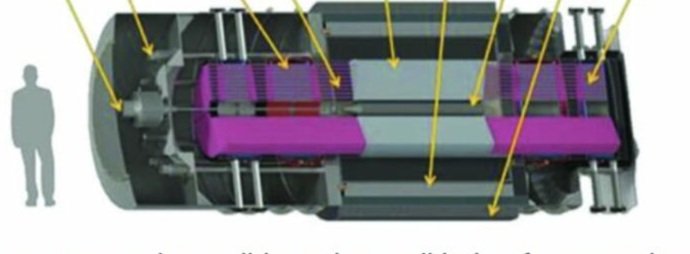
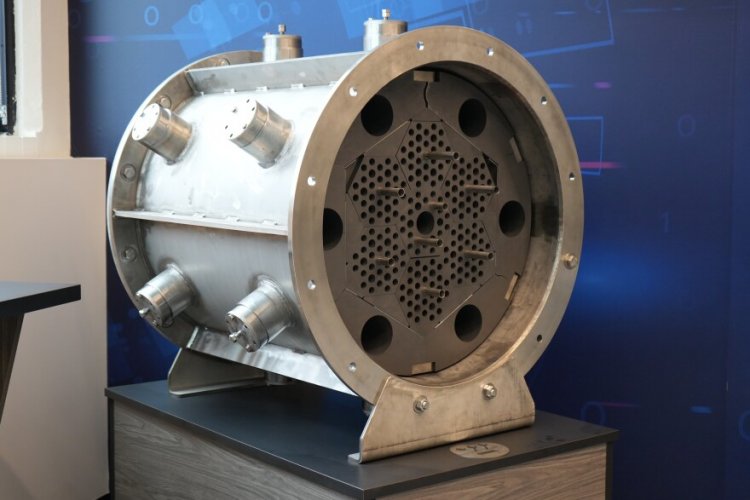
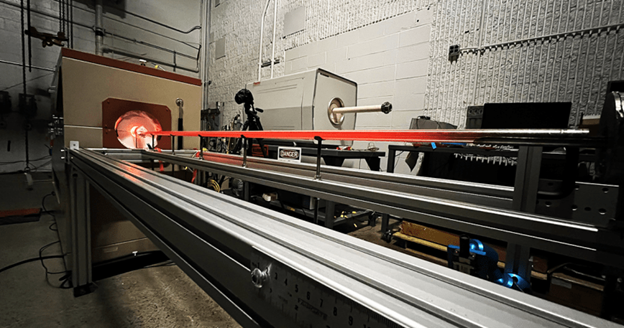
Return to nuclear propulsion requires a simplified design. Heat pipe reactors may yield these benefits. Unlike other designs there is no liquid or gaseous medium interaction in the core. It's a dry battery reactor, instead uses alloy heat pipes and small amount akali metal, and pipe radiate external heat away. It's the same tech used in your computer and phone.
It's entirely passive and relies no moving n parts. Metal has high thermal conductivity, indoors down as fast as it heats up.


1000043018.jpg
1000043017.jpg

The design produce heat with coolant outlet temp 650° thus backwards compatibility to boiler style steam system, without need nuclear reactors large steam generator.

Or a nitrogen/helium based brayton gas turbine.

Mechanical horsepower as well as electricity can be produced.Unlike other reactors transient power fluctuations do not affect efficacy of the heat pipe.

1000043020.png
 
Heat pipes are well suited for this job, but here the cooling should still work to a certein degree when the vessel is sunk and might lay upside down. This must not be undoable, but emergency cooling cennot rely on heatpipes.
 
Back
Top Bottom