Couldn't you just design weapon bays to be placed upside down? So the plane takes off on and lands on one side, but then cruises and does combat turned on other side?That was the idea back in the 90s. Simplifies some things, complicates others, like launching weapons

You are using an out of date browser. It may not display this or other websites correctly.
You should upgrade or use an alternative browser.
You should upgrade or use an alternative browser.
Lockheed Martin Vectis CCA
- Thread starter JetBrain
- Start date
Not James Stockdale
ACCESS: Secret
- Joined
- 29 August 2025
- Messages
- 257
- Reaction score
- 477
This reminds me of the debate about the NSM, which launches with its inlet on the dorsal side but is normally portrayed as flying with its inlet on the ventral side (I don't know if there was ever a conclusion about which way it actually cruises). That being said, the video that Lockheed just published consistently shows the Vectis flying with its inlet on the dorsal side.

- Joined
- 3 June 2011
- Messages
- 20,991
- Reaction score
- 19,255
And almost all videos and pictures show JASSM flying inlet down, yet. . .This reminds me of the debate about the NSM, which launches with its inlet on the dorsal side but is normally portrayed as flying with its inlet on the ventral side (I don't know if there was ever a conclusion about which way it actually cruises). That being said, the video that Lockheed just published consistently shows the Vectis flying with its inlet on the dorsal side.
This reminds me of the debate about the NSM, which launches with its inlet on the dorsal side but is normally portrayed as flying with its inlet on the ventral side (I don't know if there was ever a conclusion about which way it actually cruises). That being said, the video that Lockheed just published consistently shows the Vectis flying with its inlet on the dorsal side.
For NSM it makes sense to change orientation from inlet on top to inlet on bottom depending on which phase of flight you are in. At launch you want the inlet on top to mitigate FOD or sea-spray ingestion. Once the missile is in sustained flight and sea skimming, you want the inlet down because until the terminal phase your most likely going to get detected by another aircraft looking down; in which case you want inlet down so the inlets are obscured.
The trade off here is you’d probably have to fly with some less than optimal airfoil on at least some phase of your flight. You want your airfoil to have some camber which means the airfoil on your wing is upside down at least some of the time. You might have to compensate for this with less range and/or larger tail surfaces or more deflection to maintain control in either orientation. I only see this as realistic for something like NSM where you are only inverted during launch phase but spend vast majority of your time right side up, whichever side that is.
I think people are over-prioritizing high AoA performance in modern air to air combat; especially for CCAs. CCAs are going to be used as long range missile trucks. If these things find themselves in dogfighting ranges, they are put there as sacrificial lambs or as bait.
Scott Kenny
ACCESS: USAP
- Joined
- 15 May 2023
- Messages
- 19,674
- Reaction score
- 28,153
That would suck to load.Couldn't you just design weapon bays to be placed upside down? So the plane takes off on and lands on one side, but then cruises and does combat turned on other side?

- Joined
- 3 September 2006
- Messages
- 1,548
- Reaction score
- 1,698
It would suck even more for the pilot:
Would he be upside down on the ground, with a surely interesting boarding sequence?
Or would he fly the whole rest of the mission upside down?
Like the Shadoks once said: Pourquoi faire simple quand on peut faire compliqué...
Why make it simple when you can make it complicated?
(poor Shadoks, whose Gibis defaulted into ioukés...)
Would he be upside down on the ground, with a surely interesting boarding sequence?
Or would he fly the whole rest of the mission upside down?
Like the Shadoks once said: Pourquoi faire simple quand on peut faire compliqué...
Why make it simple when you can make it complicated?
(poor Shadoks, whose Gibis defaulted into ioukés...)
jsport
what do you know about surfing Major? you're from-
- Joined
- 27 July 2011
- Messages
- 8,628
- Reaction score
- 6,930
If the goal of conventional military campaign(s) is overall effects which impart cascading culmination, than there is nothing more stark than what these CCAs can (not) deliver and that is ordnance volumn. Manned craft & bombers are worth creating large programs. Discreet, spiral developments incompassing only a very few systems, just like the old Big Safari days, is all that CCA programs deserve. Seems like alot of drunken sailor w/ a credit card behavior....
It might not be an easy job for a single FJ44....

bring_it_on
I really should change my personal text
- Joined
- 4 July 2013
- Messages
- 4,224
- Reaction score
- 5,769
The USAF has indicated an interest in future CCA propulsion solutions in the 3000-8000 lbf thrust class in its prior solicitations.
To build on this a bit more, the AFRL Autonomous Collaborative Platform or ACP effort has always run ahead of the USAF's CCA effort to ensure air vehicle concepts are conceived and matured to be able to be pulled into a future CCA increment. We saw that with what became the Valkyrie (ACP Gen 1) and what became the Fury (AdAir) and Vengence (OBSS origins under AFRL contract work). AFRL has funded the GE426 Turbofan for its next ACP hop.
LINK
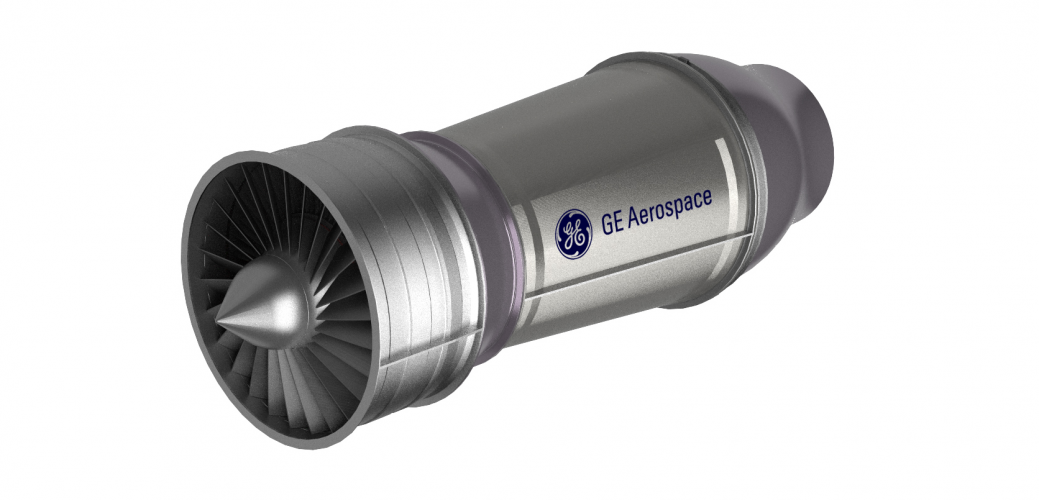
CINCINNATI – GE Aerospace (NYSE:GE) has been awarded a contract from the U.S. Air Force to complete the preliminary design review (PDR) for its new GE426 engine in support of the Air Force’s medium thrust class Autonomous Collaborative Platform (ACP) effort.
The GE426 is a next-generation propulsion system purpose-built for the medium-thrust-class ACP mission, delivering the performance, affordability, and manufacturability required for uncrewed, autonomous combat aircraft.
This award builds on GE Aerospace’s previously demonstrated capability to rapidly design, manufacture, and test small engines in support of the Air Force’s opportunities. In August 2025, GE Aerospace successfully completed the concept design review of the GE426, validating the engine’s architecture and advancing its design.
Under this contract, GE Aerospace will mature the GE426 prototype engine through preliminary design review and further refine system capability, producibility, and cost while ensuring alignment with Air Force requirements for the medium-thrust-class ACP fleet.
“We’ve proven we can rapidly move from concept to engine demonstration with the GEK800, and our focus now is on applying that process to the GE426 to ensure it provides the performance, affordability, and readiness the warfighter needs,” said Steve “Doogie” Russell, Vice President and General Manager of Edison Works at GE Aerospace.
LINK
The GE426 is a next-generation propulsion system from GE Aerospace designed for the medium-thrust-class Autonomous Collaborative Platform mission.
In the 4,000 to 8,000-pound thrust range, it offers the performance, affordability, and manufacturability needed for autonomous combat aircraft. The ACP initiative supports uncrewed systems operating as a coordinated team alongside crewed aircraft.
Attachments
Similar threads
-
DARPA AdvaNced airCraft Infrastructure-Less Launch And RecoverY (ANCILLARY) UAS
- Started by raptor82
- Replies: 21
-

-

-

-
 Lockheed Martin X-44 MANTA (Multi-Axis No-Tail Aircraft)
- Started by Maveric
- Replies: 22