Ford Class Aircraft Carrier 3D Print Model

Reddington777

ACCESS: Top Secret
Joined
23 March 2025
Messages
848
Reaction score
2,800
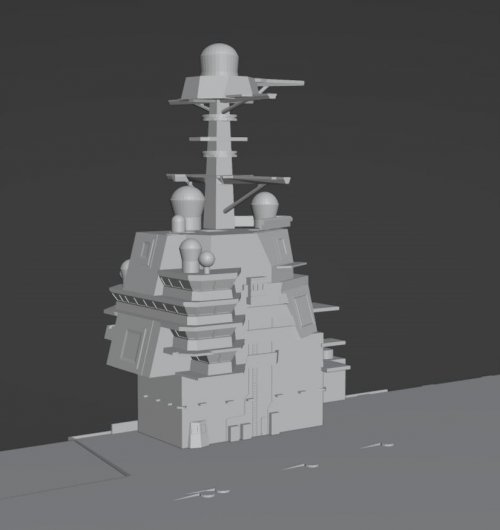
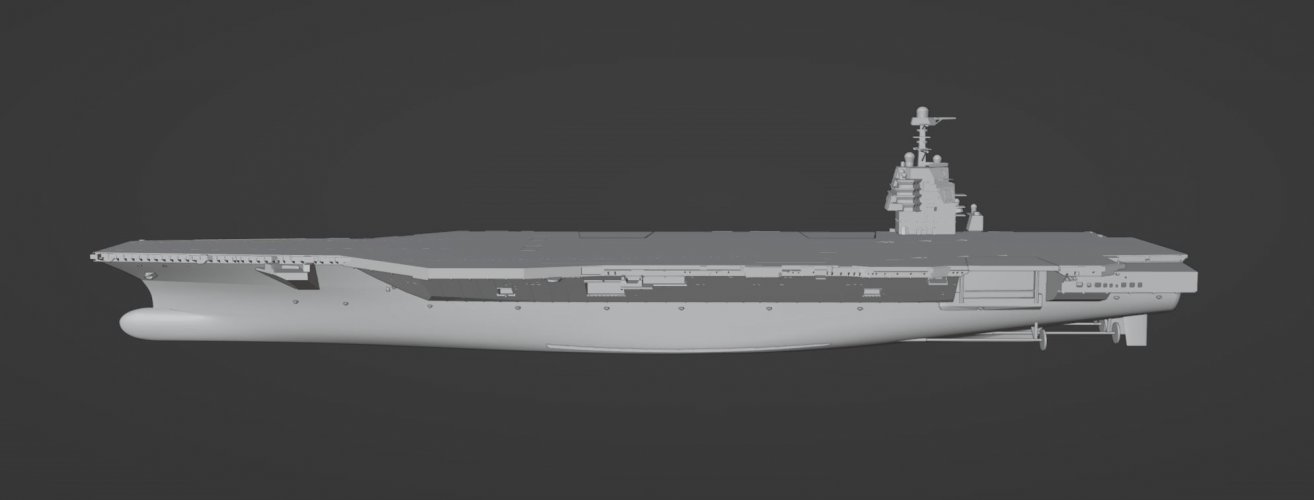
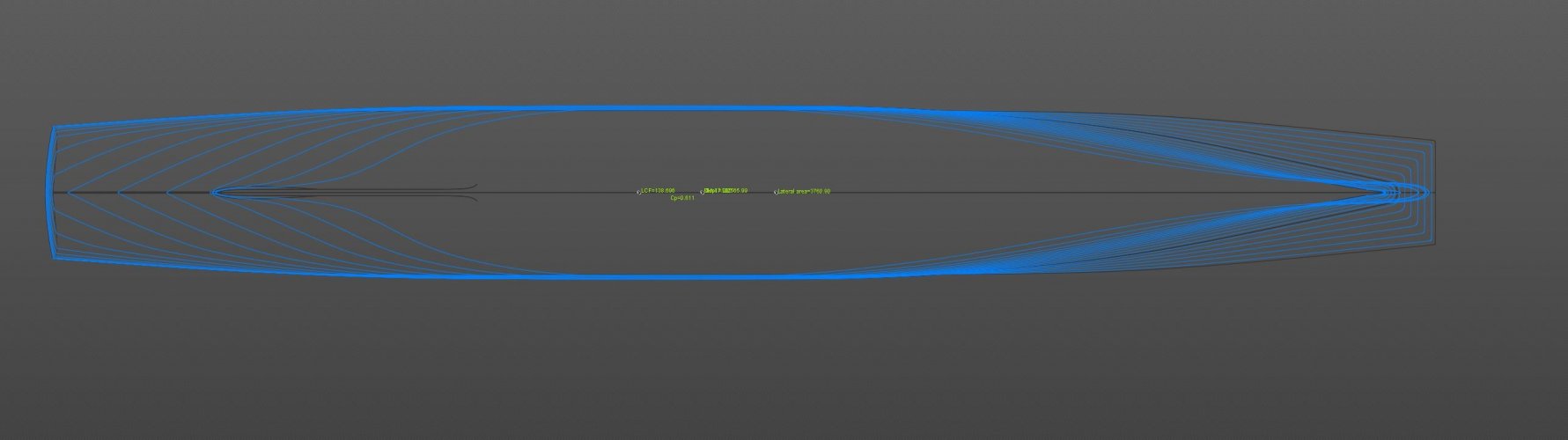
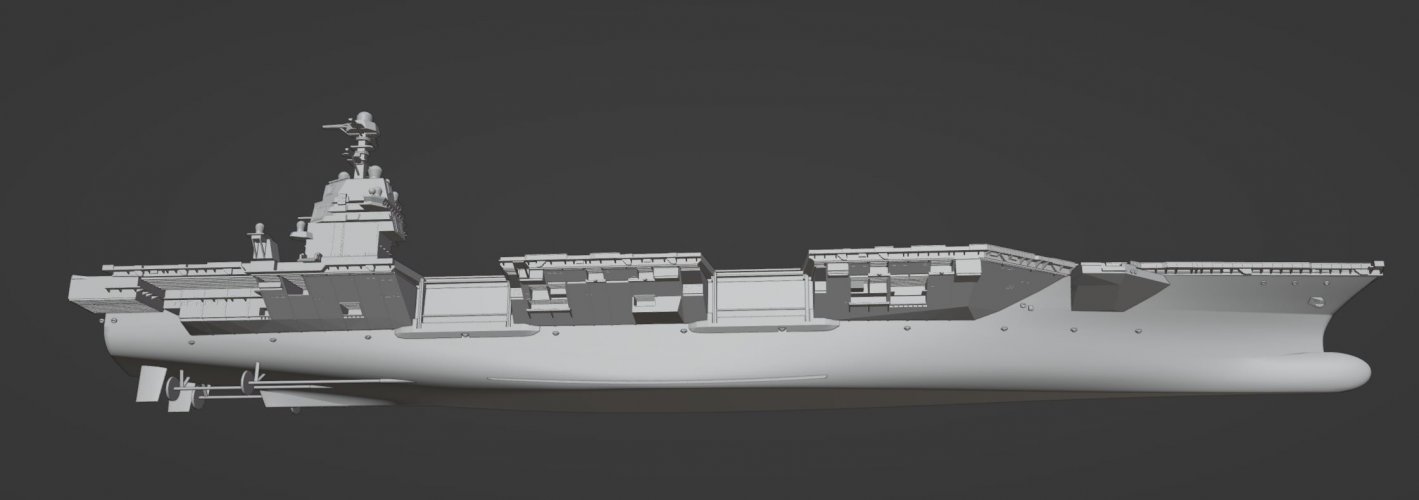
I've been working on a 3d printable model of CVN 80 Enterprise (based on the CVN-78) at 1:700 scale. I've spent a good 5 years trying to get this model to a place of good accuracy and just this morning, I've finally smoothed the hull out to a degree that I find acceptable enough.

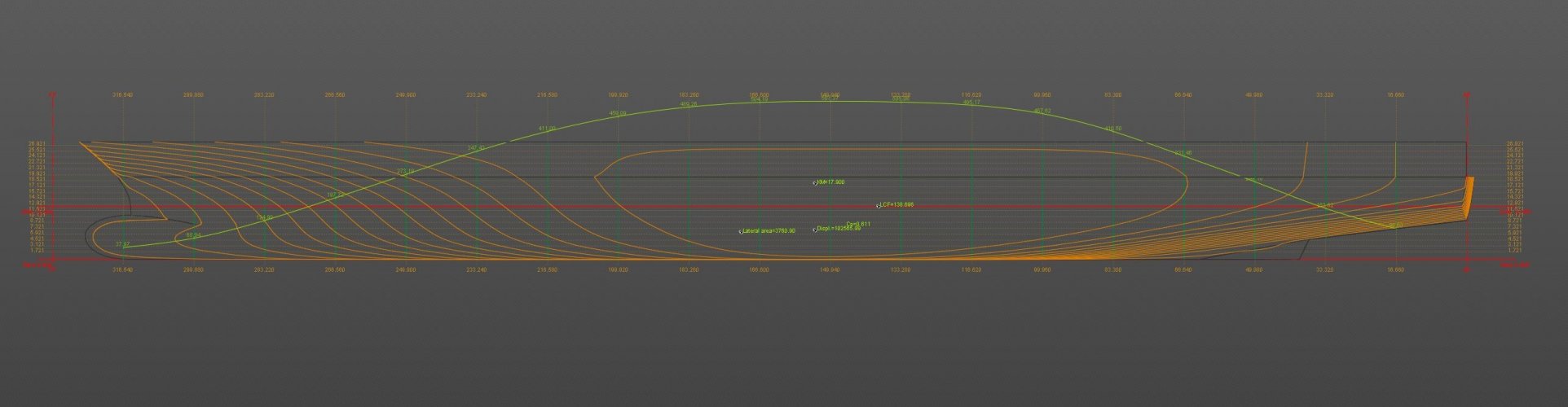
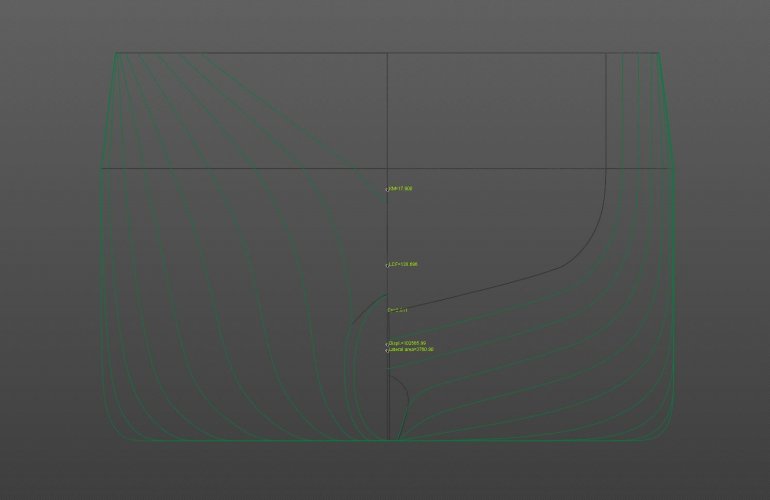
Relying only on publicly available stats, images and videos, I've managed to get the hull form to a displacement of 102500 tons (100,000 tons is the listed displacement). There's also a PPT slide floating around somewhere of different stills of the Ford getting built and after perspective matching, the same hull form gets extremely close to the stills on the PPT. I'm pretty happy with the results.

Not done yet though. All the super structure now needs to be re-modeled to fit the hull form again (except for the island. I'm never touching that thing again with a thousand mile stick).

Once that is done, I'll post up the model for people to download / print on their own.
 
Last edited:
Hi,
That is a very nice model. I really admire the effort you put into the hullform.

Did you use DelftShip to develop the hull (the images look alot like Delftship output). As a naval architect myself its great to see someone going to such great lengths to make a realistic looking hullform, since alot of otherwise nice models available on line can be a little let down by their overly simplistic hull shapes (erspecially under the waterline) but making realistic looking hullforms can be difficult since details aren't always available. :)
 
Did you use DelftShip to develop the hull (the images look alot like Delftship output).
I did! The learning curve was pretty substantial mainly because of the clunky mesh handling but it did posses alot more rigid surface control and analysis than blender.
As a naval architect myself its great to see someone going to such great lengths to make a realistic looking hullform, since alot of otherwise nice models available on line can be a little let down by their overly simplistic hull shapes (erspecially under the waterline) but making realistic looking hullforms can be difficult since details aren't always available. :)
Yes I too am frustrated with a lot of the options online. People with models decked out in details but the hull is a low poly hull with completely wrong contours (And stupid me for spending 400 dollars on that model only to find out the hull was basically a tube). I went back to look in my backups and I started working on the delftship hull in march 2022. Since then I think I've probably stared at every image of the CVN-78 hull I could possibly find on the internet just to try to understand how the hullform changes shape and what reference points to use for measurements. I've had to match the bare steel panel to the same painted panel just to get how high the boot top strip's top and bottom are from the keel.
 
Last edited:
Anyone use DelftShip for sci-fi projects?

The SHIELD Helicarrier would seem a good fit at least.
 
Anyone use DelftShip for sci-fi projects?
It depends on how "sci" you want yout sci-fi to be - granted, there's things in Blender that I've never learned before and there's certainly aspects of delftship that are too deep into marine architecture for me to understand.

Delftship in my opinion should be used when you care a lot about the surface smoothness and you require more options of gauranteeing smoothness besides the mk1 eyeball and different shaders in blender. At the same time - the mesh shading on delft is very much lacking. In places where your control curves don't cover, the mesh will not show the rippling and distortion that might occur with abnormal geometry. I had an extremely difficult time avoiding abdnormal geometry and I ended up having to try and push the abnormal geometry to places with little surface variation to hide it. Delftship also has no short cuts, its controls are clunky and there's been a number of bugs (like shifting a point in the Z axis while in stations view will automatically add a negative sign to your point's y value). You won't be able to free-slice mesh either. Instead you have to painstakingly split lines, connect them and shift them into place.

Blender is great because every tool and mesh manipulation method you can think of is probably covered by blender in a very easily accessible hotkey. The same action in delftship that takes 10 minutes to complete takes seconds in blender. For the mor programmatically inclined, you can do a lot of menial tasks with the python console in blender too. The downside of the speed and accessibility is that many of the most accessible modeling functions in blender will deform meshes way too sharply instead of affecting a large area in a more stiff manner. For structures, sculpting is largely out of the question. In addition to this, Blender gives no options of visualizing the surface smoothness in any other way but shading.

It's best to combine the two - use delftship when you need to create smooth, relatively simple and organic shapes. Use Blender to verify your delftship model for surface defects and easy modeling of superstructures, accessory details. etc.
 

Similar threads

Back
Top Bottom