Folland Aircraft, General Aircraft and Specification 15/38

Schneiderman

ACCESS: Top Secret
Top Contributor
Senior Member
Joined
19 October 2012
Messages
2,072
Reaction score
2,207
This article has been sitting on my hard drive for a couple of years, originally offered to TAH but not published. Rather than leave it gathering digital dust I thought I would share it here
 

Attachments

  • GAL & Folland 15_38.pdf
    9.7 MB · Views: 153
This article has been sitting on my hard drive for a couple of years, originally offered to TAH but not published. Rather than leave it gathering digital dust I thought I would share it here
Fascinating twice over. First for the corporate manoeuvring, and second for the aircraft themselves.

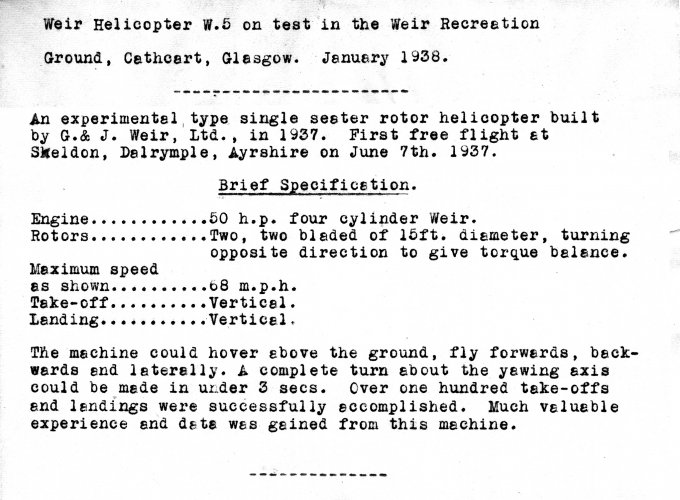
WRT Weir engines, was that the same company as the helicopter pioneers?
 
This article has been sitting on my hard drive for a couple of years, originally offered to TAH but not published. Rather than leave it gathering digital dust I thought I would share it here

Fantastic article! Thank you so much for sharing. Why a publisher would not want to include it in a magazine is beyond me... They prefer to publish a zillionth article on the Lancaster instead of detailed research on projects that could have been lost forever... Sells mags of course, but it's sad because the generation of knowledgeable writers will be gone one day, and what will be left but reprints then??

One remark, though, Ralph: your article fails to observe that there were actually two versions considered for the Folland airliner:
  • the Fo.106, studied in November 1937, to be powered by two Bristol Aquila engines; and
  • the Fo.106A, studied in August 1938, to be powered by two Bristol Taurus engines.
Consequently, the project you described in your article is the latter.

Also, one question: do you know about the C.14/38 specification? In what manner did it differ from the C.15/38 one?
It seemed to me that the Fo.106A may have been a candidate to either one of them, but I wasn't sure which.
 
do you know about the C.14/38 specification? In what manner did it differ from the C.15/38 one?
It seemed to me that the Fo.106A may have been a candidate to either one of them, but I wasn't sure which.
14/38* specified a range of 3000 miles vs a 30mph headwind, from a design with an unpressurized version operating at 10,000 feet and a pressurized version operating at 20-25,000ft.

15/38 specified a long range version capable of 1850 miles vs a 30mph headwind with 10 pax and a short range version capable of 200 miles vs a 40mph headwind with 30 pax.

So essentially 14/38 calls for roughly twice the range of 15/38's long range aircraft.

(Details from British Aircraft Specification File, which has about half a page of specs for each).

* 14/38, not C.14/38, C was a later innovation, and I'm not sure if it wasn't military transport specific
 
OK, first thing is that this project had four engines not two. Second thing is that the design with Taurus engines was tendered to the Air Ministry in July 1938, so clearly predates the August 1938 project date that you quote. It is also worth noting that neither the specification nor the associated drawings make mention of any designation, which, from other Folland projects I have seen appears to be the norm. I suspect this is one of several companies where a designation system was invented later and applied retrospectively, so should be treated with a degree of caution.
The Aquila gave about 75% the power of a Taurus, so this could not have been an either/or situation, if indeed that was ever really considered. In the introduction to the specification the company do express reservations about trying to meet the Short and Long range requirements with a single design
 
OK, first thing is that this project had four engines not two.
Yep. Four engines indeed. My bad!
Second thing is that the design with Taurus engines was tendered to the Air Ministry in July 1938, so clearly predates the August 1938 project date that you quote.
Could explain why I had it with the mention "14/38? 15/38?" as it might have been considered for the earlier specification.
It is also worth noting that neither the specification nor the associated drawings make mention of any designation, which, from other Folland projects I have seen appears to be the norm. I suspect this is one of several companies where a designation system was invented later and applied retrospectively, so should be treated with a degree of caution.
I can't recall where I got the Fo.106/106A distinction from. And yes, it wouldn't be the first time a later invention sticks...
The Aquila gave about 75% the power of a Taurus, so this could not have been an either/or situation, if indeed that was ever really considered. In the introduction to the specification the company do express reservations about trying to meet the Short and Long range requirements with a single design
Interesting. Could it be that this was asked of them and they studied it reluctantly? We may never know...
 
The performance and load called for in both AM Specifications definitely required engines in the 1000hp+ category. Folland and Fairey went with the Taurus, GAL with either Hercules of Merlin. 14/38 was even more demanding making Hercules pretty much the only option. The smaller two-engine airliner design that featured in an advert around this time may have been a candidate for two Aquila, I guess.
The Fo designation system comes from Derek James - Spirit of Hamble, but I have been unable to verify numbers for the earliest projects, including the 15/38 design. Some have a company Specification number, some just a reference to the AM Spec. to which the project was tendered, and some have nothing at all.
 
Last edited:
Back
Top Bottom
