

- Joined
- 22 April 2012
- Messages
- 2,274
- Reaction score
- 2,848
From the US Naval Institute Proceedings (Link):
The above largely covers it but note that the horizontal launcher was also intended to hot launch missiles as well as torpedos and decoys, the paper includes a conceptual image of what appears to be an ESSM in a CCL to be mounted in the horizontal launcher. Additionally, the conceptual graphic shows what appear to be Nulka tubes angled upwards (e.g. they would launch through the deck).
There are later patents for CCL (e.g. covering a re-loadable version and one with a composite canister) but this is the one that best describes the core concept (Link).
Horizontal launcher patent here (Link).
Also:
Dahlgren's role, he points out, emerges from technology-development work carried out by the launcher group and its concentric canister launcher (CCL) program, initiated in 1996 and scheduled to conclude at the end of this year. The effort has aimed to lay the groundwork for meeting new launcher requirements for future surface combatants, including the DD-21 land-attack destroyer, as well as for aircraft carriers, amphibious ships, and submarines.
Mills, who has managed the CCL effort since 1997, stresses that the work, funded through ONR's 6.3 advanced technology program, has aimed at investigating a range of advanced surface ship launcher technologies and designs, including gas-venting management, launcher control, and packaging. According to Mills, the program initially was perceived as an attempt to develop a specific launcher system that would compete with the Navy's long-fielded Mk 41 vertical launch system-a perception that Navy officials say generated lukewarm support, and some opposition both from fleet operators and from Lockheed Martin Naval Electronics & surveillance Systems, which acts as Mk 41 systems integrator.
Dahlgren, supported by United Defense LP, Lockheed Martin, Raytheon, and other companies, designed a CCL system consisting of a two concentric tubes joined at the base. Missiles would be inserted and launched from the inner tube. A new-concept self-contained gas management system would vent missile exhaust gases from the space between the two tubes. A missile-unique electronics package would provide the interface between the individual canister and the shipboard combat system, which would provide targeting. Kyle Jones, head of Dahlgren's launcher branch, says that the use of the missile-- unique electronics eliminates the need for complex interfaces between the launcher and individual missiles.
Each CCL would represent an all-up launcher. Individual launchers could be configured in systems of four, eight, or more, as few as two or even one, depending on the platform or installation. The Mk 41 VLS installation is based on a baseline eight-cell launcher. Dahlgren in 1997 carried out a successful test-fly-out of an Army tactical missile (ATACM), fitted with a short-burn motor, from a prototype CCL, built by United Defense from a titanium alloy.
Mills says that the ATACM test showed the effectiveness of the gas-management system. Since then the program carried out a restrained test-firing of a full-scale Tomahawk booster rocket, and in late 1998 integrated a CCL-unique electronics package developed for the SM-2 Standard air-defense missile with the Aegis combat system. Last year the team tested a prototype "cold-launch" modular horizontal launcher system to launch Mk 46 and Mk 50 torpedoes.
In April of this year the CCL team carried out a restrained firing test of an SM-2 block 4 missile booster and successfully simulated an electronics package for the Evolved Seasparrow air defense missile. The program will conclude this fall with a fly-out test in a ship self-defense configuration.
The above largely covers it but note that the horizontal launcher was also intended to hot launch missiles as well as torpedos and decoys, the paper includes a conceptual image of what appears to be an ESSM in a CCL to be mounted in the horizontal launcher. Additionally, the conceptual graphic shows what appear to be Nulka tubes angled upwards (e.g. they would launch through the deck).
There are later patents for CCL (e.g. covering a re-loadable version and one with a composite canister) but this is the one that best describes the core concept (Link).
Horizontal launcher patent here (Link).
Also:
Attachments
-
MHLS_Paper.pdf3.4 MB · Views: 64
-
Concentric_Canister_Launcher.pdf1.4 MB · Views: 29
-
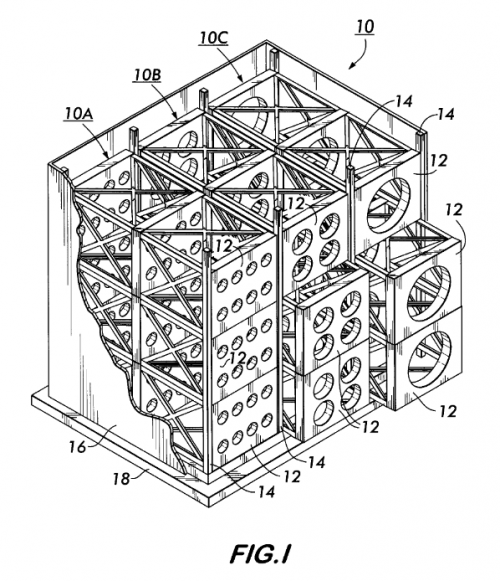 MHLS Patent Diagram.png188.9 KB · Views: 68
 -
 MHLS Conceptual Graphic.png90.6 KB · Views: 81
 -
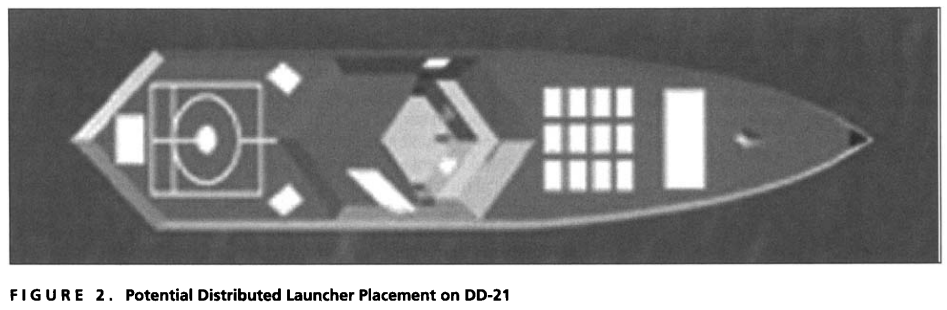 MHLS DD-21 distributed positioning.png217.8 KB · Views: 81
 -
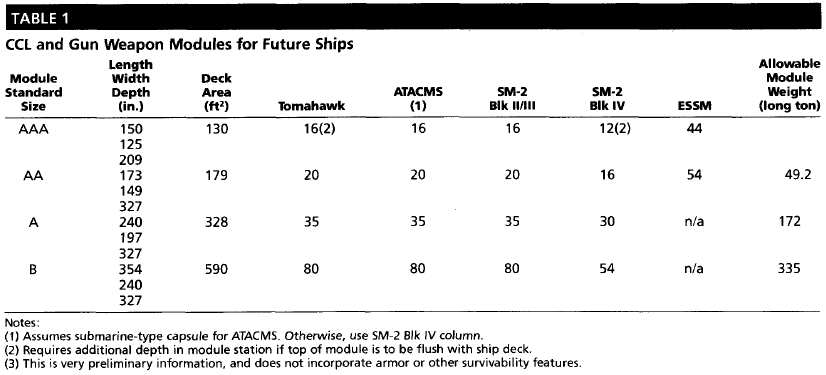 CCL SSES Module Capacities.png47.4 KB · Views: 79
 -
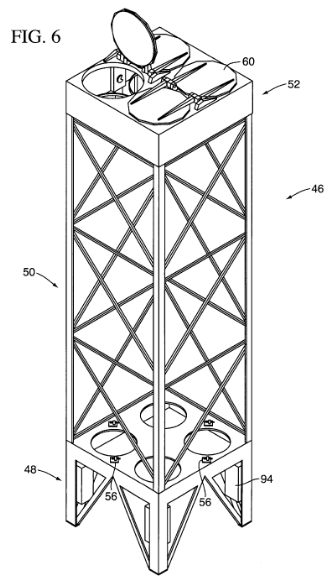 CCL Patent Rack.png85.8 KB · Views: 68
 -
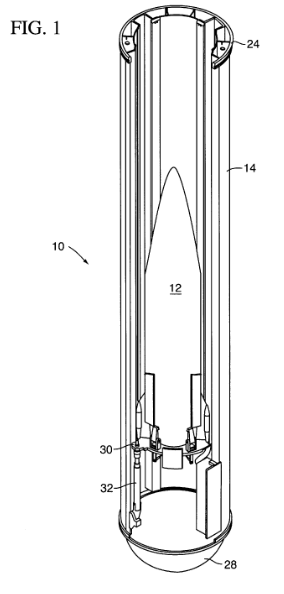 CCL Patent Canister.png41.4 KB · Views: 66
Last edited:


