

Null
ACCESS: Secret
- Joined
- 16 December 2024
- Messages
- 274
- Reaction score
- 515
This looked cool.
https://topwar.ru/274663-giperzvuk-ot-novichkov-raketnyj-kompleks-jujkunczi-1000.html
Hypersonic from newcomers: Yukunji-1000 missile system
China continues to develop hypersonic and create promising missile weapons systems. Recently, he presented another development of this class - the Yukunji-1000 complex. The missile and the warhead from this complex must show high technical and combat characteristics that allow them to hit different targets. At the same time, the most interesting is the fact that the project was developed by a private company.
In 2012, Beijing Lingkong Tianxing Technology Co., Ltd., a private company, started operating in Beijing. The company entered the market with the trademarks Lingkong Tianxing and Space Transportation.
In 2019, the company launched a launch vehicle of its own design for the first time. Later, this project was developed and showed new results. In 2022, the company announced the development of a hypersonic passenger aircraft. In October 2024, the first tests of an unmanned technology demonstrator took place. Work on this project continues and new prototypes are being created.

As it turned out, a few years ago, Lingkong Tianxing began developing a hypersonic missile system for the armed forces behind closed doors. Since then, this project has gone through all stages of development and reached the construction and testing of experimental equipment.
The new missile system was first announced on November 25, 2025 The developer company published a video in which it showed a prototype of the complex, the launch of the missile and the destruction of a conditional target at the test site. The
complex received the loud name "Yukunji-1000" - "Halberd that conquers the skies". The abbreviation YKJ-1000 is also used. If the product is brought to the point of adoption by the PLA, a new official designation may appear.
It is reported that the Lingkun Tianxing company developed the new complex on its own. It used its own developments on the hypersonic topic and a number of new solutions. In order to speed up and simplify work, materials, parts and assemblies available on the commercial market are actively used.
The YKJ-1000 project has reached full-fledged flight tests, and at least one launch has already been carried out with a full flight program and the destruction of a ground target. Probably, tests and fine-tuning of the design will continue. How long these processes will take is unknown.
Also in question are the prospects for serial production and adoption. The PLA Missile Forces are showing great interest in hypersonic systems and have begun operating several such models in recent years. It cannot be ruled out that the new complex from a private company will also find its place in the units.
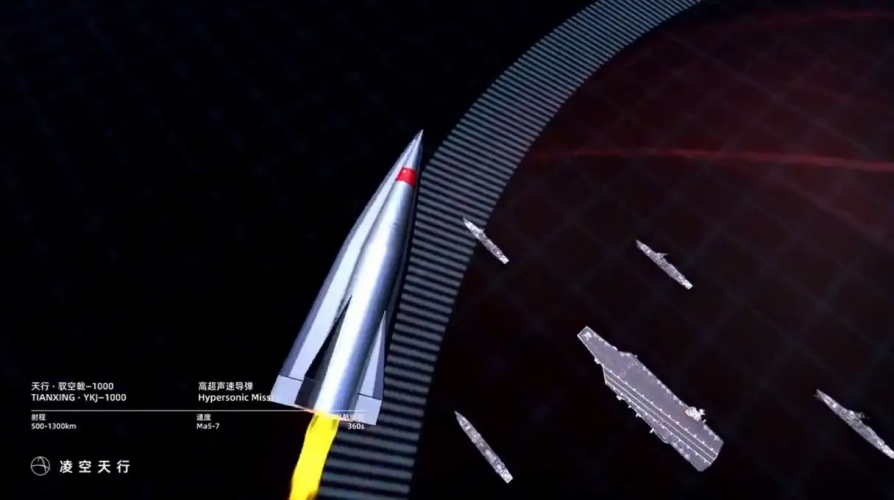
In its current form, the YKJ-1000 is a movable missile system with hypersonic combat equipment. It is designed to destroy ground or surface targets at ranges up to 1300 km.
The main element of the complex is a two-stage missile. The first stage is made in the form of a cylinder with a tail, and a hypersonic aircraft is used as the second. The dimensions and weight of the missile are unknown. It will also not be possible to accurately determine them from the available materials. Perhaps such information will be published later.
The main part of the first stage is a solid-propellant rocket engine. With its help, the rocket takes off, develops the required speed and enters the calculated trajectory. The head of the stage has mounts for the installation of hypersonic combat equipment.

The combat stage is built according to the "load-bearing fuselage" scheme. It has a fuselage with a pointed nose and a flat bottom, the continuation of which is the planes of minimum elongation. The tail unit is provided in the form of two keels collapsed to the sides.
The hypersonic stage has its own propulsion system. From the graphic advertising materials, it follows that these are two liquid-propellant engines or one two-chamber one. Such a setup is used for additional acceleration after separation from the first stage and/or to maintain the speed on the trajectory. Apparently, after the fuel is exhausted, the aircraft goes into gliding.
According to the developer company, on the trajectory, the combat stage develops a speed of up to 5-7 M, which meets the basic requirements for hypersonic systems. The minimum launch range of such ammunition is 500 km. The maximum is 1300 km.The
combat stage has an autopilot and can be equipped with means of searching for a target, for example, a radar homing head. It is claimed that the aircraft is capable of active maneuvering on a trajectory, up to deep turns and 180 ° turns. In the future, it is planned to improve the management system. It should receive new detection devices and software with artificial intelligence.

The method of hitting the target has not yet been specified. Perhaps a hypersonic aircraft carries a warhead. At the same time, high speed characteristics allow you to inflict significant damage to the target only due to kinetic energy.
Available commercial units and parts are widely used in the design of the missile and the complex. Due to this, first of all, it was possible to reduce the cost of production and operation. According to some sources, the YKJ-1000 missile costs about 700 thousand yuan (about 100 thousand dollars).
The Yukunji-1000 experimental complex included a container launcher transported on a semi-trailer. With the help of hydraulic jacks, it is unloaded onto the ground, after which the necessary preparation is carried out. Inside the container, a lifting frame for the rocket and a launch pad are placed. The start is carried out from a vertical position.
Obviously, this is just an experimental sample with limited capabilities. In the future, if the project is developed, a full-fledged self-propelled launcher can be developed like those used as part of other missile systems. It will be performed on one of the available multi-axle chassis, equipped with a lifting device and a closed casing for the rocket.
Hypersonic missile systems are not a novelty for a long time. Similar equipment is being developed and tested in different countries. In addition, a number of complexes of this class have already entered service with the leading armies of the world. In particular, China has its own models of hypersonic weapons.
Against this background, the product "Yukunji-1000" from the company "Lingkun Tianxing" does not look like something new and remarkable from a technical point of view. However, this project is interesting for another reason. It was developed and tested by a private company founded at the beginning of the last decade. Not all young "startups" can boast of such success. At the same time, it should be borne in mind that we are talking about a company from China with all its specifics.
From the point of view of technology, the YKJ-1000 complex does not fundamentally differ from other modern developments of its class. This is a mobile (in the future) system with a two-stage missile carrying hypersonic combat equipment. The developers promise fairly high flight and combat characteristics and wide operational capabilities.
Judging by the published data, the promising complex and its main components have confirmed their fundamental performance. Now it will have to undergo the next tests, during which the calculated characteristics, the required level of reliability, etc.
, will be shown. After that, the new product must be evaluated by the armed forces - they will decide whether to adopt it and put it into production. In case of a positive decision, Yukunji-1000 will complement other hypersonic systems in service with the PLA.
What the future of the new Chinese missile system will be is still unknown. However, this project has already attracted attention and shown that hypersonic technologies are no longer the prerogative of large organizations and companies with extensive experience in rocket technology. The further development of this situation is of particular interest.
https://topwar.ru/274663-giperzvuk-ot-novichkov-raketnyj-kompleks-jujkunczi-1000.html
Hypersonic from newcomers: Yukunji-1000 missile system
China continues to develop hypersonic and create promising missile weapons systems. Recently, he presented another development of this class - the Yukunji-1000 complex. The missile and the warhead from this complex must show high technical and combat characteristics that allow them to hit different targets. At the same time, the most interesting is the fact that the project was developed by a private company.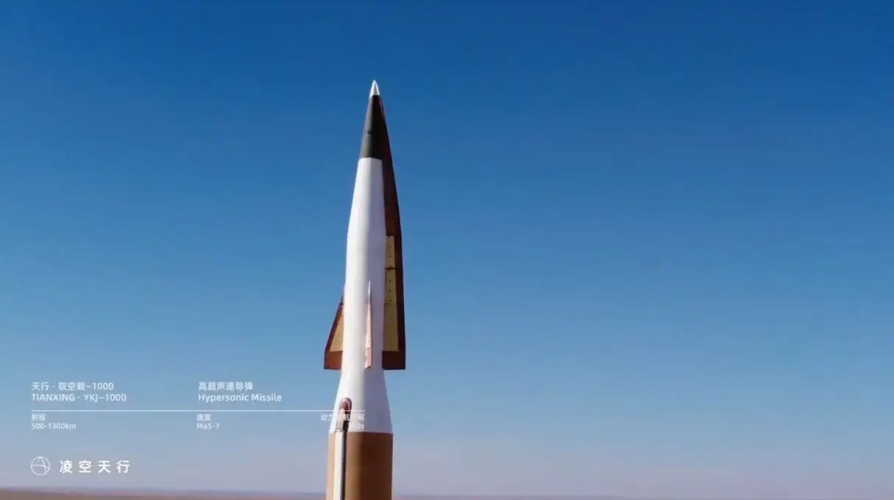
A new player in the market
In 2012, Beijing Lingkong Tianxing Technology Co., Ltd., a private company, started operating in Beijing. The company entered the market with the trademarks Lingkong Tianxing and Space Transportation.
In 2019, the company launched a launch vehicle of its own design for the first time. Later, this project was developed and showed new results. In 2022, the company announced the development of a hypersonic passenger aircraft. In October 2024, the first tests of an unmanned technology demonstrator took place. Work on this project continues and new prototypes are being created.
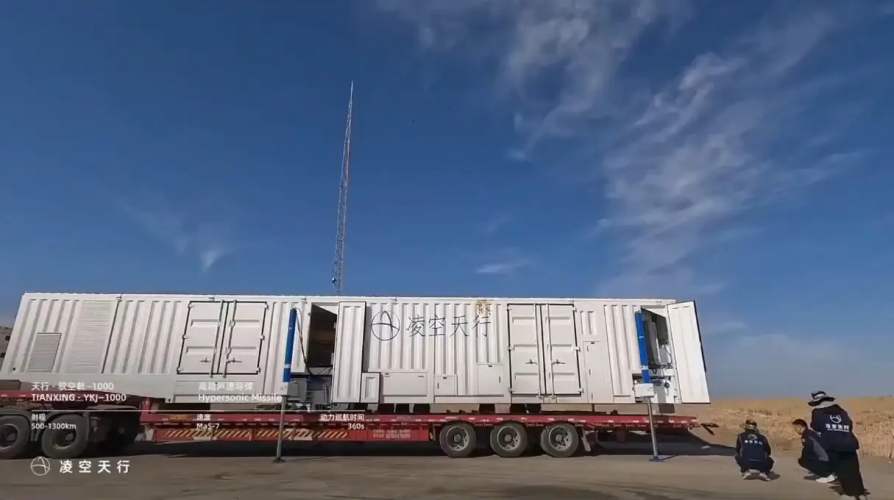
As it turned out, a few years ago, Lingkong Tianxing began developing a hypersonic missile system for the armed forces behind closed doors. Since then, this project has gone through all stages of development and reached the construction and testing of experimental equipment.
"The Halberd That Conquers the Skies"
The new missile system was first announced on November 25, 2025 The developer company published a video in which it showed a prototype of the complex, the launch of the missile and the destruction of a conditional target at the test site. The
complex received the loud name "Yukunji-1000" - "Halberd that conquers the skies". The abbreviation YKJ-1000 is also used. If the product is brought to the point of adoption by the PLA, a new official designation may appear.
It is reported that the Lingkun Tianxing company developed the new complex on its own. It used its own developments on the hypersonic topic and a number of new solutions. In order to speed up and simplify work, materials, parts and assemblies available on the commercial market are actively used.
The YKJ-1000 project has reached full-fledged flight tests, and at least one launch has already been carried out with a full flight program and the destruction of a ground target. Probably, tests and fine-tuning of the design will continue. How long these processes will take is unknown.
Also in question are the prospects for serial production and adoption. The PLA Missile Forces are showing great interest in hypersonic systems and have begun operating several such models in recent years. It cannot be ruled out that the new complex from a private company will also find its place in the units.
Complex and components
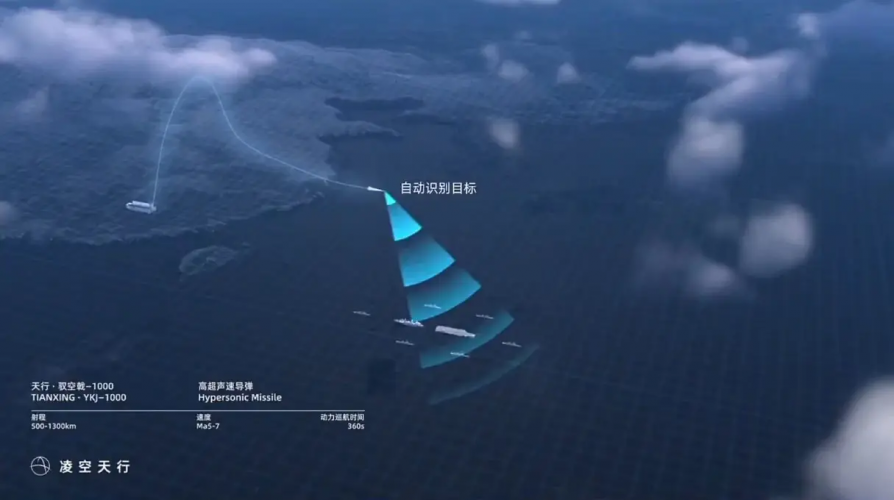
In its current form, the YKJ-1000 is a movable missile system with hypersonic combat equipment. It is designed to destroy ground or surface targets at ranges up to 1300 km.
The main element of the complex is a two-stage missile. The first stage is made in the form of a cylinder with a tail, and a hypersonic aircraft is used as the second. The dimensions and weight of the missile are unknown. It will also not be possible to accurately determine them from the available materials. Perhaps such information will be published later.
The main part of the first stage is a solid-propellant rocket engine. With its help, the rocket takes off, develops the required speed and enters the calculated trajectory. The head of the stage has mounts for the installation of hypersonic combat equipment.
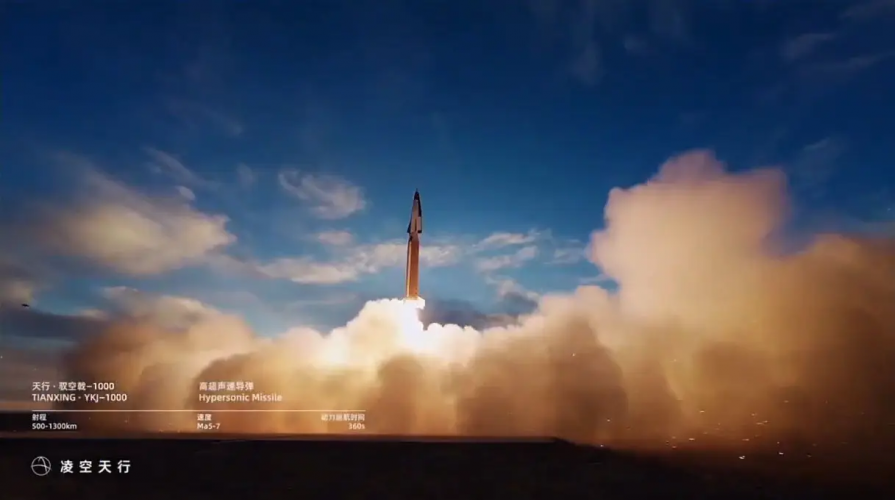
The combat stage is built according to the "load-bearing fuselage" scheme. It has a fuselage with a pointed nose and a flat bottom, the continuation of which is the planes of minimum elongation. The tail unit is provided in the form of two keels collapsed to the sides.
The hypersonic stage has its own propulsion system. From the graphic advertising materials, it follows that these are two liquid-propellant engines or one two-chamber one. Such a setup is used for additional acceleration after separation from the first stage and/or to maintain the speed on the trajectory. Apparently, after the fuel is exhausted, the aircraft goes into gliding.
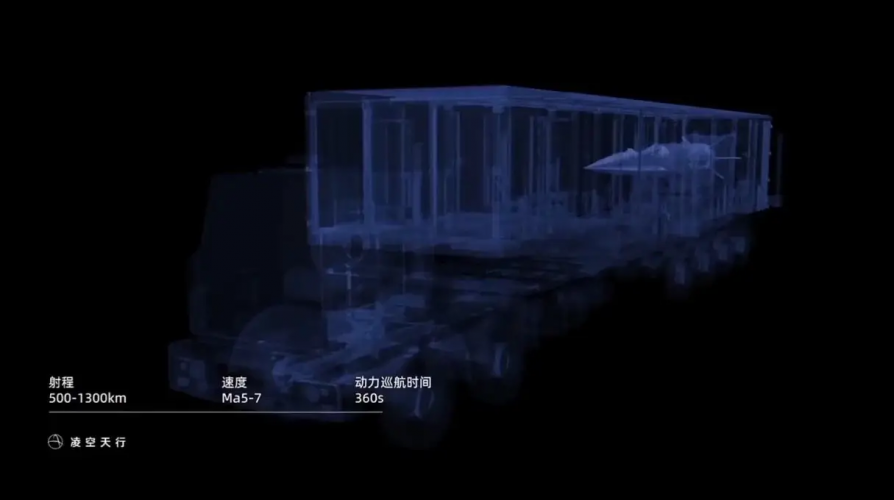
According to the developer company, on the trajectory, the combat stage develops a speed of up to 5-7 M, which meets the basic requirements for hypersonic systems. The minimum launch range of such ammunition is 500 km. The maximum is 1300 km.The
combat stage has an autopilot and can be equipped with means of searching for a target, for example, a radar homing head. It is claimed that the aircraft is capable of active maneuvering on a trajectory, up to deep turns and 180 ° turns. In the future, it is planned to improve the management system. It should receive new detection devices and software with artificial intelligence.
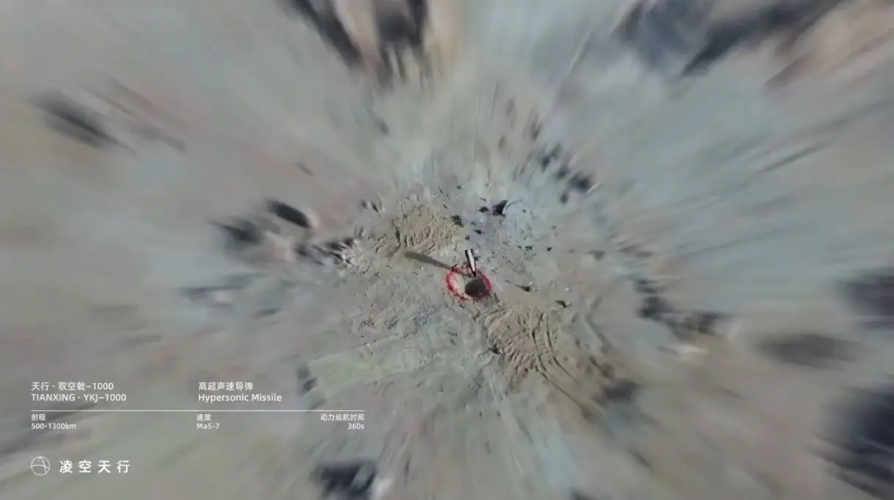
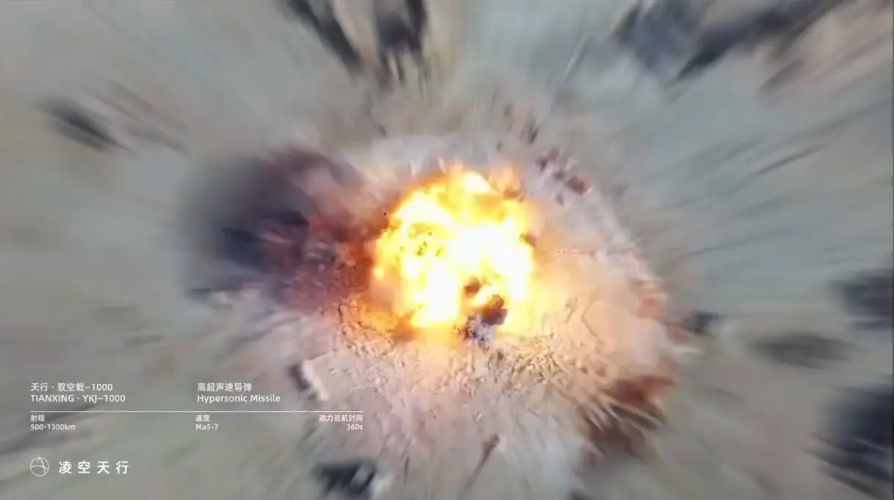
The method of hitting the target has not yet been specified. Perhaps a hypersonic aircraft carries a warhead. At the same time, high speed characteristics allow you to inflict significant damage to the target only due to kinetic energy.
Available commercial units and parts are widely used in the design of the missile and the complex. Due to this, first of all, it was possible to reduce the cost of production and operation. According to some sources, the YKJ-1000 missile costs about 700 thousand yuan (about 100 thousand dollars).
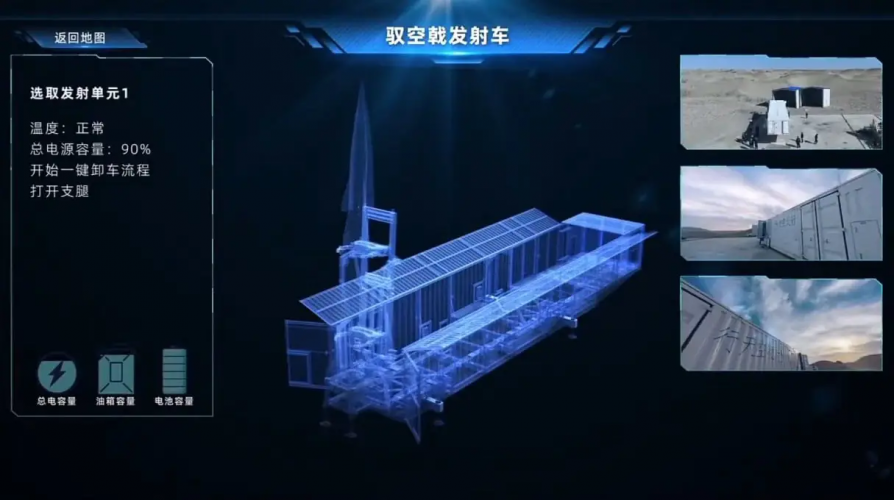
The Yukunji-1000 experimental complex included a container launcher transported on a semi-trailer. With the help of hydraulic jacks, it is unloaded onto the ground, after which the necessary preparation is carried out. Inside the container, a lifting frame for the rocket and a launch pad are placed. The start is carried out from a vertical position.
Obviously, this is just an experimental sample with limited capabilities. In the future, if the project is developed, a full-fledged self-propelled launcher can be developed like those used as part of other missile systems. It will be performed on one of the available multi-axle chassis, equipped with a lifting device and a closed casing for the rocket.
Unexpected novelty
Hypersonic missile systems are not a novelty for a long time. Similar equipment is being developed and tested in different countries. In addition, a number of complexes of this class have already entered service with the leading armies of the world. In particular, China has its own models of hypersonic weapons.
Against this background, the product "Yukunji-1000" from the company "Lingkun Tianxing" does not look like something new and remarkable from a technical point of view. However, this project is interesting for another reason. It was developed and tested by a private company founded at the beginning of the last decade. Not all young "startups" can boast of such success. At the same time, it should be borne in mind that we are talking about a company from China with all its specifics.
From the point of view of technology, the YKJ-1000 complex does not fundamentally differ from other modern developments of its class. This is a mobile (in the future) system with a two-stage missile carrying hypersonic combat equipment. The developers promise fairly high flight and combat characteristics and wide operational capabilities.
Judging by the published data, the promising complex and its main components have confirmed their fundamental performance. Now it will have to undergo the next tests, during which the calculated characteristics, the required level of reliability, etc.
, will be shown. After that, the new product must be evaluated by the armed forces - they will decide whether to adopt it and put it into production. In case of a positive decision, Yukunji-1000 will complement other hypersonic systems in service with the PLA.
What the future of the new Chinese missile system will be is still unknown. However, this project has already attracted attention and shown that hypersonic technologies are no longer the prerogative of large organizations and companies with extensive experience in rocket technology. The further development of this situation is of particular interest.


