Depressing reading.
Information overload of the crew, First Officer with documented (in 2016)Recurring maintenance issues/errors, exacerbatingdifficulties to control aircraft during manual flight
[...]
[First Officer's] application exercise for stall recovery is difficult due to wrong concept of the basic principle for stall recovery in high or low level” during a 2017 observationProblems with an earlier flight of the crashed aircraft, contrasted with what happened on its final flightabsence of an illuminated AOA DISAGREE alert, due to a misconfiguration in the MAX’s software that Boeing discovered in 2017 but did not plan to fix until 2020
[...]
“The AOA DISAGREE alert was not correctly enabled during Boeing 737-8 (MAX) development,” the NTSC says. “As a result, it did not appear during flight with the miscalibrated AOA sensor, could not be documented by the flight crew and was therefore not available to help maintenance.”
[...]
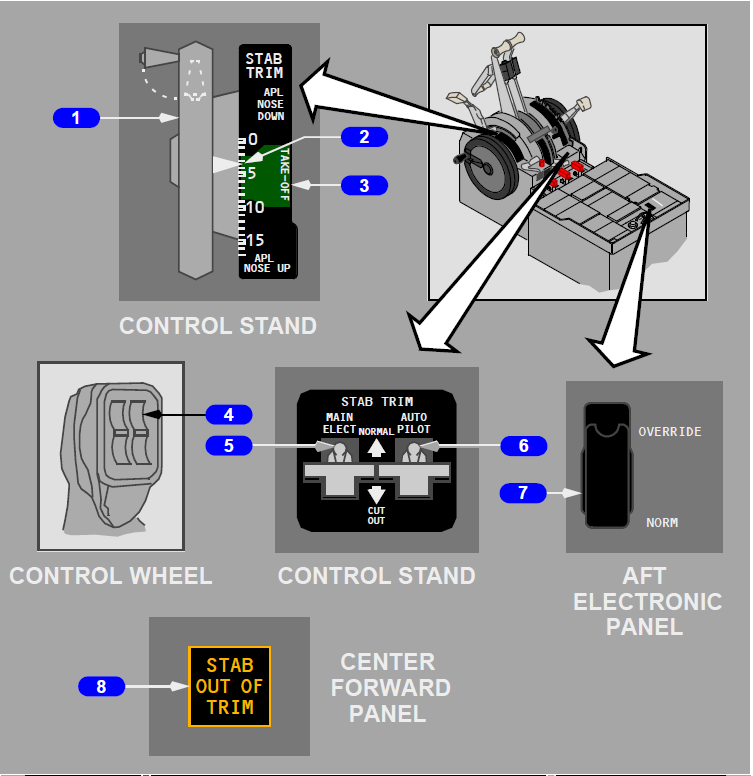
The runaway stabilizer checklist calls for using the cutout switches if other actions, including electric trim inputs, do not stop the runaway condition. On both JT610 and the March 10, 2019, crash of Ethiopian Airlines Flight 302, another 737-8, pilots used electric trim to counter the MCAS. This interrupted the nose-down stabilizer movements, but faulty AOA data triggered the MCAS repeatedly.
“[Erroneous] MCAS activation does not look like a typical stabilizer runaway, which is continuous uncommanded (runaway) movement of the stabilizer,” the NTSC report says. “During the accident flight, the stabilizer movement was not continuous; the MCAS commands were bounded by the MCAS authority (up to 2.5 deg); the pilots were able to counter the nose-down movement using opposing manual electric trim inputs. . . . After the pilots released the manual electric input and MCAS was reset, there was not another MCAS command for 5 sec.”
There is no evidence of the JT610 crew referring to the runaway-stabilizer checklist or toggling center pedestal-mounted cut-out switches that would have stopped the automatic stabilizer movements. The 737 MAX flight crew operations manual did not contain any information on the MCAS. Boeing determined during the MAX’s development that the information was superfluous based on U.S. Federal Aviation Regulation Part 25.1585 (b), which says, “Information or procedures not directly related to airworthiness or not under the control of the crew must not be included, nor must any procedure that is accepted as basic airmanship.”
The FAA accepted Boeing’s logic, the NTSC report says, adding that the rationale behind the decision “was not formally documented in meeting minutes.”
In reaction:“The absence of [JT610’s] flight crew discussion of the previous problem suggests the flight crew might not be aware of aircraft problems that might reappear during their flight,” the report says. “This was different compared to the flight crew of the [previous day’s] flight, who had awareness of the aircraft condition after discussion with the engineer about the aircraft problem and the rectification prior to the flight, which may have helped the flight crew to immediately identify the problem correctly. Being unaware of multiple problems that occurred on the previous flight, including the stickshaker activation and uncommanded [nose-down] trim led to the inability of the flight crew to predict and be prepared to mitigate the events that might occur.”
Lion Air has implemented a series of changes based on the NTSC recommendations. It updated a training syllabus to “enhance [the] flight crew decision-making concept during [an] emergency or abnormal situation,” issued instructions to improve its pilot control-handover procedure and recently introduced a “new training standard and pilot performance review program.”
More at the link.
https://aviationweek.com/commercial...s-max-design-and-airline-operational-failures
Boeing in full DC-10 rear-door-issue-denial mode...
Last edited by a moderator: