Advanced ATGM discussion thread

shin_getter

ACCESS: Top Secret
Joined
1 June 2019
Messages
1,491
Reaction score
2,192
Just learnt of this news:
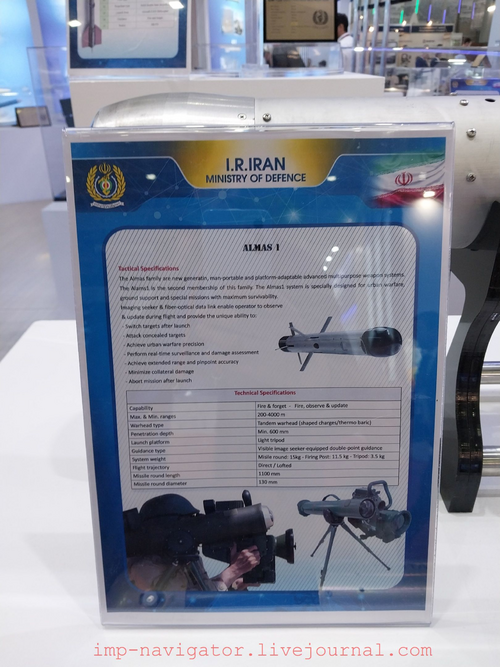
https://southfront.org/iran-unveils-own-copy-of-israeli-spike-anti-tank-guided-missile-video-photos/
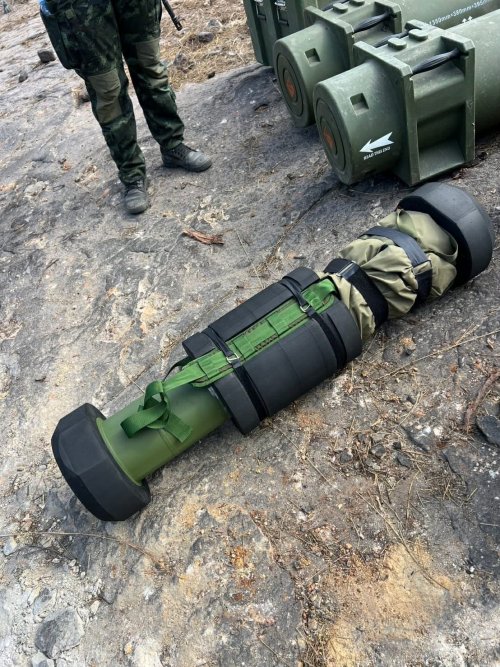
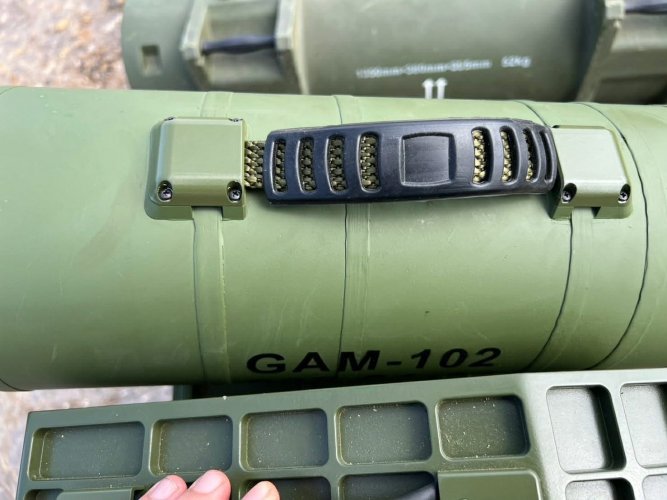
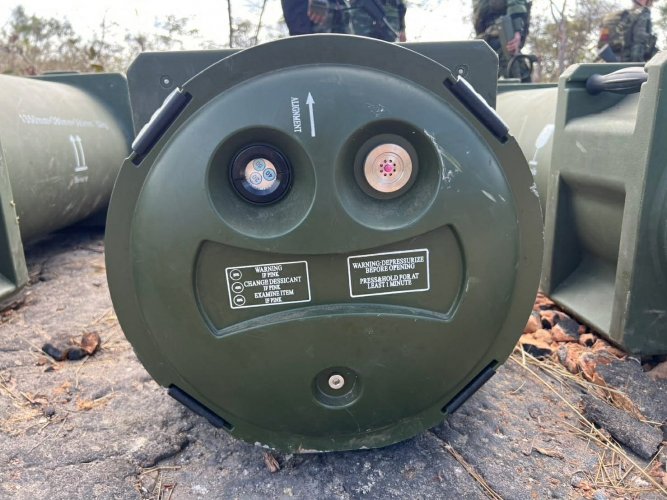
Iran with spike clone? Unlike other 4+th gen ATGM producers mostly falling into the same air power dependent block or noninterventionist, Iran is mixed up in multiple conflicts that could see systems getting used with significant effects.

In other news:
View: https://www.youtube.com/watch?v=NjpSK0-fIFM

HJ-16?
Chinese 4th gen, rumor range up to 10km. Man in the loop Two way datalink with EOIR seeker?

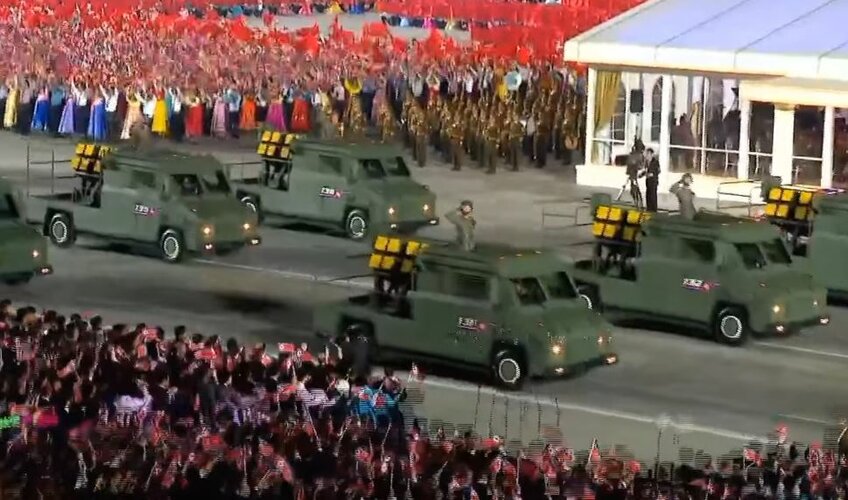
Given that the norks have https://www.globalsecurity.org/military/world/dprk/bulsae-4.htm
What blocks are without access to 4th gen missiles? (oh Russia? insert meme)
 
View: https://www.youtube.com/watch?v=QdlTbGnypd4


https://21stcenturyasianarmsrace.com/2022/05/18/north-korea-is-all-missiles-less-tanks/ north-korean-nlos-truck-parade-april-2022.jpg

https://21stcenturyasianarmsrace.com/2021/04/01/china-has-a-new-missile-launcher-for-its-friends/-------------------------

Looking at the current war, a ~30km range class missile can be used to counterbattery 155mm guns. It is likely far less logistically demanding than counterbattery with dumb shells and require less technology than guided artillery shells, and have a more robust killchain with some search capability. Could be useful.
 
Last edited:
https://21stcenturyasianarmsrace.co...ady-selling-this-mystery-missile/#more-227783View attachment 662285

View attachment 662284

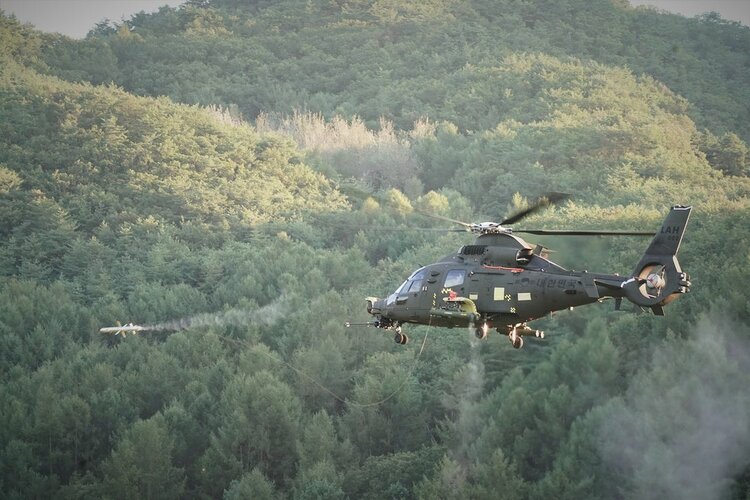
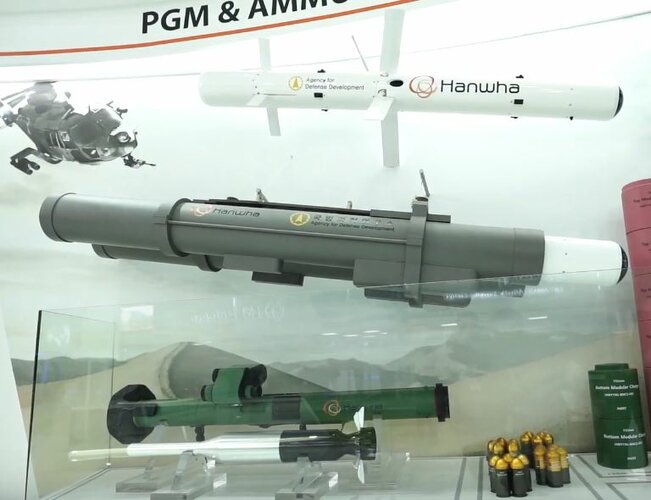
New South Korean NLOS ATGM? South Korea already operates Spike NLOS, so this isn't a revolutionary capability. Would be nice to know more about it nonetheless though.
I'm quite late to answer but anyways. The missile's called Chuhn-guhm (not the official way of writing it but literally how it sounds) and is called Taipers for the export market.

It was developed as a primary ordnance of the LAH armed helicopter, of which more than 200 is planned to be prcured for the ROKA. LAH will be assigned on the corps-level helo wings and will replace aging AH-1S, 500MD and Bo-105 in the inventory. Taipers weighs 35kg and has an effective range of 8km, coupled with dual mode seeker of color and IR CCD.

Most importantly it is wire-guided, with which it could be launched as both LOBL and LOAL, and as you've mentioned, it could be launched on NLOS targets behind the terrain when launched LOAL. Although wire-guided, it is also F&F capable, since the guidance wire could be cutoff from the missile and the launcher any time. This means the operator could choose to transition from man-in-the-loop to F&F at any given moment after launch, be it from the beginning or during middle of the flight.
 
NLAW stocks are likely to be at a premium at this point, given that at the last report new examples were still being practically having to be hand built, thanks to HM Treasury's stupidity back in the day.
 
View: https://youtu.be/vrlPvTJltJk?si=Wj8pzSKTkRTFPDuc

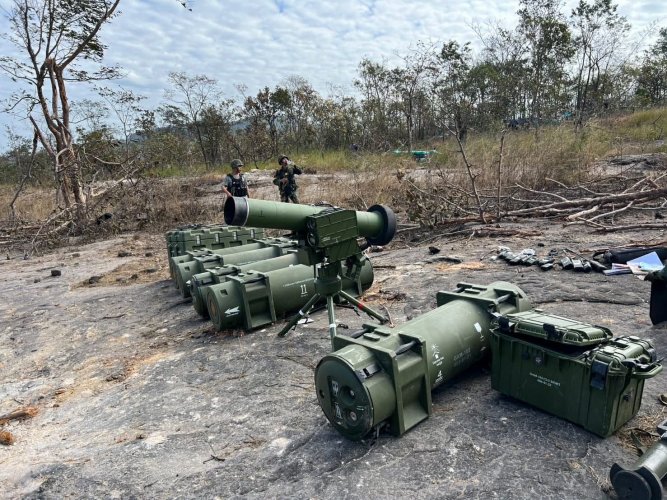
Honestly not surprised that Red Effect does not read much or do research as if he did he would know that Bulsae translates to Phoenix and Phoenix-4M(Bulsae-4M) was sold to Hamas while original Bulsae-4 was marketed as AT-4MLB in 2008 to military of Myanmar/Burma.

Bulsae-1 is Shmel
Bulsae-2 is Malyutka
Bulsae-3 is Fagot/Konkurs
Bulsae-4 is Bulsae-3 with LBR SACLOS
Bulsae-5 is Kornet
 
Looking at the current war, a ~30km range class missile can be used to counterbattery 155mm guns. It is likely far less logistically demanding than counterbattery with dumb shells and require less technology than guided artillery shells, and have a more robust killchain with some search capability. Could be useful.
That is a very interesting point... Makes for some scary threat models when any given Company-sized mechanized unit can effectively counterbattery.
 

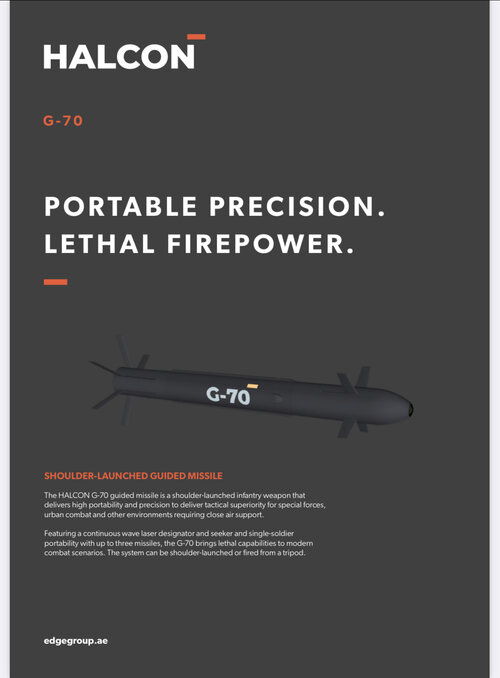
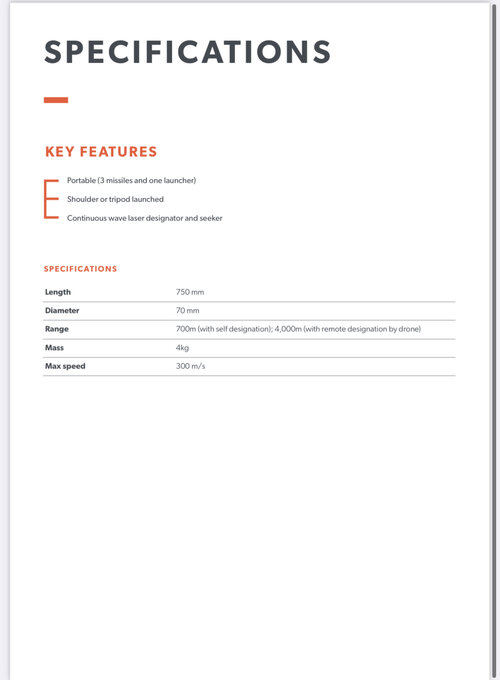
Continuous wave laser guidance is confusing me. Normally laser illuminators are pulse coded because that's how the missile tells it's aiming at the right laser spot. This weapon seems to be assuming there will be no other spots the right frequency in the missile's field of view, which seems optimistic.

Other than that, this feels like the old NAWC Spike missile. Very light, very cheap and useful for bunker busting or killing light armor but not really for tanks.
 
Continuous wave laser guidance is confusing me. Normally laser illuminators are pulse coded because that's how the missile tells it's aiming at the right laser spot. This weapon seems to be assuming there will be no other spots the right frequency in the missile's field of view, which seems optimistic.

Other than that, this feels like the old NAWC Spike missile. Very light, very cheap and useful for bunker busting or killing light armor but not really for tanks.
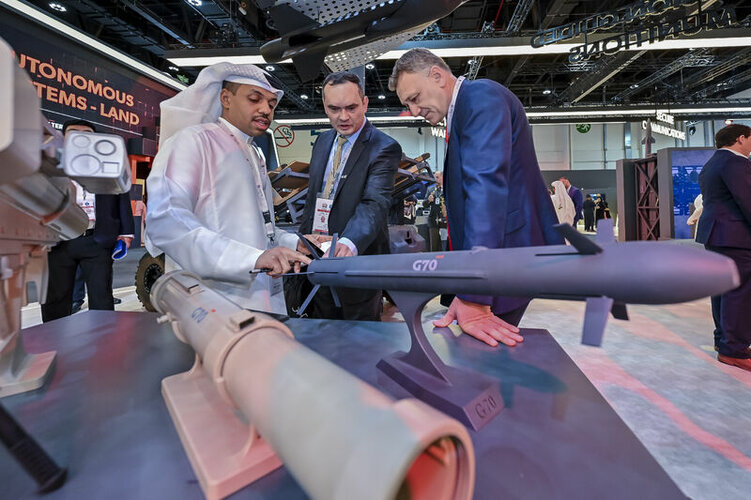
Very well suited for the UAE as the main threat is generally light vehicles, and entrenched enemies. There’s not really a chance of them running into MBTs where they operate.

The guidance is quite odd though, I haven’t seen a lot of ground launched SAL missiles. It does make sense as they rely on drones a lot for warfare and being able to have a drone operator guide a missile for infantry is a useful capability.

Missile would kill a Hilux as well as a Javelin would.

Theres also a concurrent program running at SIATT for a Jav type atgm.


Back in Yemen UAE SF had Kornet teams that targeted Houthis but Kornets are expensive and heavy. As long as you aren’t attacking enemies very far out. Most of their targets were enemy light vehicles and heavy weaponry.

1739671818641.png
 
Last edited:
A telegraph report from 2 days ago claims Ukraine misuses some western weapons and uses improper tactics.
https://www.telegraph.co.uk/world-n...oviet-battlefield-tactics-squandered-weapons/
This could easily be a politically motivated article, as corruption and reselling of aid is a common false narrative against Ukraine. But it's easy to claim Ukraine abandons Javelins when retreating, for practical reasons. The Javelin, although a top attack missile, is still just a line of sight missile. The idea of abandoning a position becomes much more realistic when you can already eyeball the enemy rather than through a video feed.
Sure some loitering munitions can replace a portion of ATGMs, but they're still valuable. It's past time the US develops an ability to NLOS fire an ATGM without using a 3rd party.
 
Few questions:
1. How is the Javelin employed? Do Javelin crews operate more or less independently when deployed?
2. Why did they insist on a LoS system instead of NLOS? Is it a doctrinal thing?
3. Is there a roadmap for Javelin to also do NLOS?
1. Yes and No. Javelin is part of standard Infantry companies alongside section level NLAW (and the remaining LASM/Matador and, soon, Carl Gustav). However there are also Javelin teams carried around by light armour for independent deployment. It's also likely that Javelin may be integrated on Kongsberg RWS in the future.
2. UK has been a Javelin user from the start, competition was between Javelin and Spike. Javelin won handily...but this was Spike MR, which was available at the time. UK also uses Spike NLOS for specific uses (but it really isn't all that...). That will be replaced by BGOAA, which is ground launched Brimstone 3 for AT work.
3. Not that I'm aware of. Likely that Drones will take that role, UK is looking for a medium range Loitering Munition at present. Inevitable other drone developments are on the way.

Personally I'd have ditched Javelin when the huge cost for LWCLU and F/G missiles became clear....MMP would have made more sense, particularly as a good chunk is made in the UK...

EDIT - Should add that there will be an ultra long range moving target capable missile in the future as well. Initially this was going to be a sort of CAMM/Brimstone hybrid (more Brimstone than CAMM as the missile body was 178mm rather than CAMM's 166mm) which would have provided a EO/IR or MMW/SAL overwatch missile out to 80km. But now appears to be superceded with an elongated ground launched Spear with a range of 250km+.
 
Last edited:
Although it first entered service and first saw combat use in the Vietnam War the BGM-71 TOW is still going strong, from Defense Updates:


The BGM-71 TOW anti-tank missile system entered service with the U.S. Army in 1970 and has since become one of the most widely deployed anti-armor systems in the world. The weapon has seen extensive combat use across multiple conflicts and remains in active service with numerous operators, including Ukraine.Most weapon systems eventually reach the end of their operational lives as newer and more capable technologies enter service.​
The TOW, however, has defied that trend.This longevity is reflected in the latest U.S. procurement decision.​
Raytheon, part of RTX, has received an additional $536 million contract modification for full-rate production and related services for the TOW system. The latest award brings the total value of the agreement to approximately $750.8 million.The work will be performed at Raytheon's facilities in Tucson, Arizona, and is expected to be completed by approximately August 31, 2027. The customer is the U.S. Army Contracting Command at Redstone Arsenal, Alabama.​
A system that is more than 5 decade old is still getting contracts shows exceptional resilience . Let’s dissect this.
Chapters:
0:00 TITLE
00:11 INTRODUCTION
01:13 SPONSORSHIP - NordVPN
01:47 CONCEPT : F-35 AS A NODE
02:33 SPEEDING UP THE KILL CHAIN
04:09 F-35 ALREADY HAS THE COMPONENTS
07:00 ANALYSIS
 
Back
Top Bottom