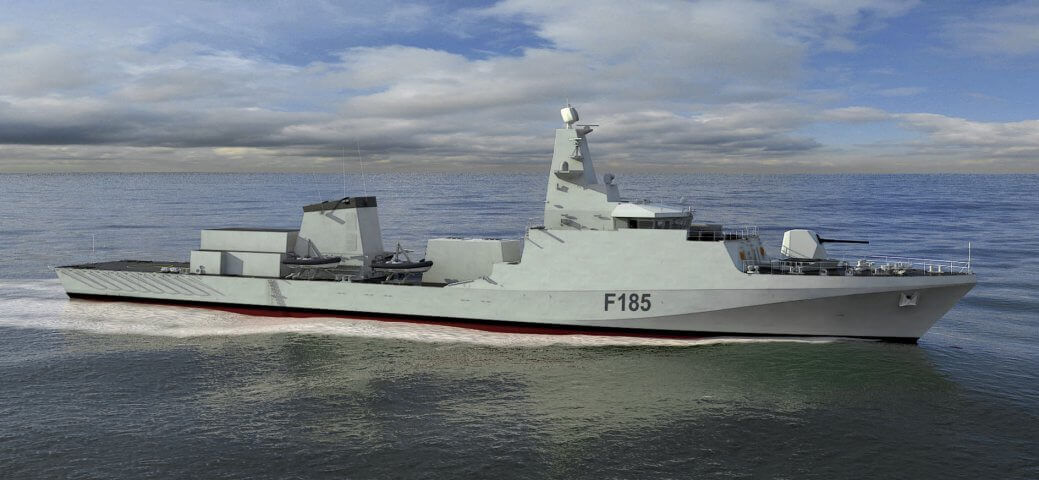
Is a modern Flower class corvette even realistic?

Those people need to review how much Tomahawks and JASSMs cost, and how many we use at a time for a single strike.


Okay, so we're talking ~200mil in a USV. 30 mil in hull, 70 for each sonar (because we need 2), and 30 for whatever else we're throwing in there.

How much is an MQ-25 again?
Your whataboutism is getting tired.

1. TLAMs cost around $3m per missile. You can launch a strike with about 10 for the cost of the reaper.
2. The missile’s destruction is doing its job successfully. Reaper being shot down is not. Reapers are meant to be reusable, missiles are not.
3. No one is pleased about our reconnaissance drones being shot down. Just like no one will be pleased about a few drones that cost 10s of thousands of dollars sinking a USV that costs $100m+
 
Review how much a modern heavyweight torpedo costs, please.
Ok, and? They’re used to destroy targets worth $1b+

Again what does a $4m torpedo have to do with letting a few $5k drones sink or mission kill a $100-200m ship?

A 30mm gun with airbursting ammo would only marginally increase the ship’s cost. The lower end of sea giraffes cost only $2m which again would be only a marginal cost increase
 
Ok, and? They’re used to destroy targets worth $1b+

Again what does a $4m torpedo have to do with letting a few $5k drones sink or mission kill a $100-200m ship?

A 30mm gun with airbursting ammo would only marginally increase the ship’s cost. The lower end of sea giraffes cost only $2m which again would be only a marginal cost increase
Again, and using your numbers:

70mil for one towed array, you need two. There's 140mil. 30mil for the hull, 30mil more for whatever else you might need to throw in brings us to 200mil per unit.
 
The Royal.Navy never adopted ASROC preferring IKARA. It was only able to afford to deploy a modest number of these-less than ten.
By the end of the Cold War the RN had developed the massive Merlin as its primary ASW helicopter. It was in effect a flying frigate. The US had considerably more SH60s.
Today a mixture of Merlins and Wildcats (developed Lynx) are available to fly from any RN ship with a helicopter deck.
Helicopters are the heirs to the Flower and postwar Blackwood classes.
The other primary role of RN ships is AAW against drones missiles and aircraft. The Dido class light cruiser was a WW2 solution and the Type 45 destroyer the current one.
Killing surface ship opponents for the RN has been done by SSN or helicopters with missiles. As far as I know neither Exocet nor Harpoon have ever been used to sink anything in RN service.
 
What is being trialled is an unmanned vessel able to provide a modest sensor platform. In a incremental development program, that sees ever longer deployments. The next generation is aiming for weeks at sea.

These intend to provide surface and submarine detection capabilities.

This has even included Cooperative location of radio/microwave emitters with land and air based platforms.

While these be unlikely to be equipped with expensive systems, they make up for that with affordability. Allowing mass to provide continuous sensor coverage.
 
You need to revise that towed array cost, CAPTAS 1 is more in the $20m range:
Thought it was high, but that was the number I was given.

Which would drop us from a ~200mil ship to a ~100mil ship with two arrays. Still a 30mil hull, two sonars at 20mil each, and 30mil for "nice to haves." Very useful drop, now they're cheaper than an AWACS or the MQ25 refueler drone.


And a low-end escort does not need two towed arrays.
Then it needs one VDS and a hull array. There is a major thermocline that's around 250ft deep everywhere, and you need to have a sensor on both sides of it.

Else you need twice as many hulls, and they work in pairs. I think it'd work out to be cheaper to have two towed arrays per USV than twice as many USVs.

If a submarine can figure out which side of the thermocline a one-sensor craft is working, they'll cross to the other side of the thermocline to avoid it.
 
Dutch fibre-optic TAS may....I stress may, be cheaper.
 
I recall an article NANY years ago, I think in the periodical ‘Maritime Defence’ where a project by British ship builder, Vosper-Thorneycroft proposed what I think was a new design Patrol Ship. From
Memory it had a novel ‘rolling’ flight-deck arrangement and, if memory serves me correctly, they referred to it as the ‘Flower class’.
I may be mixing up memories of another firms project (possible even P&O!) but, without being able to get to the Library in question where they held the publications, I cannot be sure.
HOWEVER.
I did manage to save this pdf for a 2012 design for a general purpose escort…the so-called Black Swan class.
 

Attachments

  • 20120503-JCN112_Black_Swan-U.pdf
    2.1 MB · Views: 15
Again, and using your numbers:

70mil for one towed array, you need two. There's 140mil. 30mil for the hull, 30mil more for whatever else you might need to throw in brings us to 200mil per unit.
Ok?
But what does a $4m torpedo have to do with a $200m+ ship?
 
The Royal.Navy never adopted ASROC preferring IKARA. It was only able to afford to deploy a modest number of these-less than ten.
By the end of the Cold War the RN had developed the massive Merlin as its primary ASW helicopter. It was in effect a flying frigate. The US had considerably more SH60s.
Today a mixture of Merlins and Wildcats (developed Lynx) are available to fly from any RN ship with a helicopter deck.
Helicopters are the heirs to the Flower and postwar Blackwood classes.
The other primary role of RN ships is AAW against drones missiles and aircraft. The Dido class light cruiser was a WW2 solution and the Type 45 destroyer the current one.
Killing surface ship opponents for the RN has been done by SSN or helicopters with missiles. As far as I know neither Exocet nor Harpoon have ever been used to sink anything in RN service.
Helicopters are not the heirs to the flower class corvettes unless those helicopters can fly across the Atlantic on their own.
 
Modern naval war is not going to resemble WW2 very much. It might have a passing resemblance to the 1980s. More likely surface units will be completely ineffective beyond serving as missile launch platforms or aviation platforms and submarines will be the only actually survivable unit.

The closest you can get a modern Flower is something like LCS I think. That little FCF-50 or whatever corvette from the 90s comes to mind.
 
Last edited:
Helicopters are not the heirs to the flower class corvettes unless those helicopters can fly across the Atlantic on their own.
My point is that they are the best surface ASW weapon rather than ASROC or torps.
A Merlin can operate from a range of ships with suitable decks including AAW screen ships.
 
In peacetime many roles can be done by lightly armed coastguard style ships or large disaster relief platforms.
On any typical day the RN is more likely to be doing this sort of thing.
Even shadowing Russian warships in peacetime does not always need a T45.
 
My point is that they are the best surface ASW weapon rather than ASROC or torps.
A Merlin can operate from a range of ships with suitable decks including AAW screen ships.
Sure, but that’s not the point of the discussion.

But just like flowers had DC racks they also had DC throwers, a modern version should have a close, medium, and long range option for actually prosecuting a sub that is detected.
 
Sure, but that’s not the point of the discussion.

But just like flowers had DC racks they also had DC throwers, a modern version should have a close, medium, and long range option for actually prosecuting a sub that is detected.
The WW 2 versions had that in terms of the depth charge pattern. The British K guns were hydraulic and could be set to several ranges. The US version used black powder charges and had three ranges available depending on how much powder was loaded.

Depth charges and other short-range, unguided, ASW weapons are really a very marginal system today. Sink times are too long--sink time was a major issue with depth charges--and subs too fast underwater. They can usually evade the pattern today.
 
Sure, but that’s not the point of the discussion.

But just like flowers had DC racks they also had DC throwers, a modern version should have a close, medium, and long range option for actually prosecuting a sub that is detected.
The modern equivalent would be LWT torpedo launchers like the USN triples for close range, ASROC/equivalent for medium range, and a helo dropping lightweight torpedooes for long range.
 
Because either a $4mil torpedo or a $4mil AShM is what a sub would use to blast one of these USVs.
Or an OPV, with a handful of UAV
The WW 2 versions had that in terms of the depth charge pattern. The British K guns were hydraulic and could be set to several ranges. The US version used black powder charges and had three ranges available depending on how much powder was loaded.

Depth charges and other short-range, unguided, ASW weapons are really a very marginal system today. Sink times are too long--sink time was a major issue with depth charges--and subs too fast underwater. They can usually evade the pattern today.
did you somehow interpret my post as advocating for depth charges on these hypothetical ships?
 
Or an OPV, with a handful of UAV
psst, double post, boss.

Also, since I think that the USV is looking like 200ft long and about a thousand tons, those UAVs aren't likely to cause catastrophic damage. Especially if the design of the ASW USV fills all the hull voids with foam. And maybe does a double hull with foam in between.
 
psst, double post, boss.

Also, since I think that the USV is looking like 200ft long and about a thousand tons, those UAVs aren't likely to cause catastrophic damage. Especially if the design of the ASW USV fills all the hull voids with foam. And maybe does a double hull with foam in between.
Build the hull from aluminum and fiberglass. That way it's non-magnetic. That does wonders to making fuses sensing magnetic variances not work.
 
Build the hull from aluminum and fiberglass. That way it's non-magnetic. That does wonders to making fuses sensing magnetic variances not work.
Exposed aluminum will pretty rapidly corrode when exposed to seawater. And send random stray electrical currents through any conductive paths.

I think pure composite would be a better option here.
 
psst, double post, boss.

Also, since I think that the USV is looking like 200ft long and about a thousand tons, those UAVs aren't likely to cause catastrophic damage. Especially if the design of the ASW USV fills all the hull voids with foam. And maybe does a double hull with foam in between.
How many switchblade style drones do you think are necessary to damage the sonar’s spool/tether and lose the entire TAS? How many do you think it would take to destroy the antenna linking the ship to its control station?

How many shahed class drones do you think a 200ft OPV could carry? How many do you think it would take to completely destroy this hypothetical ship, even if it doesn’t necessarily sink?
 
You could likely make a River batch 2 into something serviceable like this.

(Dont forget how cool the bathurst class was though ;) )
 
5052 is highly resistant in an marine environment. It is commonly used today to build high end yachts for example.
Steel is still the best for volume production. Although aluminium has been used for large ocean going OPVs such as Ocea’s OPV 270 class, very few shipyards are qualified to build large aluminium hulls.

1,300 to 2,500 tonnes displacement (full load) is the minimum size for decent seakeeping, 6,000nm+ range, and payload capacity (this is a rough range based on existing OPV designs). In Europe alone there must be 20+ smaller shipyards that can build large patrol vessels in that size range.

Ultimately many existing OPVs could probably be used as a starting point for a mass produced Flower class. All you really need is space in the stern for a towed sonar, diesel electric propulsion with ~12kt speed in electric mode, 22-24 knot top speed, and enough fuel for a 2,000nm transatlantic crossing at an average speed of advance of 18-20 knots (plus say 30% fuel reserves). Effectors can be a mix of LWTs welded to the deck, UAVs dropping sonobuoys, ideally also a few ramp launched ASROC that fit in the footprint of a 20ft container. Perhaps 1-2 small davit or ramp launched USVs can also help (though I’m not convinced they can maintain the speed of advance, so probably best used against already identified sub contacts).

In France alone there are 4 shipyards building multiple OPV designs that might work, from the small 1,300t Patrouilleur Outre-mer (Felix Eboue class), to the larger 1,500t Gowind 87 (Adroit/Bouchard class), and the new 2,400t Patrouilleur Hauturier (Auguste Techer class). All use very robust commercial systems including identical diesel electric propulsion (ABC diesels from fishing trawlers and tugboats and Scania truck diesels as gensets), Flume passive stabilization tanks, simple box coolers to dissipate engine heat etc.

Production costs start at ~€45M / $50M for a 1,300t OPV. Probably a lot less if you build in lower cost yards in Romania, Bulgaria, Poland and the Baltics.

 
Last edited:
5052 is highly resistant in an marine environment. It is commonly used today to build high end yachts for example.

https://www.yachtbuyer.com/en-us/for-sale/aluminium
How much painting does it need? Your link says it may be more expensive and may also need regular inspection. A USV isn't going to be as easily inspected on a rolling basis, no crew onboard to do daily zone checks and instead you're looking at stem-to-stern checks every time the USV docks.
 
How much painting does it need? Your link says it may be more expensive and may also need regular inspection. A USV isn't going to be as easily inspected on a rolling basis, no crew onboard to do daily zone checks and instead you're looking at stem-to-stern checks every time the USV docks.
The standard for the Navy is, or at least was when I was doing that stuff, one coat of primer, two coats of finish. You need to let each coat set for 24 hours, minimum, before applying the next coat.
 
lol, yea but there’s parts of it that you can fast forward through. I don’t mind the concept as a starting point it’s got potential
 
1,300 to 2,500 tonnes displacement (full load) is the minimum size for decent seakeeping, 6,000nm+ range, and payload capacity (this is a rough range based on existing OPV designs). In Europe alone there must be 20+ smaller shipyards that can build large patrol vessels in that size range.

Ultimately many existing OPVs could probably be used as a starting point for a mass produced Flower class. All you really need is space in the stern for a towed sonar, diesel electric propulsion with ~12kt speed in electric mode, 22-24 knot top speed, and enough fuel for a 2,000nm transatlantic crossing at an average speed of advance of 18-20 knots (plus say 30% fuel reserves). Effectors can be a mix of LWTs welded to the deck, UAVs dropping sonobuoys, ideally also a few ramp launched ASROC that fit in the footprint of a 20ft container. Perhaps 1-2 small davit or ramp launched USVs can also help (though I’m not convinced they can maintain the speed of advance, so probably best used against already identified sub contacts).

BAE Avenger...lengthened River Class Batch 2...a real missed opportunity that we didn't get BAE to build these under TOBA rather than the RB2's...

1788692471680.png
 
BAE Avenger...lengthened River Class Batch 2...a real missed opportunity that we didn't get BAE to build these under TOBA rather than the RB2's...

View attachment 823145
The batch 2s had already been locked in. This was a submission for type 31. Who knows, they may build a few of these after the batch 1s leave service. But they'll probably just wait for NGPV
 
Back
Top Bottom