European Space News

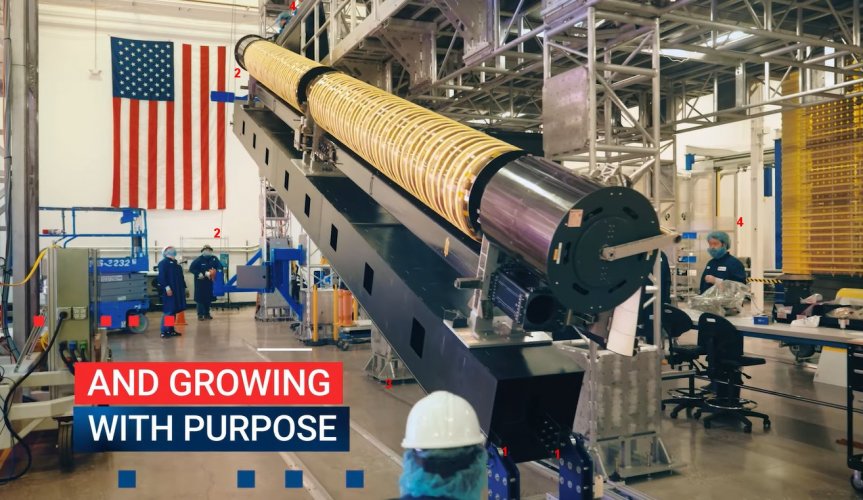
Let´s hope that they will execute this project with more relevant resources when it comes to engineering (what we see here is a potential disaster in the making - follow the number marks I added on the image below extracted from one of their marketing video for their ROSA product):

RedWire_ROSA-test.jpg

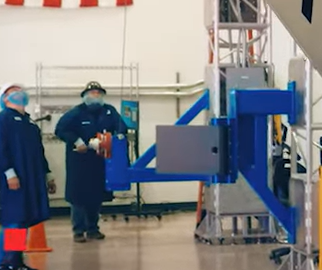
Screenshot 2025-12-09 112556.png

Screenshot 2025-12-09 115716.png

(Will post the solution later but feel free to post your own)
1. Brackets not designed for out of plan strain (torque and side loads)
2. No safety line + no protection for the operators + probably irrelevant cable routing (add a pulley) + no safety containments of the cable in case it snaps or the lifted object falls obliquely
3. Pillars (scaffolding) are not anchored so can´t have any structural functions
3bis. (3rd picture) The frame supporting the lifting cable is directly anchored to a contractor product (need to be recertified) that does not support, as apparent in 2, (and probably was not studied) for such added loading.
4. Operators under and in the scaffoldings are directly exposed of Bracket 1, cable 2 or frame 3bis failure (structural collapsing)

Edited
 
Last edited:

HyPrSpace looks for applications beyond launch for its hybrid propulsion technology​

https://spacenews.com/hyprspace-loo...-launch-for-its-hybrid-propulsion-technology/
HyPrSpace is one of several companies worldwide pursuing hybrid propulsion, which combines a solid fuel with a liquid oxidizer. In theory, hybrid engines combine attributes of both solid- and liquid-propellant rockets, but they have gained little market traction beyond their use in Virgin Galactic’s suborbital spaceplanes. First launch attempts earlier this year by Gilmour Space Technologies’ Eris rocket and Innospace’s Hanbit-Nano, which both use hybrid engines in their first stages, failed shortly after liftoff.
HyPrSpace is developing a small launch vehicle called Orbital Baguette 1, or OB-1, capable of placing up to 235 kilograms into orbit. The company is also working on a suborbital vehicle, Baguette One, intended as a technology demonstrator for OB-1.
Orbital Baguette 1? That has to be a joke right?
 
I have in mind that this is related to the weight of the Baguette, per definition 250g (9 oz)* and they will eventually use that scale for the capacity of any future project (Baguette / Bread (twice as much) etc...).

*except you would convert grams for kilograms
 
If I remember correctly (my family are French Belgian) the word also means "stick or branch" so I am wondering if perhaps they are using an alternative meaning of the word.
Not that Tomcat's interpretation is not the correct one.

Now I am craving a good, fresh, hot and very crusty baguette...
 
What a waste.
The soviet will never return to Guiana Space Centre, I mean Russians

France, Arianespace and ESA are not waiting
They demolish unused old launch complex to build new ones
For PLD Space, Maia Space and Others
those companies have future here, because they planned to reuse there boosters...
 
What happened at the ESA during April 2026:


What did space deliver for Europe this month? From the Moon to low Earth orbit and beyond, here’s what the European Space Agency has been up to.
Chapters:
0:00 - 0:03 This Month at ESA
0:03 - 0:32 European Service Module powers Artemis II
0:32 - 0:55 Sophie Adenot advances science in orbit
0:55 - 1:19 Plato tested for deep space
1:19 - 1:38 Celeste sends first navigation signal
1:38 - 1:56 Smile moves closer to launch
1:56 - 2:13 Earth Observation satellites on display
2:13 - 2:27 Space Rider passes major test
2:27 - 2:37 New leadership takes shape
2:37 - 2:55 Hubble looks back at the changing cosmos
2:55 - 3:14 That’s a wrap for This Month at ESA!
 
View: https://x.com/Amazonleo/status/2062597784734257617?s=20

View: https://x.com/Amazonleo/status/2062901039884271973?s=20


TEC is also teasing a reusable launch vehicle named Yrene:
An image included on the company’s new website appears to show the rocket’s first stage powered by nine Storm engines, which are described as being capable of producing 180 tonnes of thrust each.

Falcon 9 first stage is 1,700,000lbf, which is 771tonf, so 9x180tonf is almost twice that at 1520tonf.
 
Last edited:

OHB to Raise €510M to Boost Manufacturing Capacity and Invest in Rockets​

https://europeanspaceflight.com/ohb...manufacturing-capacity-and-invest-in-rockets/
Publicly listed German space technology company OHB has announced plans to raise up to €510.7 million by issuing approximately 1.7 million new shares. The company plans to use the proceeds primarily to bolster its production capacity. However, it will also fund planned acquisitions, investments in launch vehicles, and “future tangible projects.”
 
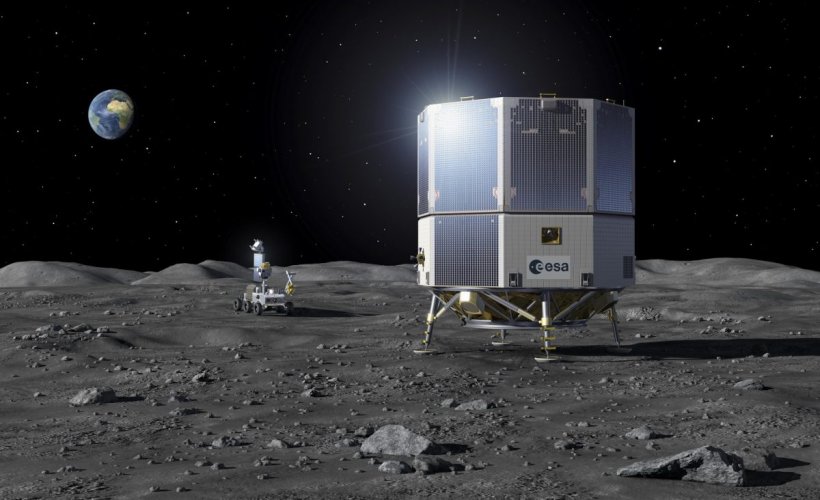
ESA to seek lunar mapping capability for Argonaut lander

Artist_s_view_of_the_Argonaut_lunar_lander-scaled.jpg

https://spacenews.com/esa-to-seek-lunar-mapping-capability-for-argonaut-lander/

"...Several spacefaring countries with lunar ambitions have invested over the past two decades in high-resolution topographic mapping, which is essential for identifying safe landing areas and potential sites for future lunar infrastructure.

Europe, however, does not have sovereign lunar topographic data to support Argonaut. That means ESA will need to rely on existing mission data, including data that can be procured from other providers, at least for the early phases of the program.

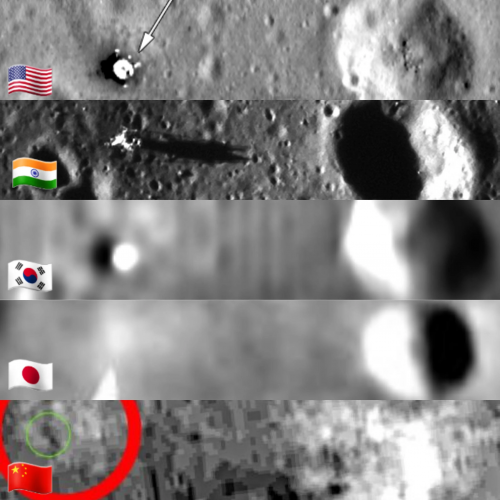
Albeit not confirmed, the three most likely nations that can provide lunar maps to Europe are the United States, India or China. NASA’s Lunar Reconnaissance Orbiter, launched in 2009, has provided global lunar topographic maps at about 100 meters per pixel, with targeted imaging down to about 0.5 meters/pixel. India’s Chandrayaan-2 Orbiter High Resolution Camera (OHRC), launched in 2019, can image selected areas at about 0.25 meters/pixel, making it one of the highest-resolution lunar mapping instruments currently in operation. China, from Chang’e-1 onwards, has also built up a substantial lunar mapping capability to support future landing and exploration activities..."

====

My comment: They'll most likely go with NASA's LRO datasets (as that's what primarily fed the Artemis program, though India's CY-2 data also had a small hand in selecting some landing locations, seek link below). But it'd be great if they decide to diversify their sources given the political developments back on Earth. Going with China might be a stretch, India could be a middle road option. Besides, CY-2's imagery is clearly better than most (if not any) dataset currently available. So there's a qualitative reason for selecting it as well.

https://jatan.space/indian-space-issue-15/#isro-aids-artemis

phr50fg5e2ed1.png

https://www.reddit.com/r/Damnthatsinteresting/s/ouynSpipNy

We'll see how it goes...
 

Similar threads

Back
Top Bottom