
Forest Green
ACCESS: USAP
- Joined
- 11 June 2019
- Messages
- 14,727
- Reaction score
- 32,032


There were folks questioning IDDS's subsonic CM defeat capability given its heritage as primarily a Counter Rocket first system. This is why Rafael, working with the IDF/MDA did very public demonstrations (attended by several US industry, Army and other stakeholders) in the 2020 timeframe ultimately leading up to the US Army itself performing the capstone demonstration in WSMR in 2021. Supersonic CM defeat was not part of the requirement. The Army knew it had no Supersonic CM defeat solution organically available within both its size/volume and cost footprint and that it would have to develop something for the future. As such, Subsonic CM and Group 3-5 UAS and other FW/RW threats were included in the truncated initial threat set. The Marines will be extensively testing against the subsonic CM threat as well (MRIC system). I don't even think the Army has tested the PAC-3 MSE yet against a supersonic low flying cruise missile and probably doesn't even have the targets in hand do this so we are some time away from demonstrating this for either Patriot or IFPC.I don't think anyone was questioning Iron Dome system capability to intercept slow subsonic stuff but rather the supersonic SEAD stuff that will definitely be fired at the THAAD installations that IFPC would be required to protect
The problem is the US Army is divesting from JTLV & does the USMC have resources to keep theirs? Costs will rise for fewer vehicles.

Supposedly, the USMC is discussing fielding their own "Theater Ballistic Missile Defense" as the MLR's and their Littoral Anti-Air Battalion's will be attempting to hold small Islands well within range of thousands of Chinese Ballistic Missiles, with MRIC & MADIS only.

Best defense would be to poke out their eyes.Supposedly, the USMC is discussing fielding their own "Theater Ballistic Missile Defense" as the MLR's and their Littoral Anti-Air Battalion's will be attempting to hold small Islands well within range of thousands of Chinese Ballistic Missiles, with MRIC & MADIS only.
I think a Battalion of Patriot's spread between 3 MLR's might be enough. (Plus the USN covering everything above)...
https://www.twz.com/land/marines-re...d-on-army-alone-for-ballistic-missile-defense
The Marines have Burkes for that.Supposedly, the USMC is discussing fielding their own "Theater Ballistic Missile Defense" as the MLR's and their Littoral Anti-Air Battalion's will be attempting to hold small Islands well within range of thousands of Chinese Ballistic Missiles, with MRIC & MADIS only.
I think a Battalion of Patriot's spread between 3 MLR's might be enough. (Plus the USN covering everything above)...
https://www.twz.com/land/marines-re...d-on-army-alone-for-ballistic-missile-defense
Patriot is a legacy system that despite IBCS and other modernization elements is still fairly dated from a size and footprint perspective. While the Army has been able to 'bolt on' things to modernize elements as budgets permit those changes (RIG-360, IFCN relays etc) have added significant footprint making the system even less agile in terms of its ability to pack up and deploy or keep up with a mobile force. Its effectively now a fixed/semi fixed site defense system.I think a Battalion of Patriot's spread between 3 MLR's might be enough. (Plus the USN covering everything above)...
Patriot always was a semi-fixed system.Burkes are not going to be able to provide terminal BM defense to every possible Marine contingency while also magically performing every other tasking that the Navy will have to support with an ever reducing fleet size. Relying on that is probably picking the most expensive, the least flexible, and possibly the least available option that the USMC could ever wish to have.
Patriot is a legacy system that despite IBCS and other modernization elements is still fairly dated from a size and footprint perspective. While the Army has been able to 'bolt on' things to modernize elements as budgets permit those changes (RIG-360, IFCN relays etc) have added significant footprint making the system even less agile in terms of its ability to pack up and deploy or keep up with a mobile force. Its effectively now a fixed/semi fixed site defense system.
ANYTHING capable of Theater Ballistic Missile Defense is going to be semi-fixed due to size of effectors required.
C130 deployable 155mm? So, revenge of FCS, at least in terms of the XM1203 NLOS-cannon?
Assuming that the island the Marines are on has a C-130-sized airstrip...Budget permitting, perhaps the Marines can show them the way by developing a mobile, C-130 deployable PAC-3 MSE (or Barak or Stunner etc etc) launcher paired with a C-130 deployable rotating Ghost Eye / TPY-5 radar capable of SRBM defeat. C-130 deployable mobile IBCS EOC and IFCN relays are the easy bit. All this is possible funding permitting, and I'd argue would much better position the US Joint Force in the INDO PACOM and at a fraction of the cost of Golden Dome and other near to mid term investments.
Marines have a C-130 requirement for the lower end of the cruise missile defense system (MRIC). Having the same for the more capable system would add no additional system requirements. No C-130, no meaningful MRIC either at those locations if air deployment is the primary means of deployment. Of cours more capacity and capability means more C-130 loads. Its the same for a MRIC battery or a larger formation. That magically does not fit on a single C-130. If you want anything other than JLTV mounted stingers or next gen CUAS weapons, and air deployability is the only option, you are looking at multiple C-130 loads. That is true for MEADS just as it is for MRIC and other systems. That said, a ligher, smaller sling loadable launcher can probably be developed. Probably using the Rogue fires platform or something like that.Assuming that the island the Marines are on has a C-130-sized airstrip...
Plus, MEADS requires at least 3x C-130s worth of trips to deploy.
Still likely looking at 2x Rogue Fires platforms and a pretty big box truck for the command post.That said, a ligher, smaller sling loadable launcher can probably be developed. Probably using the Rogue fires platform or something like that.
Absolutely. Unfortunately, there isn't a MANPAD version of TBM defeat. But the Marines don't seem to have those requirements. If they did MRIC would have been cancelled and not expanded. So that seems to be something that we've invented here in the thread and may not have any actual relation to what the Marines want from its expeditionary requirements for medium and long range air defense. Recall the original point was that TBM defeat systems are essentially fixed or semi fixed sites. That is clearly not the case unless one charecterizes any system that cannot be sling loaded on a CH-53 as not mobile.Still likely looking at 2x Rogue Fires platforms and a pretty big box truck for the command post.
Might even take 4 King Stallion sling loads that way. (Radar, launcher, CP, generator+fuel)
You're not moving THAAD etc very quickly. Setup/strikedown times measured in hours, not minutes.Recall the original point was that TBM defeat systems are essentially fixed or semi fixed sites. That is clearly not the case unless one charecterizes any system that cannot be sling loaded on a CH-53 as not mobile.
I am not talking about an upper tier system. Neither is the USMC. That is a strategic system which is why even the US Army never introduced it into its Patriot battalions (hopefully they will in their composite ibcs battalions). Systems like MEADS, modified David's Sling etc could all operate within very similar footprints of a MRIC from the USMC perspective.You're not moving THAAD etc very quickly. Setup/strikedown times measured in hours, not minutes.
The current wide area dispersed front would seem to invite a remoted netfires able to find its own tgts. Hiding the boxes from drones et al. would be an abiding issue though. New Js w/ a 5km rnage would be a start or SPEAR 3s w even longer range.I think they've already avoided that by diversifying so well. NetFires boxes and the SLAMRAAM launcher could be used for other payloads but the Army never went out and actually did it. So when their limited payload died, so did the launcher. This MML already has a track record shooting off a variety of weapons with minimal integration issues. Anyone one of those weapons could die but the MML should live on, one hopes anyway.
Needs a few missiles in the box with turbojet engines instead of solid rockets for loitering air defense, best against Shahed-types.another Netfires box option.albeit w/ lesser rng.
Netfires Loitering Attack Missile (LAM) and the larger cargo container launched creature of the Drone Dominance Intiative. Cost is an issue as boxes will be easy to find & destroy. They wold be primary tgt to stifle battlespace shaping.Needs a few missiles in the box with turbojet engines instead of solid rockets for loitering air defense, best against Shahed-types.
Ironic that Iran of all nations went and built the loitering SAMs that the US never got around to making.
If you're putting boxes of that size everywhere, some of which are LAMs and some of which are Javelin Mines etc**, the chances of the enemy hitting the right boxes are reduced.Netfires Loitering Attack Missile (LAM) and the larger cargo container launched creature of the Drone Dominance Intiative. Cost is an issue as boxes will be easy to find & destroy. They wold be primary tgt to stifle battlespace shaping.
Thought that thing has been dead for years.View: https://youtu.be/UaM7VeYgbCY?si=3gMg2nUUImAfDFrl
another Netfires box option.albeit w/ lesser rng.
Netfires has been dead for years except the operational goals they fit remain.Thought that thing has been dead for years.
Non Credible Defense is a spoof reddit site after all. An exact capability would of course require quite a bit M&S. The level of automation on the current front would calculate what is the realm of the practical. Expending 70 quads to destroy a single vehicle is certainly not practical.The current wide area dispersed front would seem to invite a remoted netfires able to find its own tgts. Hiding the boxes from drones et al. would be an abiding issue though. New Js w/ a 5km rnage would be a start or SPEAR 3s w even longer range.
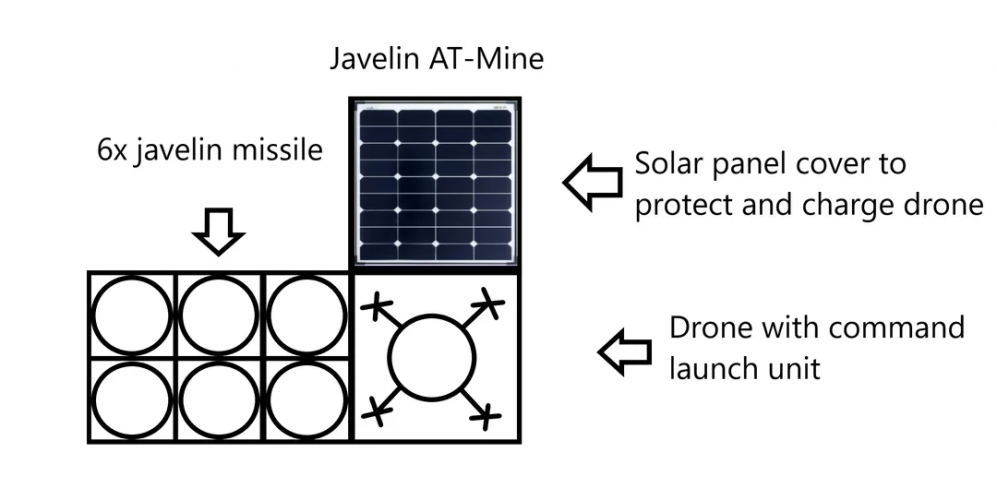
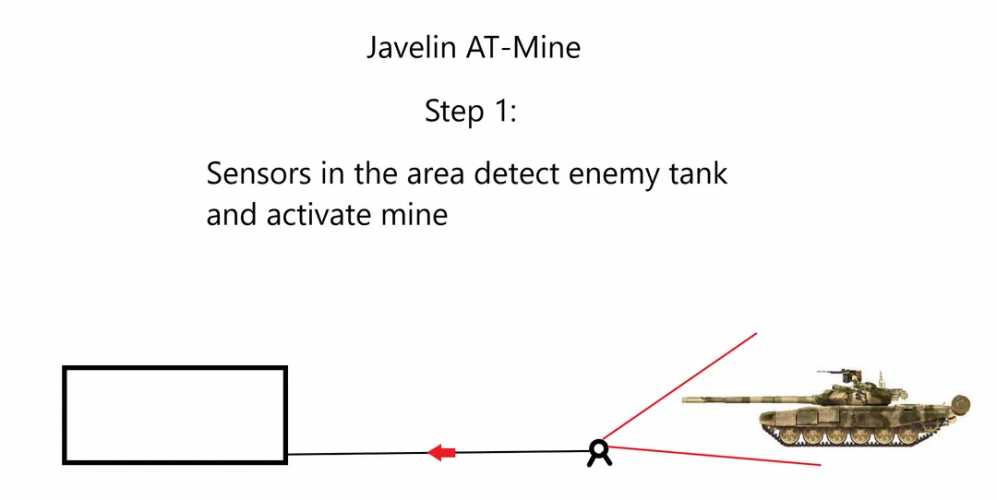
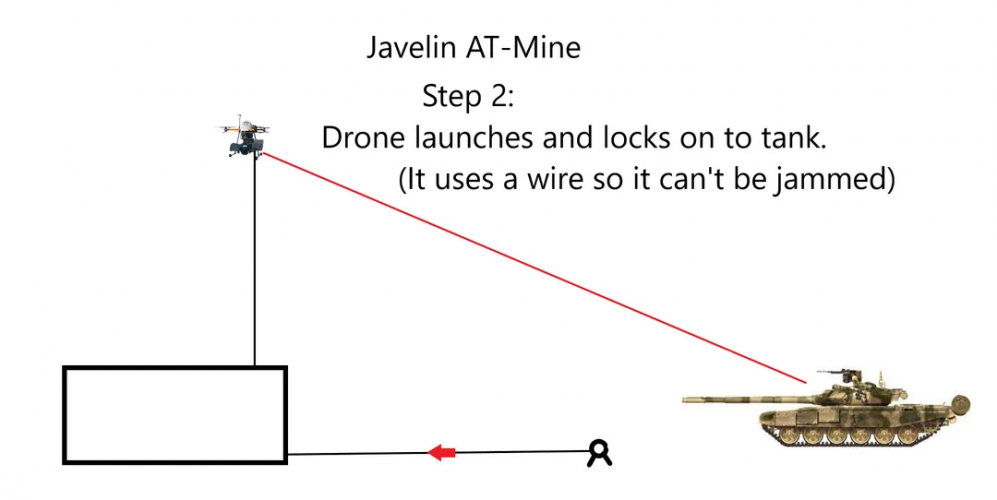
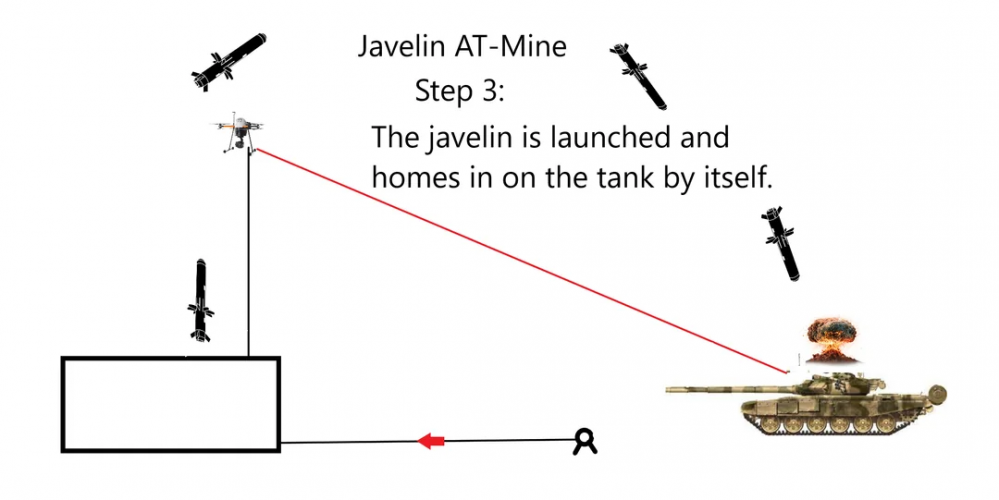
View: https://www.reddit.com/r/NonCredibleDefense/comments/1d8lbq3/javelin_anti_tank_mine_system/
Javelin anti tank mine systemView attachment 815687View attachment 815688View attachment 815690View attachment 815693
What about CAML?A mobile, rapidly relodable (palletized), C-130 deployable TBM capability was demonstrated under the MEADS effort. It was able to demonstrate intercepts using a PAC-3 MSE that majority of the US's currently deployed Patriot launchers and FCN are incapable of doing until the latter part of the decade / into next decade. Its origins actually go back to a US Army - USMC effort (Corps SAM).
Both the Italian and US/German versions of the launchers were C-130 deployable. The Fire Control radar likewise was C-130 deployable. The system had modularity and could be built up for fixed/semi fixed defenses by adding additional fire control and long range sensors (dedicated surveillance radar to share load) or it could be used as a mobile system with fewer elements yet still capable of performing to the threshold standards and requirements. In fact it was this latter version that was ultimately pitched by Lockheed Martin and partners for Germany's TLVS program.
Israelis can produce a similarly mobile Barak MX system if a customer wishes for one and I believe the Stunner's launcher could also be adapted to a MRIC like C-130 deployable configuration. All of these things are possible now and were more than a decade ago. Just because the US Army decided to bolt stuff on to existing TBM system to make them even bulkier, less mobile, and harder to deploy does not mean that producing systems with a lighter footprint, more mobility, and better survivability is not possible.
View: https://www.youtube.com/watch?v=vjjcK9Q356Y
BTW, this problem also exists for the US Army. Specifically as it ties into USAF and rest of the Joint Forces' ACE concept in the Pacific. But the Army's response so far to that has been "Can't defend everything" rather then reforming its current ADA capabilities to meet the challenge. What's worst is that the Army then responded with the Multi Domain Task Force concept of fielding Navy missiles (MRC) and then assigned majority of its initial IFPC SHORAD systems (the only SHORAD capability with the service) to protecting those launchers rather than the JF operating in theater. If the Army is incapable of developing a modern mobile TBM system that can network with aerial and space borne sensors and can deploy at tactically relevant timelines (to match ACE) then it needs to step aside and transfer funding over to other services that can take a shot at it.
Budget permitting, perhaps the Marines can show them the way by developing a mobile, C-130 deployable PAC-3 MSE (or Barak or Stunner etc etc) launcher paired with a C-130 deployable rotating Ghost Eye / TPY-5 radar capable of SRBM defeat. C-130 deployable mobile IBCS EOC and IFCN relays are the easy bit. All this is possible funding permitting, and I'd argue would much better position the US Joint Force in the INDO PACOM and at a fraction of the cost of Golden Dome and other near to mid term investments.
CAML is not an air defense system. Its an autonomous launcher. But yes, it, if followed through, should create more deployable options but again, its just a launcher. By itself that is not an IADS. You still have radars and larger C2 elements that cannot deploy on something like a C-130. MEADS demonstrated that nearly a decade ago.What about CAML?
The Army isn't developing an designated mobile TBM Defence system because they're already doing so with CAML.
Here another wide area denial concept from 'flaketom' on Deviantart.Non Credible Defense is a spoof reddit site after all. An exact capability would of course require quite a bit M&S. The level of automation on the current front would calculate what is the realm of the practical. Expending 70 quads to destroy a single vehicle is certainly not practical.
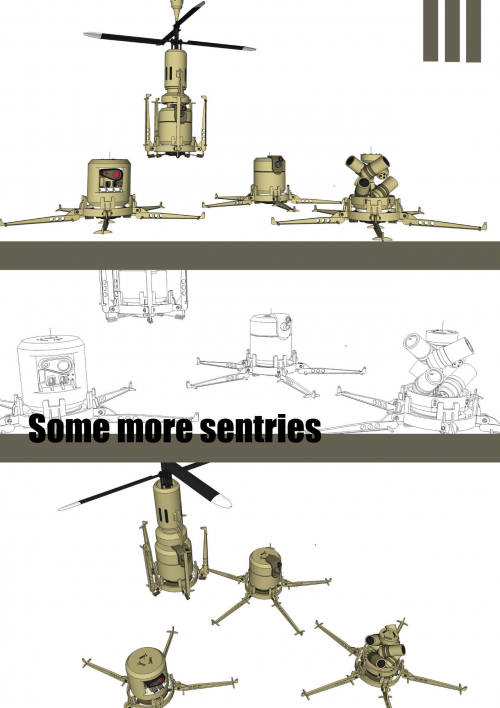
The problem is the US Army is divesting from JTLV & does the USMC have resources to keep theirs? Costs will rise for fewer vehicles.
https://legis1.com/news/jltv-program-cancellation-army-cancels-sparksI did not yet see such information.
What exactly do you mean by "divesting" and would you offer a source?
If you're talking ABM work, that's not a lower tier system. By definition.I am not talking about an upper tier system. Neither is the USMC. That is a strategic system which is why even the US Army never introduced it into its Patriot battalions (hopefully they will in their composite ibcs battalions). Systems like MEADS, modified David's Sling etc could all operate within very similar footprints of a MRIC from the USMC perspective.
Well, it depends if it's terminal / endo / exo ABM. You can (in theory) do ABM with stinger if you believe in yourself hard enough and get really lucky. AIUI if you want to look at the smallest footprint for reasonable BMD you're looking at SAMP-T NG, Chu-SAM Kai/-PIP, and KM-SAM Block II, which means at least six trucks.If you're talking ABM work, that's not a lower tier system. By definition.
ABM needs a fecking big radar that may-or-may-not be C130 transportable. You also need pretty big effectors, though for the USMC it helps that the ABM launcher and radar is basically sitting on top of the place being targeted so they may not need missiles as big as the Army is using.
Can't even use the standard TPY-2 or Patriot radar (I forget the designationMPQ-65A), because island bases need full 360 coverage, not single-arc. Yes, I know that Patriot has added some small arrays for 360 coverage, but they're not big enough for 360 BMD. With Patriot, you'd be dropping an entire 4-radar battalion on the island. Which honestly is just too much stuff to move. But I don't know how much smaller you can get a radar array that is still effective for BMD, even by switching to GaN or whatever the current hotness is. I think an 8ft wide array is as small as you can get away with. Likely need to build a new radar trailer (or truck) with 4 array panels on it each 8ft diameter and add some fun "push the base out while the cube is pushed upwards and/or rotated" mechanical silliness. Like a spiral track that the angle-setting block runs in, and you rotate the whole cube to set whatever the appropriate angle needs to be. Maybe someone with some actual 3d modeling skills and software can design that?
The Marines can get away with smaller effectors than the Army would need, since as I mentioned the Marine ABM launcher is sitting within a mile or so of whatever the target is. And that makes life a lot easier in terms of moving ordnance onto and off of an island.


