
You are using an out of date browser. It may not display this or other websites correctly.
You should upgrade or use an alternative browser.
You should upgrade or use an alternative browser.
Sukhoi T-75 LTS (CheckMate)
- Thread starter sublight_
- Start date
Scott Kenny
ACCESS: USAP
- Joined
- 15 May 2023
- Messages
- 16,977
- Reaction score
- 24,081
The key point is the difference (at least in USAF terms) between "Battlefield Air Interdiction" and "Close Air Support". I'm not sure that other air forces divide the missions the same way.Dedicated CAS plane is obsolete ,has been obsolete already in cold war, has no role now , some of the A-10 are being replaced with F15EX others probably by F35
Stealthy strike fighter aircraft is exactly what will in most airforces replace dedicated strike platforms ,the dedicated strike or CAS platform left will be a drone
The classic fighters flying in support of ground troops through most of WW2 and Korea was more like what we call Battlefield Air Interdiction today, "hunting things like march formations or logistics convoys beyond the front lines" for the most part. They called it Close Air Support then, but very rarely were the air attacks on top of an infantry firefight.
In Vietnam, you ended up with Close Air Support specifically meaning "aircraft bombing or strafing when the enemy was within rifle or even grenade-throwing range." And that takes a very different set of weapons and design priorities than zooming past the front lines to hit trains, march formations, or logistics convoys.
Let's step back to the early 1980s, and the fly-off between the A-7 and the A-10. What the USAF found out was that the A-7 did battlefield air interdiction really well but didn't do CAS mission items very well, while the A-10 did CAS missions really well and didn't do BAI missions very well. So the USAF decided to keep some A-7 units so that the A-10s could focus on CAS while the A-7s did BAI. Those A-7 units were eventually re-equipped with F-16s, and today the F-16s are getting replaced by F-35s.
The F-35 is an absolutely excellent BAI striker. I should hope so, BAI is what the thing was designed to do! Similarly, I'd expect the Su-75 to be a very good BAI striker for the same reason. But the things that makes a good BAI striker do not make a good CAS plane.
The Russians have the additional complication that they have two separate air forces. PVO or whatever they're calling it now operating the Interceptors like MiG-31 and Flankers, and VVS operating the aircraft supporting the Red Army. Those two organizations are much more widely separated than the USAF SAC, TAC, ADC, and MAC.

Galaxy
ACCESS: Confidential
- Joined
- 14 December 2024
- Messages
- 174
- Reaction score
- 400
All of this is true.
And despite all the fabrications from Indian forums (it's not trru 5th gen faita!"), it remains to be added that no other operational aircraft in the world besides Su-57 has the ability to simultaneously internally carry weapons such is the Izd. 810 and Kh-69.
And this is likely the reason the IAF came out on the losing side of the last air battle. PAF fighters were likely armed only for A2A and many aircraft such as J-10Bs probably didn’t even use external fuel tanks meaning they could get relatively close before they were detected as apposed to many IAF fighters that were armed with air to ground munitions and fuel tanks from evidence we have.
Regardless of what people say about RCS of the SU-57, it would still be magnitudes better then even a clean Rafale from any aspect angle. An SU-57 would have changed the balance of the air battle but India made it choice.
The AMCA, if it is even developed, won’t see operational use until at least 2035-2040. The F-35 is unlikely to be given due to Indian S-400s and espionage but the other issue is that the US will probably charge very high prices even if it is offered and on top of that the US may set forth conditions that India not use the aircraft under certain circumstances making the aircraft worthless.
The SU-75 or SU-57 make the most sense with the SU-57 and its weapons being combat proven in a high intensity conflict, something that other aircraft can’t offer. Russia is also flexible with upgrades and generally doesn’t have any restrictions on the use of its weapons. Something else that is important is how quickly Russia is able to make upgrades and improve its weapons tactics based on the war in Ukraine.

EmoBirb
E.S.T
- Joined
- 18 January 2025
- Messages
- 2,210
- Reaction score
- 5,623
Has Russia began or are there rumors of building the first SU-75 prototype? Lots of hype.
Rumor is that a prototype is in the construction phase, take that as you will.
Rumors are just that until they turn out to be true or false.

- Joined
- 1 April 2006
- Messages
- 12,024
- Reaction score
- 13,950
From this same threadHas Russia began or are there rumors of building the first SU-75 prototype? Lots of hype.

Началась подготовка к производству первых российских истребителей Checkmate
В России началась подготовка к производству первых образцов легких истребителей пятого поколения Checkmate, сообщили РИА Новости в пресс-службе госкорпорации... РИА Новости, 13.11.2023

Новейший истребитель Су-75 Checkmate создадут в двух экземплярах для испытаний
КнААЗ (Комсомольский-на-Амуре авиационный завод имени Ю. А. Гагарина) планирует в 2025 году собрать два опытных образца легкого тактического самолета Су-75 Checkmate для статических и летных испытаний. Об этом сообщил директор предприятия Юрий Кондратьев. Су-75 Checkmate Изображение Ростех По его
 www1.ru
From "80 Years of Sukhoi Design Bureau":Has Russia began or are there rumors of building the first SU-75 prototype? Lots of hype.
На сегодняшний день выпущен комплект конструкторской документации и начата подготовка производства первых экспериментальных образцов. Для обеспечения лидирующих позиций России на рынке военной техники, а также для формирования задела для Министерства обороны РФ, Минпромторг России заключает с ПАО «ОАК» Государственный контракт на проведение НИЭР с постройкой экспериментального образца.
To date, a set of design documentation has been released and preparations for the production of the first experimental samples have begun. In order to ensure Russia's leading position in the military equipment market, as well as to form a reserve for the Ministry of Defense of the Russian Federation, the Ministry of Industry and Trade of Russia has concluded a State Contract with PJSC UAC to conduct research and development work with the construction of an experimental sample.
According to available information the completion date is 2025, including the prototype's flight.
There is no information about a possible postponement of the date.
This has not been the case for a long time. The air Defense forces and the Air Force were merged back in 1998. 27 years have passed since that moment. In 2015, the united Air Force was combined with the space forces, and the aerospace forces of the Russian Aerospace Forces were formed. So the problem you mentioned is typical for the Soviet Union, but not for Russia. 27 years is a sufficient period for the previously separate branches of the armed forces to become part of a single branch of the armed forces, and the space forces added to the structure help with this integration with their space and ground components.The Russians have the additional complication that they have two separate air forces. PVO or whatever they're calling it now operating the Interceptors like MiG-31 and Flankers, and VVS operating the aircraft supporting the Red Army. Those two organizations are much more widely separated than the USAF SAC, TAC, ADC, and MAC.
Last edited:

Airborne2001
ACCESS: Secret
- Joined
- 19 June 2020
- Messages
- 330
- Reaction score
- 483
Half a year left to fulfill the promised flight now. I still have confidence that it can fly by the end of the year, BUT the lack of news seems to not bode very well for the project.

snne
ACCESS: Top Secret
- Joined
- 3 July 2022
- Messages
- 2,047
- Reaction score
- 7,557
Why though? They're in a wartime economy, and since the level of secrecy has increased, we (naturally) don’t get as much news as we used to.Half a year left to fulfill the promised flight now. I still have confidence that it can fly by the end of the year, BUT the lack of news seems to not bode very well for the project.
If anything, I bet this environment has benefited the Su-75 project the most, and I don’t expect any major delays with it.
I mean, designing airframes is one of Russia’s strong suits, and they’re just going to slap whatever avionics and engines are available onto the jet for the prototypes anyway.
For example, in the Okhotnik project, the first prototype seemed atrocious when it came to LOity, but they eventually cleaned up the fuselage, added conformal arrays, and incorporated a stealth nozzle design.

|

|

|
Last edited:

donnage99
ACCESS: Top Secret
- Joined
- 16 June 2008
- Messages
- 1,545
- Reaction score
- 1,546
If it's built, it would be the only aircraft that can dethrone the yf-23 aesthetically among 5th gens. Even given the razor thin narrow road to production, just build a one and let us see it fly we are grateful.
Galaxy
ACCESS: Confidential
- Joined
- 14 December 2024
- Messages
- 174
- Reaction score
- 400
Why though? They're in a wartime economy, and since the level of secrecy has increased, we (naturally) don’t get as much news as we used to.
If anything, I bet this environment has benefited the Su-75 project the most, and I don’t expect any major delays with it.
I mean, designing airframes is one of Russia’s strong suits, and they’re just going to slap whatever avionics and engines are available onto the jet for the prototypes anyway.
For example, in the Okhotnik project, the first prototype seemed atrocious when it came to LOity, but they eventually cleaned up the fuselage, added conformal arrays, and incorporated a stealth nozzle design.
They already have experience designing the SU-57 and with that said it will allow Sukhoi to carry over a lot of what they learned making the SU-75 development a little more smooth. Plus they can use artificial intelligence to help speed up development and testing which was not really available or that mature when the SU-57 was getting designed 10+ years ago. Moreover a lot of the avionics such as radar, IRST, mission computer and things like canopy, engines, cockpit and other components including tooling machinery, ect will be carried by over.
I believe the SU-75 will fly this year and its development will be shortened by years thanks to the SU-57.
donnage99
ACCESS: Top Secret
- Joined
- 16 June 2008
- Messages
- 1,545
- Reaction score
- 1,546
@Galaxy I literally could copy and paste your post and replace su-57 for f-22 and t-75 for f-35 as an lockheed ads from 90s early 2000s. Look at what disaster of a program that became. There is alot of moving parts and how ambitious a program is and how much it deviates from a predecessor is all dependent on the technical details and requirements which none of us are privy to.
EmoBirb
E.S.T
- Joined
- 18 January 2025
- Messages
- 2,210
- Reaction score
- 5,623
I'm also a big fan of it's aesthetics, the side profile is that of a dart. I also appreciate the rather unique layout, with the X-32 being the closest but still very different.If it's built, it would be the only aircraft that can dethrone the yf-23 aesthetically among 5th gens. Even given the razor thin narrow road to production, just build a one and let us see it fly we are grateful.
EmoBirb
E.S.T
- Joined
- 18 January 2025
- Messages
- 2,210
- Reaction score
- 5,623
@Galaxy I literally could copy and paste your post and replace su-57 for f-22 and t-75 for f-35 as an lockheed ads from 90s early 2000s. Look at what disaster of a program that became. There is alot of moving parts and how ambitious a program is and how much it deviates from a predecessor is all dependent on the technical details and requirements which none of us are privy to.
While true, the Su-75 is genuinely intended to re-use exact components from the Su-57, something that's not really the case with the F-22/F-35 I think. So that will at least shorten development and reduce cost of some components. Obviously there will still be a lot of bespoke parts that will have to be developed and manufactured specifically for the LTS. But every bit of cost saving counts imo.
EmoBirb
E.S.T
- Joined
- 18 January 2025
- Messages
- 2,210
- Reaction score
- 5,623
If anything, I bet this environment has benefited the Su-75 project the most, and I don’t expect any major delays with it.
I believe that rings especially true as the VKS should have come to the conclusion that a cheaper, single engine, aircraft that can do like 3/4 of what the Su-57 could do is simply too good to pass on. They should have a vested interest in acquiring it to replace the oldest Flankers and the Fulcrum derivatives. The Su-57, especially the Su-57M(M1?), will simply be too expensive to replace all of the aging fleet. And while a full 1:1 replacement is not realistic anyway, having an aircraft that is easier on maintenance, cheaper per flight hour and arguably has more suitable LO qualities in exchange for some payload and range is a worthy trade off in my eyes.
Whenever I'm lurking on Russian language sites and see people complain about cost of the Su-57, or how the VKS needs cheap but modern aircraft to replace aging systems, it all basically leads to the LTS. Which is why I think the VKS should place the first orders, it would be a terrible shame and quite frankly bordering on insanity if they just want to export this thing and focus entirely on the Su-57.
Su-57M, Su-75, S(u)-70, Su-35 and Su-34 should be the backbone of the VKS, and from their POV sooner rather than later. Furthermore, for all we know the LTS is developed from the ground up to the also support a tandem seat option, something that just really lends itself to future CCA/UCAV endeavors. A Su-75D and UCAV constellation is just very cost effective compared to leveraging the heavy twin engine Su-57 for that role.
Galaxy
ACCESS: Confidential
- Joined
- 14 December 2024
- Messages
- 174
- Reaction score
- 400
I
The were 3 different variants of the F-35 with the B variant pretty much a new aircraft compared to the other two variants. VSTOL is also a lot more complex so it’s no surprise there were so many development issues and cost overruns. F-35 development also started in the early 2000s again well before artificial intelligence was as powerful as it is today so the F-35 never fully benefited from AI as it can reduce development and testing up to ~25% to ~70% or more in some cases. The F-22 and F-35 are also two different aircraft with nothing in common, not even engines or radar. While the SU-75 will barrow engines, radar, IRST, canopy, cockpit, helmet, ect.
It’s a lot more simpler and modular to develop SU-75 from SU-57 then to develop the F-35 (actually 3 variants or different aircraft) from an F-22 that shares absolutely nothing in common with the F-35
@Galaxy I literally could copy and paste your post and replace su-57 for f-22 and t-75 for f-35 as an lockheed ads from 90s early 2000s. Look at what disaster of a program that became. There is alot of moving parts and how ambitious a program is and how much it deviates from a predecessor is all dependent on the technical details and requirements which none of us are privy to.
The were 3 different variants of the F-35 with the B variant pretty much a new aircraft compared to the other two variants. VSTOL is also a lot more complex so it’s no surprise there were so many development issues and cost overruns. F-35 development also started in the early 2000s again well before artificial intelligence was as powerful as it is today so the F-35 never fully benefited from AI as it can reduce development and testing up to ~25% to ~70% or more in some cases. The F-22 and F-35 are also two different aircraft with nothing in common, not even engines or radar. While the SU-75 will barrow engines, radar, IRST, canopy, cockpit, helmet, ect.
It’s a lot more simpler and modular to develop SU-75 from SU-57 then to develop the F-35 (actually 3 variants or different aircraft) from an F-22 that shares absolutely nothing in common with the F-35
It couldn’t have been said better.I believe that rings especially true as the VKS should have come to the conclusion that a cheaper, single engine, aircraft that can do like 3/4 of what the Su-57 could do is simply too good to pass on. They should have a vested interest in acquiring it to replace the oldest Flankers and the Fulcrum derivatives. The Su-57, especially the Su-57M(M1?), will simply be too expensive to replace all of the aging fleet. And while a full 1:1 replacement is not realistic anyway, having an aircraft that is easier on maintenance, cheaper per flight hour and arguably has more suitable LO qualities in exchange for some payload and range is a worthy trade off in my eyes.
Whenever I'm lurking on Russian language sites and see people complain about cost of the Su-57, or how the VKS needs cheap but modern aircraft to replace aging systems, it all basically leads to the LTS. Which is why I think the VKS should place the first orders, it would be a terrible shame and quite frankly bordering on insanity if they just want to export this thing and focus entirely on the Su-57.
Su-57M, Su-75, S(u)-70, Su-35 and Su-34 should be the backbone of the VKS, and from their POV sooner rather than later. Furthermore, for all we know the LTS is developed from the ground up to the also support a tandem seat option, something that just really lends itself to future CCA/UCAV endeavors. A Su-75D and UCAV constellation is just very cost effective compared to leveraging the heavy twin engine Su-57 for that role.
And the fact that there’s no new information about the Su-75 doesn’t necessarily mean a prototype isn’t being built. The Russians are becoming increasingly cautious about sharing details on military projects (just look at the low-quality, both in content and visuals, updates on the new Su-34 NVO).
But anyone who sees past the noise and follows developments in the Russian aerospace industry can clearly observe plenty of activity across various programs—be it the LMS-901, LMS-192, TVRS-44, Il-114-300, SSJ-100, MC-21, PD-08, PD-18, VK-800, or VK-1600 and derivatives… All of this strongly suggests that military projects like the LTS, Ka-65, or Izdeliye 80 are far from dead—in fact, quite the opposite.
Galaxy
ACCESS: Confidential
- Joined
- 14 December 2024
- Messages
- 174
- Reaction score
- 400
I believe that rings especially true as the VKS should have come to the conclusion that a cheaper, single engine, aircraft that can do like 3/4 of what the Su-57 could do is simply too good to pass on. They should have a vested interest in acquiring it to replace the oldest Flankers and the Fulcrum derivatives. The Su-57, especially the Su-57M(M1?), will simply be too expensive to replace all of the aging fleet. And while a full 1:1 replacement is not realistic anyway, having an aircraft that is easier on maintenance, cheaper per flight hour and arguably has more suitable LO qualities in exchange for some payload and range is a worthy trade off in my eyes.
Whenever I'm lurking on Russian language sites and see people complain about cost of the Su-57, or how the VKS needs cheap but modern aircraft to replace aging systems, it all basically leads to the LTS. Which is why I think the VKS should place the first orders, it would be a terrible shame and quite frankly bordering on insanity if they just want to export this thing and focus entirely on the Su-57.
Su-57M, Su-75, S(u)-70, Su-35 and Su-34 should be the backbone of the VKS, and from their POV sooner rather than later. Furthermore, for all we know the LTS is developed from the ground up to the also support a tandem seat option, something that just really lends itself to future CCA/UCAV endeavors. A Su-75D and UCAV constellation is just very cost effective compared to leveraging the heavy twin engine Su-57 for that role.
The SU-75 doing 3/4th of what the SU-57 can do is subject. So far we are yet to see the latest reiteration of the SU-57M1 which is supposed to have a flatter, wider lower fuselage and other refinements but as it stands now the SU-75 has better stealth shaping and thus better RCS and thus it may actually have an advantage in A2A and be less likely to be detected by ground radars as its lower fuselage is flatter so it may be the more capable aircraft in those regards, it has a DSI intake and it’s a single intake which should also improve RCS, it has tapering around the flight control surfaces similar to what the F-22 has and what the SU-57 lacks, it does not have those short range air to air missile housing pods attached to the wings, some of its sensors are more optimized for stealth such as the housing that looks like a DAS, ect,
The SU-57 will however have better situational awareness with its additional radars and L band which the SU-75 is not known to currently have and if I were to take a guess it will also have larger weapons bays so possibly longer range munitions at least air to ground wise.
The SU-75 will be a decent amount cheaper because it won’t have the side or rear radars and it will have a single engine but still have great range and stealth. At the end of the day the SU-75 will have better survival due to it’s better shaping but have the same frontal radar and missiles as the SU-57 so the SU-75 is the better bargain and more can be made for cheaper.
But all depends on the final design of the SU-57M1, if the lower fuselage will indeed be flattened, intakes redesigned for better RCS and other RCS reinforcements are made than the SU-57 will be the more capable aircraft albeit more expensive but that is a lot of unknowns.
EmoBirb
E.S.T
- Joined
- 18 January 2025
- Messages
- 2,210
- Reaction score
- 5,623
It couldn’t have been said better.
And the fact that there’s no new information about the Su-75 doesn’t necessarily mean a prototype isn’t being built. The Russians are becoming increasingly cautious about sharing details on military projects (just look at the low-quality, both in content and visuals, updates on the new Su-34 NVO).
But anyone who sees past the noise and follows developments in the Russian aerospace industry can clearly observe plenty of activity across various programs—be it the LMS-901, LMS-192, TVRS-44, Il-114-300, SSJ-100, MC-21, PD-08, PD-18, VK-800, or VK-1600 and derivatives… All of this strongly suggests that military projects like the LTS, Ka-65, or Izdeliye 80 are far from dead—in fact, quite the opposite.
Thank you and well, that PAK DA and LTS are actively being worked on shouldn't be a surprise to anyone, as you said, there are plenty of signs if one knows where to look.
I'm curious if PAK DA or H-20 will make their first flight sooner. Given that at least with regards to public information there's little on either aside from hushed "there will come something" and patents and papers in foreign languages (PAK DA subsystems and simulator, H-20 supposed supersonic nature being explored).
It's a good time to be interested in either Chinese or Russian aviation these days, truly.
EmoBirb
E.S.T
- Joined
- 18 January 2025
- Messages
- 2,210
- Reaction score
- 5,623
than the SU-57 will be the more capable aircraft albeit more expensive but that is a lot of unknowns.
I'd argue even if all of that isn't the case it's still "more capable" in various ways. It's probably going to retain superior flight characteristics, and I don't mean aerobatics but speed, altitude, thrust to weight (with the new engines). And will obviously be able to carry more ordnance, be it more AAMs or ALCM. While the LTS utilizes a smaller weapons bay as far as we know. Leveraging common weapons, but in a reduced quantity. I do agree though that it will most likely be more LO optimized, just how the J-35 most likely is compared to the J-20. But the two heavy weights will remain overall the more menacing threat I'd say, with powerful, large radar (or multiple radars) and more powerful engines. I can envision in case of the Su-57, Su-75 and Su-70 (S-70) that the Su-70 and Su-75 operate further forward, with the Su-57 operating from further behind while supporting the other two through long range fire, aided by it's own sensors and the distributed sensors of the others. Somewhere between a missile truck and an armed AEW&C, it's low observable features will obviously help to increase it's survivability and will make it possible to move this whole constellation further forward, but I'm unsure if it could go where the Su-75 could go.
I personally doubt massive changes to the fuselage. To individual component like the engine nozzles and nacelles I could see improvements being made, the nozzles being basically confirmed. I'd also expect a new generation of RAM being used and some minor fuselage changes being made, just how J-20A addressed deficiencies of the J-20. But I don't think they'll essentially make a new aircraft, which a widening and flattening of the fuselage would lead to. I think the major improvements however will be the AL-51 and improvements to the avionics suite, radar, weapons integration and I think maintenence as well. The Su-57M is after all meant to address deficiencies discovered during active service of the Su-57S, alleviate them and integrate the AL-51.
EmoBirb
E.S.T
- Joined
- 18 January 2025
- Messages
- 2,210
- Reaction score
- 5,623
What fascinates me a lot about the LTS is how moving parts were minimized. That together with the single engine nature should drive cost down a good bit. The single DSI, single engine and ruddervator configuration just removes a lot of moving parts that would otherwise be present, like complex intake systems, additional moving stabilizers or an entire second engine to maintain and pay for. My only gripe is the IRST, something I would have expected to either disappear or become retractable like the refueling probe.
This really isn’t about generations. By the way, the F-16 is going to be in production well into the second half of the decade and maybe even longer (if a solid order comes in, say from the Philippines), and the J-16CE is just starting its export career...I think the Su-75, as a fifth-generation fighter, is arriving a bit too late. If it hasn’t even flown yet, it likely won’t enter service for another 10 years, and full-scale production may not start until 15 years from now — that’s already around 2040. So I believe the developers should consider adapting it toward sixth-generation concepts.
If that’s too difficult technologically, it might still be feasible conceptually. For example, they could create a paired system: one aircraft acting as a mini-AWACS platform, and the other as a missile carrier. The missile carrier wouldn’t have a radar, improving its stealth and reducing cost, which would allow it to get closer to the enemy. The other aircraft could be equipped with large side-mounted radars — possibly with a radar surface area up to three times greater than what fits in the nose.
Their main mission could be air patrol, which allows faster response compared to the traditional interceptor concept that requires takeoff and high-speed interception. The fact that these jets are single-engine means lower cost and longer flight endurance.
The lack of supercruise capability isn’t critical either — the aircraft could perform defensive maneuvers and, using gravity, quickly gain speed and drop altitude. At low altitude, sustained high-speed flight isn't efficient anyway due to air resistance. Meanwhile, incoming enemy missiles would slow down in the atmosphere once their engines burn out.
I don’t see any major issues with this concept — the aircraft's strengths are fully utilized, while its weaknesses are effectively compensated.
To understand the philosophy behind the LTS, it’s worth reading at least some excerpts from Sukhoi’s book:
"Работы по созданию легкого тактического самолета (ЛТС Т-75, «The Checkmate») начаты в ОКБ Сухого в инициативном порядке с 2015 года. На основе результатов научно-практической работы по рациональному составу авиационной группировки была предложена концепция самолета. Основными аспектами которой являлось создание современного самолета, предназначенного преимущественно для решения ударных задач, но при этом обладающего высокими показателями выживаемости, а также обеспечивающего существенное снижение стоимости эксплуатации. Фактически, нужен был самолет с функционалом истребителя бомбардировщика (аналогично Су-17 и МиГ-27), но с современным уровнем характеристик и новыми свойствами."
"Development of the Light Tactical Aircraft (LTS T-75, 'The Checkmate') began at Sukhoi Design Bureau on its own initiative in 2015. Based on the results of research into the optimal structure of an air force grouping, a concept was proposed. The main idea was to create a modern aircraft focused primarily on strike missions, but with high survivability and significantly lower operating costs. Basically, what was needed was a modern-day strike fighter (similar to the Su-17 or MiG-27), but with updated performance and new features."
The plane started taking shape during Russia’s involvement in Syria. That’s when a major mistake from the 1990s started to show — the rushed retirement of single-engine frontline bombers. After that, all attempts to replace them failed, like the S-37 project (a single-engine canard delta — by the way, a fascinating design) or the very short-lived LFS program. The lack of such an aircraft is even more obvious today. One big factor — even more important now than it was at the end of the USSR — is the strong focus on keeping lifetime costs low. The goal is to create a cheap, easily repairable, flexible frontline aircraft. By design, you just can’t compare the LTS to so-called sixth-generation programs.
The second reason for the program’s existence is the export of military aircraft — whether for profit or as a political tool. Russia would otherwise have nothing to offer its more or less formal allies (like Belarus or Kazakhstan), traditional customers (Algeria, Myanmar, Vietnam…), or countries that might surprise us in the future by wanting to replace or supplement their reliable Flankers (like Ethiopia, Uganda, Angola) — even if that sounds laughable right now. The world changes fast.
The book mentions Rosoboronexport’s requirements and includes a market analysis, but there’s no point quoting that here. For those impatient folks who are already burying the whole program based on some signs of delay or dissatisfaction, here’s a quote from another source — UAC’s development strategy through 2035:
"В рамках реализации третьего этапа (2030-2035 гг.) «Глобальная конкурентоспособность» после выхода лёгкого/среднего истребителя на плановые показатели серийного производства и благодаря развитию программ Су-57 и БПЛА, выпуску комплексов оперативно-тактической, транспортной, стратегической и специальной авиации укрепится положение России как одного из мировых лидеров в военной авиации."
"As part of Stage Three (2030–2035), 'Global Competitiveness,' after the light/medium fighter reaches its planned serial production levels, and thanks to the progress of the Su-57 and UAV programs, plus the production of operational-tactical, transport, strategic, and special aircraft systems, Russia’s position as one of the world leaders in military aviation will be strengthened."
 And finally, the technical angle. The LTS is being developed from the start as a very open system — a “modular” airframe with open avionics architecture. The invitation to participate in development and manufacturing (currently being discussed with Belarus) shows a willingness to jointly define or share data to allow for lightning-fast integration of foreign components and weapons (you want Uttam + Astra Mk-3? You want to control Jeniah from a Su-75D? No problem).
But even in its base configuration, the aircraft is expected to be quite advanced thanks to tech developed under the Megapolis project — including the radar system, self-defense suite, KOEPS-75, new materials to reduce RCS… Plus, since the LTS was first publicly shown, there’s been a huge boom in AI algorithms, so we can expect really interesting developments in terms of system autonomy.
5th gen? 6th gen? 7th gen?
Who even knows anymore.

targetpractice
ACCESS: Confidential
- Joined
- 30 December 2024
- Messages
- 145
- Reaction score
- 553
Naïve question perhaps, but is the LTS still a purely internal Sukhoi project?
Ainen
I really should change my personal text
- Joined
- 25 August 2011
- Messages
- 2,113
- Reaction score
- 3,599
This wasn't the primary goal.I would rather have an aircraft that can survive deep in enemy airspace than one that has better lift but gets shot down.
VKS development is primed at a very specific set of opponents. There is no survival there at realistic force ratio, nor there are any forces to spare to send them there.
Pen part was outsourced more than a decade ago to s-70.
Su-75 was the project where sukhoi had certain freedom to design that they consider fit, not fulfill the VKS requirement.The SU-75 is mostly meant for export but it is a far superior design when it comes to RCS and survivability…that is just bizarre and backwards project management on behalf of Sukhoi engineers and project managers.
Yes, one may certainly question quality of Russian higher level planning, if SOE manufacturer consistently does guesswork better.
Last edited:

emiltigrat
ACCESS: Restricted
- Joined
- 6 July 2019
- Messages
- 9
- Reaction score
- 3
where Icould buy this 3d model, complete of cockpit, frames, gears, etc?
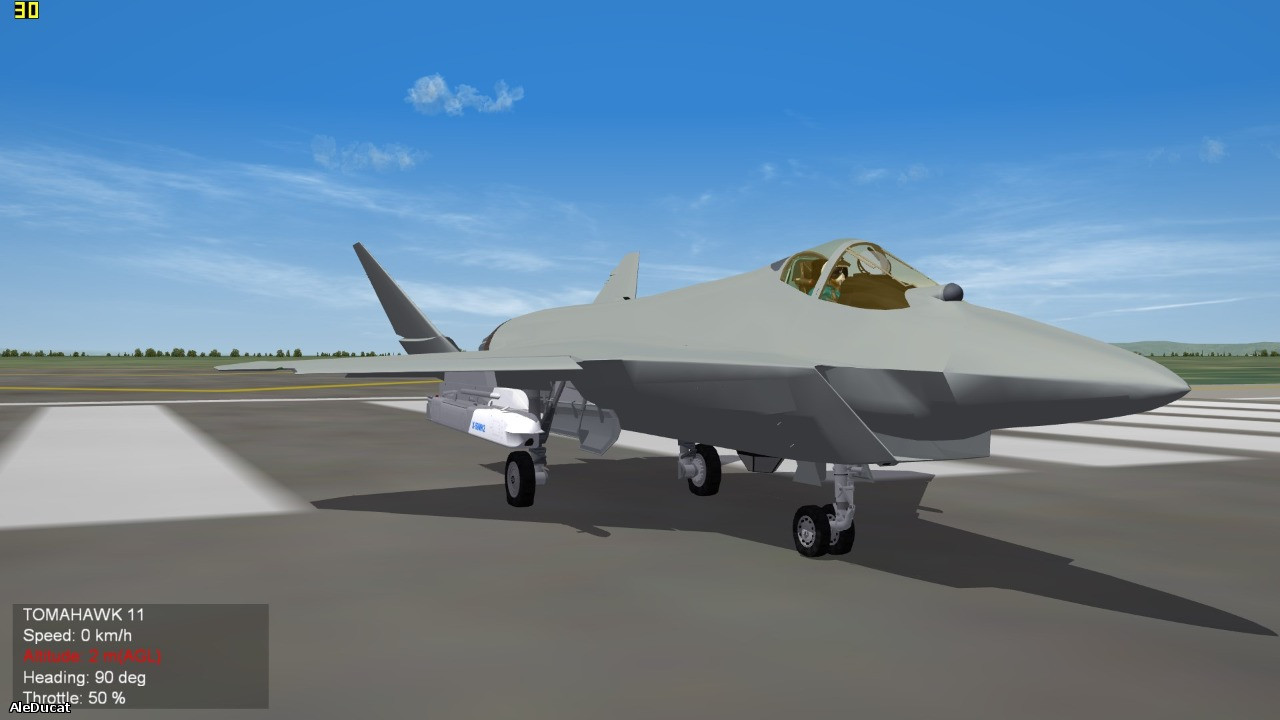
Last edited by a moderator:
Life of Tyo
ACCESS: Confidential
- Joined
- 23 January 2022
- Messages
- 127
- Reaction score
- 474
this Mod from Game Strike Fighter 2where Icould buy this 3d model, complete of cockpit, frames, gears, etc?

- Joined
- 27 December 2005
- Messages
- 18,718
- Reaction score
- 33,077
I evicted a bunch of off-topic posts (https://www.secretprojects.co.uk/threads/posts-evicted-from-sukhoi-t-75-lts-checkmate-topic.48644/). Lets try and avoid every topic devolving to the same pointless arguments.
Rosoboronexport will present the Su-75 in Serbia.

 tass.ru
РФ покажет танк Т-90МС и последние версии стрелкового оружия на выставке в Сербии
Главными экспонатами стенда Рособоронэкспорта станет продукция Ростеха: военно-транспортный самолет Ил-76МД-90А(Э) от ОАК, боевой вертолет Ми-28НЭ, зенитный ракетно-пушечный комплекс "Панцирь-С1М" ...
tass.ru

This is a historical photo from a non-flying T-75 demonstrator photoshoot in daylight. Nice design, anyway, but let's wait for the prototype.
I didn't say it's a flying prototype. And i didn't see this photo before as well as Yandex pic search didn't find it.This is a historical photo from a non-flying T-75 demonstrator photoshoot in daylight. Nice design, anyway, but let's wait for the prototype.
I didn't say it's a flying prototype. And i didn't see this photo before as well as Yandex pic search didn't find it.
Yes, you are right.
EmoBirb
E.S.T
- Joined
- 18 January 2025
- Messages
- 2,210
- Reaction score
- 5,623
"Brother, photo is from 2021. We hung around there, rearranging them for photos. You can safely look at other angles on the Internet. Well, what will fly next year will be very different from the model..."One quite interesting thread on X:
View: https://x.com/GeorgeN28581/status/1973723269820989664
(rough translation for the thread here, native speakers feel free to correct)
And... (down the thread): Not only is the T-75 alive, but there are big plans for it."Brother, photo is from 2021. We hung around there, rearranging them for photos. You can safely look at other angles on the Internet. Well, what will fly next year will be very different from the model..."
(rough translation for the thread here, native speakers feel free to correct)
Similar threads
-
 Sierra Nevada P-9A "Pale Ale" (Bombardier Q200) drug interdiction aircraft
- Started by Stargazer
- Replies: 9
-
