USAF/USN 6th Gen Fighters - F/A-XX, F-X, NGAD, PCA, ASFS News & Analysis [2008- 2025]

Status
Not open for further replies.
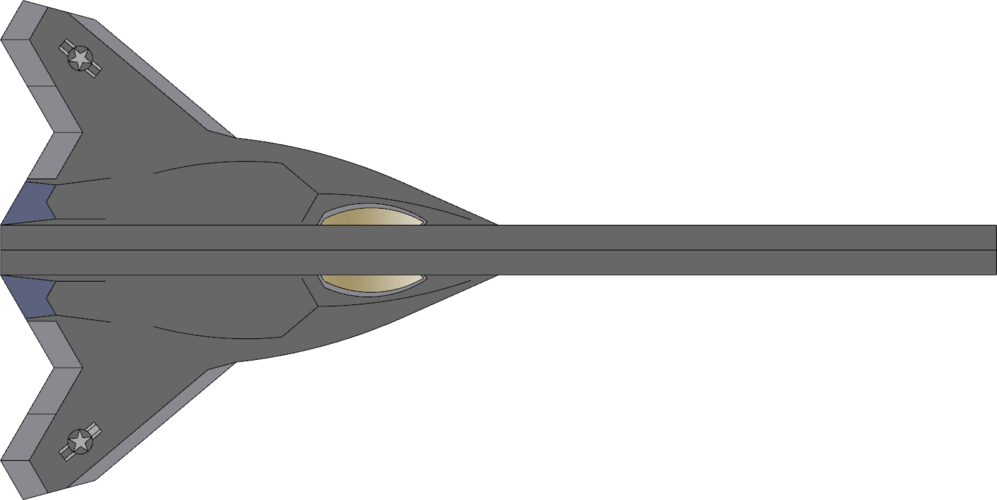
First patch to pop up (I suppose) came from this listing I came across in January.

Replicas are available here, and this is the image's source.

 
Folks, let's cut this line of discussion off before it gets real dumb. Please.
There was actually a serious point buried in my last post. Network Attack is almost certainly one of the expected capabilities for 6th Gen aircraft and drones. The Celeritate, Certus, Virales patch could refer to such a programme. "Fast and true" isn't something we'd normally apply to a virus like Covid, but it could be applied to a Network Attack capability like Suter.
 
There was actually a serious point buried in my last post. Network Attack is almost certainly one of the expected capabilities for 6th Gen aircraft and drones. The Celeritate, Certus, Virales patch could refer to such a programme. "Fast and true" isn't something we'd normally apply to a virus like Covid, but it could be applied to a Network Attack capability like Suter.
Or it could mean ,with this stealth and speed abble to go in enemy territory like a virus...
 
With the contract being awarded this year does that mean we're expecting a demonstrator picture at least? I need more after the B-21...
 
I do not the get the feeling like we are gto to see the new toys. If anything, the USAF is being even more secretive than I remember it being in the Cold War. You will see a UAV or an AAM when is deployed operationally, and the latter only externally.
 
Last edited:
I do not the get the feeling like we are gto to see the new toys. If anything, the USAF is being even more secretive than I remember it being in the Cold War. You will see a UAV or an AAM white is deployed operationally, and the latter only externally.
Very much so. There was a lot more drawings and concept art floating around during ATF and ATB than there has been for NGAD and B21.
 
We live in a world much more susceptible to security breaches compared to cold war thanks to globalism, specifically international supply and manufacturing chains and of course the internet. Remember how Boeing was found to have subcontractors downloading loads of classified tech in foreign lands and fed to china or the enormous breach on the f-35 data?
 
Well. Given the US elections context, we might see some picture surface.
 
Very much so. There was a lot more drawings and concept art floating around during ATF and ATB than there has been for NGAD and B21.
That's not true actually. If you are talking of _concepts_ from OEMs. And you saw an official B-21 rendering years before rollout, not months like with B-2.
 
Well I imagine a UAV just has less systems to go wrong from a maintenance point of view. And I bet a commercial engine outlasts the aircraft by thousands of hours. And depending on how complex your UCAV is (I’m a fan of smaller and simpler), maybe there’s no radar to go wrong either. And if it’s really hard to repair: tear off the the wings and engine and anything else fairly easily removed and just trash the thing. If it a Williams 44 engine, that’s probably almost half the cost anyway. Don’t do maintenance; do rapid manufacturing.
Never underestimate the complexity of an unmanned aircraft. It has to do all the things a manned aircraft of similar capabilities must do...with a very complex set of data links spliced in.
 
Never underestimate the complexity of an unmanned aircraft. It has to do all the things a manned aircraft of similar capabilities must do...with a very complex set of data links spliced in.
It don't do the same things , it is unable to conduct interception , or sky policy or doing supersonic flight it is not the same than a piloted aircraft.
 
It don't do the same things , it is unable to conduct interception , or sky policy or doing supersonic flight it is not the same than a piloted aircraft.
Yet an MQ-9 Reaper (just the airframe, not counting the control station) is roughly twice the price of a PC-12NG (~$4.5mil)... Go figure.
 
While we are on the topic of technology being introduced into these upcoming platforms, an interesting thing caught my eye about the patch that I've seen in abstract is the use of biomorph pulsator jets for the use of reducing turbulent airflow and increasing laminar performance, and it just so happens that the images traceline on the aft of the aircraft is reminiscent of those abstract patent images
 

Attachments

  • 257223-5a21a4a673639df4b921136e60ce7ad5.png
    257223-5a21a4a673639df4b921136e60ce7ad5.png
    376.3 KB · Views: 145
  • US08038102-20111018-D00004.png
    US08038102-20111018-D00004.png
    4.1 KB · Views: 150
  • US20060219847A1-20061005-D00006.png
    US20060219847A1-20061005-D00006.png
    3.1 KB · Views: 145
2025 budget request cuts planned $1.5bn funding for F/A-XX next year by 2/3rds and delays the project schedule a year.

Rear Adm. Ben Reynolds, the deputy assistant secretary of the Navy for budget, said that was one of the “hard choices” resulting from the limited top line. The delay also gives industry more time to mature technology, he added, saying the Navy is “still committed” to this piece of its Next-Generation Air Dominance family of systems.

Air Force on the other hand is prioritising R&D over airframes with cuts in procurement in many aircraft programs, more aircraft retirements but an increase in NGAD funding by $815m, $166m boost for CCA and $116m for operational experimentation of unmanned systems by an evaluation unit. B-21 R&D is being slowed slightly with a $300m cut but an increase of $400m for airframe production.
 
LRS-B was awarded to NG in 2015 and there was an artist concept unveiled in 2016. Hopefully we see something according to that schedule.

Unless it already has been unveiled? The general outer mold lines of the real NGAD may have been hidden in all the artist concepts that have been released.
 
2025 budget request cuts planned $1.5bn funding for F/A-XX next year by 2/3rds and delays the project schedule a year.


Air Force on the other hand is prioritising R&D over airframes with cuts in procurement in many aircraft programs, more aircraft retirements but an increase in NGAD funding by $815m, $166m boost for CCA and $116m for operational experimentation of unmanned systems by an evaluation unit. B-21 R&D is being slowed slightly with a $300m cut but an increase of $400m for airframe production.
Navy will fall realy behind the USAF and it is no time to slow down with the Russia and China, navy do a bad mistake to delay FA/XX
 
If its not needed why a 'mistake' ?
Not needed ? with the war in Ukraine ? it is time to show the toys , Super Hornet are old , F-35 c not in number to face China it is not the good fleet.
 
Navy will fall realy behind the USAF and it is no time to slow down with the Russia and China, navy do a bad mistake to delay FA/XX

The truth is that FA-XX probably is a lot less significant than NGAD. The odds of USN aviation being offensively decisive are very low, and F-35/F-18 provides adequate defensive firepower. I also get the impression from this cut and the official statement that FA-XX is not as far along as NGAD and/or the USN would rather let the USAF absorb more of the risks and costs of the associated technology.
 
The truth is that FA-XX probably is a lot less significant than NGAD. The odds of USN aviation being offensively decisive are very low, and F-35/F-18 provides adequate defensive firepower. I also get the impression from this cut and the official statement that FA-XX is not as far along as NGAD and/or the USN would rather let the USAF absorb more of the risks and costs of the associated technology.
I agree USAF do the job very well , B-21 in time , NGAD contract this year .....
 
I agree USAF do the job very well , B-21 in time , NGAD contract this year .....

Well my point was more that carrier strikes were never going to deliver decisive results anyway - tactical aircraft are going to be a lot more limited in the volume of fire they can deliver than land based bombers supported by long range fighters. To some extent, the USN can "cheat" against naval targets, substituting MALD-N for actual cruise missiles to increase the apparent strike size, but ultimately the contribution of a few embarked air wings is not going to be as decisive as land based air.
 
Well my point was more that carrier strikes were never going to deliver decisive results anyway - tactical aircraft are going to be a lot more limited in the volume of fire they can deliver than land based bombers supported by long range fighters. To some extent, the USN can "cheat" against naval targets, substituting MALD-N for actual cruise missiles to increase the apparent strike size, but ultimately the contribution of a few embarked air wings is not going to be as decisive as land based air.
So what are USN carriers for if holding targets-at-risk is better done by long-range aircraft, missiles, or submarines? Is the defacto purpose of carrier aircraft to defend the floating bases?

Seems the outcome of an objective and comprehensive DoD-wide cost/benefit analysis (fat chance) would find that there are better choices than sustaining 11 carrier strike groups for the primary missions of showing the flag or attacking third-world belligerents.
 
So what are USN carriers for if holding targets-at-risk is better done by long-range aircraft, missiles, or submarines? Is the defacto purpose of carrier aircraft to defend the floating bases?

Seems the outcome of an objective and comprehensive DoD-wide cost/benefit analysis (fat chance) would find that there are better choices than sustaining 11 carrier strike groups for the primary missions of showing the flag or attacking third-world belligerents.

My argument is not the carriers are useless; my argument is that FA-XX probably will have less impact that NGAD in a PRC-US conflict. Not only will the number in theater always be rather small, but also the USN is largely building its offensive anti ship capability around stand off weapons that would not necessarily require long range counter air. This is because surface combatants represent very high density AD targets where the air defenses are co-located with the target on very flat terrain compared to land based targets. As such, direct attack munitions are not really a workable solution (hence the proliferation of various flavors of AShMs).

In terms of cost benefit analysis in a peer conflict, one would probably have to factor not just the effectiveness of the platform but also how much of the PLAN, PLARF, and the PRC orbital infrastructure resources are spent on anti carrier efforts as a result.
 
better choices than sustaining 11 carrier strike groups for the primary missions of showing the flag or attacking third-world belligerents
Heh. This is actually close to being correct.
Military strong-arm tactics dont work out well these days when proliferation of fifth collumnists, sympathizers and long-range transports and heavy construction equipments means that offending leaders can simply run and hide in a luxurious cave somewhere in god-know-stan before their minions murder enough troops that the "defendant" have to pull back because of anti-war activist. It worked out quite well for the Taliban, after all. The PRC demonstrated that the smart ones, worthy of help, will bite the money. And illiterate tribal-class god-know-stan-ers can have their own concubines and sheeps, not giving a darn to whatever cultural, economic and technological revolution there is. Don't try to force-feed them with foreign ideas that highly contrasted with their historical cultural values. Guess what happened to women's rights in Afghanistan? I think one of the main pusher for the Mujahideens were that the new socialist government tried to implement reforms that wouldve stripped the tribe leaders of most of their powers and prestiges.

And I don't think that "showing the flag" needs 11 supercarriers for all that matters. The Brits seems pretty content with their blue-water OPVs doing that job. Some of the "through-deck"/aviation cruiser/hybrid capital ships could probably do that job well. Drones and specops would do quick work of the less competent third world military dictatorships and the actual supercarriers could be doing roles that wouldn't need so many deployments, and hence, less refits and maintenance cycles.


Re F/A-XX, I'd agree that delaying the program is a rational choice. It's far more important that the USN gets what it needs right now (state-of-the-art IAMD system, new SM-6/3 rounds on faster schedule, FFG-62s and Flight IIIs, plus the first Columbia-class, and many tinier acquisitions/efforts). Plus the F-35C is adequate as it is, why bother spending money waiting for new shinier, but paper stuff?
 
I am once again given the impression that NAVAIR doesn't know what it wants and doesn't know what it's doing. There is no point in having such a force of modern CVNs if the aircraft on them aren't kept to date to match the latest threats. There seems to be a focus on strikes against PRC mainland targets if it came to war but what about the role of protecting the surface fleet itself? The threat isn't just those anti-ship ballistic missiles that seem to get all of the focus.
 
Maybe the threat did pace slower than anticipated. Why put the blame on your own side.

If the J's and Su's are below parity, there is much more urgent to go After. Don't forget that the USN is a navy foremost.
 
There is no point in having such a force of modern CVNs if the aircraft on them aren't kept to date to match the latest threats
The F-35C is among the most *capable* naval fighters out there, and it isn't even a pure fighter ( more like a long-range striker with fighter capability).
protecting the surface fleet itself
The carriers can stay far away, as aircrafts can fly and provide coverage. It also helps that the replenishment ships get to do their work in areas that aren't compromised by PLARF naval strike force. AAW could also be provided by the destroyers, armed with far larger radar arrays and missiles than fighters could, while the fighters, cruising in a much more elevated position, closer to the enemy, could provide the sensing capability to search, track and guide. Cooperative engagement, systems as a whole.
 
The F-35C is among the most *capable* naval fighters out there, and it isn't even a pure fighter ( more like a long-range striker with fighter capability).
I'll grant you that the F-35C is a very capable aircraft in many respects, but it is a strike fighter, and I'd emphasis the strike part of that term. It gives up some performance to have greater range.

I'm envisioning something with a similar degree of stealth as the F-35 or F-22 that can go Mach 2+ if needed and can supercruise with a payload of long-range air-to-air missiles. A modern successor to the F-14 in many respects. Naturally it can be given some air-to-surface capability, but this should be secondary to its role of countering offensive efforts of the enemy's land or carrier-based aircraft.

The carriers can stay far away, as aircrafts can fly and provide coverage. It also helps that the replenishment ships get to do their work in areas that aren't compromised by PLARF naval strike force. AAW could also be provided by the destroyers, armed with far larger radar arrays and missiles than fighters could, while the fighters, cruising in a much more elevated position, closer to the enemy, could provide the sensing capability to search, track and guide. Cooperative engagement, systems as a whole.
Indeed, the ability of the carriers to stand-off from most threats is hugely important and is one of the reasons a longer range was desired from F/A-XX. But I don't see how this decision helps that goal.
 
I am once again given the impression that NAVAIR doesn't know what it wants and doesn't know what it's doing. There is no point in having such a force of modern CVNs if the aircraft on them aren't kept to date to match the latest threats. There seems to be a focus on strikes against PRC mainland targets if it came to war but what about the role of protecting the surface fleet itself? The threat isn't just those anti-ship ballistic missiles that seem to get all of the focus.

I think realistically most of the air wing *will* be dedicated to screening the surface fleet (in a peer war), which is why long range counter air is a lower priority. The range of the current air wing is perfectly adequate if you are operating within several hundred miles of the bird farm. In the medium to long term future I think the USN would like to extend its counter air and strike range, with UAVs playing a much larger role in the force structure.* But they have other priorities now.

Also I think one can argue that the ballistic missiles are by far the most serious threat, given their long range, short travel time, and short prep time. Consider the thousand mile range band: an SSK is going to have to slog for a week or more to get to the patrol area. Tactical air will need refueling to cover any air operation, and any large force transiting the first island chain probably is detected by someone on the way out. An AShBM can just skip over that distance in twenty minutes.


*(EDIT TO ADD): To the USN seems to be focusing on very long ranged subsonic weapons in the near to medium term with opponent ships being their primary target (as opposed to say the mainland). So we see Tomahawk blk V, LRASM C2 ("naval JASSM"), MALD-N, and now the proposal for "MACE". So even the offensive strike (against ships) needs no escort. That limits the target set but it is a much more achievable goal, for now.
 
Last edited:
The F/A-XX funding is specifically for research and development of the fighter and does not include funding spent on the Next Generation Air Dominance family of systems, some of which are classified, Reynolds said.https://news.usni.org/2024/03/11/new-navy-budget-seeks-6-battle-force-ships-10-decommissions-in-fy-2025
In fact this is possible that much of the FA/XX budget is in the classified
 
So what are USN carriers for if holding targets-at-risk is better done by long-range aircraft, missiles, or submarines? Is the defacto purpose of carrier aircraft to defend the floating bases?
For roughly half of the embarked aircraft?

Yes, that's EXACTLY the purpose.

16x aircraft to make 2x 2-bird CAPs flying 24/7 (one more or less on top of the carrier, one ~150nmi towards the likely threat). 5x Hawkeyes, again to keep 1x up 24/7. 12x MH60R ASW helos (though some of those are spread across the escorts, that's still enough to keep 2-3 up 24/7). 3x tankers. 36 birds required for group protection.

All the rest make up the strike package.


I'm envisioning something with a similar degree of stealth as the F-35 or F-22 that can go Mach 2+ if needed and can supercruise with a payload of long-range air-to-air missiles. A modern successor to the F-14 in many respects. Naturally it can be given some air-to-surface capability, but this should be secondary to its role of countering offensive efforts of the enemy's land or carrier-based aircraft.
That's very much what I'm seeing as the FAXX. A 'mere' 85klbs MTOW (catapult max), ~55klbs landing weight, ~30klbs of fuel.

The USAF NGAD is looking more like 105klbs MTOW, and most of that increase over the FAXX is more fuel for more range. Because either you're flying from Japan and Okinawa or you're flying from Alaska-Hawaii-Guam. Nothing really in between with a 3km runway on it!
 
Australia might be an in between the second chain and outlying US states. But certainly range is a major consideration, more so than FA-XX. If the USN was Guam level distant from the PRC coast, I suspect they would be happy. Thier airfield moves.
 
I am once again given the impression that NAVAIR doesn't know what it wants and doesn't know what it's doing.

The Navy needs a naval NGAD. What it will ask for, and get, is a “ hyper Hornet” with a few UAVs it doesn’t know what to do with that will eat more specious below deck space.

If the Navy had a clue it would be pushing separate, cheaper “carriers” for unmanned systems.
 
Status
Not open for further replies.

Similar threads

Back
Top Bottom