aonestudio
I really should change my personal text
- Joined
- 11 March 2018
- Messages
- 3,381
- Reaction score
- 9,228


Cheers, I've moved it.Already posted here:
https://www.secretprojects.co.uk/th...nsive-punch-outlook.23259/page-27#post-482067
Not sure there's a best place for it. This thread is SM-3 specific. Maybe "Standard Missile Projects"?
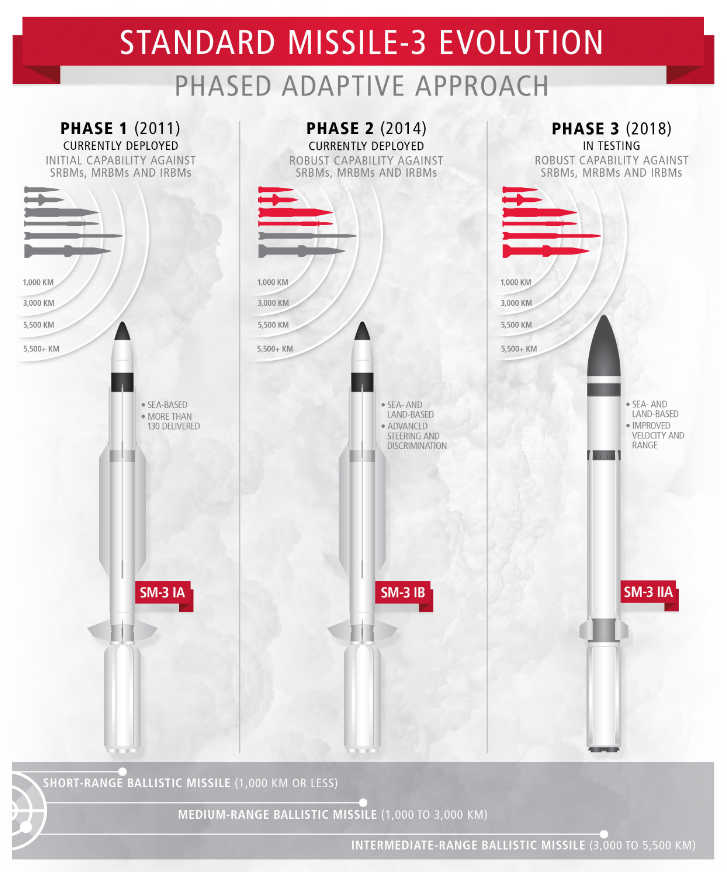
On Wednesday, Maya fired an SM-3 Block IIA missile, successfully intercepting the target outside the atmosphere in the first launch of the missile from a Japanese ship. The SM-3 Block IIA has two distinct new features: larger rocket motors that will allow the missile to defend broader areas from ballistic missile threats and a larger kinetic warhead.

There's no US Army requirement for a Midcourse interceptor. There are those in the Navy who would happily hand over Aegis Ashore to the Army for budgetary reasons, but I'd rate that as "unlikely." Terminal defense and hypersonic defense are Army priorities, but those are not SM-3 roles.I wonder if we'll see the US army or other NATO armies deploying the SM-3 Block-IIA?

From text, it looks like maybe that MRC might turn into a mobile SAM, unless it's THAAD-ER, but I'm not really sure that counts as mid-range.
But a changing adversary means the service must develop further its own capabilities. The service is looking toward a more mobile architecture, one that can use mobile launchers.
One of those new technologies is the Mid-Range Capability missile. The missile will be fielded in 2023, more than two years since the Army announced that the service would pursue the capability.
The Army chose Lockheed Martin to integrate the Navy’s SM-6 and Tomahawk missiles with a launcher and battery operations center to create an MRC prototype back in November 2020.
unless it's THAAD-ER
Not to my knowledge. In 2015 it was stated to be due in 2024.unless it's THAAD-ER
Has THAAD-ER been flight-tested?

From text, it looks like maybe that MRC might turn into a mobile SAM, unless it's THAAD-ER, but I'm not really sure that counts as mid-range.
But a changing adversary means the service must develop further its own capabilities. The service is looking toward a more mobile architecture, one that can use mobile launchers.
One of those new technologies is the Mid-Range Capability missile. The missile will be fielded in 2023, more than two years since the Army announced that the service would pursue the capability.
The Army chose Lockheed Martin to integrate the Navy’s SM-6 and Tomahawk missiles with a launcher and battery operations center to create an MRC prototype back in November 2020.
It could easily form part of mobile launch architecture for a SAM though.I think the author may be a bit confused. The MRC that is coming into service in 2023 is a coast artillery antiship missile capability. It includes SM-6 as a strike weapon, not a SAM.
GI ven that it's basically a transportable Mk41 launcher, there's no fundamental reason MRC couldn't also fire SM-3. But I think the current references to SM-3 in the Guam TBMD architecture probably are about AEGIS ships operating around the island.
https://www.armytimes.com/news/your...facebook&utm_medium=social&utm_campaign=fb_atI think Awgis ashore was contemplated for Guam but ultimately rejected.
Congress ultimately approved $80 million to accelerate arming Guam, including with the Patriot air-and-missile defense system and the Navy’s SM-6 and SM-3 missiles.
I’m not sure how those will be stored/launched but I’d thought an Aegis Ashore installation was rejected; perhaps I’m mistaken. Some kind of relocatable system like the MRC makes more sense to me but I realize it doesn’t have an anti air capability integrated.
The architecture will not be a fixed missile defense site like Aegis Ashore in Romania and Poland, Hill said during a Pentagon budget briefing. “Think of it as a distributed system.” He added that the agency is interested in using mobile launchers.
So mobile Aegis? Be interesting to see what radar it uses. Maybe the radars will still be fixed.You are correct about AEGIS Ashore for Guam.
https://www.defensenews.com/land/20...ersight-on-pentagon-plans-for-defending-guam/
The architecture will not be a fixed missile defense site like Aegis Ashore in Romania and Poland, Hill said during a Pentagon budget briefing. “Think of it as a distributed system.” He added that the agency is interested in using mobile launchers.
We've had mobile AEGIS for decades, on ships.So mobile Aegis? Be interesting to see what radar it uses. Maybe the radars will still be fixed.

Hoping Guam gets a 50 silo dense pack filled with IRBMs armed with HBGV.So mobile Aegis? Be interesting to see what radar it uses. Maybe the radars will still be fixed.You are correct about AEGIS Ashore for Guam.
https://www.defensenews.com/land/20...ersight-on-pentagon-plans-for-defending-guam/
The architecture will not be a fixed missile defense site like Aegis Ashore in Romania and Poland, Hill said during a Pentagon budget briefing. “Think of it as a distributed system.” He added that the agency is interested in using mobile launchers.
Hoping Guam gets a 50 silo dense pack filled with IRBMs armed with HBGV.
Hoping Guam gets a 50 silo dense pack filled with IRBMs armed with HBGV.So mobile Aegis? Be interesting to see what radar it uses. Maybe the radars will still be fixed.You are correct about AEGIS Ashore for Guam.
https://www.defensenews.com/land/20...ersight-on-pentagon-plans-for-defending-guam/
The architecture will not be a fixed missile defense site like Aegis Ashore in Romania and Poland, Hill said during a Pentagon budget briefing. “Think of it as a distributed system.” He added that the agency is interested in using mobile launchers.
https://www.thedrive.com/the-war-zone/u-s-building-advanced-over-the-horizon-radar-on-palauIf they do adopt a mobile launcher for SM-3 (likely the same basic launcher as MRC) you'd expect it to be cued by other TBMD radars, like THAAD's TPY-2, nearby shipboard SPY-1 or -6, or anything else suitable in the area. There is talk about some sort of long-range radar on Palau, which could cover Guam, for example.
Called the Tactical Mobile Over-the-Horizon Radar, or TACMOR, the sensor station will be installed on the increasingly strategic island of Palau to enhance air and maritime domain situational awareness for U.S. and allied forces in the region. The Department of Defense announced on Dec. 28 that it had awarded a $118.4 million contract to Gilbane Federal for the construction of reinforced concrete pads and foundations in support of the installation of TACMOR equipment on the island. The contracting activity for what’s being called the TACMOR infrastructure project is the Naval Facilities Engineering Systems Command Pacific, and work is expected to be completed by June 2026.

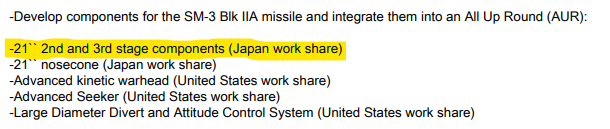
I've tried searching on Google but haven't had any luck finding the designations for the SM-3 Block II's second and third stage rockets (In the SM-3 Block I/IA/IB they're the Mk-104 DTRM and Mk-136 TSRM) or do the still use the Mk-104 and Mk-136 designations with a "Mod" suffix?
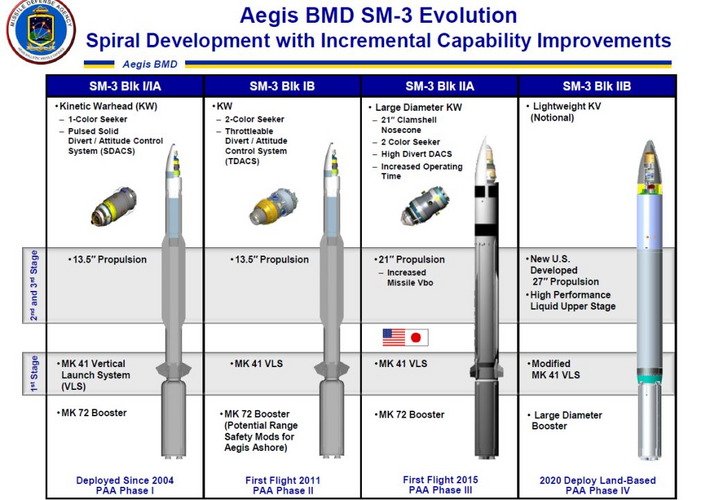
In regards to the SM-3 Block II's nosecone design does it still use a one-piece radome type design like the Block I or does it use the two-piece clamshell design?
I don't like to quote myself however does anyone know if the SM3 Block-II use a single-piece ejected nose-cone like the Block-I or does it use the two-piece clamshell type nose-cone to protect the EKV?
Revisiting this thread this turns out to me to be the best choice of armanent for arming Guam.Hoping Guam gets a 50 silo dense pack filled with IRBMs armed with HBGV.
I'd suppose the low-cost space launch offered by MNMS is very different from MRC which is a rapid fielding strike system that covers the gap between PrSM (500+ km) and LRHW (2875+ km BGV-tipped IRBM). Tomahawk fills the medium-range strike role with its proven capability as a cruise missiles while SM-6 BLK IA is being used as an AShBM with a range guesstimate of 450km, and the new IB will leverage the SM-3 BLK IIA 21in motor for an speculative increase in range of up to 1000km ballistic.View: https://www.youtube.com/watch?v=N_H8QATr_g8
If one is investing in large TELs like Typhon why not into MNMS?
Affordable LEO sat launch is also affordable LEO ASAT launch. Either some flavor of explosive party favor or simply an opposing orbital kinetic impact.Affordable LEO sat launch is a novel capability by itself and in future conflicts where the US Army envisages enemy offensive ASAT, a system akin to MNMS will be highly desired. A modular missile architure rapidly reconfigurable for LRPF/ISR/test target across a broad spectrum of range, payload and size.
Affordable LEO sat launch is also affordable LEO ASAT launch. Either some flavor of explosive party favor or simply an opposing orbital kinetic impact.
Kinetic direct ascent? Like SM-3?The U.S. is winning the affordable launch war hands down, and I think it likely has adopted a policy of no first use or even no use when it comes to kinetic direct ascent weapons. Probably because it has the luxury of non kinetic options and within several years, a prolific ISR and communications constellation that could not be practically attacked by direct ascent.
Kinetic direct ascent? Like SM-3?
My image for the "new orbital ASAT" is a pop-down attack pattern. ASAT gets placed in a slightly higher orbit so that the collision energy is all aimed towards earth.The U.S. is winning the affordable launch war hands down, and I think it likely has adopted a policy of no first use or even no use when it comes to kinetic direct ascent weapons. Probably because it has the luxury of non kinetic options and within several years, a prolific ISR and communications constellation that could not be practically attacked by direct ascent.
My image for the "new orbital ASAT" is a pop-down attack pattern. ASAT gets placed in a slightly higher orbit so that the collision energy is all aimed towards earth.
It's probably the best profile for "not wanting to piss off the neighbors" and "not wanting to break our own stuff"That's what India did when the ISRO conducted an ASET test a few years ago.

